
- Prisma's Value: Transforms photos into art using AI, ideal for creative expression and social media.
- Core Features: Offers diverse artistic filters and a user-friendly interface for quick transformations.
- Limitations: Lacks traditional editing tools; many features are behind a subscription paywall.
- Ideal Users: Best for artists and influencers seeking unique visual styles, not professional photographers needing precision.
- Privacy & Cost: Cloud processing raises data privacy concerns; free version has ads and quality limits.
- UniConverter Alternative: Provides robust, comprehensive image enhancement with local processing and batch features, unlike Prisma.
In this article
- Part 1: What is Prisma Photo Editor?
- Part 2: Prisma Photo Editor: Core Features, Pros, and Cons
- Part 3: Prisma Photo Editor: Ideal Users and Use Cases
- Part 4: Prisma Photo Editor and Alternatives Comparison
- Part 5: Risks and Pitfalls to Consider
- Part 6: How to Use UniConverter for Comprehensive Image Enhancement
- Part 7: Conclusion
- Part 8: FAQs about Prisma Photo Editor Image Enhancer
When I first stumbled upon Prisma Photo Editor, I was genuinely intrigued. It promised to transform my everyday photos into works of art with just a few taps, leveraging the magic of AI. As someone who loves experimenting with visuals, the idea of turning a simple snapshot into a painting or a sketch without needing advanced artistic skills was incredibly appealing. This Prisma Photo Editor image enhancer review dives deep into its capabilities, comparing it with other tools I've used, and ultimately helps you decide if it’s the right fit for your creative endeavors. We'll explore its core features, ideal use cases, and even some potential pitfalls, giving you a comprehensive look at what this AI-powered artistry tool truly offers.
Part 1: What is Prisma Photo Editor?
Prisma Photo Editor burst onto the scene a few years ago, quickly gaining traction for its unique approach to photo editing. Unlike traditional editors that focus on adjustments like brightness or contrast, Prisma’s core identity lies in its AI-powered artistic filters. It’s not about making your photo look "better" in a conventional sense; it's about transforming it into an entirely new piece of art, mimicking styles from famous painters or abstract designs. I remember thinking, "Finally, an app that lets me be an artist without actually being able to draw!" This review aims to dissect its performance, user experience, and overall value, especially when stacked against its competitors.
The Rise of AI-Powered Image Enhancement
The digital world has seen an explosion in AI-driven tools, and image enhancement is no exception. This trend is driven by several key factors:
* Accessibility for Non-Professionals: AI democratizes complex artistic techniques, making them available to anyone with a smartphone.
* Time-Saving Solutions: What used to take hours in a professional studio can now be done in seconds.
* Creative Exploration: AI opens up new avenues for artistic expression, pushing boundaries beyond traditional methods.
* Demand for Unique Content: In a crowded digital space, AI helps creators stand out with distinctive visuals.
Part 2: Prisma Photo Editor: Core Features, Pros, and Cons
Prisma Photo Editor's main selling point, from my experience, is its ability to apply a vast array of artistic filters to your photos. It's not just a simple overlay; the AI actually reinterprets your image in the style of a chosen artwork. I've been consistently impressed by how it can turn a mundane photo into something visually striking.
* Transformative Artistic Filters: This is where Prisma truly shines. It offers hundreds of styles, from impressionistic paintings to comic book aesthetics.
* User-Friendly Interface: Navigating the app is straightforward. You select a photo, choose a filter, and adjust its intensity.
* Regular Updates & New Styles: The developers frequently add new filters, keeping the experience fresh and exciting.
* High-Quality Output (Premium): With a subscription, the output resolution and detail are quite good for social media sharing.
* Community and Sharing Features: It integrates well with social media, making it easy to share your creations.
- Pros:
- Transformative Artistic Filters: Unparalleled artistic style transfer for unique visual effects.
- User-Friendly Interface: Intuitive design allows for quick application of filters.
- Regular Updates & New Styles: Constantly evolving library of artistic filters keeps content fresh.
- Cons:
- Limited Traditional Editing Tools: Lacks advanced features for standard photo adjustments (e.g., exposure, contrast).
- Subscription Model for Full Access: Many desirable filters and features are locked behind a paywall.
Part 3: Prisma Photo Editor: Ideal Users and Use Cases
From my perspective, Prisma Photo Editor isn't for everyone, but for its target audience, it's a fantastic tool. If you're looking to create something visually unique and aren't concerned with pixel-perfect realism, this app is probably for you. I've found it particularly useful for adding a creative flair to my social media posts.
- Best Use Case: Social Media Content Creation for Artists & Influencers
- Scenario: An artist wants to quickly transform a photograph into a painting-like image for their Instagram feed, showcasing their unique aesthetic without manual drawing. I've used it to turn travel photos into stylized postcards, which always gets engagement.
- Limited Use Case: Professional Photography Post-Processing
- Scenario: A professional photographer needs to fine-tune color grading, sharpen details, and remove blemishes from a high-resolution portrait for a client, where precise control over every pixel is paramount. Here, Prisma falls short. I once tried to use it for a client project, hoping to add an artistic touch, but quickly realized it lacked the granular control needed for professional work. It's more about artistic interpretation than precise correction.
Part 4: Prisma Photo Editor and Alternatives Comparison
When I look at the landscape of image enhancement, Prisma occupies a very specific niche. It's all about artistic transformation. But what if you need something else? I've tried several alternatives, and here's how they stack up.
| Feature/Aspect | Prisma Photo Editor | UniConverter (AI Image Enhancer) | Remini | Topaz Labs Gigapixel AI |
| Primary Focus | Artistic Style Transfer | Comprehensive Enhancement | Photo Restoration & Enhancement | Upscaling & Detail Recovery |
| AI Technology | Neural Style Transfer | Deep Learning, GANs | Generative Adversarial Networks (GANs) | Deep Learning (Convolutional Neural Networks) |
| Output Style | Artistic, Painterly | Realistic, Sharpened, Enhanced | Realistic, Sharpened | High-Resolution, Detailed |
| Ease of Use | Very High | Very High | High | Moderate |
| Price Model | Freemium/Subscription | One-time Purchase/Subscription | Freemium/Subscription | One-time Purchase |
| Processing Speed | Fast (Cloud-based) | Very Fast (GPU accelerated) | Moderate | Moderate to Slow (Local processing) |
| Output Resolution | Good (Premium) | Up to 8K | Good | Up to 600% original size |
| Batch Processing | No | Yes | No | Yes |
| Data Privacy | Cloud-based (concerns) | Local processing option | Cloud-based (concerns) | Local processing |
Core Differentiators: Artistic Expression vs. Technical Enhancement
For me, Prisma is about creative expression. If I want to make a photo look like a Picasso, it's my go-to. However, if I need to restore an old photo (Remini excels here), or significantly upscale a low-resolution image without losing detail (that's Gigapixel AI's domain), or even just get a generally better, sharper image with comprehensive enhancement (UniConverter is surprisingly versatile), Prisma isn't the right tool. UniConverter, in particular, offers a balance of ease of use and powerful enhancement that Prisma simply doesn't touch when it comes to technical image improvement.
Part 5: Risks and Pitfalls to Consider
While Prisma Photo Editor offers a lot of creative fun, I've also encountered some aspects that give me pause. It's important to be aware of these before you dive in, especially if you're considering a subscription.
Data Privacy Concerns with Cloud Processing
Like many apps that rely on AI, Prisma processes your images on its servers. This immediately raises a red flag for me regarding data privacy. While they have a privacy policy, I'm always a bit wary of uploading personal photos to a third-party server, especially if they contain sensitive information. It's a trade-off for the AI magic, but one I think about.
In-App Advertisements and Upselling
The free version of Prisma is riddled with ads. I understand that developers need to monetize, but the constant interruptions and aggressive upselling to the premium version can be quite annoying. It often feels like the app is pushing me towards a subscription rather than letting me enjoy the free features.
Potential for Over-Processing and Unnatural Results
While the artistic filters are cool, it's very easy to overdo it. Sometimes, the AI can produce results that look unnatural or distort key features in a way that isn't aesthetically pleasing. I've had to discard many images because the filter made faces look strange or landscapes unrecognizable in a bad way. It requires a delicate touch and knowing when to stop.
Subscription Fatigue and Hidden Costs
The "freemium" model is common, but Prisma's subscription can feel a bit steep for what it offers, especially when compared to other comprehensive photo editors. Many of the most appealing filters are locked behind the paywall, and if you're only using it occasionally, the recurring cost might not be worth it. I've definitely felt the "subscription fatigue" with this one.
Image Quality Degradation on Free Tier
If you're using the free version, don't expect pristine image quality. I've noticed that the output resolution can be lower, and sometimes there's a visible watermark. This is a common tactic to push users towards a paid plan, but it definitely limits the usability of the free version for anything serious.
Part 6: How to Use UniConverter for Comprehensive Image Enhancement
Sometimes, Prisma's artistic flair isn't what you need. If you're looking for a tool that offers robust, stable, and high-quality image enhancement without the artistic interpretation, especially for tasks like upscaling, sharpening, or general improvement, I've found UniConverter to be an excellent alternative. It avoids the pitfalls of ads and privacy concerns by offering local processing and a more professional suite of tools. For me, when other tools fall short in batch processing, enhancement stability, or simply don't deliver strong enough results, UniConverter steps in as a reliable solution. It's a comprehensive, all-in-one toolkit that handles various media needs, including powerful AI image enhancement. It's free from ads, supports a wide range of formats, leverages GPU acceleration for speed, ensures stable and lossless enhancement, and even offers batch processing.
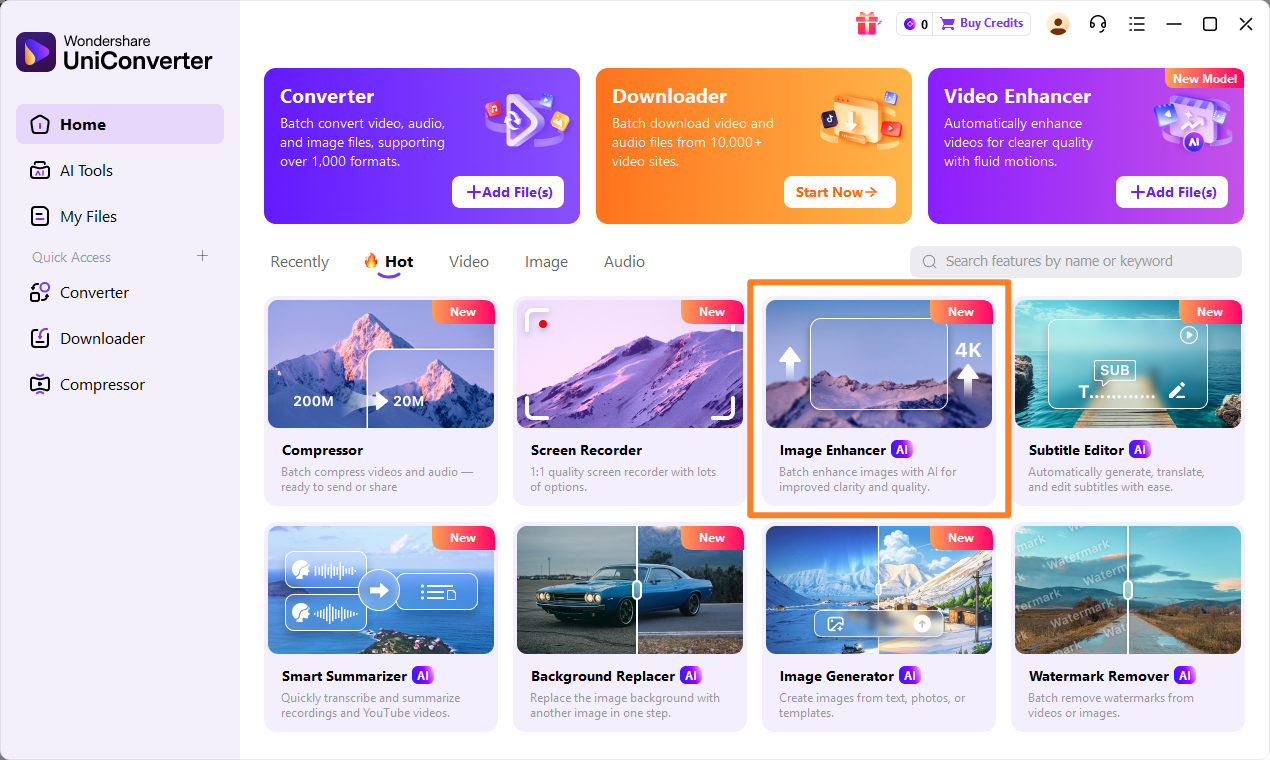
Step 1: Open UniConverter and Choose Image Enhancer
Launch UniConverter on your desktop. On the main interface, navigate to the "AI Lab" section and select the "AI Image Enhancer" tool.
Step 2: Upload the Images
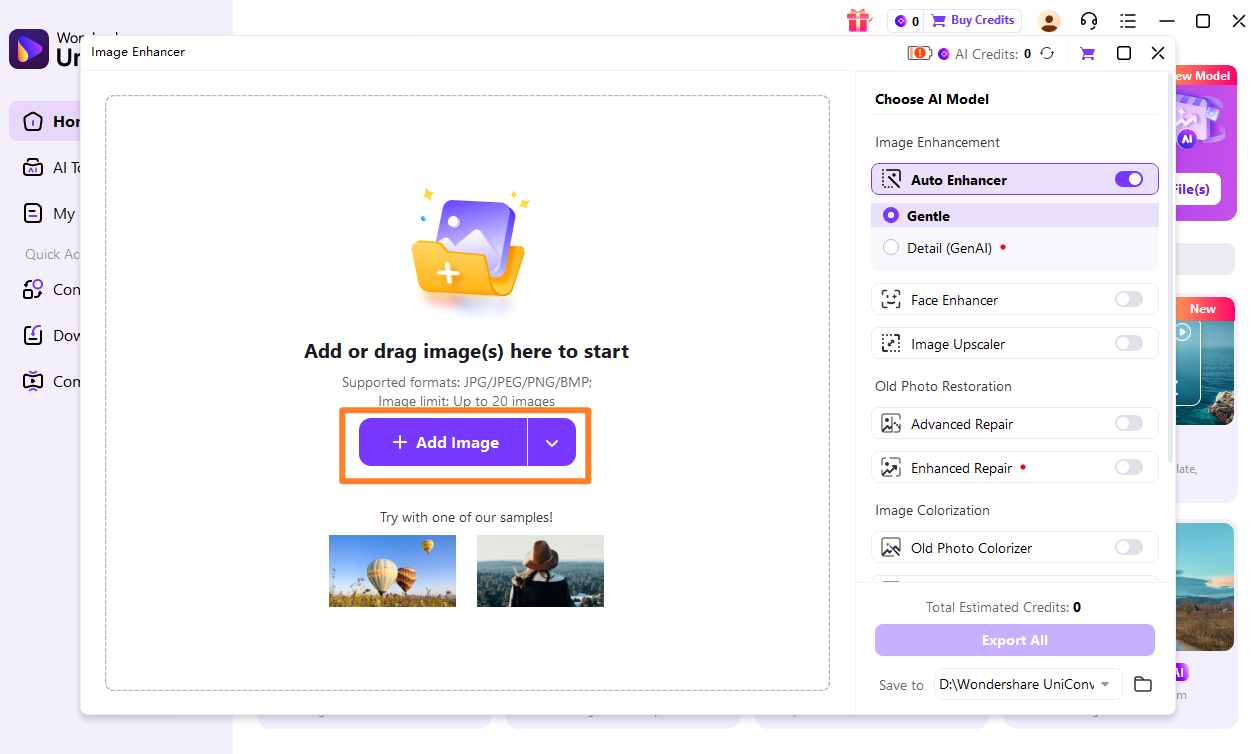
Click on the "Add Files" button or simply drag and drop the images you wish to enhance into the UniConverter window. You can upload multiple images for batch processing.
Step 3: Choose Enhancement Model
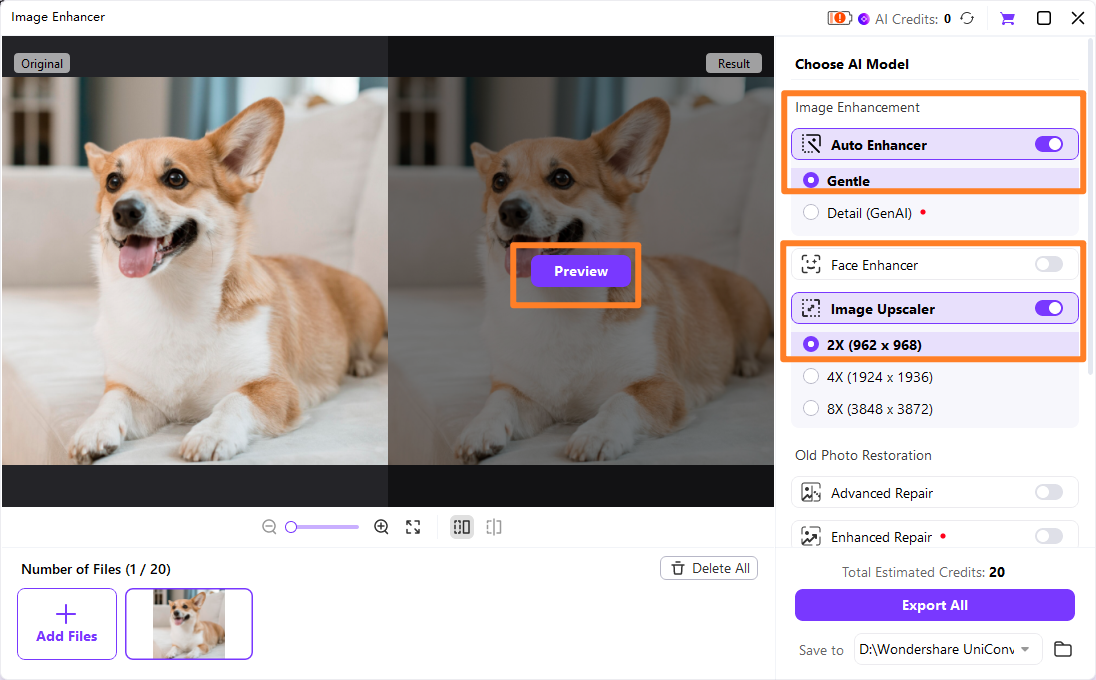
UniConverter offers different enhancement models. Select the one that best suits your needs (e.g., general enhancement, face enhancement, or cartoon enhancement). You can also adjust parameters like resolution upscaling if desired.
Step 4: Preview and Save the Enhanced Images
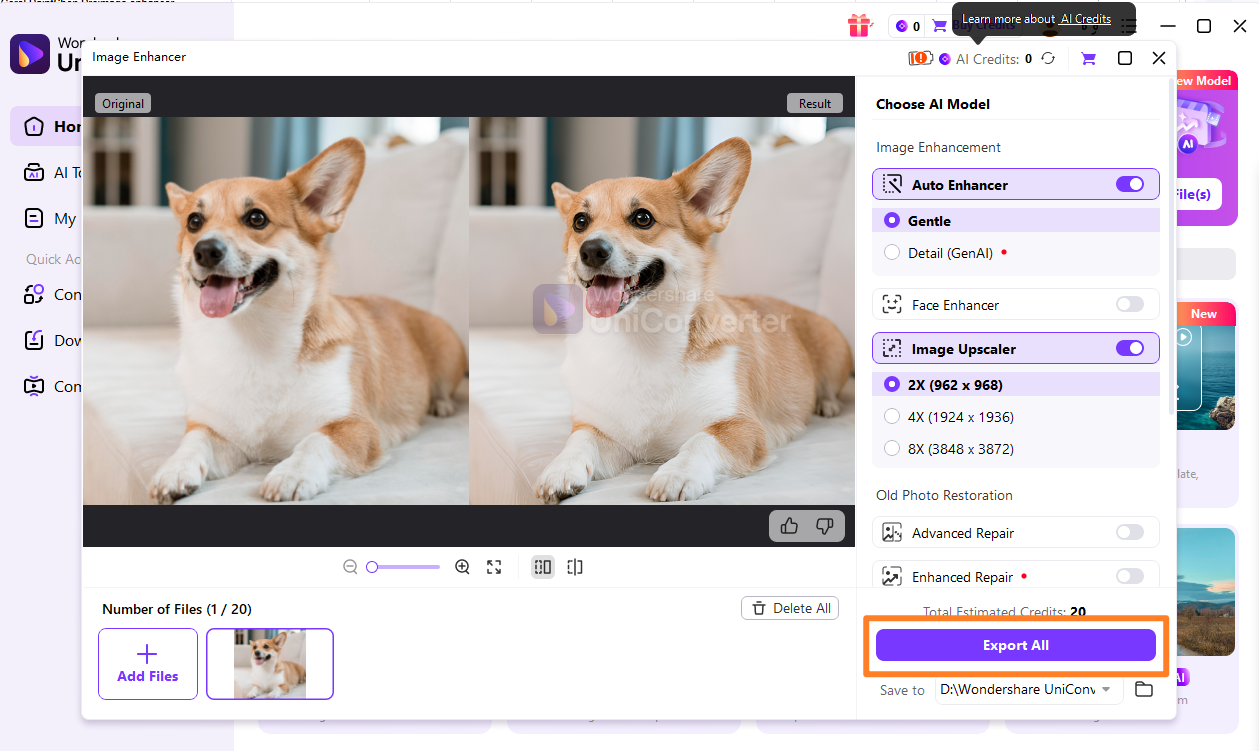
Once the enhancement is complete, you can preview the results. If you're satisfied, choose your output folder and click "Export" to save your enhanced images.

Seeking a Powerful Prisma Photo Editor Alternative?
Part 7: Conclusion
After spending considerable time with Prisma Photo Editor and its competitors, my Prisma Photo Editor image enhancer review boils down to this: it's a fantastic tool for artistic experimentation and social media content if you embrace its unique style. For casual users seeking an artistic flair, it offers an unparalleled array of filters to transform photos into unique art pieces. However, for professionals needing precise control over every pixel, or for those who prioritize traditional photo adjustments like exposure and color correction, Prisma's limited editing tools will be a significant drawback. Budget-conscious creators might find the subscription model a barrier, especially with many desirable features locked behind a paywall. And for users prioritizing data privacy, the cloud-based processing of images is a point of concern. Ultimately, your choice depends on your specific needs and priorities. If you're looking for artistic transformation, Prisma is great; if you need comprehensive, technical image enhancement, alternatives like UniConverter offer a more robust and versatile solution.
Part 8: FAQs about Prisma Photo Editor Image Enhancer
-
1. **Is Prisma Photo Editor free to use?**
Prisma offers a free version with limited filters and features, but a subscription is required for full access to all artistic styles and higher-quality output.
-
2. **How does Prisma Photo Editor enhance images?**
It primarily uses AI-powered neural style transfer to apply artistic filters, transforming photos into various art styles by reinterpreting the image based on a chosen artwork's aesthetic.
-
3. **Can Prisma Photo Editor improve image resolution?**
While it enhances the artistic style, its primary function isn't resolution upscaling. Other tools are better suited for significantly improving image resolution without artistic alteration.
-
4. **Are there any privacy concerns with using Prisma Photo Editor?**
As with many cloud-based apps, images are processed on their servers. Users should review Prisma's privacy policy to understand how their data is handled and stored.
-
5. **What are the best alternatives to Prisma Photo Editor for general image enhancement?**
For general enhancement, consider tools like UniConverter for comprehensive features and local processing, Remini for photo restoration and sharpening, or Adobe Lightroom Mobile for more traditional photo editing, depending on your specific needs.
