
- Value: Prism tools suit basic video conversion and simple enhancements for casual users.
- Comparison: UniConverter offers a superior balance of advanced features, speed, and user-friendliness.
- Decision: For professional needs, invest in robust alternatives like UniConverter, avoiding free tools' pitfalls.
- Pitfalls: Be wary of online converters' privacy risks and free software's bundled adware.
In this article
- Part 1: What is Prism Video Converter and Video Enhancer
- Part 2: Prism Video Converter & Video Enhancer: Core Features, Pros, and Cons
- Part 3: Ideal Users and Use Cases for Prism Video Converter & Video Enhancer
- Part 4: Prism Video Converter & Video Enhancer vs. Alternatives
- Part 5: Risks and Pitfalls to Consider
- Part 6: How to Use UniConverter to Efficiently Enhance Videos
- Part 7: Conclusion
- Part 8: FAQs
This Prism Video Converter Video Enhancer review delves into the functionalities and comparative advantages of these tools within the dynamic landscape of video processing. As digital content creation and consumption surge, the need for efficient video conversion and enhancement solutions has become paramount. This review aims to provide a comprehensive, scenario-based analysis, helping users navigate the myriad options available and make informed decisions about which tool best suits their specific requirements. We will explore their core features, ideal use cases, and pit them against leading alternatives to offer a clear perspective on their strengths and weaknesses.
Part 1: What is Prism Video Converter and Video Enhancer
Prism Video Converter and Video Enhancer are software solutions designed to address common video manipulation needs. Prism Video Converter, developed by NCH Software, focuses primarily on converting video files between various formats, offering a straightforward approach to compatibility issues. Video Enhancer, often a standalone application or a feature within broader video editing suites, aims to improve the visual quality of video footage through processes like upscaling, de-noising, and sharpening. This review will critically examine both, assessing their individual merits and how they perform when considered together as a solution for video processing. The core problem this review addresses is identifying which tool, or combination of tools, offers the most effective and user-friendly experience for different video processing tasks.
The Evolving Demands of Video Processing
* Ubiquitous Content Creation: The proliferation of smartphones and affordable cameras has led to an explosion in user-generated video content.
* Diverse Playback Environments: Videos need to be optimized for a multitude of devices, from small mobile screens to large 4K TVs.
* Desire for High-Quality Visuals: Users increasingly expect crisp, clear, and professional-looking video, even from amateur footage.
* Archival and Restoration Needs: Older video formats and lower-resolution content often require enhancement for modern viewing standards.
Part 2: Prism Video Converter & Video Enhancer: Core Features, Pros, and Cons
Prism Video Converter excels in its primary function of format conversion, supporting a vast array of input and output options. Its interface is designed for ease of use, making it accessible even for novice users. Video Enhancer, on the other hand, focuses on improving visual fidelity, often employing algorithms to sharpen details, reduce noise, and upscale lower-resolution content. When used in conjunction, they offer a basic workflow for preparing and improving video files.
* Extensive Format Support: Converts between virtually all popular video formats (AVI, MP4, WMV, MOV, MPEG, FLV, etc.).
* Batch Processing: Efficiently handles multiple video files simultaneously, saving time for large libraries.
* Basic Editing Tools: Includes fundamental options like trimming, cropping, and adding text overlays.
* Direct Device Conversion: Optimized presets for various devices (phones, tablets, gaming consoles).
* Video Enhancement Filters: Offers basic adjustments for brightness, contrast, and some de-interlacing.
Pros of Prism Video Converter & Video Enhancer
* Efficient batch processing for large video libraries
* Wide range of supported input and output formats
* User-friendly interface for quick conversions and basic enhancements
Cons of Prism Video Converter & Video Enhancer
* Limited advanced video enhancement capabilities
* Potential for quality degradation with aggressive compression settings
Part 3: Ideal Users and Use Cases for Prism Video Converter & Video Enhancer
Prism Video Converter and Video Enhancer are best suited for individuals who require straightforward video processing without the complexity of professional editing suites. Their intuitive interfaces and focused feature sets cater to everyday users and those with specific, non-intensive video tasks. They are not designed for high-end post-production but rather for practical, quick solutions.
Best Use Case: Quick Conversions and Basic Adjustments for Everyday Users
For the average user, these tools are invaluable. Imagine you've downloaded a video in an obscure format that your smartphone can't play. Prism Video Converter quickly transforms it into a compatible MP4. Similarly, if you've recorded a family video that's a bit dark or grainy, the basic enhancement features can offer a quick fix before sharing it online or with friends. This includes converting downloaded videos for mobile device playback and resizing videos for email attachments or social media sharing.
Limited Use Case: Professional Video Production and High-End Enhancement
These tools fall short for professional video production workflows. They lack the sophisticated color grading, advanced noise reduction algorithms, and precise control required for broadcast-quality content. Restoring old, low-resolution footage to broadcast quality or applying complex visual effects and detailed color grading demands dedicated professional software like Adobe Premiere Pro or DaVinci Resolve, which offer a much deeper feature set and greater creative control.
Part 4: Prism Video Converter & Video Enhancer vs. Alternatives
When evaluating Prism Video Converter and Video Enhancer, it's crucial to compare them against other market leaders to understand their competitive positioning. While they offer a solid foundation for basic tasks, alternatives often provide more specialized features or a more comprehensive all-in-one solution. This comparison highlights where each product excels and where users might need to look elsewhere.
Comparison Table: Prism Video Converter & Video Enhancer vs. Leading Alternatives
| Feature/Product | Prism Video Converter & Video Enhancer | UniConverter | HandBrake | Adobe Premiere Pro |
| Video Conversion Speed | Good | Excellent | Good | N/A (Editor) |
| Enhancement Features | Basic | Advanced | Basic | Professional |
| Ease of Use | High | High | Moderate | Low |
| Price | Affordable | Mid-range | Free | Premium (Subscription) |
| Supported Formats | Extensive | Extensive | Extensive | Extensive |
| Customer Support | Basic | Excellent | Community | Excellent |
| Security | Standard | High | Open Source | High |
Key Differentiators: What Sets Them Apart
Prism Video Converter and Video Enhancer stand out for their simplicity and affordability, making them accessible entry points for basic video tasks. UniConverter differentiates itself with a balance of advanced features, speed, and user-friendliness, offering a more comprehensive solution for a mid-range price. HandBrake is a powerful free option, but its interface can be less intuitive for beginners. Adobe Premiere Pro is the industry standard for professional editing and enhancement, offering unparalleled control and features, but at a premium price and with a steeper learning curve. For users prioritizing ease of use and basic functionality at a low cost, Prism and Video Enhancer are viable. For a more robust, all-in-one solution with better enhancement, UniConverter is a strong contender.
Part 5: Risks and Pitfalls to Consider
While video conversion and enhancement tools offer undeniable convenience, users must be aware of potential risks and pitfalls, especially when opting for free or less reputable software. These issues can range from privacy breaches to compromised video quality, impacting the overall user experience and potentially leading to frustration.
Privacy Concerns with Online Converters
Many free online video converters require users to upload their video files to a third-party server. This process can expose sensitive personal or proprietary content to potential privacy breaches. Users should be cautious about the terms of service and privacy policies of such platforms, as their data might be stored, analyzed, or even shared without explicit consent. For business or personal sensitive content, desktop software is generally a safer choice.
Unwanted Bundled Software or Advertisements
A common tactic for free software, especially desktop applications, is to bundle unwanted programs or adware during installation. These can range from browser toolbars to system optimizers that slow down your computer or display intrusive advertisements. Users must pay close attention during the installation process, opting out of any additional software that is not explicitly part of the desired application.
Potential for Loss of Original Video Quality
While video enhancers promise improved quality, aggressive compression settings or poorly optimized algorithms in converters can lead to a noticeable degradation of the original video. This can manifest as pixelation, artifacts, or a loss of fine detail, especially when converting between formats or attempting significant upscaling. It's crucial to experiment with settings and compare the output with the original to ensure satisfactory results.
Limited Customer Support for Free Versions
Free versions of software, or even some affordable paid options, often come with minimal to no dedicated customer support. This means that if users encounter bugs, compatibility issues, or need assistance with specific features, they might be left to troubleshoot on their own or rely on community forums. For critical tasks, reliable customer support can be a significant factor.
Inconsistent Enhancement Quality
The effectiveness of video enhancement features can vary wildly between different tools. Some "enhancers" merely apply basic filters that don't genuinely improve quality, while others might produce inconsistent results across different types of footage. Users should manage expectations and test the enhancement capabilities thoroughly before committing to a particular tool for important projects.
Part 6: How to Use UniConverter to Efficiently Enhance Videos
When other tools fall short in batch processing, stable enhancement, or delivering noticeable quality improvements, UniConverter emerges as a robust alternative. It addresses the common frustrations of inconsistent results, limited format support, and intrusive advertisements often found in free or less comprehensive solutions. UniConverter offers a seamless, all-in-one experience for video conversion and enhancement, leveraging GPU acceleration for speed and ensuring lossless quality, even when dealing with large volumes of files. Its clean interface and powerful features make it an ideal choice for users seeking a reliable and efficient video processing solution, free from the common pitfalls of other software.
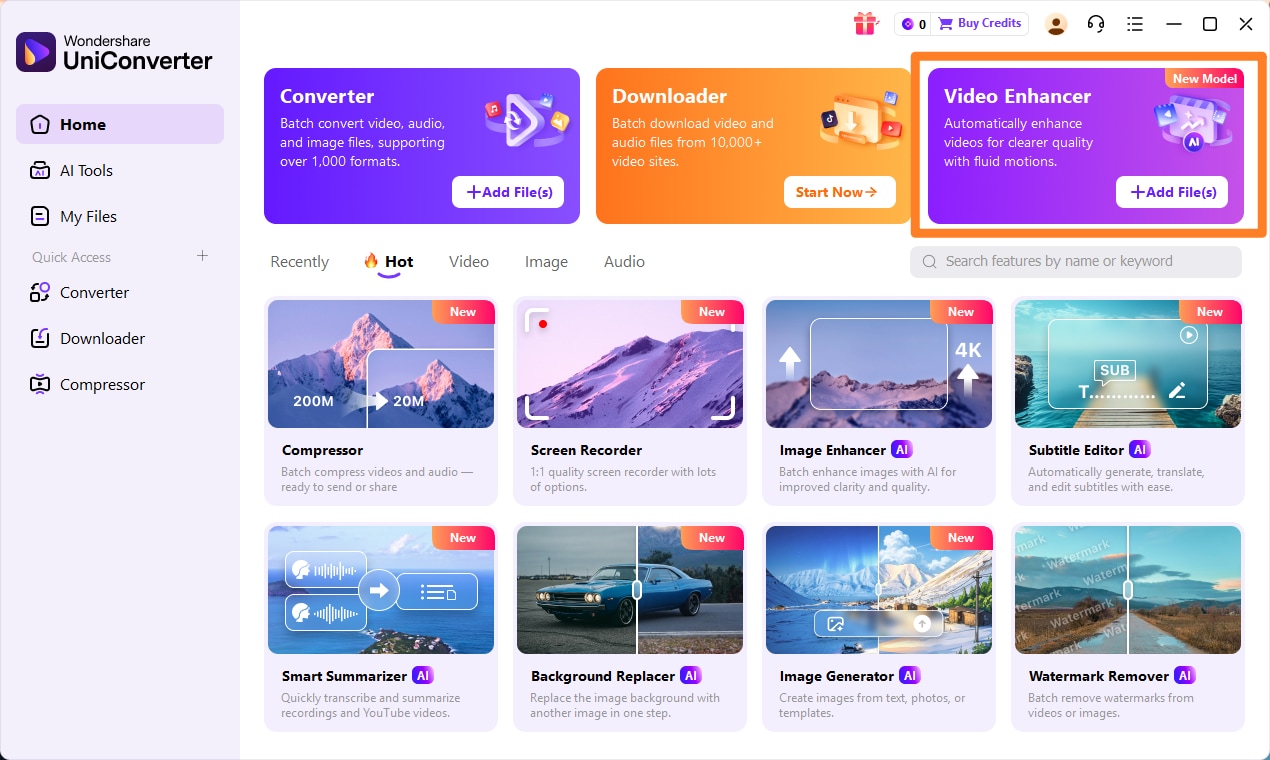
Step 1: Open UniConverter and Choose Video Enhancer
Launch UniConverter on your computer. From the main interface, navigate to the "AI Lab" section and select the "Video Enhancer" tool.
Step 2: Upload the Videos
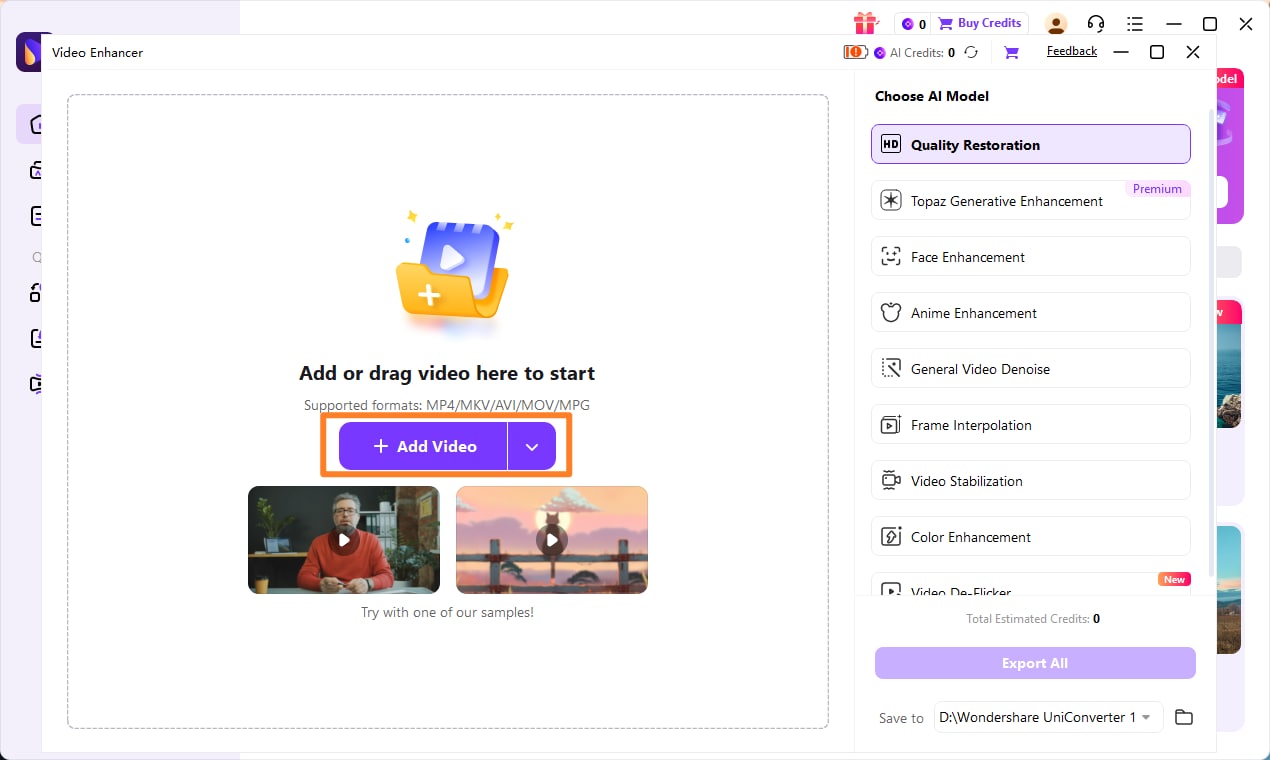
Click on the "Add Files" button or drag and drop your video files directly into the UniConverter window. You can add multiple videos for batch processing.
Step 3: Choose Enhancement Model
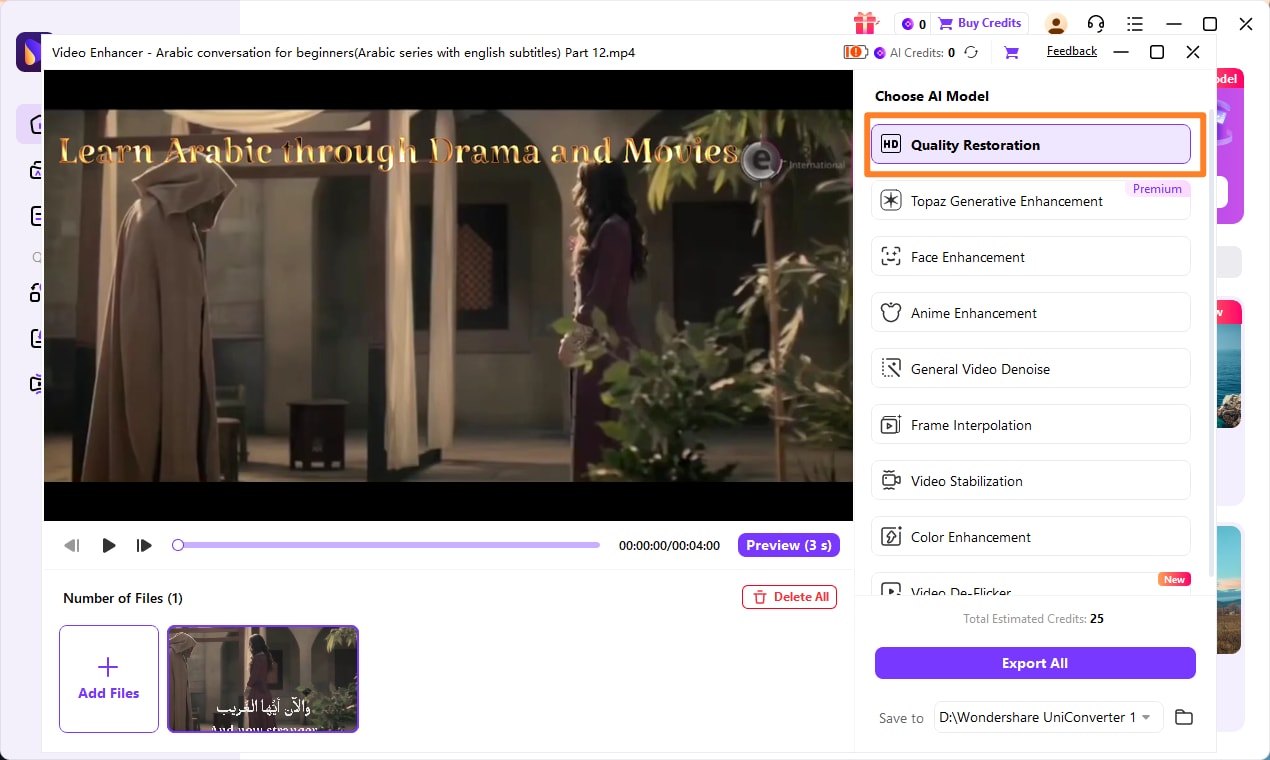
Once your videos are loaded, select the desired enhancement model (e.g., AI Upscale, Denoise, Deblur) and adjust any specific parameters like output resolution or quality settings. For instance, you might want to use a background replacer to change the visual context of your video, or explore options for a video background changer to achieve a more dynamic look.
Step 4: Preview and Save the Enhanced Video
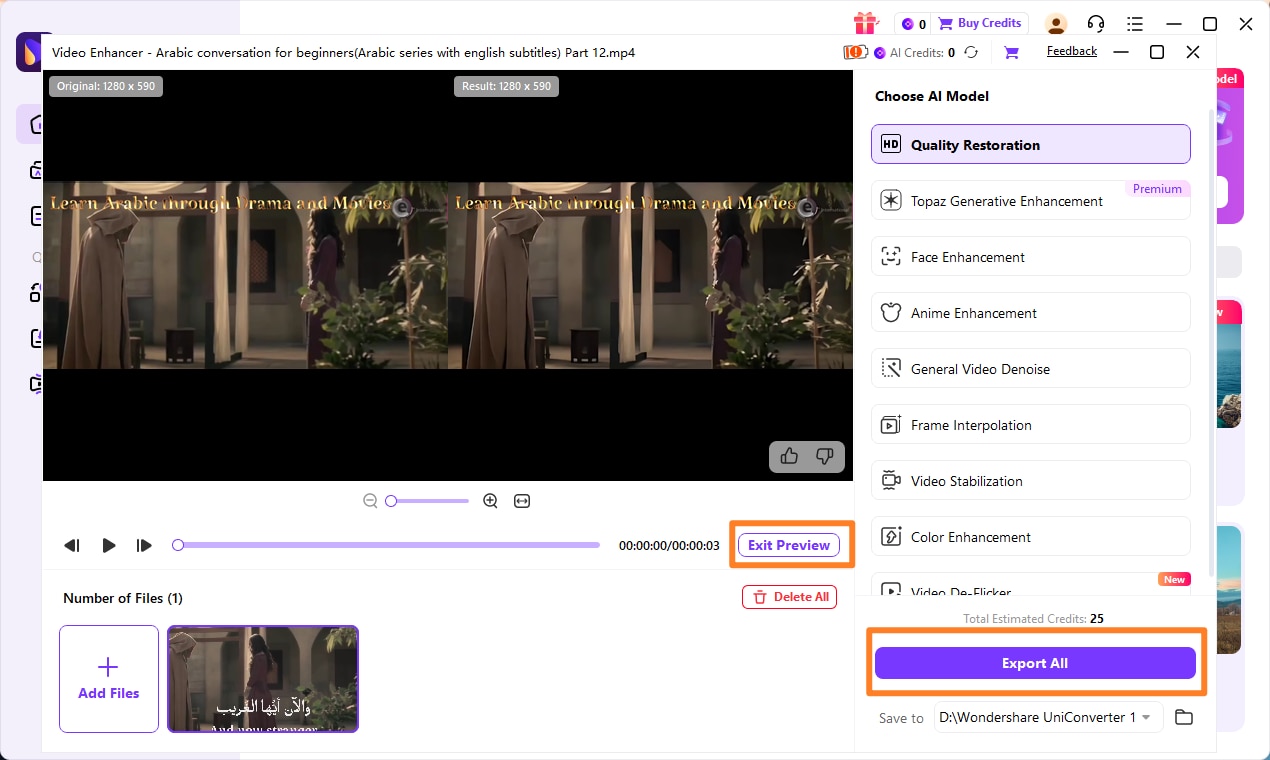
Before finalizing, use the "Preview" function to compare the enhanced video with the original. Once satisfied, click "Export" to save your high-quality, enhanced video to your chosen destination. You can also ensure high-definition background remover results for a polished final product, or remove background without losing quality to maintain visual integrity.

Seeking a Better Alternative to Prism Video Converter?
Part 7: Conclusion
In conclusion, this Prism Video Converter Video Enhancer review highlights that while Prism Video Converter and Video Enhancer offer accessible and affordable solutions for basic video conversion and rudimentary enhancement, their capabilities are best suited for casual users with straightforward needs. They excel in quick format changes and minor visual adjustments, making them ideal for everyday tasks like preparing videos for mobile devices or social media. However, for content creators, professionals, or anyone requiring advanced video enhancement, precise control, or comprehensive editing features, these tools fall short. The limitations in sophisticated enhancement algorithms, potential for quality degradation with aggressive settings, and lack of professional-grade features necessitate looking towards more robust alternatives. UniConverter, for instance, presents a compelling middle-ground, offering a balance of advanced features, speed, and user-friendliness without the premium cost or steep learning curve of professional suites. Ultimately, the choice depends on individual requirements, budget, and the desired level of quality and control. For simple, quick tasks, Prism and Video Enhancer are adequate; for anything more demanding, investing in a more capable solution is advisable.
Part 8: FAQs
-
1. Is Prism Video Converter free to use?
Prism Video Converter offers a free trial version with limited features, and a paid version for full functionality.
-
2. Can Video Enhancer truly improve video quality?
Video Enhancer can improve perceived quality by sharpening, de-noising, and upscaling, but it cannot create information that isn't present in the original footage.
-
3. What are the best alternatives to Prism Video Converter?
Popular alternatives include UniConverter, HandBrake, and VLC Media Player for conversion, and Adobe Premiere Pro or DaVinci Resolve for professional enhancement.
-
4. Is it safe to use online video converters?
While convenient, online converters can pose privacy risks and may have limitations on file size and conversion speed. Desktop software is generally more secure.
-
5. How do I choose the right video converter and enhancer for my needs?
Consider your primary use cases (e.g., simple conversion, advanced editing), budget, desired features, and the level of technical expertise required.
