
- Polarr Overview: Polarr Image Enhancer offers advanced AI photo editing with granular control, ideal for detailed enhancements.
- AI vs. Manual: Polarr balances AI automation with extensive manual controls, unlike simpler one-click enhancers.
- Target Audience: Best for professional photographers and enthusiasts needing deep customization, not quick social media edits.
- Polarr vs. Alternatives: Offers more granular AI control than Lightroom, more precision than Luminar Neo, and broader editing than Topaz Photo AI.
- Potential Pitfalls: Beware of subscription costs, steep learning curve, data privacy with cloud sync, and risk of over-editing.
- UniConverter Alternative: UniConverter provides comprehensive media enhancement (image/video), offering stability, speed, and broad format support beyond Polarr's image focus.
In this article
- Part 1: What is Polarr Image Enhancer?
- Part 2: Polarr Image Enhancer: Core Features, Pros, and Cons
- Part 3: Target Users and Use Cases
- Part 4: Polarr Image Enhancer vs. Alternatives
- Part 5: Risks and Pitfalls When Using Polarr Image Enhancer
- Part 6: How to Use UniConverter for Comprehensive Media Enhancement
- Part 7: Conclusion
- Part 8: FAQs
The digital age has transformed how we capture and share memories, making photo editing an indispensable part of our lives. From quick social media posts to professional portfolios, the demand for tools that can elevate image quality has never been higher. This is where AI-powered image enhancers step in, promising to simplify complex editing tasks and deliver stunning results with minimal effort. Among these, Polarr image enhancer has carved out a niche for itself, offering a blend of advanced AI capabilities and granular control. In this review, I'll dive deep into Polarr's offerings, compare it with its competitors, and help you decide if it's the right tool for your photo editing journey.
Part 1: What is Polarr Image Enhancer?
Polarr Image Enhancer is a sophisticated photo editing application that leverages artificial intelligence to provide users with powerful tools for image manipulation and enhancement. Unlike traditional photo editors that often require extensive manual adjustments, Polarr aims to streamline the process by offering AI-driven suggestions and automated corrections. My initial impression was that it was just another filter app, but I quickly realized its depth. It’s designed for those who want more than just basic tweaks but aren't quite ready for the steep learning curve of professional-grade software.
The Rise of AI in Photo Editing
The integration of AI into photo editing has been a game-changer, addressing several key user pain points:
* Time-consuming manual edits: AI can automate repetitive tasks, saving precious time.
* Lack of advanced editing skills: AI democratizes complex techniques, making them accessible to everyone.
* Inconsistent results: AI algorithms can ensure more uniform and high-quality enhancements across multiple images.
* Overwhelming feature sets: AI can simplify interfaces by intelligently suggesting tools and adjustments.
Part 2: Polarr Image Enhancer: Core Features, Pros, and Cons
Polarr Image Enhancer stands out with its robust set of features, making it a versatile tool for various editing needs. I've spent a good amount of time exploring its capabilities, and here's what I've found.
* AI-powered auto-enhancement: This is a lifesaver for quick fixes, intelligently adjusting exposure, contrast, and color balance.
* Customizable filters and presets: Beyond the standard filters, Polarr allows for deep customization, letting me create and save my own unique styles.
* Advanced selective adjustments: I can precisely target specific areas of an image for editing, which is crucial for detailed work.
* Batch processing: For photographers dealing with large sets of images, this feature is incredibly efficient.
* Cross-platform availability and cloud synchronization: I can start editing on my desktop and seamlessly continue on my mobile device, which is super convenient.
Pros
* Advanced AI-powered adjustments for various image types: The AI is surprisingly smart, adapting well to different scenes.
* Highly customizable filters and presets: This is where Polarr truly shines for me; the creative control is immense.
* Cross-platform availability and cloud synchronization: My workflow is never interrupted, no matter which device I'm on.
Cons
* Steep learning curve for beginners: I initially found it a bit overwhelming with all the options.
* Subscription model for full feature access: While common, it's still a con for those who prefer one-time purchases.
Part 3: Target Users and Use Cases
Polarr Image Enhancer isn't for everyone, but it certainly caters to a specific audience with its unique blend of AI and manual control. I've found it particularly useful in certain scenarios.
Best Use Case: Professional Photographers and Enthusiasts Seeking Granular Control
For me, as someone who appreciates fine-tuning every detail, Polarr is a fantastic tool. If you're a professional photographer or a serious enthusiast who wants to go beyond basic edits and dive into intricate adjustments, Polarr offers the depth you need. Its AI can give you a great starting point, but the real power lies in the ability to manually tweak every aspect, from color grading to selective enhancements. I use it for my landscape photography where subtle changes can make a huge difference.
Limited Use Case: Quick Edits for Social Media on Mobile Devices
While Polarr is available on mobile, if you're just looking for a quick filter or a simple crop for your Instagram story, it might be overkill. The interface, even on mobile, can feel a bit cluttered compared to simpler, more intuitive apps designed purely for social media. I've tried using it for quick edits, but often found myself reaching for a more streamlined app when time was of the essence. It's like bringing a high-end DSLR to a point-and-shoot situation – you can do it, but it's not the most efficient.
Part 4: Polarr Image Enhancer vs. Alternatives
When it comes to image enhancement, Polarr isn't the only player in the game. I've had experience with several alternatives, and here's how Polarr stacks up against some of the big names.
| Feature/Product | Polarr Image Enhancer | Adobe Lightroom | Luminar Neo | Topaz Photo AI |
| AI Enhancement | Advanced, customizable | Integrated, less granular | Strong, creative | Focus on quality/denoise |
| User Interface | Complex, feature-rich | Industry standard | Modern, intuitive | Simple, task-oriented |
| Price Model | Subscription | Subscription | One-time/Subscription | One-time |
| Target Audience | Pros, enthusiasts | Pros, serious amateurs | Amateurs, pros | Quality-focused users |
| Processing Speed | Good, depends on device | Fast, optimized | Moderate to fast | Fast, GPU-accelerated |
| Output Quality | High, professional | Excellent, industry-standard | Very high, artistic | Exceptional, detail-oriented |
| Ease of Use | Moderate to difficult | Moderate | Easy to moderate | Very easy |
| Customer Support | Email, community forum | Extensive, tutorials | Responsive, online resources | Good, online resources |
| Security | Cloud sync, standard | Cloud sync, robust | Local storage, standard | Local storage, standard |
Key Differentiators: Granular Control vs. Automated Simplicity
Polarr's strength lies in its granular control over AI enhancements. While Adobe Lightroom offers robust editing, its AI is often more integrated and less open to fine-tuning. Luminar Neo, on the other hand, leans heavily into creative AI features, making it great for artistic effects but sometimes less precise. Topaz Photo AI excels at specific tasks like noise reduction and upscaling, prioritizing raw image quality. For me, if I want to dictate every aspect of the AI's influence, Polarr is my go-to. However, if I'm looking for a more automated, one-click solution for specific issues, Topaz Photo AI often does a better job. UniConverter, as we'll discuss later, offers a different kind of comprehensive media enhancement, focusing on versatility beyond just image editing.
Part 5: Risks and Pitfalls When Using Polarr Image Enhancer
While Polarr is a powerful tool, it's not without its potential downsides. From my experience, there are a few things to be aware of before diving in headfirst.
Data Privacy Concerns with Cloud Sync
The convenience of cloud synchronization is a double-edged sword. While it’s great to access my edits anywhere, I've always been a bit wary about uploading all my personal photos to the cloud. It’s important to understand Polarr’s privacy policy and be comfortable with how your data is handled. For sensitive projects, I often prefer to work offline or ensure I have local backups.
Potential for Over-Editing and Unnatural Results
With great power comes great responsibility. Polarr's extensive customization options mean it's incredibly easy to overdo it. I've definitely fallen into the trap of pushing sliders too far, resulting in images that look artificial or overly processed. It takes a discerning eye and some practice to achieve natural-looking enhancements, especially with the AI features.
Subscription Fatigue and Cost-Effectiveness
Like many modern software, Polarr operates on a subscription model for full access. While the monthly fee might seem small, it adds up over time. If you're a casual editor, you might find yourself questioning the cost-effectiveness, especially if you're already subscribed to other creative tools. I always recommend evaluating your actual usage before committing to a long-term subscription.
Learning Curve Frustration for Casual Users
As I mentioned earlier, the learning curve can be steep. For someone just wanting to quickly brighten a photo, Polarr's interface can be overwhelming. I've seen friends get frustrated trying to navigate all the options when they just wanted a simple edit. If you're not prepared to invest some time learning the ropes, you might find yourself giving up before unlocking its full potential.
Output Quality Limitations for Extreme Enhancements
While Polarr is excellent for enhancing existing details, it's not magic. If your source image is very low quality or extremely underexposed, even Polarr's AI will struggle to produce a truly high-quality output. I've tried to rescue some really bad photos, and while Polarr can improve them, there's a limit to what any software can do without sufficient original data.
Part 6: How to Use UniConverter for Comprehensive Media Enhancement
Sometimes, Polarr's specific focus on image enhancement might not cover all your media needs, or you might encounter situations where its batch processing or enhancement stability isn't quite what you need, especially for a large volume of diverse media files. This is where a comprehensive tool like UniConverter comes into play. UniConverter is an all-in-one media solution that offers robust image enhancement capabilities alongside video conversion, editing, and compression, making it a truly versatile choice. It's perfect for those who need a reliable, ad-free tool with broad format support, GPU acceleration for speed, and stable, lossless batch enhancement. If you're looking to enhance video quality or even upscale images to 4K, UniConverter provides powerful features. For instance, you can easily fix pixelated videos or unblur a video with its advanced AI tools.
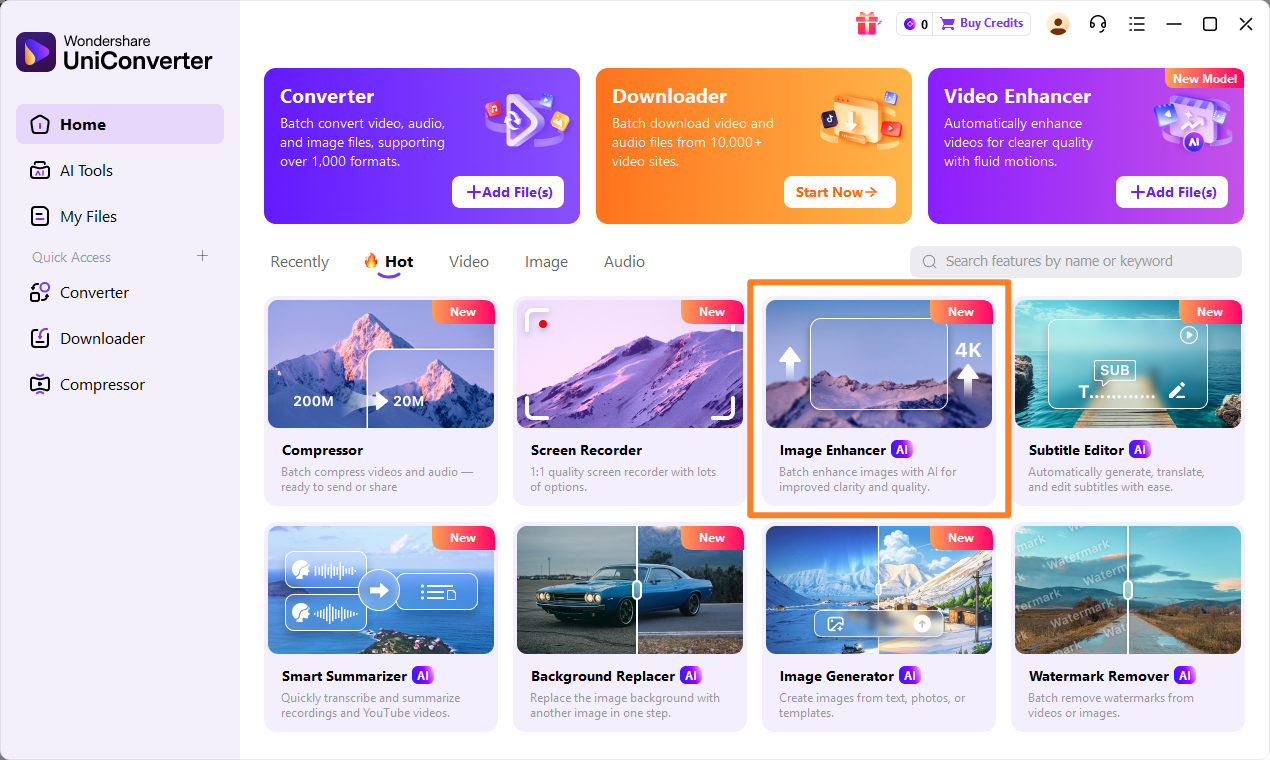
Step 1: Open UniConverter and Choose Image Enhancer
Launch UniConverter on your computer. On the main interface, navigate to the "Toolbox" section and select the "AI Lab" feature. From there, choose "AI Image Enhancer."
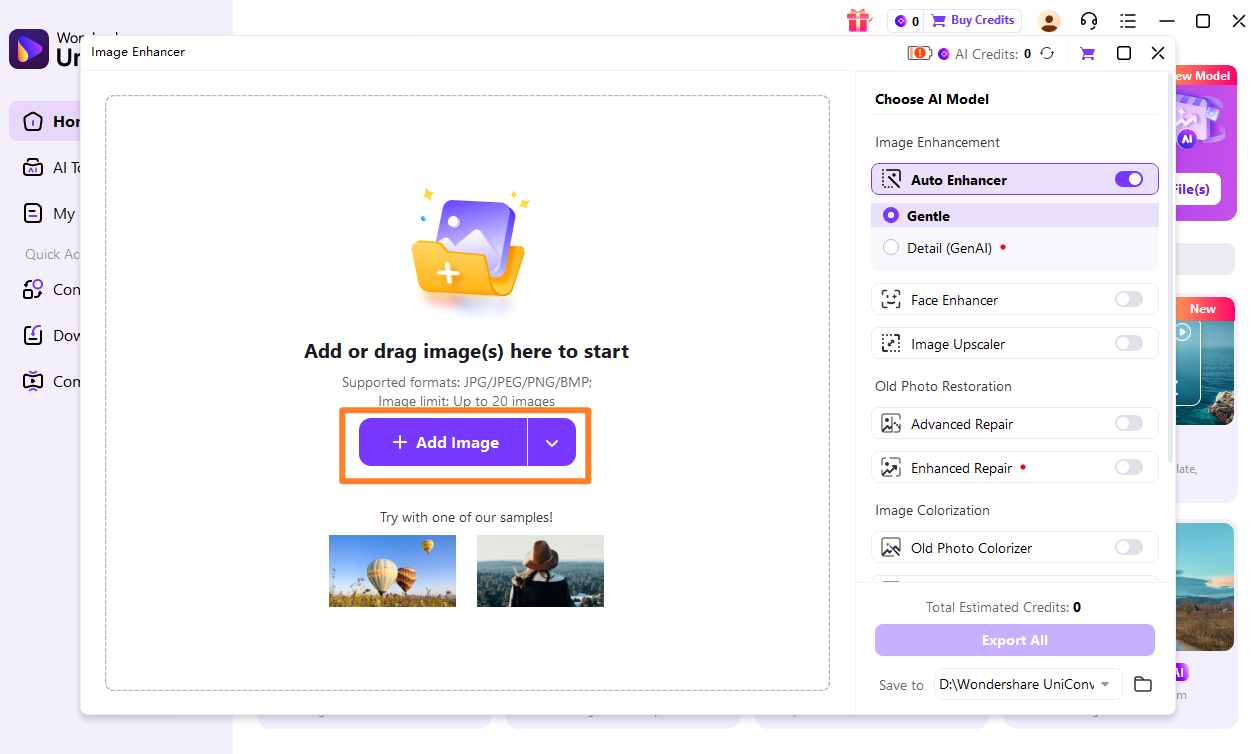
Step 2: Upload the Images
Click on the "Add Files" button or simply drag and drop the images you wish to enhance into the UniConverter window. You can add multiple images for batch processing.
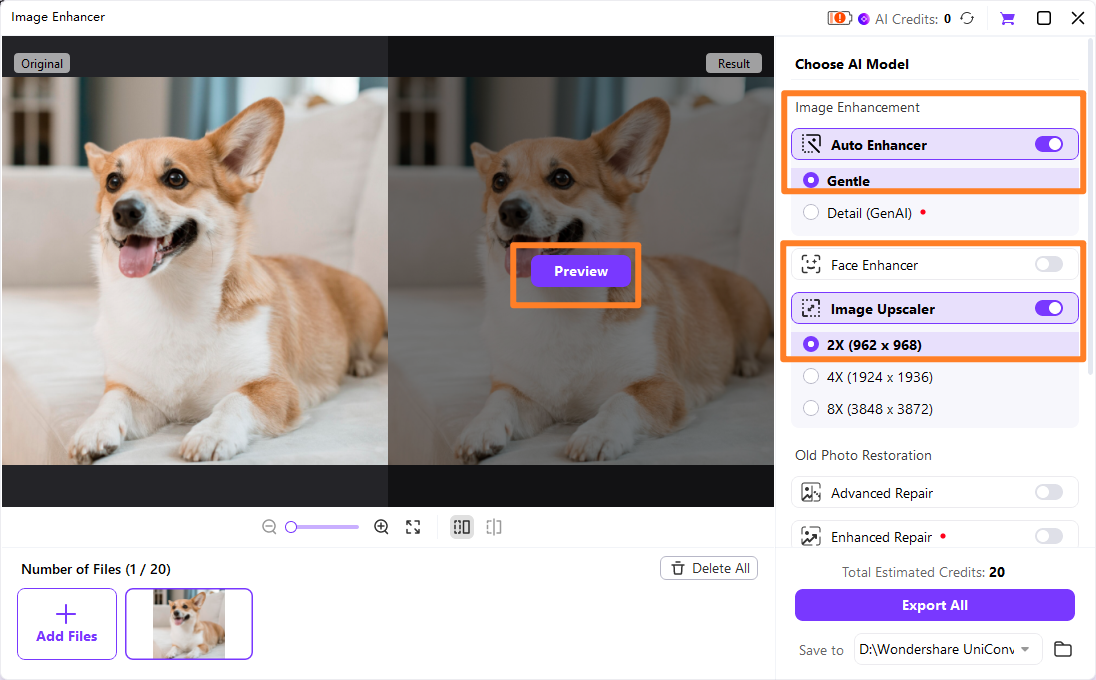
Step 3: Choose Enhancement Model
UniConverter offers various AI enhancement models. Select the model that best suits your image enhancement needs, such as "General Enhancement" or "Portrait Enhancement." You can also adjust intensity settings.
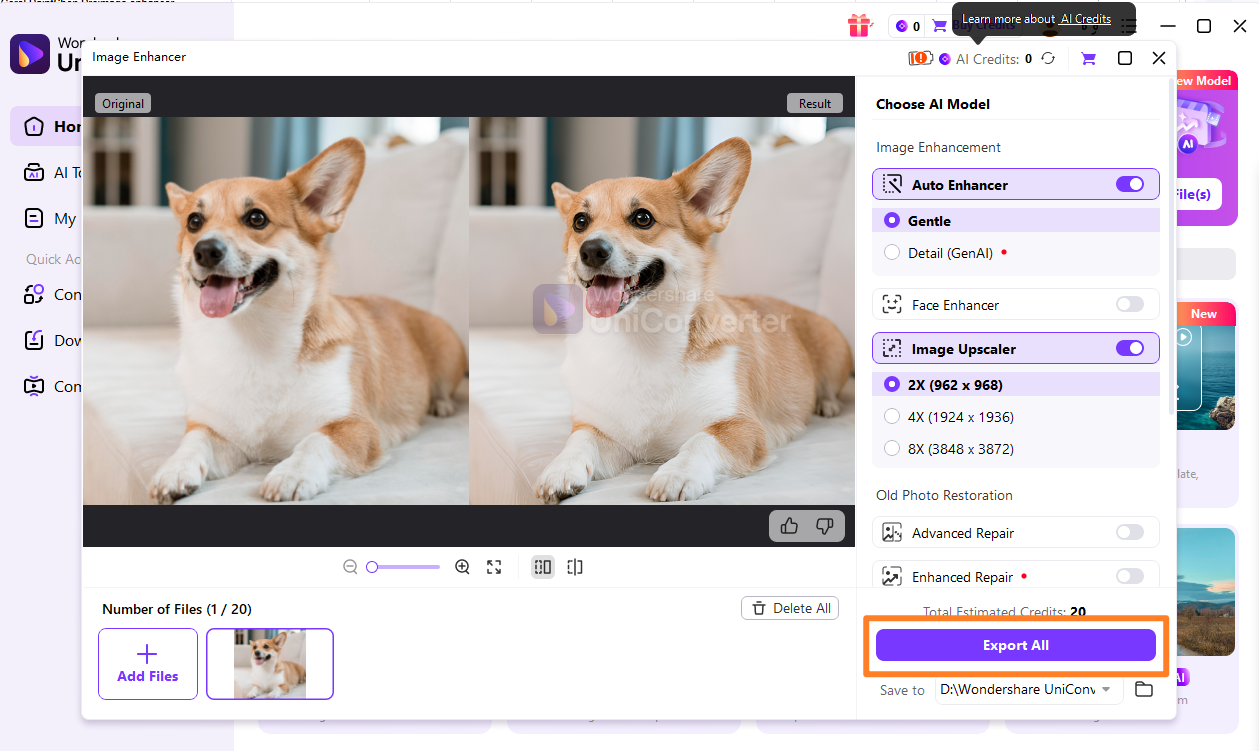
Step 4: Preview and Save the Enhanced Images
After selecting the enhancement model, UniConverter will process your images. You can preview the enhanced results side-by-side with the original. Once satisfied, click "Export" to save your high-quality enhanced images to your desired location.

Seeking a Polarr Alternative for Image Enhancement?
Part 7: Conclusion
After spending considerable time with Polarr image enhancer review, I can confidently say it's a powerful and versatile tool, especially for those who appreciate a high degree of control over their photo edits. For professional photographers and serious enthusiasts who want to leverage AI for a head start but still demand the ability to fine-tune every detail, Polarr offers an unparalleled experience. Its cross-platform synchronization and extensive customization options make it a strong contender in the advanced photo editing space. However, for beginners or those looking for quick, simple edits for social media, the learning curve and feature richness might be more than you need. In such cases, simpler mobile apps or even the more automated solutions like Topaz Photo AI might be a better fit. And if your workflow extends beyond just image enhancement to include video editing, conversion, and compression, then a comprehensive media suite like UniConverter presents itself as an excellent all-in-one solution, offering stability, speed, and a wide array of tools that Polarr doesn't cover. Ultimately, your choice should align with your skill level, specific editing needs, and willingness to invest time in mastering a feature-rich application.
Part 8: FAQs
-
1. Is Polarr Image Enhancer free to use?
Polarr offers a free version with limited features, primarily for basic edits and a taste of its capabilities. For full access to all AI tools, advanced adjustments, and cloud synchronization, a subscription is required.
-
2. How does Polarr's AI compare to other image enhancers?
Polarr's AI stands out by offering highly customizable adjustments. While many enhancers provide automated "one-click" solutions, Polarr gives you more granular control over how the AI influences your image, allowing for a more personalized and refined result compared to some purely automated alternatives.
-
3. Can Polarr enhance video as well as images?
Polarr is primarily designed as an image enhancer. While it excels at photo editing, it does not offer video enhancement capabilities. For video editing and enhancement, dedicated tools like UniConverter or Adobe Premiere Pro would be more suitable.
-
4. Is Polarr suitable for professional print quality?
Yes, with proper usage and high-resolution source images, Polarr can absolutely produce professional-grade results suitable for printing. Its advanced editing tools and precise controls allow for the necessary adjustments to meet print quality standards, provided the original image quality is sufficient.
-
5. What are the system requirements for Polarr Image Enhancer?
Polarr is available on various platforms including desktop (Windows, macOS) and mobile (iOS, Android). Generally, a modern device with a decent processor and sufficient RAM (at least 8GB for desktop, 4GB for mobile) is recommended for smooth performance, especially when dealing with large files or complex AI operations.
