
- Pixop Defined: Cloud-based AI video enhancer for upscaling, noise reduction, and color correction.
- Pros & Cons: Offers professional AI results and cloud convenience; costly subscription, no offline use.
- Ideal Use: Best for archival restoration and large projects; unsuitable for real-time live streaming.
- Pixop vs. Alternatives: Cloud-native Pixop for scalability; UniConverter for versatile, desktop-based enhancement.
- Risks to Consider: Data privacy, potential over-enhancement, cost for small projects, and internet dependency.
- UniConverter Solution: Efficiently enhance videos with UniConverter's stable, feature-rich, desktop-based AI tools.
In this article
- Part 1: What is Pixop Video Enhancer?
- Part 2: Pixop Video Enhancer: Core Features, Pros, and Cons
- Part 3: Pixop Video Enhancer: Ideal Users and Use Cases
- Part 4: Pixop Video Enhancer and Alternatives Comparison
- Part 5: Risks and Pitfalls to Consider
- Part 6: How to Use UniConverter to Efficiently Enhance Videos
- Part 7: Conclusion
- Part 8: FAQs
The digital age has ushered in an unprecedented demand for high-quality visual content. From filmmakers restoring archival footage to content creators striving for pristine visuals, the need for effective video enhancement tools has never been greater. This Pixop Video Enhancer review delves into one such solution, Pixop, an AI-powered platform designed to breathe new life into video assets. This comprehensive review will explore Pixop's core features, analyze its strengths and weaknesses, and compare it against key competitors, providing a scenario-based assessment to help users make informed decisions for their video enhancement needs. We will also highlight potential pitfalls and offer alternative solutions for various use cases.
Part 1: What is Pixop Video Enhancer?
Pixop Video Enhancer emerges as a prominent player in the burgeoning field of AI-driven video enhancement. It's a cloud-based platform that leverages sophisticated artificial intelligence and machine learning algorithms to automatically improve video quality, performing tasks such as upscaling, noise reduction, deinterlacing, and color correction. Unlike traditional desktop software that relies on local hardware, Pixop processes videos entirely in the cloud, offering a scalable and accessible solution for individuals and businesses alike. This review aims to dissect Pixop's capabilities, evaluate its performance in diverse scenarios, and position it within the competitive landscape of video enhancement tools.
The Rise of AI-Powered Video Enhancement
The demand for high-quality video content has surged, driven by:
* Archival Restoration Needs: Preserving and enhancing historical footage for documentaries and cultural heritage projects.
* Content Creation Standards: Meeting the ever-increasing visual fidelity expectations across platforms like YouTube, Netflix, and broadcast television.
* Accessibility and Efficiency: The desire for automated, user-friendly solutions that don't require extensive technical expertise or powerful local computing resources.
Part 2: Pixop Video Enhancer: Core Features, Pros, and Cons
Pixop Video Enhancer stands out with its robust set of features designed to tackle various video quality issues. Its core capabilities include AI-driven upscaling, which intelligently increases video resolution without significant loss of detail, and advanced noise reduction, effectively cleaning up grainy or artifact-ridden footage. The platform also offers deinterlacing for older interlaced videos, color correction to restore vibrancy, and artifact removal to eliminate compression issues. Its cloud-based nature means users can access powerful processing without investing in high-end hardware.
Pros:
* AI-driven upscaling and noise reduction for professional-grade results.
* Cloud-based processing, eliminating the need for powerful local hardware.
* Wide range of supported video formats and resolutions.
Cons:
* Subscription-based pricing can be costly for infrequent users.
* Limited offline functionality and reliance on internet connectivity.
Part 3: Pixop Video Enhancer: Ideal Users and Use Cases
Pixop Video Enhancer is particularly well-suited for users who require high-quality, automated video enhancement without the burden of managing powerful local hardware. Its cloud-based infrastructure makes it an excellent choice for professionals and organizations dealing with large volumes of video data or those needing specialized AI models for specific enhancement tasks.
Best Use Case: Archiving and Restoring Vintage Footage
* Scenario: A documentary filmmaker needs to enhance decades-old archival footage for a new production, requiring significant noise reduction, deinterlacing, and upscaling to modern resolutions without introducing artifacts. Pixop's specialized AI models for historical content are ideal here, as they are trained to handle common issues found in older film and video, such as film grain, color fading, and interlacing artifacts, delivering superior results compared to generic enhancement tools.
Limited Use Case: Real-time Live Stream Enhancement
* Scenario: A live streamer wants to enhance their video feed in real-time to improve quality for viewers. Pixop's cloud-based, asynchronous processing is not suitable for immediate, live application, as it requires upload, processing, and download steps. The inherent latency in cloud processing makes it impractical for real-time scenarios where instantaneous feedback and minimal delay are critical for a seamless viewer experience.
Part 4: Pixop Video Enhancer and Alternatives Comparison
| Feature/Aspect | Pixop Video Enhancer | Topaz Video AI | DaVinci Resolve Studio | UniConverter |
| Core Technology | AI/Cloud-based | AI/Desktop-based | Traditional/Desktop-based | AI/Desktop-based |
| Ease of Use | High | Medium | Low (steep learning curve) | High |
| Processing Speed | Varies (cloud queue) | Fast (local hardware dependent) | Fast (local hardware dependent) | Fast (local hardware dependent) |
| Pricing Model | Subscription/Pay-per-minute | One-time purchase | One-time purchase | One-time purchase |
| Best for | Archival, large projects | Specific enhancement tasks | Professional editing suites | Versatile video toolkit |
| Output Quality | Excellent (AI-driven) | Excellent (AI-driven) | Good (manual control) | Very Good (AI-driven) |
| Customer Support | Email/Ticketing | Email/Forum | Extensive documentation/Forum | Email/Live Chat |
| Security | Cloud data protection | Local processing | Local processing | Local processing |
Key Differentiators:
Pixop's cloud-native approach offers unparalleled scalability and accessibility, making it ideal for large-scale archival projects where local hardware limitations are a concern. Topaz Video AI excels in desktop-based AI enhancement, providing users with direct control and faster processing if they possess powerful GPUs. DaVinci Resolve Studio, while offering robust enhancement tools, is primarily a comprehensive editing suite, requiring a steeper learning curve. UniConverter stands out as a versatile, user-friendly option for everyday users, combining enhancement with a broad range of video utilities.
Part 5: Risks and Pitfalls to Consider
When utilizing cloud-based video enhancement services like Pixop, or any video enhancement tool for that matter, users must be aware of several potential risks and pitfalls that can impact their projects, data, and budget. Understanding these challenges is crucial for making informed decisions and mitigating adverse outcomes.
Data Privacy and Security Concerns
Uploading sensitive or proprietary video content to a cloud platform inherently raises data privacy and security questions. Users must thoroughly review Pixop's (or any cloud service's) privacy policy and data handling practices. Concerns include how long data is stored, who has access to it, and what measures are in place to prevent unauthorized access or breaches. For highly confidential projects, the risk of data exposure, however small, might outweigh the convenience of cloud processing.
Potential for Over-Enhancement and Unnatural Results
AI-powered enhancement, while powerful, isn't always perfect. There's a risk of "over-enhancement," where algorithms aggressively apply filters or upscaling, leading to an artificial, plasticky, or overly smoothed look. This can strip away natural film grain or fine details, resulting in videos that look unnatural or even worse than the original. Users need to carefully preview results and understand that not all footage benefits equally from aggressive enhancement.
Cost-Effectiveness for Small Projects
Pixop's subscription or pay-per-minute model can become expensive, especially for users with small, infrequent enhancement needs. For a single short video, the cost might not be justified compared to a one-time purchase desktop solution or even free alternatives. The cumulative cost over time for occasional use can quickly exceed the value derived, making it less cost-effective for individual creators or hobbyists.
Internet Dependency and Upload/Download Times
As a cloud-based service, Pixop is entirely dependent on a stable and fast internet connection. Users with slow or unreliable internet will face significant challenges with lengthy upload and download times for their video files, especially for high-resolution or long-duration content. This dependency can severely impact workflow efficiency and project deadlines, making it unsuitable for environments with limited bandwidth.
Part 6: How to Use UniConverter to Efficiently Enhance Videos
When other tools fall short in batch processing, stable enhancement, or delivering noticeable improvements, UniConverter emerges as a robust alternative. It offers a comprehensive suite of video tools, including powerful enhancement features, making it a versatile and user-friendly option for various video needs. UniConverter provides a stable, ad-free experience with extensive format support, GPU acceleration for faster processing, and lossless quality output, making it an all-in-one solution for enhancing your videos efficiently and reliably.
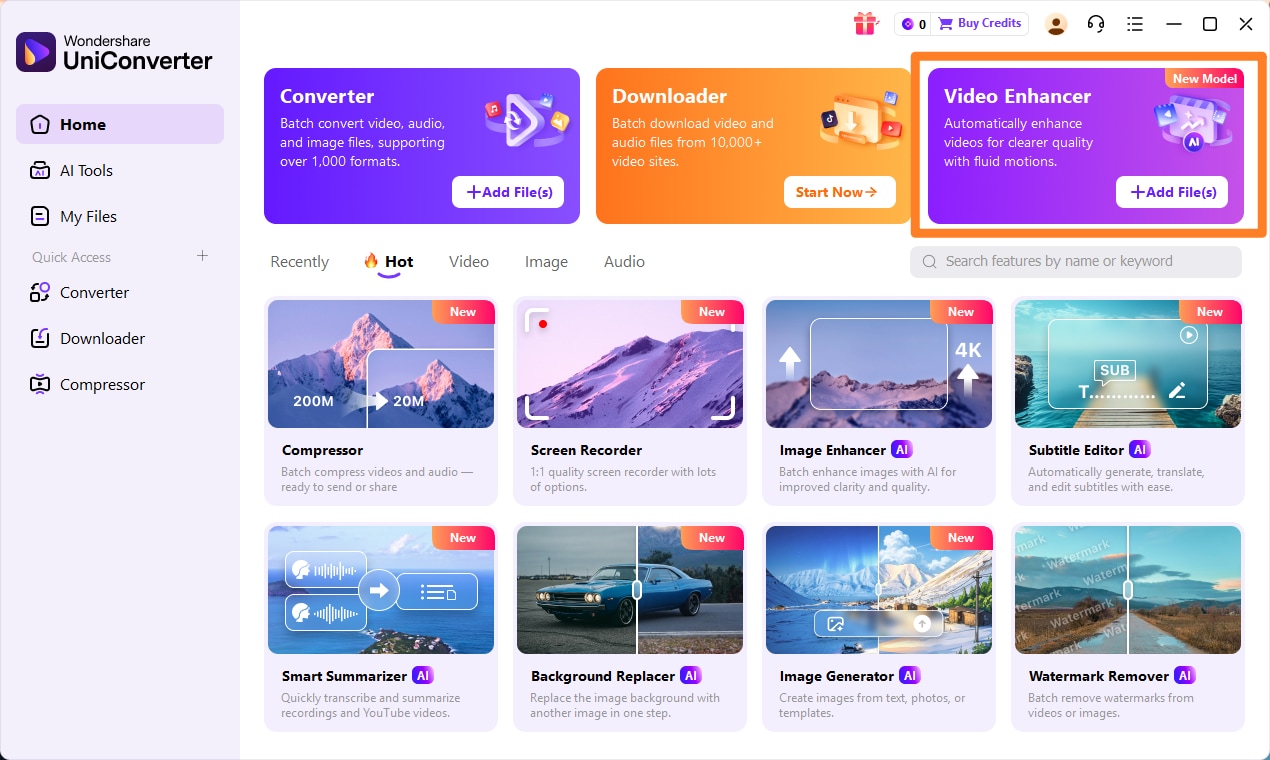
Step 1: Open UniConverter and Choose Video Enhancer
Launch UniConverter on your computer. From the main interface, navigate to the "Toolbox" section and select the "Video Enhancer" feature.
Step 2: Upload the Videos
Click on the "Add Files" button or drag and drop your video files directly into the UniConverter interface. You can add multiple videos for batch processing.
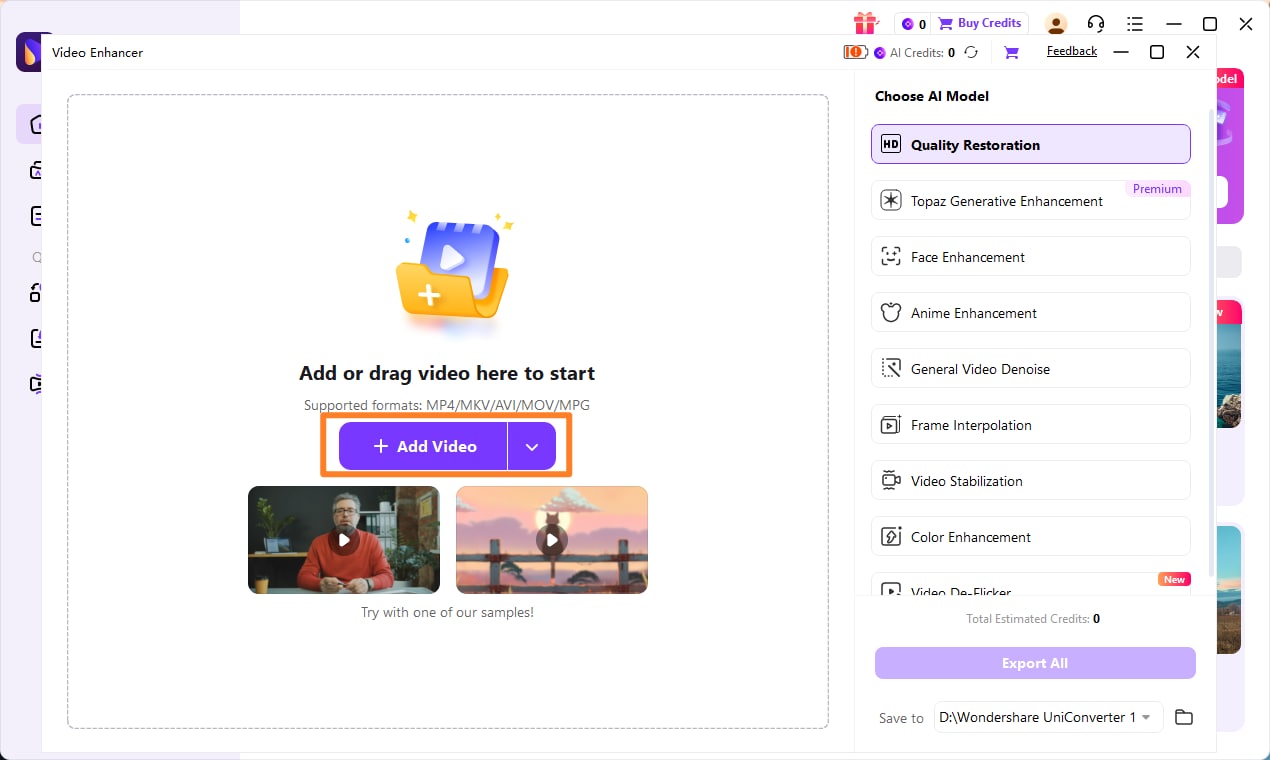
Step 3: Choose Enhancement Model
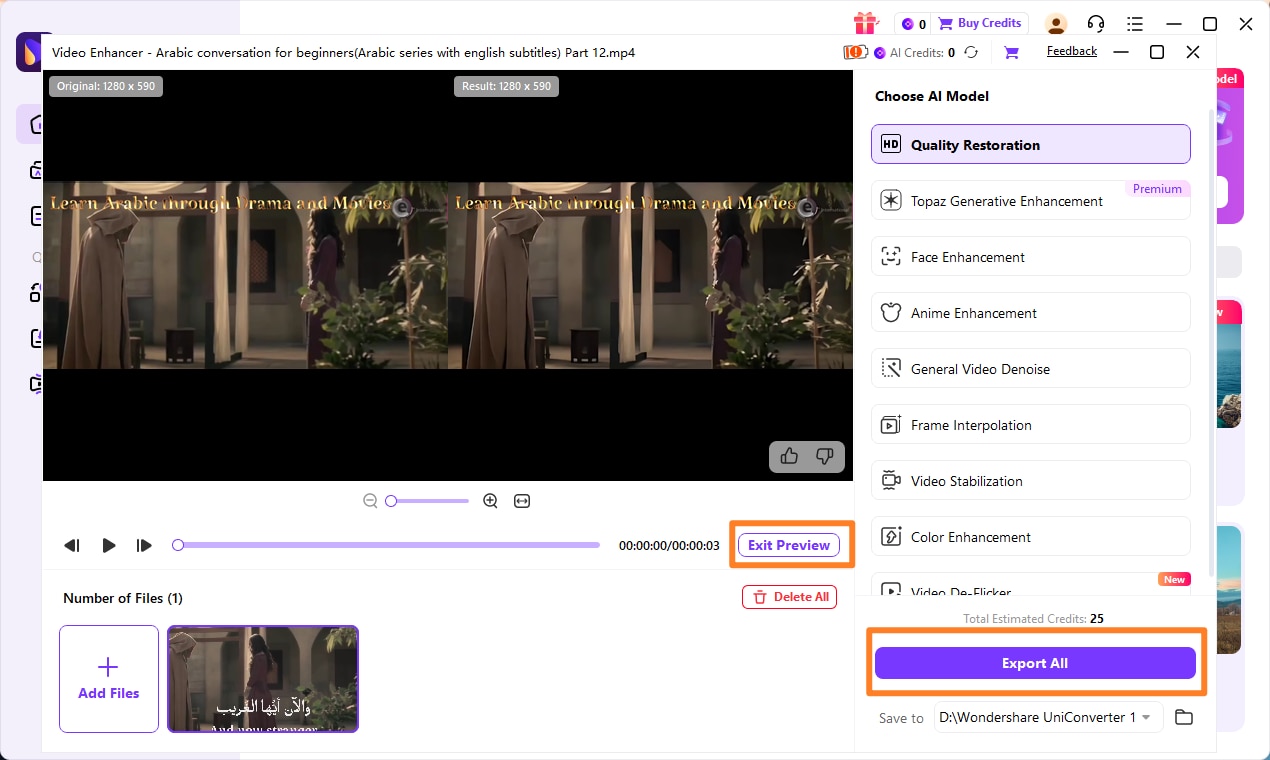
Once your video is loaded, UniConverter will present various enhancement options. Select the desired enhancement model, such as "Upscale Resolution," "Optimize Brightness and Contrast," "Remove Video Noise," or "Reduce Video Shaking," based on your video's specific needs. Adjust parameters as required.

Step 4: Preview and Save the Enhanced Video
Before finalizing, use the "Preview" option to see the enhanced result. If satisfied, choose your desired output format and destination folder, then click "Enhance" to save your improved video.

Seeking a Powerful Pixop Video Enhancer Alternative?
Part 7: Conclusion
In conclusion, the Pixop Video Enhancer review reveals a powerful, AI-driven cloud solution best suited for professional archival and large-scale video enhancement projects. Its ability to process high volumes of footage with specialized AI models for tasks like deinterlacing and noise reduction makes it invaluable for filmmakers and media professionals dealing with historical or challenging source material. However, its subscription model and reliance on internet connectivity might not be ideal for infrequent users or those with real-time enhancement needs. For everyday users seeking a versatile, desktop-based solution that combines enhancement with a broad range of video utilities, UniConverter presents a compelling alternative, offering ease of use, comprehensive features, and a more accessible pricing model. Desktop solutions like Topaz Video AI or comprehensive suites like DaVinci Resolve Studio remain strong contenders for users requiring local processing power or extensive editing capabilities. Ultimately, the best choice depends on the specific project requirements, budget, and technical comfort level of the user.
Part 8: FAQs
-
1. Is Pixop Video Enhancer suitable for beginners?
While its interface is relatively straightforward, understanding the nuances of video enhancement and AI models might require some prior knowledge.
-
2. How does Pixop handle video privacy?
Pixop states adherence to data protection regulations, but users should review their specific privacy policy regarding uploaded content.
-
3. Can Pixop enhance videos in 8K resolution?
Yes, Pixop supports upscaling and enhancing videos to 8K resolution, depending on the source material and chosen plan.
-
4. What's the main difference between Pixop and desktop video enhancers?
Pixop is cloud-based, meaning processing happens remotely without using your local computer's resources, while desktop enhancers rely on your hardware.
-
5. Is there a free trial for Pixop Video Enhancer?
Pixop typically offers a limited free trial or a pay-as-you-go option for initial testing.
