
- Pixop Review: AI enhances video quality, upscaling, denoising, and deinterlacing old or low-quality footage.
- Core Features: AI upscaling to 8K, denoising, deinterlacing, color correction, and broad format support.
- Pros & Cons: Advanced AI and cloud processing versus high cost and limited control for advanced users.
- Ideal Users: Best for professionals and archivists restoring historical footage; not for real-time live streams.
- Comparison: Pixop (cloud, pay-per-minute) vs. Topaz Video AI (local, one-time) vs. UniConverter (easy, versatile).
- Risks: Data privacy, complex pricing, potential AI artifacts, internet dependency, and a learning curve.
- UniConverter Alternative: Offers efficient, user-friendly video enhancement, conversion, and batch processing for diverse needs.
In this article
Pixop Review: A Deep Dive into AI Video Enhancement
The digital age has brought an explosion of video content, from historical archives to daily vlogs. However, much of this footage suffers from low resolution, noise, or compression artifacts, hindering its potential impact. This is where AI-powered video enhancement tools like Pixop come into play. Pixop leverages advanced artificial intelligence to breathe new life into old or low-quality videos, promising to upscale, denoise, and deinterlace footage with remarkable precision. This Pixop review will delve into its core features, compare it against leading competitors, analyze its ideal use cases, and highlight potential risks, ultimately guiding users toward an informed decision on whether Pixop is the right solution for their video enhancement needs.
Part 1: What is Pixop?
Pixop is a cloud-based AI video enhancement platform designed to automatically upscale, denoise, deinterlace, and restore video footage. It utilizes sophisticated machine learning algorithms to intelligently analyze and reconstruct video frames, transforming low-resolution or degraded content into high-quality, crisp visuals. Unlike traditional video editing software that relies on simple interpolation, Pixop's AI models are trained on vast datasets, allowing them to "understand" and generate missing details, resulting in significantly improved clarity and sharpness. This review aims to provide a comprehensive understanding of Pixop's capabilities and its standing in the competitive landscape of AI video enhancement.
The Rise of AI-Powered Video Upscaling
The demand for high-quality video content continues to grow, driven by:
* Archival Preservation: The need to digitize and enhance historical footage for future generations.
* Content Repurposing: Adapting older, lower-resolution content for modern high-definition displays.
* Improving User Experience: Delivering clearer, more engaging visuals across various platforms.
Part 2: Pixop: Core Features, Pros, and Cons
Pixop stands out with its robust set of AI-driven features aimed at transforming video quality. Its core capabilities revolve around intelligent upscaling and restoration.
* AI Upscaling: Enhances video resolution from SD to 4K or even 8K, intelligently adding detail rather than simply stretching pixels.
* Denoising: Effectively removes various types of video noise, such as grain, chroma noise, and compression artifacts, without sacrificing detail.
* Deinterlacing: Converts interlaced footage into progressive scan, eliminating comb-like artifacts common in older video formats.
* Color Correction & Restoration: Offers automated tools to improve color accuracy and vibrancy, bringing life back to faded footage.
* Format Versatility: Supports a wide array of input and output video formats, catering to diverse professional needs.
- Pros:
- Advanced AI algorithms for superior upscaling and denoising.
- Cloud-based processing, no powerful local hardware needed.
- Wide range of supported video formats and resolutions.
- Cons:
- Pricing can be prohibitive for casual users or small projects.
- Limited control over specific AI parameters for advanced users.
Part 3: Pixop: Ideal Users and Use Cases
Pixop is primarily tailored for professionals and organizations with specific video enhancement needs, particularly those dealing with large volumes of footage or requiring high-quality restoration.
- Best Use Case: Archiving and Restoring Historical Footage
- Scenario: A museum needs to digitize and enhance decades-old, low-resolution video archives for public display and research. Pixop's AI can significantly improve clarity and detail, making the footage more accessible and engaging. Its cloud-based nature also means large batches of footage can be processed without tying up local resources.
- Limited Use Case: Real-time Live Stream Enhancement
- Scenario: A streamer wants to instantly improve the quality of their live broadcast on the fly. Pixop, being a cloud-based, batch processing tool, is not designed for real-time, low-latency enhancement of live streams. Its processing times, while efficient for batch work, are not suitable for instantaneous output required for live events.
Part 4: Pixop vs. Competitors: A Comparative Analysis
| Feature/Scenario | Pixop | Topaz Video AI | DaVinci Resolve (Studio) | UniConverter |
| AI Upscaling Quality | Excellent | Excellent | Good | Good |
| Ease of Use | Moderate | Moderate | High Learning Curve | Very Easy |
| Pricing Model | Pay-per-minute/subscription | One-time purchase | One-time purchase | Subscription/One-time |
| Cloud vs. Local | Cloud | Local | Local | Local |
| Batch Processing | Yes | Yes | Yes | Yes |
| Real-time Editing | No | No | Yes | No |
| Target Audience | Professionals, Archivists | Enthusiasts, Professionals | Professionals | Casual Users, Small Businesses |
Key Differentiators: Cloud Power vs. Local Control
Pixop excels with its cloud-based infrastructure, offering scalability and freeing users from local hardware constraints, making it ideal for large-scale archival projects. Topaz Video AI and DaVinci Resolve (Studio) offer excellent local processing, providing more control and privacy, suitable for users with powerful workstations. UniConverter stands out for its user-friendliness and versatility, appealing to a broader audience seeking an all-in-one solution for basic enhancements and conversions.
Part 5: Risks and Pitfalls to Consider
When utilizing cloud-based AI video enhancement services like Pixop, several potential risks and pitfalls should be carefully considered before committing to the platform.
Data Privacy and Security Concerns
Uploading sensitive or proprietary video content to a third-party cloud service raises legitimate concerns about data privacy and security. Users must thoroughly review Pixop's data handling policies, encryption standards, and compliance certifications to ensure their footage is protected from unauthorized access or misuse.
Understanding the Credit/Pricing Model
Pixop operates on a pay-per-minute or subscription model, which can quickly become expensive, especially for large projects or frequent use. Misunderstanding the credit consumption rate or underestimating processing times can lead to unexpected costs. It's crucial to meticulously calculate potential expenses based on project scope.
Potential for "AI Artifacts" in Output
While AI enhancement is powerful, it's not infallible. Sometimes, the AI can introduce subtle or even noticeable "artifacts" – unnatural patterns or distortions – into the video, particularly with heavily degraded source material. These artifacts might require additional manual correction or could render the enhanced footage unsuitable.
Internet Dependency for Cloud Processing
As a cloud-based service, Pixop's functionality is entirely dependent on a stable and fast internet connection. Slow or unreliable internet can significantly prolong upload and download times, impacting workflow efficiency and project deadlines. This dependency can be a major drawback for users in areas with poor connectivity.
Learning Curve for Optimal Results
Although Pixop aims for automation, achieving optimal results often requires some understanding of video enhancement principles and the ability to select the most appropriate AI models and settings for specific footage types. Users might need to experiment with different options, which can consume time and credits.
Part 6: How to Use UniConverter to Efficiently Enhance Videos
When other tools fall short in batch processing, stable enhancement, or delivering strong results, UniConverter emerges as a reliable alternative. It provides a comprehensive, ad-free solution for video conversion, editing, and enhancement, supporting a wide range of formats with GPU acceleration for stable, lossless processing. UniConverter is an all-in-one ultimate solution for your video needs.
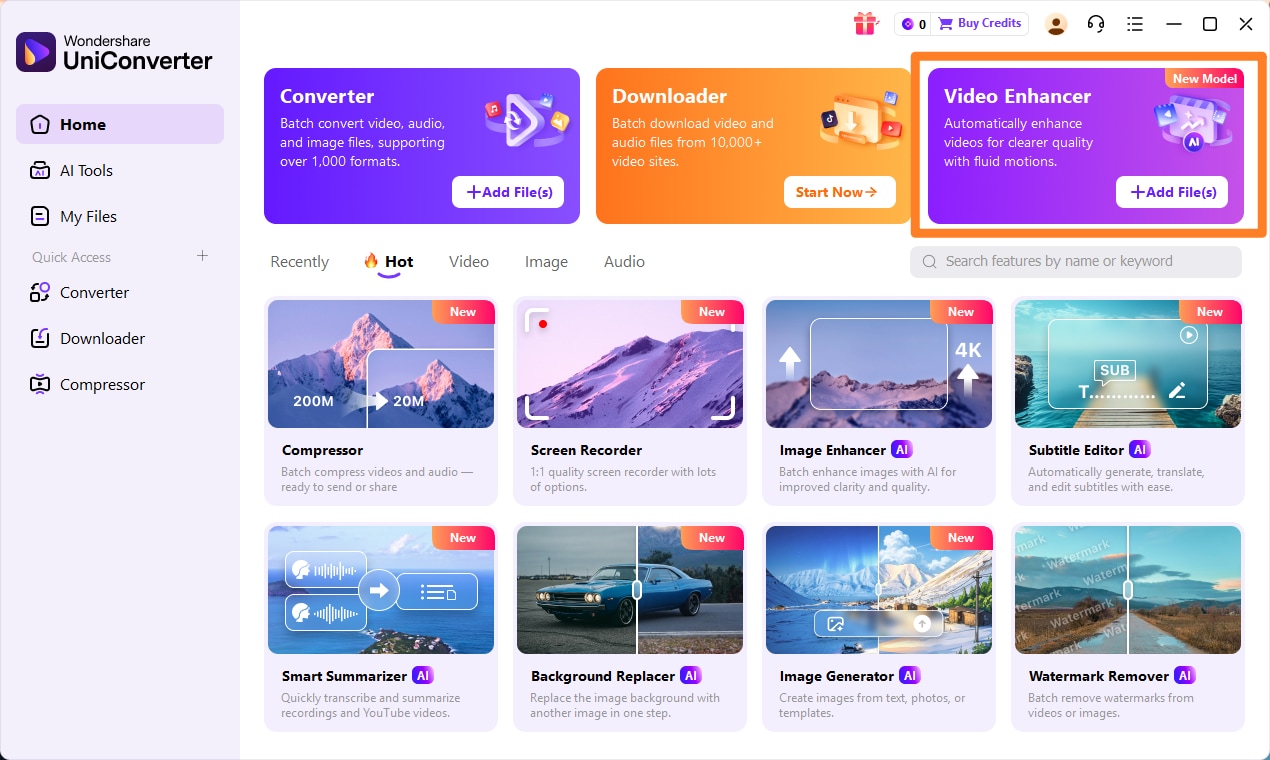
Step 1: Open UniConverter and Choose Video Enhancer
Launch UniConverter on your computer. From the main interface, navigate to the "Toolbox" section and select the "Video Enhancer" feature.
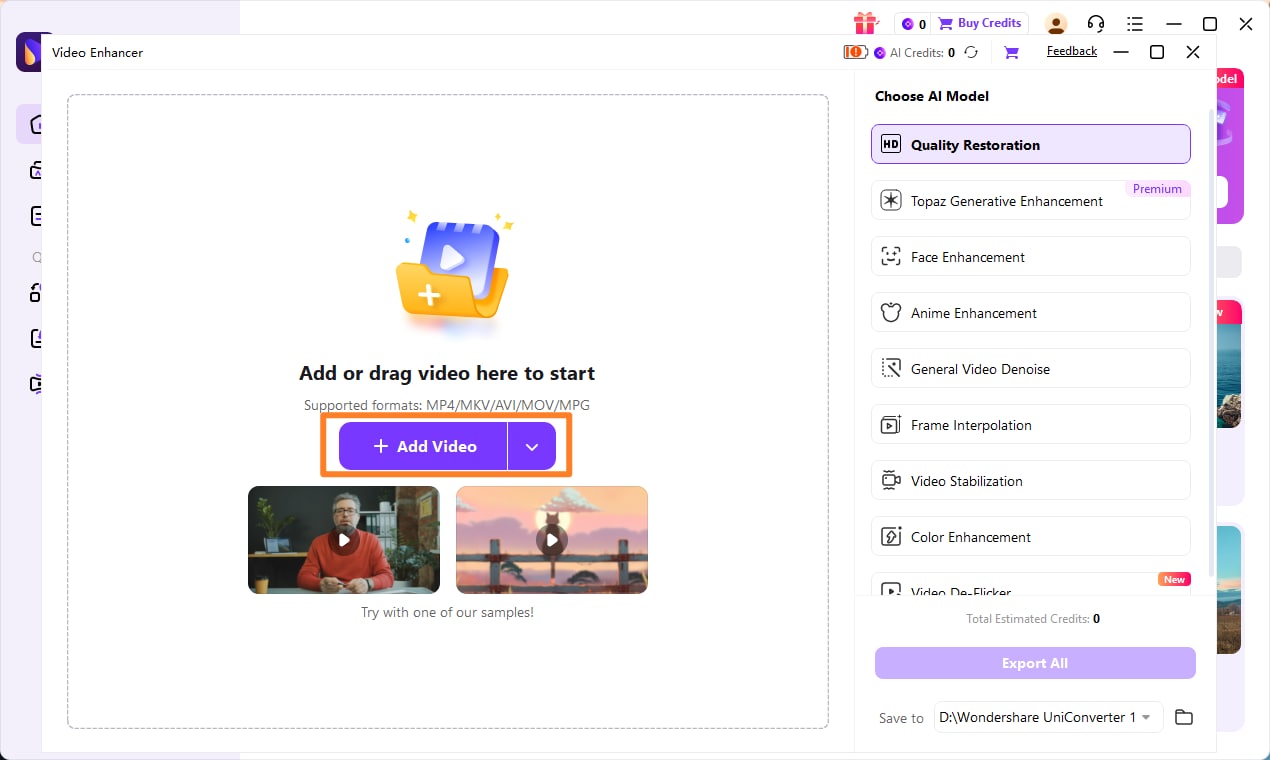
Step 2: Upload the Videos
Click on the "Add Files" button or drag and drop your video files into the UniConverter interface. You can add multiple videos for batch processing.
Step 3: Choose Enhancement Model
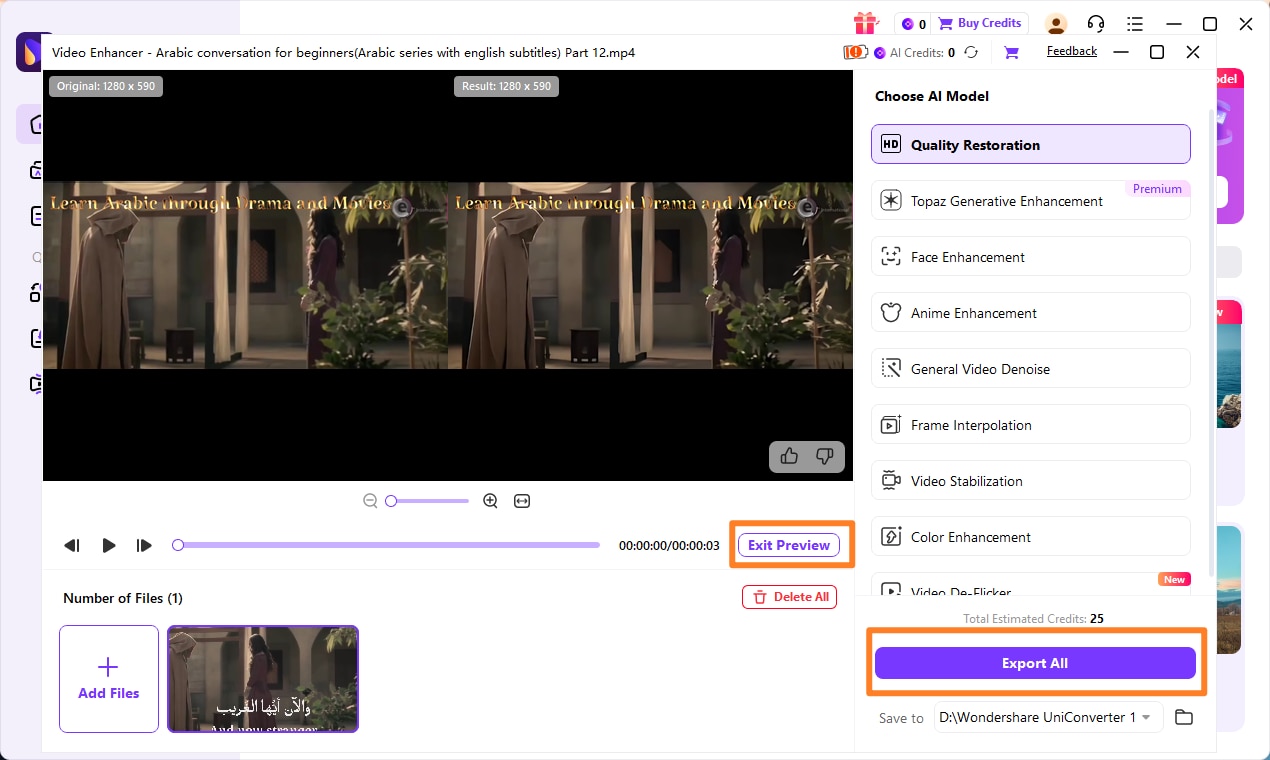
UniConverter offers several enhancement options. Select the desired AI model for upscaling, denoising, or other improvements based on your video's needs. You can also preview the changes. For instance, you might want to use a background replacer to change the visual context of your video, or explore other video background changer features. If you're looking to remove background without losing quality, UniConverter provides advanced tools to achieve this.

Step 4: Preview and Save the Enhanced Video
After selecting your enhancement options, click "Preview" to see the results. Once satisfied, choose your desired output format and destination folder, then click "Enhance" to save your improved video. For those interested in high-definition background remover capabilities, UniConverter ensures your enhanced videos maintain their quality.

Seeking a Pixop Alternative for Video Enhancement?
Part 7: Conclusion
This Pixop review highlights its strengths as a powerful, cloud-based AI video enhancement tool, particularly for professional archivists and large-scale restoration projects. Its advanced AI algorithms deliver superior upscaling and denoising, making it invaluable for breathing new life into historical or low-quality footage. However, its pay-per-minute pricing and cloud dependency might not suit casual users or those requiring real-time processing. For independent filmmakers and content creators, the balance between cost and quality needs careful consideration. When local control, a one-time purchase model, or real-time editing is paramount, alternatives like Topaz Video AI or DaVinci Resolve (Studio) become more attractive. For everyday video needs and a user-friendly experience with basic enhancements, UniConverter offers a versatile and accessible solution. Ultimately, the best choice depends on specific project requirements, budget, and desired level of control.
Part 8: FAQs
-
1. Is Pixop truly better than traditional upscaling methods?
Yes, Pixop's AI leverages machine learning to intelligently reconstruct details, often producing significantly better results than simple interpolation by predicting and generating missing information.
-
2. How long does Pixop take to process a video?
Processing time varies greatly depending on video length, resolution, and the chosen enhancement options. It's a cloud-based service, so network speed for uploading and downloading also plays a significant role.
-
3. Can Pixop fix heavily damaged or corrupted video files?
While Pixop can significantly improve quality, it has limitations. It's designed for enhancement and restoration of existing footage, not complete reconstruction of severely damaged or corrupted files where data is fundamentally missing.
-
4. What are the main differences between Pixop and Topaz Video AI?
Pixop is a cloud-based, pay-per-use service, meaning you pay for processing time and don't need powerful local hardware. Topaz Video AI is a local software with a one-time purchase, requiring a capable computer but offering more direct control and no recurring processing fees.
-
5. Is there a free trial for Pixop?
Pixop typically offers a limited free trial or credits for new users to test the service and evaluate its capabilities before committing to a paid plan. It's advisable to check their official website for current trial offers.
