
- Value: Pixlr Image Enhancer offers quick, AI-driven photo improvements for casual users and small businesses, ideal for social media.
- Comparison: It excels in ease of use and accessibility compared to complex tools like Photoshop, but lacks advanced customization.
- Decision: Choose Pixlr for fast, web-based touch-ups; opt for UniConverter or Photoshop for professional-grade control, batch processing, or print quality.
- Consideration: Be aware of Pixlr's limitations: potential for over-processing, internet dependency, and data privacy concerns with sensitive images.
In this article
- Part 1: What is Pixlr Image Enhancer?
- Part 2: Pixlr Image Enhancer: Core Features, Pros, and Cons
- Part 3: Pixlr Image Enhancer: Target Audience and Use Cases
- Part 4: Pixlr Image Enhancer and Alternatives Comparison
- Part 5: Risks and Pitfalls When Using Pixlr Image Enhancer
- Part 6: How to Use UniConverter for Comprehensive Image and Video Solutions
- Part 7: Conclusion
- Part 8: FAQs
In today's visually-driven world, a compelling image can make all the difference. As someone who's constantly refining visuals for various projects, I've seen firsthand how AI-powered tools are revolutionizing photo editing. This Pixlr Image Enhancer review delves into one such popular option, exploring its capabilities, comparing it against key competitors, and highlighting its ideal use cases. My goal is to provide a comprehensive, scenario-based analysis to help you decide if Pixlr Image Enhancer is the right tool for your specific needs, or if an alternative might serve you better.
Part 1: What is Pixlr Image Enhancer?
Pixlr Image Enhancer is an online, AI-driven tool designed to automatically improve the quality of your photos. It's part of the broader Pixlr suite of photo editing applications, known for their accessibility and user-friendly interfaces. I initially approached it with a healthy dose of skepticism, wondering if an AI could truly deliver professional-grade enhancements without extensive manual tweaking. However, after spending considerable time with it, I've come to appreciate its niche. This review aims to cut through the marketing hype and provide a practical assessment of its performance, particularly in the context of common user pain points.
The Rise of AI Image Enhancement Tools
* Growing Demand for Quick and Easy Edits: Not everyone is a Photoshop wizard, and the need for instant, high-quality image improvements is universal.
* Accessibility Across Devices: Cloud-based solutions like Pixlr mean you can enhance photos on the go, without needing powerful desktop software.
* Bridging the Skill Gap: AI takes the guesswork out of complex editing, making professional-looking results achievable for beginners.
Part 2: Pixlr Image Enhancer: Core Features, Pros, and Cons
From my experience, Pixlr Image Enhancer's core strength lies in its ability to quickly apply a range of AI-driven improvements. It offers features like automatic color correction, sharpening, noise reduction, and even some basic object removal. I found the "Enhance" button to be surprisingly effective for a quick fix, often delivering noticeable improvements with a single click. For those who want a bit more control, there are sliders for adjusting intensity, contrast, and saturation, though they are not as granular as professional-grade software.
Pros:
* Intuitive Interface for Quick Edits: I found it incredibly easy to navigate, even for someone new to photo editing.
* Wide Range of AI-Powered Enhancement Options: The variety of one-click enhancements is impressive for a free/freemium tool.
* Cloud-Based Accessibility Across Devices: Being able to access it from any browser on any device is a huge plus for flexibility.
Cons:
* Limited Advanced Customization for Professionals: If you need precise control over curves, masks, or specific color channels, you'll hit a wall.
* Occasional Performance Lags with Large Files: I noticed it could struggle and slow down when processing very high-resolution images.
Part 3: Pixlr Image Enhancer: Target Audience and Use Cases
I've come to realize that Pixlr Image Enhancer isn't trying to be a one-size-fits-all solution, and that's perfectly fine. It truly shines for individuals and small businesses who need to quickly spruce up images without investing in expensive software or extensive training. If your goal is to make your photos look better for online sharing, it's a fantastic option.
Best Use Case: Social Media Content Creation for Small Businesses
For small business owners, bloggers, or social media managers, Pixlr Image Enhancer is a godsend. I often use it to quickly brighten product photos, sharpen graphics, or improve the overall aesthetic of images before posting them. It saves a ton of time and effort, allowing me to focus on content creation rather than intricate editing. The results are usually more than sufficient for platforms like Instagram, Facebook, or a blog.
Limited Use Case: High-Resolution Print Media Production
However, if you're looking to enhance images for high-resolution print media, like large posters, magazines, or professional photography portfolios, Pixlr Image Enhancer will likely fall short. The subtle nuances and extreme detail required for print often demand more sophisticated tools that offer non-destructive editing, broader color spaces, and finer control over every pixel. I wouldn't trust it for a client's print campaign, for example.
Part 4: Pixlr Image Enhancer and Alternatives Comparison
When I look at the landscape of image enhancement tools, Pixlr Image Enhancer occupies a unique space. It's more capable than basic phone filters but less complex than professional desktop software. Here’s how it stacks up against some other players I've used:
| Feature/Tool | Pixlr Image Enhancer | UniConverter | Adobe Photoshop | Topaz Labs Gigapixel AI |
| AI Enhancement Quality | Good | Excellent | Excellent | Superior |
| Ease of Use | High | High | Medium | Medium |
| Price Point | Free/Subscription | Subscription | Subscription | One-time purchase |
| Advanced Features | Limited | Moderate | Extensive | Specialized |
| Cloud Integration | Yes | No (Desktop) | Yes (Creative Cloud) | No (Desktop) |
| Processing Speed | Moderate | Fast (GPU) | Moderate | Moderate |
| Output Formats | JPG, PNG, WEBP | JPG, PNG, BMP, TIFF, GIF | PSD, JPG, PNG, TIFF, etc. | JPG, PNG, TIFF |
Pixlr Image Enhancer's strength lies in its accessibility and ease of use, making it ideal for quick, everyday enhancements. UniConverter, on the other hand, offers a more robust desktop solution with superior AI quality and faster processing, especially for batch tasks, making it a strong contender for those needing better results without the full complexity of Photoshop. Photoshop remains the industry standard for comprehensive editing, while Topaz Labs Gigapixel AI is a niche tool specifically for upscaling and extreme detail recovery. For simple, web-based enhancements, Pixlr is great, but for anything more serious, I'd lean towards UniConverter or Photoshop.
Part 5: Risks and Pitfalls When Using Pixlr Image Enhancer
While Pixlr Image Enhancer offers convenience, I've learned that it's important to be aware of its potential downsides, especially if you're relying on it for more critical tasks.
Data Privacy Concerns with Cloud Storage
Like any cloud-based service, there's always the question of data privacy. When you upload your images to Pixlr, they reside on their servers. While Pixlr has privacy policies in place, I always exercise caution with sensitive or personal photos. It's a trade-off for the convenience of cloud access.
Potential for Over-Processed or Unnatural Results
The AI, while smart, isn't perfect. I've encountered instances where the "enhance" button led to images that looked overly sharpened, had blown-out highlights, or unnaturally vibrant colors. It's easy to fall into the trap of thinking "more enhancement is better," but often, subtlety is key. Always review the results critically.
Dependence on Internet Connectivity
Since it's a web-based tool, a stable internet connection is non-negotiable. If your Wi-Fi is spotty or you're working offline, Pixlr Image Enhancer becomes unusable. This can be a significant limitation if you frequently work in environments with unreliable internet access.
In-App Advertisements in Free Version
The free version of Pixlr Image Enhancer is supported by ads. While they're generally not overly intrusive, they can disrupt the workflow and make the experience feel less professional. For serious users, upgrading to the premium version to remove ads is almost a necessity.
Quality Degradation with Excessive Enhancements
I've noticed that repeatedly applying enhancements or pushing the sliders too far can actually degrade the image quality, introducing artifacts or a "plastic" look. It's crucial to use the enhancements judiciously and save your work frequently, perhaps even keeping original copies.
Part 6: How to Use UniConverter for Comprehensive Image and Video Solutions
Sometimes, Pixlr Image Enhancer's limitations, like the lack of batch processing, occasional instability, or less powerful enhancement effects, become apparent. When I need a more robust and reliable solution for image enhancement, especially for multiple files or when I demand higher quality, I turn to UniConverter. It's a versatile desktop tool that offers a comprehensive suite of features, including a powerful AI image enhancer that works offline, without ads, and with excellent stability. It leverages GPU acceleration for speed and ensures lossless quality, making it my go-to for more demanding tasks. For those looking to upscale images to 4K or even fix pixelated videos, this tool provides an effective solution.
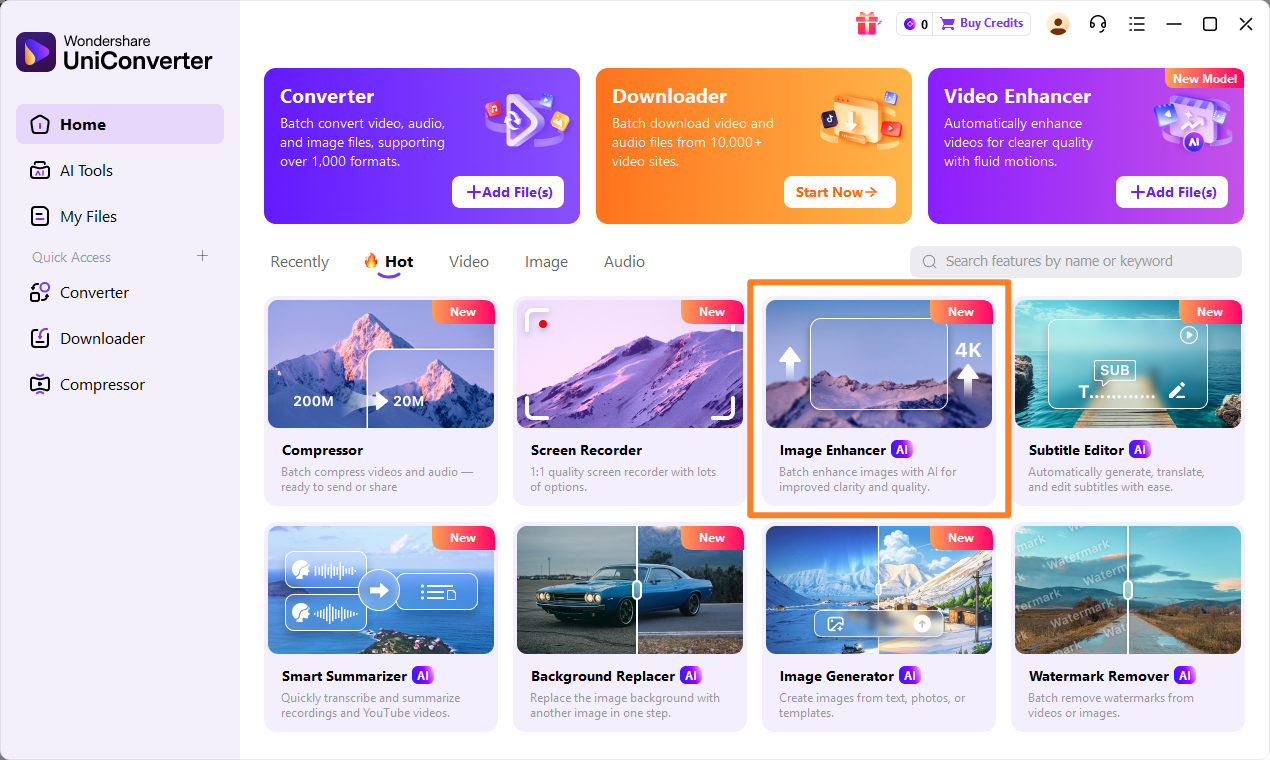
Step 1: Open UniConverter and Choose Image Enhancer
Launch UniConverter and navigate to the "Toolbox" section. Here, you'll find the "Image Enhancer" feature. Click on it to open the dedicated enhancement interface.
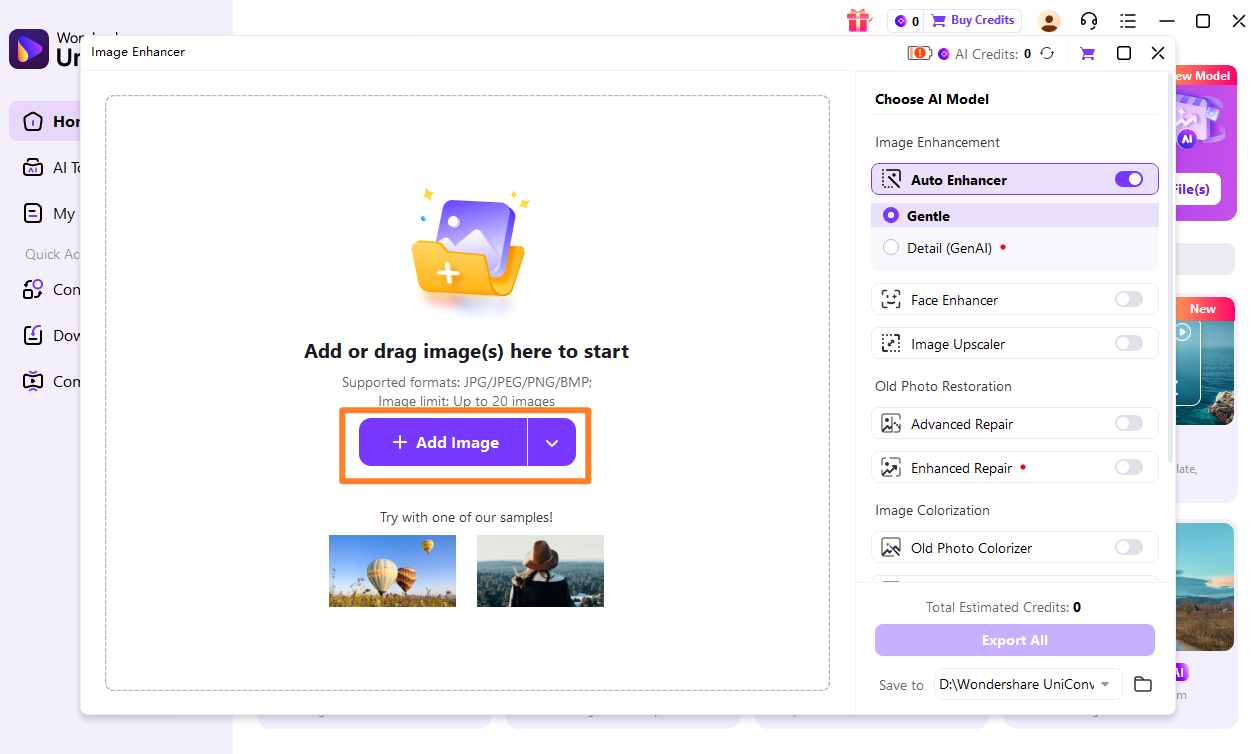
Step 2: Upload the Images
Drag and drop your images directly into the UniConverter window, or click the "Add Files" button to browse and select them from your computer. UniConverter supports various image formats for enhancement.
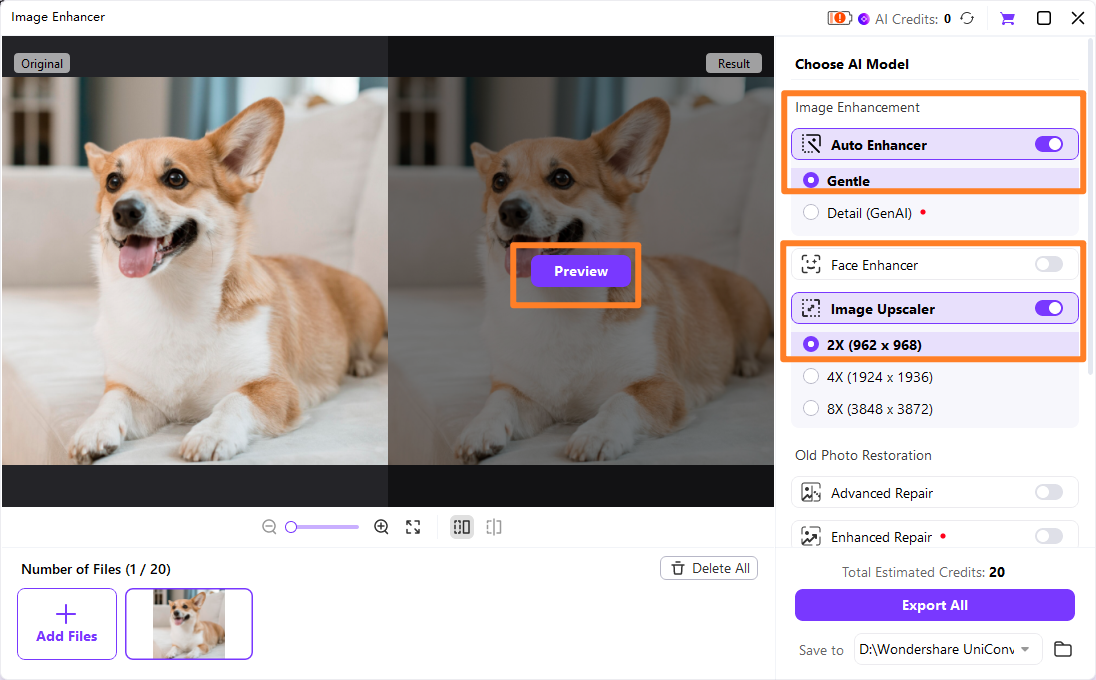
Step 3: Choose Enhancement Model
Once your images are loaded, UniConverter will present you with different AI enhancement models. Select the model that best suits your needs, whether it's for general enhancement, deblurring, or color correction. You can also adjust the enhancement intensity.
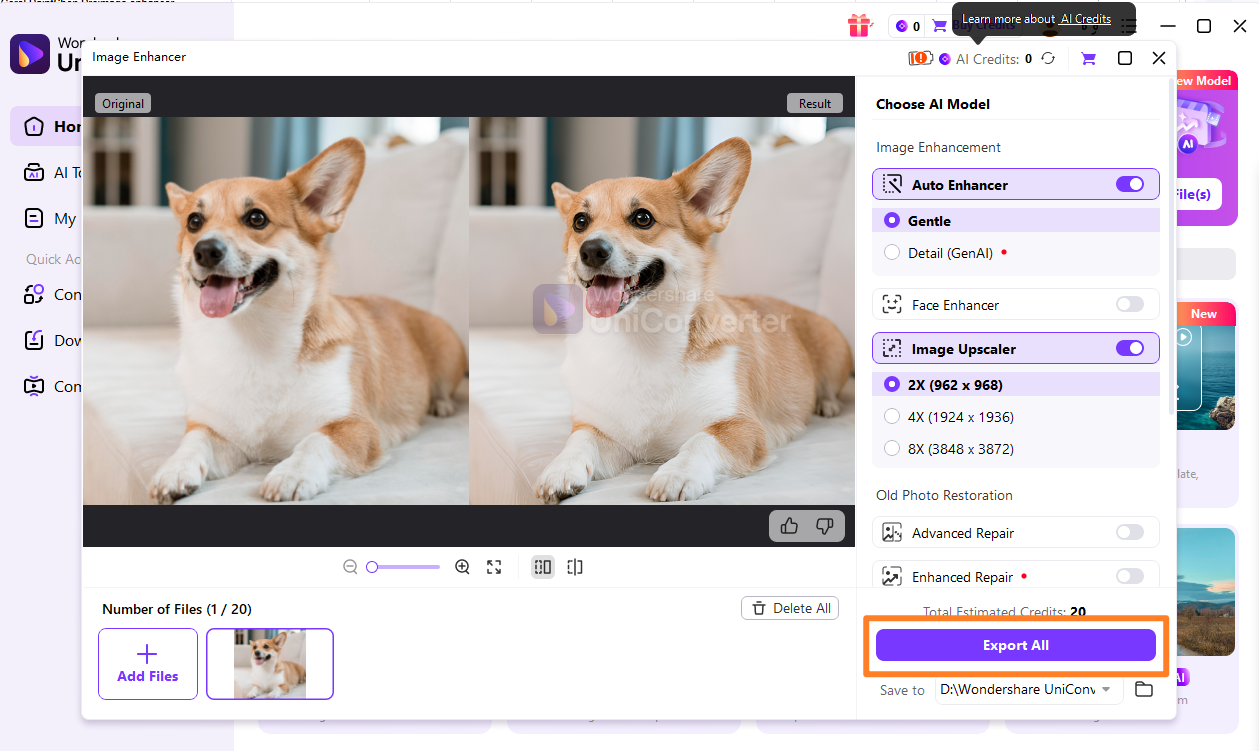
Step 4: Preview and Save the Enhanced Images
After selecting your enhancement options, UniConverter will process a preview. Review the enhanced image and make any final adjustments. Once satisfied, click the "Export" button to save your high-quality, enhanced images to your desired location.

Enhance Images Beyond Pixlr's Limits?
Part 7: Conclusion
After extensive use and comparison, my Pixlr Image Enhancer review concludes that it is an excellent tool for specific user groups. For casual users, social media enthusiasts, and small businesses needing quick, decent-quality image touch-ups for online platforms, Pixlr Image Enhancer offers unparalleled ease of use and accessibility, often at no cost. Its cloud-based nature and intuitive interface make it a strong contender for on-the-go editing. However, for professionals requiring granular control, consistent high-resolution output for print, or robust batch processing capabilities, it falls short. In those scenarios, investing in a more powerful desktop solution like UniConverter or Adobe Photoshop is a necessity. Ultimately, your choice should align with your specific needs, skill level, and the intended use of your enhanced images.
Part 8: FAQs
-
1. Is Pixlr Image Enhancer truly free to use?
Yes, Pixlr Image Enhancer offers a free version with core enhancement features, but it includes advertisements and some advanced options are locked behind a premium subscription.
-
2. Can Pixlr Image Enhancer improve the quality of very old or blurry photos?
It can offer some improvements to old or slightly blurry photos, especially for basic sharpening and color correction. However, for severely damaged or extremely blurry images, its capabilities are limited compared to specialized restoration software.
-
3. How does Pixlr Image Enhancer compare to Photoshop's AI features?
Photoshop's AI features, such as Neural Filters, are far more advanced and offer a much wider range of sophisticated, customizable enhancements. Pixlr's AI is simpler and more automated, designed for quick fixes rather than deep, professional-grade manipulation.
-
4. What file formats does Pixlr Image Enhancer support?
Pixlr Image Enhancer primarily supports common web image formats like JPG, PNG, and WEBP for both input and output.
-
5. Is my data safe when using Pixlr Image Enhancer?
Pixlr states that they take data privacy seriously and have measures in place to protect user data. However, as with any cloud service, it's always advisable to be cautious when uploading highly sensitive or personal images.
