
- Pixelup Value: Excels in enhancing old, low-resolution photos, especially faces, with an intuitive, fast interface.
- Target Audience: Ideal for casual users revitalizing personal photo collections; less suited for professional photography.
- Comparison Insights: Pixelup offers ease for faces; UniConverter provides versatile, offline batch processing and broader media tools.
- Key Decision Factors: Consider subscription costs, potential AI artifacts, and data privacy with cloud-based processing.
- UniConverter Advantage: Offers stable, lossless, batch image enhancement with AI, GPU acceleration, and offline capabilities.
In this article
- Part 1: What is Pixelup Image Enhancer?
- Part 2: Pixelup Image Enhancer: Core Features, Pros & Cons
- Part 3: Pixelup Image Enhancer: Target Audience & Use Cases
- Part 4: Pixelup & Competitors: A Comparative Analysis
- Part 5: Risks & Pitfalls to Consider
- Part 6: How to Use UniConverter for Efficient Image Enhancement
- Part 7: Conclusion
- Part 8: FAQs
When it comes to breathing new life into old, faded, or low-resolution photos, AI image enhancers have become indispensable. Among the myriad options available, Pixelup image enhancer review has garnered significant attention for its promise of transforming mediocre pictures into stunning visuals. This review aims to provide a comprehensive, scenario-based analysis of Pixelup, comparing it with its key competitors, and guiding you through its strengths and weaknesses. We'll delve into its core features, identify its ideal users, and highlight potential pitfalls, ensuring you make an informed decision about whether Pixelup is the right tool for your image enhancement needs.
Part 1: What is Pixelup Image Enhancer?
Pixelup Image Enhancer emerges from a growing demand for accessible and powerful tools to restore and improve digital images. In an age where every moment is captured, often on less-than-perfect devices, the need to refine these memories is paramount. I've personally found myself sifting through countless old photos, wishing there was an easy way to bring them back to life without needing professional editing skills. Pixelup steps into this gap, offering an AI-driven solution that promises to do just that. This review will explore how well it lives up to that promise, especially when stacked against its rivals.
The Rise of AI Image Enhancement Tools
The proliferation of AI image enhancement tools is a direct response to several common user pain points:
* Nostalgia for Old Memories: Many of us have physical or digital archives of cherished family photos that have degraded over time or were taken with older, lower-quality cameras.
* Social Media Demands: The desire to share high-quality, visually appealing content on social media platforms drives users to seek quick and effective enhancement solutions.
* Accessibility for Non-Professionals: Traditional photo editing software often has a steep learning curve, making AI tools appealing for those without advanced technical skills.
* Limitations of Smartphone Cameras: Despite advancements, smartphone cameras can still struggle in certain conditions, leading to blurry or pixelated images that need a boost.
Part 2: Pixelup Image Enhancer: Core Features, Pros & Cons
Pixelup positions itself as a go-to solution for anyone looking to quickly and effectively enhance their images, particularly those with faces. From my experience, its primary strength lies in its ability to intelligently detect and refine facial features, making old portraits look remarkably fresh. It’s not just about sharpening; it often reconstructs details that seemed lost forever. The app’s intuitive design means you don’t need to be an expert to get impressive results, which was a huge relief for me when I first tried it.
Pros:
* Exceptional detail recovery for old/low-resolution photos, especially faces: I was genuinely surprised by how well it brought out details in my grandmother's faded photos. Faces, in particular, look incredibly natural and clear.
* User-friendly interface, making it accessible for non-technical users: The app is incredibly straightforward. You upload a photo, tap "enhance," and it does the rest. No complicated menus or settings to navigate.
* Fast processing times for most image enhancement tasks: For quick touch-ups, Pixelup is impressively fast, usually delivering enhanced images within seconds.
Cons:
* Subscription-based model can be costly for infrequent users: If you only have a few photos to enhance, the recurring subscription fee might feel a bit steep.
* Occasional "AI artifacting" on complex textures or backgrounds: While great with faces, I've noticed that sometimes complex patterns or busy backgrounds can get a slightly artificial, "painted" look.
Part 3: Pixelup Image Enhancer: Target Audience & Use Cases
Pixelup, in my opinion, is primarily designed for the casual user who wants to effortlessly improve their personal photo collection. If you're like me and have boxes of old photos or a digital archive of blurry smartphone snaps, this tool feels tailor-made for you. It's not trying to replace professional editing suites; instead, it offers a convenient, one-click solution for common image problems.
Best Use Case: Revitalizing Cherished Family Photos
This is where Pixelup truly shines. I've used it to restore numerous old family photos, some dating back decades, that were faded, scratched, or simply low-resolution. The AI's ability to sharpen faces, recover colors, and reduce noise makes these memories feel vibrant again. It’s incredibly satisfying to see a blurry childhood photo transform into a clear, shareable image. For anyone looking to digitize and enhance their family archives, Pixelup is an excellent choice.
Limited Use Case: Professional Photography Post-Processing
While Pixelup is fantastic for personal use, I wouldn't recommend it as a primary tool for professional photographers. Its automated nature means you lack the granular control that professionals often need for precise adjustments, color grading, and complex retouching. For high-stakes commercial work or fine art photography, the occasional "AI artifacting" and lack of manual control would be significant drawbacks. Professionals typically require tools that offer a much deeper level of customization and fidelity.
Part 4: Pixelup & Competitors: A Comparative Analysis
When I first started exploring image enhancers, I quickly realized Pixelup wasn't the only player in the game. Comparing it to others helped me understand its niche and where it truly excels. Here's how I see it stacked up against some popular alternatives:
| Feature/Tool | Pixelup | Remini | Topaz Labs Gigapixel AI | UniConverter |
| Core Enhancement | General, Face Focus | General, Face Focus | General, Detail | General, Batch, AI-driven |
| Ease of Use | High | High | Medium | High |
| Output Quality (Faces) | Excellent | Excellent | Very Good | Excellent |
| Output Quality (General) | Good | Good | Excellent | Very Good |
| Pricing Model | Subscription | Subscription | One-time Purchase | One-time Purchase/Subscription |
| Offline Processing | No | No | Yes | Yes |
Key Differentiators:
Pixelup excels in ease of use and facial enhancement for casual users. If you just want to fix a blurry face in an old photo, it’s incredibly quick and effective. Remini offers similar facial enhancement but with slightly different AI aesthetics. I've found Remini sometimes produces a slightly more "smoothed" look on faces, which some might prefer, while Pixelup tends to retain a bit more texture. Topaz Labs Gigapixel AI provides more granular control and superior general image upscaling for professionals. For truly high-quality, large-format prints or professional work, Gigapixel AI's ability to retain and even generate fine detail across the entire image is unmatched. UniConverter stands out for its versatility, offering not just image enhancement but a whole suite of media tools, including batch processing and offline capabilities, making it a strong all-in-one solution for various media tasks.
Part 5: Risks & Pitfalls to Consider
While Pixelup offers impressive results, it's crucial to be aware of certain risks and limitations, especially since it's a cloud-based, subscription service. I've learned these lessons through my own usage and by observing others' experiences.
Data Privacy Concerns with Cloud Processing
Since Pixelup processes your images on their cloud servers, data privacy is a significant consideration. You're essentially uploading your personal photos, which could include sensitive information or private moments, to a third-party server. While most reputable companies have robust privacy policies, it's always wise to read them carefully and understand how your data is stored, used, and protected. For me, this is a major point of caution, especially with very personal or confidential images.
Potential for Over-Enhancement and Unnatural Results
The AI, while powerful, isn't perfect. Sometimes, in its attempt to "enhance," it can go too far, leading to images that look overly smoothed, plastic, or simply unnatural. This is particularly noticeable in areas with complex textures or subtle gradients. What starts as an attempt to fix a blurry image can sometimes result in an image that looks "AI-generated" rather than naturally improved. It's a fine line, and Pixelup occasionally crosses it.
Subscription Traps and Hidden Costs
Like many apps today, Pixelup operates on a subscription model. While it often offers a free trial, forgetting to cancel can lead to unexpected charges. Moreover, some users might find themselves paying for a service they only use sporadically, making the long-term cost higher than anticipated. Always be mindful of the billing cycle and cancellation policies.
Limitations on Output Resolution and File Formats
While Pixelup enhances images, it might have limitations on the maximum output resolution or the file formats it supports for export. If you're working with extremely high-resolution images or need specific professional-grade file types (like TIFF or uncompressed PNGs), you might find Pixelup's options restrictive. It's primarily geared towards common web and print formats.
Inconsistent Performance on Highly Damaged Images
While Pixelup works wonders on moderately damaged or low-resolution photos, it can struggle with images that are severely degraded, heavily pixelated, or have significant portions missing. In such cases, the AI might "guess" at missing details, leading to inaccurate or even bizarre reconstructions. For truly extreme restoration projects, specialized manual editing or more advanced AI tools might be necessary.
Part 6: How to Use UniConverter for Efficient Image Enhancement
Sometimes, when other tools fall short with batch processing, inconsistent enhancements, or simply don't offer the stability you need, I find myself turning to UniConverter. It's a robust solution that avoids many of the pitfalls of online-only or less comprehensive tools. UniConverter offers a powerful AI Image Enhancer that can upscale, deblur, and denoise your images with impressive quality, all while supporting batch processing and leveraging GPU acceleration for speed. It's an all-in-one solution that ensures stable, lossless enhancement across various formats, without the annoyance of ads or watermarks. For those looking to upscale images to 4K, this tool provides excellent results. If you need to enhance image resolution effectively, UniConverter is a reliable choice.
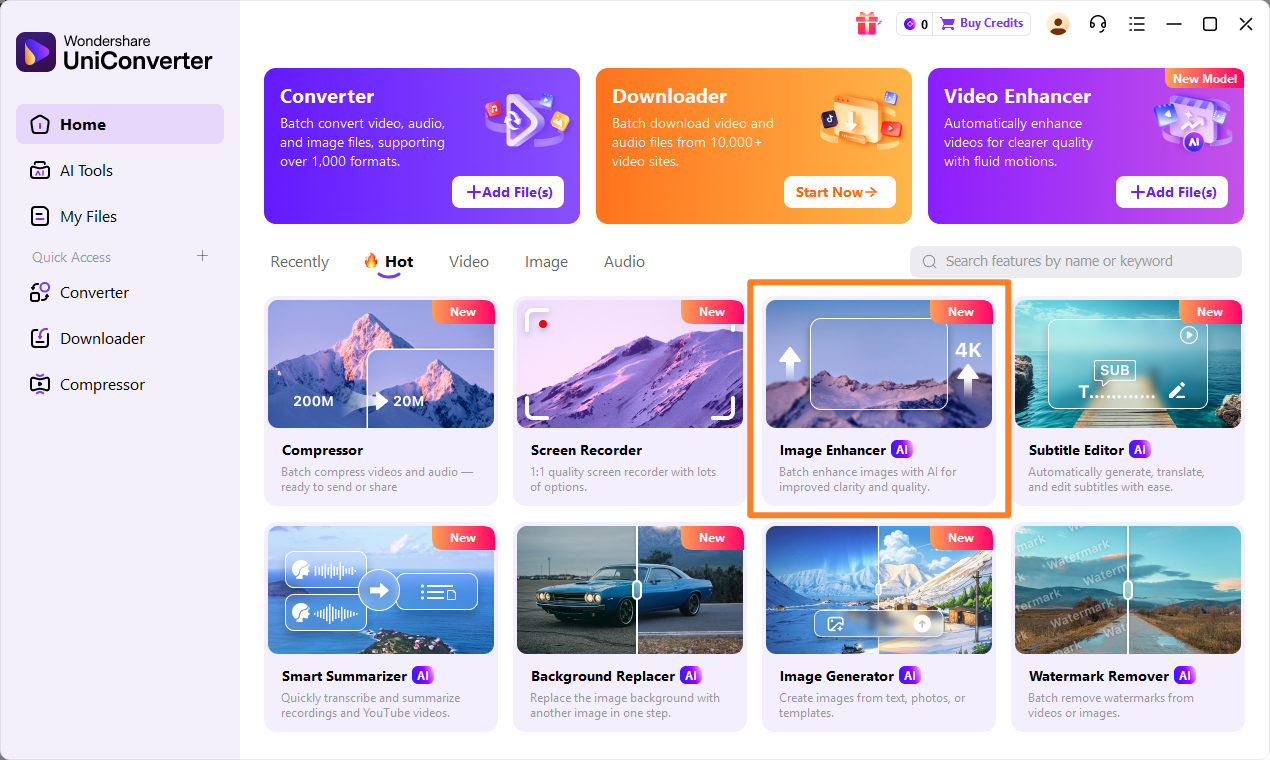
Step 1: Open UniConverter and Choose Image Enhancer
Launch UniConverter on your computer and navigate to the "AI Lab" section. From there, select the "Image Enhancer" tool.
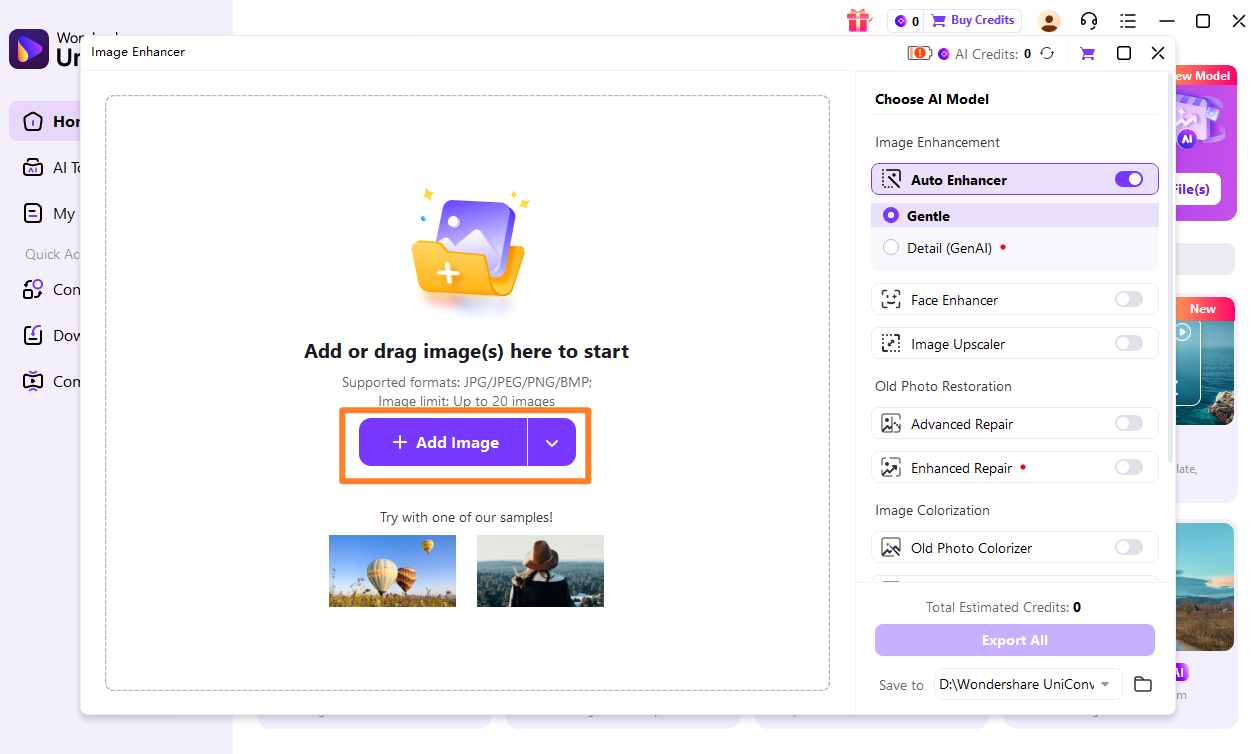
Step 2: Upload the Images
Click on the "Add Files" button or simply drag and drop the images you wish to enhance into the UniConverter interface. You can add multiple images for batch processing.
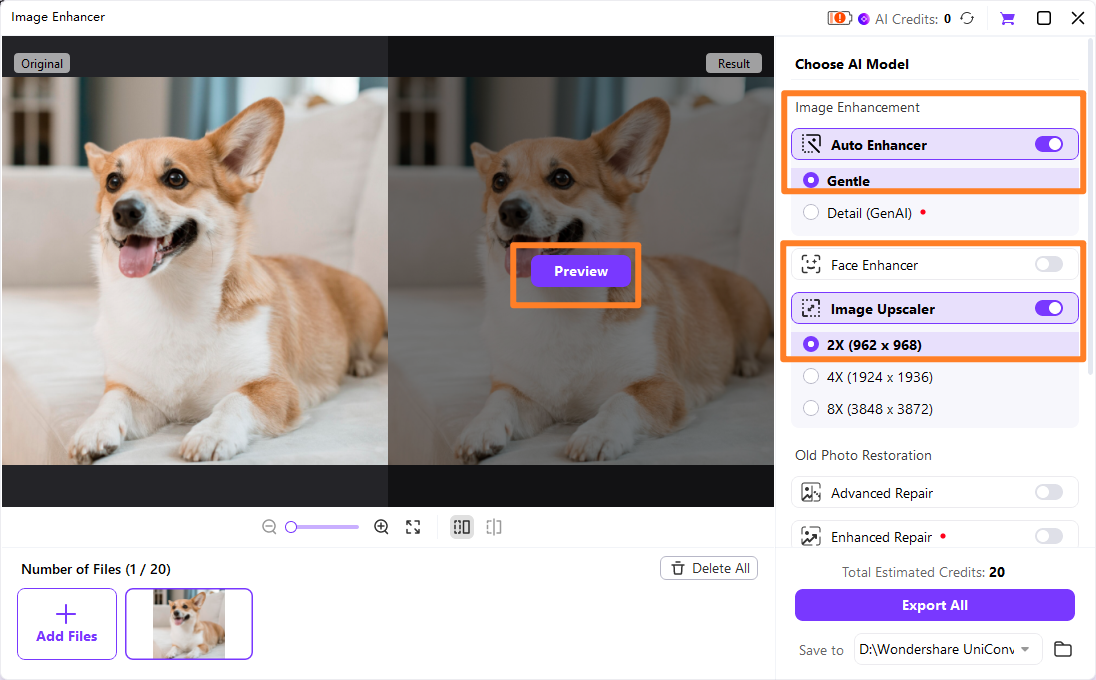
Step 3: Choose Enhancement Model
UniConverter offers different AI models for various enhancement needs. Select the model that best suits your image (e.g., general enhancement, face enhancement, or upscaling). You can also adjust parameters like resolution and quality.
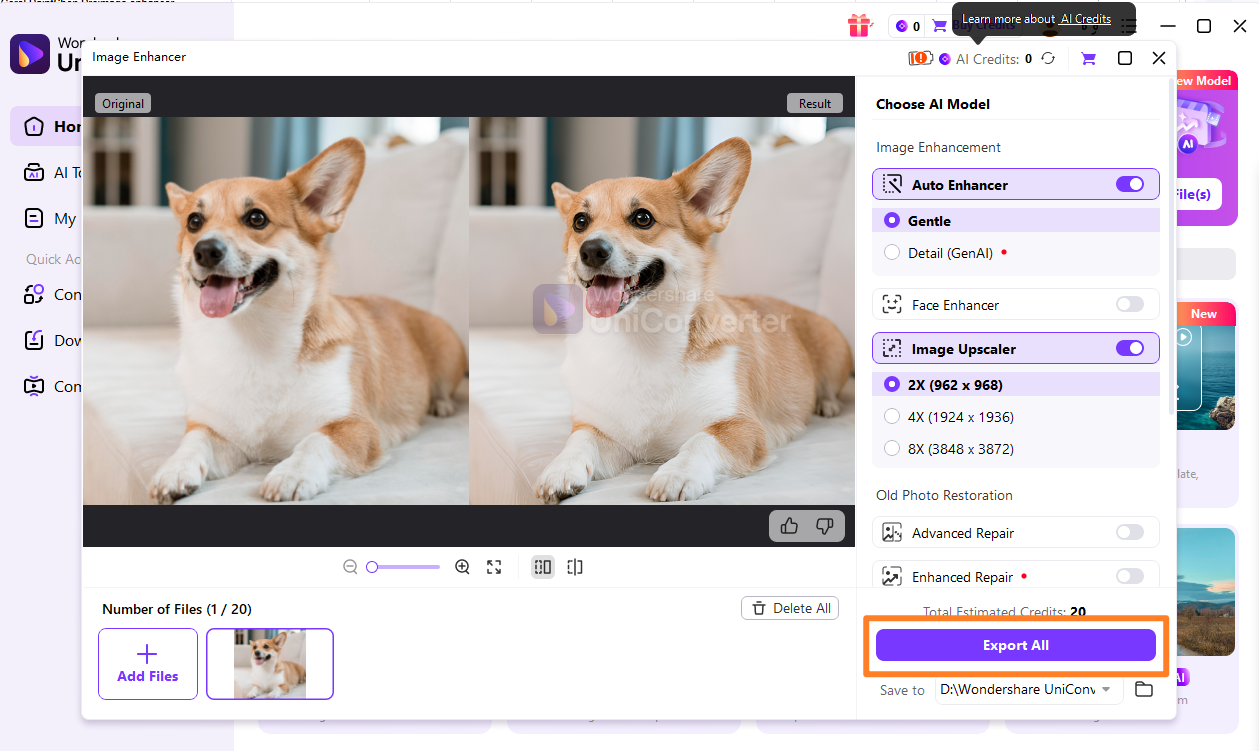
Step 4: Preview and Save the Enhanced Images
After selecting your enhancement options, UniConverter will process the images. You can preview the enhanced results to ensure they meet your expectations. Once satisfied, click the "Export" button to save your high-quality, enhanced images to your desired location.

Seeking a Powerful Pixelup Alternative?
Part 7: Conclusion
After spending considerable time with Pixelup image enhancer review and its competitors, my conclusion is that it's an excellent tool for specific needs. It truly excels at bringing old, blurry, or low-resolution faces back to life with remarkable clarity and ease. For anyone looking to restore cherished family photos or quickly improve personal snapshots for sharing, Pixelup offers a user-friendly and effective solution. However, its subscription model and occasional AI artifacting mean it might not be the best fit for infrequent users or those requiring absolute precision and control. For social media content creators who need quick, visually appealing results, Pixelup is a strong contender. Professional photographers and graphic designers, however, will likely find its automated nature too restrictive, preferring more powerful, control-rich tools like Topaz Labs Gigapixel AI or the comprehensive suite offered by UniConverter, especially for offline processing and data privacy concerns. Ultimately, your choice should align with your specific use case, budget, and comfort level with cloud-based processing.
Part 8: FAQs
-
1. Is Pixelup free to use?
Pixelup offers a limited free trial, but full functionality, including unlimited enhancements and higher resolutions, requires a subscription.
-
2. Can Pixelup enhance video quality?
No, Pixelup is specifically designed for image enhancement, not video. For video enhancement, you would need a dedicated video editing or enhancement tool.
-
3. How does Pixelup compare to Photoshop for image enhancement?
Pixelup is an AI-powered, one-click solution for quick, automated enhancements, especially for faces. Photoshop, on the other hand, offers manual, detailed control for professional-level editing, allowing for precise adjustments across all aspects of an image. They serve very different user needs.
-
4. Are there any privacy concerns with uploading photos to Pixelup?
Yes, as images are processed on Pixelup's cloud servers, users should review Pixelup's privacy policy to understand how their data is stored, used, and protected. It's always a good practice to be cautious with personal images on cloud services.
-
5. What types of images does Pixelup work best on?
Pixelup performs exceptionally well on old, blurry, or low-resolution photos, especially those containing faces. It's particularly effective for restoring vintage portraits and improving the clarity of smartphone photos.
