
- PineTools Value: Simple, free, browser-based for quick, basic image adjustments.
- Limitations: Lacks advanced features, not for professional use, potential quality degradation.
- Target Users: Ideal for casual users needing fast, minor photo fixes.
- Comparison: Less robust than Fotor, Canva, or Adobe Express for advanced editing.
- Risks: Data privacy, intrusive ads, limited output quality, over-processing, internet dependency.
- UniConverter Alternative: Offers comprehensive AI-driven enhancement, batch processing, and superior quality.
- Decision: Choose PineTools for quick fixes; UniConverter for professional, reliable, and advanced enhancement.
In this article
- Part 1: What is PineTools Image Enhancer?
- Part 2: PineTools Image Enhancer: Core Features, Pros, and Cons
- Part 3: Target Users and Use Cases
- Part 4: PineTools Image Enhancer and Alternatives Comparison
- Part 5: Risks and Pitfalls When Using Online Image Enhancers
- Part 6: How to Use UniConverter for Comprehensive Image Enhancement
- Part 7: Conclusion
- Part 8: FAQs
PineTools Image Enhancer Review: Boosting Your Visuals
When I first stumbled upon PineTools Image Enhancer, I was looking for a quick fix for some photos that just didn't pop. In a world saturated with complex photo editing software, the promise of a simple, browser-based tool for image enhancement was incredibly appealing. This PineTools Image Enhancer review aims to cut through the noise, offering an honest look at its capabilities, comparing it with other popular tools, and ultimately helping you decide if it's the right fit for your visual needs. We'll dive into its core features, weigh its pros and cons, and explore who truly benefits from its offerings, all while keeping an eye on the broader landscape of online image enhancement.
Part 1: What is PineTools Image Enhancer?
PineTools Image Enhancer is a part of the larger PineTools suite, a collection of free, browser-based utilities designed for various online tasks. My initial impression was that it’s positioned as a no-frills solution for basic image adjustments, a stark contrast to the often overwhelming interfaces of professional photo editors. It's built for speed and accessibility, allowing you to enhance images directly in your web browser without needing to download or install any software. This approach immediately caught my attention, especially for those moments when I just needed a quick touch-up without committing to a hefty application.
The Landscape of Online Image Enhancement Tools
The market for online image enhancement tools is vast and varied, catering to a wide spectrum of users. From my perspective, this diversity often leads to a few key challenges for users:
* Overwhelming Feature Sets: Many tools offer so many features that it's hard to know where to start, especially for casual users.
* Cost Barriers: Professional-grade software often comes with a steep price tag, making free alternatives very attractive.
* Accessibility Issues: Not everyone has the latest hardware or the desire to install heavy software, making browser-based solutions a godsend.
* Quality vs. Simplicity Trade-offs: Finding a tool that balances ease of use with decent output quality can be a real struggle.
Part 2: PineTools Image Enhancer: Core Features, Pros, and Cons
From my experience, PineTools Image Enhancer focuses on core image adjustments rather than advanced manipulations. It offers basic controls for brightness, contrast, saturation, and sharpness. What I found most useful was its straightforward interface; I could upload an image, tweak a few sliders, and see the results almost instantly. It’s not about transforming an image drastically, but rather about making those subtle improvements that can really make a difference.
Pros:
* Simplicity and Ease of Use for Quick Edits: Honestly, this is its biggest selling point. If you need to brighten a photo or boost its colors in a hurry, PineTools is incredibly intuitive.
* Browser-Based Accessibility for On-the-Go Enhancements: I’ve used it on different computers without any hassle, which is a huge plus for flexibility.
* Free Access to Basic Image Correction Tools: For zero cost, it delivers exactly what it promises – basic, effective enhancements.
Cons:
* Limited Advanced Features for Professional Users: If you're looking for layers, masks, or selective adjustments, you'll be disappointed. It's just not built for that.
* Potential for Quality Degradation on Highly Compressed Images: I noticed that trying to enhance an already low-quality image sometimes made it look worse, introducing artifacts.
Part 3: Target Users and Use Cases
PineTools Image Enhancer, in my opinion, shines brightest for a very specific audience. It's not trying to be a one-size-fits-all solution, and that's perfectly fine. I've found it incredibly useful for certain scenarios, while for others, it simply falls short.
Best Use Case: Casual Users Needing Quick, Minor Adjustments
If you're like me and just need to quickly fix a photo before sharing it on social media, or if you're preparing images for a blog post and don't require professional-grade editing, PineTools is fantastic. I often use it to correct exposure issues or add a bit more vibrancy to my smartphone photos. It’s perfect for those moments when you think, "This photo is almost there, it just needs a little something." It’s the digital equivalent of a quick wipe and polish.
Limited Use Case: Professional Photographers Requiring High-Fidelity Editing
For anyone who relies on image quality for their livelihood, like professional photographers or graphic designers, PineTools Image Enhancer is simply not enough. I wouldn't even consider using it for client work. The lack of granular control, advanced color management, and support for high-resolution RAW files means it can't meet the stringent demands of professional workflows. If you're looking to recover details from shadows, perform complex retouching, or ensure color accuracy across different devices, you'll need a much more robust tool.
Part 4: PineTools Image Enhancer and Alternatives Comparison
When I look at the broader market, PineTools Image Enhancer occupies a very specific niche. It’s the epitome of simplicity, but that comes with trade-offs when compared to more feature-rich alternatives.
| Feature/Tool | PineTools Image Enhancer | Fotor | Canva | Adobe Express |
| Ease of Use | Very High | High | Medium | Medium |
| Advanced Features | Low | Medium | Medium | High |
| Price | Free | Freemium | Freemium | Freemium |
| Output Quality | Basic | Good | Good | Excellent |
| Collaboration | No | Yes | Yes | Yes |
| Processing Speed | Fast | Moderate | Moderate | Moderate |
| Customer Support | Community | Email/FAQ | Email/Chat | Email/Chat |
| Security | Basic | Standard | Standard | High |
| Batch Processing | No | Yes (Premium) | No | No |
| AI Enhancement | No | Yes | Yes | Yes |
| File Format Support | JPG, PNG, GIF | Many | Many | Many |
Key Differentiators: Simplicity vs. Feature Richness
What I've learned is that PineTools Image Enhancer excels in its sheer simplicity and speed. If you just need to quickly adjust brightness or contrast, it's probably the fastest option out there. However, for anything beyond basic tweaks, tools like Fotor, Canva, and especially Adobe Express offer a much richer set of features, including AI-powered enhancements, more precise controls, and better output quality. While these come with a learning curve and often a premium price for full functionality, they deliver far more sophisticated results. For collaborative projects or professional output, the advanced features and robust support of the alternatives clearly win out.
Part 5: Risks and Pitfalls When Using Online Image Enhancers
Using online image enhancers, especially free ones, isn't without its caveats. I've encountered several issues that users should be aware of before uploading their precious photos. It's not just about the features; it's also about the hidden costs and potential downsides.
Data Privacy Concerns with Uploaded Images
This is a big one for me. When I upload an image to an online tool, I'm essentially handing over a piece of my data. While PineTools seems straightforward, many free services might use your uploaded images for their own purposes, such as training AI models or even sharing with third parties. I always recommend checking the privacy policy, especially if the images contain sensitive personal information. It’s a risk I weigh carefully with every upload.
Intrusive Advertisements and User Experience
Many free online tools, including some image enhancers, rely on advertising revenue. This often translates to a cluttered interface, pop-up ads, or even redirects that can severely degrade the user experience. While PineTools is relatively clean, I've seen other tools that are almost unusable due to aggressive advertising. It’s a constant battle between getting a free service and enduring a barrage of distractions.
Limitations in Output Resolution and Quality
I've often found that free online enhancers can struggle with maintaining the original resolution or quality of an image, especially after applying enhancements. What might look good on a small screen can appear pixelated or degraded when viewed at a larger size or printed. This is particularly frustrating when you're trying to improve an image, only to find the output isn't suitable for your intended use.
Over-Processing and Unnatural Results
It’s surprisingly easy to overdo it with image enhancement, especially with simple sliders for brightness or saturation. I've seen images come out looking garish, artificial, or just plain wrong because the tool didn't offer enough nuanced control. What starts as an attempt to "enhance" can quickly turn into "destroy." Achieving a natural, pleasing look often requires more sophisticated algorithms than basic online tools provide.
Dependence on Internet Connectivity
This might seem obvious, but it's a significant limitation. If I'm without an internet connection, or if my connection is slow, these browser-based tools become useless. For anyone who works offline or in areas with unreliable internet, this reliance on connectivity can be a major bottleneck in their workflow.
Part 6: How to Use UniConverter for Comprehensive Image Enhancement
When I've hit the limits with basic online enhancers—whether it's the lack of batch processing, unstable enhancement results, or simply weak effects—I often turn to UniConverter for a more robust image enhancement solution. It's become my go-to for achieving consistent, high-quality results without the hassle of ads or privacy concerns. It feels like an all-in-one toolkit that handles more than just basic tweaks.
UniConverter stands out because it offers a suite of powerful AI-driven enhancement tools, supports a vast array of formats, and leverages GPU acceleration for speedy processing. What I appreciate most is its ability to perform stable, lossless enhancements, even in batches, which saves me a ton of time. It’s a comprehensive solution that avoids the common pitfalls of free online tools, delivering professional-grade results without compromising on privacy or user experience. For instance, its AI video enhancer and AI image enhancer capabilities are particularly impressive, allowing me to upscale video or enhance image resolution with ease.
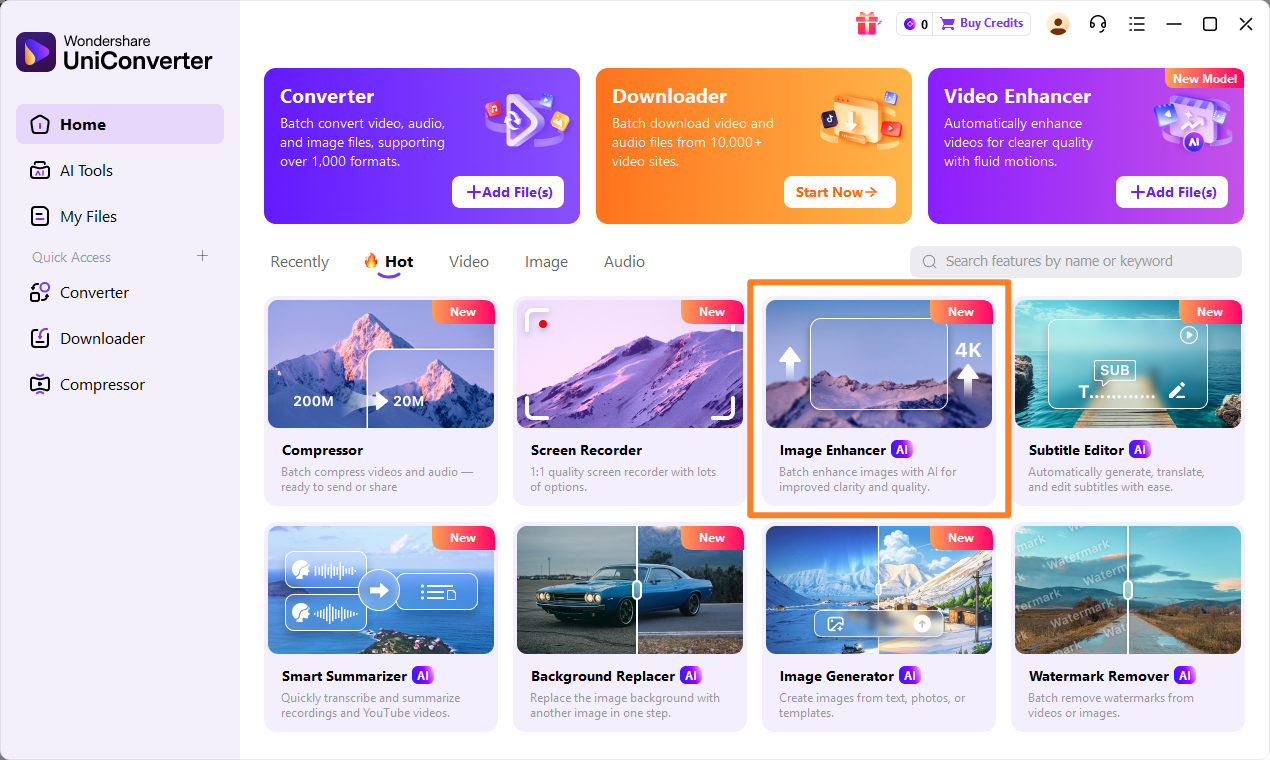
Step 1: Open UniConverter and Choose Image Enhancer
First, I launch UniConverter on my desktop. From the main interface, I navigate to the "AI Lab" section and select the "Image Enhancer" tool. It’s usually clearly labeled and easy to find.
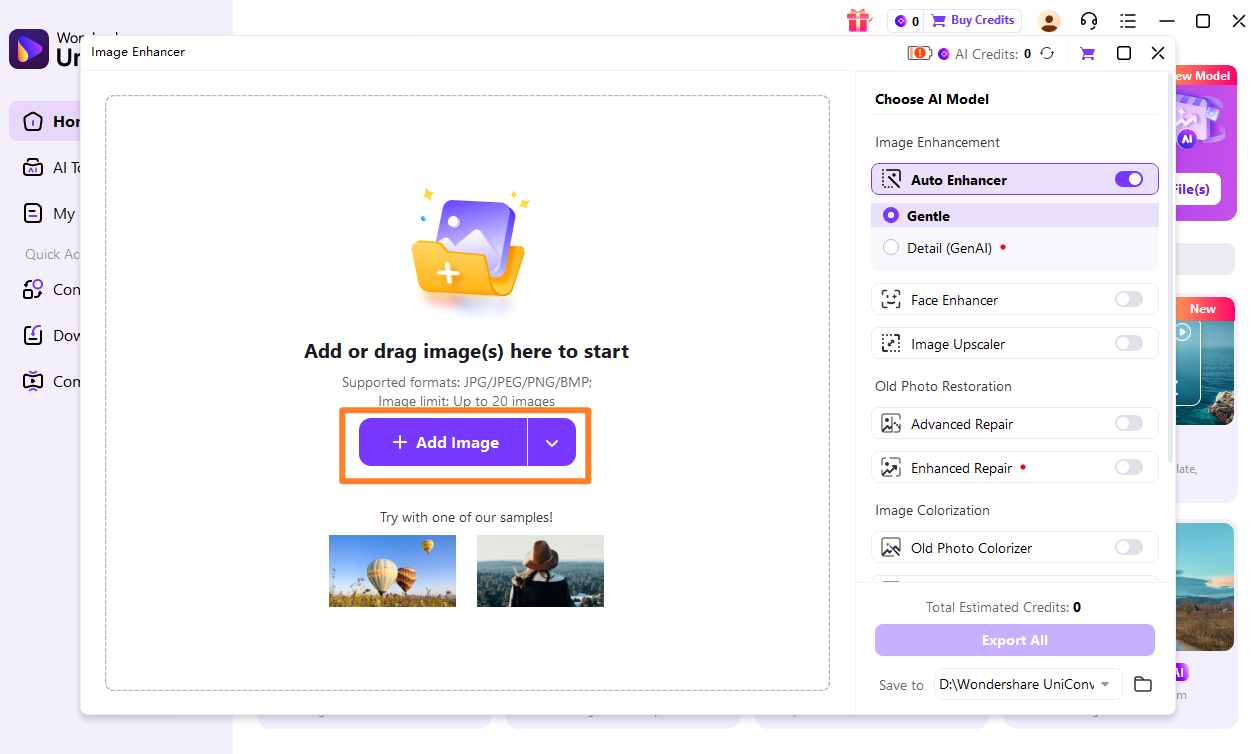
Step 2: Upload the Images
Next, I simply drag and drop the images I want to enhance into the UniConverter window. Alternatively, I can click the "Add Files" button to browse and select them from my computer. This is where the batch processing really shines for me.
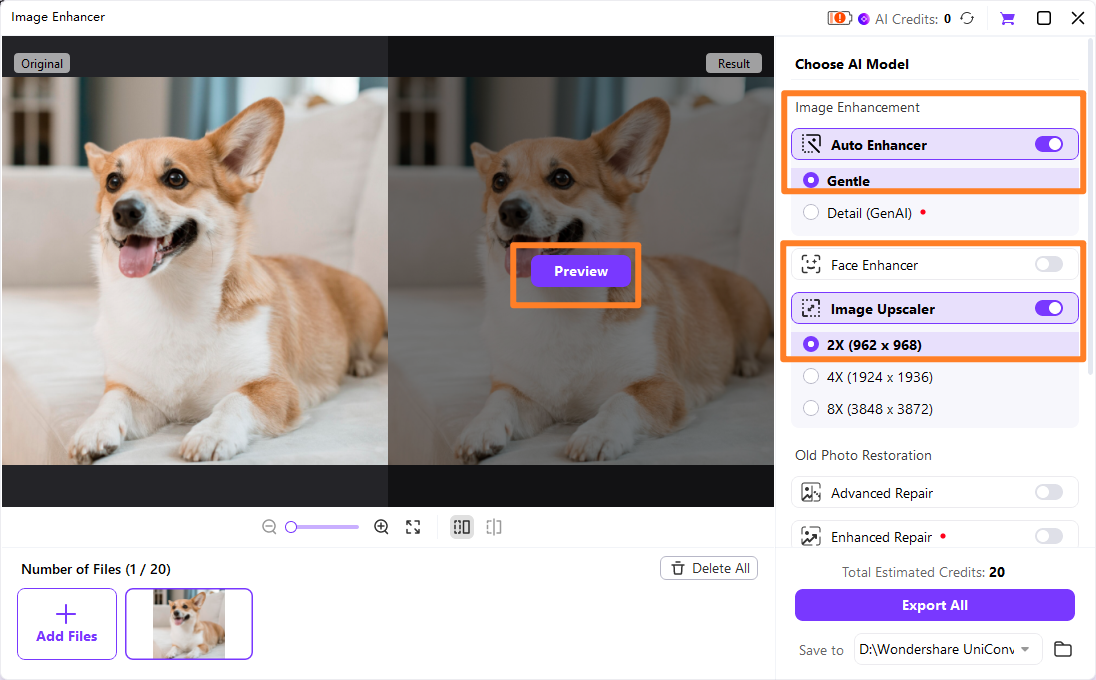
Step 3: Choose Enhancement Model
UniConverter offers different AI enhancement models. I usually experiment with these to see which one best suits the image type—whether it's for general improvement, deblurring, or color correction. I can preview the effects before committing.
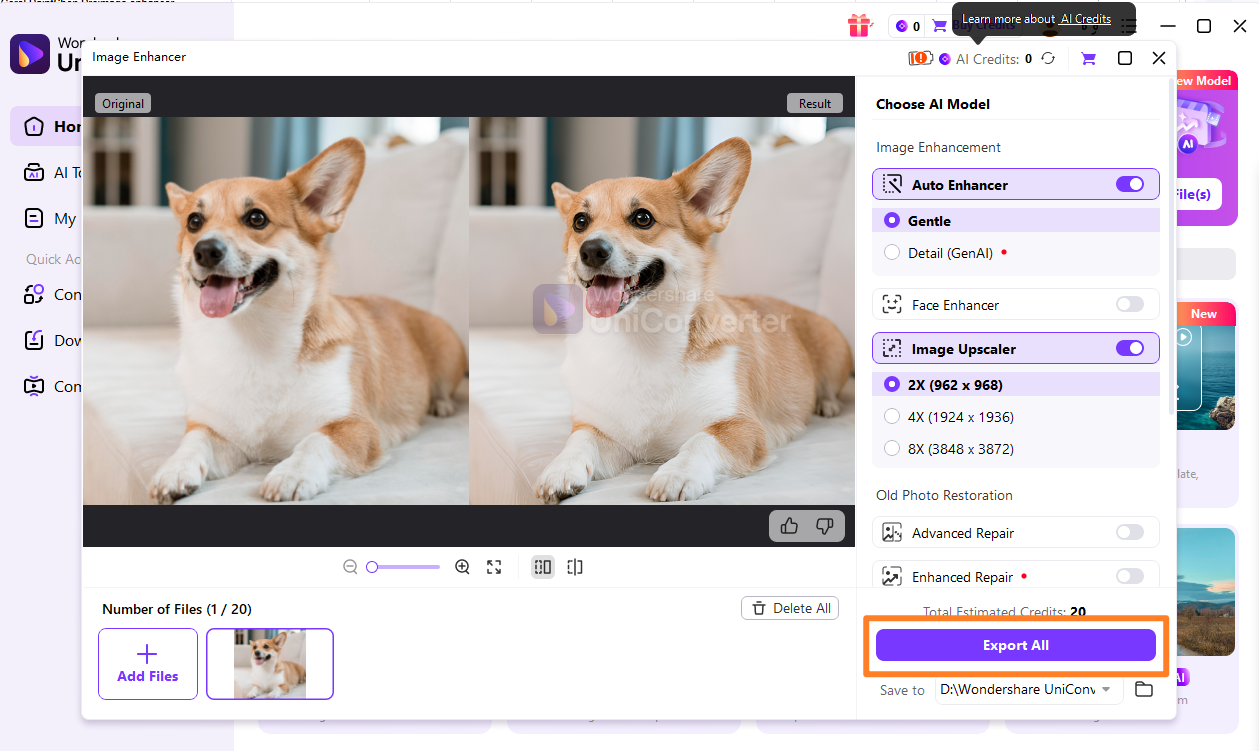
Step 4: Preview and Save the Enhanced Images
Once I’m happy with the enhancement, I can preview the results side-by-side with the original. Then, I choose my desired output format and destination folder, and click "Export" to save my newly enhanced images.

Seeking a Better Image Enhancer Alternative?
Part 7: Conclusion
After spending time with PineTools Image Enhancer and comparing it against various alternatives, my conclusion is clear: its value lies in its simplicity and accessibility for basic, quick edits. For anyone who just needs to brighten a photo for social media or make minor adjustments without downloading software, it’s an excellent, free option. However, for more demanding tasks, professional results, or when privacy and output quality are paramount, its limitations become apparent. Tools like UniConverter offer a more robust, feature-rich experience, leveraging AI for superior enhancements and providing a more secure, ad-free environment. The choice ultimately boils down to your specific needs, balancing the convenience of a free, browser-based tool against the power and reliability of a dedicated software solution. This PineTools Image Enhancer review highlights that while it serves a purpose, it's crucial to understand its boundaries and explore alternatives for more comprehensive image enhancement.
Part 8: FAQs
-
1. Is PineTools Image Enhancer completely free to use?
Yes, PineTools Image Enhancer offers its basic features for free.
-
2. Can PineTools Image Enhancer improve the quality of very blurry images?
While it can offer some improvement, heavily blurred images may not see significant quality restoration.
-
3. Are there any privacy concerns when uploading images to PineTools?
Like any online tool, it's advisable to review their privacy policy, especially for sensitive images.
-
4. What types of image files does PineTools Image Enhancer support?
It typically supports common formats like JPG, PNG, and GIF.
-
5. How does UniConverter compare to PineTools in terms of image enhancement capabilities?
UniConverter generally offers more advanced enhancement features, AI-powered tools, and broader format support compared to PineTools.
