
- Value Proposition: PicsArt Image Enhancer offers quick, AI-powered photo improvements for social media, but its free version is ad-heavy.
- Core Features: Provides intuitive editing, creative filters, and social sharing, yet advanced AI features require a subscription.
- Ideal Users: Best for influencers and casual users needing fast, visually appealing social media content.
- Limitations: Not suitable for professional photography due to lack of granular control and advanced editing tools.
- Comparison: UniConverter offers superior AI enhancement, batch processing, and an ad-free experience, outperforming PicsArt for quality and efficiency.
- Risks: Users face privacy concerns, intrusive ads, potential for over-processed results, and hidden subscription costs.
- Decision Factor: Choose PicsArt for quick, casual edits; opt for UniConverter or other alternatives for professional-grade, reliable enhancement.
In this article
- Part 1: What is PicsArt Image Enhancer?
- Part 2: PicsArt Image Enhancer: Core Features, Pros, and Cons
- Part 3: PicsArt Image Enhancer: Ideal Users and Use Cases
- Part 4: PicsArt Image Enhancer and Alternatives Comparison
- Part 5: Risks and Pitfalls of Using PicsArt Image Enhancer
- Part 6: How to Use UniConverter for Efficient Image Enhancement
- Part 7: Conclusion
- Part 8: FAQs
When I first started dabbling in digital content creation, I quickly realized that a good image could make or break my efforts. That's where tools like PicsArt Image Enhancer review come into play. This review aims to cut through the marketing hype and give you a real-world perspective on PicsArt's image enhancement capabilities. We'll explore its features, weigh its pros and cons, and crucially, compare it to other players in the market, helping you decide if it's the right tool for your specific needs. From quick social media edits to more demanding projects, I'll share my insights to guide your decision-making process.
Part 1: What is PicsArt Image Enhancer?
PicsArt Image Enhancer is a feature within the broader PicsArt photo and video editing application, designed to improve the quality of your images through various tools, including AI-powered enhancements. It's positioned as an accessible solution for anyone looking to quickly refine their photos without needing extensive graphic design knowledge. My initial impression was that it aimed to be an all-in-one creative suite, and the image enhancer is a key part of that offering.
The Growing Need for AI-Powered Image Enhancement
In today's visually-driven world, the demand for high-quality images is constant, and AI has stepped in to fill a crucial gap.
* Social Media Dominance: Platforms like Instagram and TikTok thrive on stunning visuals, making quick and effective image enhancement a necessity for creators.
* E-commerce and Marketing: Businesses, big and small, rely on crisp, appealing product photos to attract customers and drive sales.
* Personal Memories: We all want our cherished photos to look their best, whether it's an old family snapshot or a recent vacation picture.
* Accessibility for All: AI tools democratize photo editing, allowing even beginners to achieve professional-looking results without a steep learning curve.
Part 2: PicsArt Image Enhancer: Core Features, Pros, and Cons
PicsArt Image Enhancer offers a range of tools to spruce up your photos. Beyond basic adjustments like brightness and contrast, it boasts AI-driven features that promise to sharpen details, reduce noise, and even upscale images. I found its "Enhance" button particularly intriguing, as it claims to intelligently improve overall image quality with a single tap. It also integrates seamlessly with PicsArt's vast library of filters and effects, making it easy to enhance and then stylize your images in one go.
Pros:
* Intuitive Interface for Quick Edits: I found navigating PicsArt incredibly straightforward. The layout is clean, and most enhancement tools are just a tap away, perfect for on-the-go editing.
* Wide Range of Creative Filters and Effects: After enhancing an image, I often like to add a creative touch, and PicsArt's extensive collection of filters and stickers allows for endless personalization.
* Integrated Social Sharing Capabilities: Once my image was enhanced and edited, sharing it directly to my social media platforms was super convenient, saving me extra steps.
Cons:
* Frequent Ads and Upsells in Free Version: This was a major annoyance for me. The free version is riddled with pop-up ads and constant prompts to upgrade, which really disrupts the editing flow.
* Subscription Required for Advanced Features: While basic enhancement is available, many of the more powerful AI tools and higher-quality outputs are locked behind a premium subscription, which felt a bit restrictive.
Part 3: PicsArt Image Enhancer: Ideal Users and Use Cases
From my experience, PicsArt Image Enhancer really shines for certain types of users and specific scenarios. It's not a one-size-fits-all solution, and understanding its strengths and limitations is key to deciding if it's right for you. If you're someone who needs quick, visually appealing results without getting bogged down in technical details, you'll likely find it very useful.
Best Use Case: Social Media Content Creation for Influencers
For influencers and casual social media users, PicsArt is a goldmine. I've used it countless times to quickly enhance photos for Instagram stories or TikTok posts. The one-tap enhancement, combined with its vast array of trendy filters and stickers, makes it incredibly efficient for creating eye-catching content on the fly. You can literally take a photo, enhance it, add some flair, and post it within minutes, which is crucial for staying relevant in the fast-paced social media world.
Limited Use Case: Professional Photography Post-Processing
However, if you're a professional photographer looking for granular control over your RAW files or needing precise color correction and detailed retouching, PicsArt will likely fall short. I tried using it for some of my more serious photography projects, and while it can make basic improvements, it lacks the advanced tools and non-destructive editing capabilities that professional software like Adobe Photoshop or Lightroom offers. For high-resolution prints or client work, I wouldn't rely on it.
Part 4: PicsArt Image Enhancer and Alternatives Comparison
When it comes to image enhancement, PicsArt isn't the only player in the game. I've explored several alternatives, and each has its own strengths. Here's how PicsArt stacks up against some notable competitors, including UniConverter, which I've found to be a strong contender in certain areas.
| Feature/Scenario | PicsArt Image Enhancer | UniConverter | Luminar Neo | Topaz Photo AI |
| Processing Speed | Good | Excellent | Good | Excellent |
| Output Quality | Good | Excellent | Excellent | Excellent |
| Ease of Use | Excellent | Excellent | Good | Good |
| Customer Support | Moderate | Excellent | Good | Good |
| Security | Moderate | Excellent | Good | Good |
| Cost | Moderate (Subscription) | Moderate (One-time) | High (Subscription/One-time) | High (One-time) |
Key Differentiators:
PicsArt's strength lies in its user-friendly interface for quick, creative edits, ideal for social media. UniConverter, on the other hand, offers superior AI enhancement and a more robust feature set for both casual and semi-professional users, especially when it comes to batch processing and video integration. Luminar Neo provides excellent AI-powered creative tools for photographers who want artistic control, while Topaz Photo AI excels in pure image quality restoration and upscaling, often used by professionals for critical enhancements. For me, if I need a quick social media boost, PicsArt is fine, but for more reliable, high-quality enhancement without the fuss, UniConverter often comes out on top.
Part 5: Risks and Pitfalls of Using PicsArt Image Enhancer
While PicsArt offers a lot of creative freedom, I've encountered several aspects that users, especially those new to the platform, should be aware of. It's not all sunshine and rainbows, and understanding these potential downsides can save you a lot of frustration down the line.
Privacy Concerns with Data Usage
Like many free-to-use apps, PicsArt collects a significant amount of user data. I've always been a bit wary of how my photos and personal information might be used, especially when dealing with cloud-based processing. It's worth reviewing their privacy policy carefully to understand what you're consenting to.
Intrusive Advertising Experience
This is perhaps my biggest gripe with the free version. The constant pop-up ads and full-screen video ads are incredibly disruptive. I often found myself closing ads more than actually editing, which really detracts from the user experience and makes quick edits anything but quick.
Potential for Over-Processed or Unnatural Results
While the "Enhance" button is convenient, I've noticed it can sometimes lead to images that look overly sharpened or have unnatural color saturation. It's a fine line between enhancement and artificiality, and PicsArt's AI doesn't always get it right, especially with subtle details or skin tones.
Subscription Traps and Hidden Costs
The free version is quite limited, and PicsArt aggressively pushes its premium subscription. I've found that many features I initially thought were free were actually locked behind a paywall. It can feel like a bait-and-switch, and if you're not careful, you might find yourself subscribing for features you don't truly need.
Lack of Granular Control for Specific Enhancements
For more advanced users like myself, the lack of granular control over specific enhancement parameters is a drawback. I often want to adjust noise reduction or sharpening levels precisely, but PicsArt tends to offer more generalized, one-size-fits-all solutions, which isn't ideal for every image.
Part 6: How to Use UniConverter for Efficient Image Enhancement
Sometimes, when I've found other tools lacking in consistency or struggling with batch processing, I turn to UniConverter. It's a solid alternative if you're looking for a reliable, ad-free experience with robust enhancement capabilities. It avoids the common pitfalls of inconsistent results and intrusive ads, offering a more stable and high-quality solution for various image enhancement needs. With its GPU acceleration and support for numerous formats, it truly stands out as an all-in-one ultimate solution for me, ensuring my enhanced images are always top-notch and lossless. For those looking to upscale images to 4K, this tool provides excellent results. If you're dealing with pixelated videos, UniConverter also offers solutions for video enhancement.
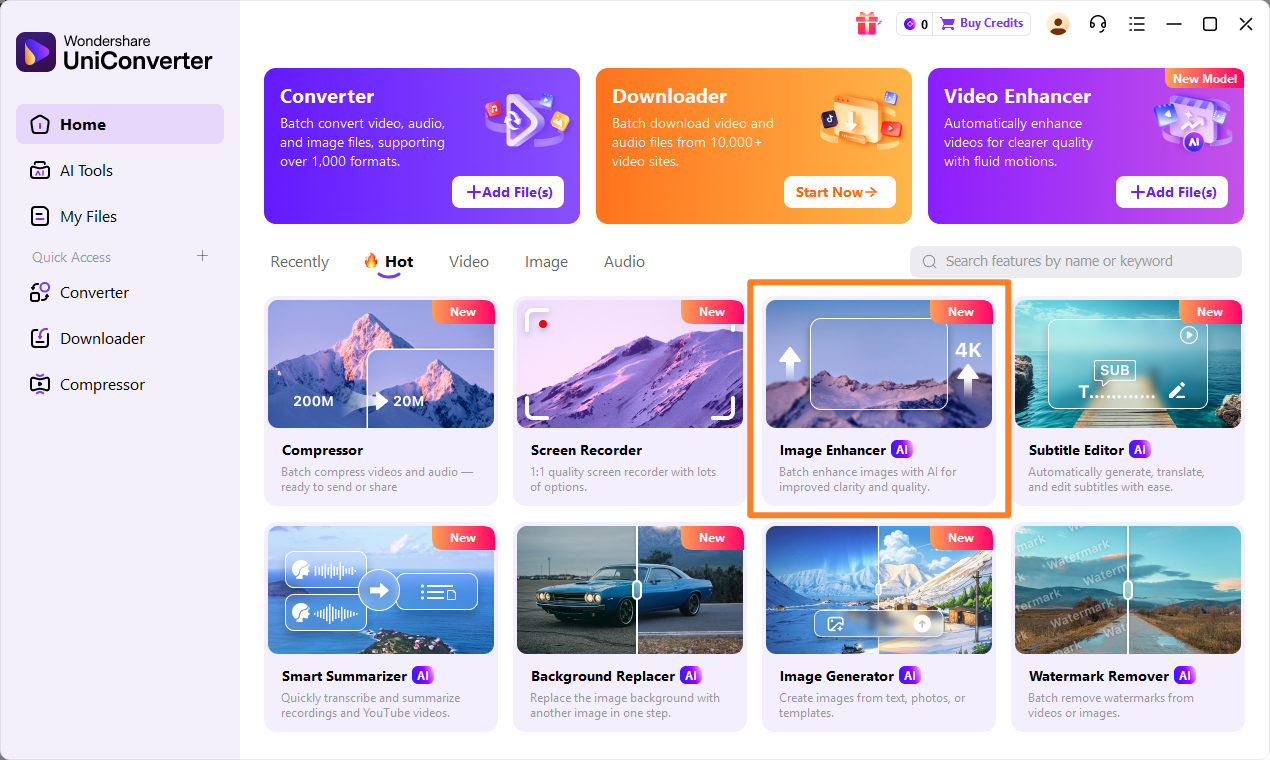
Step 1: Open UniConverter and Choose Image Enhancer
First, I launch UniConverter on my desktop. On the main interface, I navigate to the "Toolbox" section and select the "Image Enhancer" option. It's usually quite prominent and easy to find.
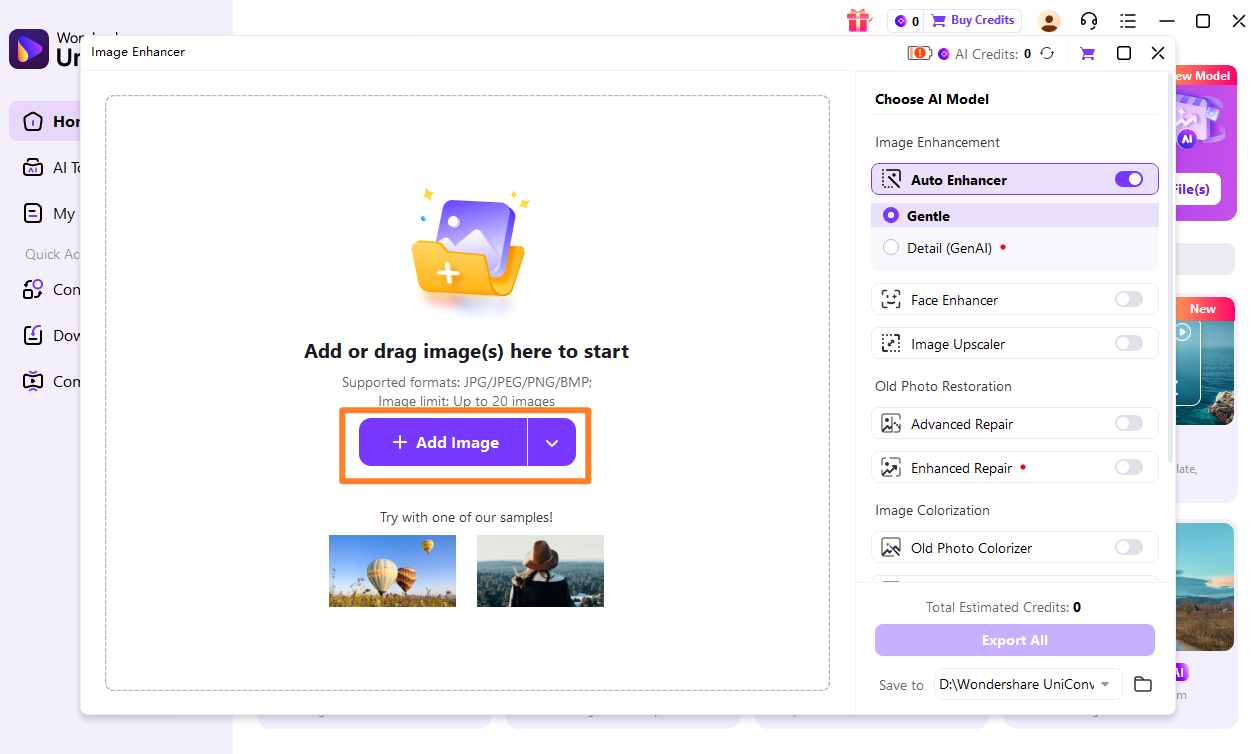
Step 2: Upload the Images
Next, I click on the "Add Files" button or simply drag and drop the images I want to enhance into the UniConverter window. I can add multiple images at once, which is a huge time-saver for batch processing.
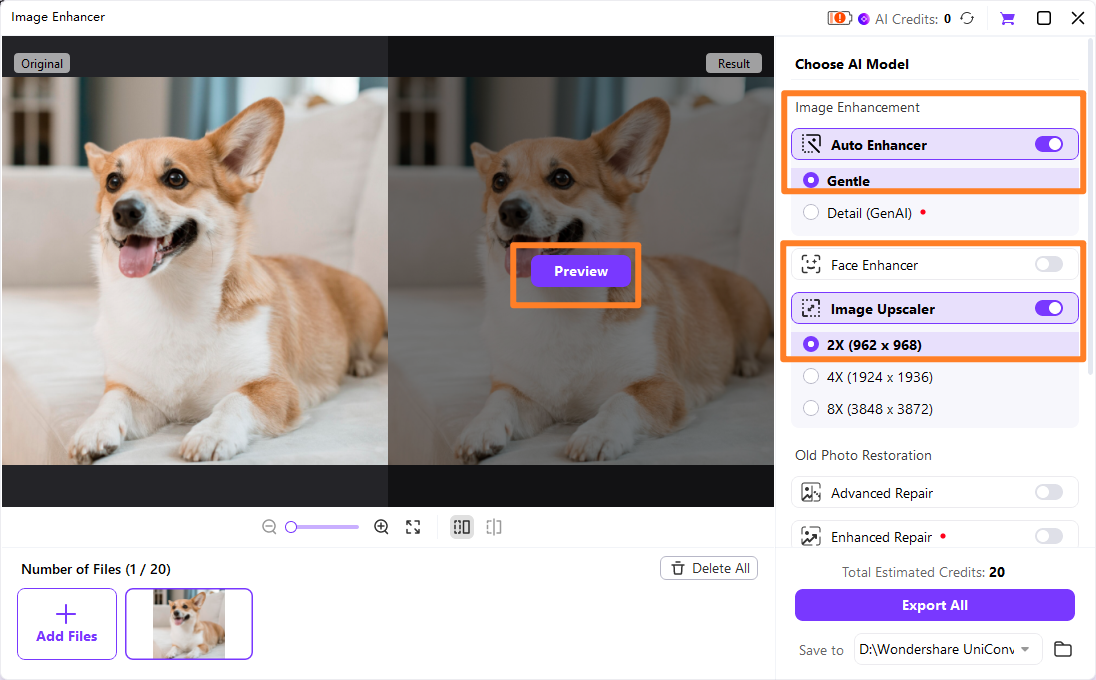
Step 3: Choose Enhancement Model
Once my images are loaded, I choose the desired enhancement model. UniConverter offers different AI models tailored for various improvements like noise reduction, sharpening, and upscaling. I select the one that best fits my image's needs.
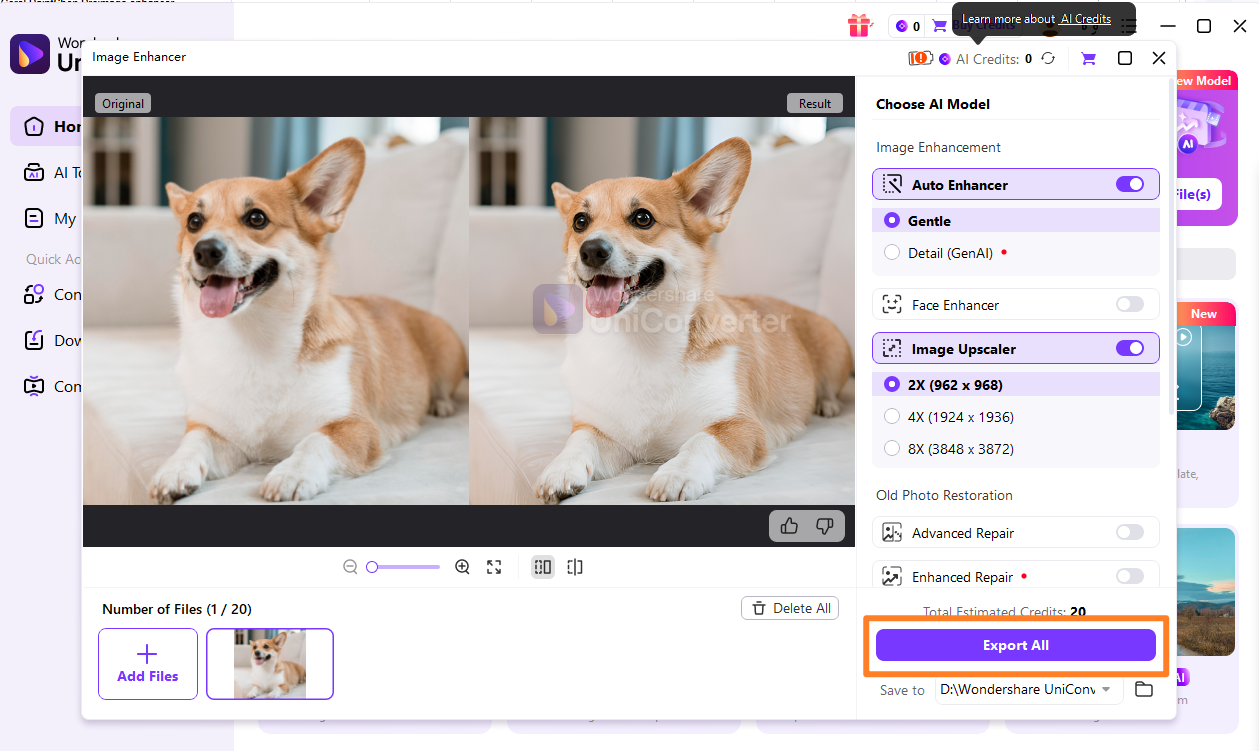
Step 4: Preview and Save the Enhanced Images
After applying the enhancement, UniConverter allows me to preview the results side-by-side with the original image. If I'm happy with the outcome, I click "Save" to export my high-quality, enhanced images to my chosen destination.

Need a Powerful PicsArt Image Enhancer Alternative?
Part 7: Conclusion
After spending considerable time with PicsArt Image Enhancer review, I've come to a clear understanding of its place in the crowded market of photo editing tools. For casual users and social media enthusiasts who prioritize speed and creative flair, PicsArt offers an accessible and fun platform to quickly beautify their photos before sharing. Its intuitive interface and vast array of filters make it a go-to for on-the-fly edits. However, for those on a tight budget, the frequent ads and aggressive upsells in the free version can be a significant deterrent, potentially making the experience frustrating rather than enjoyable. Professionals seeking advanced control, precise adjustments, or high-fidelity output for print or client work will likely find PicsArt's capabilities too limited, lacking the granular control and non-destructive editing features found in more specialized software. In such cases, exploring alternatives like UniConverter, Luminar Neo, or Topaz Photo AI would be a more suitable path to achieve professional-grade results without compromise.
Part 8: FAQs
-
1. Is PicsArt Image Enhancer free to use?
Yes, PicsArt offers a free version with basic image enhancement features, but it includes frequent ads and many advanced tools are locked behind a premium subscription.
-
2. How does PicsArt's AI enhancement compare to professional software?
PicsArt's AI enhancement is generally good for quick, automatic improvements, but it lacks the granular control, precision, and high-fidelity output that professional software like Adobe Photoshop or Lightroom offers for detailed work.
-
3. Can PicsArt improve the resolution of old photos?
PicsArt does have tools that claim to upscale and improve the resolution of photos, but the results can vary. For significant resolution improvements on very old or low-quality photos, dedicated upscaling software might yield better results.
-
4. What are the best alternatives to PicsArt for image enhancement?
Strong alternatives include UniConverter for an all-in-one solution with robust enhancement, Luminar Neo for creative AI-powered editing, and Topaz Photo AI for professional-grade noise reduction and sharpening.
-
5. Is my data safe when using PicsArt Image Enhancer?
Like many cloud-based applications, PicsArt collects user data. It's advisable to review their privacy policy to understand how your images and personal information are handled and stored.
