
- PhotoWorks Overview: User-friendly AI enhancer for quick fixes, ideal for casual photographers and social media.
- Core Strengths: Intuitive interface, powerful AI for common issues, and efficient batch processing save time.
- Limitations: Lacks advanced editing features and granular control; not suitable for professional-grade work.
- Target Audience: Best for casual users seeking fast, simple enhancements; professionals need more robust tools.
- Comparison: Simpler than Luminar Neo or Lightroom, but UniConverter offers broader media enhancement.
- Risks: Watch for over-processing, subscription costs, and potential data privacy concerns with cloud features.
- UniConverter Alternative: Offers comprehensive, stable AI enhancement for both images and videos with GPU acceleration.
- Decision: Choose based on need: PhotoWorks for simplicity, UniConverter for all-in-one media, or professional tools for advanced control.
In this article
- Part 1: What is PhotoWorks Image Enhancer?
- Part 2: PhotoWorks Image Enhancer: Core Features, Pros, and Cons
- Part 3: PhotoWorks Image Enhancer: Target Audience and Use Cases
- Part 4: PhotoWorks Image Enhancer and Alternatives Comparison
- Part 5: Risks and Pitfalls to Consider
- Part 6: How to Use UniConverter for Comprehensive Image and Video Enhancement
- Part 7: Conclusion
- Part 8: FAQs
When diving into the world of digital photography and image editing, one often encounters situations where a photo just doesn't quite hit the mark. Maybe it's a bit underexposed, slightly blurry, or the colors feel flat. This is where AI image enhancers like PhotoWorks Image Enhancer come into play. As someone who's spent countless hours tweaking photos, I've seen the rise of these tools firsthand, promising to magically fix imperfections with a click. This PhotoWorks Image Enhancer review aims to cut through the marketing hype and give you a real-world perspective on its capabilities, comparing it against some of its notable competitors to help you decide if it's the right fit for your needs.
Part 1: What is PhotoWorks Image Enhancer?
PhotoWorks Image Enhancer positions itself as an accessible and user-friendly photo editing software, primarily focusing on leveraging AI to simplify complex enhancement tasks. It's designed for individuals who want to improve their photos without delving into the intricacies of professional-grade editing suites. My initial impression was that it aimed to be a "one-click wonder" for common photo problems, and to a large extent, it delivers on that promise for basic enhancements. This review will explore whether its simplicity comes at the cost of advanced control and if it truly stands out in a crowded market of AI-powered image tools.
The Landscape of AI Image Enhancement Tools
The market for AI image enhancement tools has exploded, driven by several key factors:
* Growing Demand for Instant Gratification: Everyone wants their photos to look great, and they want it now. AI offers that speed.
* Accessibility for Non-Professionals: Traditional photo editing software can be daunting. AI tools democratize enhancement.
* Rise of Social Media: High-quality visuals are crucial for engagement, pushing users to seek easy enhancement solutions.
Part 2: PhotoWorks Image Enhancer: Core Features, Pros, and Cons
PhotoWorks Image Enhancer offers a suite of tools that cater to common photo editing needs. From my experience, its core strength lies in its AI-driven capabilities to automatically correct lighting, color, and sharpness. It also includes features for portrait retouching, background removal, and basic object removal. For someone like me who often needs quick fixes for social media posts or personal albums, these features are quite handy.
Pros:
* Intuitive Interface for Quick Edits: I found it incredibly easy to navigate. The layout is clean, and the tools are clearly labeled, making it simple to jump in and start enhancing without a steep learning curve.
* Powerful AI-Driven Enhancement for Common Photo Issues: The AI really shines when dealing with underexposed photos or those with dull colors. It often brings out details I didn't even realize were there.
* Batch Processing for Efficiency: This is a lifesaver when you have a large set of photos from an event. Being able to apply the same enhancements to multiple images at once saves a tremendous amount of time.
Cons:
* Limited Advanced Editing Capabilities: While great for quick fixes, I quickly hit a wall when I needed more granular control. Things like precise masking, complex layer adjustments, or advanced color grading are simply not available.
* Subscription-Based Model for Full Features: To unlock its full potential and avoid watermarks, you're looking at a subscription. While common, it's something to consider if you're on a tight budget or only need occasional use.
Part 3: PhotoWorks Image Enhancer: Target Audience and Use Cases
From my perspective, PhotoWorks Image Enhancer is perfectly tailored for a specific segment of users. It's not trying to be a Photoshop killer, and that's okay.
Best Use Case: Casual Photographers and Social Media Enthusiasts Seeking Quick Fixes
If you're like me and primarily take photos with your smartphone or a basic camera, and your main goal is to make them look better for sharing online or printing casually, PhotoWorks is fantastic. It's ideal for brightening up vacation photos, making selfies pop, or correcting minor flaws in everyday shots without spending hours learning complex software. I find myself reaching for it when I just need a photo to look "good enough" quickly.
Limited Use Case: Professional Photographers Requiring Granular Control and Specialized Tools
However, if you're a professional photographer, or even a serious hobbyist who demands pixel-level precision, extensive color management, or specialized retouching tools, PhotoWorks will likely fall short. For intricate portrait retouching, architectural photography corrections, or fine-art prints, its limitations in advanced features become apparent. I wouldn't recommend it for client work where specific, high-end results are non-negotiable.
Part 4: PhotoWorks Image Enhancer and Alternatives Comparison
When evaluating PhotoWorks, it's crucial to see how it stacks up against other players in the field. Here's my take on how it compares to some popular alternatives.
| Feature/Scenario | PhotoWorks Image Enhancer | Luminar Neo | Adobe Lightroom | UniConverter |
| Ease of Use (Beginner) | Excellent | Good | Moderate | Excellent |
| AI Enhancement Quality (General) | Very Good | Excellent | Good | Very Good |
| Advanced Editing Options | Limited | Extensive | Very Extensive | Limited (Focus on Conversion/Basic Edit) |
| Batch Processing | Good | Excellent | Excellent | Excellent |
| Pricing Model | Subscription | One-time/Subscription | Subscription | One-time/Subscription |
| Specific Scenario: Enhancing Old Family Photos | Good | Excellent | Good | Good |
| Specific Scenario: Professional Portrait Retouching | Limited | Very Good | Excellent | Limited |
| Processing Speed | Moderate | Fast | Fast | Very Fast (GPU Accelerated) |
| Output Quality (Lossless) | Good | Excellent | Excellent | Excellent |
| Customer Support | Standard | Good | Excellent | Excellent |
| Security/Privacy | Standard | Good | Excellent | Excellent |
Key Differentiators: Simplicity vs. Power
PhotoWorks clearly prioritizes simplicity. It's designed for quick, effective enhancements. Luminar Neo, on the other hand, offers a more robust set of AI tools and creative filters, bridging the gap between simplicity and professional features. Adobe Lightroom remains the industry standard for comprehensive photo management and editing, offering unparalleled control but with a steeper learning curve. UniConverter, while not a dedicated image editor, offers surprisingly effective AI enhancement as part of its broader media toolkit, especially for batch processing and conversion. If you just want to make your photos look better without fuss, PhotoWorks is a strong contender. If you need more creative control or professional-grade results, Luminar Neo or Lightroom are better choices.
Part 5: Risks and Pitfalls to Consider
While PhotoWorks Image Enhancer offers a convenient solution, it's important to be aware of potential downsides, especially if you're considering a long-term commitment.
Data Privacy Concerns with Cloud-Based Processing
Like many modern software solutions, PhotoWorks might utilize cloud processing for some of its AI features. This means your images could be uploaded to their servers. While companies usually have robust privacy policies, it's always wise to be cautious, especially with sensitive personal photos. I always recommend checking their privacy policy to understand how your data is handled.
Potential for Over-Processed or Unnatural Results
The "magic" of AI enhancement can sometimes be a double-edged sword. In my experience, while PhotoWorks often does a good job, there are instances where the AI might over-sharpen an image, boost colors too aggressively, or apply a "beautifying" filter that makes portraits look unnatural or plastic. It's crucial to review the enhanced image and adjust the intensity if needed, rather than blindly accepting the AI's suggestions.
Hidden Costs or Upsells in Free Trials
Many software products, including PhotoWorks, offer free trials. However, these trials often come with limitations, such as watermarks on exported images or restricted access to premium features. It's important to read the fine print. I've seen situations where users get hooked on a feature only to find it's locked behind a subscription, or that the "free" version is too limited to be truly useful.
Compatibility Issues with Specific File Formats
While PhotoWorks supports common image formats like JPEG and PNG, you might encounter issues if you work with less common formats or high-end RAW files from professional cameras. Always check the supported file types before committing, especially if your workflow involves specialized formats.
Reliance on Internet Connection for AI Features
Some of PhotoWorks' more advanced AI features might require an active internet connection to access cloud-based processing power. If you frequently work offline or have an unreliable internet connection, this could be a significant limitation, slowing down your workflow or preventing certain features from working altogether.
Part 6: How to Use UniConverter for Comprehensive Image and Video Enhancement
Sometimes, despite the promises, dedicated image enhancers might fall short – perhaps they don't support batch processing for all your needs, the enhancement is unstable, or the effects are too subtle. In such cases, I've found UniConverter to be a surprisingly robust alternative, especially when you need an all-in-one media solution. It's not just a converter; its AI enhancement features are quite powerful, stable, and, importantly, ad-free. It leverages GPU acceleration for speed and ensures lossless quality, making it a fantastic tool for both image and video enhancement.
Why UniConverter Stands Out
UniConverter offers a comprehensive suite of tools that goes beyond simple image enhancement. For me, its ability to handle both images and videos, coupled with its AI-driven features and efficient batch processing, makes it an invaluable addition to my toolkit. It's a reliable solution when other tools are too niche or too complex, providing a seamless experience for enhancing video quality and refining images.
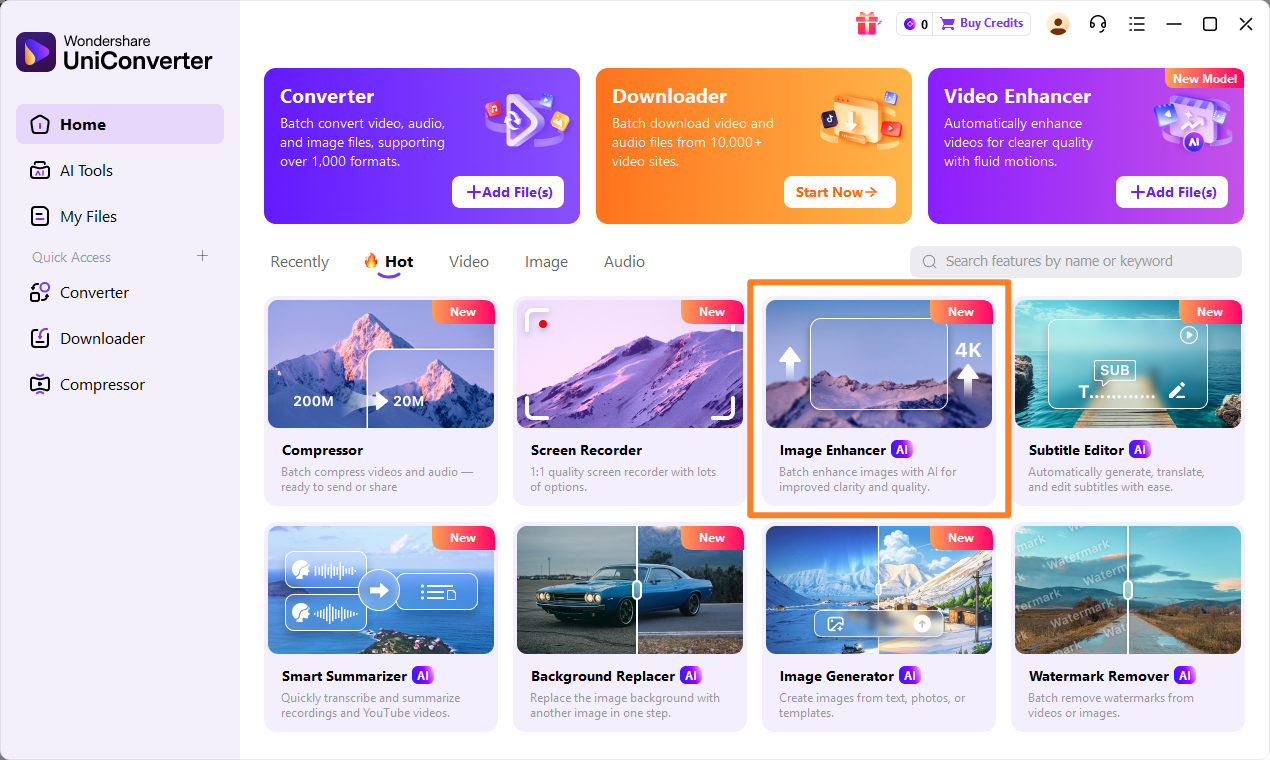
Step 1: Open UniConverter and Choose Image Enhancer
Launch UniConverter on your computer. On the main interface, navigate to the "AI Lab" section and select the "Image Enhancer" tool.
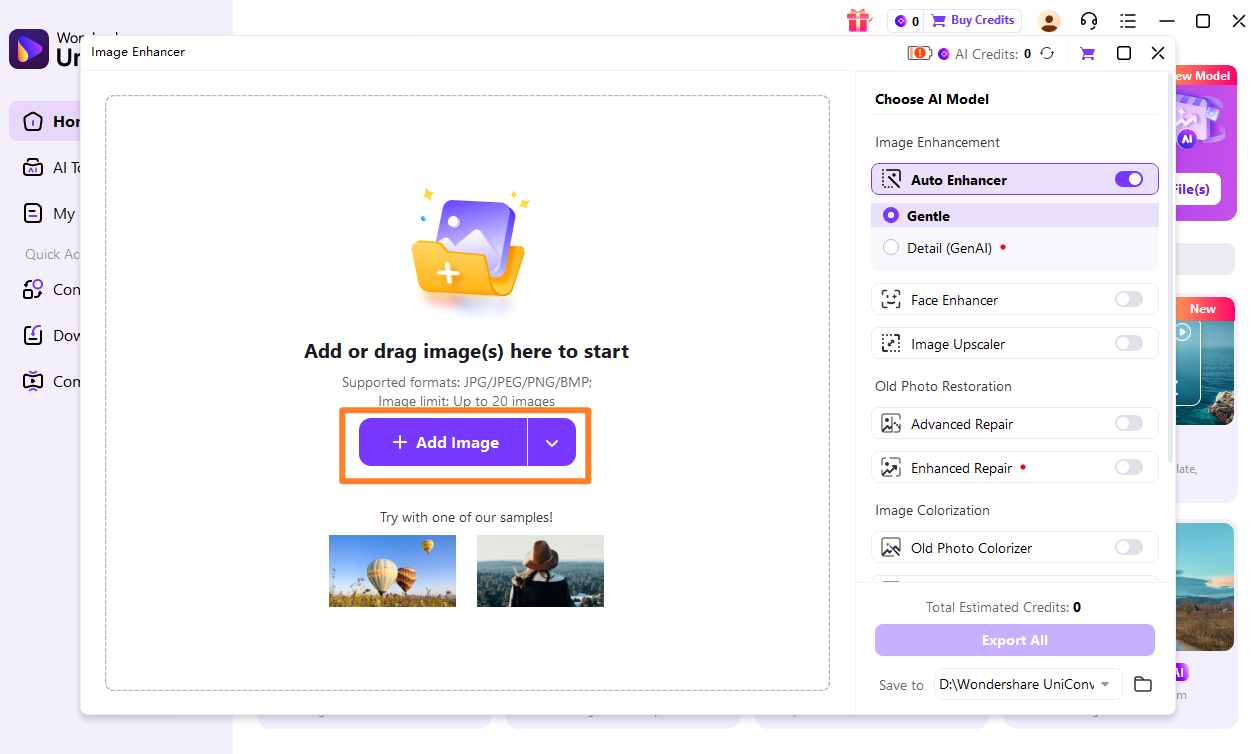
Step 2: Upload the Images
Click on the "Add Files" button or simply drag and drop the images you wish to enhance into the UniConverter window. You can add multiple images for batch processing.
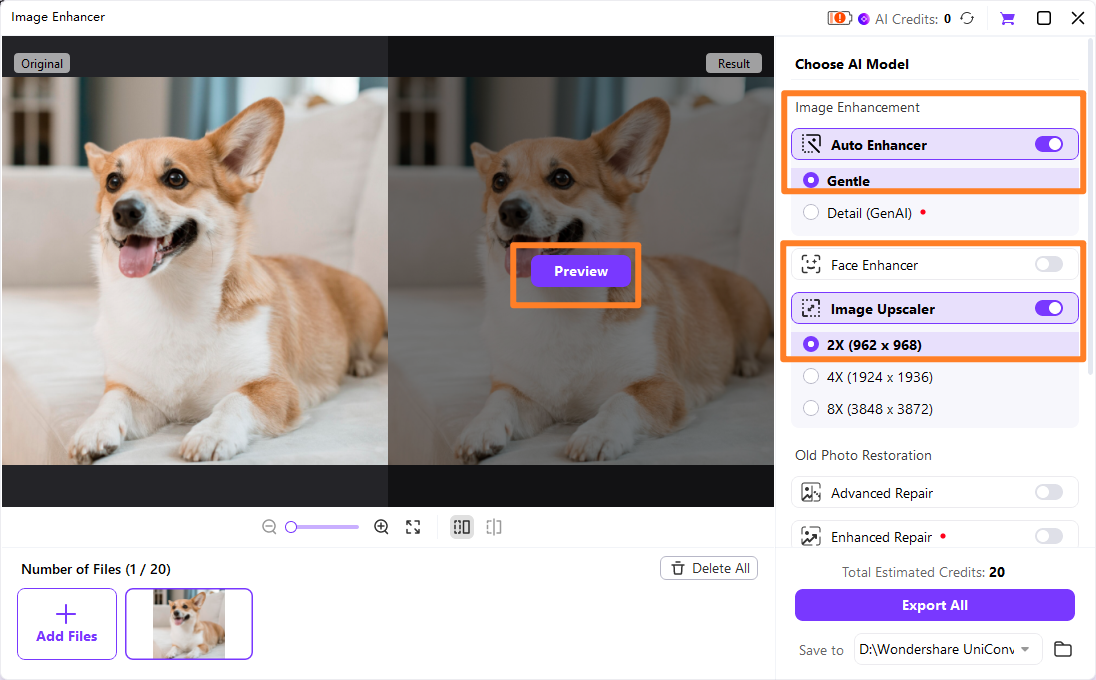
Step 3: Choose Enhancement Model
Once your images are loaded, UniConverter will present various AI enhancement models. Select the model that best suits your needs (e.g., general enhancement, portrait enhancement, denoising). You can often preview the effect before applying, helping you to upscale image to 4K or improve clarity.
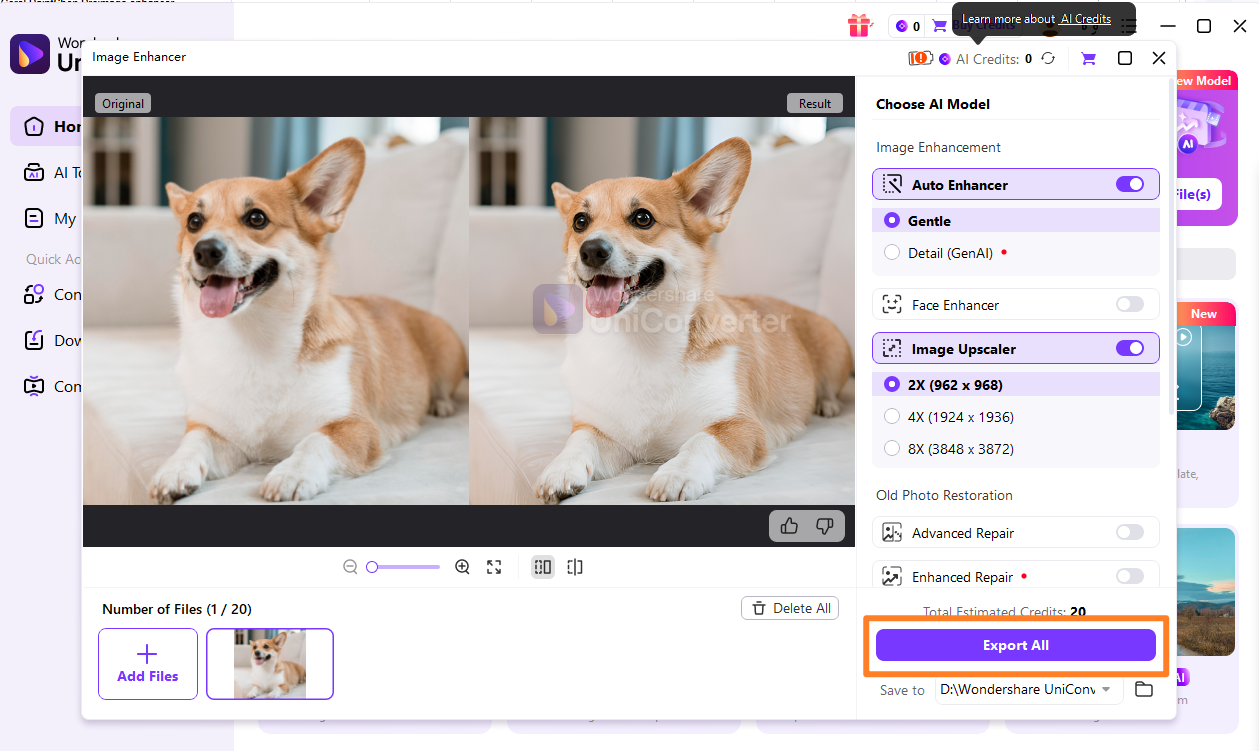
Step 4: Preview and Save the Enhanced Images
After selecting the enhancement model, UniConverter will process your images. Once done, you can preview the enhanced versions alongside the originals. If satisfied, click the "Export" or "Save All" button to save your high-quality, enhanced images to your desired location. This process ensures your enhanced images are ready for use.

Seeking a PhotoWorks Image Enhancer Alternative?
Part 7: Conclusion
After spending considerable time with PhotoWorks Image Enhancer, I can confidently say it carves out a niche for itself as a user-friendly tool for quick and effective photo improvements. For users prioritizing simplicity and speed, especially casual photographers and social media enthusiasts, it's an excellent choice for breathing new life into everyday snapshots without a steep learning curve. However, for those needing advanced control and professional results, its limitations become apparent, and you'd be better served by more comprehensive editing suites like Adobe Lightroom or Luminar Neo. For users seeking an all-in-one media solution that also offers robust image enhancement, particularly for batch processing and diverse media types, UniConverter stands out as a highly efficient and reliable alternative. Ultimately, your choice should align with your specific needs, skill level, and budget.
Part 8: FAQs
-
1. Is PhotoWorks Image Enhancer truly free to use?
PhotoWorks Image Enhancer offers a free trial version, but it typically comes with limitations such as watermarks on exported images or restricted access to premium features. To unlock its full capabilities and export without watermarks, a paid subscription is usually required.
-
2. How does PhotoWorks Image Enhancer compare to Photoshop's AI features?
PhotoWorks Image Enhancer is designed for simplicity and quick, AI-driven fixes, making it accessible for beginners. Photoshop, while also incorporating advanced AI features, is a professional-grade tool offering far more granular control, extensive layering, and complex manipulation capabilities, requiring a steeper learning curve. PhotoWorks is for quick enhancements; Photoshop is for comprehensive, professional-level editing.
-
3. Can PhotoWorks Image Enhancer improve the resolution of low-quality images?
While PhotoWorks Image Enhancer can improve the perceived quality of low-resolution images by enhancing details, sharpening, and reducing noise, it cannot genuinely "create" pixels or magically increase the true resolution of an image beyond its original data. It's more about optimizing what's already there rather than true upscaling.
-
4. What are the best alternatives to PhotoWorks Image Enhancer for professional use?
For professional use, top alternatives include Adobe Lightroom (for photo management and extensive non-destructive editing), Luminar Neo (for AI-powered creative editing with more control), and Capture One (known for its superior RAW processing and tethered shooting). These tools offer the depth and precision required for professional workflows.
-
5. Is my data safe when using PhotoWorks Image Enhancer's cloud features?
Most reputable software providers, including PhotoWorks, implement security measures to protect user data. However, if PhotoWorks uses cloud-based processing for certain AI features, your images might be uploaded to their servers. It's always recommended to review their privacy policy to understand how your data is handled, stored, and protected.
