
- Value: OpenShot Video Enhancer offers a free, open-source solution for basic video enhancement, ideal for beginners and casual creators.
- Comparison: It excels in ease of use and cost-effectiveness compared to complex, expensive professional software.
- Decision: Choose OpenShot for quick edits and social media content; consider alternatives like UniConverter for advanced, AI-driven enhancements.
- Risks: Be aware of OpenShot's limitations in advanced features, potential performance issues, and output quality for high-resolution projects.
In this article
- Part 1: What is OpenShot Video Enhancer?
- Part 2: OpenShot Video Enhancer: Core Features, Pros & Cons
- Part 3: Target Users and Use Cases
- Part 4: OpenShot Video Enhancer and Alternatives Comparison
- Part 5: Risks and Pitfalls to Consider
- Part 6: How to Use UniConverter to Efficiently Enhance Videos and Images
- Part 7: Conclusion
- Part 8: FAQs
OpenShot Video Enhancer emerges as a compelling open-source solution in the crowded video editing landscape, offering a free and accessible entry point for users looking to refine their video content. This OpenShot Video Enhancer review will delve into its core functionalities, assess its market position, and conduct a scenario-based comparison against key competitors. We aim to provide a comprehensive understanding of its strengths and weaknesses, helping both novice and experienced users determine if OpenShot Video Enhancer aligns with their specific video enhancement needs and project goals.
Part 1: What is OpenShot Video Enhancer?
OpenShot Video Enhancer is a free, open-source video editing software designed to provide users with a straightforward platform for creating and enhancing video content. Originating from the OpenShot Video Editor project, this iteration focuses specifically on tools that can improve the visual and auditory quality of videos. It positions itself as an accessible alternative to more complex and costly professional software, catering primarily to individuals and small creators who prioritize ease of use and community support. This review aims to address the core question: Can OpenShot Video Enhancer deliver reliable and effective video enhancement for everyday users, or are its capabilities too limited for serious projects?
Market Background and User Pain Points:
* High Cost of Professional Software: Many users are deterred by the expensive subscription models of industry-standard video editing suites.
* Complexity of Advanced Tools: Steep learning curves often frustrate beginners attempting to navigate feature-rich, professional-grade software.
* Need for Basic Enhancement: A significant segment of users simply requires tools for quick fixes like color correction, stabilization, and audio adjustments without overwhelming complexity.
* Desire for Open-Source Flexibility: The appeal of open-source lies in its transparency, community-driven development, and freedom from proprietary restrictions.
Part 2: OpenShot Video Enhancer: Core Features, Pros & Cons
OpenShot Video Enhancer, while part of the broader OpenShot ecosystem, focuses on providing essential tools for improving video quality. Its core capabilities include basic color correction, brightness/contrast adjustments, simple video stabilization, and audio enhancement features. It supports a wide array of video and audio formats for import and export, ensuring broad compatibility. The software leverages a user-friendly drag-and-drop interface, making it accessible even for those new to video editing.
Core Features:
* Basic Color Correction: Adjust hue, saturation, and lightness for visual appeal.
* Brightness and Contrast Control: Fine-tune exposure for better visibility.
* Video Stabilization: Reduce camera shake for smoother footage.
* Audio Enhancement: Adjust volume levels and apply basic audio effects.
* Format Compatibility: Supports numerous video and audio formats for seamless workflow.
Pros:
* Intuitive Interface for Beginners: The clean and simple layout makes it easy for new users to get started without a steep learning curve.
* Robust Open-Source Community Support: A large and active community provides extensive resources, tutorials, and troubleshooting assistance.
* Wide Range of Basic Editing Tools: Beyond enhancement, it offers fundamental editing capabilities like cutting, trimming, and transitions.
Cons:
* Limited Advanced Enhancement Features: Lacks sophisticated AI-driven enhancement, noise reduction, or complex color grading tools found in premium software.
* Occasional Performance Instability: Users may experience crashes or slowdowns, especially when working with larger files or complex projects.
Part 3: Target Users and Use Cases
OpenShot Video Enhancer is ideally suited for individuals and small content creators who need a free, straightforward tool for basic video improvements. Its design philosophy prioritizes accessibility over advanced functionality, making it a good fit for those with limited budgets or technical expertise.
Best Use Case: Quick Edits for Social Media Content Creators
For social media influencers, vloggers, and hobbyists who frequently upload short videos, OpenShot Video Enhancer excels. Imagine a scenario where a content creator has filmed a quick product review or a daily vlog. The footage might have slightly off colors, be a bit shaky, or have inconsistent audio levels. OpenShot allows them to quickly import the video, apply basic color corrections to make it pop, stabilize any minor camera shakes, and normalize audio levels before exporting for platforms like YouTube, TikTok, or Instagram. The ease of use and quick turnaround time are significant advantages in this fast-paced content creation environment.
Limited Use Case: Professional-Grade Video Production
OpenShot Video Enhancer is not suitable for professional-grade video production. Consider a scenario involving a documentary filmmaker or a commercial videographer working on a high-budget project requiring precise color grading, advanced noise reduction, multi-camera editing, or complex visual effects. OpenShot's limited enhancement capabilities, lack of robust performance for large files, and absence of professional-grade tools like scopes, advanced masking, or motion tracking would severely hinder the workflow and compromise the final output quality. Professionals would find its feature set inadequate for meeting industry standards and client expectations.
Part 4: OpenShot Video Enhancer and Alternatives Comparison
When evaluating OpenShot Video Enhancer, it's crucial to compare its capabilities against other popular video enhancement tools. This table highlights key differences across several dimensions, including processing speed, output quality, ease of use, customer support, and security.
| Feature / Product | OpenShot Video Enhancer | UniConverter | DaVinci Resolve | VideoProc Converter AI |
| Processing Speed | Moderate, can be slow with large files | Fast (GPU acceleration) | Varies (demanding, GPU-dependent) | Fast (GPU acceleration) |
| Output Quality | Basic enhancement, limited upscaling | High (AI-driven, lossless) | Professional-grade | High (AI-driven, various presets) |
| Ease of Use | Very Easy (beginner-friendly) | Easy (intuitive interface) | Complex (steep learning curve) | Moderate (feature-rich, guided) |
| Customer Support | Community-driven forums | Dedicated 24/7 support | Extensive documentation, forums | Dedicated support, online guides |
| Security | Open-source (community vetted) | Proprietary (established company) | Proprietary (established company) | Proprietary (established company) |
| Key Enhancement | Basic color, stabilization | AI upscaling, denoising, stabilization | Advanced color, VFX, audio | AI upscaling, stabilization, frame interpolation |
| Cost | Free | Paid (subscription/lifetime) | Free (limited), Paid (Studio) | Paid (subscription/lifetime) |
OpenShot Video Enhancer stands out for its absolute cost-effectiveness and beginner-friendly interface, making it ideal for quick, basic enhancements without any financial commitment. However, for users prioritizing high output quality and advanced AI-driven enhancements like resolution upscaling or intelligent denoising, UniConverter and VideoProc Converter AI offer superior capabilities with faster processing, often leveraging GPU acceleration. DaVinci Resolve, while having a free version, caters to professionals demanding comprehensive editing, color grading, and VFX, presenting a much steeper learning curve and higher system requirements. UniConverter provides a balanced approach, offering advanced enhancement features with a relatively easy-to-use interface and dedicated support, bridging the gap between free basic tools and complex professional suites.
Part 5: Risks and Pitfalls to Consider
While OpenShot Video Enhancer offers the undeniable advantage of being free and open-source, users should be aware of potential risks and limitations that might impact their workflow and project quality. Understanding these pitfalls is crucial for making an informed decision about its suitability.
Data Privacy Concerns with Open-Source Software
Although open-source software like OpenShot is generally considered secure due to its transparent code, the lack of a dedicated corporate entity responsible for data handling can sometimes raise privacy questions. While OpenShot itself doesn't typically collect user data, third-party plugins or community-contributed features, if not properly vetted, could potentially introduce vulnerabilities. Users should always download OpenShot from its official website to avoid modified versions that might pose risks.
Potential for Unwanted Advertisements or Bundled Software
While OpenShot Video Enhancer itself is free of advertisements and bundled software from its official distribution, downloading it from unofficial sources or third-party download sites can expose users to risks. These sites might bundle the installer with adware, toolbars, or other unwanted programs, leading to a cluttered system, performance issues, and potential security breaches. Always verify the download source to ensure you are getting the clean, official version.
Output Quality Limitations for High-Resolution Projects
OpenShot's enhancement capabilities are relatively basic. For high-resolution projects (e.g., 4K or 8K footage) or scenarios requiring significant quality improvements like advanced noise reduction, precise color grading, or intelligent upscaling, OpenShot may fall short. The output quality, while acceptable for social media or casual viewing, might not meet the stringent standards of professional or broadcast-quality content, potentially resulting in artifacts, loss of detail, or an overall less polished look compared to dedicated enhancement tools.
Learning Curve for Specific Advanced Features
While OpenShot is generally user-friendly for basic tasks, some of its more nuanced features or workarounds for advanced effects might still present a learning curve. Users accustomed to professional software might find the lack of certain advanced controls frustrating, while beginners might struggle with achieving specific, complex visual outcomes without extensive community research or external tutorials. The interface, while intuitive, doesn't always guide users through intricate enhancement processes.
Part 6: How to Use UniConverter to Efficiently Enhance Videos and Images
When other tools fall short in batch processing, stable enhancement, or delivering noticeable improvements, UniConverter emerges as a robust alternative. It provides a comprehensive solution for video and image enhancement, ensuring stable, lossless quality, and efficient batch processing, often leveraging GPU acceleration. UniConverter eliminates concerns about ads, limited formats, or inconsistent results, positioning itself as an all-in-one ultimate solution for diverse media needs.
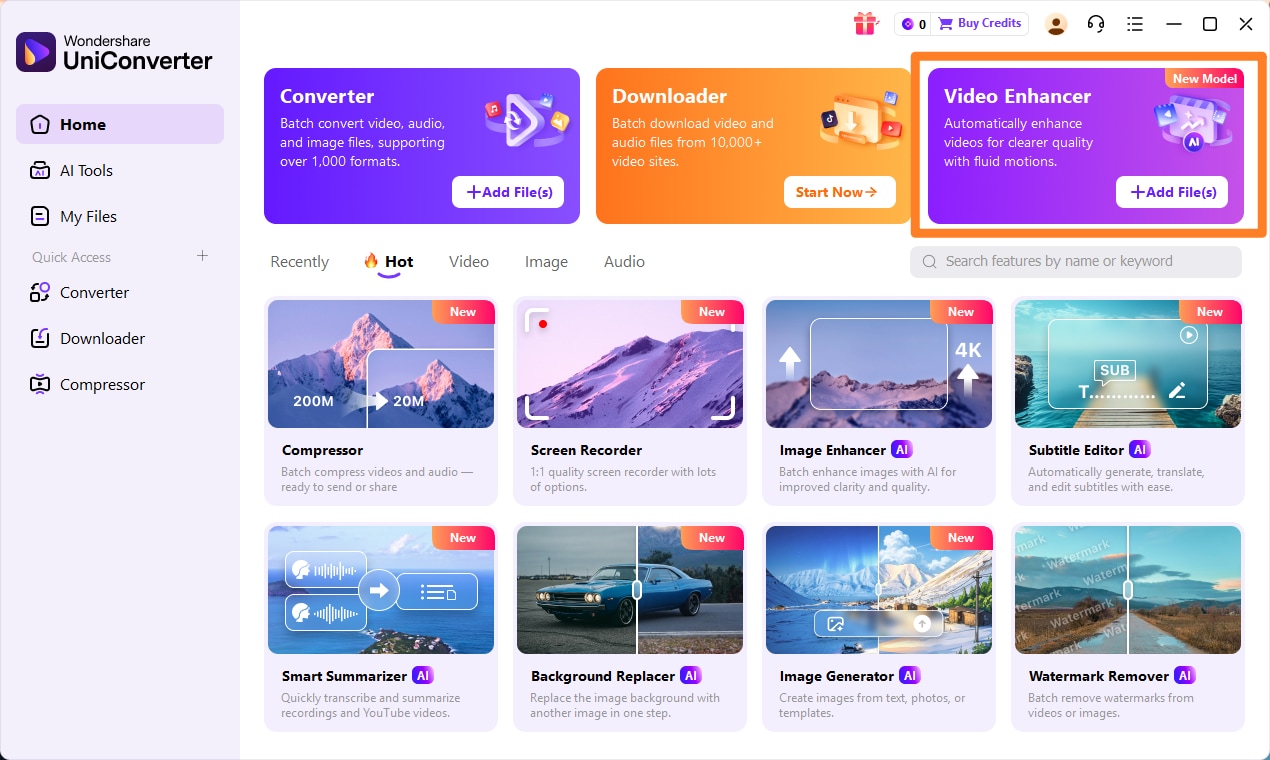
Step 1: Open UniConverter and Choose Video Enhancer
Launch UniConverter on your computer. From the main interface, navigate to the "AI Lab" section on the left sidebar and select the "Video Enhancer" tool.
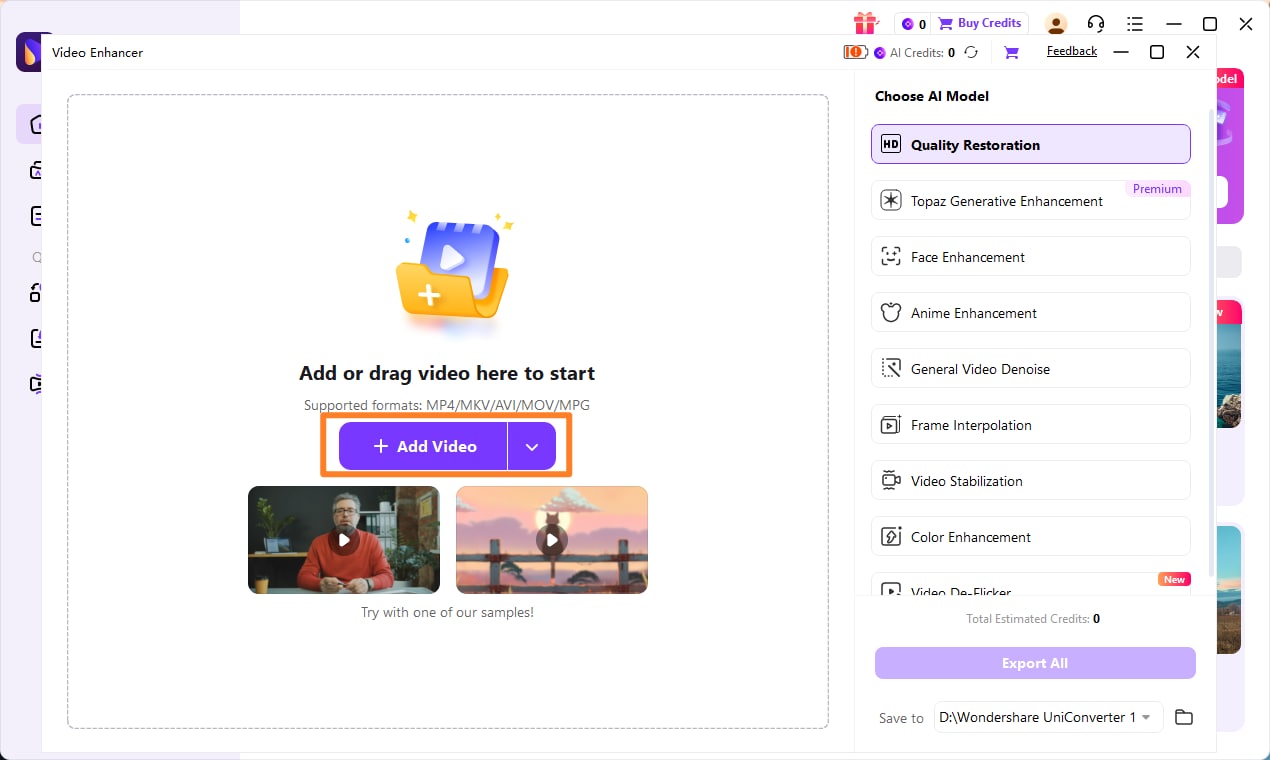
Step 2: Upload the Videos
Click on the "Add Files" button or drag and drop your video files directly into the UniConverter interface. You can add multiple videos for batch processing.
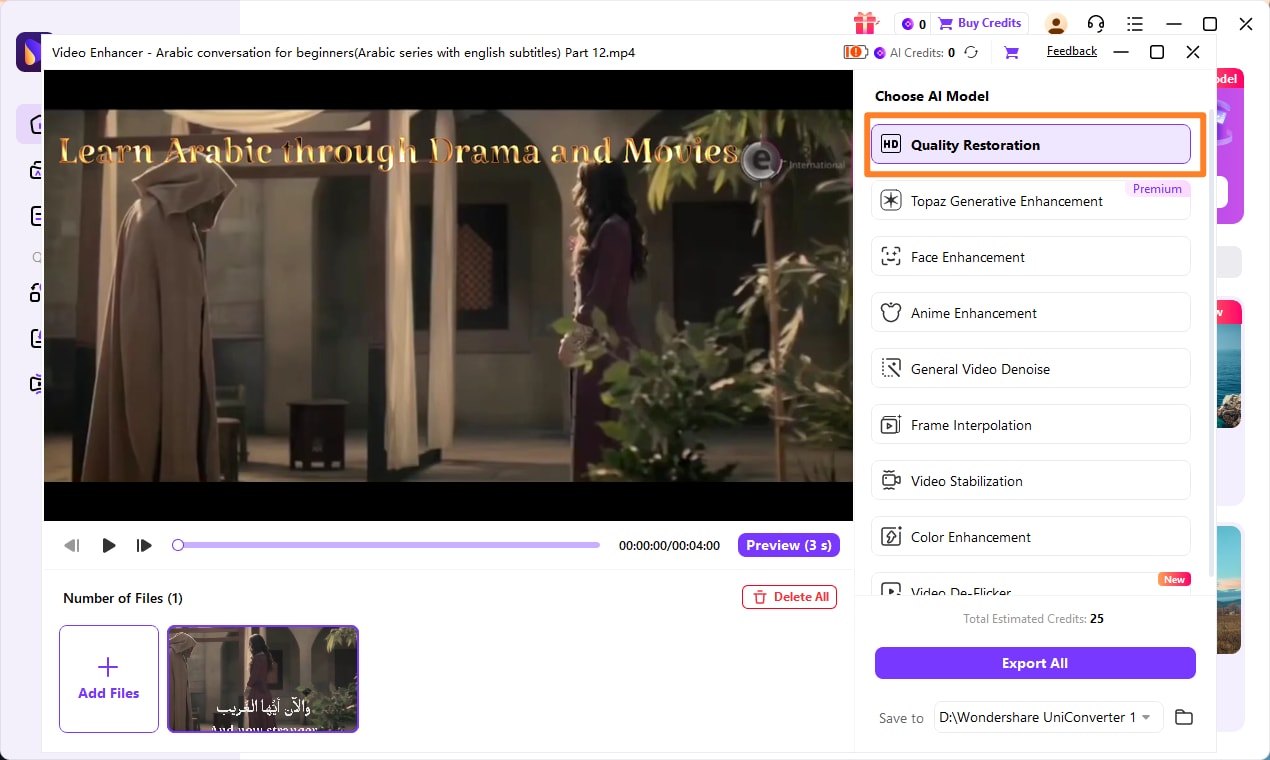
Step 3: Choose Enhancement Model
After uploading, UniConverter will present various enhancement models. Select the most suitable AI model based on your needs, such as "AI Upscale," "AI Denoise," or "AI Stabilization." Adjust parameters like resolution, output format, and quality settings as desired. For instance, you might want to remove background without losing quality from your videos or change the video background entirely. You can also achieve a high-definition background remover effect with ease.
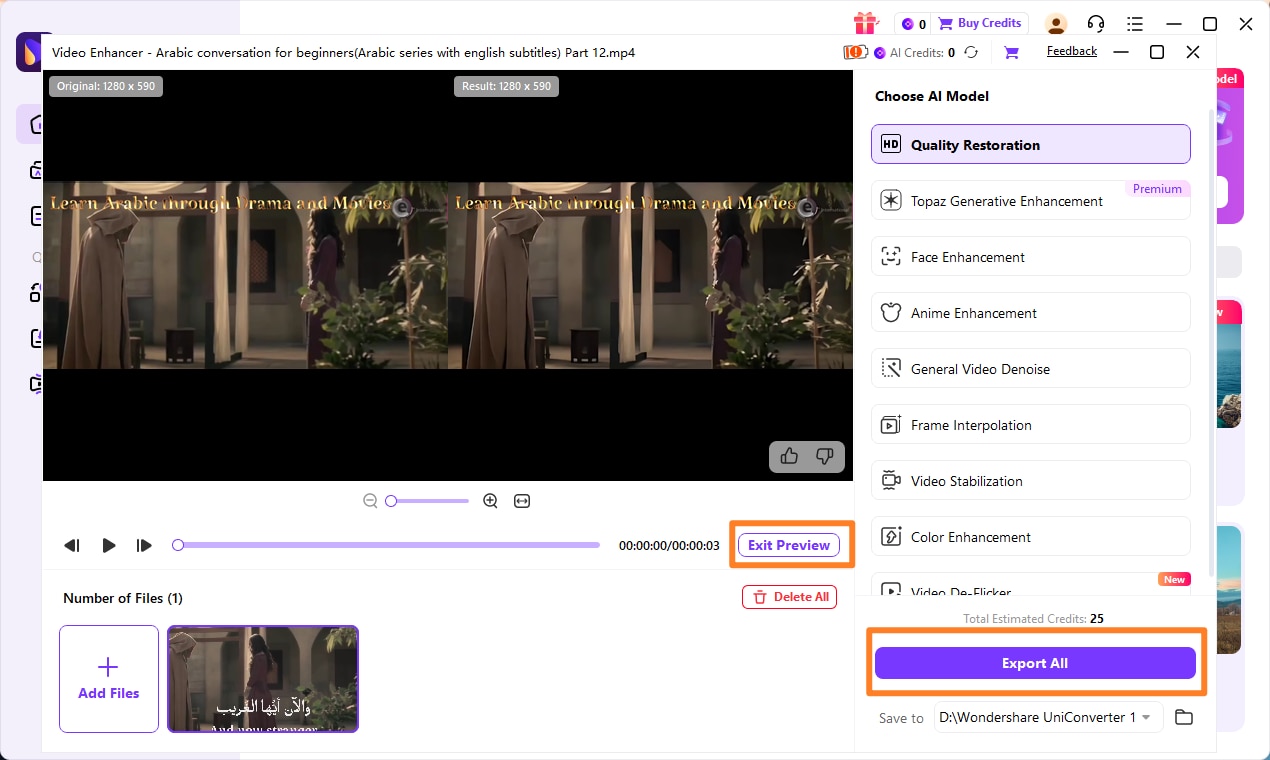
Step 4: Preview and Save the Enhanced Video
Click the "Preview" button to see the enhanced video before final export. Once satisfied, click the "Export" button to save your enhanced video to the desired location on your computer. You can even remove the background from SVG images if needed.

Seeking an OpenShot Video Enhancer Alternative?
Part 7: Conclusion
This OpenShot Video Enhancer review highlights its position as a valuable, free, and open-source tool primarily for beginners and social media content creators. Its intuitive interface and basic enhancement capabilities make it an excellent entry point for quick edits, color corrections, and stabilization for casual projects. However, for users requiring professional-grade output, advanced AI-driven enhancements, or robust performance with large, high-resolution files, OpenShot's limitations become apparent. In such scenarios, alternatives like UniConverter, DaVinci Resolve, or VideoProc Converter AI offer more sophisticated features, better stability, and superior output quality, albeit often at a cost. The choice ultimately depends on the user's specific needs, technical proficiency, and budget. OpenShot remains a strong contender for those prioritizing accessibility and basic functionality without financial investment, while others may need to explore more powerful solutions for demanding projects.
Part 8: FAQs
-
1. Is OpenShot Video Enhancer truly free?
Yes, OpenShot is an open-source project and is completely free to use without any hidden costs or in-app purchases.
-
2. Can OpenShot Video Enhancer improve video resolution?
While OpenShot offers basic enhancement tools, it's not designed for significant resolution upscaling. For substantial resolution improvement, dedicated AI upscaling tools are more effective.
-
3. What operating systems does OpenShot Video Enhancer support?
OpenShot is cross-platform, supporting Windows, macOS, and Linux, making it accessible to a wide user base.
-
4. How does OpenShot Video Enhancer handle large video files?
Performance with large files can vary; some users report occasional slowdowns or instability, especially on less powerful hardware.
-
5. Are there any hidden costs or in-app purchases in OpenShot Video Enhancer?
No, as an open-source tool, OpenShot does not have hidden costs or in-app purchases, ensuring a completely free user experience.
