
- Value: Olive Video Editor offers free, open-source, professional-grade non-linear editing for creative control and complex projects.
- Comparison: Dedicated AI Video Enhancers excel at automated quality improvements like upscaling, denoising, and stabilization, which Olive lacks.
- Decision: Choose Olive for creative editing; choose an AI enhancer for technical quality improvement. A combined approach is often optimal.
- Solution: UniConverter provides a balanced, all-in-one solution for both basic editing and effective AI-driven video enhancement.
In this article
- Part 1: What is Olive Video Editor?
- Part 2: Olive Video Editor: Core Features, Pros, and Cons
- Part 3: Olive Video Editor: Ideal Users and Use Cases
- Part 4: Olive Video Editor and Video Enhancer Competitors
- Part 5: Risks and Pitfalls
- Part 6: How to Use UniConverter to Efficiently Enhance Videos
- Part 7: Conclusion
- Part 8: FAQs
Olive Video Editor vs. Video Enhancer: A Scenario-Based Comparison
This Olive Video Editor review and Video Enhancer review delves into two distinct yet often intertwined facets of video post-production. Olive Video Editor, an open-source non-linear editing system, offers robust creative control for filmmakers and editors. Conversely, dedicated Video Enhancers leverage AI to improve footage quality, addressing issues like low resolution, noise, and instability. This comparison will explore their core functionalities, ideal use cases, and how they stack up against each other, helping users make informed decisions based on their specific project needs and technical requirements. We aim to provide a comprehensive analysis of their strengths and weaknesses in various real-world scenarios.
Part 1: What is Olive Video Editor?
Olive Video Editor is a free, open-source, and cross-platform non-linear video editor designed for professional-grade video production. It aims to provide a powerful and intuitive editing experience, rivaling commercial alternatives without the associated cost. Developed by a community of contributors, Olive emphasizes flexibility and user control, allowing for complex multi-track editing, advanced effects, and precise audio synchronization. This review will critically assess its capabilities, particularly in contrast to specialized video enhancement tools, to determine its suitability for various video editing tasks. The core problem this comparison addresses is whether a comprehensive editor like Olive can truly substitute for dedicated enhancement software, or if a combined approach is necessary for optimal results.
The Rise of AI in Video Editing
The landscape of video editing has been significantly transformed by the integration of artificial intelligence.
* Automated Enhancements: AI now automates tasks like color grading, noise reduction, and stabilization, traditionally requiring meticulous manual effort.
* Upscaling and Restoration: AI-powered tools can intelligently upscale low-resolution footage and restore old, damaged videos, breathing new life into archival content.
* Efficiency and Accessibility: These advancements make high-quality video production more accessible to a broader audience, reducing the technical barriers for complex post-production.
* Creative Augmentation: AI acts as a powerful assistant, freeing editors to focus more on creative storytelling rather than technical corrections.
Part 2: Olive Video Editor: Core Features, Pros, and Cons
Olive Video Editor stands out with its commitment to providing a professional-grade editing suite without a price tag. Its core capabilities revolve around non-linear editing, allowing users to arrange and manipulate video clips, audio tracks, and effects on a timeline with precision. It supports a wide array of video and audio formats, ensuring compatibility with most project assets. The software also features a robust compositing engine, enabling complex visual effects and layering.
Core Features:
* Non-linear Editing: Flexible timeline for arranging and editing media.
* Multi-track Support: Handle numerous video and audio tracks simultaneously.
* Compositing Engine: Advanced layering and visual effects capabilities.
* Keyframe Animation: Precise control over effects and transformations.
* Format Compatibility: Broad support for various media file types.
Pros:
* Open-source and free, offering professional-grade editing tools.
* Non-linear editing capabilities for complex projects.
* Cross-platform compatibility (Windows, macOS, Linux).
Cons:
* Steeper learning curve for beginners compared to simpler editors.
* Less frequent updates and community support than commercial alternatives.
Part 3: Olive Video Editor: Ideal Users and Use Cases
Olive Video Editor is particularly well-suited for users who prioritize creative control and have a foundational understanding of video editing principles. Its open-source nature appeals to those who value community-driven development and the freedom from subscription fees.
Ideal Users:
* Independent Filmmakers: Seeking a powerful, free tool for narrative films, documentaries, and experimental projects.
* Experienced Video Editors: Looking for a cost-effective alternative to commercial NLEs, comfortable with a learning curve.
* Hobbyists and Students: Eager to learn professional editing techniques without financial investment.
* Linux Users: As a robust cross-platform solution, it's a strong contender for those on Linux systems.
Best Use Case:
Independent filmmakers and experienced video editors seeking a free, powerful NLE for feature films or documentaries. For instance, a budding filmmaker on a tight budget could use Olive to edit a short film from start to finish, leveraging its multi-track editing and compositing features for complex scene construction and visual effects.
Limited Use Case:
Casual users needing quick edits or AI-powered enhancements for social media content. Someone looking to quickly crop a video, add a simple filter, or automatically upscale low-resolution phone footage for Instagram would find Olive's interface and feature set overly complex and time-consuming compared to more streamlined, AI-focused tools.
Part 4: Olive Video Editor and Video Enhancer Competitors
When comparing Olive Video Editor with dedicated AI Video Enhancers, it's crucial to understand their distinct primary functions. Olive focuses on the creative editing process, while enhancers specialize in improving video quality through AI.
| Feature/Scenario | Olive Video Editor | AI Video Enhancer (e.g., Topaz Video AI) | DaVinci Resolve Studio | UniConverter |
| Primary Function | Non-linear video editing | AI-driven video upscaling, denoising, stabilization | Professional NLE, color grading, VFX, audio | Video conversion, basic editing, AI enhancement |
| Cost | Free (Open Source) | Paid (One-time purchase) | Paid (One-time purchase) | Paid (Subscription/One-time) |
| Learning Curve | Moderate to High | Low to Moderate (for basic enhancements) | High | Low |
| Target User | Professional editors, hobbyists | Content creators, archivists, restorers | Professional filmmakers, colorists, editors | Casual to pro users needing versatile tools |
| Integration | Standalone | Often integrates with NLEs or standalone | Standalone, comprehensive suite | Standalone, integrates various functions |
| Output Quality (Enhancement) | Manual adjustments only | AI-driven superior enhancement | Manual & some AI tools | AI-driven, good balance |
Olive Video Editor excels in providing a free, comprehensive platform for creative video editing, offering deep control over the narrative and visual composition. However, when it comes to automatically improving video quality—such as upscaling low-resolution footage, reducing noise, or stabilizing shaky clips—dedicated AI Video Enhancers like Topaz Video AI or the AI features within DaVinci Resolve Studio are significantly more powerful. UniConverter offers a balanced approach, combining basic editing with effective AI enhancement, making it a versatile choice for users who need both without the steep learning curve or high cost of professional suites.
Part 5: Risks and Pitfalls
Using video editing and enhancement tools, especially those that are free or cloud-based, comes with a set of potential risks and pitfalls that users should be aware of. Navigating these challenges is crucial for a smooth and secure workflow.
Privacy Concerns with Cloud-Based Enhancers
Many AI video enhancers operate in the cloud, requiring users to upload their video files to external servers. This raises significant privacy concerns, especially for sensitive or proprietary content. Users should carefully review the privacy policies of such services to understand how their data is stored, processed, and protected. There's always a risk of data breaches or unauthorized access if the service provider's security measures are not robust.
Over-Enhancement and Unnatural Results
AI enhancement, while powerful, isn't always perfect. There's a risk of "over-enhancement," where the AI algorithms apply too much processing, leading to unnatural, "plastic-looking," or overly smooth results that strip away the original texture and character of the footage. This can be particularly problematic with facial features or fine details, making the video appear artificial rather than genuinely improved. Achieving a natural look often requires careful adjustment of enhancement parameters.
Demanding Hardware Requirements
High-end video enhancement, especially 4K upscaling or complex denoising, is computationally intensive. Dedicated AI video enhancers often demand powerful hardware, particularly high-performance GPUs, to process videos efficiently. Users with older or less powerful systems may experience extremely slow processing times, making the tools impractical for large projects or frequent use. This can lead to frustration and missed deadlines if hardware capabilities are underestimated.
Subscription Fatigue and Cost Accumulation
While Olive Video Editor is free, many advanced AI video enhancers operate on a subscription model or require a significant one-time purchase. Users might find themselves accumulating multiple subscriptions for different tools (e.g., one for editing, one for enhancement, one for audio), leading to "subscription fatigue" and a considerable monthly or annual cost. It's essential to evaluate the long-term cost and necessity of each tool before committing to multiple paid services.
Inconsistent Output Quality Across Video Types
Not all AI video enhancers deliver consistent quality across various video types, codecs, or resolutions. An enhancer that performs exceptionally well on modern, well-lit footage might struggle with older, highly compressed, or poorly lit videos. This inconsistency can lead to unpredictable results, requiring users to experiment with different tools or settings for each project, adding complexity and time to the workflow.
Part 6: How to Use UniConverter to Efficiently Enhance Videos
When other tools fall short in batch processing, stable enhancement, or delivering noticeable quality improvements, UniConverter emerges as a robust solution. It bypasses common issues like unstable enhancement, weak effects, and lack of batch processing found in many free or less specialized tools. UniConverter offers a seamless, ad-free experience with extensive format support, GPU acceleration for speed, stable and lossless enhancement, and the crucial ability to batch enhance multiple videos simultaneously, positioning it as an all-in-one ultimate solution for video enhancement. For instance, if you need to change video background or remove background without losing quality, UniConverter provides advanced features to achieve high-quality results. Its capabilities extend to various background replacer tasks, ensuring your videos look professional. You can even remove background from SVG images with ease.
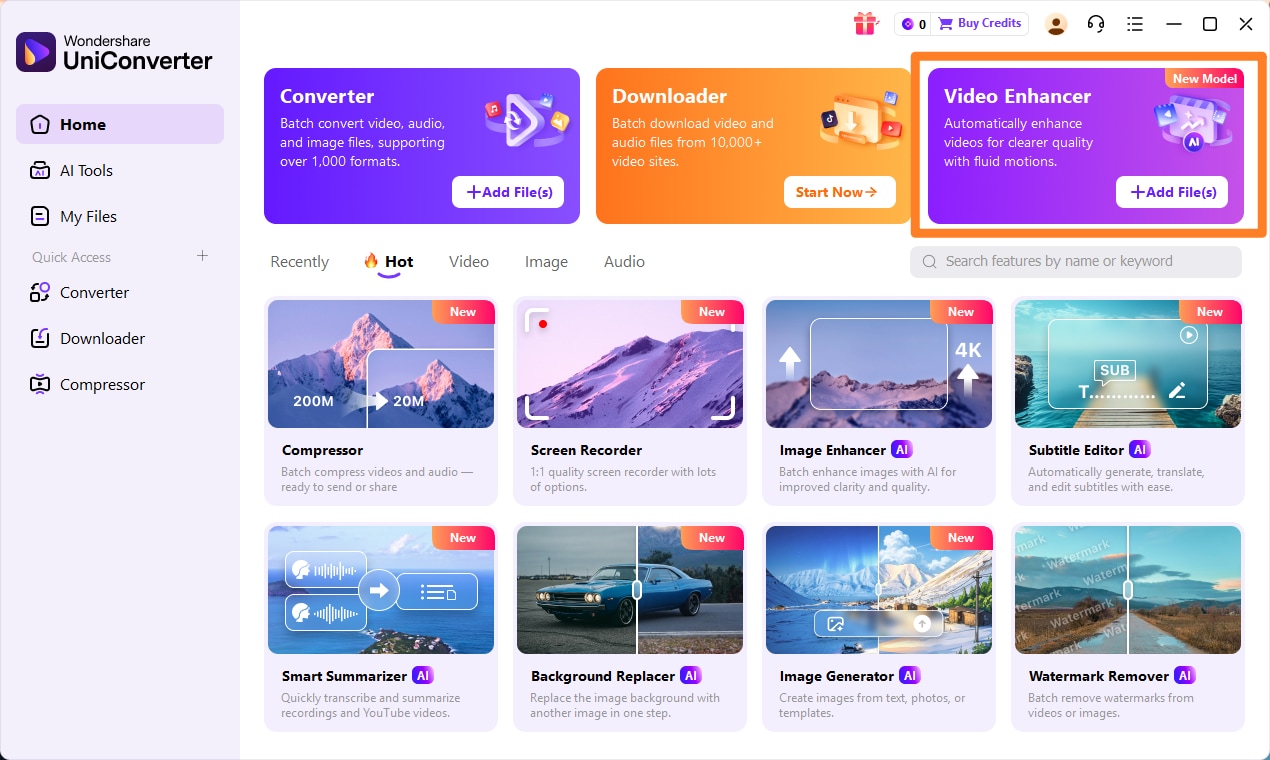
Step 1: Open UniConverter and Choose Video Enhancer
Launch UniConverter on your computer. From the main interface, navigate to the "AI Lab" section and select the "Video Enhancer" tool. This dedicated module is designed for intelligent video quality improvement.
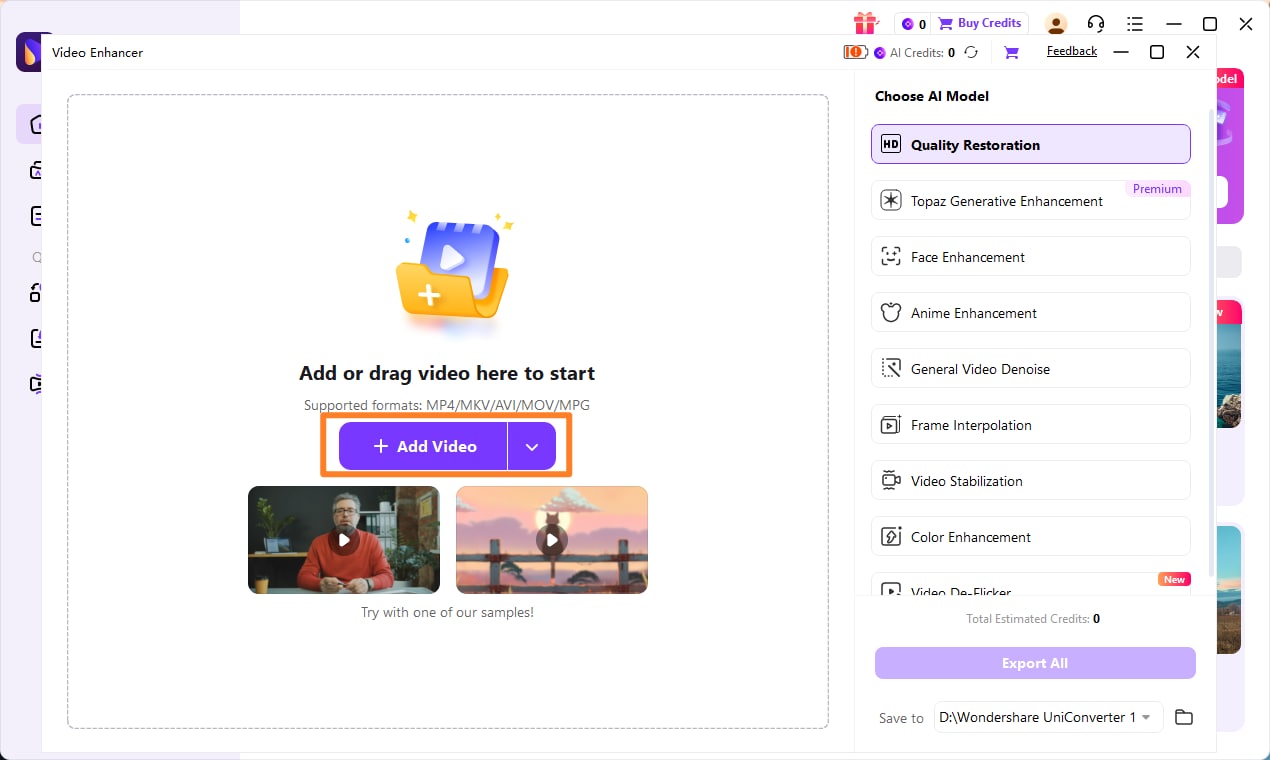
Step 2: Upload the Videos
Click on the "Add Files" button or drag and drop the video files you wish to enhance into the UniConverter interface. You can add multiple videos for batch processing.
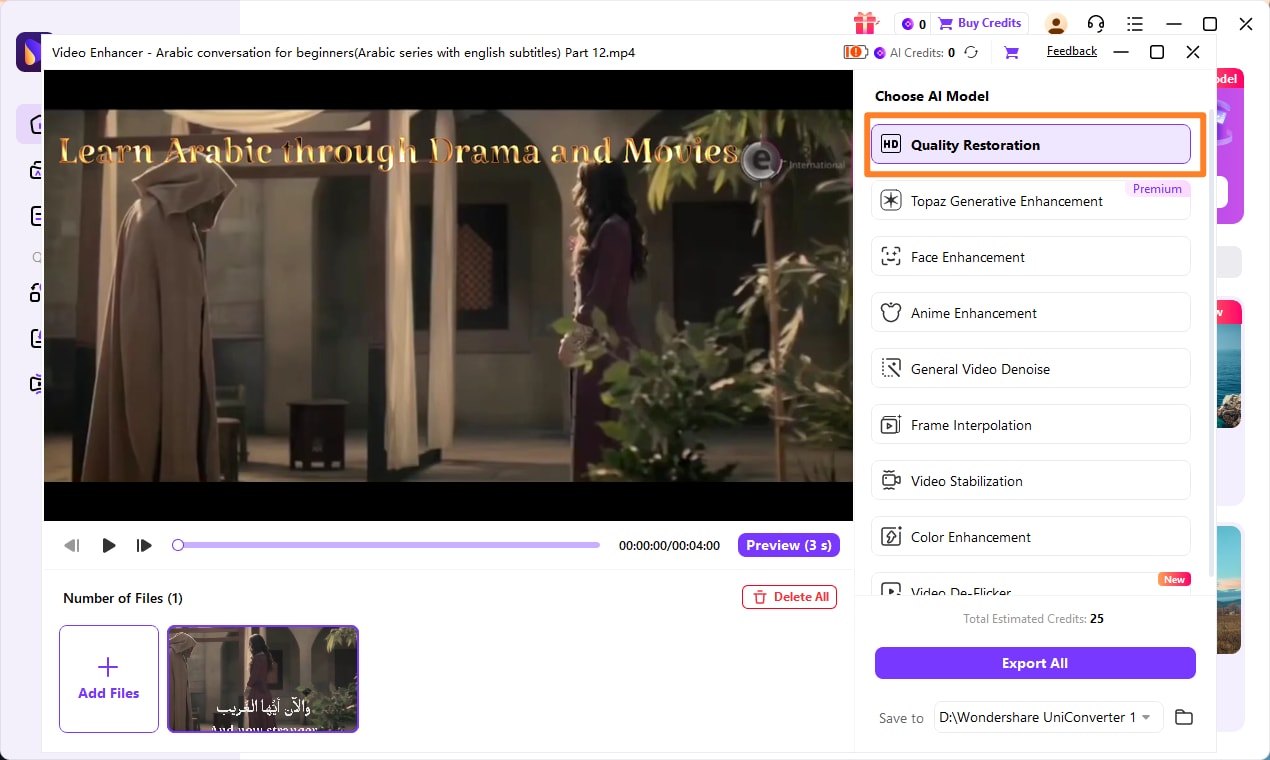
Step 3: Choose Enhancement Model
Once your videos are loaded, UniConverter will present various AI enhancement models. Select the appropriate model based on your needs, such as "AI Upscaling" for resolution improvement, "Denoise" for removing grain, or "Stabilization" for shaky footage. You can also adjust specific parameters for each model.
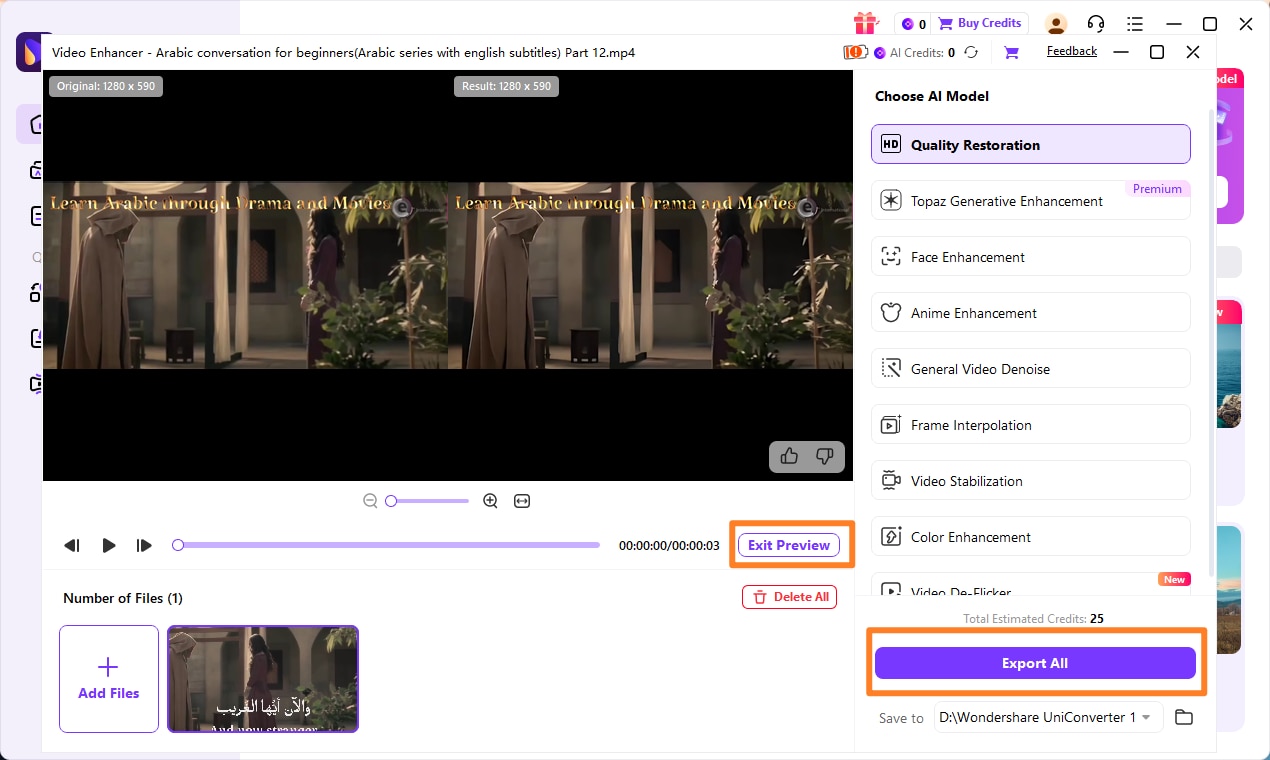
Step 4: Preview and Save the Enhanced Video
After selecting your enhancement settings, click "Preview" to see the results before final processing. If satisfied, choose your desired output format and destination folder, then click "Export" to save your enhanced video.

Enhance Videos Beyond Olive Video Editor
Part 7: Conclusion
In conclusion, the choice between Olive Video Editor review and a dedicated Video Enhancer review hinges entirely on your primary objective. Olive Video Editor stands as an exceptional, free, and open-source non-linear editing system, ideal for budget-conscious editors and independent filmmakers who prioritize creative control, complex multi-track editing, and a deep dive into the editing process. Its strength lies in providing a comprehensive platform for crafting narratives and visual compositions from scratch. However, for users whose main goal is to improve the inherent quality of existing video footage—such as upscaling low-resolution clips, removing noise, stabilizing shaky video, or restoring old content—a dedicated AI Video Enhancer is undeniably superior. These tools leverage advanced algorithms to automate and perfect tasks that Olive can only address with basic, manual adjustments. For those seeking a balanced approach, where both fundamental editing capabilities and effective AI-driven enhancement are needed within a single, user-friendly interface, UniConverter offers a compelling all-in-one solution. Ultimately, consider whether your workflow demands creative manipulation or technical quality improvement to make the most informed decision.
Part 8: FAQs
-
1. **Can Olive Video Editor enhance video quality like a dedicated enhancer?**
Olive offers basic color correction, exposure adjustments, and some noise reduction tools, but it lacks the advanced AI algorithms of dedicated video enhancers for intelligent upscaling, sophisticated denoising, or automatic stabilization. Its enhancement capabilities are manual and less powerful than specialized AI tools.
-
2. **Are AI video enhancers worth the investment for casual users?**
For casual users, free or built-in enhancement tools in basic editors (like those in smartphone apps or basic desktop software) might suffice for minor improvements. Dedicated AI video enhancers are a significant investment and are more beneficial for professionals, content creators, or enthusiasts seeking substantial and high-quality improvements for critical projects or archival restoration.
-
3. **What are the main advantages of using an open-source editor like Olive?**
The primary advantages include no cost, full control over the software (as it's open-source), community-driven development and support, and the ability to customize or modify the software if you have the technical skills. It also offers a professional feature set without a subscription fee.
-
4. **How do I choose between Olive Video Editor and a paid video enhancer?**
Choose Olive if your priority is free, comprehensive non-linear editing for creative projects, and you're comfortable with a learning curve. Opt for a paid video enhancer if your main goal is AI-driven video quality improvement (upscaling, denoising, stabilization) with minimal manual effort and you're willing to invest for superior results.
-
5. **Can I use Olive Video Editor and a video enhancer together?**
Yes, this is often the most effective workflow for complex projects. You can edit your video in Olive, perform all your creative cuts, transitions, and effects, then export the raw or edited footage. Subsequently, you can import this footage into a dedicated video enhancer for quality improvements, and then potentially bring it back into Olive for final touches or export.
