
- Value: Nero AI Video Upscaler enhances video quality, ideal for revitalizing old footage for modern screens.
- Features: Offers advanced AI for detail reconstruction and user-friendly interface, supporting various formats.
- Limitations: Resource-intensive processing and potential artifacts with highly compressed or low-quality source footage.
- Target Audience: Best for casual users and content creators, not professional film restoration requiring precision.
- Comparison: Balances quality and accessibility, while UniConverter offers comprehensive features and faster GPU-accelerated processing.
- Risks: Beware of over-upscaling, hardware compatibility issues, subscription lock-in, and exaggerated marketing claims.
- Decision: Evaluate your needs, budget, and hardware. UniConverter is a robust alternative for efficient, high-quality enhancement.
In this article
- Part 1: What is Nero AI Video Upscaler
- Part 2: Nero AI Video Upscaler: Core Features, Pros, and Cons
- Part 3: Target Audience and Use Cases for Nero AI Video Upscaler
- Part 4: Nero AI Video Upscaler and Alternatives Comparison
- Part 5: Risks and Pitfalls to Consider
- Part 6: How to Use UniConverter to Efficiently Enhance Videos and Images
- Part 7: Conclusion
- Part 8: FAQs
Nero AI Video Upscaler Review: Elevating Your Footage to New Heights
The digital age has ushered in an unprecedented demand for high-quality visual content. However, much of our cherished memories or valuable archival footage remains trapped in lower resolutions, incompatible with modern displays. This is where AI video upscaling technology steps in, promising to bridge the gap between old and new. This Nero AI Video Upscaler review delves into one such solution, examining its features, performance, and how it stacks up against its competitors. We aim to provide a comprehensive analysis to help users make informed decisions about enhancing their video content, ensuring their visual assets are future-proofed and visually stunning.
Part 1: What is Nero AI Video Upscaler
Nero AI Video Upscaler is a software solution designed to enhance the resolution and quality of videos using artificial intelligence. Developed by Nero, a company long associated with multimedia software, this tool aims to breathe new life into older, lower-resolution footage, making it suitable for modern high-definition screens. The core promise is to intelligently reconstruct details, reduce noise, and improve overall clarity, transforming standard-definition videos into near-HD or even 4K quality. This review seeks to address the crucial question: can Nero AI Video Upscaler truly deliver on its promise of significantly improving video quality, or are there limitations and better alternatives to consider for specific use cases?
The Rise of AI in Video Enhancement
The increasing accessibility of AI has revolutionized various aspects of digital media, and video enhancement is no exception.
* Addressing Legacy Content: A vast amount of valuable video content exists in resolutions that are no longer adequate for contemporary viewing standards.
* Democratizing Professional Tools: AI upscaling makes sophisticated video enhancement techniques accessible to a broader audience beyond professional studios.
* Meeting User Expectations: Viewers today expect crisp, clear visuals, and AI upscaling helps meet these expectations even for older footage.
* Simplifying Complex Processes: Traditional video enhancement often requires specialized skills; AI streamlines this, making it more user-friendly.
Part 2: Nero AI Video Upscaler: Core Features, Pros, and Cons
Nero AI Video Upscaler leverages sophisticated AI models to intelligently analyze and reconstruct video frames, aiming to enhance resolution without simply stretching pixels. Its primary function is to convert lower-resolution videos into higher-definition formats, improving sharpness, detail, and overall visual fidelity. The software is designed to be intuitive, allowing users to quickly process their videos with minimal technical expertise. It supports a wide array of input and output video formats, making it versatile for various user needs.
Pros:
* Advanced AI Algorithms for Detail Reconstruction: Utilizes sophisticated AI to intelligently fill in missing pixel data, resulting in more natural and detailed upscaled videos.
* User-Friendly Interface for Quick Upscaling: The software boasts an intuitive design, making it accessible even for beginners to navigate and initiate the upscaling process efficiently.
* Support for Various Input/Output Formats: Offers broad compatibility with numerous video file types, ensuring users can process almost any video and export it in their preferred format.
Cons:
* Resource-Intensive Processing Requirements: Upscaling high-resolution videos can demand significant CPU and GPU power, leading to longer processing times on less powerful machines.
* Occasional Artifacts with Highly Compressed Source Footage: While generally effective, extremely low-quality or heavily compressed source videos may still exhibit noticeable artifacts or an unnatural "plastic" look after upscaling.
Part 3: Target Audience and Use Cases for Nero AI Video Upscaler
Nero AI Video Upscaler is primarily aimed at casual users, content creators, and small businesses looking to improve the quality of their existing video assets without investing in professional-grade, complex software. Its user-friendly interface makes it accessible to those who may not have extensive video editing experience but still desire higher-quality output. The software is ideal for individuals wanting to modernize their personal video archives or content creators seeking to enhance older footage for new projects.
Best Use Case: Revitalizing Archival or Low-Resolution Home Videos
Imagine rediscovering old family vacation videos shot on a standard-definition camcorder. Nero AI Video Upscaler can transform these blurry, pixelated memories into clearer, more vibrant footage suitable for viewing on a modern 4K TV. This allows users to preserve and enjoy their precious moments with significantly improved visual quality, bridging the gap between nostalgic content and contemporary viewing standards.
Limited Use Case: Professional Film Restoration Requiring Frame-by-Frame Precision
While effective for general enhancement, Nero AI Video Upscaler might fall short for highly specialized professional film restoration projects. These often require meticulous frame-by-frame analysis, advanced color grading, and artifact removal techniques that go beyond what a consumer-grade AI upscaler can offer. For such precision, dedicated professional tools with manual control over every detail are typically preferred.
Part 4: Nero AI Video Upscaler and Alternatives Comparison
| Feature/Product | Nero AI Video Upscaler | UniConverter | Topaz Video AI | DaVinci Resolve |
| AI Model Sophistication | High | High | Very High | High (with Studio version) |
| Ease of Use | Excellent | Excellent | Moderate | Complex |
| Output Quality (General) | Very Good | Very Good | Excellent | Excellent |
| Processing Speed | Moderate | Fast (GPU accelerated) | Moderate (GPU dependent) | Fast (GPU accelerated) |
| Price Point | Mid-Range | Mid-Range | High | Free (Studio is High) |
Key Differentiators:
Nero AI Video Upscaler strikes a good balance between quality and accessibility, making it suitable for everyday users who need reliable upscaling without a steep learning curve. UniConverter stands out for its comprehensive feature set, including fast processing speeds thanks to GPU acceleration, making it a strong all-in-one solution. Topaz Video AI excels in raw output quality, especially for challenging footage, but comes with a higher price tag and a slightly more demanding interface. DaVinci Resolve, while offering unparalleled professional-grade tools, has a significant learning curve and its best upscaling features are locked behind its paid Studio version.
Part 5: Risks and Pitfalls to Consider
When venturing into the world of AI video upscaling, especially with tools like Nero AI Video Upscaler or its free alternatives, users should be aware of several potential risks and pitfalls that can impact their experience and the quality of their output. These issues range from technical limitations to concerns about data integrity and user experience.
Over-Upscaling Leading to Unnatural or "Plastic" Look
One common pitfall is the tendency for AI upscalers to sometimes over-process footage, especially when pushing for very high resolutions from extremely low-quality sources. This can result in a "plastic," overly smooth, or artificial appearance where natural film grain and subtle textures are lost, making the video look unnatural rather than genuinely enhanced.
Compatibility Issues with Older Hardware
AI video upscaling is computationally intensive. Users with older computers or those lacking dedicated graphics cards (GPUs) might experience extremely slow processing times, frequent software crashes, or even an inability to run the software effectively. This can lead to frustration and wasted time, as the hardware simply cannot keep up with the demands of the AI algorithms.
Subscription Model Lock-in
Many modern software solutions, including some AI upscalers, operate on a subscription model. While this can offer continuous updates and support, it also means users are tied to recurring payments. If the software is only needed for a one-off project or occasional use, a subscription can become an unnecessary long-term expense, leading to higher overall costs than a one-time purchase.
Potential for Unwanted Watermarks or Ads in Free Versions
Free versions or trials of AI upscaling software often come with limitations, such as watermarks on the output video or intrusive advertisements. These can significantly detract from the usability and professional appearance of the enhanced footage, forcing users to either tolerate the imperfections or upgrade to a paid version, which might not always be the most cost-effective solution.
Exaggerated Marketing Claims vs. Real-World Performance
The marketing for AI upscaling tools often showcases dramatic improvements. While these tools can indeed enhance video quality, the real-world results can vary significantly depending on the original footage's quality, compression, and resolution. Users might have unrealistic expectations based on marketing, leading to disappointment when their specific videos don't achieve the advertised level of transformation.
Part 6: How to Use UniConverter to Efficiently Enhance Videos and Images
When other tools fall short, offering inconsistent enhancements, poor quality, or lacking batch processing capabilities, UniConverter emerges as a robust alternative. It provides a stable, high-quality solution for video and image enhancement, free from ads and offering extensive format support. With GPU acceleration, UniConverter ensures fast and lossless processing, making it an all-in-one ultimate solution for all your media enhancement needs, including batch processing for efficiency.
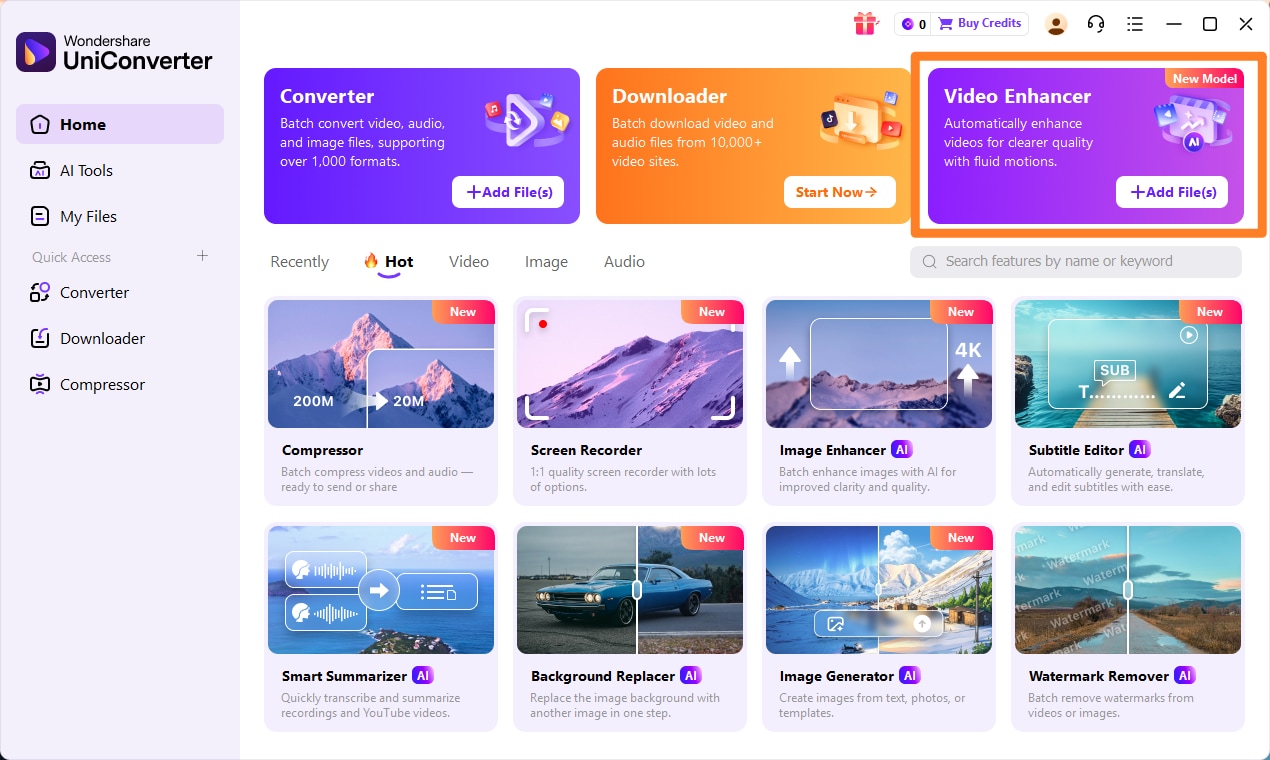
Step 1: Open UniConverter and Choose Video Enhancer
Launch UniConverter on your computer. From the main interface, navigate to the "Toolbox" section and select the "Video Enhancer" feature. This will open the dedicated enhancement module.
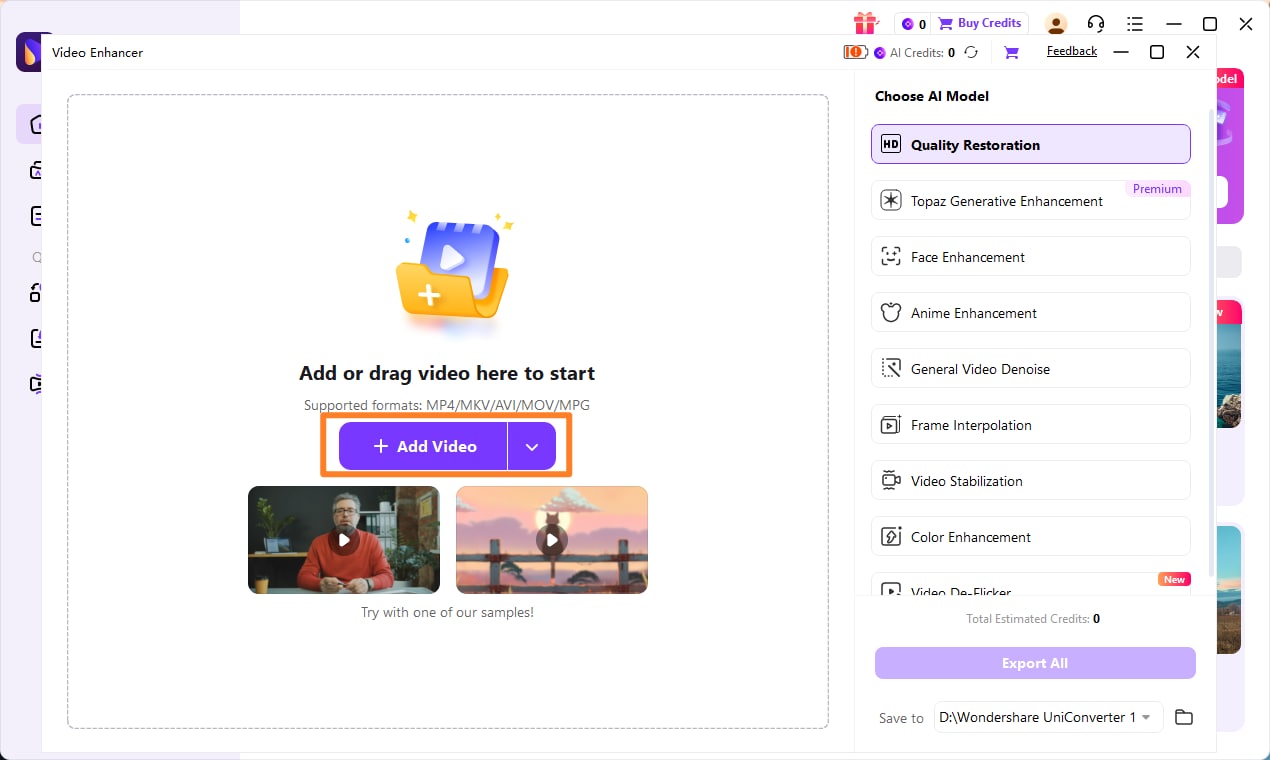
Step 2: Upload the Videos
Click on the "Add Files" button or simply drag and drop your video files into the UniConverter interface. You can add multiple videos for batch processing.
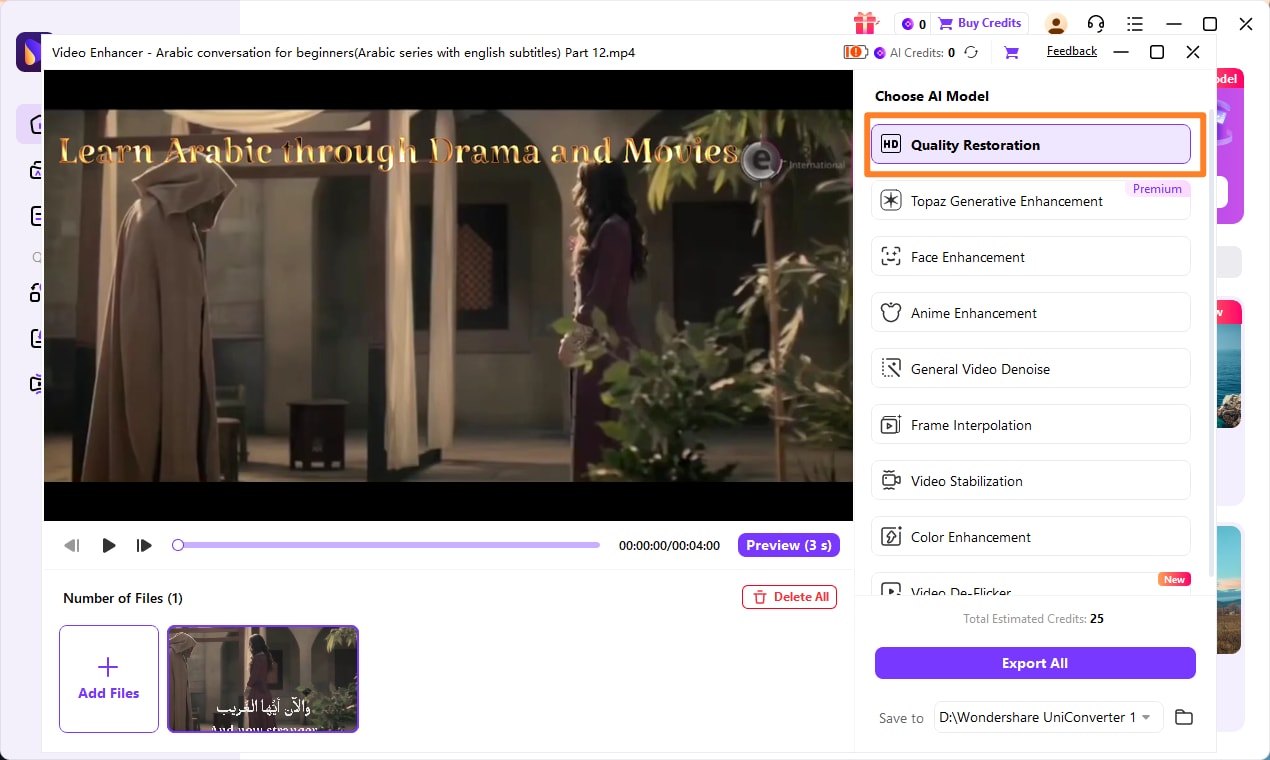
Step 3: Choose Enhancement Model
After uploading, UniConverter will present various enhancement options. Select the AI enhancement model that best suits your needs, such as "AI Upscale" or "AI Denoise." You can also adjust output settings like resolution and format. For instance, if you're looking to remove background without losing quality from your videos or images, UniConverter offers advanced features for that. You can also change video background to achieve a professional look.
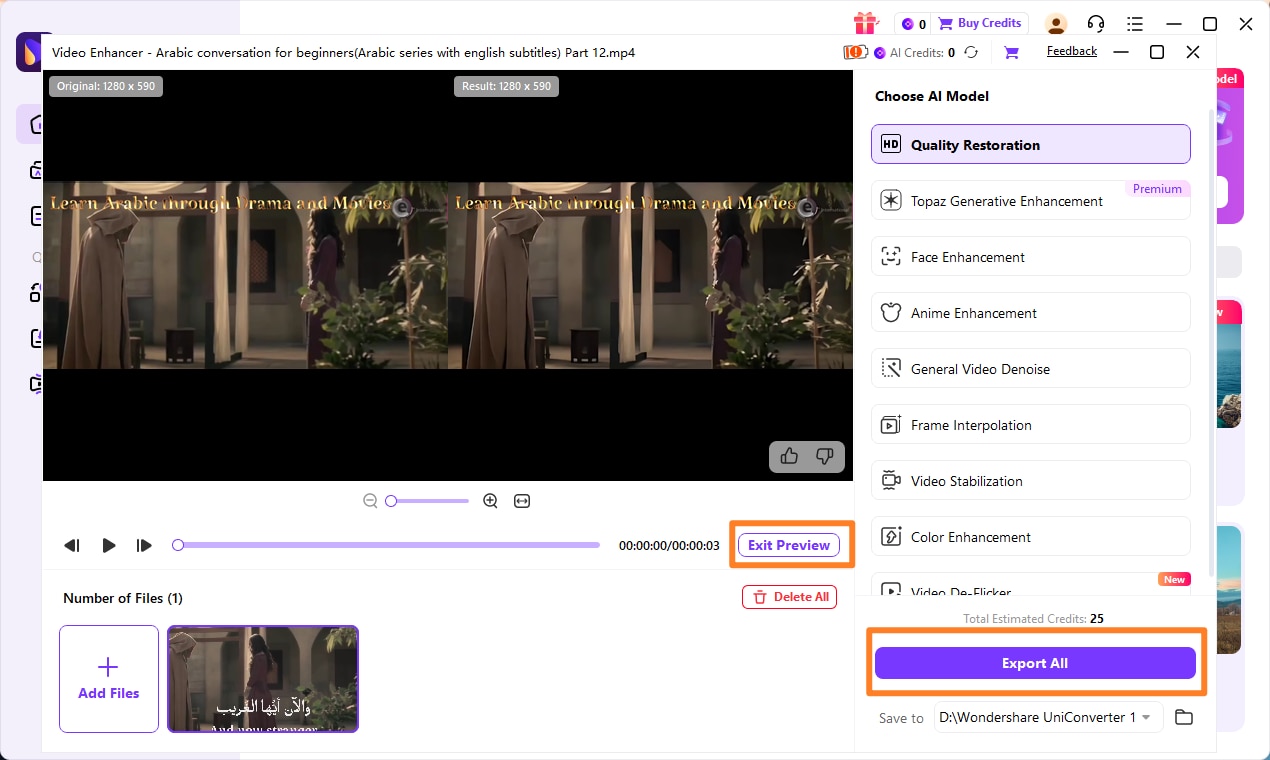
Step 4: Preview and Save the Enhanced Video
Before finalizing, UniConverter allows you to preview a segment of the enhanced video to ensure the quality meets your expectations. Once satisfied, click the "Start" or "Enhance" button to begin the processing and save your improved video to the designated output folder. If you're working with images, you can also use the background replacer to achieve desired visual effects. For those interested in high-definition background remover capabilities, UniConverter provides precise tools for that.

Seeking a Nero AI Video Upscaler Alternative?
Part 7: Conclusion
In conclusion, the Nero AI Video Upscaler review reveals it to be a competent and user-friendly tool for enhancing video quality, particularly for casual users and content creators looking to revitalize older or lower-resolution footage. Its advanced AI algorithms and intuitive interface make it an accessible option for those without extensive technical expertise. However, its resource-intensive nature and potential for artifacts with highly compressed sources are points to consider. For users with archival home videos or content creators needing a quick quality boost, Nero AI Video Upscaler offers a valuable solution. For high-end professional film restoration or tasks demanding frame-by-frame precision and ultimate control, alternatives like Topaz Video AI or the Studio version of DaVinci Resolve might be more appropriate, despite their higher cost or steeper learning curve. Ultimately, the best choice depends on individual needs, budget, and the specific demands of the video enhancement project. Evaluating your hardware capabilities before purchase is also crucial to ensure a smooth and efficient workflow.
Part 8: FAQs
-
1. What is Nero AI Video Upscaler?
Nero AI Video Upscaler is a software that uses artificial intelligence to increase the resolution and improve the visual quality of videos, making them clearer and more suitable for modern high-definition displays.
-
2. How does AI video upscaling work?
AI video upscaling works by employing machine learning algorithms to analyze video frames, intelligently predict and reconstruct missing pixel data, reduce noise, and sharpen details, effectively converting lower-resolution footage into higher resolutions.
-
3. Can Nero AI Video Upscaler improve video quality significantly?
Yes, Nero AI Video Upscaler can significantly improve video quality, especially for moderately low-resolution or older footage. However, the degree of improvement depends heavily on the original video's quality and compression.
-
4. What are the system requirements for Nero AI Video Upscaler?
While specific requirements can vary, AI video upscaling software generally benefits from a powerful CPU, a dedicated GPU with sufficient VRAM, and ample RAM to ensure efficient processing and prevent slowdowns or crashes.
-
5. Is there a free version of Nero AI Video Upscaler available?
Nero typically offers trial versions of its software, which may have limitations such as watermarks or restricted features. A fully free version with complete functionality is usually not available, requiring a purchase or subscription for full access.
