
- MPC-HC Value: Lightweight, open-source player excels in efficiency and broad format support for basic playback.
- MPC-HC Limitations: Lacks advanced, AI-powered video enhancement features for true quality improvement.
- Ideal User: Best for users with older hardware or those prioritizing minimalist playback over enhancement.
- Comparison Insight: MPC-HC offers basic adjustments; UniConverter provides superior, AI-powered video enhancement.
- Decision Factor: Choose UniConverter for dedicated video quality improvement; MPC-HC for simple, efficient playback.
In this article
MPC-HC Video Enhancer Review: A Deep Dive into Playback Quality
The landscape of video playback software is vast, with options ranging from minimalist players to feature-rich suites. Among these, Media Player Classic - Home Cinema (MPC-HC) has carved out a niche for itself as a lightweight, open-source player favored by many for its simplicity and efficiency. However, in an era where visual fidelity is paramount, and users increasingly seek advanced tools for improving video quality, the question arises: how does MPC-HC stack up, particularly concerning its video enhancement capabilities? This MPC-HC video enhancer review will delve into its core functionalities, compare it with leading alternatives, and ultimately guide users toward the best solution for their specific needs, addressing the common pain points of subpar video quality and the desire for a more immersive viewing experience.
Part 1: What is MPC-HC?
Media Player Classic - Home Cinema (MPC-HC) is a free and open-source video and audio player for Windows. It is based on the original Media Player Classic and aims to provide a lightweight, highly customizable, and efficient playback experience. Born from the desire for a no-frills player that could handle a wide array of formats without bogging down system resources, MPC-HC quickly gained popularity among users who prioritized performance and control over flashy interfaces. While its development has officially ceased, its legacy continues through its stable builds and dedicated user base. This review aims to assess its current relevance, especially in the context of modern video enhancement demands.
The Legacy of Media Player Classic - Home Cinema
* Minimalist Design: MPC-HC was designed for efficiency, offering a clean interface without unnecessary bloat.
* Extensive Codec Support: It boasts built-in codecs for a vast range of video and audio formats, reducing the need for external codec packs.
* Resource Efficiency: Known for its low CPU and RAM usage, making it ideal for older or less powerful hardware.
* Community-Driven Development: Though officially discontinued, its open-source nature allowed for community contributions and forks.
Part 2: MPC-HC: Core Features, Pros, and Cons
MPC-HC has long been a go-to for users seeking a straightforward and efficient media playback experience. Its core strength lies in its ability to handle a vast array of video formats with minimal system overhead. While it offers basic video adjustments like brightness, contrast, and saturation, it lacks the sophisticated, real-time AI-powered enhancement features found in more modern solutions. Its appeal is rooted in its simplicity and directness, making it a reliable choice for pure playback rather than transformative video quality improvements.
Pros:
* Lightweight and resource-efficient playback, ideal for older systems.
* Extensive codec support for diverse video formats out of the box.
* Highly customizable interface and advanced settings for power users.
Cons:
* Limited built-in video enhancement capabilities compared to specialized tools.
* Outdated interface and lack of modern aesthetic compared to contemporary players.
Part 3: MPC-HC: Ideal Users and Scenarios
MPC-HC finds its sweet spot with users who value simplicity, efficiency, and broad format compatibility above all else. It's particularly well-suited for individuals with older computer hardware or those who prefer a minimalist approach to media consumption. Its strength lies in its ability to play almost any video file without requiring additional codec installations, making it a reliable workhorse for straightforward playback tasks. However, its capabilities are significantly limited when it comes to actively improving video quality.
Best Use Case: Playback of legacy or niche video formats on older hardware
MPC-HC excels when you need to play an obscure video file on a less powerful machine. Its low resource consumption ensures smooth playback even with high-resolution content, provided the source quality is already good. It's perfect for archiving old home videos or playing files from less common sources where other players might struggle with codec compatibility or system demands.
Limited Use Case: Advanced real-time video upscaling and quality improvement
For users looking to actively enhance the quality of low-resolution or poor-quality videos, MPC-HC falls short. It lacks the advanced algorithms and AI-driven features necessary for real-time upscaling, noise reduction, or artifact removal. If your goal is to transform a grainy, pixelated video into a crisp, high-definition experience, MPC-HC is not the tool for the job. Its enhancement features are rudimentary at best, offering basic adjustments rather than true quality improvement.
Part 4: MPC-HC and Alternatives Comparison
When evaluating video players and enhancers, it's crucial to understand where MPC-HC stands against its contemporaries. While MPC-HC excels in minimalist playback, its video enhancement capabilities are basic. VLC offers a more balanced approach with moderate enhancement options, while PotPlayer provides more robust settings for users seeking greater control. UniConverter, however, distinguishes itself as a dedicated solution for superior, AI-powered video enhancement, making it the top choice for those prioritizing quality improvement.
| Feature/Player | MPC-HC | VLC Media Player | PotPlayer | UniConverter |
| Video Enhancement | Basic (brightness, contrast) | Moderate (filters, effects) | Advanced (deinterlacing, sharpening) | Excellent (AI upscaling, noise reduction) |
| Codec Support | Excellent | Excellent | Excellent | Excellent |
| Resource Usage | Low | Moderate | Moderate | Moderate (higher during enhancement) |
| User Interface | Dated | Functional | Modern | Modern, intuitive |
| Additional Features | Limited | Streaming, Conversion | Streaming, 3D | Conversion, Editing, AI Enhance |
Key Differentiators:
MPC-HC excels in minimalist playback but lacks advanced enhancement. VLC offers a balance of features and enhancement. PotPlayer provides more robust enhancement options. UniConverter stands out for dedicated, AI-powered video enhancement.
Part 5: Risks and Pitfalls
While MPC-HC offers a lightweight and efficient playback experience, relying on it for modern video enhancement needs or as a primary media player in 2024 comes with several risks. Its discontinued development and lack of contemporary features can lead to a less than ideal user experience and potential security vulnerabilities. Users seeking robust video enhancement should be aware of these limitations.
Potential for Outdated Codecs and Security Vulnerabilities
As MPC-HC is no longer actively developed, its internal codecs may become outdated. This can lead to compatibility issues with newer video formats and, more critically, expose users to security vulnerabilities if exploits are discovered and not patched. Using software that doesn't receive regular updates is a significant risk in today's digital landscape.
Lack of Active Development and Community Support
The official development of MPC-HC has ceased, meaning there are no new features, bug fixes, or performance optimizations. While a community fork exists, it doesn't guarantee the same level of support or rapid updates as actively maintained software. Users encountering issues or seeking new functionalities will find limited avenues for assistance.
Limited Real-time Enhancement for Low-Quality Sources
MPC-HC's video enhancement capabilities are rudimentary, offering only basic adjustments like brightness and contrast. It lacks advanced algorithms for real-time upscaling, noise reduction, or artifact removal. Attempting to "enhance" low-quality videos with MPC-HC will likely result in minimal improvement, often leading to a more noticeable degradation of quality rather than a true enhancement.
Compatibility Issues with Newer Operating Systems
While MPC-HC generally runs on newer Windows versions, the lack of active development means it may not be fully optimized for future operating system updates. This could lead to unforeseen compatibility issues, performance problems, or even complete non-functionality as operating systems evolve. Users might find themselves needing to switch players unexpectedly.
Part 6: How to Use UniConverter for Efficient Video Enhancement
When other tools fall short in batch processing, stable enhancement, or delivering noticeable quality improvements, UniConverter emerges as a powerful alternative. It bypasses common issues like unstable enhancement, weak effects, and lack of batch processing, offering a comprehensive solution for all your video enhancement needs. UniConverter is an all-in-one video toolbox that provides a seamless experience for enhancing videos without ads, supporting a wide range of formats, leveraging GPU acceleration for speed, ensuring stable and lossless output, and offering efficient batch enhancement.
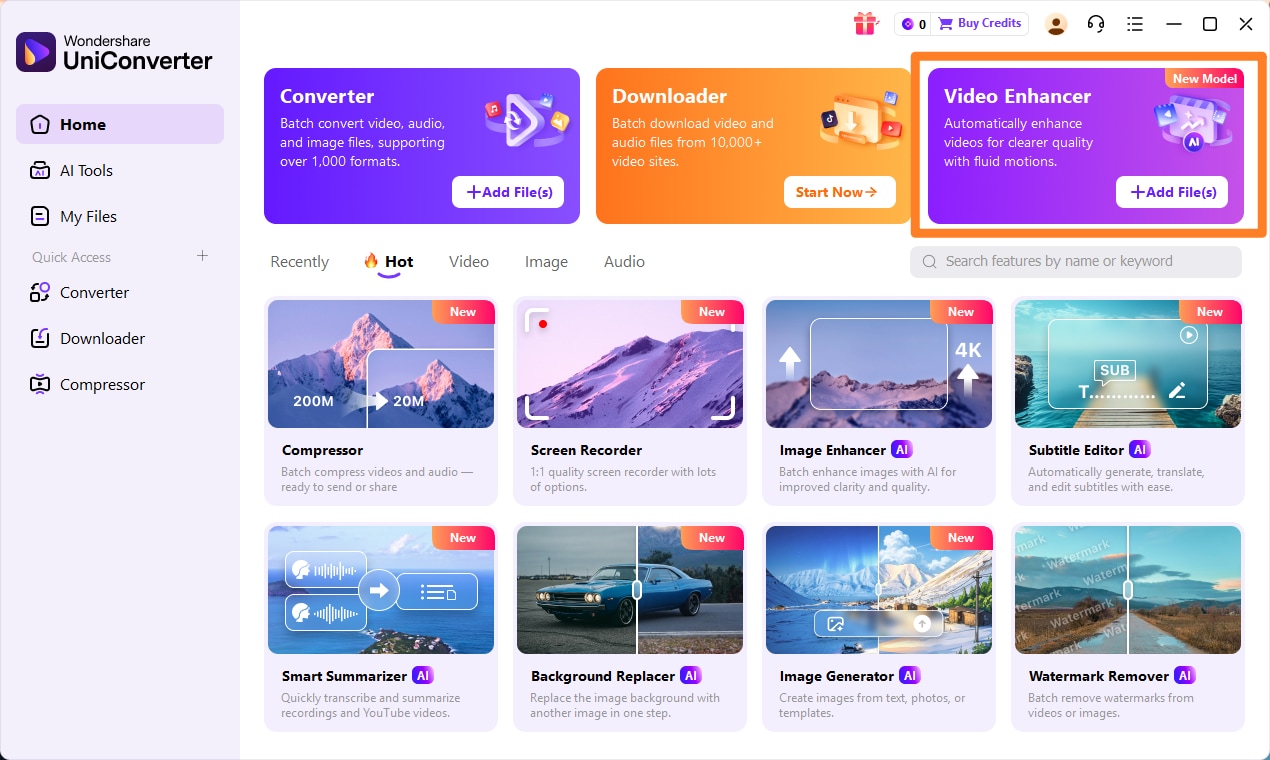
Step 1: Open UniConverter and Choose Video Enhancer
Launch UniConverter on your computer. From the main interface, navigate to the "AI Lab" section and select the "AI Video Enhancer" tool. This dedicated feature is designed to intelligently improve your video quality.
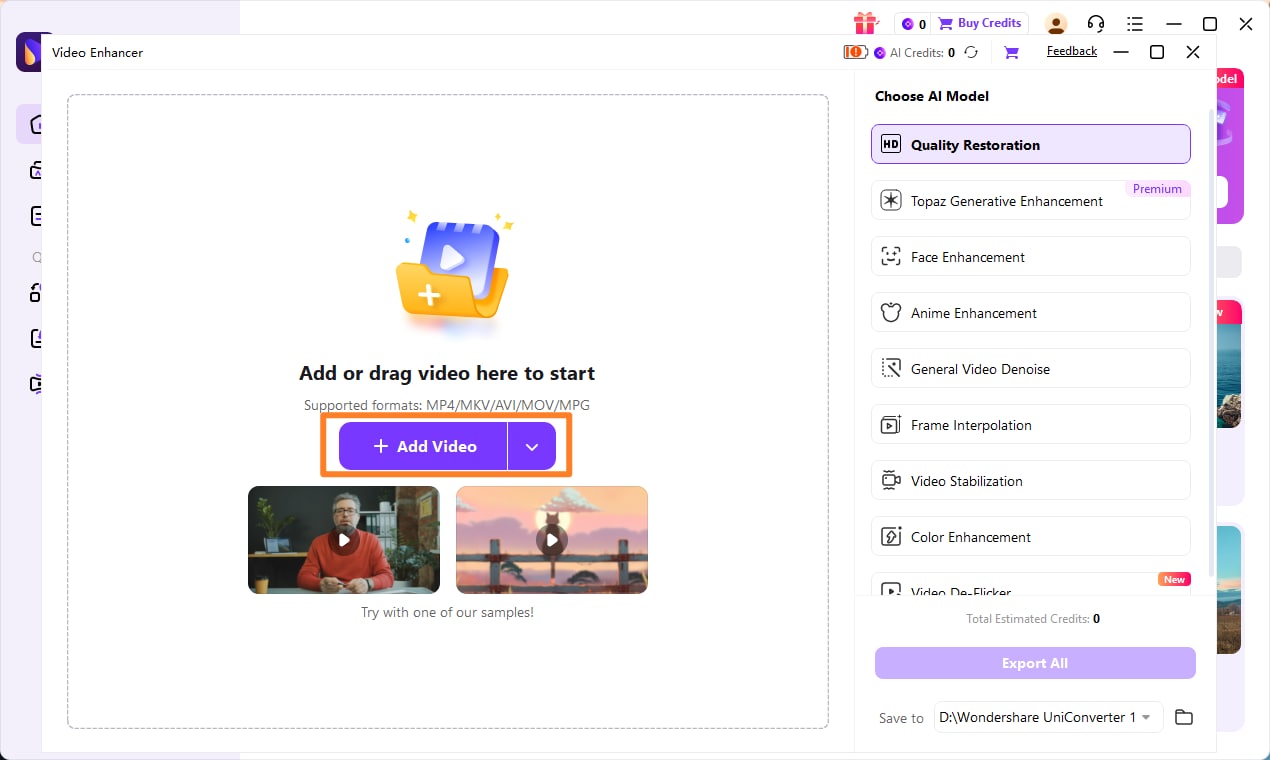
Step 2: Upload the Videos
Click on the "Add Files" button or simply drag and drop the video files you wish to enhance into the UniConverter interface. You can add multiple videos for batch processing, saving you time and effort.
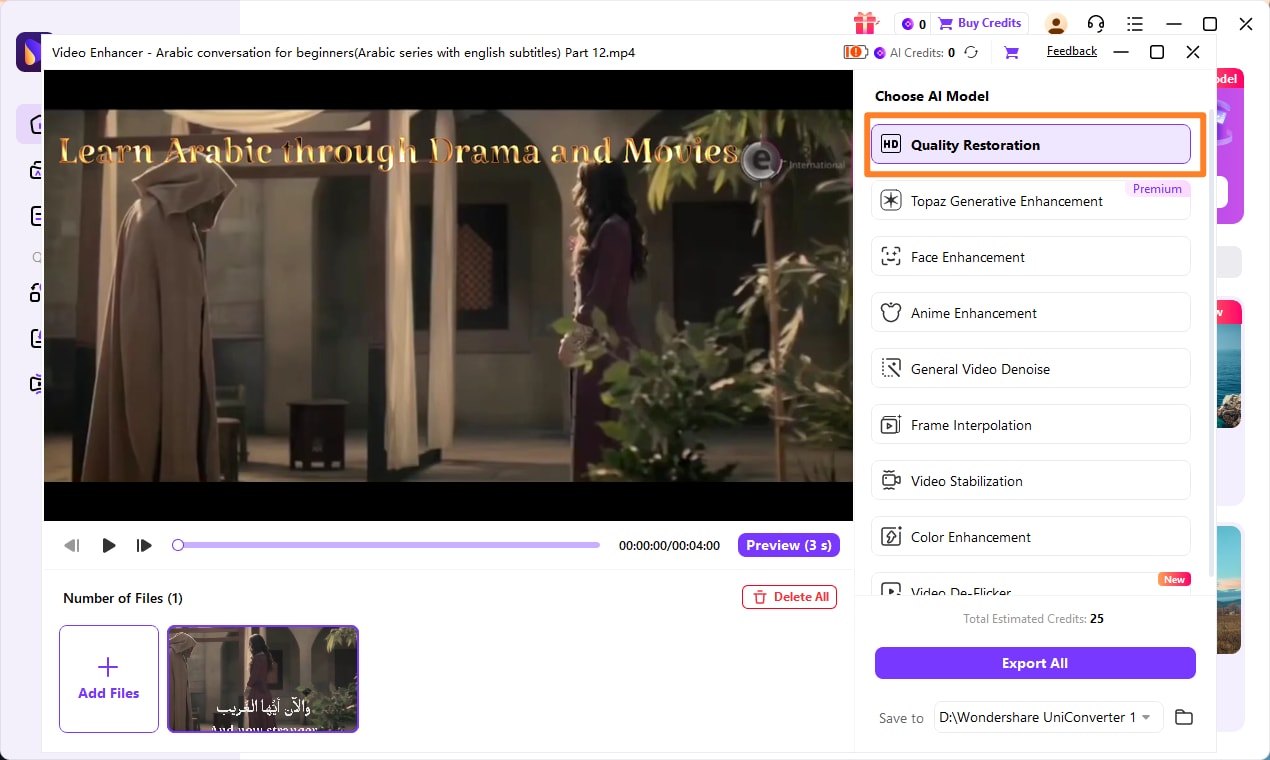
Step 3: Choose Enhancement Model
Once your video is loaded, UniConverter will present you with various AI enhancement models. Select the model that best suits your video's needs, such as "AI Upscale," "AI Denoise," or "AI Color Correction." You can also adjust specific parameters like resolution, brightness, and contrast. For instance, if you're looking to remove background without losing quality, UniConverter offers advanced features to achieve that. Additionally, you can explore options for a high-definition background remover to further refine your visuals.
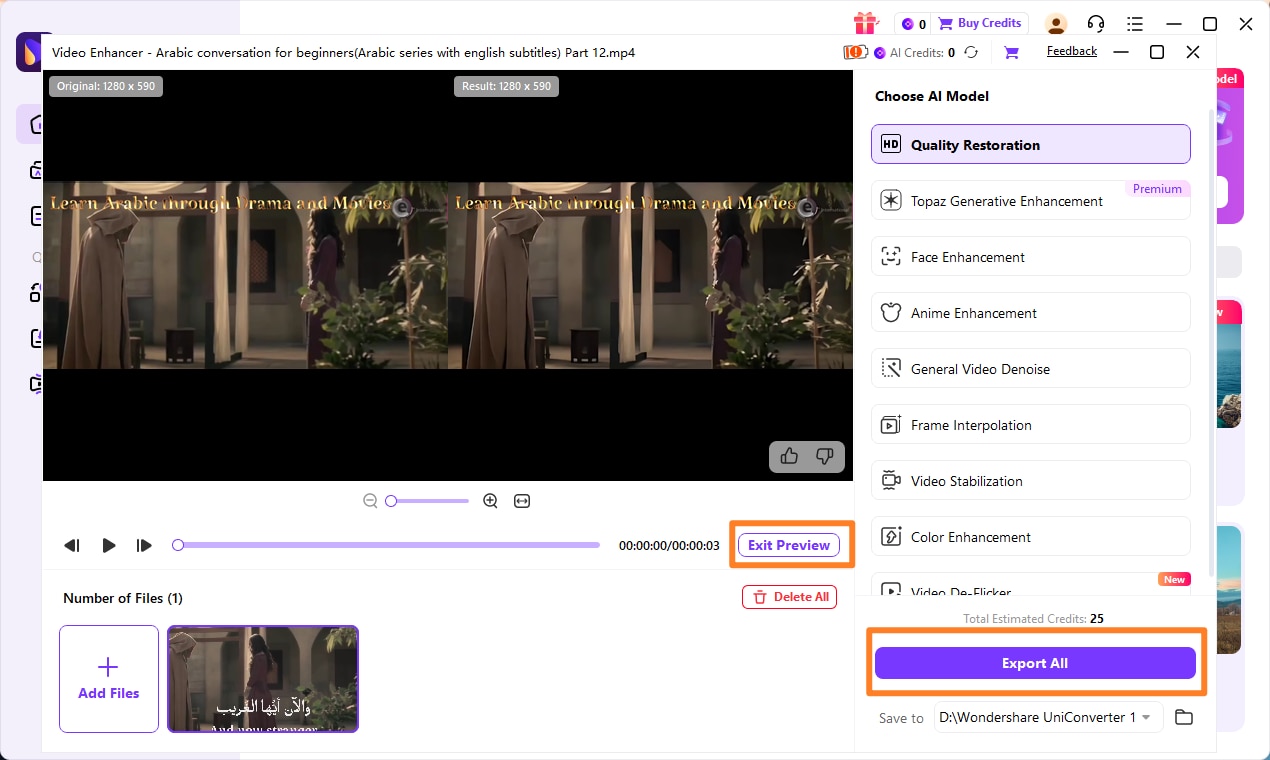
Step 4: Preview and Save the Enhanced Video
After selecting your desired enhancement settings, click the "Preview" button to see the improvements in real-time. Once satisfied, choose your desired output format and destination folder, then click "Export" to save your beautifully enhanced video. If you're working with images, UniConverter also provides an SVG background remover feature. For those interested in dynamic visual changes, consider exploring the video background changer capabilities.

Enhance Videos Beyond MPC-HC's Capabilities?
Part 7: Conclusion
This MPC-HC video enhancer review highlights that while Media Player Classic - Home Cinema remains a commendable choice for lightweight, no-frills video playback, its capabilities for true video enhancement are significantly limited. For users prioritizing efficiency and broad codec support on older hardware, MPC-HC is a viable option. However, for those seeking to genuinely improve video quality, especially from low-resolution or noisy sources, specialized tools are essential. VLC and PotPlayer offer a more balanced experience with moderate enhancement features, but for comprehensive, AI-powered video enhancement, UniConverter stands out as the superior choice. It provides advanced upscaling, noise reduction, and color correction, making it ideal for users who demand the highest visual fidelity. Ultimately, the best choice depends on individual needs: pure playback for MPC-HC, balanced features for VLC/PotPlayer, and dedicated, powerful enhancement for UniConverter.
Part 8: FAQs
-
1. Can MPC-HC truly enhance video quality?
MPC-HC offers basic playback adjustments like brightness and contrast but lacks dedicated, advanced video enhancement features found in specialized software designed for upscaling, noise reduction, or artifact removal.
-
2. Is MPC-HC still safe to use in 2024?
While functional, MPC-HC's lack of active development means it may not receive security updates for newly discovered vulnerabilities, potentially posing risks to users. It's advisable to use actively maintained software for security.
-
3. What are the best alternatives to MPC-HC for video enhancement?
UniConverter, PotPlayer, and even VLC Media Player offer more robust video enhancement capabilities, with UniConverter leading the pack for its AI-powered features.
-
4. Does MPC-HC support 4K or 8K video playback?
MPC-HC can play 4K/8K videos, but its ability to enhance their quality or efficiently handle very high bitrates might be limited compared to modern, optimized players or dedicated enhancement tools.
-
5. Is UniConverter difficult to use for video enhancement?
No, UniConverter is designed with a user-friendly interface, making video enhancement accessible even for beginners. Its AI-driven features simplify complex tasks into a few clicks.
