
- Meitu's Appeal: Meitu excels for quick, stylized social media edits with user-friendly AI and diverse filters.
- Meitu's Drawbacks: Beware of Meitu's intrusive ads, privacy concerns, and potential for over-processed, unnatural results.
- Professional Limitations: Meitu lacks the granular control and precision needed for professional photography workflows.
- UniConverter's Value: UniConverter offers robust, lossless image enhancement with strong privacy and no ads, ideal for quality-focused users.
- Alternative Choices: Snapseed and Photoshop Express provide good mobile editing balance without Meitu's privacy issues.
- Decision Factor: Choose based on your priorities: quick social edits (Meitu) vs. quality, privacy, and control (UniConverter/alternatives).
In this article
- Part 1: What is Meitu Image Enhancer?
- Part 2: Meitu Image Enhancer: Core Features, Pros, and Cons
- Part 3: Target Audience and Use Cases
- Part 4: Meitu Image Enhancer and Alternatives Comparison
- Part 5: Risks and Pitfalls of Using Meitu Image Enhancer
- Part 6: How to Enhance Images with UniConverter:
- Part 7: Conclusion
- Part 8: FAQs
Meitu Image Enhancer review: As someone who's constantly snapping photos and sharing them online, I've always been on the lookout for tools that can quickly make my pictures pop. Meitu Image Enhancer caught my eye with its promise of AI-powered magic, but does it truly deliver? This review will dive deep into its features, weigh its pros and cons, and compare it against other popular options, helping you decide if it's the right fit for your photo editing needs. We'll explore its strengths for casual users and its limitations for more professional workflows, ultimately guiding you to an informed decision.
Part 1: What is Meitu Image Enhancer?
Meitu Image Enhancer is a mobile-first photo editing application that leverages artificial intelligence to automatically enhance images. Originating from China, it gained immense popularity for its ability to quickly beautify selfies and add artistic flair with minimal effort. When I first heard about it, I was intrigued by the idea of "one-tap" enhancements – who wouldn't want to save time while still getting great-looking photos? This review aims to dissect whether this convenience comes with hidden costs, particularly concerning data privacy and the actual quality of the enhancements.
The Rise of AI-Powered Photo Editing
The digital age has ushered in an era where everyone is a photographer, and the demand for instant, high-quality image enhancement has skyrocketed.
* Accessibility for all: AI tools democratize photo editing, making professional-looking results achievable for users without extensive graphic design knowledge.
* Time-saving solutions: Automated enhancements drastically cut down the time spent on manual adjustments, which is a huge plus for social media enthusiasts.
* Creative exploration: AI-driven filters and effects open up new avenues for artistic expression, allowing users to experiment with diverse styles.
* Addressing common pain points: From poor lighting to blemishes, AI can quickly correct common photographic flaws that would otherwise require complex manual edits.
Part 2: Meitu Image Enhancer: Core Features, Pros, and Cons
Meitu Image Enhancer is primarily known for its AI-driven beautification and artistic filters. When I first started using it, I was genuinely impressed by how quickly it could transform a dull photo into something vibrant. It offers a suite of tools that cater to quick fixes and stylized looks, making it a go-to for many casual users. However, my experience also revealed some significant drawbacks that are worth considering.
Core Features:
* One-tap AI enhancement: Automatically adjusts brightness, contrast, and color.
* Skin smoothing and blemish removal: AI-powered tools for perfecting portraits.
* Artistic filters and effects: A vast library of styles, from vintage to futuristic.
* Body reshaping tools: Features to subtly (or not so subtly) alter body proportions.
* Makeup application: Virtual makeup options to enhance facial features.
Pros:
* One-tap AI enhancement for quick results: For someone like me who just wants to post something decent on Instagram without spending an hour on it, this is a lifesaver.
* Wide range of artistic filters and effects: I love experimenting with different looks, and Meitu offers a seemingly endless collection that keeps things fresh.
* User-friendly interface for beginners: Even my tech-averse friends found it easy to navigate and get good results almost immediately.
Cons:
* Aggressive in-app advertising: This was a real buzzkill. Just when I was getting into a creative flow, an ad would pop up, disrupting the experience.
* Potential privacy concerns regarding data usage: This is a big one for me. I've always been wary of apps that ask for extensive permissions, and Meitu's history in this area makes me think twice about what data they might be collecting.
Part 3: Target Audience and Use Cases
From my perspective, Meitu Image Enhancer is clearly designed for a specific type of user and scenario. It's not a one-size-fits-all solution, and understanding its strengths and limitations in different contexts is crucial.
Best Use Case: Quick Social Media Edits for Casual Users
If you're like me and just want to quickly enhance a selfie or a casual snapshot before sharing it on Instagram, TikTok, or Facebook, Meitu is fantastic. Its one-tap beautification and diverse filter library mean you can go from a raw photo to a share-worthy image in seconds. I often use it when I'm on the go and don't have time for more intricate editing. It's perfect for adding a bit of sparkle or an artistic touch without needing any advanced editing skills. For everyday social sharing, it really shines.
Limited Use Case: Professional Photography Workflow
However, if you're a professional photographer or someone who needs granular control over every aspect of an image, Meitu will fall short. I've tried using it for more serious projects, and I quickly realized its limitations. The AI enhancements, while convenient, often lack the precision and subtlety required for professional work. You can't fine-tune specific color channels, adjust curves with accuracy, or perform complex retouching tasks. For high-resolution prints or client work, the output quality simply isn't up to par, and the automatic adjustments can sometimes lead to an "over-processed" look that professionals actively avoid. It's definitely not a replacement for tools like Photoshop or Lightroom in a professional setting.
Part 4: Meitu Image Enhancer and Alternatives Comparison
When I look at image enhancers, I'm always thinking about what I need for different situations. Here's how Meitu stacks up against some other popular options, including UniConverter, based on my experience.
| Feature/Scenario | Meitu Image Enhancer | UniConverter | Adobe Photoshop Express | Snapseed |
| Processing Speed | Fast (mobile) | Very Fast (desktop, GPU accelerated) | Moderate (mobile) | Fast (mobile) |
| Output Quality (Detail Retention) | Good, but can be over-processed | Excellent, lossless | Excellent | Very Good |
| Ease of Use (Casual User) | Excellent | Good (for specific tasks) | Good | Excellent |
| Advanced Editing Tools (Pro User) | Limited | Excellent (for video/audio/image conversion & basic editing) | Good | Moderate |
| Privacy & Data Security | Concerns | Strong | Strong | Strong |
| Ad Experience | Intrusive | None | Minimal (premium features) | None |
From my perspective, Meitu really excels when you just need a quick, stylized edit for social media. It's super easy to use, and the filters are fun. However, if you're serious about image quality and privacy, UniConverter stands out. It offers a more comprehensive suite of tools, and its image enhancement is robust and lossless, which is crucial for me when I want to maintain detail. Photoshop Express gives you more control than Meitu without being as complex as the full desktop Photoshop, making it a good middle ground. Snapseed is another excellent free option that balances ease of use with powerful editing capabilities, and importantly, it's ad-free. For me, if I'm doing anything beyond a quick social post, I'd lean towards UniConverter for its quality and versatility, or Snapseed for a mobile-first, ad-free experience.
Part 5: Risks and Pitfalls of Using Meitu Image Enhancer
While Meitu Image Enhancer offers undeniable convenience, my experience has taught me that this convenience often comes with a set of risks and pitfalls, especially if you're not fully aware of them. I've definitely encountered some frustrating aspects that made me question its long-term viability for my needs.
Data Privacy and Security Concerns
This is probably my biggest apprehension with Meitu. There have been numerous reports and discussions about the app's extensive data collection practices, including accessing sensitive information like your location, device identifiers, and even phone calls. While they claim this data is used for improving services, it makes me very uncomfortable. I always think twice before granting it permissions, and for anything even remotely sensitive, I simply wouldn't use it. For me, the potential privacy cost outweighs the benefit of a quick filter.
Intrusive Advertisements and Upsells
Honestly, the ads are a major annoyance. Just when I'm in the flow of editing, a full-screen ad pops up, forcing me to wait or click through. It completely breaks the user experience. Beyond ads, there's a constant push for in-app purchases for premium filters or features. It feels like I'm always being nudged to spend money, which detracts from the free editing experience they initially promise.
Potential for Over-Processed or Unnatural Results
I've found that Meitu's AI, while powerful, can sometimes be a bit heavy-handed. It's very easy to end up with an image that looks overly smoothed, with unnatural skin tones or exaggerated features. While some people might like the "perfected" look, for me, it often crosses the line into looking fake. I've had to be very careful not to overdo it, and even then, I sometimes feel like the original essence of the photo is lost.
Limited Control Over Specific Enhancement Parameters
One of the most frustrating aspects for me is the lack of granular control. When I use a filter or an enhancement, I often want to fine-tune specific aspects – maybe reduce the intensity of the skin smoothing by just a little, or adjust the color balance more precisely. Meitu often gives you a slider for overall intensity, but it rarely allows for the kind of detailed adjustments that would make the enhancement truly perfect. It's a "take it or leave it" approach that limits creative expression.
Part 6: How to Enhance Images with UniConverter:
When I've hit a wall with other tools that either lack batch processing, offer unstable enhancements, or just don't deliver the quality I need, I often turn to UniConverter. It's become my go-to for a more reliable and comprehensive image enhancement experience, especially when I'm dealing with multiple images or need consistent, high-quality results without the hassle of ads or privacy worries. UniConverter provides a robust solution, ensuring lossless quality, a wide array of format support, and efficient GPU-accelerated processing for both individual and batch enhancements. It's truly an all-in-one multimedia toolkit that handles image enhancement with precision and ease. For those looking to upscale images to 4K, this tool offers excellent capabilities. You can also enhance image resolution with its advanced features.
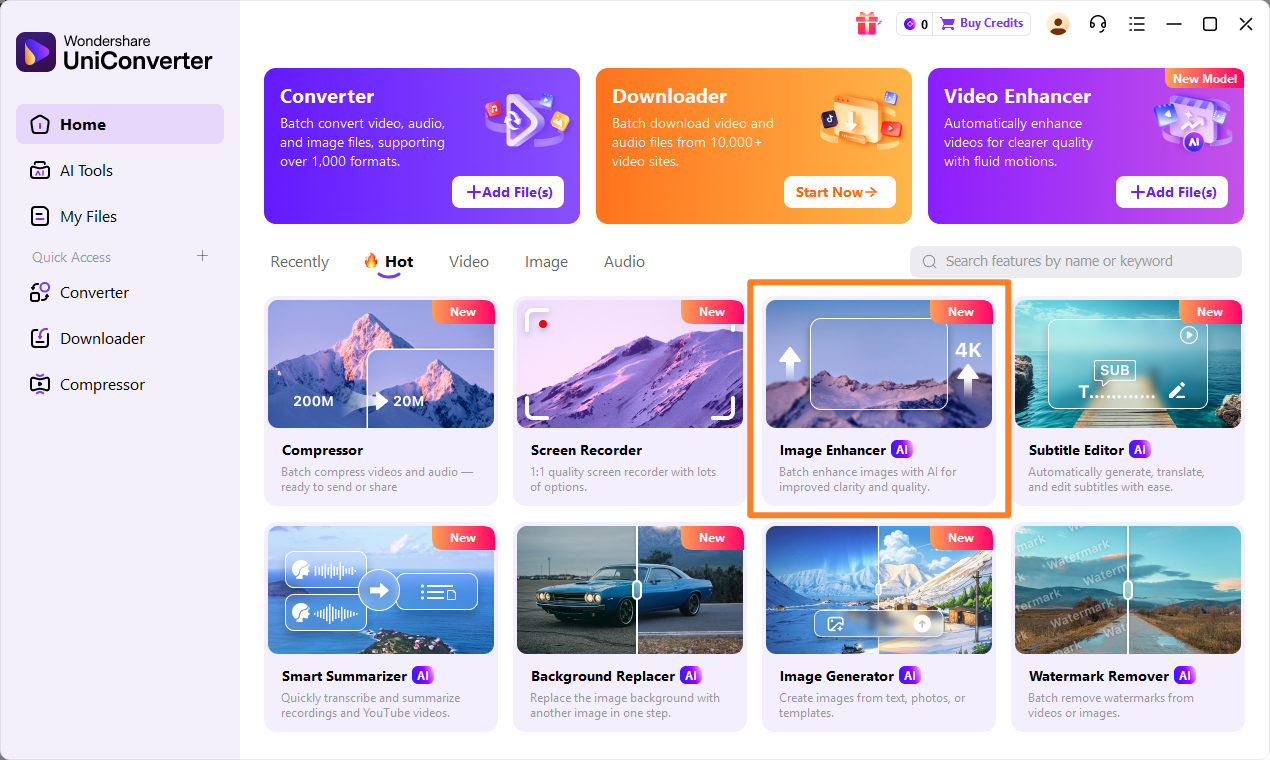
Step 1: Open UniConverter and Choose Image Enhancer
Launch UniConverter on your desktop. On the main interface, navigate to the "AI Lab" section and select the "Image Enhancer" tool. This dedicated tool is designed to enhance images online and offline with ease.
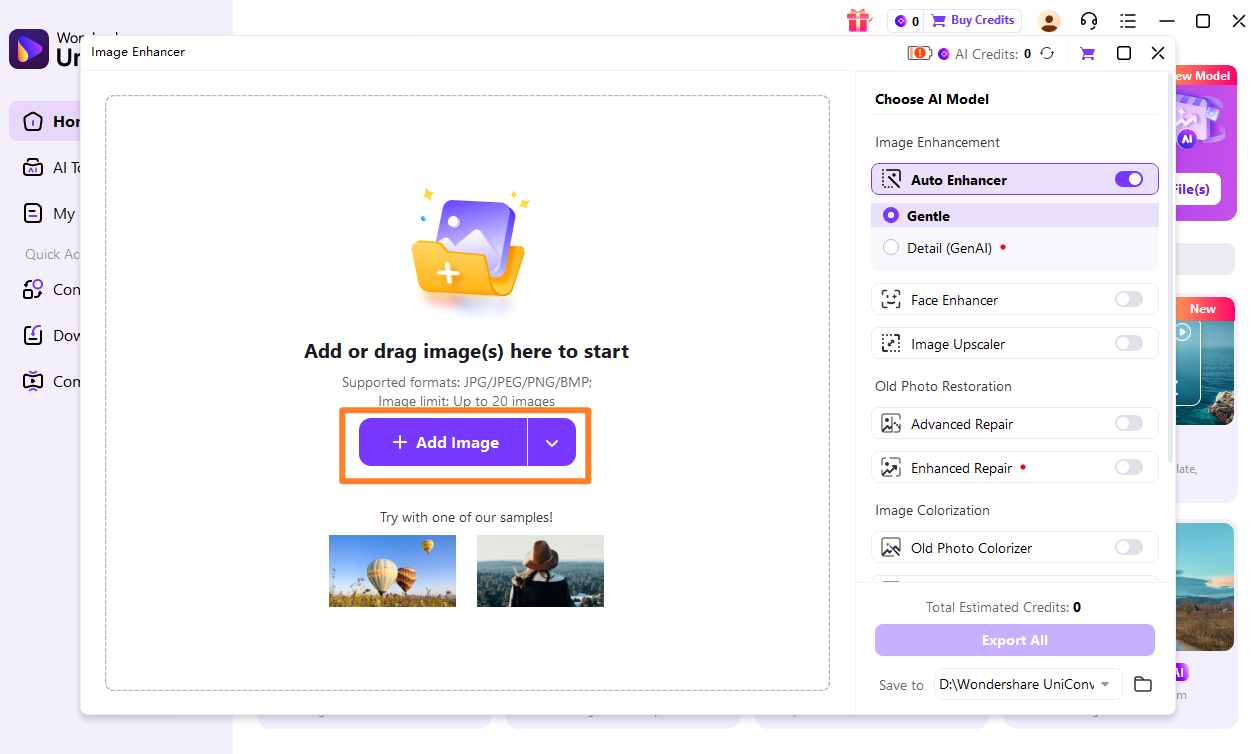
Step 2: Upload the Images
Click the "Add Files" button or simply drag and drop the images you wish to enhance into the UniConverter window. You can upload multiple images for batch processing.
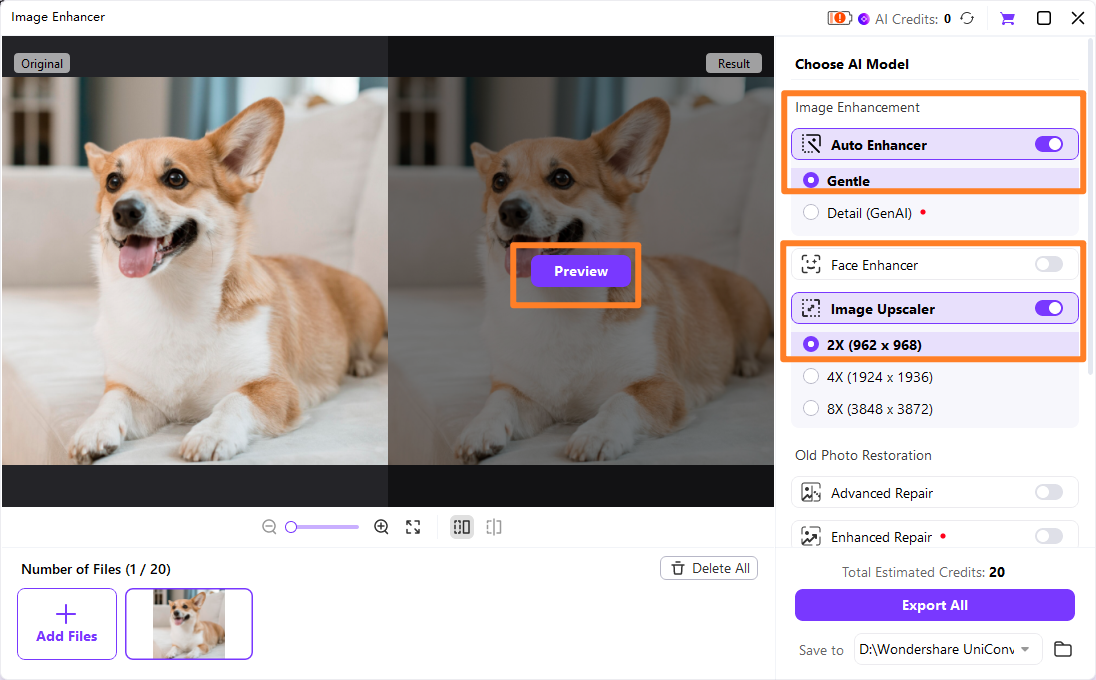
Step 3: Choose Enhancement Model
UniConverter offers different AI enhancement models. Select the model that best suits your image type and desired outcome (e.g., general enhancement, portrait beautification). You can also adjust parameters like resolution and quality.
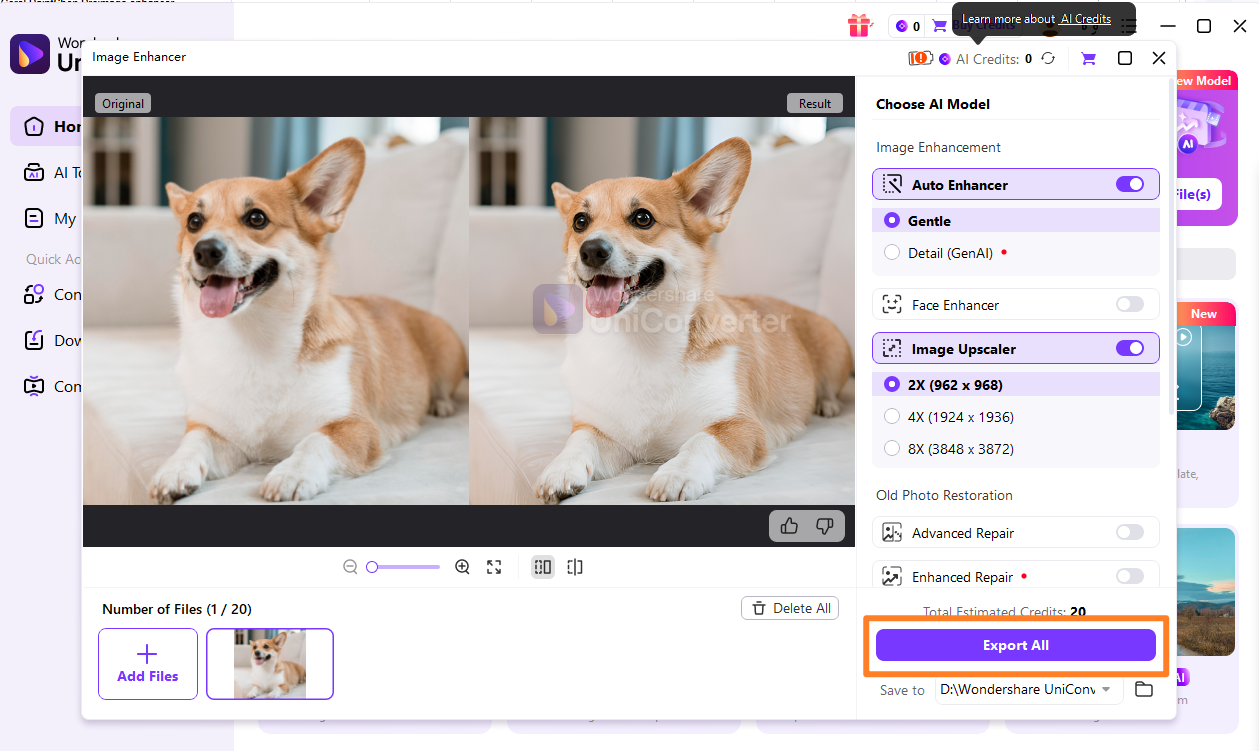
Step 4: Preview and Save the Enhanced Images
After the enhancement process is complete, you can preview the "before" and "after" versions of your images. Once satisfied, choose your desired output format and destination folder, then click "Export" to save your enhanced images.

Need a Meitu Alternative for Image Enhancement?
Part 7: Conclusion
After spending considerable time with Meitu Image Enhancer review and its alternatives, my final thoughts are clear: Meitu is a fantastic tool for quick, stylized edits, especially for social media. Its one-tap AI and vast filter library make it incredibly user-friendly for casual users who prioritize speed and aesthetic appeal over granular control. However, for anyone concerned about data privacy, intrusive ads, or requiring professional-grade output with precise adjustments, Meitu falls short. Professionals or users who need consistent, high-quality, lossless enhancements and a comprehensive multimedia toolkit would be better served by alternatives like UniConverter, which offers robust features without the privacy concerns or ad interruptions. For those seeking a balance of ease of use and advanced features without the privacy trade-offs, options like Snapseed or Adobe Photoshop Express are also strong contenders. Ultimately, the best choice depends entirely on your specific needs, priorities, and tolerance for its drawbacks.
Part 8: FAQs
-
1. Is Meitu Image Enhancer free to use?
Yes, the basic features are free, but it includes in-app purchases and ads.
-
2. Does Meitu Image Enhancer collect user data?
There have been reports and concerns regarding Meitu's data collection practices. Users should review their privacy policy.
-
3. Can Meitu Image Enhancer improve image resolution?
It can enhance image quality and sharpness, but true resolution upscaling is limited.
-
4. What are the best alternatives to Meitu Image Enhancer for professional use?
Adobe Photoshop, Lightroom, and Luminar Neo are popular choices for professionals.
-
5. How does UniConverter compare to Meitu for image enhancement?
UniConverter offers a more comprehensive suite of multimedia tools, including image enhancement, with a focus on quality and user control, often with fewer privacy concerns than Meitu.
