
- Magic Studio Overview: AI-powered online tool for quick, automatic image quality improvement, ideal for everyday users.
- Pros & Cons: Easy-to-use interface and effective AI detail restoration (Pros); limited customization and potential for artifacts (Cons).
- Ideal Users: Best for social media content creators needing quick visual boosts, not professional photographers requiring granular control.
- Comparison: Magic Studio excels in ease of use, UniConverter balances control and batch processing, Photoshop offers extensive features.
- Risks: Cloud-based processing raises data privacy concerns; potential for over-processing and unnatural results on complex images.
- UniConverter Value: Offers stable, lossless, GPU-accelerated enhancement with batch processing and extensive format support, a robust alternative.
- Decision: Choose Magic Studio for quick, simple enhancements; UniConverter for versatile batch processing; Photoshop for professional control.
In this article
- Part 1: What is Magic Studio Image Enhancer?
- Part 2: Magic Studio Image Enhancer: Core Features, Pros & Cons
- Part 3: Magic Studio Image Enhancer: Ideal Users & Use Cases
- Part 4: Magic Studio Image Enhancer and Alternatives Comparison
- Part 5: Risks and Pitfalls to Consider
- Part 6: How to Use UniConverter to Efficiently Enhance Images
- Part 7: Final Verdict and Recommendations
- Part 8: FAQs
When I first started dabbling in online content creation, I quickly realized that good visuals are non-negotiable. That's where tools like Magic Studio Image Enhancer come in. This Magic Studio Image Enhancer review will dive deep into its capabilities, comparing it with other popular options to help you decide if it's the right fit for your needs. We'll explore its strengths, weaknesses, and ideal use cases, giving you a clear picture of what to expect. My goal here is to share my experience and insights, guiding you through the crowded landscape of AI image enhancement.
Part 1: What is Magic Studio Image Enhancer?
Magic Studio Image Enhancer is an AI-powered online tool designed to automatically improve the quality of your images. It's built for speed and simplicity, aiming to take the guesswork out of photo editing for everyday users. My initial impression was that it promised a lot, and I was curious to see if it could deliver on those promises. This review will address the core question: does Magic Studio truly enhance images effectively for its target audience, or are there better alternatives out there?
The Rise of AI-Powered Image Enhancement Tools
The demand for quick and effective image enhancement has skyrocketed, driven by several factors:
* Social Media's Visual Dominance: Everyone wants their photos to stand out on platforms like Instagram and TikTok.
* Accessibility of Photography: With smartphones, everyone's a photographer, leading to a huge volume of images needing a quick polish.
* AI's Maturation: Artificial intelligence has reached a point where it can intelligently analyze and improve image quality without complex manual adjustments.
* Time Constraints: Content creators and casual users often don't have the time or expertise for professional-grade photo editing software.
Part 2: Magic Studio Image Enhancer: Core Features, Pros & Cons
Magic Studio Image Enhancer focuses on delivering a streamlined experience for improving image quality. Its core ability lies in its AI algorithms that can sharpen details, reduce noise, and enhance colors with minimal user input. I found its primary function to be a one-click solution for making photos look "better" almost instantly. It handles common image issues like blurriness and poor lighting quite well, making it a handy tool for quick fixes.
Pros:
* Intuitive User Interface for Quick Edits: I found it incredibly easy to upload an image and get an enhanced version back in seconds. There's almost no learning curve.
* Effective AI-Driven Detail Restoration: For many of my slightly out-of-focus or low-resolution images, it did a surprisingly good job of bringing out details.
* Batch Processing Capability for Efficiency: This was a lifesaver when I had multiple images from an event that all needed a similar touch-up.
Cons:
* Limited Advanced Customization Options: If you're looking for granular control over sharpening, noise reduction, or color grading, you'll feel constrained. It's mostly an "all or nothing" enhancement.
* Occasional Artifacts on Complex Images: On some highly detailed or textured images, I noticed the AI sometimes introduced unnatural patterns or smoothed out textures too much, leading to an artificial look.
Part 3: Magic Studio Image Enhancer: Ideal Users & Use Cases
From my experience, Magic Studio Image Enhancer really shines for a specific demographic. If you're someone who needs quick, decent results without investing time in learning complex software, this is definitely for you. I wouldn't recommend it for professional photographers, but for social media, it's a solid choice.
Best Use Case: Social Media Content Creators Enhancing Photos for Engagement
For me, as someone who frequently posts on social media, Magic Studio is perfect. I can quickly upload a photo from my phone, enhance it, and post it within minutes. It helps my images look more polished and professional, which definitely boosts engagement. If you're managing a small business's social media or just want your personal photos to pop, this tool is incredibly efficient. It saves me from spending ages in more complex editors just to get a decent-looking image.
Limited Use Case: Professional Photographers Requiring Granular Control and RAW Support
On the other hand, if you're a professional photographer, you'll quickly hit Magic Studio's limitations. I tried using it on some of my RAW files, and it simply doesn't support them. The lack of granular control over specific adjustments means you can't fine-tune an image to meet professional standards or client briefs. For high-stakes projects where every pixel matters and you need to maintain artistic integrity, you'll find yourself frustrated by its automated approach.
Part 4: Magic Studio Image Enhancer and Alternatives Comparison
When I started looking for image enhancers, I quickly realized there's a whole spectrum of tools out there. Here's how Magic Studio stacks up against some other popular options I've tried, including UniConverter, which I've found to be a surprisingly robust alternative.
| Feature/Scenario | Magic Studio Image Enhancer | Topaz Labs Gigapixel AI | Adobe Photoshop | UniConverter |
| Ease of Use (Quick Edits) | Excellent | Good | Moderate | Excellent |
| AI Upscaling Quality (General) | Very Good | Excellent | Good | Very Good |
| Batch Processing | Yes | Yes | Limited (requires scripting) | Yes |
| Advanced Control | Limited | Extensive | Extensive | Moderate |
| Pricing Model | Subscription/Credits | One-time purchase | Subscription | One-time purchase/Subscription |
| Target Audience | Casual users, content creators | Professional photographers | Graphic designers, photo editors | Casual to advanced users |
Key Differentiators:
Magic Studio really excels in user-friendliness for quick, AI-powered enhancements. If you're just looking for a fast fix, it's hard to beat. Topaz Labs Gigapixel AI, however, offers superior quality and control, especially for professional upscaling, which is crucial for large prints. Adobe Photoshop provides a comprehensive suite of editing tools far beyond simple enhancement, but it comes with a steep learning curve. UniConverter, for me, strikes a great balance, offering excellent batch processing and a good level of control for a wider range of users.
Part 5: Risks and Pitfalls to Consider
While Magic Studio offers convenience, I've learned that it's important to be aware of the potential downsides, especially with cloud-based tools. It's not always a straightforward win, and I've encountered a few issues that users should definitely consider before committing.
Data Privacy Concerns with Cloud-Based Processing
Since Magic Studio is a cloud-based service, I always have a slight concern about data privacy. When I upload my images, they're being processed on their servers. For personal photos, this might not be a huge deal, but if I were handling sensitive client images or proprietary content, I'd definitely think twice. It's crucial to understand their privacy policy and terms of service before uploading anything confidential.
Potential for Over-Processing and Unnatural Results
I've noticed that sometimes, in its attempt to "enhance" an image, Magic Studio can go a bit overboard. This often leads to an unnatural, overly smooth, or even cartoonish look, especially on faces or intricate textures. What starts as an enhancement can quickly turn into an artificial-looking image, which defeats the purpose for me. It's a fine line between enhancement and distortion, and Magic Studio occasionally crosses it.
Subscription Model Value for Infrequent Users
The pricing model is another point to consider. Magic Studio typically operates on a subscription or credit-based system. If you're someone who only needs to enhance a few images once in a blue moon, paying a monthly subscription might not be cost-effective. I've found myself in situations where I only needed it for a single project, and the recurring cost felt a bit much for infrequent use. It's worth calculating if the value aligns with your usage frequency.
Output Resolution Limitations for Print Media
While Magic Studio does a decent job of upscaling for digital use, I've found its output resolution can be limiting if you're planning on printing your enhanced images, especially at larger sizes. The AI might add detail, but it can't magically create true resolution from thin air. For high-quality prints, I still rely on dedicated professional tools that offer more robust upscaling algorithms designed for print media.
Part 6: How to Use UniConverter to Efficiently Enhance Images
When I've found myself frustrated with tools that don't support batch processing, produce unstable enhancements, or offer weak results, UniConverter has often been my go-to. It's a robust solution that avoids many of the common pitfalls, offering a stable, lossless, and GPU-accelerated enhancement experience with no ads and extensive format support. For me, it's an all-in-one media toolkit that just happens to have an excellent image enhancer.
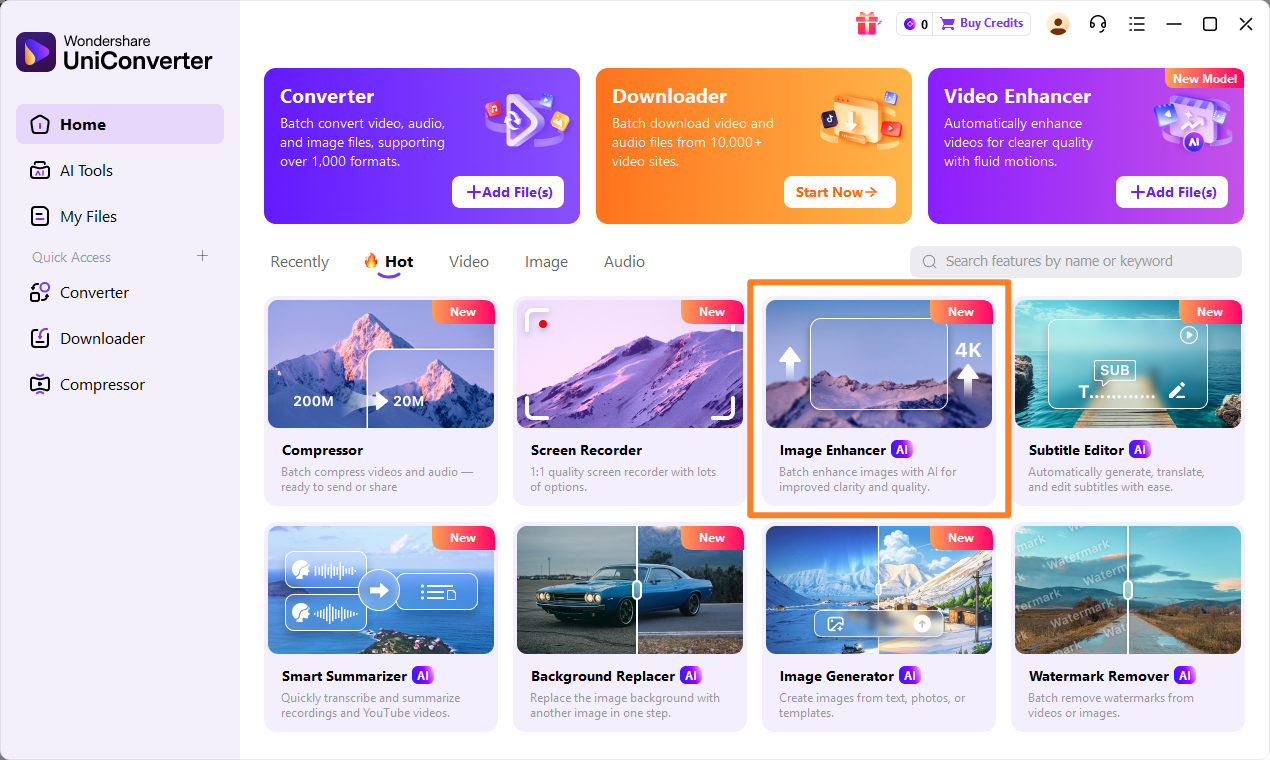
Step 1: Open UniConverter and Choose Image Enhancer
First, I launch UniConverter on my desktop. On the main interface, I navigate to the "Toolbox" section. Within the Toolbox, I'll find the "Image Enhancer" option. I click on it to open the dedicated enhancement module.
Step 2: Upload the Images
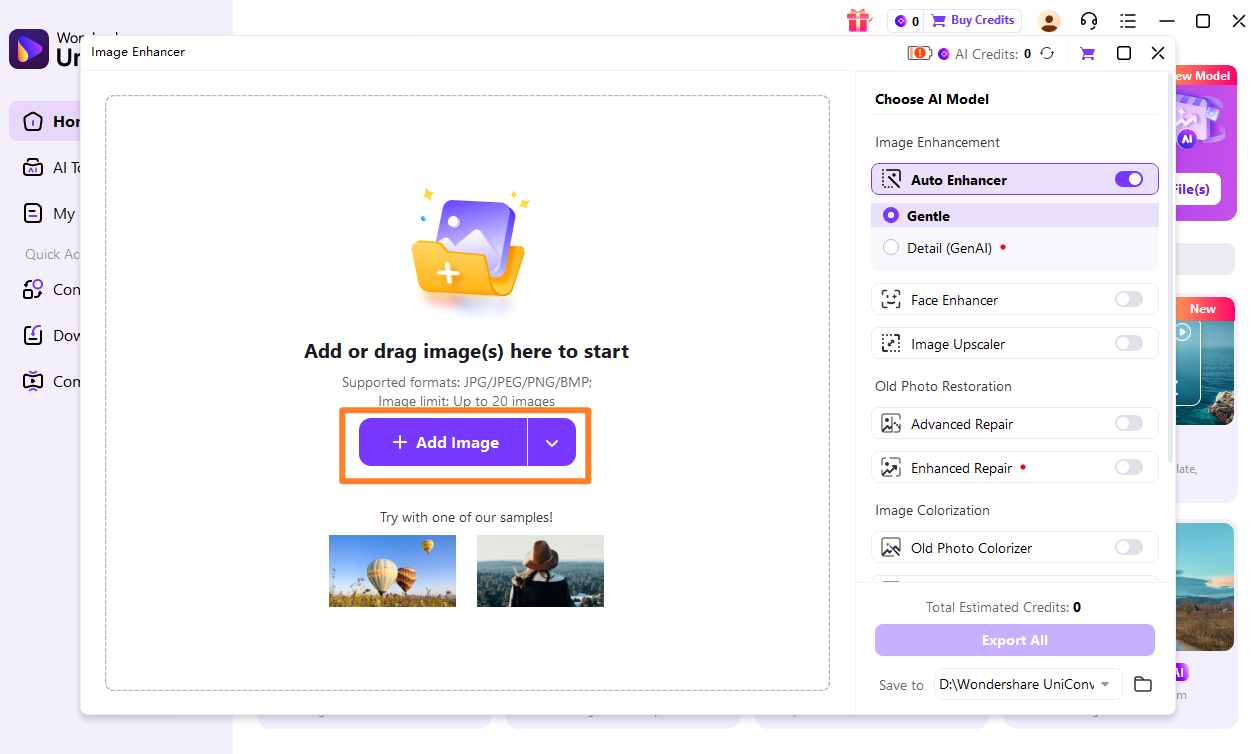
Next, I simply drag and drop the images I want to enhance directly into the Image Enhancer window. Alternatively, I can click the "Add Files" button to browse and select them from my computer. UniConverter supports various image formats, so I don't usually worry about compatibility. This tool can also be used as a free video upscaler.
Step 3: Choose Enhancement Model
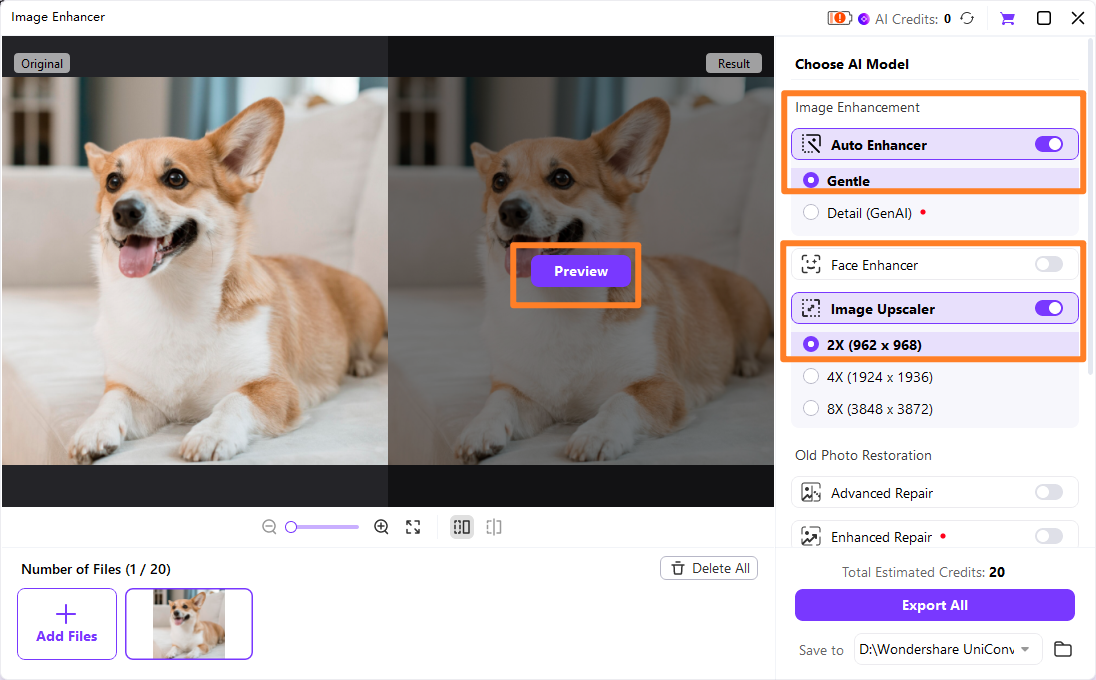
Once my images are loaded, I can select the desired enhancement model. UniConverter often provides options like "AI Upscale," "Denoise," or "Sharpen." I choose the one that best fits my needs. I can also adjust parameters like output resolution or quality if available, ensuring a high-quality image upscaler.
Step 4: Preview and Save the Enhanced Images
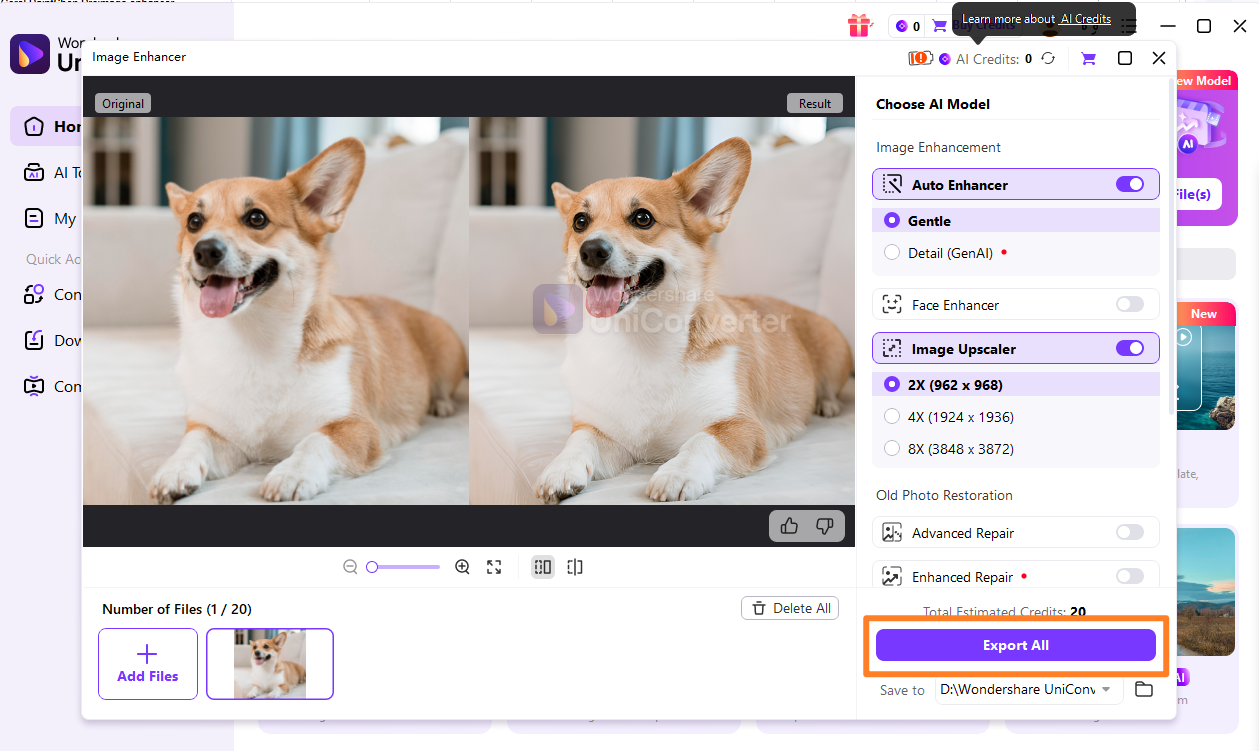
Before saving, UniConverter usually offers a preview feature. I can compare the original and enhanced versions side-by-side to ensure I'm happy with the results. Once satisfied, I click the "Enhance" or "Start" button, and UniConverter processes and saves the enhanced images to my chosen output folder. This process is similar to how one might unblur a video using its video enhancement capabilities.

Enhance Images Beyond Magic Studio
Part 7: Final Verdict and Recommendations
After spending considerable time with Magic Studio Image Enhancer and its competitors, my final verdict is that it's a fantastic tool for specific users. If you're a social media content creator, a small business owner needing quick visual boosts, or just someone who wants to make their personal photos look better without any fuss, Magic Studio is a strong contender. Its ease of use and AI-driven efficiency are its biggest selling points. However, if you're a professional photographer, graphic designer, or someone who demands granular control, RAW support, and absolutely pristine results for print, you'll find its limitations frustrating. For those who need a more comprehensive media toolkit that includes robust image enhancement with batch processing and greater control, UniConverter emerges as a highly capable and versatile alternative. And for the absolute highest-end demands, dedicated professional software like Topaz Labs Gigapixel AI or Adobe Photoshop remains indispensable. This Magic Studio Image Enhancer review aims to guide you to the right tool for your specific needs.
Part 8: FAQs
-
1. Is Magic Studio Image Enhancer free to use?
Magic Studio offers a free trial or limited free usage, with premium features requiring a subscription or credits. You usually get a few free enhancements before needing to pay.
-
2. Can Magic Studio enhance old, blurry photos?
Yes, Magic Studio's AI is designed to improve detail and clarity in blurry or low-resolution images, but results vary based on original quality. Severely damaged or extremely blurry photos might not see dramatic improvements.
-
3. What file formats does Magic Studio support?
Magic Studio typically supports common image formats like JPG, PNG, and WebP. I haven't seen it support RAW files, which is a common limitation for many online enhancers.
-
4. How does Magic Studio compare to Photoshop's image enhancement features?
Magic Studio offers a more streamlined, AI-driven approach for quick enhancements, while Photoshop provides extensive manual control and a broader range of editing tools. Magic Studio is for speed; Photoshop is for precision and comprehensive editing.
-
5. Is UniConverter a good alternative for batch image enhancement?
Yes, UniConverter includes robust batch processing capabilities for image enhancement, making it a strong alternative for users with multiple images. I've found it to be very efficient for handling large sets of photos.
