
- MadVR Value: MadVR offers unparalleled video quality for enthusiasts, but demands high-end hardware and technical expertise.
- Target Audience: Ideal for home theater enthusiasts with powerful systems, not for casual users on standard laptops.
- MadVR vs. UniConverter: MadVR provides deep customization; UniConverter offers user-friendly, AI-powered enhancement for broader accessibility.
- Risks: MadVR involves performance bottlenecks, compatibility issues, and a significant time investment for optimal setup.
- Decision Factor: Choose MadVR for ultimate control and quality with high effort; UniConverter for efficient, accessible enhancement.
In this article
- Part 1: What is MadVR Video Enhancer?
- Part 2: MadVR Video Enhancer: Core Features, Pros, and Cons
- Part 3: MadVR Video Enhancer: Target Audience and Use Cases
- Part 4: MadVR Video Enhancer and Alternatives: A Comparative Analysis
- Part 5: Risks and Pitfalls
- Part 6: How to Use UniConverter for Efficient Video Enhancement
- Part 7: Conclusion
- Part 8: FAQs
MadVR Video Enhancer: The Ultimate Guide to Unlocking Cinematic Visuals
The pursuit of pristine visual fidelity in digital media consumption has led to the development of sophisticated tools, with MadVR Video Enhancer review standing out as a cornerstone for enthusiasts. This in-depth analysis will delve into MadVR's capabilities, contrasting it with prominent alternatives to provide a comprehensive understanding of its strengths and weaknesses. We aim to equip readers with the knowledge to make informed decisions, whether they are seeking unparalleled image quality for their home theater or a more user-friendly solution for everyday viewing. This review will cover core features, target audiences, comparative analysis, potential pitfalls, and alternative solutions, culminating in a definitive recommendation.
Part 1: What is MadVR Video Enhancer?
MadVR Video Enhancer is a highly advanced, free-to-use video renderer for Windows-based media players, renowned for its ability to significantly improve video playback quality. Unlike standard video renderers that simply display video frames, MadVR employs complex algorithms to upscale, deinterlace, and process video signals, aiming to deliver a picture quality that rivals professional cinema. Its development stems from a dedicated community's desire to push the boundaries of home theater visual performance, addressing limitations inherent in typical playback software. This review seeks to answer the fundamental question: Is MadVR the ultimate solution for video enhancement, or do its complexities outweigh its benefits for the average user?
The Quest for Perfect Picture Quality
The digital video landscape often presents users with compromises in visual fidelity, leading to several pain points:
* Suboptimal Upscaling: Standard players often produce blurry or artifact-ridden images when scaling lower-resolution content to high-resolution displays.
* Inconsistent HDR Presentation: Displaying HDR content on SDR screens, or even on less capable HDR displays, can result in washed-out colors or clipped highlights.
* Lack of Granular Control: Most media players offer minimal options for fine-tuning video processing, leaving enthusiasts wanting more control over their viewing experience.
Part 2: MadVR Video Enhancer: Core Features, Pros, and Cons
MadVR Video Enhancer is a powerful tool designed to elevate video playback through its sophisticated rendering capabilities. Its core strength lies in its advanced algorithms for image processing, offering users an unparalleled degree of control over their video output. Key features include high-quality chroma and luma upscaling, precise deinterlacing, and advanced HDR tone mapping. It also supports various display calibration options and custom shader integration.
Pros:
* Unparalleled Image Processing Algorithms for Upscaling and Deinterlacing: MadVR utilizes state-of-the-art algorithms (e.g., Jinc, NGU) to deliver incredibly sharp and detailed upscaled images, minimizing artifacts and preserving fine details.
* Highly Customizable Settings for Granular Control Over Picture Quality: Users can fine-tune virtually every aspect of video rendering, from scaling algorithms and anti-aliasing to color management and dithering.
* Advanced HDR Tone Mapping for Optimal Display on SDR Screens: MadVR's dynamic tone mapping intelligently adjusts HDR content to suit the capabilities of SDR or less capable HDR displays, preserving highlights and shadow details.
Cons:
* Steep Learning Curve and Complex Configuration: Setting up MadVR for optimal performance requires significant technical knowledge and patience, often involving hours of tweaking.
* Demanding Hardware Requirements for Real-time Processing: Achieving the best results, especially with 4K HDR content and advanced algorithms, necessitates a powerful GPU, which can be a barrier for many users.
Part 3: MadVR Video Enhancer: Target Audience and Use Cases
MadVR Video Enhancer caters to a specific niche within the digital media consumption landscape, primarily appealing to users who prioritize absolute visual fidelity above all else. Its intricate configuration and demanding hardware requirements naturally filter out casual viewers.
Best Use Case: Home Theater Enthusiasts with High-End Systems
MadVR is the ultimate tool for dedicated home theater enthusiasts who have invested heavily in high-quality displays (4K HDR TVs, projectors) and powerful PCs. These users are willing to spend considerable time configuring MadVR to extract every ounce of detail and color accuracy from their video content. They seek a cinematic experience that goes beyond what standard media players can offer, leveraging MadVR for superior upscaling of Blu-ray rips, precise HDR tone mapping, and overall image enhancement. For them, MadVR is an essential component of their high-fidelity media playback chain.
Limited Use Case: Casual Viewers on Standard Laptops
For casual viewers using standard laptops or entry-level desktop PCs, MadVR offers little practical benefit and significant drawbacks. The hardware demands mean that most integrated graphics or low-end discrete GPUs will struggle to run MadVR effectively, leading to dropped frames, stuttering, and an overall poor viewing experience. Furthermore, the complexity of its setup is a major deterrent for users who simply want to click and play. For this audience, built-in player features or simpler video enhancement software are far more appropriate and user-friendly.
Part 4: MadVR Video Enhancer and Alternatives: A Comparative Analysis
| Feature/Aspect | MadVR Video Enhancer | UniConverter | PotPlayer's Built-in Filters | DaVinci Resolve |
| Image Processing Quality | Excellent (Highly customizable algorithms like NGU, Jinc) | Very Good (AI-powered enhancement, upscaling up to 8K) | Good (Basic scaling, deinterlacing) | Excellent (Professional-grade color grading, noise reduction) |
| Customization | Extensive (Dozens of settings for every aspect of rendering) | Moderate (Presets for common enhancements, adjustable parameters) | Moderate (Limited options for scaling, deinterlacing) | Extensive (Node-based editing, fine-grained control over effects) |
| Hardware Demands | High (Requires powerful GPU for real-time 4K HDR processing) | Moderate (GPU acceleration recommended for 4K/8K) | Low (Runs on most modern CPUs) | High (Demanding on CPU, GPU, and RAM for complex projects) |
| Ease of Use | Low (Steep learning curve, complex setup) | High (Intuitive interface, one-click enhancements) | High (Built-in, no extra setup) | Low (Professional software, requires learning curve) |
| Price | Free (as a renderer) | Paid (Subscription/Lifetime license) | Free (built-in) | Free (basic version), Paid (Studio version) |
MadVR stands out for its scientific approach to video rendering, offering unparalleled image processing quality and customization depth. However, this comes at the cost of high hardware demands and a steep learning curve. UniConverter, on the other hand, provides a more user-friendly experience with AI-powered enhancements, making it accessible for a broader audience without sacrificing significant quality. PotPlayer's built-in filters offer a free and easy solution for basic improvements but lack the advanced capabilities of MadVR or UniConverter. DaVinci Resolve, while a professional-grade tool, is overkill for simple video enhancement and is designed for comprehensive video editing and color grading. The choice ultimately hinges on the user's technical proficiency, hardware, and desired level of control versus ease of use.
Part 5: Risks and Pitfalls
While MadVR Video Enhancer promises superior video quality, its advanced nature introduces several potential risks and pitfalls that users should be aware of, especially when attempting to optimize their setup. These issues can range from performance degradation to system instability, making the user experience frustrating if not properly managed.
Performance Bottlenecks and System Instability
Pushing MadVR to its limits with demanding algorithms and high-resolution content can quickly overwhelm even powerful hardware. This often leads to dropped frames, stuttering playback, and an overall choppy experience. In extreme cases, an underpowered system attempting to run MadVR with aggressive settings can cause system crashes or freezes, requiring a hard reboot. The constant struggle to balance quality settings with hardware capabilities can be a significant source of frustration.
Compatibility Issues with Certain Hardware/Software Combinations
MadVR, being a third-party renderer, can sometimes encounter compatibility problems with specific graphics card drivers, operating system updates, or media player versions. These conflicts can manifest as rendering errors, black screens, or failure to launch properly. Diagnosing and resolving such issues often requires extensive troubleshooting, including driver rollbacks or software reinstallation, which can be time-consuming and complex.
Over-Complication Leading to Suboptimal Settings
The sheer number of customizable settings in MadVR can be overwhelming. Users, in an attempt to achieve the "best" picture, might inadvertently select settings that are either too demanding for their hardware or actually degrade the image quality. Without a deep understanding of each setting's impact, it's easy to create a configuration that looks worse than default settings or introduces unwanted artifacts. This complexity can lead to a less-than-optimal viewing experience despite the effort invested.
Time Investment for Configuration and Optimization
Achieving the desired visual output with MadVR is not a plug-and-play experience. It requires a significant time investment in research, experimentation, and fine-tuning. Users often spend hours, if not days, tweaking settings, running benchmarks, and comparing visual differences to find the sweet spot for their specific hardware and display. This extensive time commitment can be a major deterrent for those seeking a quick and easy solution.
Part 6: How to Use UniConverter for Efficient Video Enhancement
When other tools fall short in batch processing, stable enhancement, or delivering noticeable improvements, UniConverter emerges as a reliable alternative. It offers a user-friendly interface and powerful features to enhance your videos without the complexities and risks associated with highly technical renderers. UniConverter ensures a stable, lossless, and efficient enhancement process, supporting GPU acceleration and a wide range of formats, making it an all-in-one ultimate solution.
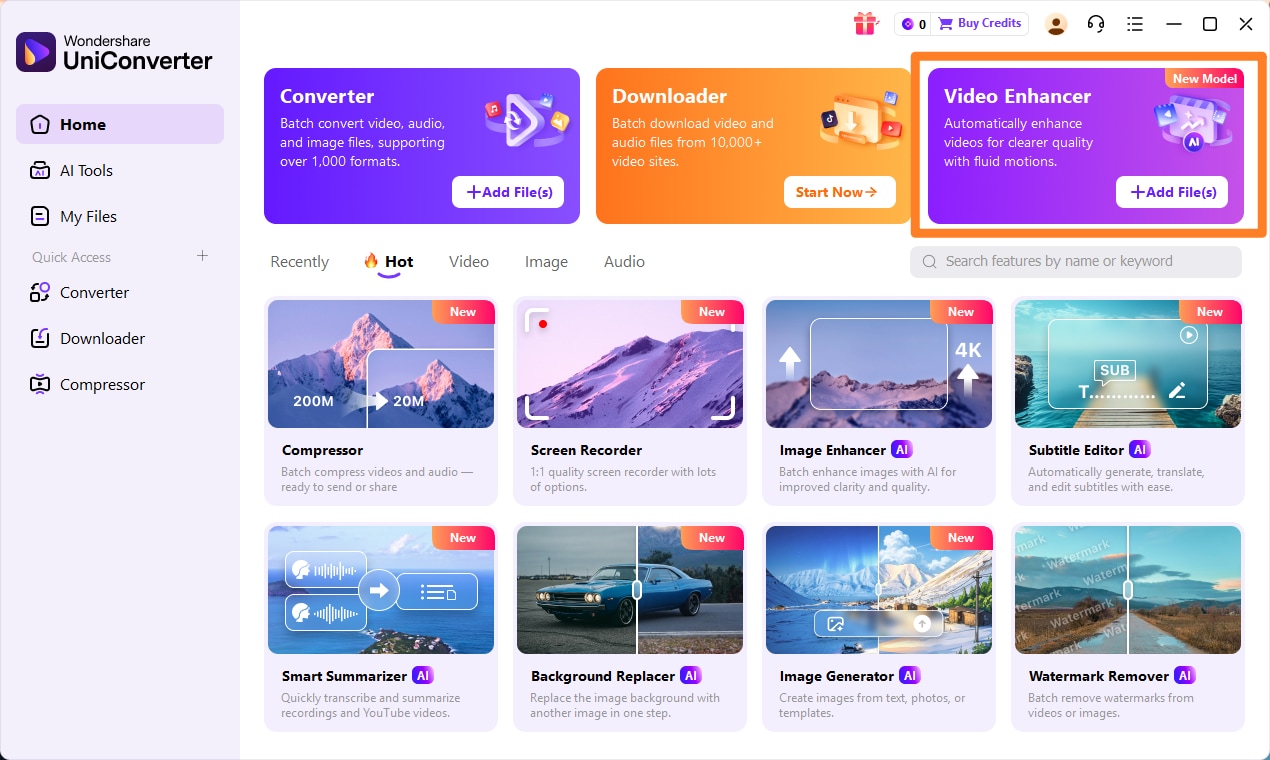
Step 1: Open UniConverter and Choose Video Enhancer
Launch UniConverter on your computer. From the main interface, navigate to the "Toolbox" section and select the "Video Enhancer" feature.
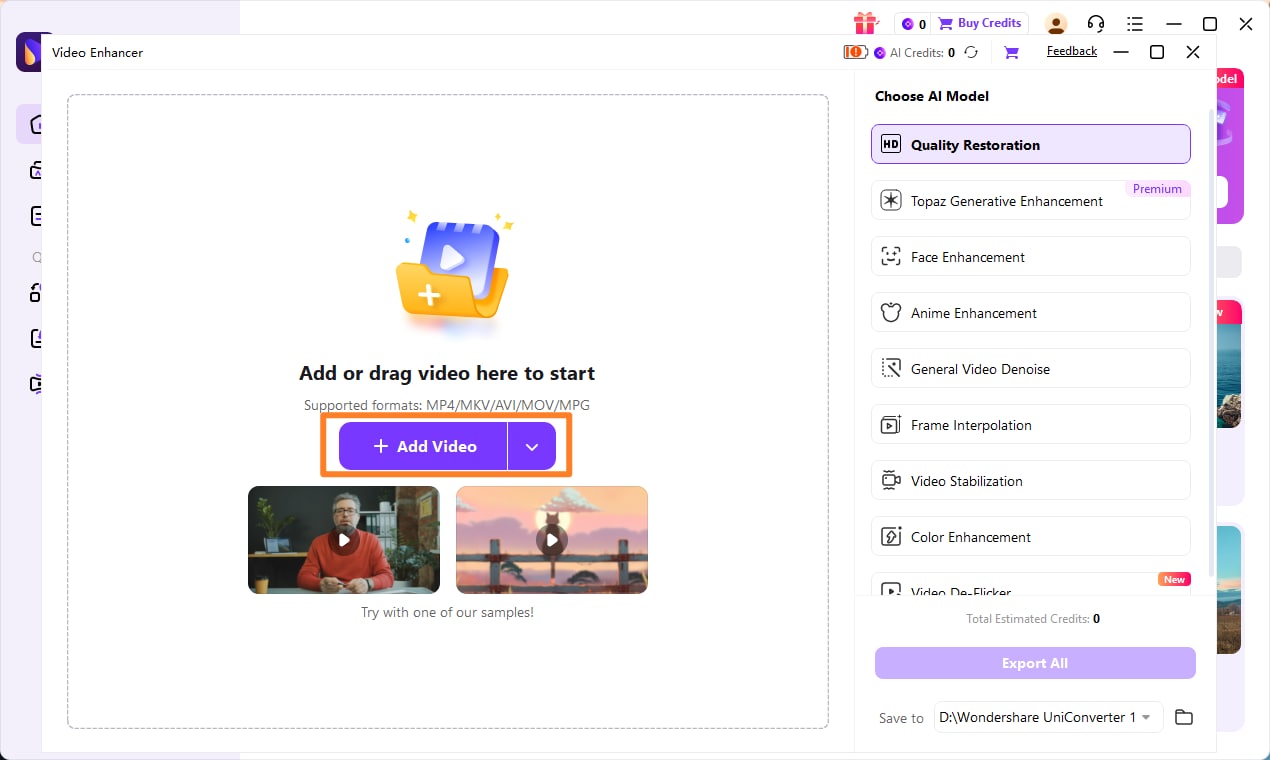
Step 2: Upload the Videos
Click on the "Add Files" button or drag and drop your video files into the UniConverter window. You can add multiple videos for batch processing.
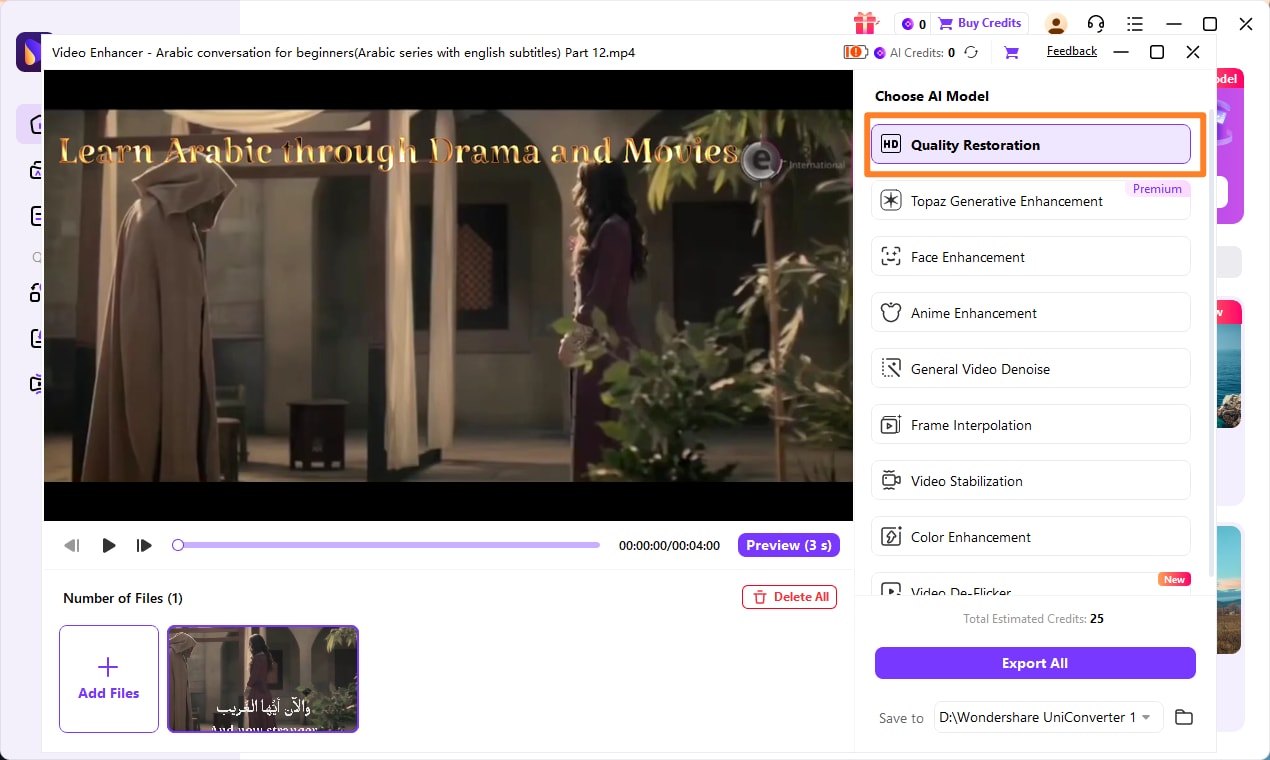
Step 3: Choose Enhancement Model
UniConverter offers various enhancement options. Select the desired enhancement model, such as "AI Upscaling," "Brightness/Contrast Adjustment," or "Denoise." You can also preview the changes before applying them. For advanced editing, consider exploring features like the background replacer to further refine your visuals, or learn how to remove background without losing quality.
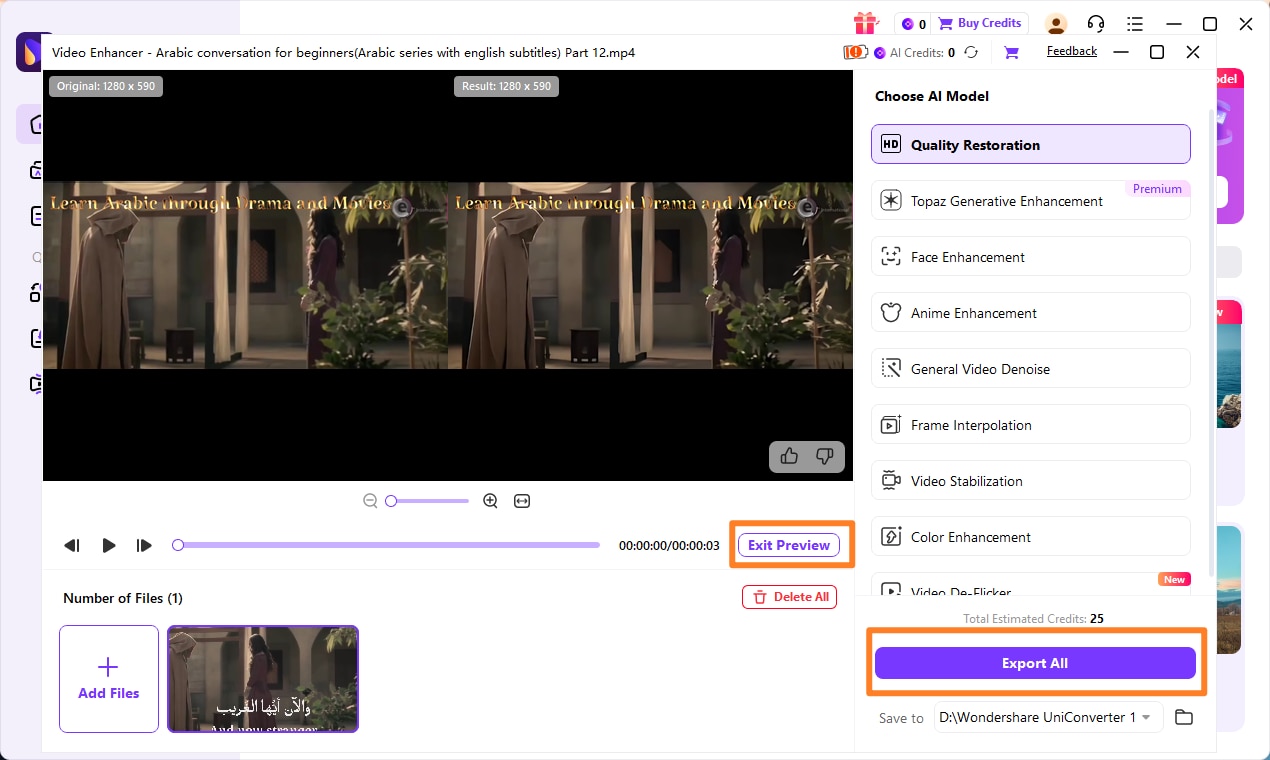
Step 4: Preview and Save the Enhanced Video
After selecting your enhancement options, click "Preview" to see the results. Once satisfied, choose your desired output format and destination folder, then click "Enhance" to save your improved video. For those interested in dynamic visual effects, UniConverter also provides tools to change video background seamlessly.

Seeking a MadVR Video Enhancer Alternative?
Part 7: Conclusion
The MadVR Video Enhancer review reveals it as an undeniably powerful tool for video playback, capable of delivering unparalleled visual fidelity for those with the right hardware and technical expertise. Its advanced algorithms and extensive customization options make it the gold standard for home theater enthusiasts seeking the absolute best picture quality. However, its steep learning curve, demanding hardware requirements, and potential for configuration pitfalls mean it is not a solution for everyone. For the dedicated videophile willing to invest time and resources, MadVR offers a truly cinematic experience. Conversely, for users prioritizing simplicity, ease of use, and efficient video enhancement without the technical complexities, alternatives like UniConverter provide a more accessible and equally effective solution. The choice between MadVR's deep customization and UniConverter's user-friendly efficiency ultimately depends on individual priorities regarding performance, usability, and the desired balance between control and convenience.
Part 8: FAQs
-
1. What is MadVR Video Enhancer?
MadVR is a high-quality video renderer for Windows media players, designed to deliver the best possible video playback quality through advanced scaling, deinterlacing, and HDR tone mapping algorithms.
-
2. Is MadVR difficult to set up?
Yes, MadVR has a steep learning curve and requires significant technical knowledge to configure optimally.
-
3. Does MadVR improve all video quality?
While MadVR can significantly improve video quality, its effectiveness depends on the source material and the user's hardware. It excels with high-quality sources and powerful GPUs.
-
4. What are the hardware requirements for MadVR?
MadVR is very demanding and typically requires a powerful discrete GPU (NVIDIA GTX 1050 or higher, or AMD equivalent) for real-time processing of high-resolution content, especially 4K HDR.
-
5. Are there any free alternatives to MadVR?
While MadVR itself is free, many media players offer built-in video enhancement features (like PotPlayer's filters), though usually not as advanced as MadVR. For more comprehensive, user-friendly enhancement, paid software like UniConverter offers a different approach.
