
- Lightworks Overview: A professional-grade NLE with integrated video enhancement, ideal for experienced editors.
- Core Features: Offers advanced color correction, noise reduction, and real-time previews for precise control.
- Pros & Cons: Professional integration and control are strengths; steep learning curve and high resource demands are drawbacks.
- Ideal Users: Best suited for professional filmmakers and post-production houses needing meticulous control.
- Limitations: Not recommended for quick social media edits due to complexity and resource intensity.
- Competitive Edge: Lightworks excels in integrated editing, while UniConverter offers superior ease of use and speed.
- Risks of Enhancers: Beware of over-processing, data privacy issues with cloud tools, and hidden costs.
- UniConverter Solution: Provides stable, high-quality, and fast batch enhancement with GPU acceleration, a user-friendly alternative.
- Ease of Use: UniConverter simplifies enhancement with intuitive steps: select tool, upload, choose model, preview, and export.
- Final Verdict: Lightworks for pros needing deep control; UniConverter for efficient, high-quality enhancement for broader users.
In this article
- Part 1: What is Lightworks Video Enhancer?
- Part 2: Lightworks Video Enhancer: Core Features, Pros, and Cons
- Part 3: Lightworks Video Enhancer: Ideal Users and Scenarios
- Part 4: Lightworks Video Enhancer vs. Competitors: A Comparative Analysis
- Part 5: Risks and Pitfalls When Using Video Enhancers
- Part 6: How to Use UniConverter for Seamless Video Enhancement
- Part 7: Final Verdict and Recommendations
- Part 8: FAQs
Lightworks Video Enhancer Review: A Deep Dive into Performance and Alternatives
The digital age has ushered in an unprecedented demand for high-quality video content, driving the evolution of video editing and enhancement tools. Among the myriad of options, Lightworks has long been recognized as a formidable player in the professional editing arena. This Lightworks video enhancer review aims to dissect its capabilities, evaluate its performance, and position it within the broader landscape of video enhancement software. We will explore its core features, ideal use cases, and critically compare it against key competitors, ultimately guiding users toward informed decisions for their video enhancement needs.
Part 1: What is Lightworks Video Enhancer?
Lightworks, developed by EditShare, is a non-linear editing system (NLE) that has been a staple in the film and broadcast industry for decades, known for its robust feature set and professional-grade output. While primarily a comprehensive editing suite, its integrated tools offer significant capabilities for video enhancement, allowing users to refine and improve the visual quality of their footage. This review focuses specifically on its enhancement functionalities, examining how effectively it can elevate video quality, from color correction to noise reduction. Our core objective is to determine if Lightworks stands as a viable and efficient solution for modern video enhancement challenges, especially when compared to specialized enhancement software.
The Landscape of Video Enhancement Software
* Growing demand for pristine video quality: Users expect flawless visuals across all platforms.
* Challenges with diverse source footage: From amateur recordings to professional shoots, quality varies.
* The need for user-friendly yet powerful tools: Balancing accessibility with advanced capabilities is crucial.
Part 2: Lightworks Video Enhancer: Core Features, Pros, and Cons
Lightworks' video enhancement capabilities are deeply integrated within its professional editing environment, offering a sophisticated approach to improving visual fidelity. Its core strength lies in providing granular control over various aspects of video quality. Users can leverage its advanced color correction tools to achieve precise color grading, adjust exposure, contrast, and saturation, and correct white balance issues. The software also includes noise reduction filters and sharpening tools to clean up grainy footage and bring out finer details. Furthermore, its real-time preview functionality allows for immediate feedback on adjustments, streamlining the enhancement workflow.
Pros:
* Professional-grade editing suite integration offers a holistic post-production environment.
* Advanced color correction and grading tools provide precise control over visual aesthetics.
* Real-time preview for adjustments allows for immediate visual feedback.
Cons:
* Steep learning curve for beginners due to its complex interface and professional-oriented features.
* Resource-intensive, requiring powerful hardware for smooth operation and rendering.
Part 3: Lightworks Video Enhancer: Ideal Users and Scenarios
Lightworks Video Enhancer is primarily tailored for professionals and experienced video editors who require a powerful, integrated solution for their post-production workflows. Its comprehensive toolset and high degree of control make it suitable for projects demanding meticulous attention to detail and broadcast-quality output. The software's learning curve and hardware requirements mean it's not designed for casual users seeking quick fixes.
Best Use Case: Professional Filmmaking and Post-Production
For independent filmmakers, documentary creators, and post-production houses, Lightworks excels. It allows for detailed color grading, precise noise reduction, and sophisticated visual effects integration, ensuring the final product meets high industry standards. Its ability to handle various codecs and resolutions, combined with its robust editing capabilities, makes it an all-in-one solution for complex projects where quality cannot be compromised.
Limited Scenario: Quick Edits for Social Media Content Creators
For social media content creators who need rapid edits and enhancements for platforms like TikTok or Instagram, Lightworks can be overkill. The time invested in learning the software and its resource demands outweigh the benefits for simple tasks such as basic color adjustments or minor sharpening. Simpler, more intuitive tools are better suited for this fast-paced environment.
Part 4: Lightworks Video Enhancer vs. Competitors: A Comparative Analysis
When evaluating Lightworks' video enhancement capabilities, it's crucial to compare it against other prominent tools in the market. While Lightworks offers deep integration within a professional NLE, dedicated enhancement software or more user-friendly editors often provide different advantages. This comparison highlights how Lightworks stands against tools like UniConverter, Adobe Premiere Pro, and DaVinci Resolve, focusing on aspects critical to video enhancement.
Comparison Table: Lightworks vs. Top Video Enhancers
| Feature/Software | Lightworks | UniConverter | Adobe Premiere Pro | DaVinci Resolve |
| Processing Speed | Good | Excellent | Good | Excellent |
| Output Quality | Excellent | Excellent | Excellent | Excellent |
| Ease of Use | Low | High | Medium | Medium |
| Customer Support | Forum/Email | 24/7 Online | Extensive | Forum/Email |
| Security | High | High | High | High |
Key Differentiators: What Sets Them Apart
Lightworks offers a highly professional, integrated editing environment where enhancement is part of a larger workflow, making it ideal for those already invested in its ecosystem. UniConverter stands out for its exceptional ease of use and efficiency, particularly for batch processing and a wide range of enhancement tasks, making it accessible to a broader audience. Adobe Premiere Pro, as part of the Creative Cloud, provides a comprehensive suite with extensive integration possibilities, catering to a vast user base. DaVinci Resolve is renowned for its industry-leading color grading capabilities, often considered the gold standard for professional colorists, and also offers a robust free version.
Part 5: Risks and Pitfalls When Using Video Enhancers
While video enhancers promise to transform footage, their use is not without potential drawbacks, especially when relying on less reputable or free versions of software. Understanding these risks is crucial for making informed decisions and protecting your work.
Potential for Over-Processing and Unnatural Results
One of the most common pitfalls is the temptation to over-enhance. Aggressive noise reduction can lead to a "plastic" or "smudged" look, losing fine detail. Excessive sharpening can introduce artifacts and halos around edges, making the video appear artificial. Over-saturation or extreme color grading can also distort the original aesthetic, resulting in an unnatural and unpleasant viewing experience. Achieving a balanced, natural enhancement requires a nuanced approach and a keen eye.
Data Privacy Concerns with Cloud-Based Solutions
Many modern video enhancement tools, particularly those offering AI-driven features, operate on cloud-based platforms. This raises significant data privacy concerns. Uploading sensitive or proprietary video content to third-party servers means trusting these providers with your intellectual property. Users must carefully review the terms of service and privacy policies to understand how their data is stored, processed, and protected, and whether it might be used for training AI models or shared with other entities.
Hidden Costs and Subscription Traps
While some video enhancers advertise themselves as "free," they often come with hidden costs or subscription traps. The free version might be severely limited in features, output quality, or export options (e.g., watermarks, low resolution). To unlock full functionality, users are often pushed into expensive subscriptions or one-time purchases. These costs can accumulate, especially if multiple tools are needed for different tasks, making the "free" option ultimately more expensive than a well-chosen paid solution.
Impact on Original Video Quality
Poorly implemented enhancement processes can inadvertently degrade the original video quality. For instance, some tools might re-encode the video multiple times during the enhancement process, leading to generation loss and compression artifacts. If the software is not optimized or if the user applies incorrect settings, the enhanced video might end up looking worse than the original, losing crucial detail or introducing new visual flaws. Always work with copies of your original footage and understand the technical implications of each enhancement step.
Part 6: How to Use UniConverter for Seamless Video Enhancement
When other tools fall short with unstable enhancements, poor quality, or lack of batch processing, UniConverter emerges as a reliable and efficient alternative. It offers a comprehensive suite of video enhancement features, ensuring stable, high-quality results without the hassle of ads or complex interfaces. With its GPU acceleration, UniConverter provides lossless and fast batch enhancement, making it an ultimate all-in-one solution for all your video and image enhancement needs. For instance, its advanced capabilities include a robust background replacer to effortlessly change video backgrounds, and the ability to remove background without losing quality for a polished look. You can even achieve high-definition background removal with ease.
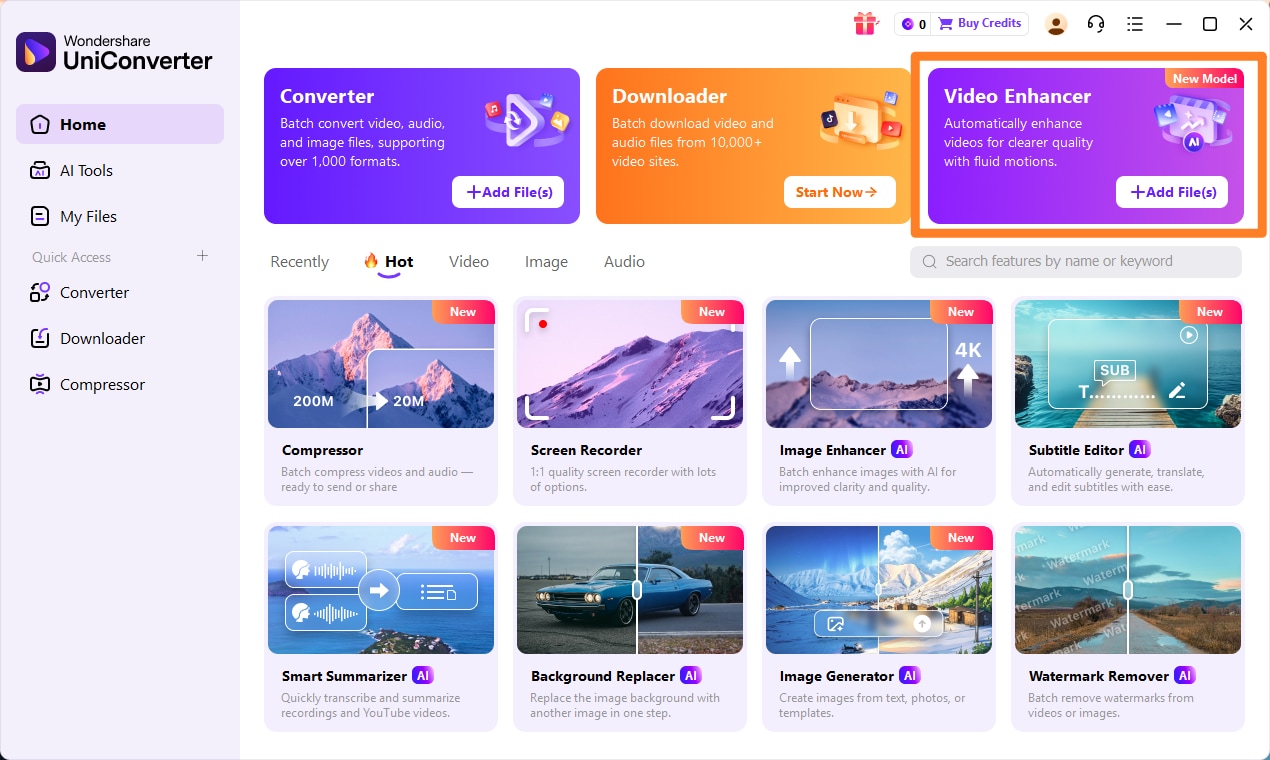
Step 1: Open UniConverter and Choose Video Enhancer
Launch UniConverter on your computer. From the main interface, navigate to the "AI Lab" section and select the "Video Enhancer" tool. This dedicated module is designed for intelligent video quality improvement.
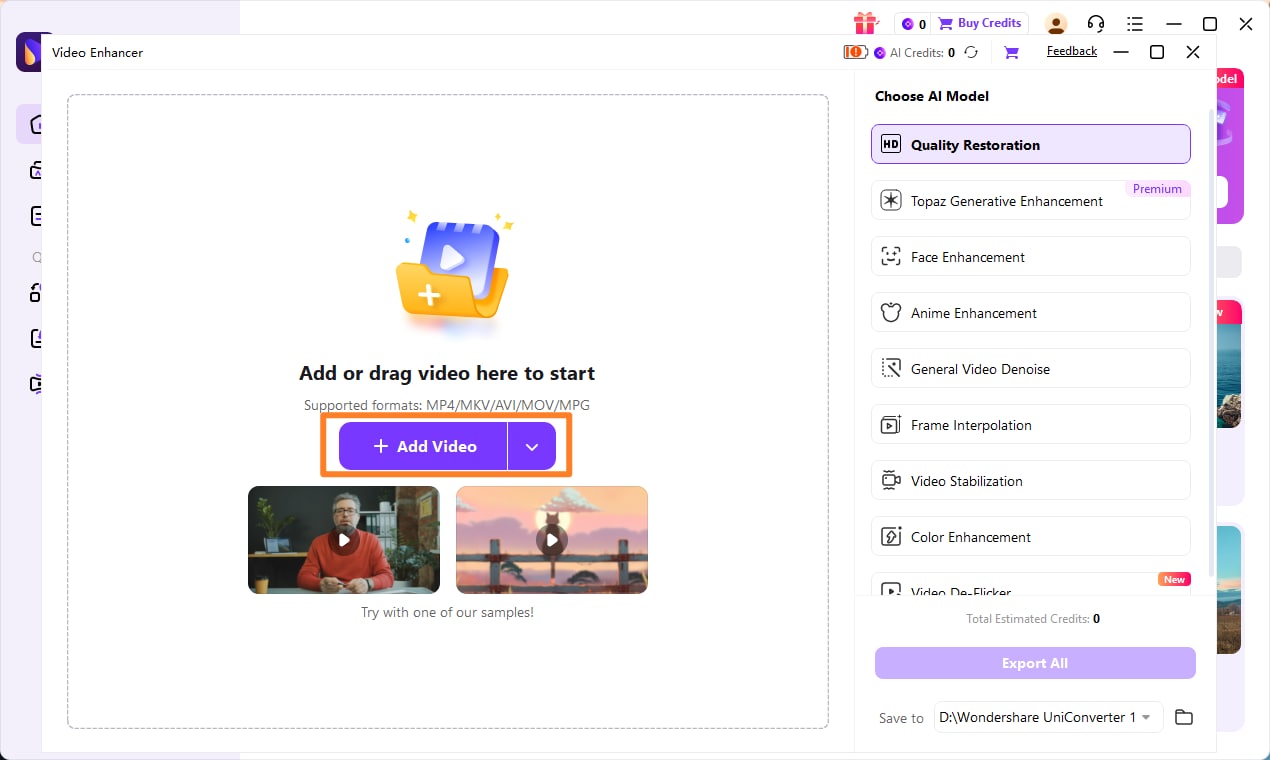
Step 2: Upload the Videos
Click on the "Add Files" button or simply drag and drop the video files you wish to enhance into the UniConverter interface. You can add multiple videos for batch processing.
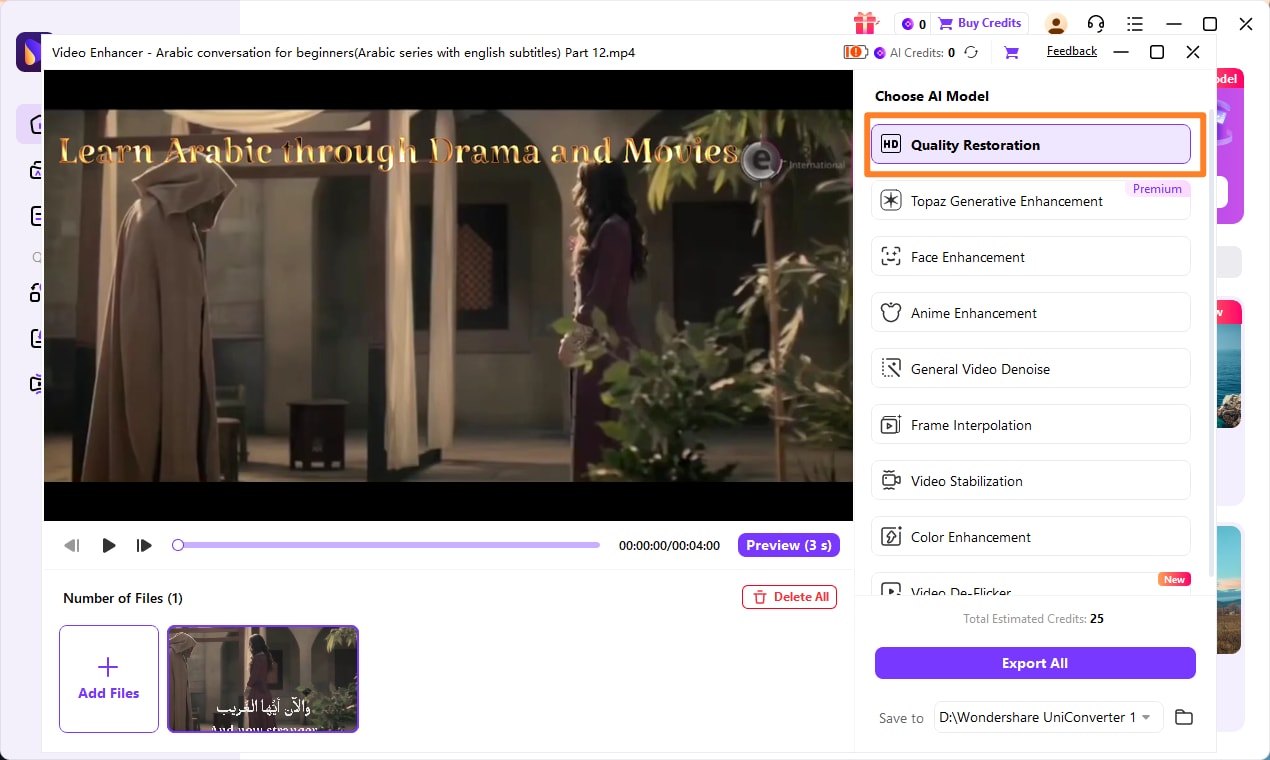
Step 3: Choose Enhancement Model
UniConverter offers various AI enhancement models. Select the most suitable model based on your video's needs, such as "AI Upscale," "AI Denoise," or "AI Deblur." Adjust parameters like resolution, brightness, and contrast as required.
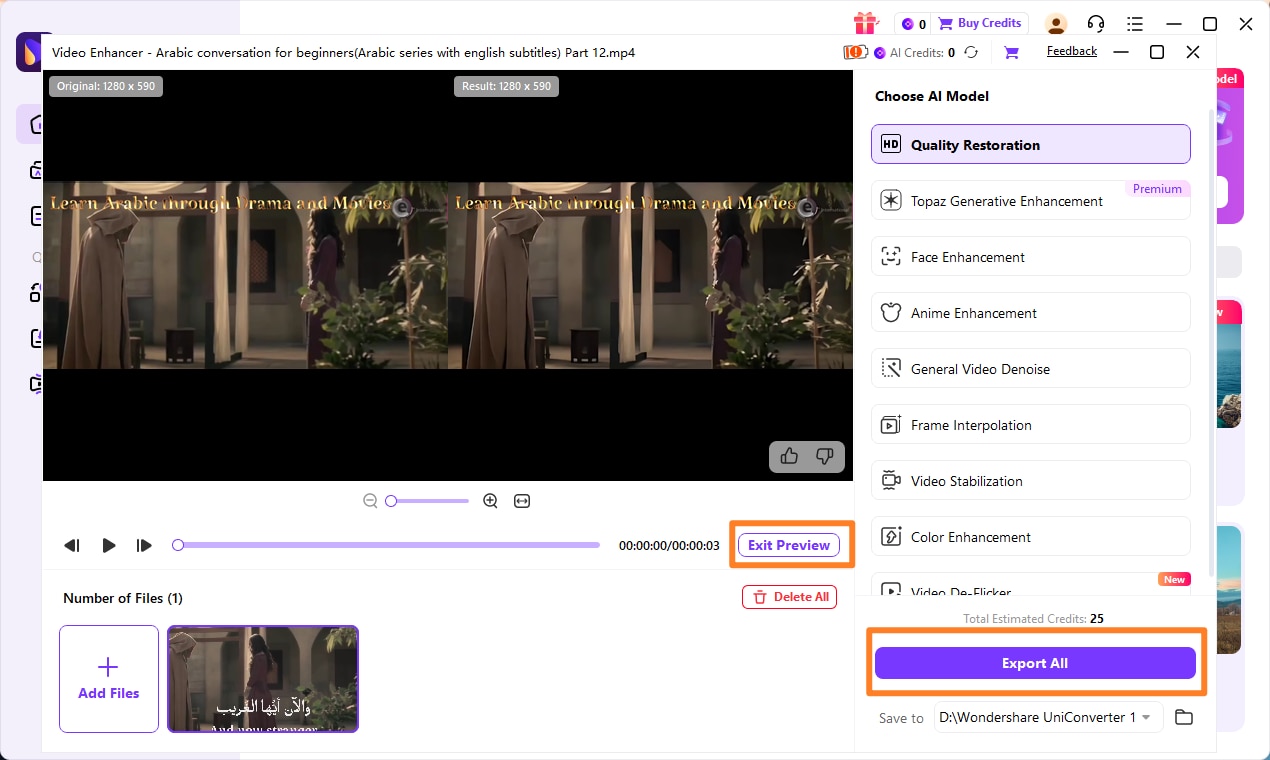
Step 4: Preview and Save the Enhanced Video
After selecting your desired settings, click "Preview" to see the enhanced result. Once satisfied, choose your output format and destination folder, then click "Export" to save your high-quality, enhanced video.

Seeking a Powerful Lightworks Video Enhancer Alternative?
Part 7: Final Verdict and Recommendations
The Lightworks video enhancer review reveals a powerful tool deeply embedded within a professional editing suite, offering extensive control for high-end video enhancement. Its strengths lie in its professional-grade color correction and robust editing environment, making it a strong contender for those already familiar with its ecosystem or demanding broadcast-quality output. However, its steep learning curve and high system requirements position it away from casual users. For professional editors, Lightworks offers niche appeal, providing granular control for complex projects. Casual users, however, will find its complexity daunting and should prioritize ease of use with simpler software. Budget-conscious creators must weigh the free version's limitations against the full subscription's cost, considering if a dedicated enhancement tool or an all-in-one solution like UniConverter offers better value. Future-proofing your workflow means choosing tools that balance power, usability, and cost-effectiveness, adapting to evolving demands without unnecessary complexity or hidden fees.
Part 8: FAQs
-
1. **Is Lightworks Video Enhancer truly free?**
Lightworks offers a free version with limited features, primarily for basic editing. The full video enhancement capabilities and advanced tools require a paid subscription to the Pro version.
-
2. **Can Lightworks enhance video resolution?**
While Lightworks can improve visual quality through sharpening and noise reduction, true resolution upscaling (e.g., from 720p to 1080p) is limited by the original footage. It can't create detail that isn't there, but it can make existing detail clearer.
-
3. **What are the minimum system requirements for Lightworks?**
Lightworks demands a powerful CPU (Intel i7 or equivalent), ample RAM (16GB or more), and a dedicated GPU (NVIDIA, AMD, or Intel with 2GB+ VRAM) for optimal performance, especially when handling high-resolution footage and complex enhancements.
-
4. **How does UniConverter compare to Lightworks in terms of output quality?**
UniConverter offers excellent output quality, particularly for common enhancement tasks like upscaling, denoising, and deblurring, often with greater ease of use and faster processing. For highly specialized, professional color grading, Lightworks might offer more granular control, but UniConverter excels in general-purpose, high-quality enhancement.
-
5. **Are there any privacy concerns when using video enhancement software?**
Yes, especially with cloud-based solutions. Always review the software's data handling policies and terms of service to understand how your video files are stored, processed, and protected. For desktop-based software like Lightworks or UniConverter, privacy concerns are generally lower as files remain on your local machine.
