
- Lightworks Overview: Lightworks Video Enhancer is a professional tool within the Lightworks NLE, designed for advanced video quality improvement.
- Pros & Cons: Offers professional-grade integration, advanced color correction, and robust noise reduction, but has a steep learning curve and high resource demands.
- Ideal Users: Best for experienced editors and post-production professionals in filmmaking, not for quick social media edits.
- Alternatives Comparison: Lightworks offers precise control; DaVinci Resolve has a powerful free version; Premiere Pro provides a broad ecosystem; UniConverter is simple and efficient.
- Risks & Pitfalls: Beware of over-processing, hardware demands, subscription lock-in, and potential data privacy concerns.
- UniConverter as an Alternative: Offers user-friendly, efficient video enhancement with batch processing, GPU acceleration, and lossless quality.
In this article
- Part 1: What is Lightworks Video Enhancer?
- Part 2: Lightworks Video Enhancer: Core Features, Pros, and Cons
- Part 3: Lightworks Video Enhancer: Ideal Users and Use Cases
- Part 4: Lightworks Video Enhancer and Alternatives Comparison
- Part 5: Risks and Pitfalls to Consider
- Part 6: How to Use UniConverter to Efficiently Enhance Videos
- Part 7: Conclusion
- Part 8: FAQs
Lightworks Video Enhancer: A Comprehensive Review and Comparison
In the dynamic world of video production, the pursuit of pristine visual quality is ceaseless. From amateur vloggers to seasoned cinematographers, everyone strives to deliver content that captivates and impresses. Video enhancement tools have become indispensable in this quest, offering solutions to common issues like poor lighting, noise, and color inaccuracies. This Lightworks Video Enhancer review delves into one such prominent tool, examining its capabilities, comparing it against its leading competitors, and ultimately guiding users toward an informed decision. This comprehensive analysis will explore Lightworks Video Enhancer's core features, ideal use cases, potential pitfalls, and provide a clear comparison with other market leaders, ensuring you understand where it stands in the crowded landscape of video post-production.
Part 1: What is Lightworks Video Enhancer?
Lightworks Video Enhancer is a specialized module or feature set within the broader Lightworks non-linear editing (NLE) software, designed to improve the visual quality of video footage. It leverages advanced algorithms to address common video imperfections, aiming to deliver a more polished and professional final product. While Lightworks itself is a professional-grade editing suite with a long history in the film and television industry, its enhancement capabilities are crucial for modern content creators facing diverse source material. This review aims to clarify its effectiveness and suitability for various user needs.
The Landscape of Video Enhancement Tools
The market for video enhancement tools is highly competitive, driven by:
* Increasing demand for high-quality content: Viewers expect crisp, clear visuals across all platforms.
* Diverse source footage: Content often comes from various cameras, drones, and even smartphones, leading to inconsistencies.
* Technological advancements: AI and machine learning are continually pushing the boundaries of what's possible in video enhancement.
* Accessibility for all skill levels: Tools range from simple one-click solutions to complex professional suites.
Part 2: Lightworks Video Enhancer: Core Features, Pros, and Cons
Lightworks Video Enhancer focuses on refining video quality through a suite of powerful tools. Its core capabilities include sophisticated color correction, advanced noise reduction, and image stabilization, all integrated within the Lightworks editing environment. This allows for a seamless workflow where enhancement can be applied directly during the editing process, maintaining consistency and control over the final output. The product's emphasis on professional-grade results makes it a strong contender for those who prioritize precision and quality.
Pros:
* Professional-grade editing suite integration: Offers a unified workflow for editing and enhancement.
* Advanced color correction and grading capabilities: Provides granular control over color, tone, and saturation.
* Robust noise reduction algorithms: Effectively minimizes grain and artifacts in low-light or high-ISO footage.
Cons:
* Steep learning curve for beginners: Its professional nature can be intimidating for new users.
* Resource-intensive, requiring powerful hardware: Demands significant CPU and GPU power for optimal performance.
Part 3: Lightworks Video Enhancer: Ideal Users and Use Cases
Lightworks Video Enhancer is primarily designed for experienced video editors, colorists, and post-production professionals who are already familiar with the Lightworks NLE or similar high-end editing platforms. Its advanced features and intricate controls cater to those who require precise adjustments and a high degree of creative freedom in their enhancement workflow. The tool shines in environments where visual fidelity is paramount and where the source footage might require significant correction to meet broadcast or cinematic standards.
Best Use Case: Professional Filmmaking and Post-Production
For independent filmmakers, documentary creators, and post-production houses, Lightworks Video Enhancer provides the tools necessary to elevate raw footage to a professional standard. Its advanced color grading and noise reduction are invaluable for correcting challenging shots and achieving a consistent, high-quality look across an entire project.
Limited Use Case: Quick Edits for Social Media Content
For casual users or social media content creators who need rapid, simple enhancements for short-form videos, Lightworks Video Enhancer might be overkill. Its complexity and resource demands make it less suitable for quick, on-the-fly edits where speed and ease of use are prioritized over granular control.
Part 4: Lightworks Video Enhancer and Alternatives Comparison
| Feature/Scenario | Lightworks Video Enhancer | DaVinci Resolve | Adobe Premiere Pro | UniConverter |
| Color Grading | Advanced, precise | Industry-standard, extensive | Comprehensive, integrated | Basic, automated |
| Noise Reduction | Effective, customizable | AI-powered, intelligent | Good, with third-party plugins | Effective, user-friendly |
| Ease of Use | Complex | Moderate to Complex | Moderate | Very Easy |
| Performance on Mid-range PC | Demanding | Demanding | Moderate to Demanding | Moderate |
| Price Model | Subscription/Perpetual | Free/Studio | Subscription | Perpetual/Subscription |
Key Differentiators:
- Lightworks excels in its integration with its own NLE, offering a seamless workflow for existing users. Its strength lies in its precise control over enhancement parameters. - DaVinci Resolve provides a powerful free version, making it accessible for budget-conscious professionals, and is renowned for its industry-leading color grading. - Adobe Premiere Pro offers a broader ecosystem of creative tools, ideal for multi-disciplinary creators who need integration with other Adobe applications like After Effects and Photoshop. - UniConverter stands out for its simplicity and efficiency, offering a user-friendly approach to video enhancement without the steep learning curve of professional suites.
Part 5: Risks and Pitfalls to Consider
When utilizing advanced video enhancement tools like Lightworks Video Enhancer, users should be aware of several potential risks and pitfalls that can impact their workflow, output quality, and overall experience. Understanding these challenges is crucial for making an informed decision and mitigating potential issues.
Data Privacy Concerns with Cloud-Based Features
While Lightworks is primarily a desktop application, some ancillary features or future integrations might involve cloud services. Users should always scrutinize the privacy policies of any cloud-based components to ensure their sensitive project data is adequately protected and not used for unintended purposes.
Potential for Over-Processing and Unnatural Results
The power of enhancement tools can be a double-edged sword. Aggressive application of noise reduction, sharpening, or color correction can lead to an "over-processed" look, resulting in unnatural skin tones, plastic-like textures, or artifacts that detract from the original footage's organic feel. Striking a balance is key.
Compatibility Issues with Older Hardware
Lightworks Video Enhancer, with its demanding algorithms and real-time processing requirements, can be very taxing on system resources. Users with older or mid-range hardware might experience slow performance, frequent crashes, or an inability to utilize all features effectively, leading to frustration and workflow bottlenecks.
Subscription Model Lock-in
While Lightworks offers both perpetual and subscription licenses, many modern software tools lean towards subscription models. This can lead to "lock-in," where users are continuously paying to access their tools, and if they stop subscribing, they lose access to updates and potentially the software itself, which can be costly over time.
Limited Support for Niche Video Formats
While Lightworks supports a wide array of professional video formats, some niche or proprietary codecs might not be fully supported, or their processing might be less optimized. This could necessitate additional conversion steps or limit the types of footage that can be seamlessly enhanced within the software.
Part 6: How to Use UniConverter to Efficiently Enhance Videos
When other tools fall short in batch processing, stable enhancement, or delivering noticeable improvements, UniConverter emerges as a robust and user-friendly alternative. It bypasses the complexities of professional suites, offering a straightforward yet powerful solution for video enhancement. UniConverter is designed to be an all-in-one media solution, ensuring no ads, extensive format support, GPU acceleration for speed, stable and lossless processing, and efficient batch enhancement. It's the ultimate solution for anyone looking to quickly and effectively improve their video quality without a steep learning curve. For instance, you can easily upscale videos or fix pixelated videos with this tool. If you need to stabilize shaky footage, UniConverter provides a seamless experience. Additionally, it can help you remove blur from videos with ease.
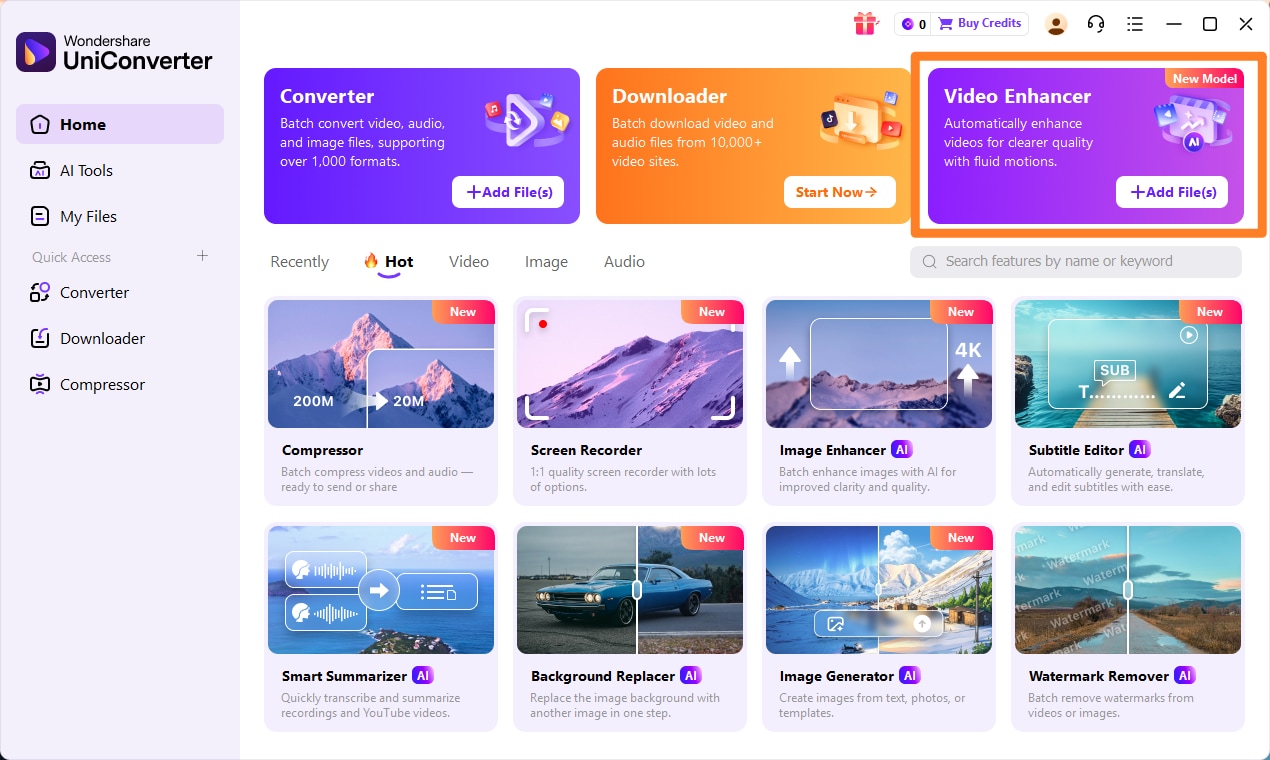
Step 1: Open UniConverter and Choose Video Enhancer
Launch UniConverter on your computer. From the main interface, navigate to the "Toolbox" section and select the "Video Enhancer" feature.
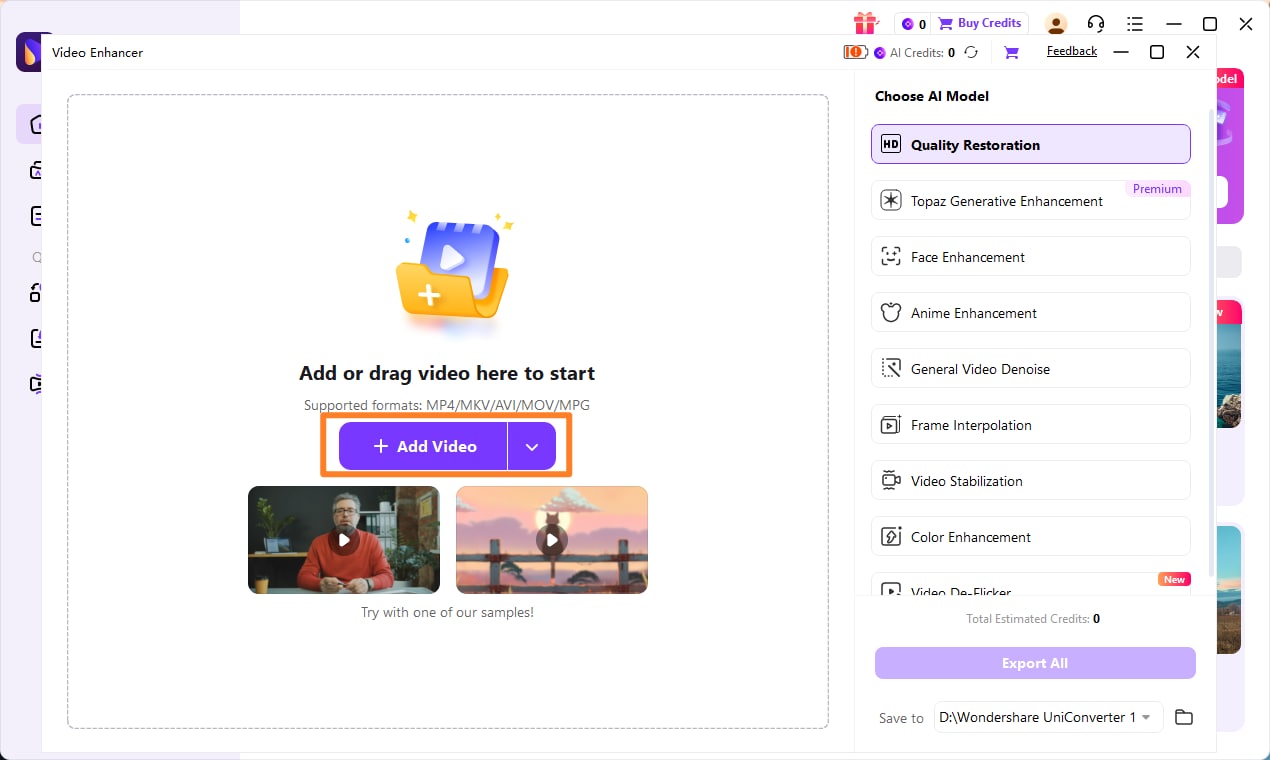
Step 2: Upload the Videos
Click on the "+" icon or drag and drop the video files you wish to enhance into the UniConverter interface. You can add multiple videos for batch processing.
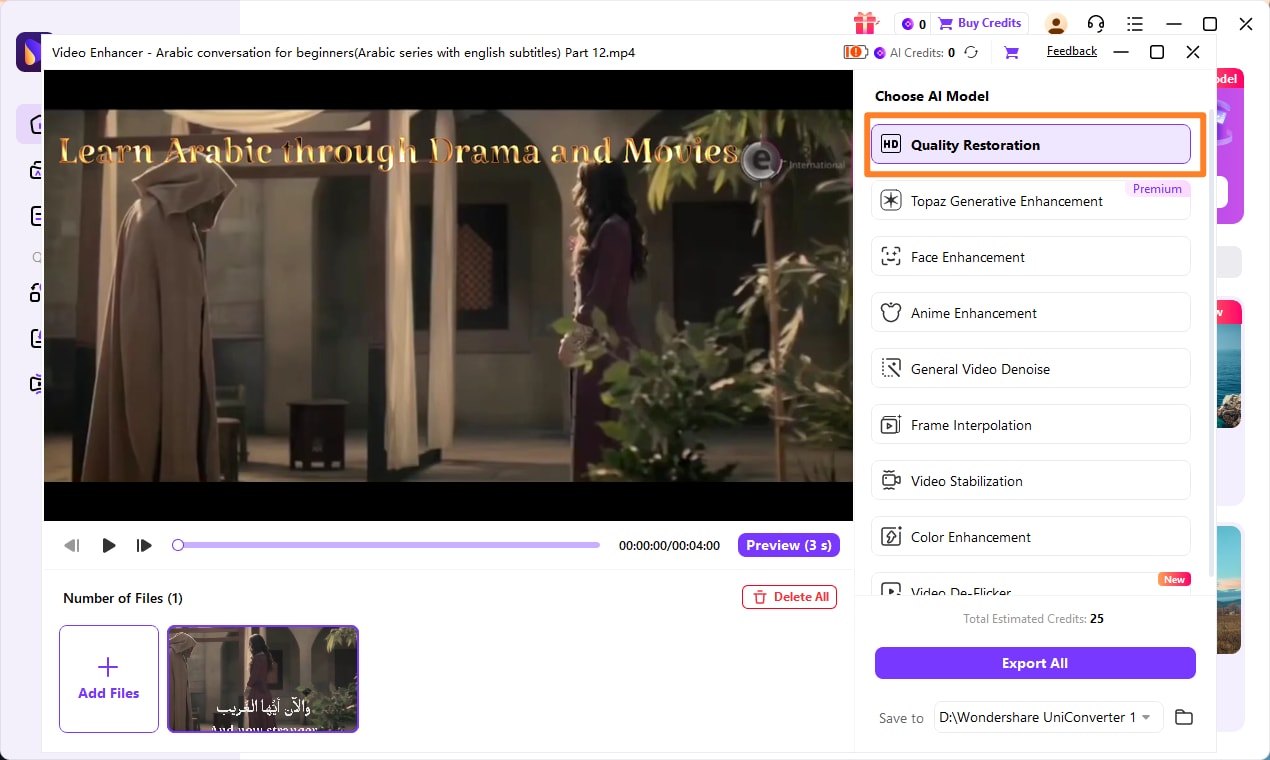
Step 3: Choose Enhancement Model
Once your video is loaded, UniConverter will present various enhancement options such as "Upscale," "Optimize Brightness & Contrast," "Denoise," and "Stabilize." Select the desired enhancement model(s) based on your video's needs.
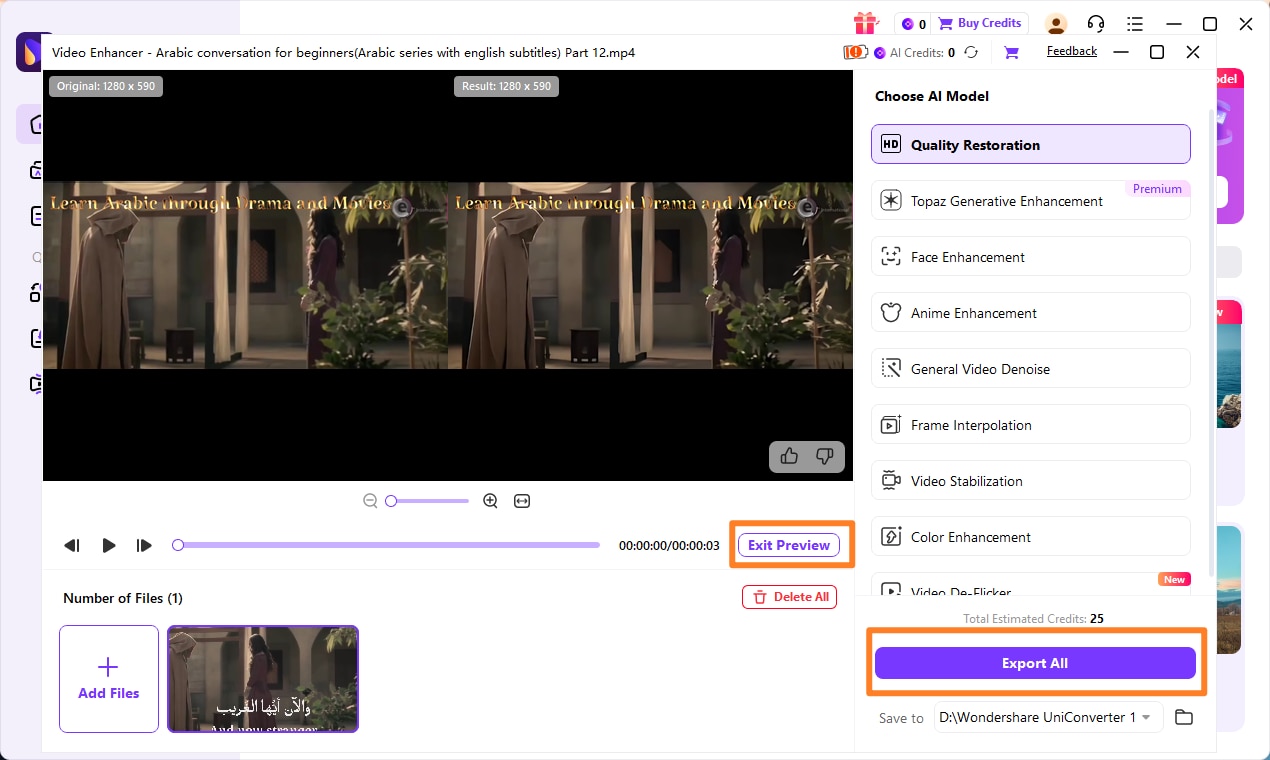
Step 4: Preview and Save the Enhanced Video
After selecting your enhancement options, click "Preview" to see the changes. Adjust settings if necessary. Once satisfied, choose your output format and destination, then click "Enhance" to save your improved video.

Enhance Videos Beyond Lightworks with Ease
Part 7: Conclusion
The Lightworks Video Enhancer review reveals a powerful tool tailored for professional video editors and colorists deeply embedded in the Lightworks ecosystem. Its advanced color grading and robust noise reduction capabilities make it an excellent choice for achieving high-quality, cinematic results, especially for complex post-production workflows. However, its steep learning curve and demanding hardware requirements position it as less ideal for beginners or those needing quick, simple enhancements. For budget-conscious users or those prioritizing ease of use, DaVinci Resolve's free version or UniConverter offer compelling alternatives. Meanwhile, creators seeking a broad creative suite might find Adobe Premiere Pro's integrated ecosystem more suitable. Ultimately, the best choice depends on individual skill level, project requirements, hardware capabilities, and budget, balancing advanced features with accessibility and workflow efficiency.
Part 8: FAQs
-
1. Is Lightworks Video Enhancer suitable for beginners?
No, its complex interface and advanced features make it more suitable for experienced editors.
-
2. Can Lightworks Video Enhancer improve low-light footage significantly?
Yes, it offers robust noise reduction and color correction tools that can enhance low-light footage, but results depend on the original quality.
-
3. What are the main differences between Lightworks Video Enhancer and DaVinci Resolve?
Lightworks is often preferred by users already in its ecosystem, while DaVinci Resolve offers a powerful free version and is renowned for its color grading capabilities.
-
4. Does Lightworks Video Enhancer support 4K and 8K video?
Yes, it supports high-resolution video formats, but processing these files will require significant system resources.
-
5. Is there a one-time purchase option for Lightworks Video Enhancer?
Yes, Lightworks offers both subscription and perpetual license options for its software.
