
- Value: Let's Enhance excels in AI-powered upscaling and detail restoration for professional-grade prints.
- Comparison: While powerful, it often over-enhances and lacks the versatile offline capabilities of UniConverter.
- Decision: Choose Let's Enhance for high-volume, cloud-based professional upscaling; UniConverter for comprehensive, offline image enhancement.
- Value: UniConverter offers a robust, all-in-one desktop solution for reliable, private image enhancement.
- Comparison: Let's Enhance's subscription model and cloud dependency contrast with UniConverter's one-time purchase and local processing.
- Decision: Evaluate your specific needs: cloud convenience vs. offline control and broader toolset.
In this article
When I first started exploring AI image enhancement, Let's Enhance review was one of the first names that popped up. It promised to magically upscale and improve image quality, which sounded like a dream for anyone dealing with low-resolution photos or needing to print large formats. This review aims to cut through the marketing hype and give you a real-world perspective on its capabilities, comparing it with alternatives and highlighting specific scenarios where it truly shines, or perhaps falls short. I'll share my experiences to help you decide if it's the right tool for your image enhancement needs.
Part 1: What is Let's Enhance?
Let's Enhance is an online AI-powered image enhancement tool designed to upscale images without losing quality, and often, to improve it. It leverages advanced machine learning algorithms to intelligently add pixels, restore details, and reduce noise, effectively transforming small, low-resolution images into larger, print-ready files. I initially thought it was just another simple upscaler, but after using it, I realized it's much more sophisticated, aiming to reconstruct image data rather than just stretching pixels. This review will delve into its practical applications and see how it holds up against other solutions in the market.
The Rise of AI Image Enhancement
The demand for high-quality visuals has never been greater, and traditional methods often fall short.
* Low-resolution images are everywhere: From old family photos to downloaded web graphics, we constantly encounter images that just aren't big enough.
* Printing demands high DPI: For professional prints, you need images with sufficient resolution, which is often a challenge.
* Social media and web content: While not always requiring extreme resolutions, clear and sharp images make a significant impact.
* Restoring old photos: AI offers a new lease on life for faded, pixelated, or damaged historical images.
Part 2: Let's Enhance: Core Features, Pros, and Cons
Let's Enhance prides itself on its AI-driven capabilities, and from my experience, these are its standout features. It's not just about making images bigger; it's about making them better. I've found its approach to detail restoration particularly impressive, often bringing out textures and clarity I didn't think were possible from the original source.
Core Capabilities:
* AI-powered Upscaling: It can enlarge images up to 16x their original size, maintaining or even improving quality.
* Smart Enhancement: This feature focuses on detail restoration, color correction, and noise reduction.
* Tone and Color Adjustment: It offers options to fine-tune brightness, contrast, and saturation.
* Face Enhancement: A dedicated algorithm to improve facial features in portraits.
* Background Removal: A handy tool for isolating subjects from their backgrounds.
Pros:
* AI-powered Upscaling for Significant Resolution Improvement: The ability to dramatically increase image size without pixelation is its strongest suit.
* Smart Enhancement for Detail Restoration and Noise Reduction: It genuinely brings out hidden details and cleans up noisy images effectively.
* Batch Processing for Efficient Workflow: For someone like me who often deals with multiple images, this feature is a huge time-saver.
Cons:
* Limited Free Tier Functionality: The free credits are very restrictive, pushing you towards a paid plan quickly.
* Potential for "Plastic" Look on Certain Image Types: Sometimes, especially with human skin or complex textures, the AI can over-smooth, leading to an unnatural, almost plastic-like appearance.
Part 3: Target Users and Use Cases
From my time with Let's Enhance, I've identified specific scenarios where it truly shines and others where its utility might be limited. It's not a one-size-fits-all solution, and understanding its strengths helps in deciding if it's the right tool for your specific needs.
Best Use Case: Professional Photographers and Graphic Designers for High-Quality Prints
If you're a professional photographer or graphic designer, especially one who deals with printing, Let's Enhance is a game-changer. I've used it to prepare client photos for large format prints where the original resolution was just a bit too low. The ability to upscale an image to a massive size (e.g., from a web-res image to a poster-sized print) while maintaining incredible detail is invaluable. It saves me from having to reshoot or find higher-resolution assets, which can be a huge time and cost saver. For me, this is where it truly earns its keep.
Limited Use Case: Quick Social Media Posts Requiring Minimal Edits
If you're just looking to quickly touch up a photo for a social media post or a casual share, Let's Enhance might be overkill. While it can certainly improve image quality, the process of uploading, enhancing, and downloading can be more involved than necessary for a quick edit. For these scenarios, I often find myself reaching for simpler, faster tools that offer basic adjustments without the deep AI processing. If you just need to crop, add a filter, or make minor color tweaks, the power of Let's Enhance is largely unused, and its subscription cost might not be justified for such light usage.
Part 4: Let's Enhance and Alternatives Comparison
When I started looking into image enhancers, I quickly realized there's a whole market out there. Let's Enhance is strong, but it's not the only player. Here's how I see it stacking up against some of its notable competitors, including UniConverter, which I've found to be a versatile alternative.
| Feature/Scenario | Let's Enhance | UniConverter | Topaz Gigapixel AI | Upscale.media |
| High-Res Print Prep | Excellent | Good | Excellent | Fair |
| Batch Processing | Excellent | Excellent | Excellent | Fair |
| Detail Restoration | Excellent | Good | Excellent | Good |
| Ease of Use | Good | Excellent | Fair | Excellent |
| Pricing | Mid-Range | Mid-Range (suite) | High | Free/Low |
| Processing Speed | Fast (cloud) | Fast (GPU) | Moderate (local) | Moderate (cloud) |
| Offline Functionality | No | Yes | Yes | No |
| Customer Support | Good | Excellent | Good | Fair |
| Security | Cloud-based | Local processing | Local processing | Cloud-based |
Key Differentiators: AI Algorithm Superiority and Batch Processing Efficiency
For me, the key differentiators for Let's Enhance are its AI algorithm's ability to genuinely reconstruct details and its efficient batch processing. While other tools can upscale, Let's Enhance often produces a more natural and detailed result, especially when dealing with complex textures or fine lines. Its batch processing is incredibly smooth, allowing me to upload an entire folder of images and have them enhanced without constant manual intervention. UniConverter, on the other hand, stands out for its all-in-one suite and offline capabilities, offering a broader range of tools beyond just image enhancement. Topaz Gigapixel AI is a strong contender for sheer quality but comes with a higher price tag and a steeper learning curve. Upscale.media is great for quick, free enhancements but often lacks the depth and control of the paid options.
Part 5: Risks and Pitfalls to Consider
Using any cloud-based service, especially one that handles your visual assets, comes with its own set of considerations. I've learned to be mindful of these potential downsides, particularly when dealing with sensitive or high-value images. It's not just about the quality of the output, but also the practical implications of integrating such a tool into my workflow.
Data Privacy Concerns with Cloud Processing
Since Let's Enhance is a cloud-based service, I'm always conscious of data privacy. Uploading images means they're temporarily stored on their servers. While they have privacy policies in place, for highly sensitive or confidential images, I tend to be more cautious. I always recommend reviewing their terms of service regarding data handling and deletion. For me, if an image is truly proprietary or contains personal information, I might opt for an offline solution to keep everything local.
Subscription Model and Cost-Effectiveness
The subscription model can be a double-edged sword. On one hand, it provides continuous access to updates and features. On the other hand, if I only have occasional enhancement needs, the monthly or annual cost might not be justified. I've found myself evaluating whether my usage truly warrants a recurring expense or if a one-time purchase of a desktop application would be more cost-effective in the long run. It's a balance between convenience and budget.
Over-Enhancement and Unnatural Results
One pitfall I've encountered is the risk of over-enhancement. While the AI is powerful, it can sometimes go too far, leading to an unnatural or "plastic" look, especially with portraits or images with subtle textures. I've learned that less is often more, and it's crucial to preview the results carefully and adjust the enhancement levels. Sometimes, the default settings can be a bit aggressive, and I find myself dialing them back to maintain a more natural aesthetic.
Internet Dependency for Optimal Performance
Being an online tool, Let's Enhance requires a stable internet connection for optimal performance. If my internet is slow or unreliable, the upload and download times can become frustratingly long. This is a significant drawback if I'm working on the go or in an area with poor connectivity. For critical projects, I always ensure I have a robust internet connection, or I consider using an offline alternative to avoid potential delays.
Limited Control Over Specific Enhancement Parameters
While the "Smart Enhance" feature is great, I sometimes wish I had more granular control over specific enhancement parameters. For instance, I might want to reduce noise without affecting sharpness as much, or adjust color balance in a very specific way. Let's Enhance offers general sliders, but it's not as precise as a dedicated photo editing software. This means for very specific or artistic enhancements, I often need to export the image and do further edits in another program.
Part 6: How to Use UniConverter for Efficient Image Enhancement
Sometimes, I find that specialized online tools like Let's Enhance, while powerful, can be a bit restrictive or come with privacy concerns. When I need a reliable, offline solution that offers more versatility and robust batch processing without the worry of cloud storage, I turn to UniConverter. It's a fantastic all-in-one suite that includes a surprisingly powerful image enhancer, perfect for when other tools fall short in terms of stability, batch capabilities, or simply having too many ads or watermarks. It's my go-to for a comprehensive and stable enhancement experience.
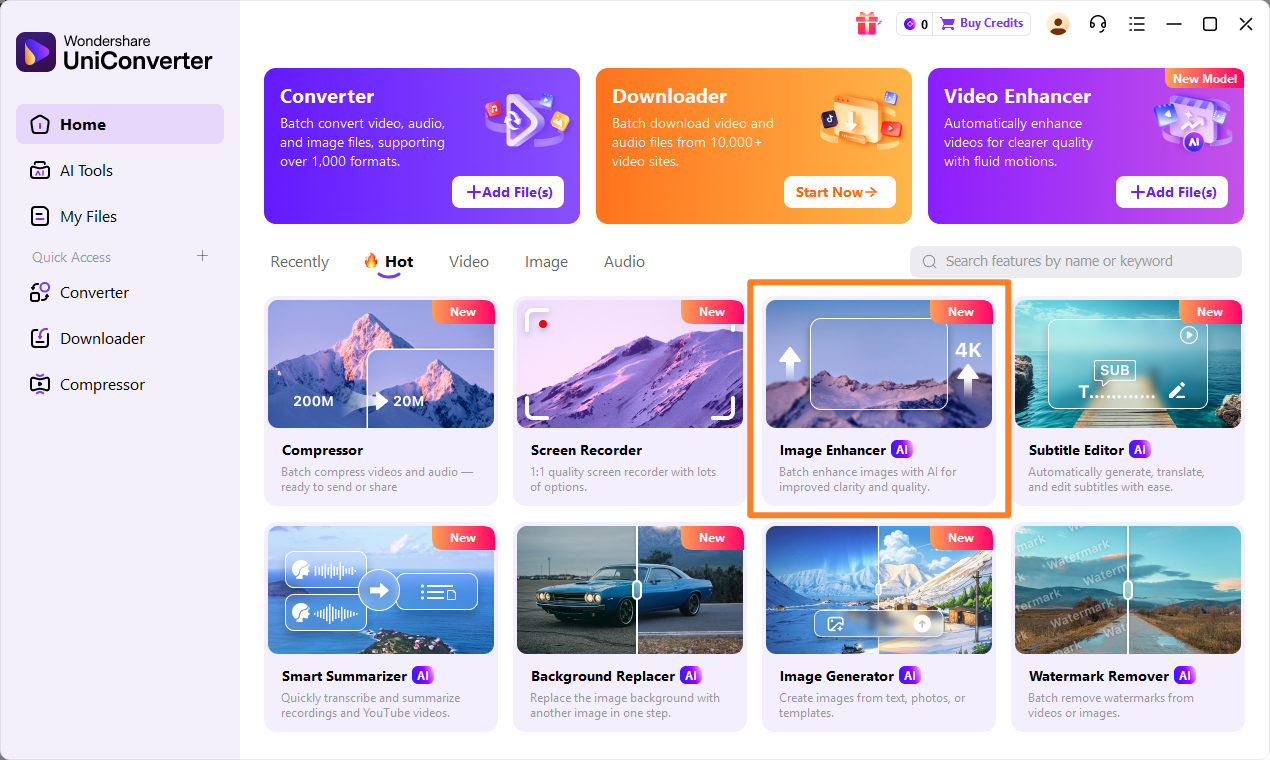
Step 1: Open UniConverter and Choose Image Enhancer
First, I launch UniConverter on my desktop. On the left sidebar, I navigate to the "AI Lab" section and select the "Image Enhancer" tool. It's pretty straightforward to find.
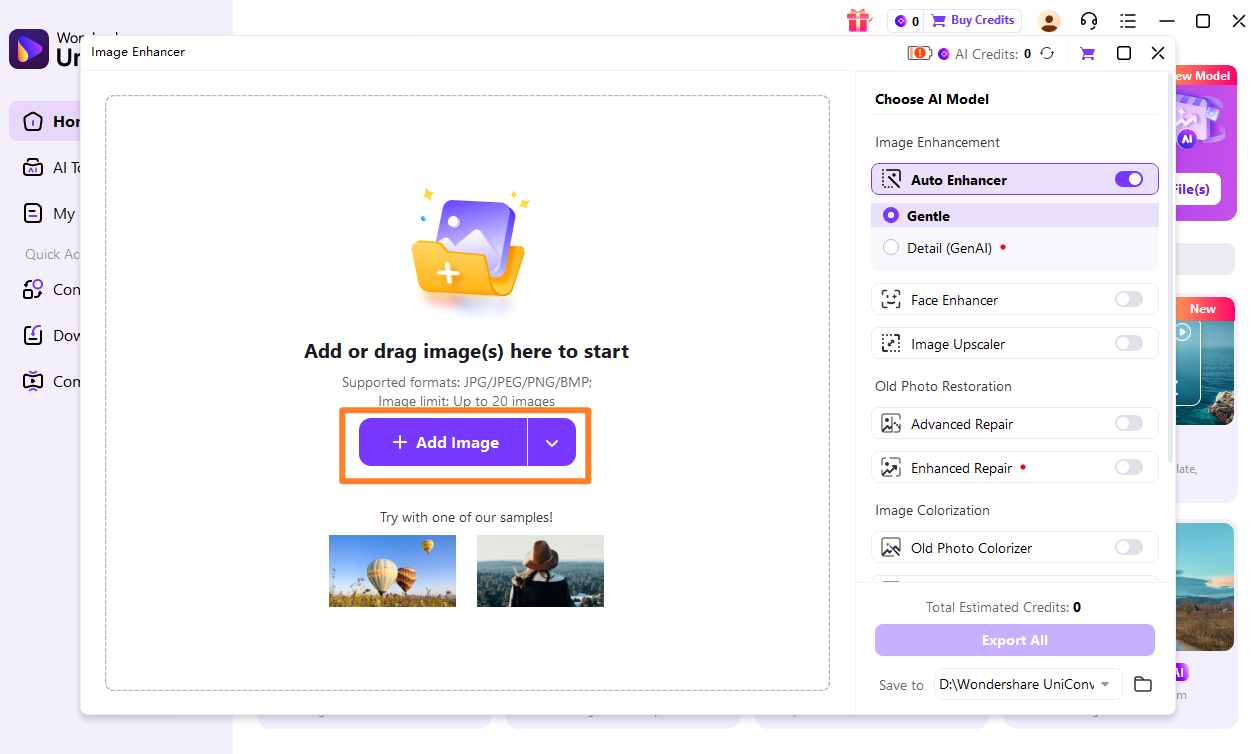
Step 2: Upload the Images
Next, I click on the "Add Files" button or simply drag and drop the images I want to enhance into the interface. UniConverter supports multiple image formats, so I don't have to worry about compatibility.
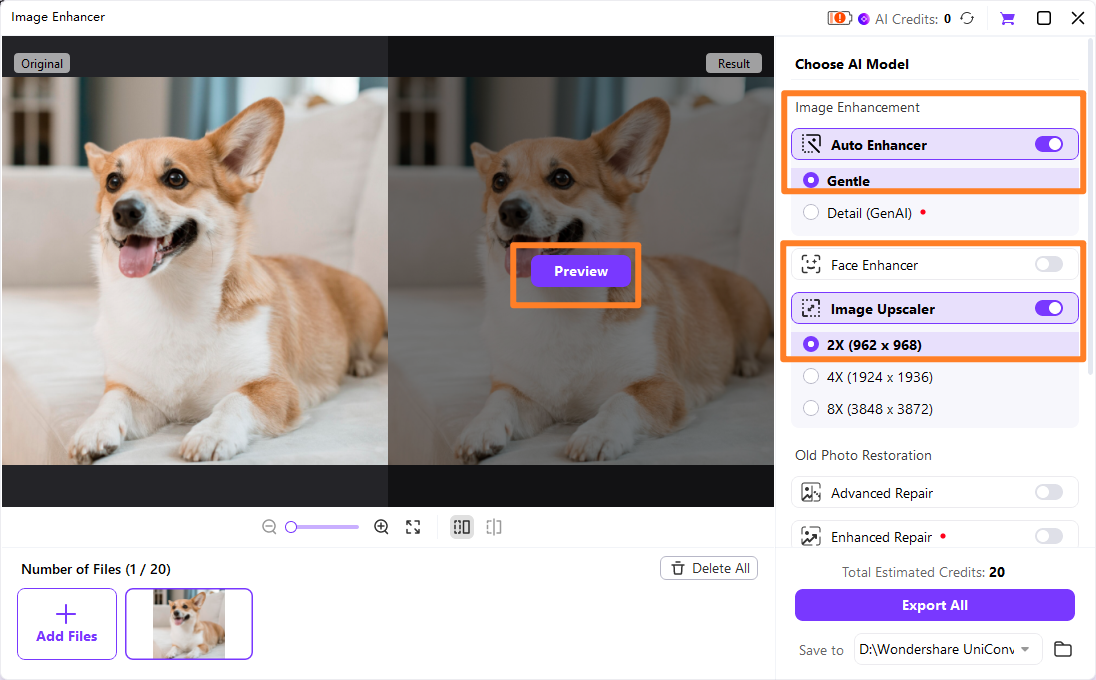
Step 3: Choose Enhancement Model
Once my images are loaded, I can select the desired enhancement model. UniConverter offers different AI models tailored for various needs, such as general enhancement, face enhancement, or even cartoon image enhancement. I choose the one that best fits my image type. I can also adjust the enhancement intensity if needed.
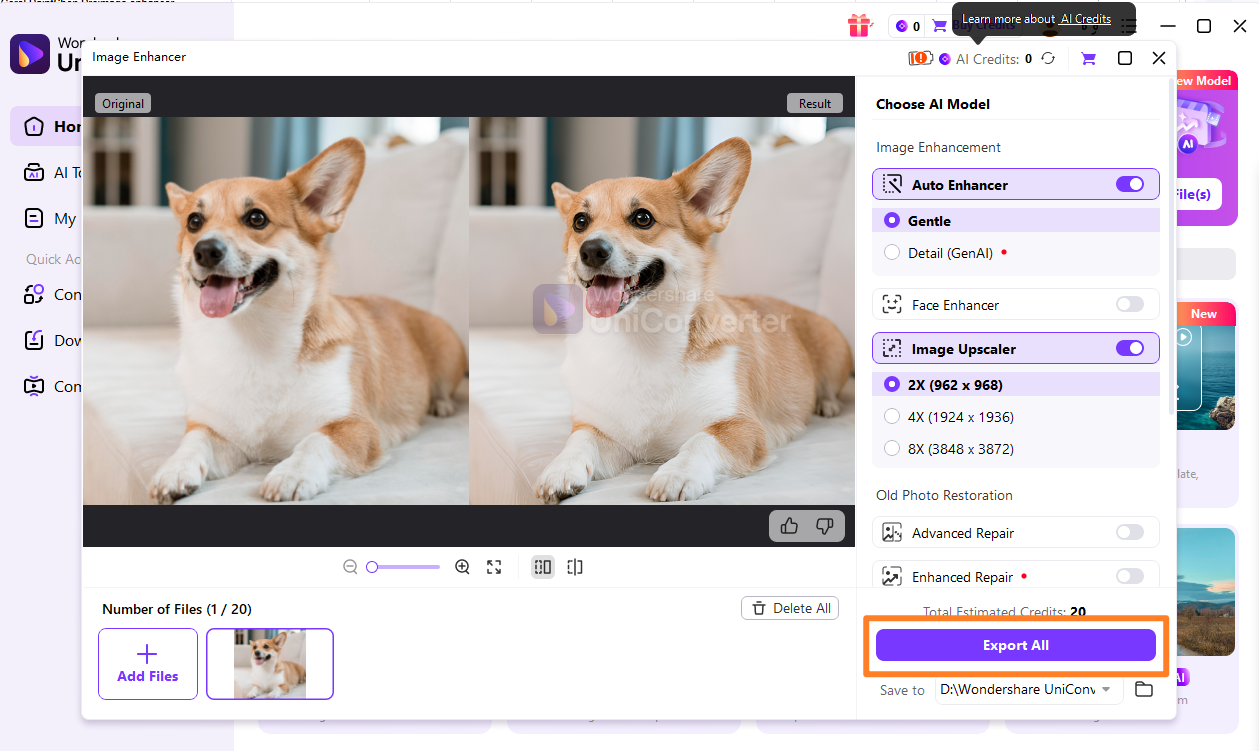
Step 4: Preview and Save the Enhanced Images
After selecting the model, UniConverter processes the images. I can then preview the enhanced results side-by-side with the original. If I'm happy with the outcome, I simply click the "Export" button to save my high-quality, enhanced images to my desired location.

Seeking a Powerful Let's Enhance Alternative?
Part 7: Conclusion
After spending considerable time with Let's Enhance review and exploring its capabilities, I can confidently say it's a powerful tool for AI-driven image upscaling and enhancement. For professionals like photographers and graphic designers who frequently need to prepare high-resolution images for print or detailed digital work, its AI algorithm and batch processing efficiency are invaluable. It truly excels at breathing new life into low-res images, making them suitable for demanding applications. However, for casual users with only occasional, minor enhancement needs, or those who prioritize offline functionality and a broader suite of tools, alternatives like UniConverter might offer better value and convenience. While Let's Enhance delivers impressive results, especially in detail reconstruction, users should be mindful of its subscription model, potential for over-enhancement, and reliance on internet connectivity. Ultimately, the best choice depends on your specific workflow, budget, and the level of control you require over your image enhancement process.
Part 8: FAQs
-
1. Can Let's Enhance improve blurry photos significantly?
While it can reduce blur and sharpen details, it's not a magic bullet for severely out-of-focus images. It works best when there's still some underlying detail for the AI to work with.
-
2. Is Let's Enhance suitable for commercial use?
Yes, its high-quality output makes it suitable for commercial applications, especially with paid plans that offer higher limits and resolutions. Many professionals use it for client work.
-
3. How does Let's Enhance handle different image formats?
It supports common formats like JPG, PNG, and TIFF. For optimal results, I always recommend starting with the highest quality input image you have, as the AI has more data to work with.
-
4. Are there any free alternatives to Let's Enhance?
Yes, some online tools offer basic enhancement, but often with limitations on quality, features, or the number of images you can process for free. They usually don't match the sophistication of Let's Enhance's AI.
-
5. What's the learning curve for Let's Enhance?
It's generally user-friendly with an intuitive interface, making it easy for beginners to get started. Most of the heavy lifting is done by the AI, so you just need to upload and select your desired enhancements.
