
- KineMaster Overview: Mobile-first video editor offering robust features for on-the-go content creation.
- Core Strengths: Multi-track editing, extensive asset store, 4K export, and chroma key for creative projects.
- Limitations: Watermark on free version, performance issues on older devices, and not for professional VFX.
- Target Audience: Ideal for social media creators and vloggers needing quick, polished mobile edits.
- Alternatives Comparison: KineMaster balances features; InShot for simplicity, DaVinci Resolve for pro mobile editing.
- Risks to Consider: Data privacy, intrusive ads in free version, potential quality degradation, steep learning curve.
- UniConverter as Alternative: Desktop solution for batch processing, advanced enhancement, and stable, lossless quality.
- Decision Point: Choose KineMaster for mobile convenience; UniConverter for desktop power and professional enhancement.
In this article
- Part 1: What is KineMaster
- Part 2: KineMaster's Core Features: Performance and Capabilities
- Part 3: Target Users and Usage Scenarios
- Part 4: KineMaster and Alternatives Comparison
- Part 5: Risks and Pitfalls to Consider
- Part 6: How to Use UniConverter for Efficient Video and Image Enhancement
- Part 7: Conclusion
- Part 8: FAQs
KineMaster Video Enhancer Review: A Deep Dive into Mobile Video Editing
The landscape of video creation has dramatically shifted, with smartphones now serving as powerful tools for capturing and editing high-quality footage. KineMaster has emerged as a prominent player in this mobile-first editing revolution, offering a feature-rich platform that bridges the gap between casual and semi-professional video production. This KineMaster video enhancer review will delve into its capabilities, compare it against key competitors, and provide a comprehensive analysis to help users make informed decisions about their mobile video editing needs. We will explore its strengths, weaknesses, ideal use cases, and potential pitfalls, ultimately guiding you toward the best solution for enhancing your video content.
Part 1: What is KineMaster
KineMaster is a full-featured video editor for Android, iOS, and ChromeOS, designed to empower users to create professional-looking videos directly on their mobile devices. It stands out in a crowded market by offering a robust set of editing tools typically found in desktop software, but optimized for touch interfaces. This KineMaster video enhancer review aims to address the core question: Can a mobile application truly deliver on the promise of high-quality video enhancement and editing, or are users better off seeking desktop alternatives for serious projects?
The Rise of Mobile Video Editing
* Accessibility and Convenience: Smartphones are ubiquitous, making video capture and editing accessible to a vast audience without the need for specialized hardware.
* Social Media Dominance: The demand for quick, engaging video content for platforms like TikTok, Instagram, and YouTube Shorts has fueled the growth of mobile editing apps.
* Technological Advancements: Modern mobile processors and camera sensors are powerful enough to handle complex video tasks, blurring the lines between mobile and desktop capabilities.
Part 2: KineMaster's Core Features: Performance and Capabilities
KineMaster boasts a comprehensive suite of tools that enable users to edit videos with considerable precision and creativity on their mobile devices. Its core capabilities span multi-track editing, a rich asset store, and granular control over animations and effects, positioning it as a powerful mobile editor.
Pros:
* Intuitive Multi-Track Editing for Complex Projects: KineMaster allows users to layer multiple video tracks, images, stickers, text, and handwriting, facilitating complex compositions.
* Extensive Asset Store for Creative Enhancements: The KineMaster Asset Store provides a vast library of royalty-free music, sound effects, stickers, fonts, transition effects, and video clips, constantly updated to inspire creativity.
* Precise Control Over Keyframe Animation and Effects: Users can apply keyframe animation to almost any element, enabling dynamic movement and sophisticated visual effects.
* Support for 4K Export: KineMaster supports exporting videos in resolutions up to 4K at 60fps, catering to high-quality content creators.
* Chroma Key Functionality: The green screen feature allows for advanced compositing, enabling users to remove backgrounds and integrate subjects into different scenes.
Cons:
* Watermark on Free Version and Subscription Cost: The free version imposes a KineMaster watermark on exported videos, requiring a paid subscription to remove it.
* Performance Issues on Older or Less Powerful Devices: While powerful, KineMaster can be resource-intensive, leading to lag or crashes on older or less capable smartphones.
Part 3: Target Users and Usage Scenarios
KineMaster is designed for a broad spectrum of users, from casual social media enthusiasts to aspiring content creators. Its mobile-first approach makes it particularly appealing for those who prioritize convenience and on-the-go editing.
Best Use Case: On-the-Go Content Creation for Social Media
KineMaster excels as a tool for quickly producing engaging video content for platforms like TikTok, Instagram Reels, and YouTube Shorts. Its intuitive interface, coupled with a rich asset library and efficient export options, allows social media influencers, vloggers, and small businesses to create and share polished videos directly from their phones. For instance, a travel vlogger can shoot footage, edit it with transitions and background music, and upload it to their channel all within minutes of capturing the content.
Limited Use Case: Professional-Grade Color Grading and Advanced VFX
While KineMaster offers a decent range of color adjustments and effects, it falls short for professional-grade color grading that requires precise control over color curves, scopes, and LUTs. Similarly, for advanced visual effects (VFX) such as complex motion graphics, 3D rendering, or highly realistic compositing, desktop software like Adobe After Effects or DaVinci Resolve offers far more depth and control. A filmmaker working on a commercial with specific brand color requirements or intricate visual effects would find KineMaster's capabilities too restrictive.
Part 4: KineMaster and Alternatives Comparison
Understanding KineMaster's position in the market requires a comparative analysis with its key competitors. Here, we pit KineMaster against other popular mobile video editors and a mobile version of a professional desktop tool.
| Feature/Aspect | KineMaster | PowerDirector | InShot | DaVinci Resolve (Mobile) |
| Ease of Use | High | High | Very High | Moderate |
| Advanced Editing | Moderate | Moderate | Low | High |
| Asset Library | Extensive | Extensive | Basic | N/A |
| Performance | Device Dependent | Device Dependent | Smooth | Device Dependent |
| Pricing Model | Freemium | Freemium | Freemium | Free (Limited) |
| Target Audience | Enthusiasts | Enthusiasts | Casual | Professionals |
| Processing Speed | Good (GPU accelerated) | Good (GPU accelerated) | Fast | Moderate (CPU/GPU) |
| Output Quality | Up to 4K, 60fps | Up to 4K, 60fps | Up to 4K | Up to 4K, high bitrate |
| Customer Support | Email/In-app | Email/Forum | Email/In-app | Forum/Documentation |
| Security | Standard app security | Standard app security | Standard app security | Standard app security |
For users prioritizing ease of use and quick edits for social media, InShot is a strong contender due to its simplicity. PowerDirector offers a feature set very similar to KineMaster, often coming down to personal preference for interface. DaVinci Resolve (Mobile) stands out for those seeking desktop-grade features on a tablet, offering superior color grading and advanced editing capabilities, albeit with a steeper learning curve and higher hardware demands. KineMaster strikes a balance, providing a robust set of features without being overly complex, making it ideal for enthusiastic mobile creators.
Part 5: Risks and Pitfalls to Consider
While KineMaster offers a powerful mobile editing experience, users should be aware of several potential risks and limitations, especially when relying on the free version or pushing the app to its limits.
Data Privacy Concerns with Cloud Features
KineMaster offers cloud storage and project syncing features. While convenient, this raises questions about data privacy and security. Users should be mindful of what content they upload to the cloud and review KineMaster's privacy policy to understand how their data is handled and stored. Sharing sensitive or proprietary video content through cloud features always carries an inherent risk.
Intrusive Ads in the Free Version
The free version of KineMaster is supported by advertisements, which can be frequent and disruptive to the editing workflow. These ads often pop up during critical editing moments, interrupting concentration and potentially leading to frustration. For serious content creators, the constant bombardment of ads can significantly detract from the user experience and productivity.
Potential for Quality Degradation with Certain Exports
While KineMaster supports high-resolution exports, users might experience quality degradation, especially when applying multiple effects, complex transitions, or exporting at lower bitrates to save space. Over-compression or incorrect export settings can lead to pixelation, artifacts, or a noticeable drop in video clarity, undermining the effort put into editing.
Steep Learning Curve for Advanced Features
Despite its intuitive interface for basic edits, mastering KineMaster's advanced features, such as keyframe animation, chroma key, and precise audio mixing, can have a surprisingly steep learning curve. New users might find themselves overwhelmed by the sheer number of options and settings, requiring significant time and effort to fully unlock the app's potential.
Compatibility Issues with Specific Device Models
KineMaster's performance is highly dependent on the device's hardware. Users with older smartphones, limited RAM, or less powerful processors may encounter frequent crashes, slow rendering times, or an inability to handle complex projects. This can lead to a frustrating editing experience and limit the scope of projects that can be undertaken.
Part 6: How to Use UniConverter for Efficient Video and Image Enhancement
When mobile editing tools fall short in terms of batch processing, consistent enhancement quality, or powerful desktop-grade features, UniConverter emerges as a robust alternative. It provides a comprehensive solution for video and image enhancement, offering stability, lossless processing, GPU acceleration, and extensive format support, making it an all-in-one toolkit for desktop users.
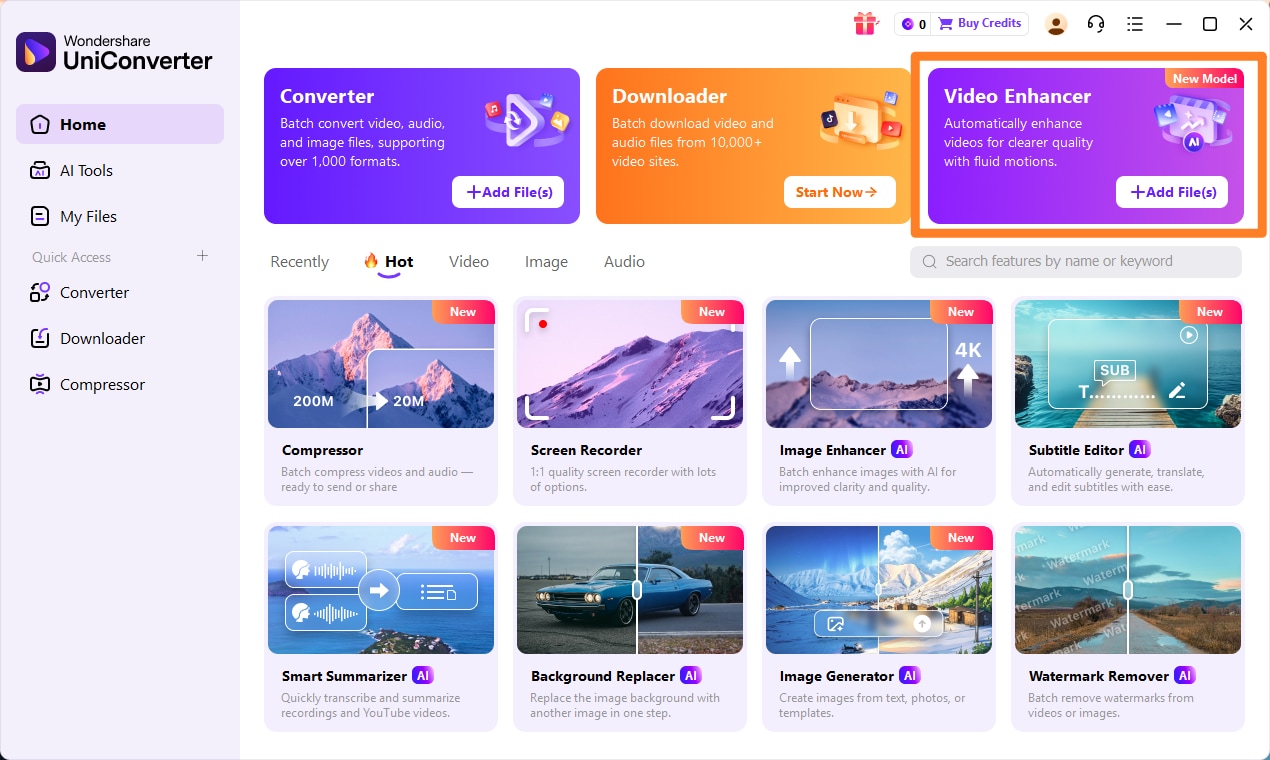
Step 1: Open UniConverter and Choose Video Enhancer
Launch UniConverter on your desktop. From the main interface, navigate to the "Toolbox" section and select the "Video Enhancer" feature.
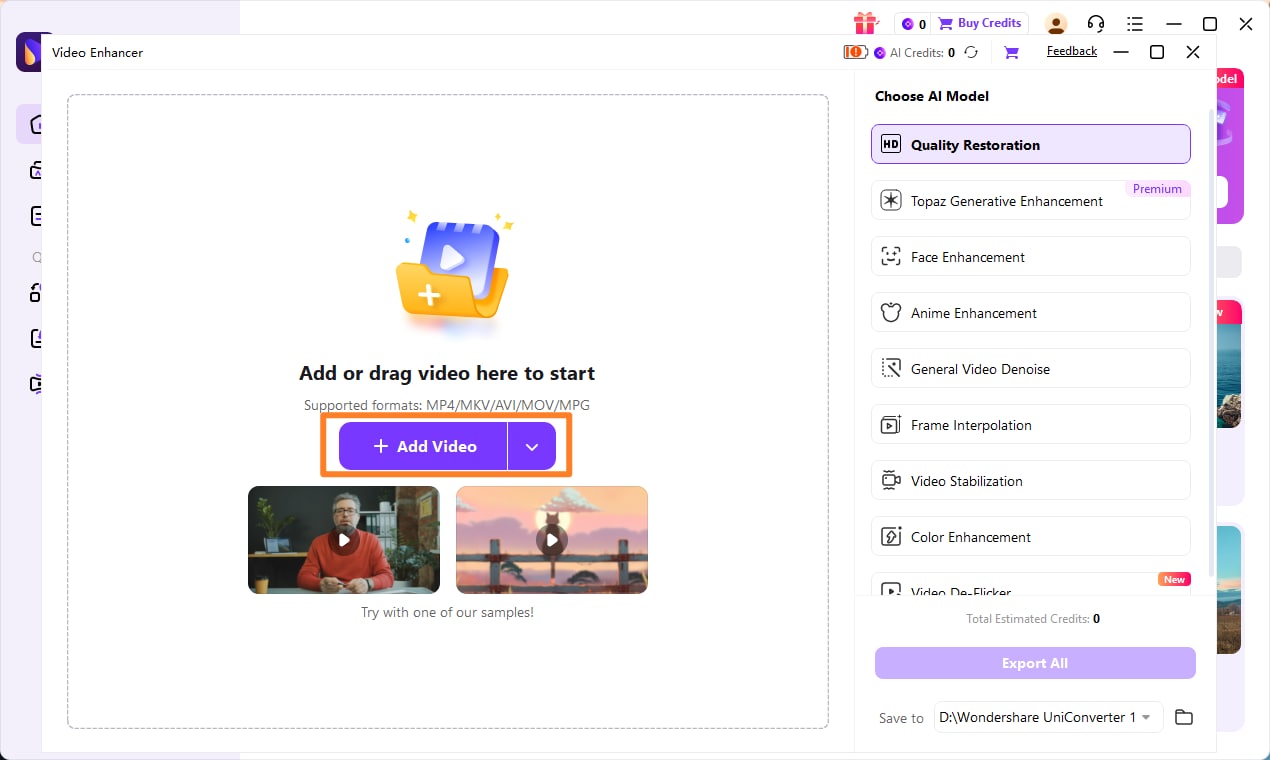
Step 2: Upload the Videos
Click on the "Add Files" button or drag and drop your video files directly into the UniConverter interface. You can add multiple videos for batch processing.
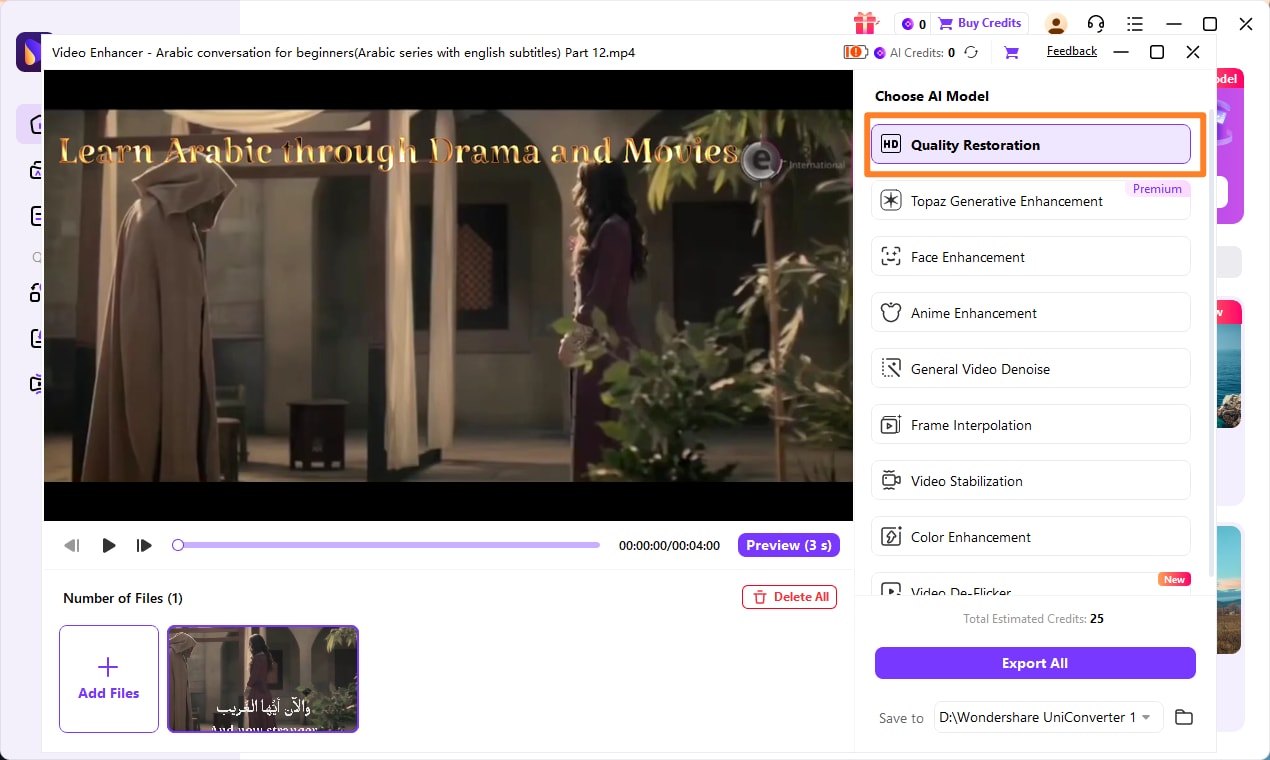
Step 3: Choose Enhancement Model
UniConverter offers various AI enhancement models. Select the appropriate model (e.g., AI Upscale, Denoise, Deblur) based on your specific enhancement needs. Adjust other settings like resolution, format, and output folder as required.
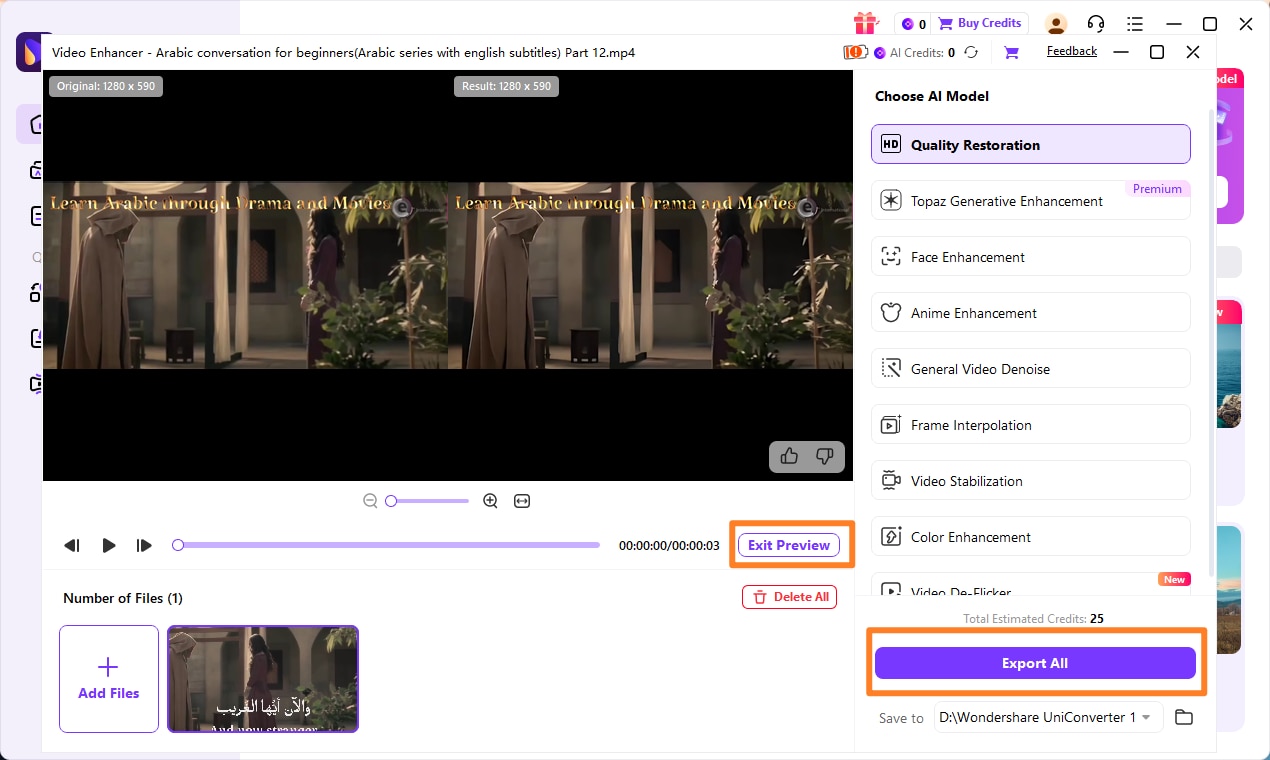
Step 4: Preview and Save the Enhanced Video
After selecting your enhancement options, you can often preview the changes to ensure satisfaction. Once ready, click the "Enhance" or "Start All" button to begin the processing. UniConverter will then save your enhanced videos to the specified output folder.

Seeking a KineMaster Video Enhancer Alternative?
Part 7: Conclusion
This KineMaster video enhancer review highlights KineMaster as an exceptionally capable mobile video editor, particularly well-suited for mobile-first creators and social media influencers who require robust editing tools on the go. Its intuitive multi-track editing, extensive asset store, and precise control over animations make it a powerful choice for producing engaging content directly from a smartphone or tablet. However, users must weigh the cost of subscription against the free version's watermark and potential performance limitations on less powerful devices. For those seeking professional-grade color grading, advanced VFX, or a more stable and powerful desktop-based enhancement solution, UniConverter offers a compelling alternative with its comprehensive features, lossless processing, and GPU acceleration. Ultimately, the best choice depends on individual needs, device specifications, and the specific demands of the video project.
Part 8: FAQs
-
1. Does KineMaster truly enhance video quality?
KineMaster can enhance video quality through its editing features like color correction, filters, and stabilization. However, it cannot magically improve inherently low-quality footage beyond what its tools allow. True "enhancement" often refers to upscaling or denoising, which KineMaster offers to a limited extent compared to dedicated AI enhancement software.
-
2. Is KineMaster suitable for professional video editing?
While KineMaster offers many professional-level features, it is generally considered suitable for semi-professional use or high-quality content creation for social media. For full-fledged professional projects requiring advanced color grading, complex VFX, or multi-user collaboration, desktop software like DaVinci Resolve or Adobe Premiere Pro is typically preferred.
-
3. How does KineMaster handle different video formats?
KineMaster supports a wide range of video, image, and audio formats for import. For export, it offers various resolutions (up to 4K) and frame rates, primarily in MP4 format. Compatibility can sometimes vary depending on the device and the specific codec used in the imported file.
-
4. What are the main differences between KineMaster's free and paid versions?
The primary difference is the watermark on exported videos in the free version. The paid subscription removes this watermark and unlocks full access to the KineMaster Asset Store, offering a much wider selection of effects, music, and other assets without additional purchases.
-
5. Can I remove the KineMaster watermark without a subscription?
No, the KineMaster watermark can only be removed by purchasing a premium subscription. Any third-party tools or methods claiming to remove the watermark without a subscription are unofficial and may pose security risks or violate KineMaster's terms of service.
