
- InShot's Role: InShot excels for quick mobile video edits, especially for social media, due to its user-friendly interface.
- Feature Limitations: While good for basics, InShot lacks advanced features for professional-grade video production compared to desktop software.
- Ideal Users: Best for casual users and social media creators needing fast, on-the-go editing without complex tools.
- Alternatives Comparison: CapCut offers trendy effects, KineMaster provides timeline control, and PowerDirector bridges mobile-desktop features.
- Risks & Pitfalls: Free versions often include watermarks, ads, and potential data privacy concerns; quality degradation can occur.
- UniConverter Advantage: For advanced, stable, and batch video enhancement without limitations, UniConverter is a powerful desktop alternative.
- Decision Guide: Choose InShot for casual use; consider alternatives like UniConverter for professional needs or higher quality output.
In this article
- Part 1: What is InShot?
- Part 2: InShot Video Enhancer: Core Features, Pros & Cons
- Part 3: InShot's Ideal Users and Use Cases
- Part 4: InShot and Alternatives Comparison
- Part 5: Risks and Pitfalls to Consider
- Part 6: How to Use UniConverter to Efficiently Enhance Videos
- Part 7: Final Verdict and Recommendations
- Part 8: FAQs
In the rapidly evolving landscape of mobile content creation, tools like InShot have become indispensable for users looking to quickly edit and enhance their videos directly from their smartphones. This InShot video enhancer review delves into its capabilities, comparing it against key competitors to provide a comprehensive understanding of its strengths and limitations. We will explore its core features, ideal use cases, and potential pitfalls, ultimately guiding users toward an informed decision for their video editing needs. This analysis aims to offer a clear perspective on whether InShot is the right tool for your specific projects, from casual social media posts to more ambitious content creation endeavors.
Part 1: What is InShot?
InShot is a popular, user-friendly mobile video editing application designed primarily for social media content creators and casual users. It allows individuals to perform a wide range of video and photo editing tasks directly on their smartphones or tablets, making professional-looking content accessible to a broader audience. Its market position is defined by its mobile-first approach, offering a streamlined experience for quick edits and enhancements without the need for complex desktop software. This InShot video enhancer review aims to address the core question: Does InShot truly deliver on its promise of easy, effective mobile video enhancement, especially when compared to its robust competitors?
The Rise of Mobile Video Editing
The proliferation of smartphones with high-quality cameras has fueled an unprecedented demand for mobile video editing solutions. This trend is driven by several key factors:
* Instant Content Creation: Users can capture, edit, and share videos within minutes, catering to the fast-paced nature of social media.
* Accessibility and Convenience: Mobile apps eliminate the need for expensive hardware or complex software, making video editing accessible to everyone.
* Social Media Dominance: Platforms like TikTok, Instagram, and YouTube Shorts thrive on short, engaging video content, for which mobile editors are perfectly suited.
* Empowerment of Creators: Mobile editing tools empower individuals to become content creators without a steep learning curve or significant investment.
Part 2: InShot Video Enhancer: Core Features, Pros & Cons
InShot offers a robust set of features tailored for mobile video editing, focusing on ease of use and quick results. Its core capabilities include trimming, cutting, merging clips, adding music, text, stickers, and various filters and effects. For video enhancement, it provides tools for adjusting brightness, contrast, saturation, and applying color filters. It also supports speed control, aspect ratio adjustments for different social media platforms, and basic keyframe animation.
Pros:
* Intuitive User Interface for Quick Edits: InShot's interface is highly visual and easy to navigate, allowing users to quickly grasp its functionalities and execute edits.
* Comprehensive Set of Basic Editing Tools: It covers all essential editing needs, from precise trimming to adding engaging overlays and sound effects.
* Excellent for Social Media Content Creation: Its presets for various aspect ratios and direct sharing options make it ideal for platforms like Instagram, TikTok, and YouTube.
Cons:
* Limited Advanced Features for Professional Use: For intricate color grading, multi-track editing, or advanced audio mixing, InShot falls short compared to desktop software.
* Potential for Watermarks and Ads in Free Version: The free version often includes an InShot watermark on exported videos and displays ads, which can be disruptive.
Part 3: InShot's Ideal Users and Use Cases
InShot primarily targets individuals who need a quick, efficient, and accessible tool for video editing on their mobile devices. Its design philosophy prioritizes ease of use over professional-grade complexity, making it suitable for a broad spectrum of casual and semi-professional content creators.
Best Use Case: Quick Social Media Content Creation on the Go
InShot excels in scenarios where speed and convenience are paramount. Imagine a social media influencer attending an event, capturing footage, and needing to upload an engaging recap video within an hour. InShot allows them to trim clips, add background music, apply a trendy filter, overlay text, and export directly to their platform of choice, all from their smartphone. Similarly, small business owners creating short promotional videos for their products or services can leverage InShot's simplicity to produce polished content without a steep learning curve or significant time investment. Its pre-set aspect ratios for Instagram Stories, TikTok, and YouTube Shorts further streamline this process.
Limitation Scenario: Professional-Grade Video Production Requiring Advanced Features
While InShot is powerful for mobile editing, it reaches its limits when it comes to professional-grade video production. Consider a filmmaker working on a documentary that requires precise color correction, complex visual effects, multi-camera editing, or sophisticated audio mastering. InShot lacks the granular control over color grading, the multi-track timeline for intricate layering, or the advanced audio tools necessary for such projects. For these scenarios, desktop software like Adobe Premiere Pro, DaVinci Resolve, or Final Cut Pro is indispensable, offering the depth and precision required for high-quality, broadcast-ready content.
Part 4: InShot and Alternatives Comparison
When evaluating mobile video editors, InShot stands out for its user-friendliness, but it's crucial to compare it with other market leaders like CapCut, KineMaster, and PowerDirector to understand their respective strengths. While InShot prioritizes intuitive, quick edits, CapCut offers robust effects and templates, KineMaster provides a more timeline-centric editing experience, and PowerDirector bridges the gap between mobile and desktop with advanced features.
| Feature / Product | InShot | CapCut | KineMaster | PowerDirector |
| Processing Speed | Fast | Fast | Moderate | Moderate |
| Output Quality | Good | Excellent | Good | Excellent |
| Ease of Use | Very High | High | Moderate | Moderate |
| Customer Support | Email/FAQ | Email/FAQ | Email/FAQ | Email/FAQ |
| Security | Standard | Standard | Standard | Standard |
| Advanced Features | Basic | Moderate | Moderate | High |
| Watermark (Free) | Yes | Yes | Yes | Yes |
Key Differentiators: Mobile-First Focus vs. Feature Richness
InShot's primary differentiator is its mobile-first focus, offering an incredibly streamlined experience for quick social media content. It's designed for immediate results. CapCut, while also mobile-first, excels with its trendy effects, templates, and TikTok integration, often preferred by younger creators. KineMaster offers a more traditional timeline-based editing experience, appealing to users who want more control without moving to a desktop. PowerDirector leans towards feature richness, providing a more comprehensive suite of tools that mimic desktop editors, making it suitable for users who need more advanced capabilities on mobile.
Part 5: Risks and Pitfalls to Consider
While free or freemium mobile video editing apps like InShot offer immense convenience, users must be aware of potential risks and pitfalls, especially concerning data privacy, intrusive advertising, and the quality of exported content. These issues can significantly impact the user experience and the professional appearance of your final video.
Data Privacy Concerns with Free Apps
Many free mobile applications, including video editors, collect user data. This can range from device information and usage patterns to, in some cases, access to your media library. It's crucial to review the app's privacy policy to understand what data is collected, how it's used, and whether it's shared with third parties. Unscrupulous apps might exploit this data for targeted advertising or other purposes, raising significant privacy concerns for users.
Intrusive Ads and Watermarks in the Free Tier
The most common trade-off for using a free version of a mobile video editor is the presence of advertisements and watermarks. Ads can pop up frequently, interrupting the editing workflow and creating a frustrating user experience. Watermarks, typically placed in a corner of the exported video, can detract from the professional appearance of your content, making it less suitable for formal presentations or client work. Removing these often requires a paid subscription.
Quality Degradation on Export
While InShot strives to maintain video quality, the export process, especially in the free version or with certain settings, can sometimes lead to quality degradation. This might manifest as increased compression artifacts, reduced resolution, or a loss of sharpness. Users aiming for high-fidelity video output, particularly for platforms that demand pristine visuals, might find this limitation problematic. It's essential to experiment with export settings and consider the impact on the final product.
Subscription Model Value Proposition
Many mobile video editors operate on a freemium model, offering basic features for free but locking advanced tools, ad removal, and watermark-free exports behind a subscription. Users need to critically evaluate whether the subscription cost justifies the additional features and benefits. For casual users, the free version might suffice, but for regular content creators, the subscription might become a necessary expense, requiring a careful assessment of its value compared to other paid alternatives or desktop software.
Part 6: How to Use UniConverter to Efficiently Enhance Videos
When mobile video enhancers fall short in terms of batch processing, stable enhancement, or delivering significant quality improvements, UniConverter emerges as a powerful desktop alternative. It bypasses the limitations of mobile apps by offering a comprehensive suite of video enhancement tools without ads, watermarks, or quality degradation. UniConverter provides extensive format support, GPU acceleration for faster processing, and stable, lossless enhancement, positioning it as an all-in-one solution for serious video creators.
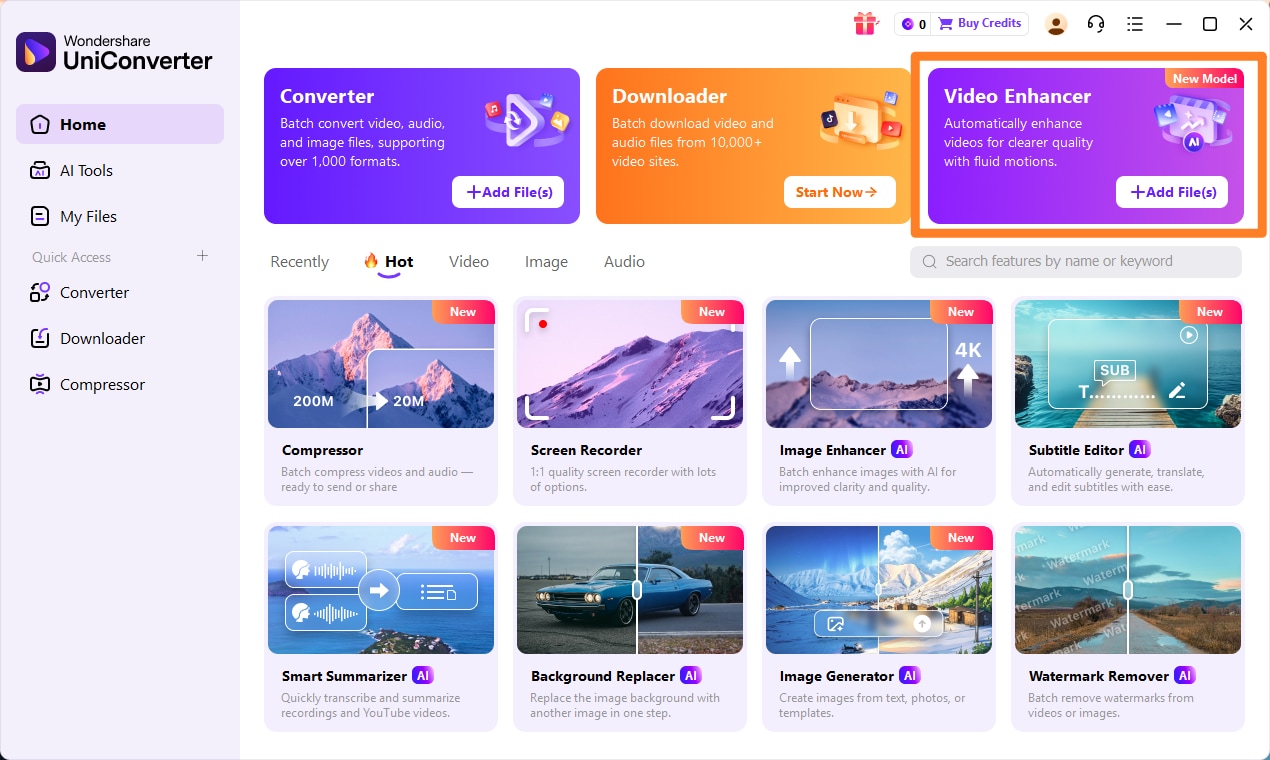
Step 1: Open UniConverter and Choose Video Enhancer
Launch UniConverter on your computer. From the main interface, navigate to the "Toolbox" section and select the "AI Lab" feature. Within AI Lab, choose "Video Enhancer" to access the dedicated enhancement tools.
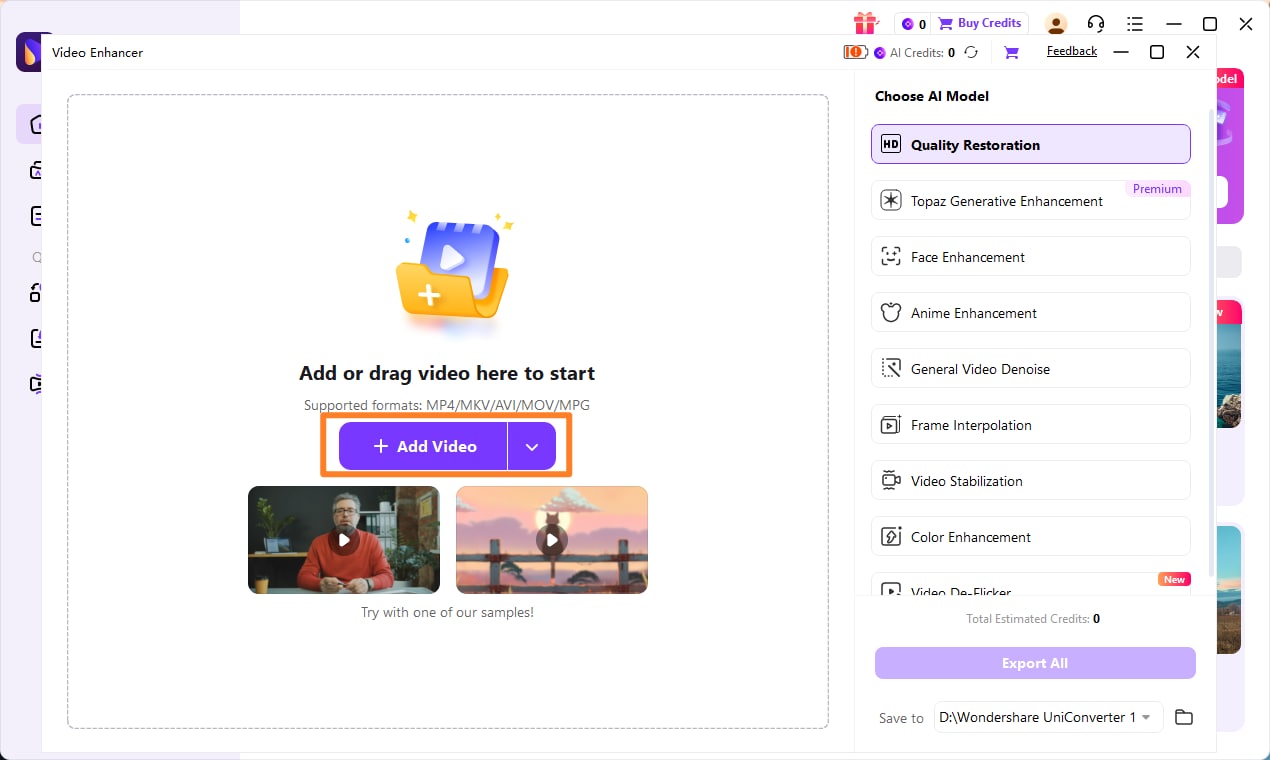
Step 2: Upload the Videos
Click on the "Add Files" button or drag and drop the video files you wish to enhance into the UniConverter interface. You can add multiple videos for batch processing.
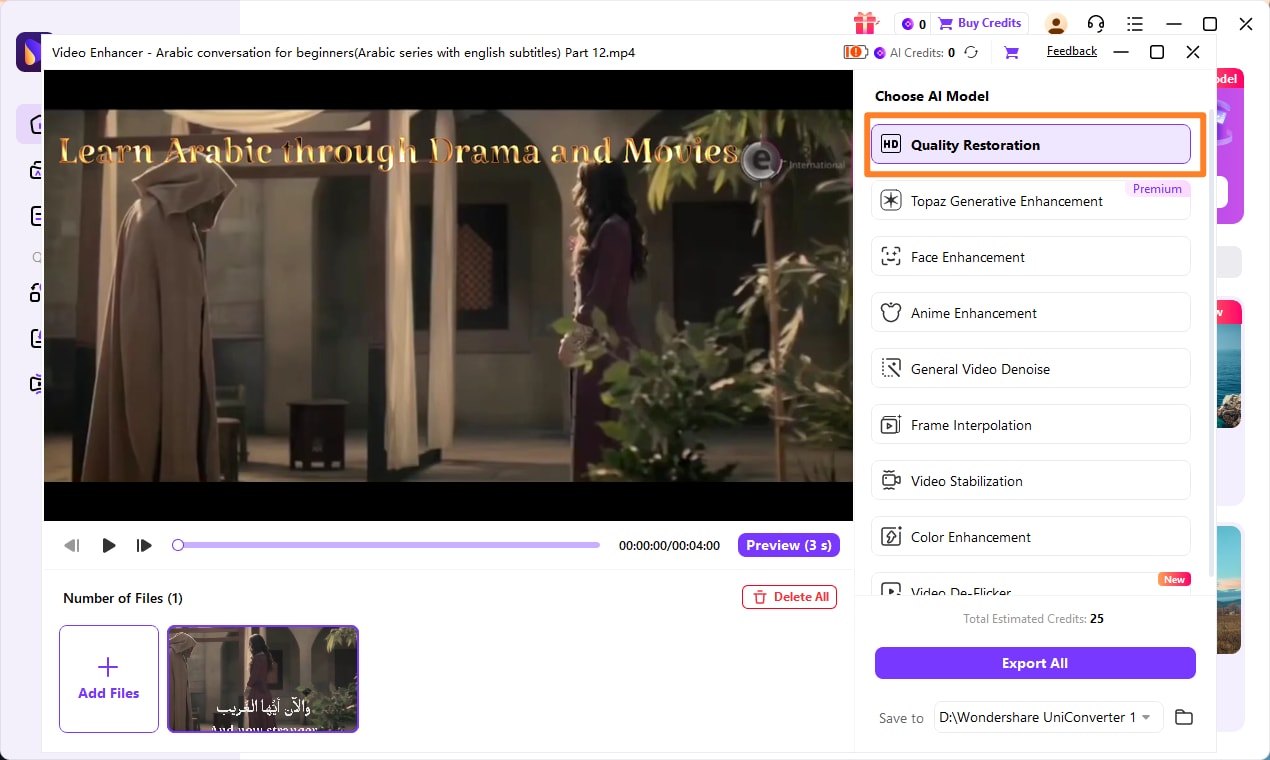
Step 3: Choose Enhancement Model
UniConverter offers several AI enhancement models. Select the model that best suits your needs, such as "AI Upscale" for resolution improvement, "AI Denoise" for removing grain, or "AI Color Correction" for adjusting colors. You can also preview the effect before applying. For instance, if you're looking to change the background of a video, UniConverter provides advanced tools to achieve this seamlessly. You can also remove the background from your video with precision.
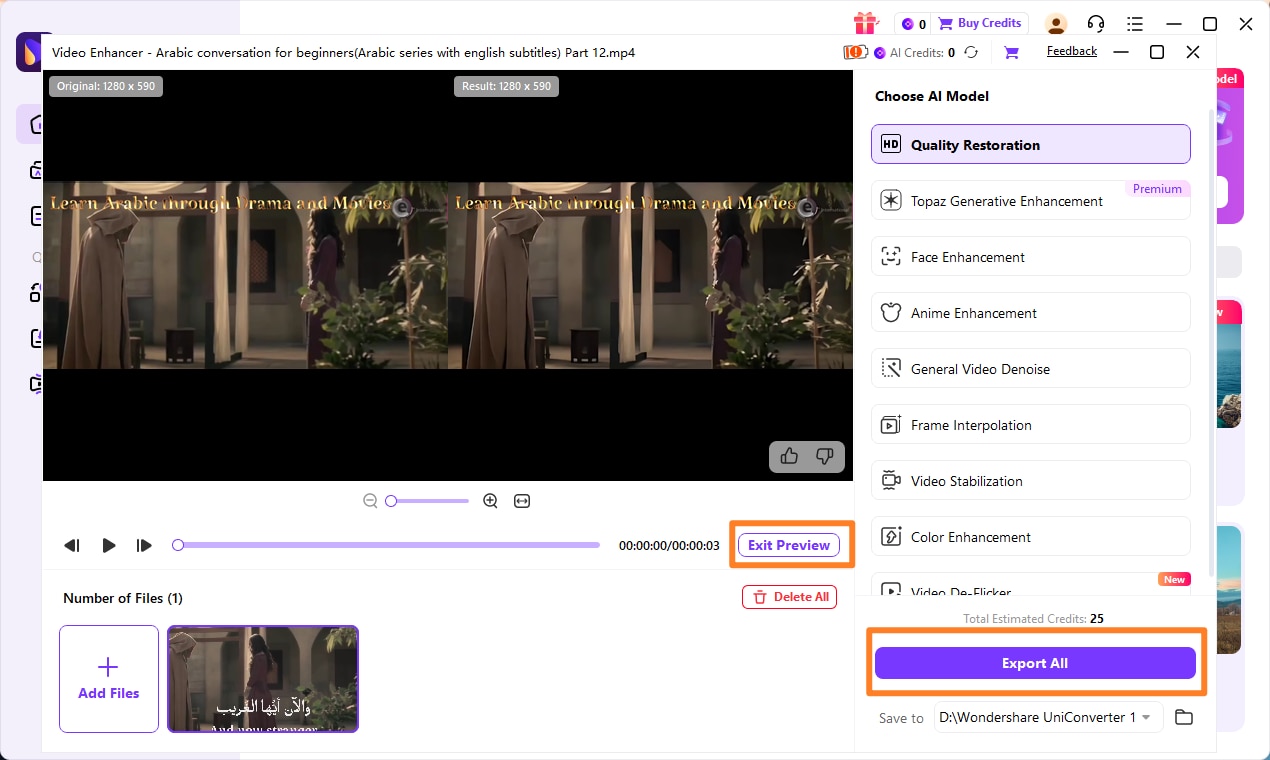
Step 4: Preview and Save the Enhanced Video
After selecting your enhancement model, click "Preview" to see the changes. Once satisfied, choose your desired output format and destination folder, then click "Start All" to process and save your high-quality enhanced video. This process ensures your background removal is high-definition and maintains quality.

Seeking a Powerful InShot Video Enhancer Alternative?
Part 7: Final Verdict and Recommendations
This InShot video enhancer review highlights its strengths as a highly accessible and user-friendly mobile video editing tool, particularly for quick edits and social media content. Its intuitive interface and comprehensive basic features make it an excellent entry point for new creators. However, its limitations in advanced features, potential for watermarks and ads in the free version, and occasional quality degradation on export become apparent when compared to more robust competitors or desktop solutions. The choice of tool ultimately depends on the user's specific needs and aspirations.
For Casual Users and Social Media Enthusiasts
InShot is an ideal choice. Its ease of use allows for rapid content creation and sharing, perfect for daily vlogs, Instagram stories, or TikTok videos. The free version, despite its limitations, offers enough functionality to get started without any financial commitment.
For Aspiring Content Creators
While InShot can serve as a starting point, aspiring creators looking to produce higher-quality, more polished content will likely outgrow its capabilities. They should consider exploring alternatives like CapCut for its trendy effects or KineMaster for more timeline control, or even invest in a UniConverter subscription for a more comprehensive and professional mobile editing experience.
For Professionals Seeking Desktop Solutions
For professional-grade video production, InShot is not a suitable replacement for desktop software. Tools like Adobe Premiere Pro, DaVinci Resolve, or UniConverter offer the precision, advanced features, and stability required for complex projects, ensuring superior output quality and creative control. Professionals should leverage mobile apps for on-the-go quick edits but rely on desktop solutions for their primary workflow.
Part 8: FAQs
-
1. Is InShot video enhancer free to use?
InShot offers a free version with basic features, but advanced tools and no watermarks require a subscription.
-
2. Does InShot degrade video quality?
While InShot aims to maintain quality, excessive compression or specific export settings can sometimes lead to a slight quality reduction.
-
3. Can InShot enhance old or low-resolution videos?
InShot can apply some enhancements, but its capabilities for significantly improving very low-resolution or old footage are limited compared to dedicated desktop software.
-
4. What are the best alternatives to InShot for mobile editing?
CapCut, KineMaster, and PowerDirector are popular alternatives offering varying levels of features and user experiences.
-
5. Is InShot suitable for professional video editing?
InShot is primarily designed for mobile-first, quick edits and social media content. For professional-grade video editing, desktop software like Adobe Premiere Pro or DaVinci Resolve is generally recommended.
