
- iMovie's Value: Excellent for beginners and casual Apple users; free, intuitive, and great for quick edits.
- Feature Comparison: iMovie offers basic enhancements; UniConverter provides advanced AI-powered tools for superior quality.
- Ideal Use Cases: iMovie suits social media and personal projects; UniConverter excels for enthusiasts and professionals needing high-quality enhancements.
- Limitations & Risks: Relying solely on iMovie limits output quality, advanced noise reduction, and cross-platform collaboration.
- Decision Point: Choose iMovie for simplicity and basic needs; opt for UniConverter for comprehensive, high-quality video enhancement.
In this article
- Part 1: What is iMovie?
- Part 2: iMovie Video Enhancer: Core Features, Pros & Cons
- Part 3: iMovie Video Enhancer: Ideal Users & Scenarios
- Part 4: iMovie and Alternatives Comparison
- Part 5: Risks & Pitfalls of Relying Solely on iMovie
- Part 6: How to Use UniConverter for Efficient Video Enhancement
- Part 7: Conclusion
- Part 8: FAQs
iMovie Video Enhancer Review: Elevating Your Footage
In the dynamic world of digital content creation, video quality is paramount. From casual social media posts to professional presentations, crisp, clear, and visually appealing footage captures attention and conveys messages effectively. Apple's iMovie has long been a go-to for many, offering an accessible entry point into video editing. However, as user expectations for visual fidelity rise, the question of its enhancement capabilities becomes critical. This iMovie video enhancer review delves into how iMovie handles video improvement, comparing its built-in features against dedicated enhancement tools. We will explore its strengths and limitations, guiding users to understand when iMovie suffices and when external solutions are necessary to truly elevate their video projects.
Part 1: What is iMovie?
iMovie, developed by Apple Inc., is a proprietary video editing software application that comes free with macOS and iOS devices. Designed with simplicity and ease of use in mind, it allows users to create, edit, and share videos with a relatively shallow learning curve. Its intuitive interface and integration within the Apple ecosystem make it a popular choice for beginners, students, and casual content creators. The software provides a range of basic editing functionalities, including trimming, cutting, adding transitions, titles, and background music. This review will specifically address iMovie's capabilities as a video enhancer, examining its built-in tools for improving video quality, and whether these are sufficient for modern demands.
Market Background and User Pain Points:
* Increasing demand for high-quality video: Viewers expect polished, professional-looking content.
* Challenges with raw footage: Videos often suffer from poor lighting, shaky camera work, or low resolution.
* Complexity of professional tools: Many users find advanced video editing software daunting and expensive.
* Desire for quick and effective solutions: Users need tools that can enhance videos without extensive technical knowledge or time investment.
Part 2: iMovie Video Enhancer: Core Features, Pros & Cons
iMovie offers a suite of basic video enhancement tools designed to improve the visual and auditory quality of your footage. Its core capabilities include automatic color correction, stabilization for shaky footage, and basic audio adjustments. Users can apply filters, adjust brightness, contrast, and saturation, and utilize a noise reduction feature for audio. While these features are generally straightforward to use, they are often limited in their depth and precision compared to professional-grade software. The software also supports various video formats, though its output options are primarily geared towards Apple's ecosystem and common web platforms.
Core Features:
* Automatic Color Correction: One-click adjustment for color balance.
* Video Stabilization: Reduces camera shake for smoother playback.
* Audio Noise Reduction: Minimizes background noise in audio tracks.
* Visual Filters: A selection of pre-set artistic and corrective filters.
* Basic Exposure & Color Adjustments: Manual sliders for brightness, contrast, and saturation.
Pros:
* Seamless Integration with Apple Ecosystem: Works flawlessly with other Apple devices and services.
* User-Friendly Interface for Beginners: Extremely easy to learn and navigate, even for first-time editors.
* Free and Accessible for Apple Users: No additional cost for Apple device owners, making it highly accessible.
Cons:
* Limited Advanced Enhancement Options: Lacks granular control over color grading, advanced noise reduction, and upscaling.
* Restricted to Apple Devices: Not available on Windows or Android, limiting its reach.
Part 3: iMovie Video Enhancer: Ideal Users & Scenarios
iMovie's design philosophy caters primarily to individuals seeking straightforward video editing and enhancement without the complexity of professional software. Its intuitive interface and free availability on Apple devices make it an excellent starting point for those new to video creation. It thrives in environments where quick turnarounds and ease of use are prioritized over highly specialized visual effects or intricate color grading.
Best Use Case: Quick Edits for Social Media & Personal Projects
iMovie excels at preparing videos for platforms like Instagram, TikTok, or YouTube, where content velocity often trumps pixel-perfect precision. For personal projects such as family vacation videos, birthday montages, or school assignments, iMovie provides all the necessary tools to create engaging and polished results. Its automatic enhancement features can quickly fix common issues like poor lighting or shaky footage, making it ideal for users who want to improve their videos without delving into complex settings.
Limited Scenario: Professional-Grade Color Grading & Noise Reduction
For professional videographers, filmmakers, or anyone requiring precise control over every aspect of their footage, iMovie falls short. It lacks the advanced color grading tools found in software like DaVinci Resolve or Adobe Premiere Pro, which are essential for achieving a specific cinematic look. Similarly, its noise reduction capabilities are basic and may not effectively clean up severely noisy footage, which is crucial for high-quality productions. For these demanding scenarios, users will need to look beyond iMovie's built-in features.
Part 4: iMovie and Alternatives Comparison
| Feature/Tool | iMovie | UniConverter | DaVinci Resolve | Adobe Premiere Pro |
| Ease of Use | High | High | Medium | Medium |
| Advanced Enhancement | Low | High (AI-powered) | High | High |
| Platform Compatibility | Apple Only | Cross-Platform | Cross-Platform | Cross-Platform |
| Price | Free | Paid | Free (Studio Paid) | Paid (Subscription) |
| Target Audience | Beginners | Enthusiasts/Professionals | Professionals | Professionals |
| Processing Speed | Good | Excellent (GPU Accel.) | Excellent (GPU Accel.) | Excellent (GPU Accel.) |
| Output Quality | Good | Excellent (AI Upscaling) | Excellent | Excellent |
| Customer Support | Apple Support | Dedicated Support | Forum/Paid Support | Dedicated Support |
| Security | High (Apple Ecosystem) | High | High | High |
iMovie stands out for its unparalleled ease of use and free access within the Apple ecosystem, making it perfect for beginners. However, for serious video enhancement, UniConverter offers a compelling alternative with its AI-powered features, providing significant improvements in output quality and processing speed, especially for upscaling and noise reduction. DaVinci Resolve, with its robust color grading tools, and Adobe Premiere Pro, with its comprehensive editing suite, cater to professionals demanding the highest level of control and advanced features, albeit with a steeper learning curve and a higher cost. UniConverter strikes a balance, offering advanced enhancement capabilities in an accessible package, making it suitable for enthusiasts and professionals who need efficient and high-quality video improvements across various platforms.
Part 5: Risks & Pitfalls of Relying Solely on iMovie
While iMovie serves as an excellent entry-level video editor, relying solely on its built-in enhancement features for all video projects can lead to several limitations and potential pitfalls, especially as your video production needs evolve or quality expectations increase.
Limited Output Quality for High-End Displays
iMovie's enhancement tools, while effective for basic adjustments, may not deliver the nuanced quality required for viewing on 4K or 8K displays. Its color correction and sharpening algorithms are not as sophisticated as those found in professional software, potentially leading to less vibrant colors, softer details, or visible artifacts when scaled up to larger, higher-resolution screens. This can be particularly noticeable for projects intended for broadcast or cinematic presentation.
Lack of Advanced Noise Reduction Capabilities
Footage shot in low-light conditions often suffers from significant digital noise. iMovie's noise reduction feature is rudimentary and might not effectively clean up heavily noisy video without introducing a "plastic" or overly smoothed look. This can degrade the overall visual fidelity, making the video appear artificial and detracting from the professional quality. Dedicated tools offer more intelligent and adjustable noise reduction algorithms that preserve detail while eliminating grain.
Inability to Handle Diverse Video Formats
While iMovie supports common video formats, it can be restrictive when dealing with less conventional codecs or high-bitrate professional formats. Users might encounter compatibility issues, requiring prior conversion of footage, which adds an extra step and potential loss of quality. This limitation can be a significant bottleneck for creators working with diverse camera equipment or specific production workflows.
Potential for Creative Bottlenecks
The simplified interface and limited feature set of iMovie, while a strength for beginners, can become a creative bottleneck for more experienced editors. The lack of granular control over effects, color grading, and advanced compositing tools can hinder the ability to achieve a specific artistic vision. This forces creators to compromise on their creative intent or seek external solutions for specific tasks, disrupting the workflow.
No Cross-Platform Project Collaboration
iMovie projects are intrinsically tied to the Apple ecosystem. This means that collaborative efforts with team members using Windows or other operating systems are virtually impossible without exporting and re-importing footage, which can lead to version control issues and significant workflow inefficiencies. The absence of cross-platform compatibility limits its utility in professional or team-based production environments.
Part 6: How to Use UniConverter for Efficient Video Enhancement
When other tools fall short in batch processing, stable enhancement, or delivering noticeable improvements, UniConverter emerges as a robust solution. It bypasses common issues like inconsistent quality, weak enhancement effects, and lack of batch processing, offering a comprehensive and reliable approach. UniConverter provides an all-in-one suite for video conversion, editing, and enhancement, leveraging GPU acceleration for speed and ensuring lossless quality. Its AI-powered features can upscale videos, remove noise, and stabilize shaky footage efficiently, making it an ideal choice for users seeking a powerful, ad-free, and format-rich tool for their video enhancement needs.
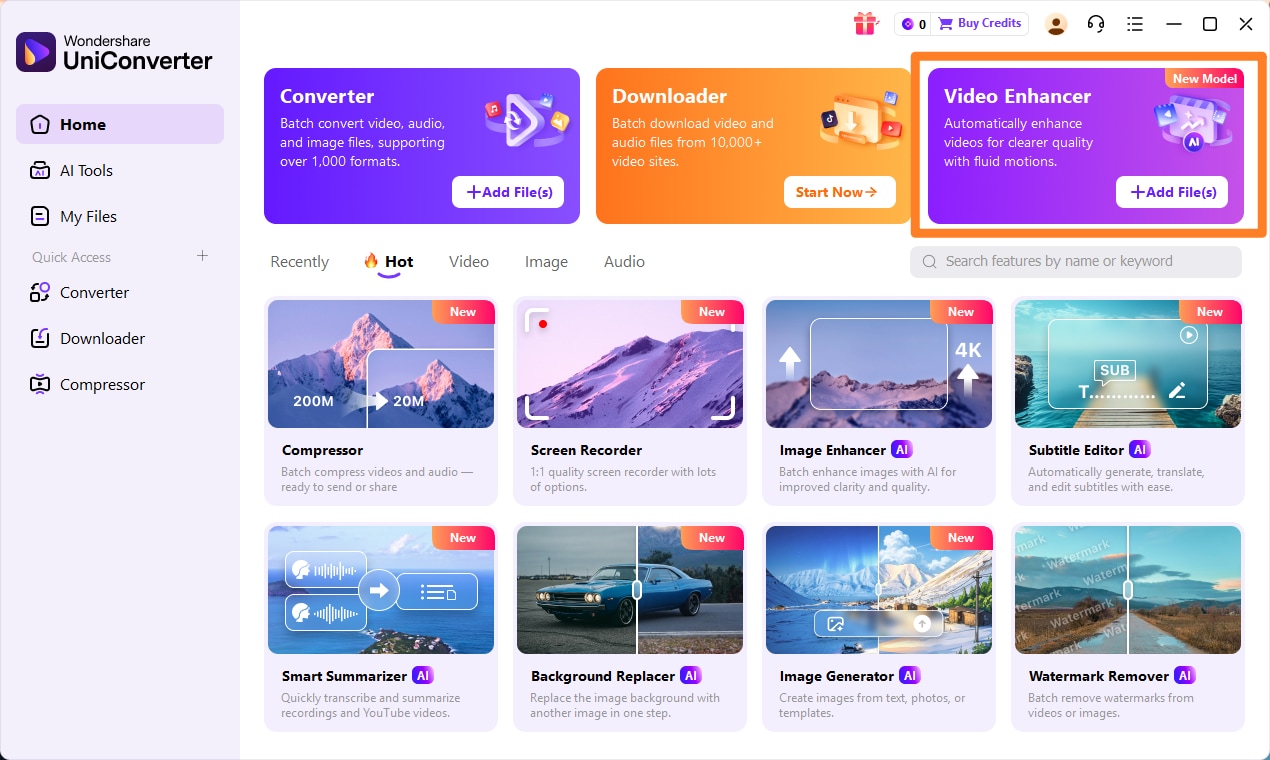
Step 1: Open UniConverter and Choose Video Enhancer
Launch UniConverter on your computer. From the main interface, navigate to the "AI Lab" section and select the "Video Enhancer" tool.
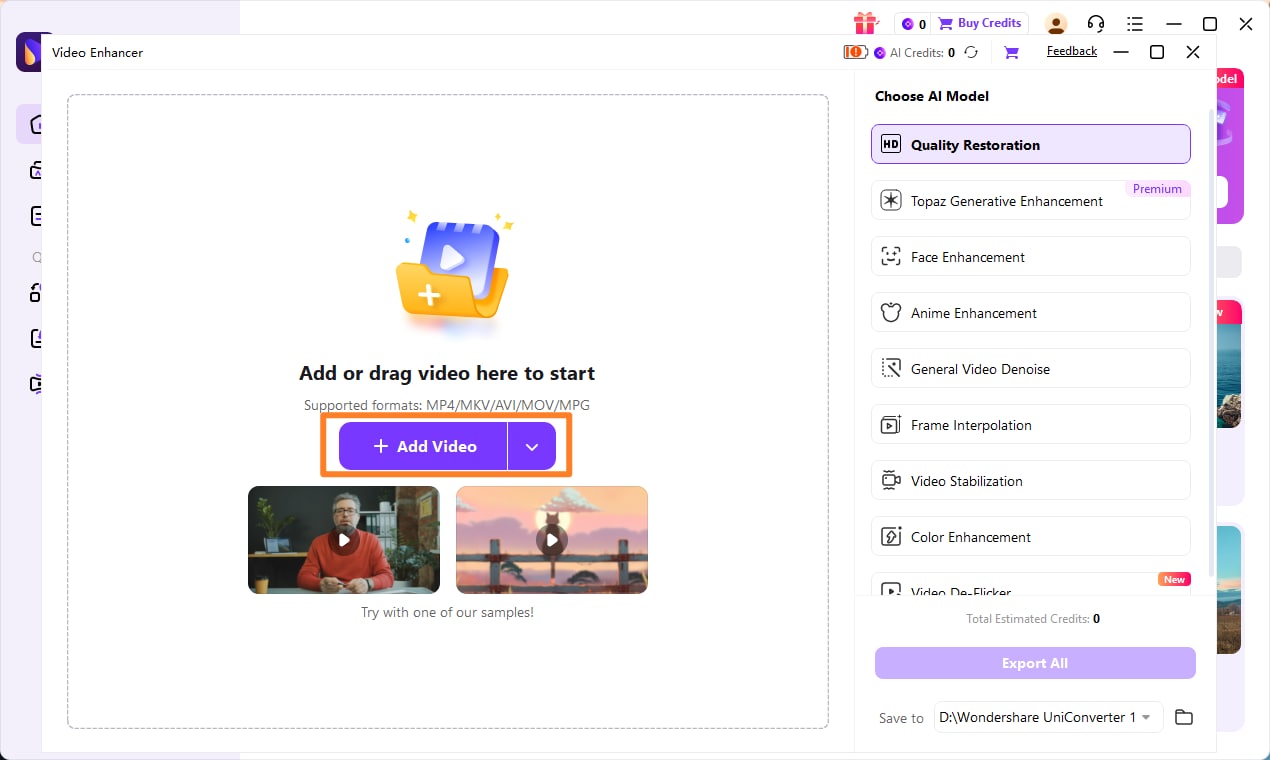
Step 2: Upload the Videos
Click on the "Add Files" button or drag and drop your iMovie project exports or raw video footage into the UniConverter interface. You can add multiple videos for batch processing.
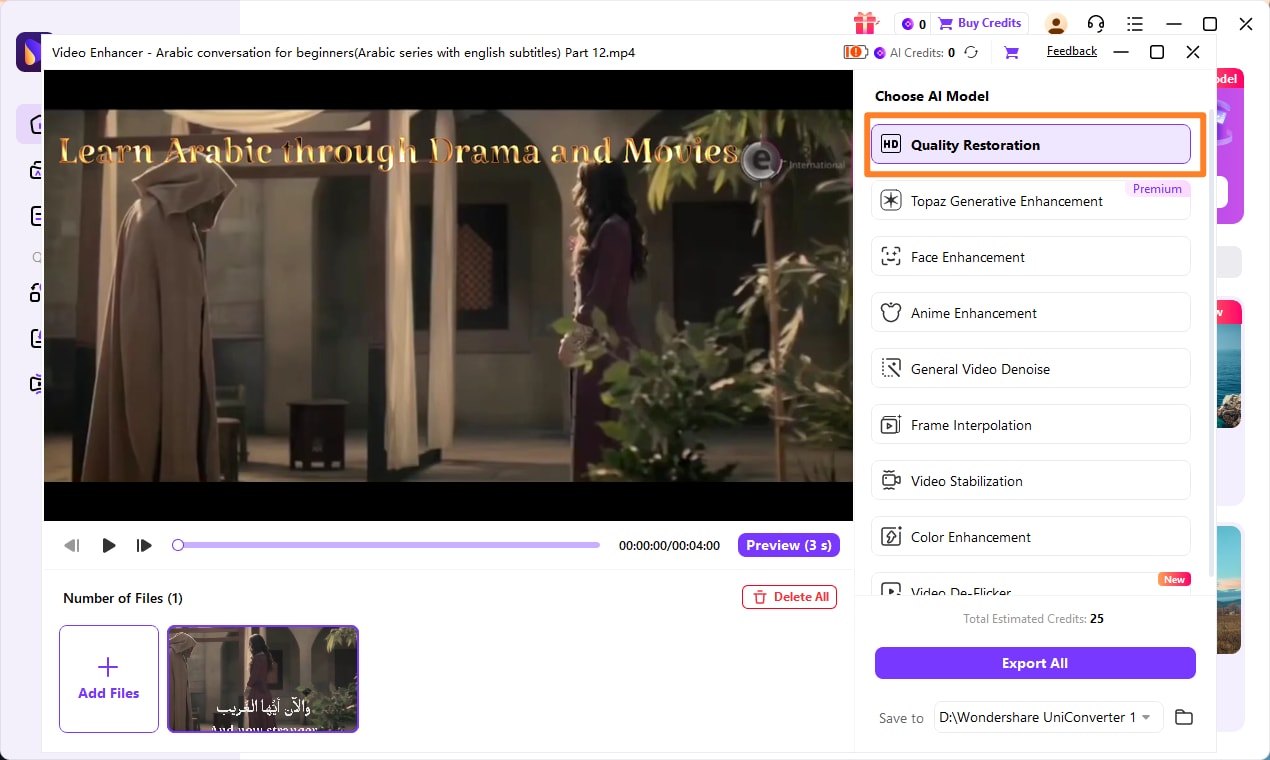
Step 3: Choose Enhancement Model
Select the desired AI enhancement model based on your needs: "AI Upscale" for resolution improvement, "AI Denoise" for noise reduction, or "AI Stabilization" for shaky footage. Adjust parameters as needed.
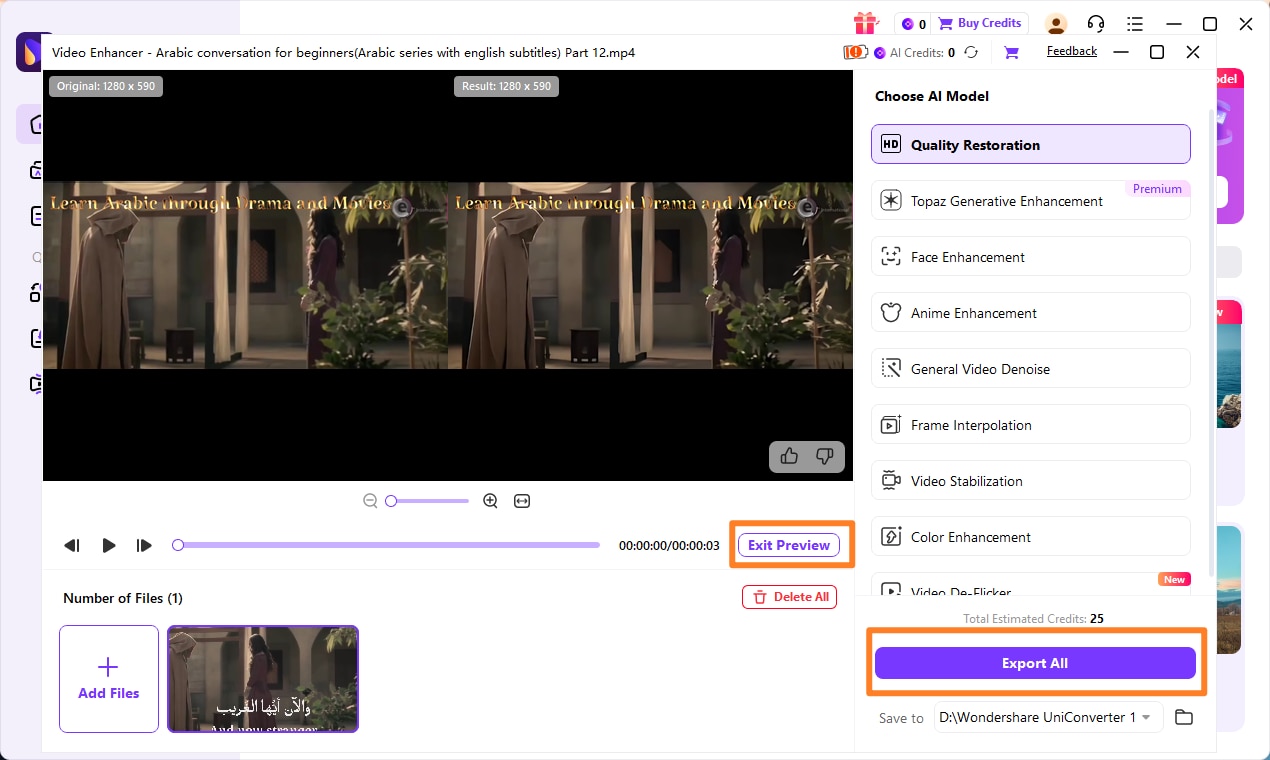
Step 4: Preview and Save the Enhanced Video
Preview the enhanced video to ensure satisfaction. Once ready, choose your preferred output format and destination folder, then click "Export" to save your high-quality, enhanced video.

Seeking an iMovie Video Enhancer Alternative?
Part 7: Conclusion
This iMovie video enhancer review has highlighted iMovie's strengths as an accessible and user-friendly video editing tool, particularly for beginners and casual users within the Apple ecosystem. Its free availability and intuitive interface make it an excellent choice for quick edits, social media content, and personal projects. However, for more demanding tasks such as professional-grade color grading, advanced noise reduction, or handling diverse video formats, iMovie's limitations become apparent. Relying solely on iMovie can lead to creative bottlenecks, suboptimal output quality for high-end displays, and a lack of cross-platform collaboration capabilities. For aspiring professionals or users seeking comprehensive and powerful video enhancement, dedicated tools like UniConverter offer a superior solution, providing AI-powered features, cross-platform compatibility, and robust performance to truly elevate video footage. Ultimately, the choice depends on individual needs, skill level, and the specific requirements of the video project.
Part 8: FAQs
-
1. Can iMovie enhance video resolution?
iMovie can export videos at higher resolutions if the original footage supports it, but it does not have built-in AI upscaling features to genuinely improve the resolution of lower-quality videos.
-
2. What are the best alternatives to iMovie for video enhancement?
For comprehensive video enhancement, UniConverter, DaVinci Resolve, and Adobe Premiere Pro are excellent alternatives, offering advanced features like AI upscaling, professional color grading, and superior noise reduction.
-
3. Is iMovie suitable for professional video editing?
iMovie is generally not suitable for professional video editing due to its limited advanced features, lack of granular control, and absence of professional-grade color grading and audio tools.
-
4. How do I improve video quality in iMovie?
You can improve video quality in iMovie by using its built-in tools for automatic color correction, video stabilization, brightness/contrast adjustments, and basic audio noise reduction.
-
5. Does iMovie support 4K video enhancement?
iMovie supports editing and exporting 4K video if your device and original footage are 4K. However, its "enhancement" capabilities for 4K footage are limited to basic adjustments rather than advanced quality improvements like AI upscaling.
