
- ImgLarger Value: AI-powered upscaling for quick, high-quality image enlargements, ideal for social media and basic needs.
- Feature Comparison: ImgLarger excels in simple upscaling; UniConverter offers broader media tools, including advanced image enhancement.
- Decision Factor: Choose ImgLarger for straightforward online upscaling; UniConverter for comprehensive, secure, offline media solutions.
- Cost Consideration: ImgLarger's best features are subscription-based; UniConverter offers a one-time purchase for extensive functionality.
In this article
When I first started dabbling in digital photography and content creation, I quickly realized the limitations of low-resolution images. Whether it was an old family photo I wanted to share online or a product shot that just wasn't quite sharp enough for a website, the need for a reliable image enhancer became apparent. That's where ImgLarger image enhancer review comes in. This comprehensive review will dive deep into its features, compare it with its rivals, and ultimately help you decide if it's the right tool for your image enhancement needs. I'll share my personal experiences, highlighting what I found most useful and where it fell short, so you can make an informed decision without the guesswork.
Part 1: What is ImgLarger?
ImgLarger is an AI-powered online tool designed to upscale and enhance images without losing quality. In a world where visual content reigns supreme, having crisp, high-resolution images is no longer a luxury but a necessity. I've personally faced the frustration of having a perfect shot, only to realize its resolution was too low for print or professional use. ImgLarger aims to solve this common problem by leveraging artificial intelligence to intelligently add pixels and refine details, making smaller images suitable for larger displays or printing. This review will explore whether it truly delivers on its promise and how it stacks up against other solutions I've tried.
The Growing Need for Image Enhancement Tools
* Social Media Demands: High-quality visuals are crucial for engagement on platforms like Instagram, Facebook, and Pinterest.
* E-commerce Requirements: Product images need to be sharp and detailed to attract customers and build trust.
* Print Media Standards: Low-resolution images often pixelate when printed, leading to unprofessional results.
* Restoration of Old Photos: Many of us have cherished old photos that could benefit from a resolution boost.
Part 2: ImgLarger: Core Features, Pros, and Cons
ImgLarger, at its core, is built around its AI upscaling capabilities. I found its primary function to be quite straightforward: upload an image, choose your desired upscale factor (2x, 4x, 8x), and let the AI do its magic. It supports various image formats, which is a plus, and the processing is generally quick, especially for smaller files. For me, the most impactful feature was its ability to bring old, low-res photos back to life with surprising clarity. However, it's not a one-size-fits-all solution, and I quickly learned its limitations.
Pros:
* AI-powered Upscaling for High-Quality Enlargements: The AI does an impressive job of intelligently adding detail, often making enlarged images look much better than simple bicubic interpolation.
* Batch Processing for Efficiency: For someone like me who often needs to enhance multiple images, the batch processing feature is a huge time-saver.
* User-Friendly Interface for Quick Edits: The online interface is clean and intuitive, making it easy to navigate even for beginners.
Cons:
* Limited Advanced Editing Features: If you're looking for tools like color correction, noise reduction beyond upscaling, or object removal, ImgLarger won't be enough.
* Subscription Model for Full Functionality: While there's a free tier, the best results and higher upscale factors are locked behind a subscription.
Part 3: ImgLarger: Ideal Users and Use Cases
From my experience, ImgLarger shines brightest for specific user groups and scenarios. If you're a casual user who just wants to make your phone photos look better for Instagram, or a small business owner needing to slightly improve product images without investing in complex software, this tool is definitely worth considering. It's not designed to replace professional photo editing suites, but rather to fill a niche for quick, effective upscaling.
Scenario 1: Enhancing Low-Resolution Photos for Social Media
This is where ImgLarger truly excels. I often use it to upscale photos taken with older phones or downloaded from less-than-ideal sources. The difference in clarity and sharpness when posting to social media is noticeable, making my content look more polished and professional without much effort.
Scenario 2: Improving Print Quality of Small Images (with limitations)
I've tried using ImgLarger to prepare small images for printing, and while it does improve them, there are limitations. For very small images that need significant enlargement (e.g., from a 1x1 inch stamp to a 8x10 inch print), the AI can only do so much. You'll see improvement, but don't expect miracles for extremely low-resolution sources. It's best for moderate enlargements.
Part 4: ImgLarger and Alternatives Comparison
When I started looking for image enhancers, I quickly realized ImgLarger wasn't the only player in town. Here's how it stacks up against some other tools I've explored, including UniConverter, which I've found to be a surprisingly robust alternative.
| Feature/Tool | ImgLarger | UniConverter | Topaz Gigapixel AI | VanceAI Image Enlarger |
| AI Upscaling Quality | Excellent | Very Good | Excellent | Good |
| Batch Processing | Yes | Yes | Yes | Yes |
| Advanced Editing | No | Yes (Integrated) | No | Limited |
| Pricing Model | Subscription | One-time purchase | One-time purchase | Freemium/Subscription |
| Ease of Use | High | Medium | Medium | High |
Key Differentiators: ImgLarger's Strengths and Weaknesses Compared to Rivals
ImgLarger's main strength lies in its simplicity and excellent AI upscaling quality for its price point. For quick, high-quality enlargements, it's hard to beat. However, UniConverter offers a broader suite of tools beyond just image enhancement, making it a more versatile option if you need video conversion, editing, or other media functionalities. Topaz Gigapixel AI, while expensive, often delivers slightly superior results for extreme upscaling, but it's a dedicated desktop application. VanceAI is similar to ImgLarger in its online, AI-focused approach but I found ImgLarger's interface slightly more intuitive. If you're just looking for a straightforward image upscaler, ImgLarger is a strong contender. But if you need more, you might look elsewhere.
Part 5: Risks and Pitfalls to Consider
While ImgLarger offers a convenient solution, my experience has taught me to be wary of certain aspects, especially with cloud-based tools. It's not just about the features; it's also about what you might be giving up or encountering unexpectedly.
Data Privacy Concerns with Cloud-Based Processing
Since ImgLarger is an online tool, you're uploading your images to their servers. For personal photos, this might not be a huge concern, but for sensitive or proprietary images, I always think twice. While they likely have robust security measures, any cloud service carries an inherent risk of data breaches. It's something I always weigh when using such platforms.
Potential for Over-Processing and Unnatural Results
The AI is good, but it's not perfect. Sometimes, especially with very low-resolution or heavily compressed images, the AI can "hallucinate" details that weren't there, leading to a somewhat artificial or painterly look. I've had instances where the enhanced image looked sharper but also lost a bit of its original character, appearing almost too smooth or plasticky. It's a fine line between enhancement and alteration.
Hidden Costs in Subscription Tiers
The free tier of ImgLarger is quite limited in terms of resolution and usage. To get the best results and unlock batch processing, you need a subscription. I initially thought the free version would be enough for my occasional needs, but quickly found myself hitting its limits. Always check the full pricing structure and what each tier offers before committing, as the "hidden" costs of restricted features can add up.
Dependence on Internet Connection for Optimal Performance
Being an online tool, ImgLarger requires a stable internet connection. If your internet is spotty or slow, uploading large batches of images can be a frustrating experience. For me, working from different locations with varying Wi-Fi speeds, this has sometimes been a bottleneck, making me wish for an offline desktop alternative.
Part 6: How to Use UniConverter to Efficiently Enhance Images
When I've encountered situations where online tools like ImgLarger fall short—perhaps due to slow internet, concerns about data privacy, or the need for more consistent and stable enhancement—I often turn to UniConverter. It's not just an image enhancer; it's a comprehensive media toolkit that offers a robust and reliable solution for batch image enhancement without the common pitfalls of web-based services. UniConverter provides a stable, offline environment with GPU acceleration, ensuring fast and high-quality results without ads or watermarks, making it an all-in-one solution for various media needs. For those looking to upscale images to 4K or perform other types of AI photo enhancement, this tool is invaluable. It also excels in video enhancement capabilities, allowing users to fix pixelated videos and improve overall video quality.
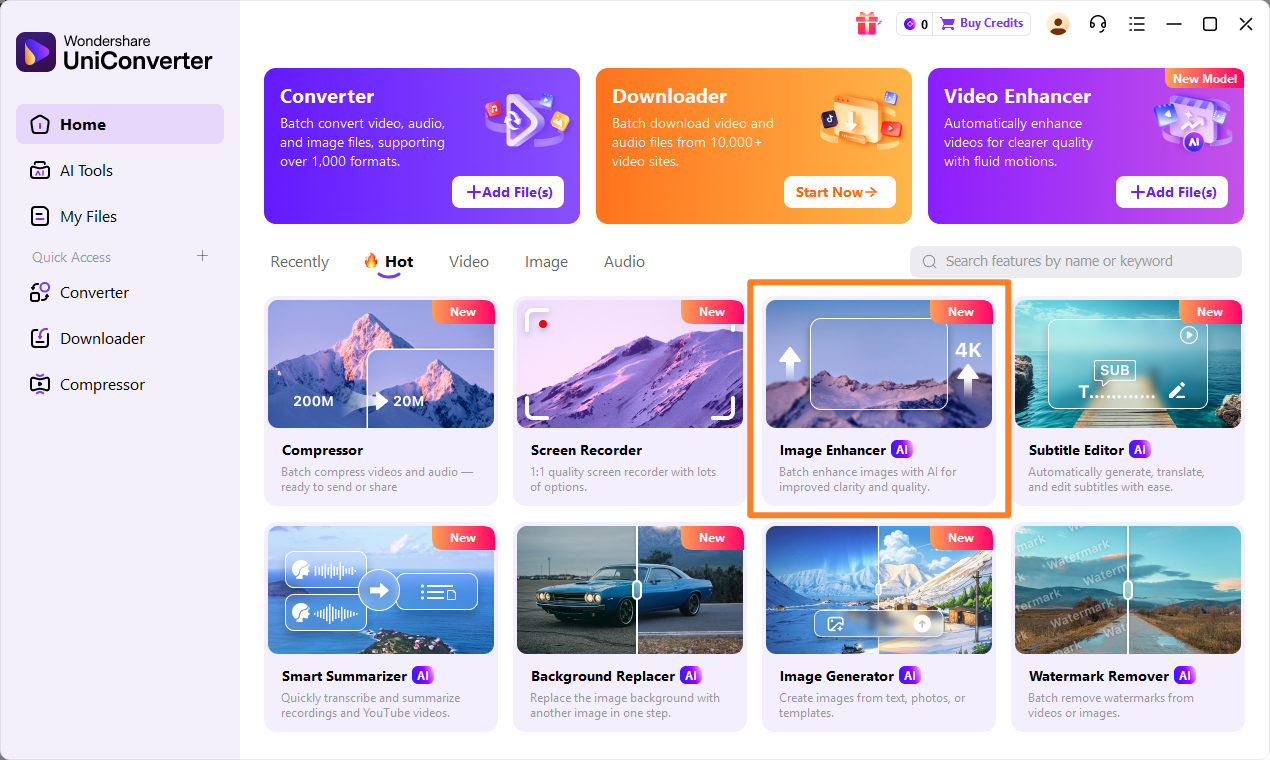
Step 1: Open UniConverter and Choose Image Enhancer
Launch UniConverter on your desktop. On the main interface, navigate to the "Toolbox" section and select the "Image Enhancer" feature.
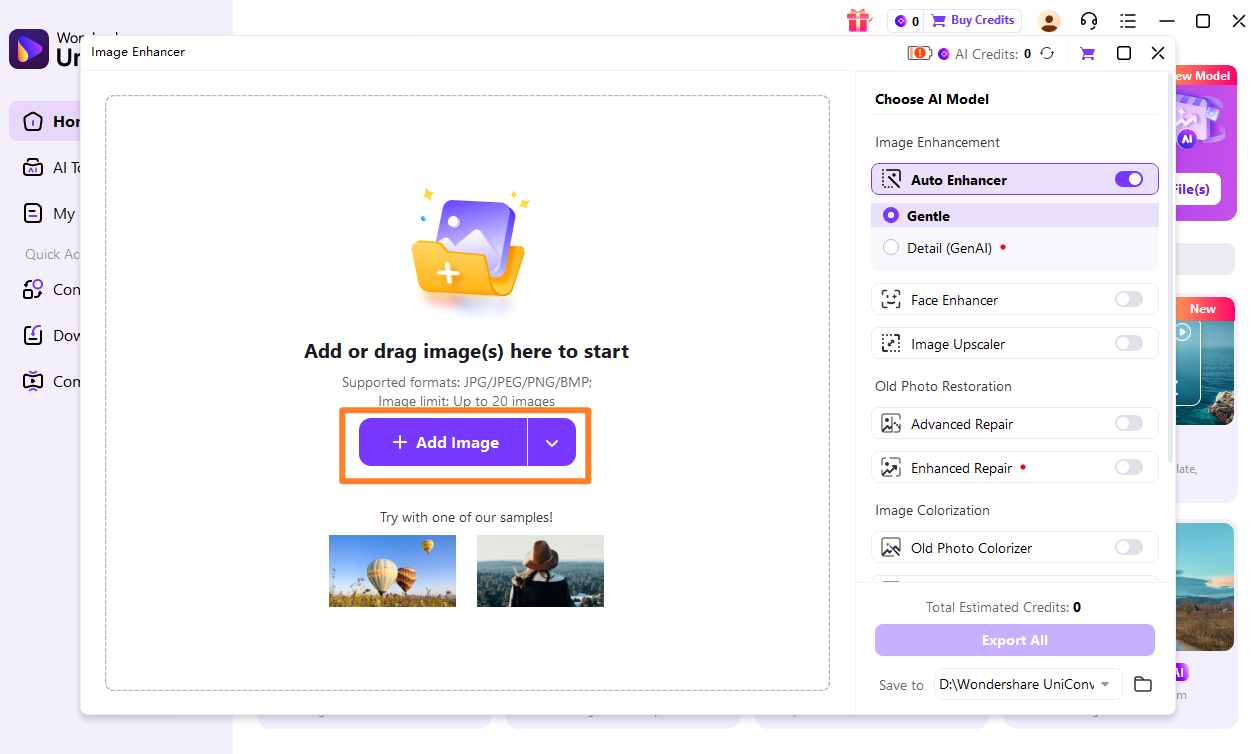
Step 2: Upload the Images
Click on the "Add Files" button or simply drag and drop the images you wish to enhance into the UniConverter window. You can add multiple images for batch processing.
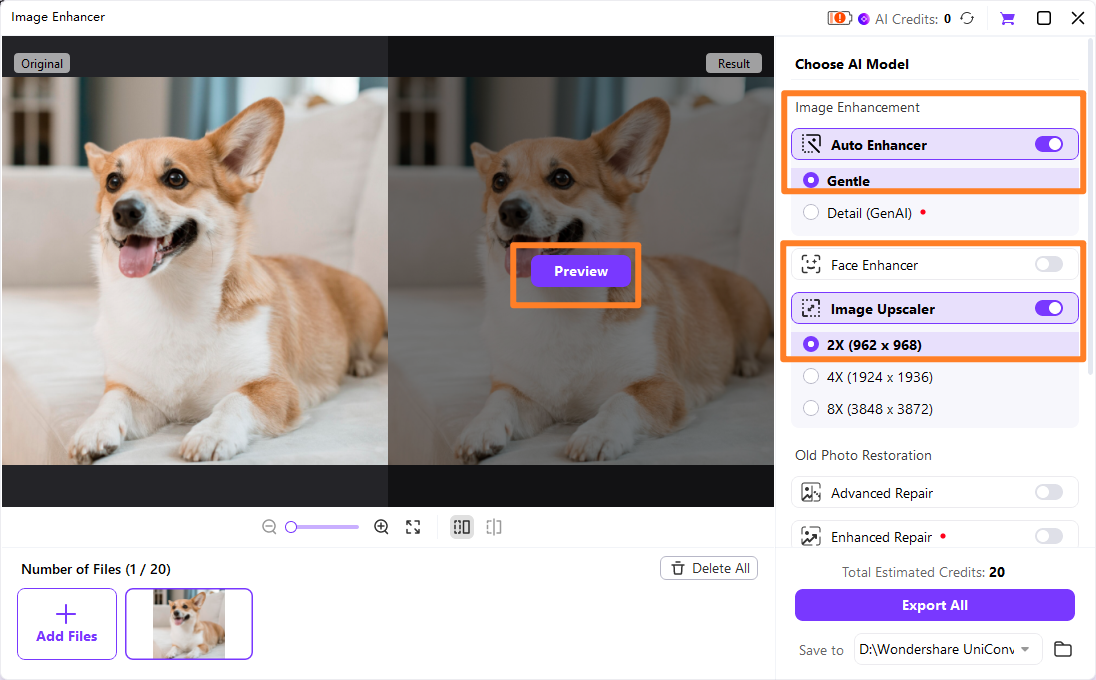
Step 3: Choose Enhancement Model
Once your images are loaded, select the desired AI enhancement model (e.g., General Model, Face Model) and choose your preferred upscale factor (e.g., 2x, 4x). You can also adjust other settings like noise reduction if available.
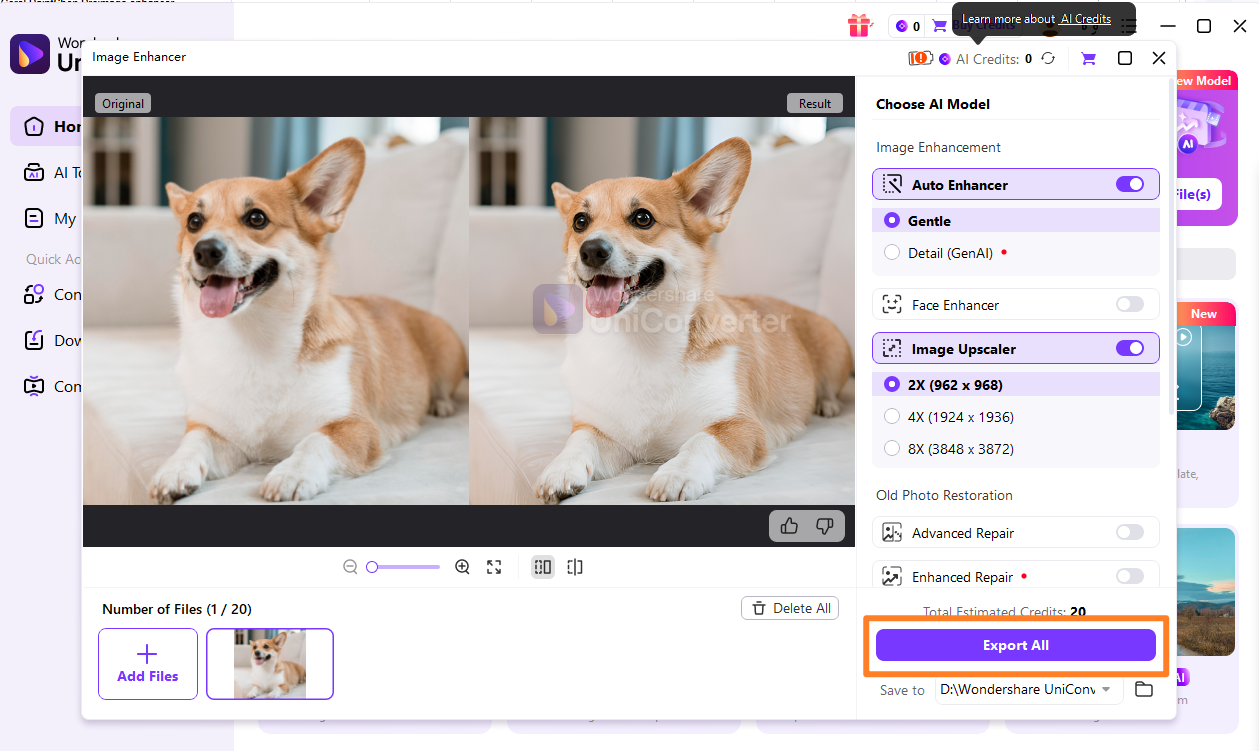
Step 4: Preview and Save the Enhanced Images
After applying the settings, you can preview the enhanced images to ensure they meet your expectations. Once satisfied, click the "Start" button to begin the enhancement process and save your high-quality images to your chosen output folder.

ImgLarger Alternative: UniConverter for Image Enhancement
Part 7: Conclusion
After spending considerable time with ImgLarger image enhancer review, I can confidently say it's a valuable tool for specific needs. For casual users and social media enthusiasts who need quick, decent-quality upscaling for their photos, ImgLarger offers an intuitive and effective solution. Its AI-powered upscaling generally produces good results, especially for moderate enlargements. However, for professionals requiring advanced editing capabilities beyond simple upscaling, or for those dealing with highly sensitive images, its limitations in features and its cloud-based nature might be a drawback. Budget-conscious users should also carefully consider the subscription model, as the best features are locked behind a paywall. While it excels at its core function, it's not a one-stop shop for all image enhancement needs, and alternatives like UniConverter offer a more comprehensive and secure experience for those seeking broader functionality and offline processing.
Part 8: FAQs
-
1. Is ImgLarger free to use?
ImgLarger offers a free tier with limited usage and resolution. To access higher upscale factors, batch processing, and more features, you need to subscribe to one of their paid plans.
-
2. What image formats does ImgLarger support?
ImgLarger typically supports common image formats such as JPG, PNG, and WebP. For specific or less common formats, it's best to check their official website or try uploading a sample.
-
3. How does ImgLarger compare to Photoshop for image enhancement?
ImgLarger is primarily an AI-powered upscaler, focusing on increasing resolution and detail. Photoshop is a comprehensive image editing suite with a vast array of tools for retouching, color correction, compositing, and more. ImgLarger is simpler and faster for just upscaling, while Photoshop offers far more control and advanced editing capabilities.
-
4. Can ImgLarger improve blurry photos?
While ImgLarger can enhance details and sharpness during upscaling, it's not specifically designed as a de-blurring tool. If a photo is severely out of focus or motion-blurred, ImgLarger might improve it slightly, but it won't magically make a completely blurry image sharp.
-
5. Is my data safe when using ImgLarger?
As a cloud-based service, ImgLarger processes your images on its servers. They generally state that they prioritize user privacy and data security. However, for highly sensitive or confidential images, it's always advisable to review their privacy policy or consider offline desktop alternatives to maintain full control over your data.
