
- Hybrid Converters: Offer versatile conversion, basic editing, and compression for everyday video tasks.
- Dedicated Enhancers: Specialize in advanced quality improvement, restoration, and detail recovery using sophisticated algorithms.
- UniConverter: A powerful hybrid solution balancing robust conversion with effective enhancement features for comprehensive video needs.
- User Choice: Select a hybrid for general tasks or a dedicated enhancer for professional-grade quality improvement.
- Risks: Be aware of data privacy, hidden costs, over-promised quality, and software bloat with some tools.
In this article
- Part 1: What is Hybrid Video Converter?
- Part 2: Hybrid Video Converter: Core Features, Pros, and Cons
- Part 3: Hybrid Video Converter: Ideal Users and Usage Scenarios
- Part 4: Hybrid Video Converter vs. Video Enhancer: A Head-to-Head Comparison
- Part 5: Risks and Pitfalls to Consider
- Part 6: How to Use UniConverter for Efficient Video Enhancement
- Part 7: Conclusion
- Part 8: FAQs
In the dynamic world of digital media, the need for efficient video processing tools has never been greater. From casual users looking to convert a video for playback on a different device to professional content creators aiming to enhance the quality of their footage, the market offers a plethora of solutions. This Hybrid Video Converter Video Enhancer review delves into two primary categories of these tools: Hybrid Video Converters and dedicated Video Enhancers. We will explore their core functionalities, pinpoint their ideal use cases, and conduct a head-to-head comparison to help you navigate the complexities of video processing. This article aims to provide a comprehensive, scenario-based analysis, enabling you to make informed decisions about which tool best suits your specific needs.
Part 1: What is Hybrid Video Converter?
A Hybrid Video Converter is a versatile software designed to perform multiple video-related tasks within a single application. Its primary function is to convert video files from one format to another, ensuring compatibility across various devices and platforms. Beyond simple conversion, these tools often integrate basic editing capabilities, such as trimming, cropping, merging, and adding effects, along with compression features to reduce file sizes. They cater to a broad audience, from everyday users needing quick format changes to content creators streamlining their workflow. This review will address the core question of whether a single hybrid tool can effectively meet both conversion and enhancement needs, or if specialized tools are still necessary for optimal results.
The Evolving Landscape of Video Processing Tools
* Increasing demand for cross-platform compatibility: Users frequently need to convert videos for playback on smartphones, tablets, smart TVs, and gaming consoles, each with its own preferred formats.
* Rise of user-generated content: With more individuals creating and sharing videos, there's a growing need for accessible tools that can process and improve footage without requiring extensive technical knowledge.
* Balancing quality and file size: Content creators and casual users alike seek solutions that can maintain or enhance video quality while keeping file sizes manageable for storage and sharing.
* Integration of AI-powered enhancement: The emergence of AI has introduced new possibilities for automatically improving video quality, pushing the boundaries of what was previously achievable.
Part 2: Hybrid Video Converter: Core Features, Pros, and Cons
Hybrid Video Converters are characterized by their multi-functional approach to video processing. They typically offer extensive format support, allowing users to convert videos between a wide array of popular and niche formats (e.g., MP4, MOV, AVI, MKV, WMV, WebM). Beyond conversion, these tools often include basic editing features like cutting, rotating, and applying simple filters. Many also incorporate compression algorithms to reduce file sizes without significant perceived quality loss, and some even offer rudimentary video enhancement options such as resolution upscaling or brightness/contrast adjustments. Their strength lies in providing a convenient, all-in-one solution for common video tasks.
Pros:
* Comprehensive Format Support and Conversion Speed: Handles a vast array of video and audio formats, often leveraging hardware acceleration for fast conversions.
* Integrated Basic Editing and Compression Capabilities: Allows for quick trims, crops, merges, and file size reduction within the same interface.
* User-Friendly Interface for Quick Tasks: Generally designed for ease of use, making it accessible for beginners and efficient for routine operations.
Cons:
* Limited Advanced Enhancement Features: Lacks the sophisticated algorithms for deep detail recovery, noise reduction, or color correction found in dedicated enhancers.
* Potential for Quality Loss in Complex Conversions: While generally good, complex conversions or aggressive compression settings can sometimes lead to noticeable quality degradation.
Part 3: Hybrid Video Converter: Ideal Users and Usage Scenarios
Hybrid Video Converters are best suited for users who require a versatile tool for everyday video tasks without delving into professional-grade editing or enhancement. This includes general consumers, students, and budding content creators who need to manage their video files efficiently. Their ease of use and integrated features make them a go-to for quick adjustments and format compatibility.
Best Use Case: Batch Processing and Format Standardization for Content Creators
A content creator frequently uploads videos to various platforms (YouTube, Instagram, TikTok) each with specific format and resolution requirements. A Hybrid Video Converter allows them to quickly convert a batch of raw footage into the optimal formats for each platform, apply basic edits like intro/outro trimming, and compress files for faster uploads, all within a single application. This streamlines their workflow significantly, saving time and effort.
Limited Use Case: Professional-Grade Video Restoration and Artistic Enhancement
A professional archivist needs to restore old, grainy footage from VHS tapes, requiring advanced noise reduction, deinterlacing, and color grading to bring the video to modern standards. Similarly, a filmmaker wants to artistically enhance a scene with specific cinematic color palettes and intricate visual effects. In these scenarios, a Hybrid Video Converter's basic enhancement features would be insufficient, necessitating a dedicated video enhancer or professional video editing software.
Part 4: Hybrid Video Converter vs. Video Enhancer: A Head-to-Head Comparison
The distinction between a Hybrid Video Converter and a dedicated Video Enhancer lies primarily in their specialization. While converters offer breadth, enhancers provide depth in quality improvement.
| Feature/Aspect | Hybrid Video Converter | Video Enhancer | UniConverter | Topaz Video AI |
| Primary Function | Format Conversion, Basic Editing | Quality Improvement, Restoration | Conversion, Editing, Enhancement | AI-powered Upscaling, Stabilization |
| Key Strength | Versatility, Speed | Advanced Algorithms, Detail Recovery | All-in-one, GPU Acceleration | AI-driven, High-quality Upscaling |
| Target User | General Users, Content Creators | Filmmakers, Archivists, Enthusiasts | All Users, Professionals | Professionals, Enthusiasts |
| Output Quality (Enhancement) | Moderate | High | High (with enhancement tools) | Very High |
| Ease of Use | High | Moderate to High (depending on complexity) | High | Moderate |
| Processing Speed | Fast (for conversion) | Variable (intensive for enhancement) | Very Fast (GPU accelerated) | Moderate (intensive for AI) |
| Customer Support | Standard | Specialized | Excellent | Good |
| Security | Generally good | Generally good | Excellent | Good |
Key Differentiators: Versatility vs. Specialization in Video Processing
Hybrid Video Converters excel in versatility, offering a convenient package for general video tasks. UniConverter stands out as a strong hybrid, combining robust conversion with a capable suite of enhancement tools, making it a comprehensive solution for many users. Dedicated Video Enhancers like Topaz Video AI, however, offer unparalleled specialization in quality improvement, leveraging advanced AI algorithms for superior upscaling, noise reduction, and detail recovery. For users prioritizing speed and a broad range of functions, a Hybrid Video Converter or UniConverter is ideal. For those whose primary goal is the utmost video quality restoration and enhancement, a specialized Video Enhancer like Topaz Video AI is the clear choice.
Part 5: Risks and Pitfalls to Consider
When venturing into the world of video processing tools, especially those that promise comprehensive solutions or free services, it's crucial to be aware of potential risks and pitfalls. These can range from software performance issues to more serious concerns regarding data privacy and hidden costs.
Data Privacy and Security Concerns with Online Tools
Many "free" or low-cost online video converters and enhancers require users to upload their video files to a third-party server. This raises significant data privacy concerns, as there's no guarantee how these files are stored, processed, or if they are accessed by unauthorized personnel. For sensitive or personal content, this risk is substantial.
Hidden Costs and Subscription Traps
Some seemingly free software often employs a "freemium" model, where basic features are free but essential functionalities (e.g., higher resolution output, faster processing, removal of watermarks) are locked behind a paywall or subscription. Users might invest time in processing a video only to find out they need to pay to export the enhanced version, leading to frustration and unexpected expenses.
Over-Promised Quality Enhancement vs. Actual Results
Marketing for video enhancers often showcases dramatic improvements, but actual results can vary significantly. Many tools, especially those offering "one-click enhancement," may only apply generic filters or slight adjustments that don't genuinely improve underlying video quality. Users might end up with a processed video that looks different but not necessarily better, or even worse due to artifacts introduced by aggressive processing.
Software Bloat and System Performance Impact
Installing multiple video processing tools or a single, overly comprehensive hybrid tool can lead to software bloat, consuming significant system resources. This can slow down your computer, cause conflicts with other applications, and even lead to system instability, especially on older or less powerful machines.
Watermarks and Export Restrictions in Free Versions
A common tactic for free versions of video converters and enhancers is to impose watermarks on the output video or restrict export options (e.g., limiting resolution, duration, or file format). This forces users to upgrade to a paid version to get a clean, usable file, which can be a significant inconvenience for those on a budget.
Part 6: How to Use UniConverter for Efficient Video Enhancement
When other tools fall short in batch processing, stable enhancement, or delivering noticeable improvements, UniConverter emerges as a robust alternative. It bypasses common issues like intrusive ads, limited format support, and unstable processing often found in less reliable software. UniConverter leverages GPU acceleration for rapid, lossless processing, ensuring high-quality batch enhancement without compromise. Its comprehensive suite of tools makes it an all-in-one solution for converting, editing, and enhancing videos, providing a seamless and efficient experience for all your video needs.
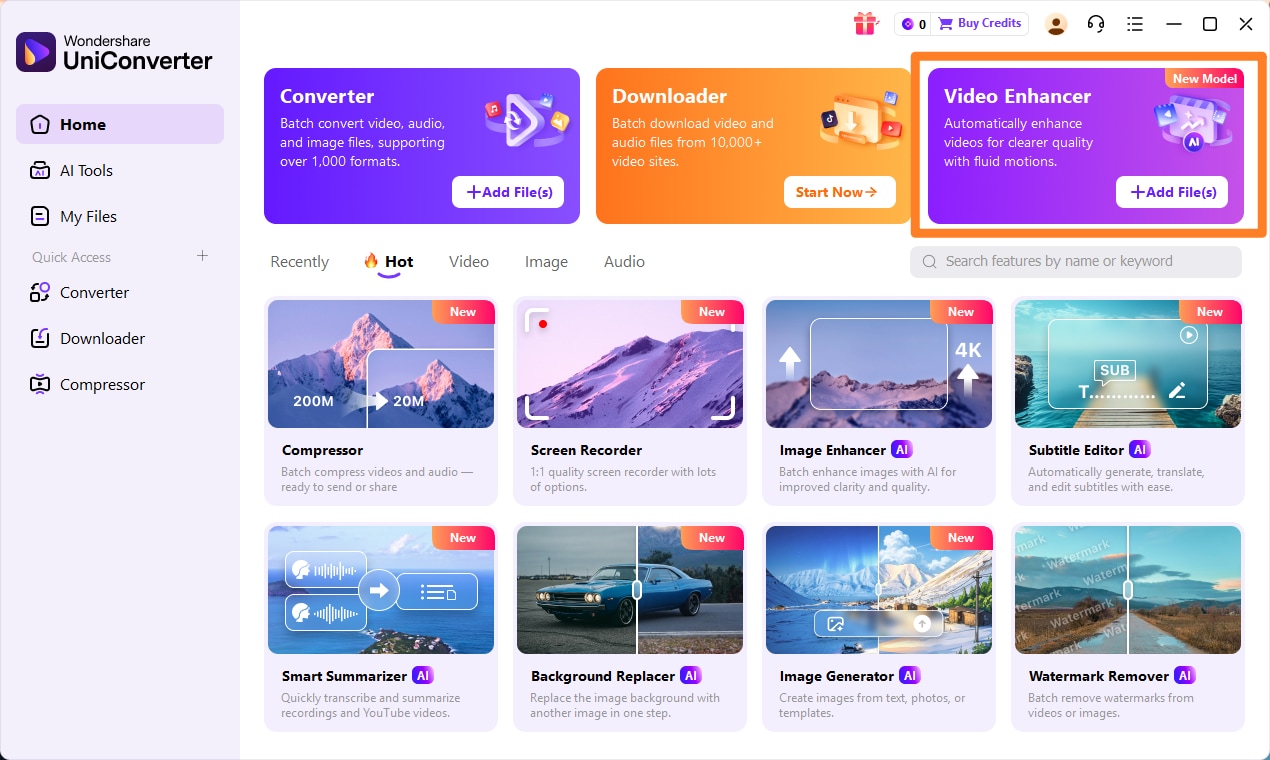
Step 1: Open UniConverter and Choose Video Enhancer
Launch UniConverter on your computer. From the main interface, navigate to the "Toolbox" section and select the "Video Enhancer" option.
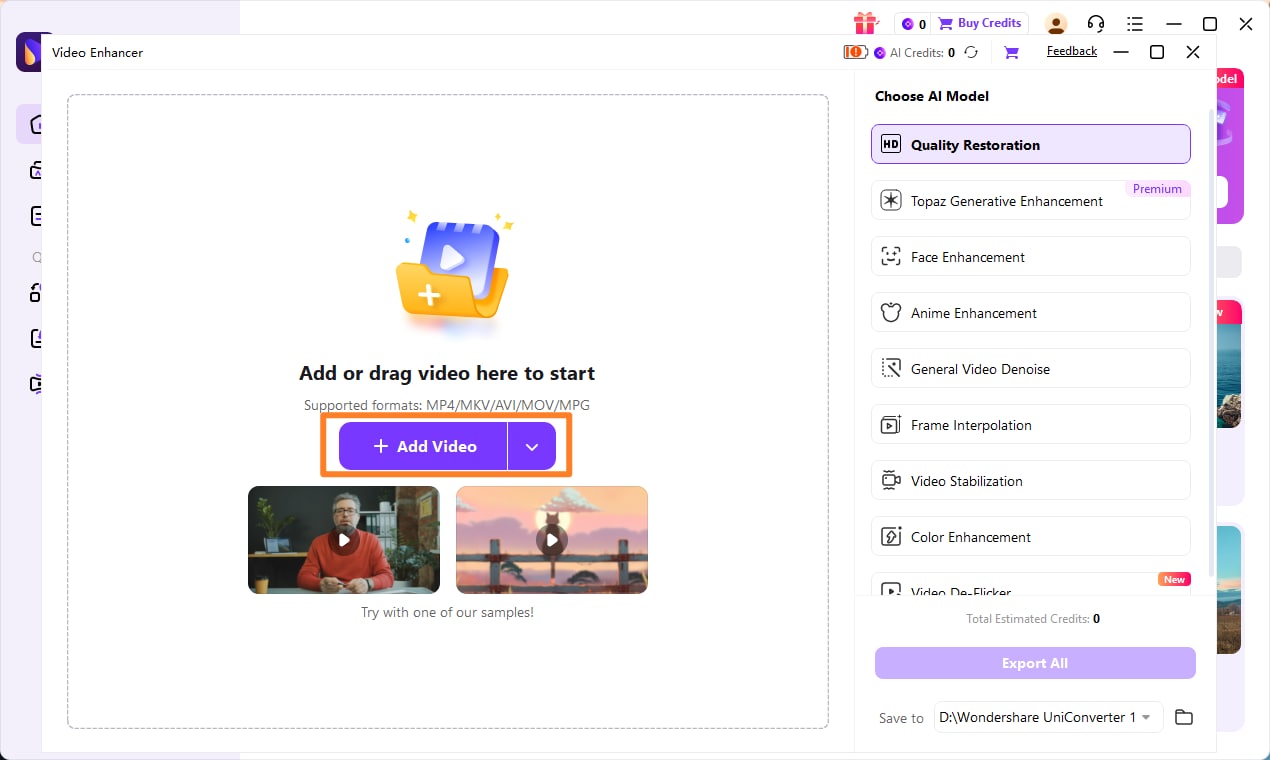
Step 2: Upload the Videos
Click on the "Add Files" button or drag and drop the video files you wish to enhance into the UniConverter interface. You can add multiple videos for batch processing.
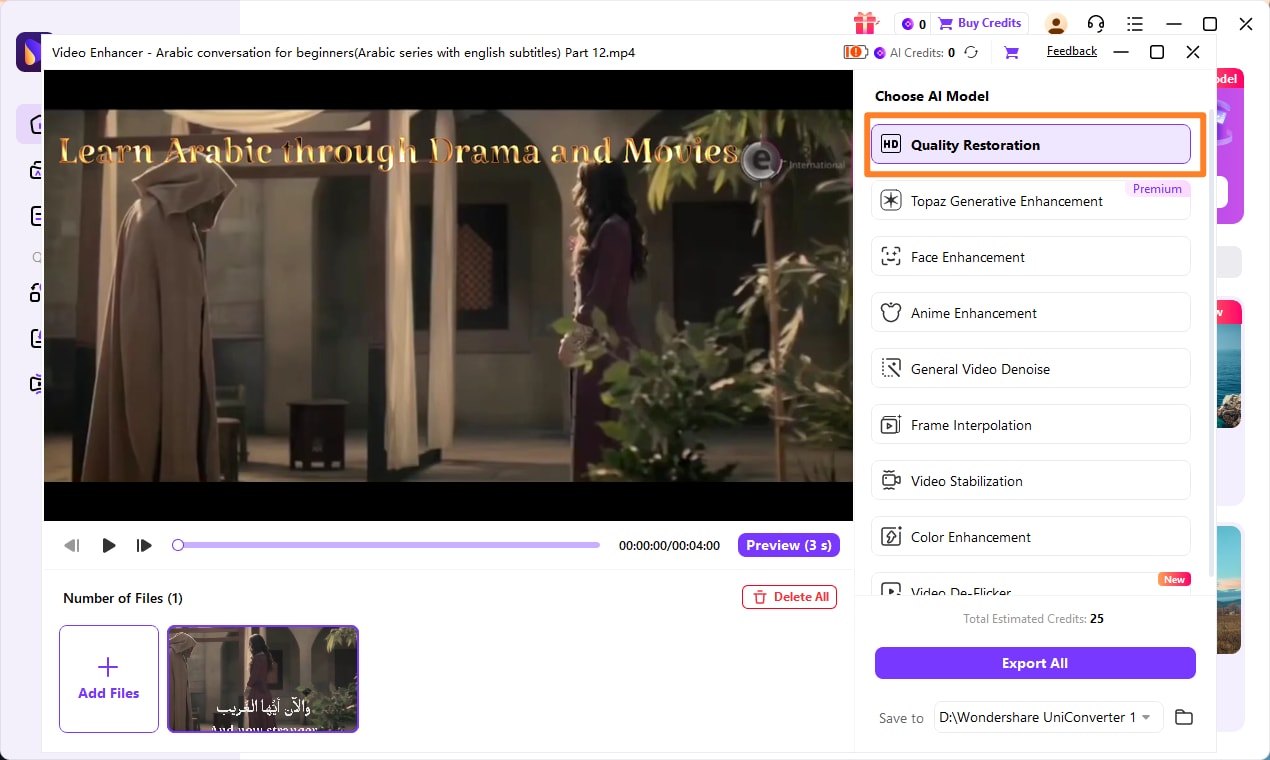
Step 3: Choose Enhancement Model
Select the desired enhancement model based on your video's needs. Options typically include AI Upscale, AI Denoise, AI Deinterlace, and AI Color Correction. Adjust parameters as needed. For instance, you might want to remove background without losing quality or utilize a high-definition background remover for specific projects. You can also explore options for a video background changer to further customize your visuals.
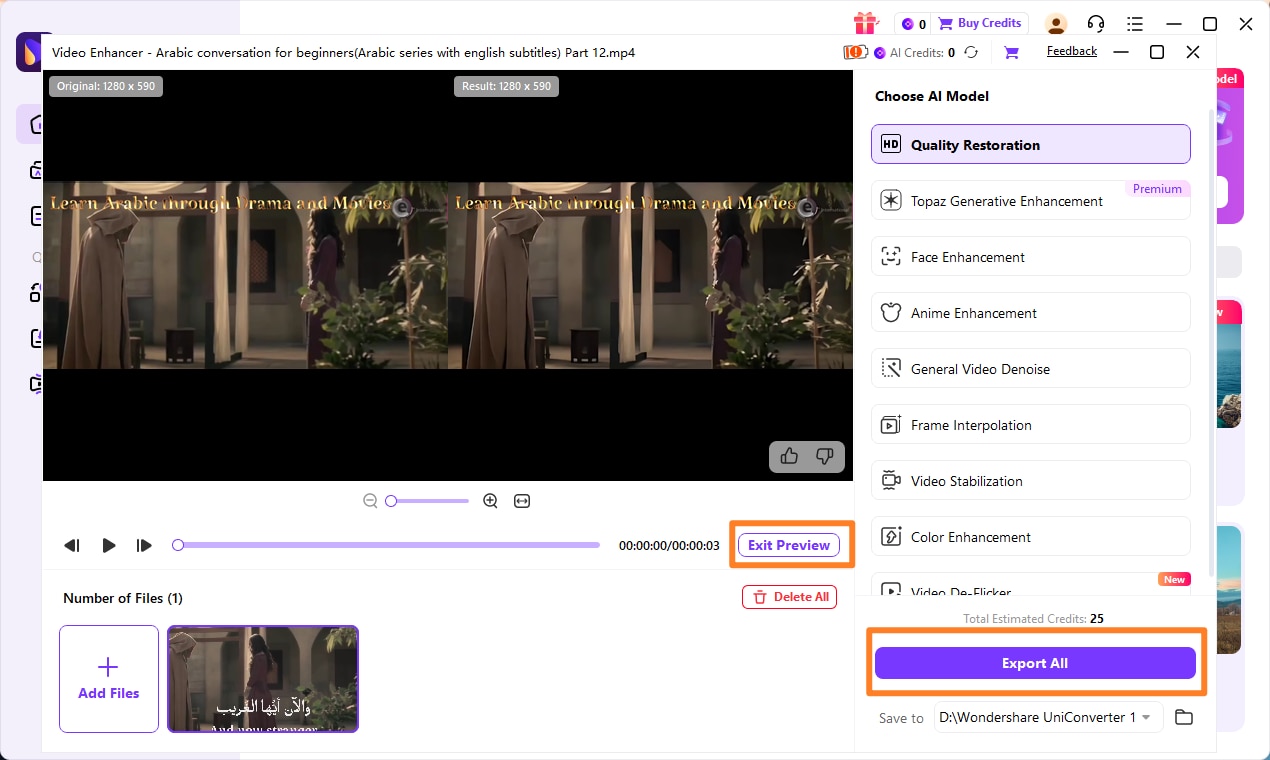
Step 4: Preview and Save the Enhanced Video
Preview the enhanced video to ensure satisfaction. Once ready, choose your output format and destination folder, then click "Export" to save your high-quality video. If you're looking to change video background or use a background replacer, UniConverter provides the tools to achieve professional results.

Enhance Your Videos with a Hybrid Converter
Part 7: Conclusion
In conclusion, the choice between a Hybrid Video Converter and a dedicated Video Enhancer hinges on your specific needs and priorities. For everyday users and content creators who require versatile tools for format conversion, basic editing, and minor quality adjustments, a Hybrid Video Converter Video Enhancer review shows that these tools offer unparalleled convenience and efficiency. They are excellent for managing diverse video files and streamlining workflows without delving into complex professional software. However, for those with advanced enhancement needs, such as restoring old footage, achieving cinematic quality, or performing intricate detail recovery, a dedicated Video Enhancer is indispensable. These specialized tools leverage sophisticated algorithms to deliver superior results that hybrid solutions cannot match. Ultimately, for users seeking a comprehensive, all-in-one solution that expertly balances robust conversion capabilities with effective enhancement features, UniConverter stands out as a highly recommended alternative, bridging the gap between versatility and specialization.
Part 8: FAQs
-
1. Can a Hybrid Video Converter truly enhance video quality?
Hybrid video converters offer basic enhancement features like resolution upscaling and noise reduction, but dedicated video enhancers provide more advanced algorithms for significant quality improvement.
-
2. What are the main differences between a video converter and a video enhancer?
A video converter primarily changes video formats and performs basic edits, while a video enhancer focuses on improving video quality, clarity, and detail.
-
3. Is UniConverter a good alternative to both Hybrid Video Converters and Video Enhancers?
Yes, UniConverter combines robust conversion capabilities with a suite of enhancement tools, making it a versatile all-in-one solution for many users.
-
4. Are there any free Hybrid Video Converters or Video Enhancers that are reliable?
While some free options exist, they often come with limitations such as watermarks, slower processing, or fewer features. Paid software generally offers better performance and support.
-
5. How important is hardware acceleration for video conversion and enhancement?
Hardware acceleration significantly speeds up video processing tasks, especially for high-resolution videos, making it a crucial feature for efficiency.
