
- Hotpot AI Overview: Hotpot AI enhances photos with AI, simplifying quality improvement for everyday users.
- Core Features: Offers intuitive interface, effective old photo restoration, and batch processing for efficiency.
- Limitations: Lacks advanced customization, can over-smooth details, and requires internet for cloud processing.
- Target Users: Ideal for casual users, small businesses, and digitizing old family photos, not professional photographers.
- Comparison: Hotpot is user-friendly; UniConverter balances ease with higher quality; Photoshop offers professional control.
- Risks: Consider data privacy, potential for unnatural results, and dependence on internet connection.
- UniConverter Advantage: Provides stable, high-quality, ad-free enhancement with GPU acceleration and lossless output.
- Decision Factor: Choose based on your needs: Hotpot for simplicity, UniConverter for balanced quality/ease, or Photoshop for pro control.
In this article
- Part 1: What is Hotpot AI Photo Enhancer?
- Part 2: Hotpot AI Photo Enhancer: Core Features, Pros & Cons
- Part 3: Target Users & Usage Scenarios
- Part 4: Hotpot AI Photo Enhancer and Alternatives Comparison
- Part 5: Risks and Pitfalls to Consider
- Part 6: How to Use UniConverter for Comprehensive Image Enhancement
- Part 7: Conclusion
- Part 8: FAQs
Hotpot AI Photo Enhancer vs. Competitors: A Scenario-Based Review
When I first stumbled upon Hotpot AI Photo Enhancer review, I was intrigued by the promise of effortlessly transforming old, faded photos into vibrant memories. As someone who's always looking for ways to breathe new life into digital archives, the idea of an AI-powered tool doing the heavy lifting was appealing. This review aims to cut through the marketing hype and provide a practical, scenario-based comparison of Hotpot AI Photo Enhancer against its key competitors. My goal is to help you understand where Hotpot truly shines and where you might need to look elsewhere, ensuring you make an informed decision for your specific image enhancement needs.
Part 1: What is Hotpot AI Photo Enhancer?
Hotpot AI Photo Enhancer positions itself as an accessible, AI-driven solution for anyone looking to improve the quality of their digital images. It leverages artificial intelligence to automatically correct common image flaws, such as blur, low resolution, and poor color balance, without requiring extensive technical knowledge. My initial impression was that it’s designed for simplicity, making advanced enhancement techniques available to the everyday user. This review will delve into its capabilities, comparing it with other prominent tools in the market to determine its real-world value.
The Rise of AI Image Enhancement Tools
The proliferation of AI image enhancement tools addresses several key user pain points:
* Democratizing Professional Editing: They make complex photo editing accessible to non-professionals.
* Time-Saving Automation: AI automates tedious manual adjustments, saving users significant time.
* Reviving Old Memories: These tools offer a powerful way to restore and preserve historical or sentimental photographs.
* Improving Casual Photography: They help elevate the quality of everyday snapshots taken with smartphones or older cameras.
Part 2: Hotpot AI Photo Enhancer: Core Features, Pros & Cons
Hotpot AI Photo Enhancer offers a suite of core capabilities designed to simplify image enhancement. From my experience, its primary focus is on one-click solutions for common photo problems. It excels at upscaling low-resolution images, deblurring, and colorizing black and white photos. The interface is remarkably clean, which I found refreshing compared to more cluttered professional software. It feels like it was built for speed and ease of use, rather than offering a deep dive into every possible setting.
Pros:
* Intuitive Interface for Quick Enhancements: I found it incredibly easy to navigate and achieve decent results almost instantly.
* Effective for Restoring Old Photos: It did a surprisingly good job on some faded family photos, bringing out details I thought were lost.
* Batch Processing Capability for Efficiency: For larger collections, being able to process multiple images at once was a huge time-saver.
Cons:
* Limited Advanced Customization Options: If you're looking for granular control over specific parameters, you'll quickly hit a wall.
* Occasional Over-Smoothing of Details: Sometimes, the AI can be a bit too aggressive, leading to a somewhat artificial, "plastic" look, especially on faces.
Part 3: Target Users & Usage Scenarios
Hotpot AI Photo Enhancer really shines for specific types of users and scenarios. From my perspective, it's perfect for anyone who needs quick, decent results without wanting to learn complex software. If you're not a professional photographer but still want your photos to look their best, this tool is definitely worth considering. It's a great fit for casual users, small business owners needing to quickly touch up product photos, or anyone digitizing old family albums.
Best Use Case: Revitalizing Old Family Photos for Digital Archiving
I found Hotpot to be an absolute lifesaver for digitizing and enhancing my grandparents' old photo albums. The ability to quickly upscale, deblur, and even colorize faded black and white prints made the process enjoyable and yielded impressive results for sharing with family. It’s about preserving memories, and for that, Hotpot does an excellent job without demanding hours of my time.
Limited Use Case: Professional Photography Post-Processing for High-Resolution Prints
However, if you're a professional photographer needing pixel-perfect control for high-resolution prints or client work, Hotpot will likely fall short. The lack of advanced controls means you can't fine-tune specific areas or correct complex lighting issues with the precision required for professional output. For critical work, I still rely on more robust, feature-rich software.
Part 4: Hotpot AI Photo Enhancer and Alternatives Comparison
When I put Hotpot AI Photo Enhancer side-by-side with other tools, its strengths and weaknesses become clearer. While it offers a great balance of ease of use and decent output, it’s not a one-size-fits-all solution.
| Feature/Scenario | Hotpot AI Photo Enhancer | Topaz Labs Gigapixel AI | Adobe Photoshop (with AI) | UniConverter |
| Ease of Use | High | Medium | Low (Steep Learning Curve) | High |
| Output Quality | Good | Excellent | Excellent (with expertise) | Excellent |
| Price Model | Freemium | One-time Purchase | Subscription | Subscription/One-time |
| Batch Processing | Yes | Yes | Yes | Yes |
| Advanced Controls | Limited | Extensive | Extensive | Moderate |
| Privacy Concerns | Moderate | Low | Low | Low |
From my experience, Hotpot is fantastic for quick, general enhancements where simplicity is key. Topaz Labs Gigapixel AI, on the other hand, is a powerhouse for upscaling and detail recovery, offering incredible quality but at a higher price point and with a slightly steeper learning curve. Adobe Photoshop, with its integrated AI features, provides the ultimate control and quality for professionals, but its complexity and subscription model can be daunting. UniConverter strikes a great balance, offering excellent quality and ease of use, making it a strong contender for those who want more than Hotpot but less complexity than Photoshop.
Part 5: Risks and Pitfalls to Consider
Using any online or AI-powered image enhancement tool, including Hotpot, comes with its own set of considerations. I've learned these the hard way, so let me share some insights to help you avoid potential headaches.
Data Privacy and Image Security Concerns
When I upload my photos to an online service, I always pause to think about where my images are going and who might access them. With Hotpot, like many cloud-based services, there's an inherent trust placed in the provider's security measures. For highly sensitive or personal images, I'd be cautious.
Potential for Over-Processing and Unnatural Results
I've definitely seen instances where Hotpot's AI, in its eagerness to enhance, over-processes images. This can lead to an artificial, smoothed-out look, especially on skin textures or fine details, making the photo look less natural than the original. It's a common pitfall of automated enhancement.
Dependence on Internet Connection for Cloud-Based Processing
Since Hotpot is primarily a cloud-based tool, a stable internet connection is non-negotiable. I've found myself frustrated when trying to enhance photos on the go with spotty Wi-Fi, as the processing simply won't happen. This can be a significant limitation if you often work offline.
Subscription Costs vs. One-Time Purchase Value
While Hotpot offers a freemium model, unlocking its full potential often requires a subscription. I always weigh whether the ongoing cost justifies my usage, especially when compared to one-time purchase software like some desktop alternatives that offer similar or superior capabilities without recurring fees.
Inconsistent Performance Across Different Image Types
My experience has shown that Hotpot performs differently depending on the image. It might do wonders for a faded landscape but struggle with a complex portrait, or vice-versa. The AI isn't always consistent in its interpretation and enhancement across a diverse range of photographic subjects and conditions.
Part 6: How to Use UniConverter for Comprehensive Image Enhancement
Sometimes, when other tools fall short with batch processing, unstable enhancements, or weak results, I turn to UniConverter. It's been a reliable alternative that avoids many of the pitfalls I've encountered elsewhere, offering a stable, high-quality, and ad-free experience with GPU acceleration for speed and lossless output. It truly feels like an all-in-one solution for my image enhancement needs.
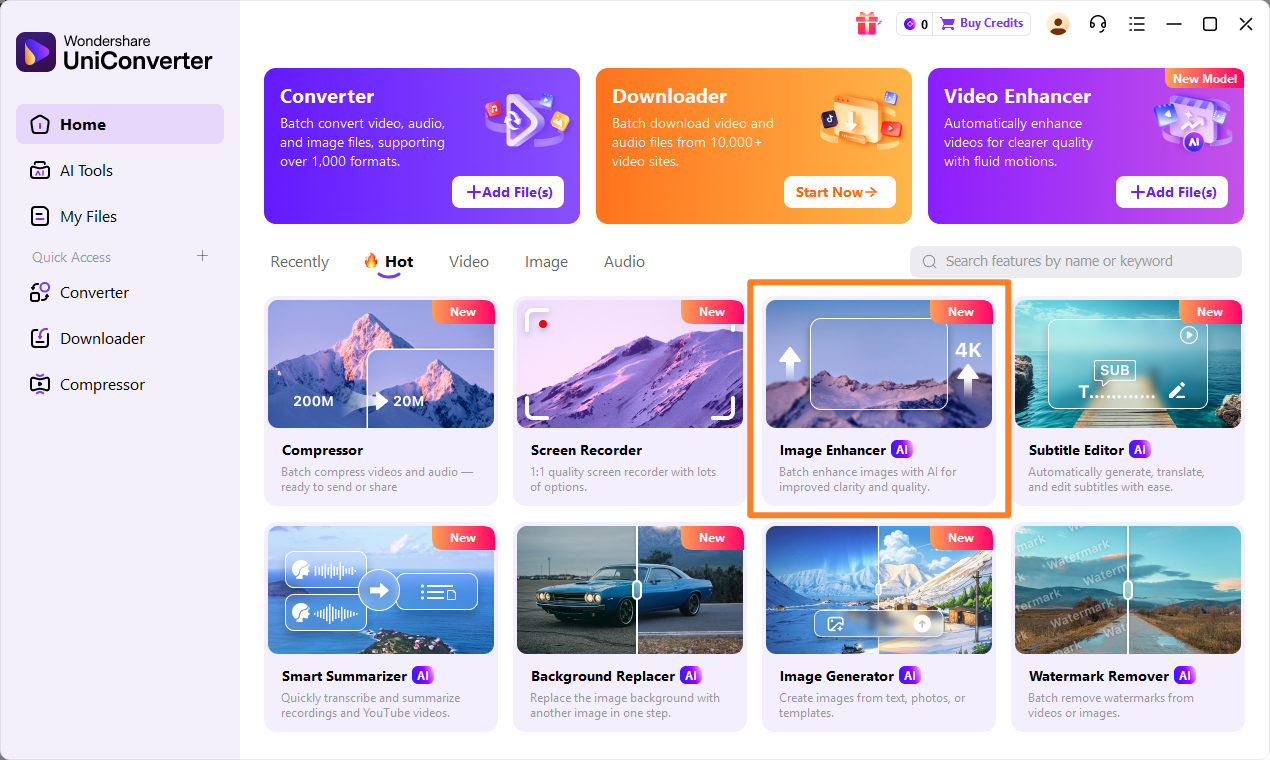
Open UniConverter and Choose Image Enhancer
First, I launch UniConverter and navigate to the "Toolbox" section. There, I find and select the "Image Enhancer" option. It's usually pretty prominent and easy to spot.
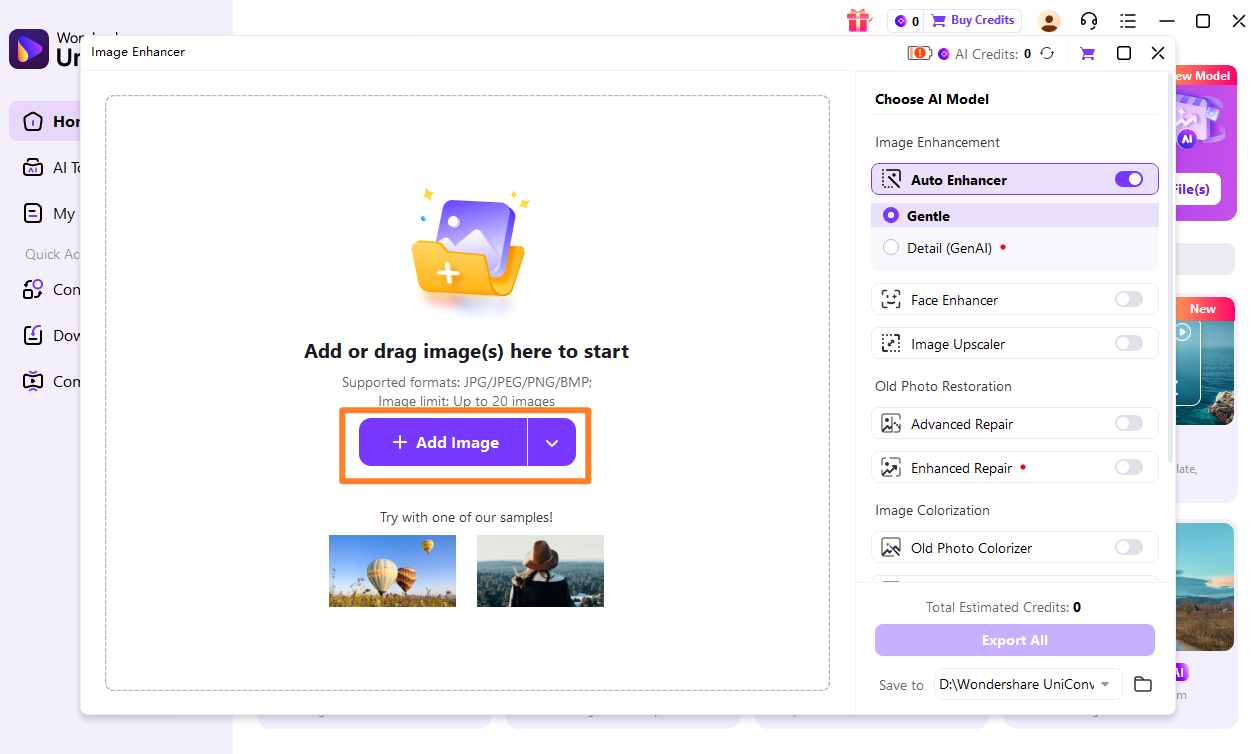
Upload the Images
Next, I simply drag and drop the images I want to enhance into the UniConverter interface. Alternatively, I can click the "Add Files" button to browse and select them from my computer. This is where the batch processing really shines.
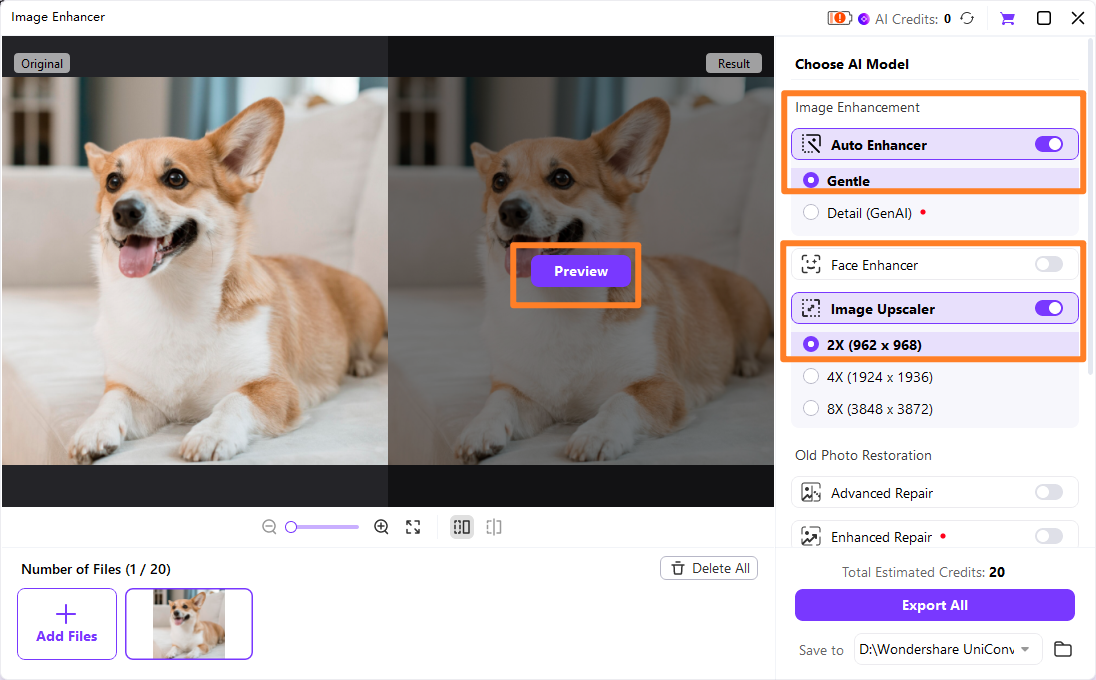
Choose Enhancement Model
Once my images are loaded, I choose the enhancement model that best suits my needs. UniConverter offers various options, allowing me to focus on aspects like deblurring, color correction, or upscaling. I can preview the changes to ensure I'm getting the desired effect.
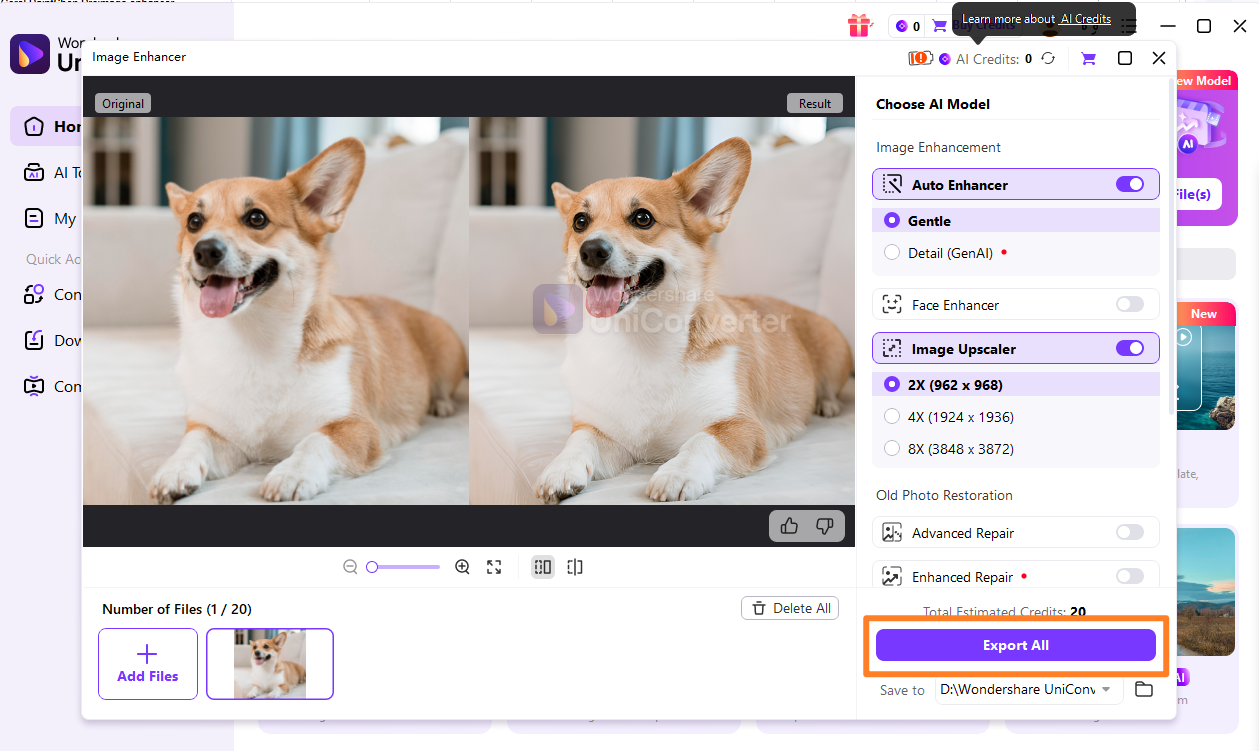
Preview and Save the Enhanced Images
After applying the enhancements, I always take a moment to preview the results. If everything looks good, I click the "Start" or "Enhance" button, and UniConverter quickly processes and saves my improved images to my chosen output folder.

Seeking a Powerful Hotpot AI Alternative?
Part 7: Conclusion
In conclusion, my Hotpot AI Photo Enhancer review reveals it as a fantastic tool for casual users and those looking for quick, hassle-free image enhancements, especially for revitalizing old family photos. Its intuitive interface and batch processing capabilities make it a strong contender for digitizing personal archives. However, for professional photographers or users requiring extensive control and pixel-perfect results, Hotpot's limitations in advanced customization and occasional over-smoothing become apparent. While it offers a convenient freemium model, users should be mindful of data privacy and the potential for inconsistent performance. For those seeking a more robust, versatile, and comprehensive solution that balances ease of use with high-quality output and advanced features like GPU acceleration and lossless processing, UniConverter presents itself as an excellent alternative, bridging the gap between simple online tools and complex professional software. Ultimately, the best choice depends on your specific needs, skill level, and the criticality of your image enhancement tasks.
Part 8: FAQs
-
1. What is the best free AI image enhancer?
For free options, tools like Hotpot AI Photo Enhancer offer a freemium model that allows basic enhancements. However, for truly "best" results, free tools often come with limitations in quality, features, or output resolution.
-
2. Can AI image enhancers improve blurry photos significantly?
Yes, AI image enhancers can significantly improve blurry photos by intelligently reconstructing details and sharpening edges. The degree of improvement depends on the original blur level and the sophistication of the AI algorithm used.
-
3. Are online image enhancers safe for my private photos?
The safety of online image enhancers for private photos varies. Always check the service's privacy policy to understand how your data is handled. For highly sensitive images, desktop software offers more control over data privacy as your images don't leave your computer.
-
4. How do AI image enhancers work?
AI image enhancers work by using machine learning models trained on vast datasets of images. They learn to identify common image flaws (like noise, blur, or low resolution) and apply intelligent corrections, often by generating new pixel data to fill in missing information or improve existing details.
-
5. What's the difference between image enhancement and image upscaling?
Image enhancement refers to improving various aspects of an image's quality, such as color, contrast, sharpness, and noise reduction. Image upscaling, specifically, is the process of increasing an image's resolution (making it larger) while trying to maintain or improve its quality, often by adding new pixels using AI interpolation.
