
- HandBrake's Core: Primarily a video transcoder and compressor, not a dedicated enhancer; excels at format conversion and file size reduction.
- Enhancement Limitations: Lacks advanced AI-driven features for true video quality improvement like intelligent upscaling or noise reduction.
- Ideal User: Best for tech-savvy users needing batch transcoding and basic compression; not for one-click magical enhancement.
- Comparison Value: Free and open-source with extensive codec support, but paid alternatives like UniConverter offer superior enhancement and ease of use.
- Risks: Aggressive compression can lead to quality loss; unofficial builds pose security risks. Not suitable for complex enhancements.
- UniConverter Advantage: Offers comprehensive, user-friendly, GPU-accelerated video enhancement for superior quality and efficiency.
In this article
- Part 1: What is HandBrake?
- Part 2: HandBrake Core Features, Pros, and Cons
- Part 3: HandBrake's Ideal Users and Use Cases
- Part 4: HandBrake and Alternatives Comparison
- Part 5: Risks and Pitfalls When Using HandBrake for Video Enhancement
- Part 6: How to Use UniConverter for Comprehensive Video Enhancement
- Part 7: Conclusion
- Part 8: FAQs
HandBrake Video Enhancer: A Comprehensive Review and Comparison
Welcome to our in-depth HandBrake Video Enhancer review, where we delve into the capabilities of this popular open-source tool within the evolving landscape of video processing. This comprehensive analysis aims to provide a clear understanding of HandBrake's strengths and limitations, particularly concerning video enhancement. We will compare it against dedicated enhancement solutions, offering a multi-dimensional perspective to help users make informed decisions. Whether you're a seasoned video editor or a casual user, this HandBrake Video Enhancer review will equip you with the insights needed to navigate your video processing needs effectively.
Part 1: What is HandBrake?
HandBrake is a renowned open-source video transcoder, originally developed in 2003, primarily designed for converting video from nearly any format to a selection of modern, widely supported codecs. Its core function revolves around changing video formats, compressing file sizes, and preparing videos for various devices or platforms. While incredibly versatile for these tasks, its positioning as a "video enhancer" is often misunderstood. This review aims to clarify HandBrake's true capabilities and limitations in the context of video enhancement, addressing the common user expectation of improving video quality beyond simple compression or format conversion.
The Evolving Landscape of Video Processing Tools
The demand for high-quality video content has surged, leading to a proliferation of tools.
* User Expectations: Users increasingly seek solutions that not only convert but genuinely improve video aesthetics.
* Technological Advancements: AI and machine learning are revolutionizing video enhancement, offering capabilities beyond traditional methods.
* Diverse Needs: From professional filmmakers to social media creators, the need for efficient and effective video processing is universal.
Part 2: HandBrake Core Features, Pros, and Cons
HandBrake, while not a dedicated video enhancer, offers robust functionalities primarily focused on video transcoding and compression. Its core capabilities include converting videos to various modern codecs, adjusting resolution, frame rate, and bit rate, and adding subtitles. It also provides basic filtering options like deinterlacing and denoise, which can subtly improve perceived quality but are not true enhancement features.
Pros:
* Open-source and Free Accessibility: HandBrake is completely free, making it an accessible option for users on a budget.
* Extensive Codec and Format Support: It supports a vast array of input and output formats, ensuring compatibility with almost any video file.
* Powerful Customization for Advanced Users: Offers granular control over encoding settings, appealing to users who understand video codecs and parameters.
Cons:
* Steep Learning Curve for Beginners: The extensive options and technical terminology can be overwhelming for new users.
* Limited Dedicated Video Enhancement Features: Lacks advanced AI-driven tools for upscaling, intelligent noise reduction, or color correction.
Part 3: HandBrake's Ideal Users and Use Cases
HandBrake is best suited for users who possess a foundational understanding of video encoding principles and require a powerful, free tool for specific tasks. It's not designed for novices seeking one-click magical enhancement.
Best Use Case: Batch Transcoding and Basic Compression for Tech-Savvy Users
HandBrake excels in scenarios where users need to convert large batches of video files to a different format or compress them for storage or sharing. For instance, a user with a vast library of old DVDs or Blu-rays might use HandBrake to rip and convert them into more modern, space-efficient formats like H.264 or H.265, while maintaining a good balance of quality and file size. Its advanced settings allow for precise control over the output, making it ideal for those who know exactly what they want in terms of bitrate, resolution, and audio tracks.
Limitations: When Advanced Video Enhancement is Required
HandBrake falls short when the primary goal is to genuinely improve the visual quality of a video beyond what basic deinterlacing or denoising can offer. If a video is blurry, low-resolution, or suffers from severe artifacts, HandBrake cannot "enhance" it to a significantly higher quality. For example, trying to upscale a 480p video to 1080p with HandBrake will likely result in a larger file size with the same inherent low quality, possibly even introducing more artifacts due to interpolation, rather than a truly sharper or more detailed image. Users needing AI-powered upscaling, intelligent noise reduction, or sophisticated color grading will find HandBrake inadequate.
Part 4: HandBrake and Alternatives Comparison
| Feature/Tool | HandBrake | UniConverter | Topaz Video AI | DaVinci Resolve |
| Video Enhancement | Limited | Advanced | Excellent | Advanced |
| Ease of Use | Moderate | High | Moderate | Low |
| Price | Free | Paid | Paid | Free (Basic) / Paid (Studio) |
| Output Quality | Good | Excellent | Superior | Excellent |
| Batch Processing | Yes | Yes | Yes | Yes |
| Processing Speed | CPU-dependent | GPU-accelerated | GPU-accelerated | GPU-accelerated |
| Customer Support | Community | Dedicated | Dedicated | Community/Dedicated |
| Security | Official builds safe | High | High | High |
HandBrake stands out for its free, open-source nature and extensive codec support, making it a go-to for basic transcoding. However, for true video enhancement, UniConverter offers a more user-friendly experience with advanced features and GPU acceleration, providing excellent output quality for a paid product. Topaz Video AI is a specialized tool that delivers superior enhancement, particularly for upscaling and noise reduction, though it comes at a premium price and has a steeper learning curve. DaVinci Resolve, while offering powerful enhancement and color grading, is a professional-grade editor with a significant learning curve, even its free version.
Part 5: Risks and Pitfalls When Using HandBrake for Video Enhancement
While HandBrake is a powerful tool for video transcoding, attempting to use it for genuine video enhancement can lead to several risks and pitfalls, especially if users have unrealistic expectations about its capabilities.
Potential Loss of Original Video Quality
One of the most significant risks is the irreversible loss of original video quality. When you transcode a video with HandBrake, especially with aggressive compression settings, you are re-encoding the video. This process is inherently lossy, meaning some data is discarded. If your goal is to "enhance" a video by simply changing its resolution or bitrate without proper understanding, you might end up with a larger file that looks worse than the original, or a smaller file with noticeable artifacts and reduced detail. HandBrake lacks the intelligent algorithms to truly "fill in" missing information or reconstruct details.
Lack of AI-Powered Enhancement Features
HandBrake does not incorporate AI or machine learning algorithms for video enhancement. This means it cannot perform tasks like intelligent upscaling (where AI generates new pixels to create a sharper image), advanced noise reduction that distinguishes between noise and detail, or sophisticated artifact removal. Relying on HandBrake for these tasks will lead to disappointment, as its filters are basic and can sometimes degrade the image if not used carefully.
Time-Consuming for Complex Enhancements
Even if you try to achieve some form of "enhancement" through HandBrake's limited filters (like deinterlacing or denoise), the process can be incredibly time-consuming, especially for high-resolution or long videos. HandBrake is primarily CPU-bound for many operations, and without GPU acceleration for complex filters, processing times can be extensive, making it inefficient for users with large enhancement projects.
Security Concerns with Unofficial Builds
While the official HandBrake release is safe and trustworthy, a significant risk arises from downloading unofficial builds or versions from untrusted sources. These unofficial versions can be bundled with malware, adware, or other malicious software, compromising your system's security and privacy. Users seeking "enhanced" versions or features not present in the official release are particularly vulnerable to these traps. Always download HandBrake from its official website to mitigate this risk.
Part 6: How to Use UniConverter for Comprehensive Video Enhancement
When other tools fall short in batch processing, stability, or the quality of video enhancement, UniConverter emerges as a robust solution. It offers a comprehensive suite of tools for video processing, including powerful enhancement features that avoid the pitfalls of basic transcoders. UniConverter provides a seamless experience for upscaling, noise reduction, and other quality improvements, ensuring stable, lossless, and GPU-accelerated batch enhancements without ads or watermarks, supporting a wide array of formats. For those looking to enhance video quality, this tool is ideal. It can also help you to fix pixelated videos and unblur a video.
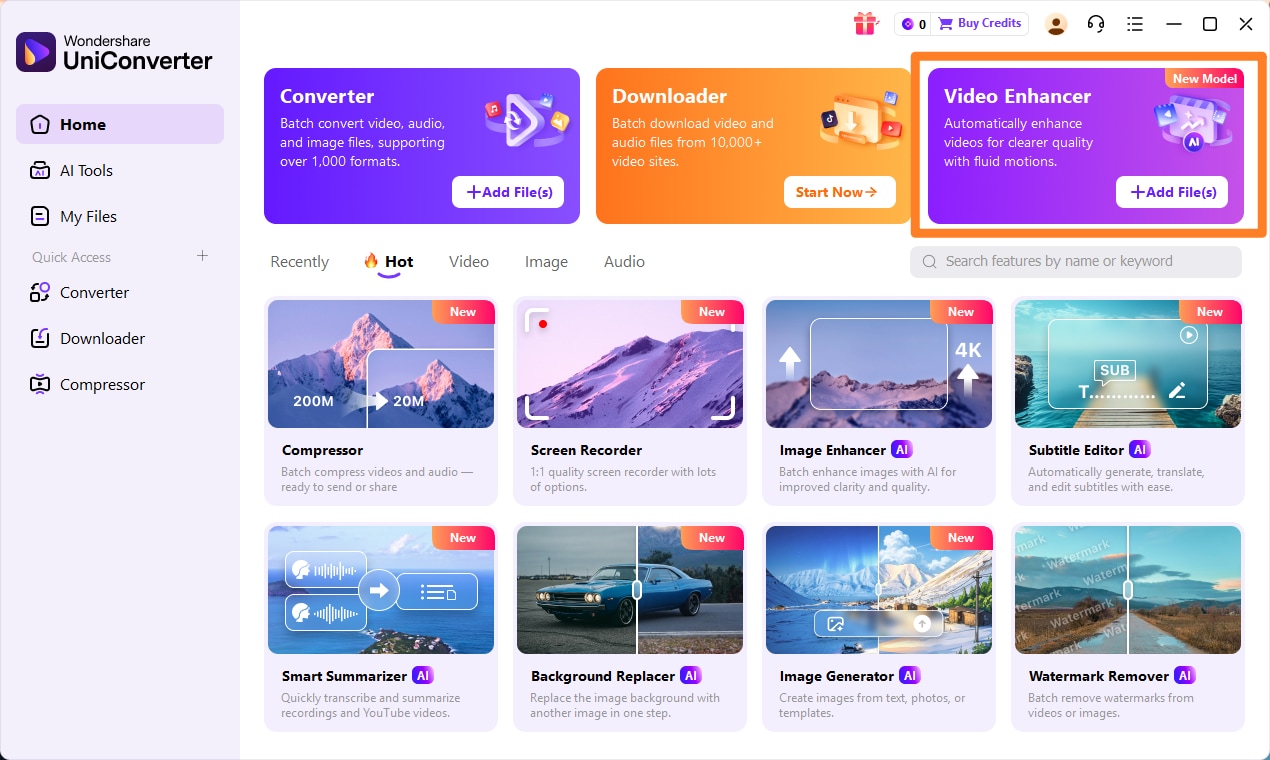
Step 1: Open UniConverter and Choose Video Enhancer
Launch UniConverter and navigate to the "Toolbox" section. Select the "Video Enhancer" feature to begin.
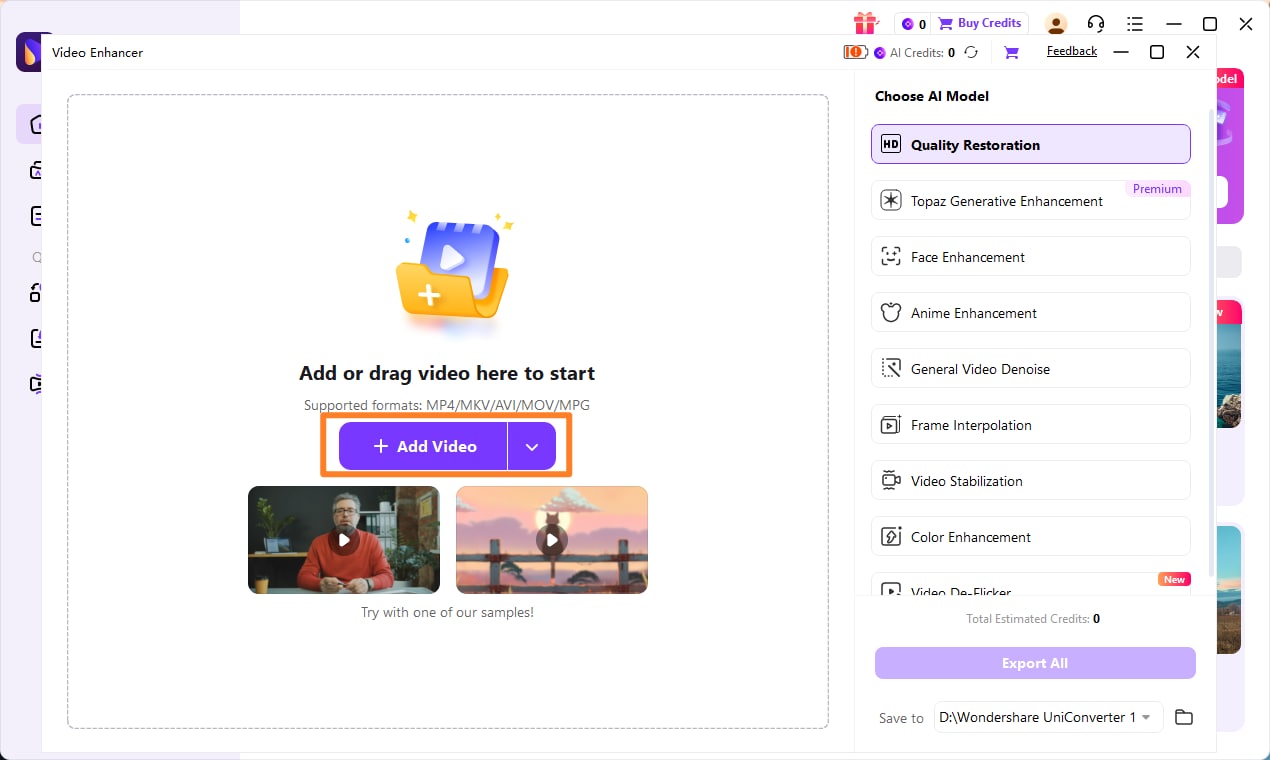
Step 2: Upload the Videos
Click on the "Add Files" button or drag and drop your video files into the UniConverter interface. You can add multiple videos for batch processing.
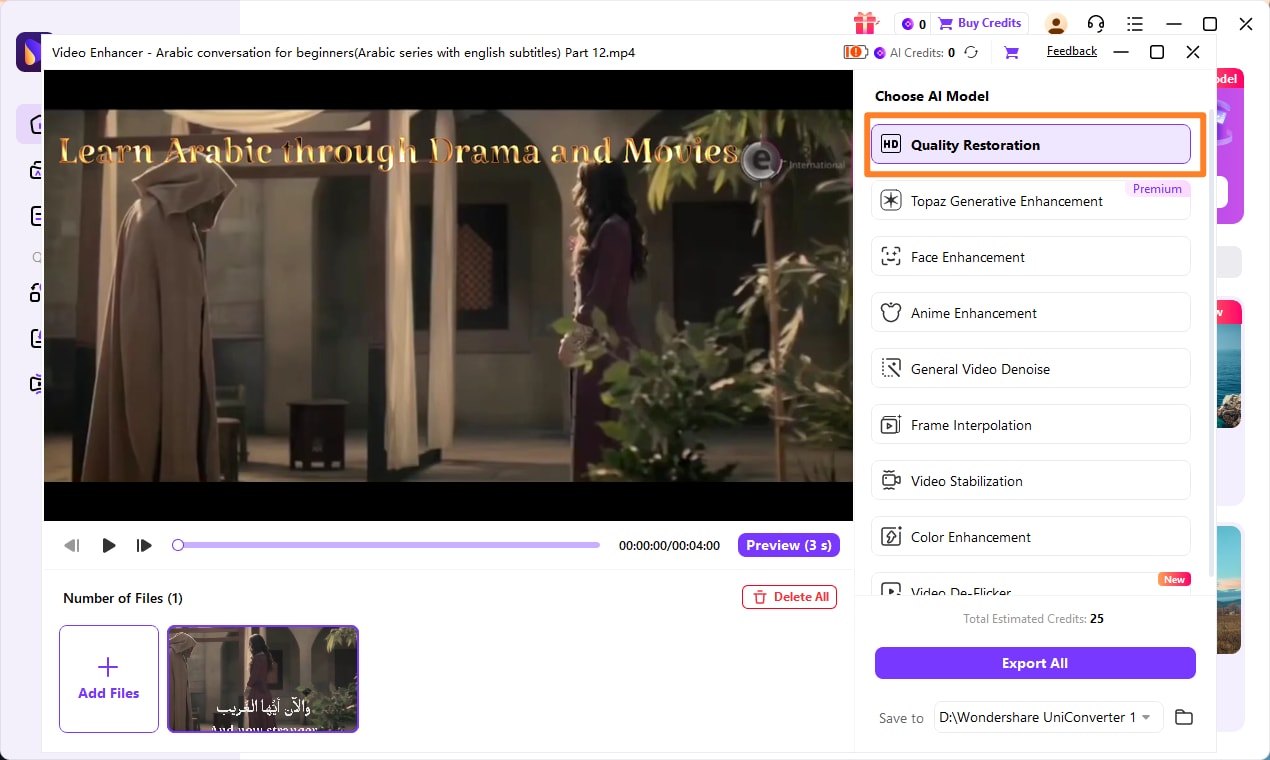
Step 3: Choose Enhancement Model
Select the desired enhancement model from the available options, such as AI Upscale, Noise Reduction, or Brightness Adjustment. Configure specific settings as needed.
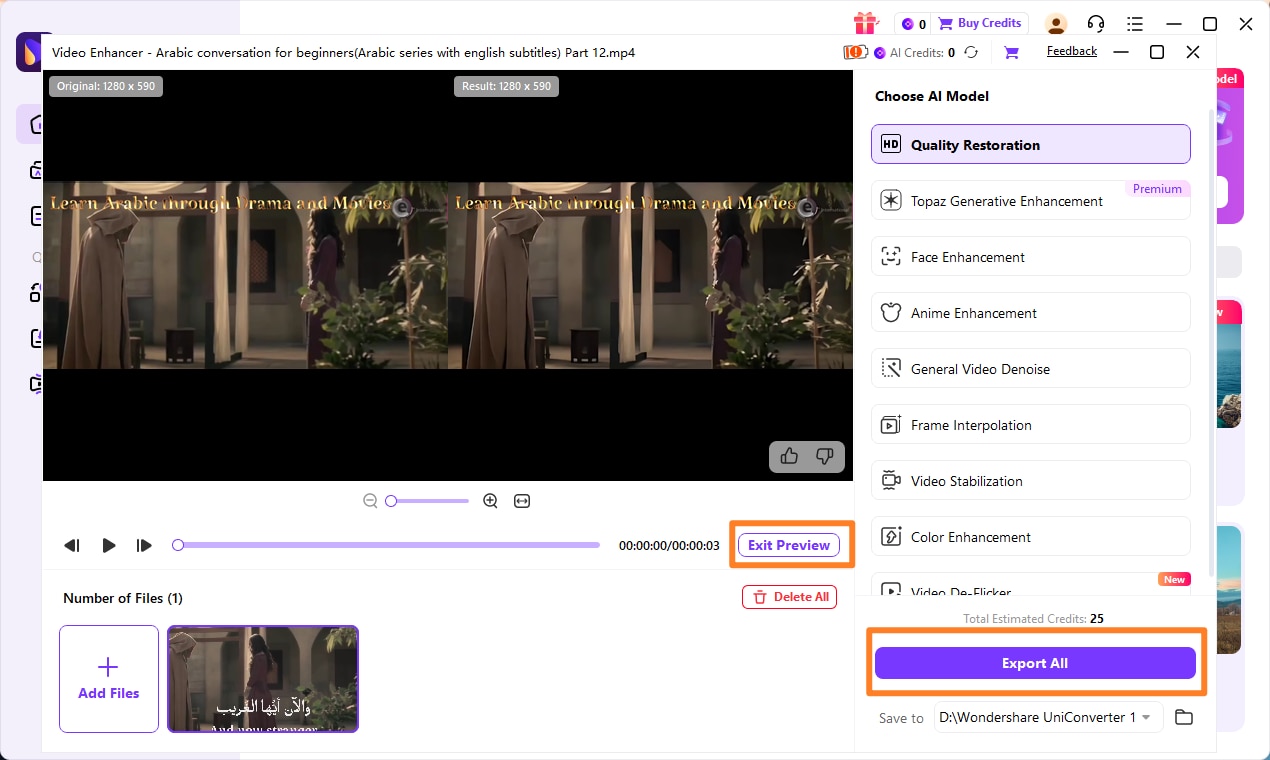
Step 4: Preview and Save the Enhanced Video
Preview the enhanced video to ensure satisfaction. Once ready, choose your output format and destination, then click "Export" to save your high-quality video.

Seeking a HandBrake Video Enhancer Alternative?
Part 7: Conclusion
In conclusion, our HandBrake Video Enhancer review reveals that while HandBrake is an exceptional open-source tool for video transcoding and compression, its capabilities for genuine video enhancement are limited. It excels in converting formats, reducing file sizes, and offering granular control for tech-savvy users. However, for tasks requiring advanced AI-driven upscaling, intelligent noise reduction, or sophisticated artifact removal, HandBrake falls short. Budget-conscious users with basic compression needs will find HandBrake invaluable. For professional-grade video enhancement, dedicated paid solutions like Topaz Video AI or the comprehensive features of UniConverter are far superior, offering true quality improvements and ease of use. Users prioritizing a balance of advanced features, ease of use, and efficient processing should consider UniConverter as a versatile alternative.
Part 8: FAQs
-
1. Can HandBrake truly enhance video quality?
HandBrake primarily focuses on transcoding and compression, not dedicated video enhancement. While it can improve perceived quality through better compression, it lacks advanced enhancement algorithms.
-
2. Is HandBrake safe to download and use?
Yes, the official HandBrake release is safe. However, be cautious of unofficial versions or downloads from untrusted sources.
-
3. What are the best alternatives to HandBrake for video enhancement?
UniConverter, Topaz Video AI, and DaVinci Resolve are popular alternatives offering more robust enhancement features.
-
4. Does HandBrake support 4K video enhancement?
HandBrake can process 4K videos for transcoding and compression, but it doesn't offer specific "enhancement" features for 4K content beyond standard processing.
-
5. How does HandBrake compare to paid video enhancers in terms of output quality?
For basic tasks, HandBrake's output quality is good. However, dedicated paid video enhancers often utilize advanced algorithms that result in superior output quality, especially for upscaling, noise reduction, and deinterlacing.
