
- Fotor's Value: Fotor excels for quick, casual photo enhancements and social media sharing due to its intuitive AI and diverse presets.
- Feature Comparison: Fotor offers ease of use and batch processing, but lacks advanced customization compared to professional tools like Luminar Neo or Topaz Photo AI.
- Ideal Users: Best for casual users and content creators needing fast, decent results; less suitable for professional print photography requiring pixel-perfect control.
- Risks & Pitfalls: Be aware of data privacy concerns, potential for over-processed results, in-app ads in the free version, and subscription fatigue.
- UniConverter Alternative: UniConverter provides a robust, ad-free solution for efficient batch processing and consistent, high-quality image enhancement across various formats.
In this article
- Part 1: What is Fotor Image Enhancer?
- Part 2: Fotor Image Enhancer: Core Features, Pros, and Cons
- Part 3: Fotor Image Enhancer: Ideal Users and Use Cases
- Part 4: Fotor Image Enhancer vs. Competitors
- Part 5: Risks and Pitfalls to Consider
- Part 6: How to Use UniConverter for Efficient Image Enhancement
- Part 7: Final Verdict and Recommendations
- Part 8: FAQs
When I first started dabbling in photography, I quickly realized that a good shot often needs a little extra polish. That's where image enhancers come in, and Fotor Image Enhancer review is something I've spent a fair bit of time on. In a world saturated with digital photos, standing out often means making your images pop. This review aims to cut through the noise, offering a comprehensive look at Fotor's capabilities, comparing it to its rivals, and helping you decide if it's the right tool for your specific needs. We'll dive into its features, pinpoint its strengths and weaknesses, and explore scenarios where it truly shines, or perhaps falls short.
Part 1: What is Fotor Image Enhancer?
Fotor Image Enhancer is an online and desktop tool designed to automatically improve the quality of your photos using artificial intelligence. It's part of the broader Fotor suite, which includes a photo editor, collage maker, and graphic design tools. My initial impression was that it aimed to be a one-stop shop for casual photo editing, making complex adjustments accessible to everyone. The core promise is to transform dull or imperfect images into vibrant, professional-looking shots with minimal effort. This review will delve into how well it delivers on that promise, especially when stacked against other players in the market.
The Rise of AI-Powered Image Enhancement
The demand for quick and effective image enhancement has skyrocketed, driven by:
* Social Media's Visual Dominance: Everyone wants their photos to look great on Instagram, Facebook, and TikTok.
* Accessibility for Non-Professionals: Not everyone has the time or skill to master complex photo editing software like Photoshop.
* Smartphone Photography Proliferation: With billions of photos taken daily on phones, there's a huge need for tools that can instantly improve these images.
* AI's Growing Sophistication: AI algorithms are now powerful enough to intelligently analyze and correct common photo flaws.
Part 2: Fotor Image Enhancer: Core Features, Pros, and Cons
Fotor Image Enhancer positions itself as an easy-to-use solution for common photo woes. From my experience, its core ability lies in its one-click enhancement features, which leverage AI to adjust brightness, contrast, saturation, and sharpness. It also offers specific tools for portrait retouching, such as skin smoothing and blemish removal, which I found surprisingly effective for quick fixes. The platform supports various image formats, making it versatile for different source files. What I really appreciate is the range of stylistic filters available, allowing for creative expression beyond just basic corrections. For those who need to process multiple images, its batch processing capability is a lifesaver, though I found it sometimes struggled with consistency across very diverse photos.
Pros:
* Intuitive User Interface for Quick Edits: I found it incredibly easy to navigate, even for someone new to photo editing.
* Diverse Range of Enhancement Presets for Various Photo Types: The presets are genuinely useful and cater to different moods and scenes.
* Batch Processing Capability for Efficiency: For events or trips, being able to enhance multiple photos at once saves a lot of time.
Cons:
* Limited Advanced Customization Options for Professional Users: As I delved deeper, I realized it lacks the granular control I sometimes need for professional work.
* Subscription Model for Full Feature Access: The free version is good, but the best features are locked behind a paywall, which can add up.
Part 3: Fotor Image Enhancer: Ideal Users and Use Cases
From my perspective, Fotor Image Enhancer is primarily designed for casual users and content creators who need quick, decent-looking results without a steep learning curve. If you're someone who frequently shares photos on social media or needs to quickly touch up family photos, this tool is right up your alley. I've used it countless times to make my Instagram posts pop, and for that, it's fantastic. However, if your work demands pixel-perfect precision or extensive creative control, you might find its capabilities somewhat restrictive. It's about understanding its sweet spot.
Best Use Case: Quick Social Media Photo Touch-ups
For me, this is where Fotor truly shines. When I need to post a photo from my phone or a quick snap from a casual outing, Fotor helps me brighten, sharpen, and color-correct it in seconds. The AI does a decent job of making photos look more appealing without requiring me to spend ages tweaking sliders. It's perfect for those "insta-ready" moments.
Limited Use Case: High-Resolution Print Photography Enhancement
I've tried using Fotor for enhancing images destined for high-resolution prints, and honestly, it often falls short. While it can improve general aesthetics, it sometimes introduces artifacts or over-processes details, which become very noticeable when printed large. For professional print work, I always revert to more powerful, desktop-based software that offers finer control over every aspect of the image.
Part 4: Fotor Image Enhancer vs. Competitors
When I look at Fotor Image Enhancer, I see a strong contender for ease of use, but it's important to compare it with others in the market to truly understand its standing. I've tried several tools, and here's how Fotor stacks up against some popular alternatives like Luminar Neo and Topaz Photo AI.
| Feature/Tool | Fotor Image Enhancer | Luminar Neo | Topaz Photo AI | UniConverter |
| Ease of Use | Excellent | Good | Moderate | Excellent |
| AI Enhancement Quality | Very Good | Excellent | Excellent | Very Good |
| Price | Freemium | Subscription | One-time Purchase | One-time Purchase/Subscription |
| Batch Processing | Yes | Yes | Yes | Yes |
| Advanced Editing | Limited | Extensive | Extensive | Moderate |
| Processing Speed | Fast | Moderate | Moderate | Fast |
| Output Formats | JPG, PNG, WEBP | JPG, PNG, TIFF, PSD | JPG, PNG, TIFF, DNG | JPG, PNG, BMP, TIFF, GIF |
Key Differentiators:
Fotor excels in user-friendliness for casual users, while Luminar Neo and Topaz Photo AI offer more granular control and often superior AI enhancement for specific tasks like noise reduction or upscaling. For me, if I just need a quick fix, Fotor is my go-to. However, if I'm dealing with a noisy low-light shot or need to significantly enlarge an image, Topaz Photo AI usually delivers more natural-looking results. Pricing models also differ significantly; Fotor's freemium model is attractive for trying it out, but Luminar Neo and Topaz Photo AI often represent a better long-term investment for serious photographers due to their advanced capabilities. UniConverter, on the other hand, offers a balanced approach with good quality and excellent batch processing, making it a strong all-rounder for general enhancement needs.
Part 5: Risks and Pitfalls to Consider
Using any online or AI-powered tool, including Fotor Image Enhancer, comes with its own set of considerations that I've learned to be wary of. It's not always a straightforward path to perfect images, and understanding these potential downsides can save you a lot of headaches.
Data Privacy Concerns with Cloud Processing
When I upload my photos to Fotor's cloud servers for enhancement, I always pause and think about data privacy. While Fotor states they protect user data, the fact that my personal images are being transmitted and processed on external servers is a concern for sensitive content. It's a trade-off for convenience, but it's something I actively consider, especially for client work or very personal photos.
Potential for Over-Processed, Unnatural Results
I've definitely experienced moments where Fotor's AI, in its eagerness to "enhance," pushed an image too far. What started as a subtle improvement can quickly turn into an overly saturated, artificially sharpened, or plasticky-looking photo. This is particularly true with skin tones or natural landscapes, where the AI might not always interpret the scene as intended, leading to an unnatural aesthetic that's hard to reverse.
In-App Advertisements in Free Version
The free version of Fotor, while useful for basic tasks, is riddled with advertisements. I found them to be quite intrusive, often popping up during critical editing moments or making the interface feel cluttered. It's a clear push towards the subscription, but it definitely detracts from the user experience if you're trying to get something done quickly without paying.
Subscription Fatigue and Hidden Costs
While the initial free access is appealing, the full potential of Fotor is locked behind a subscription. I've fallen into the trap of subscribing to multiple services, and the monthly or annual fees can quickly add up. What seems like a small cost for Fotor can contribute to "subscription fatigue," especially when similar features might be available in other tools I already pay for or in a one-time purchase software. Always evaluate if the cost truly justifies the features you'll use.
Image Quality Degradation with Excessive Enhancement
I've noticed that repeatedly enhancing an image, or applying very strong enhancements, can sometimes lead to a degradation of the original image quality. This is particularly true if you're starting with a lower-resolution image. The AI tries to "fill in" missing information, but this can result in a loss of fine detail, introduction of digital noise, or a generally softer, less crisp output compared to the original. It's a delicate balance, and sometimes less is more.
Part 6: How to Use UniConverter for Efficient Image Enhancement
When I find that some tools don't quite hit the mark for batch processing, stable enhancement, or just don't deliver the quality I expect, I often turn to UniConverter. It's become my go-to for a more robust and reliable image enhancement experience, especially when I'm dealing with a large number of photos or need consistent, high-quality results without the hassle of ads or inconsistent AI. UniConverter offers a comprehensive solution, ensuring your images are enhanced without loss of quality, supporting a wide array of formats, and leveraging GPU acceleration for speed. For those looking to enhance image resolution or generally improve photo quality, this tool provides a powerful alternative to consider. It's truly an all-in-one toolkit that handles image enhancement with precision and efficiency, making it a powerful alternative to consider.
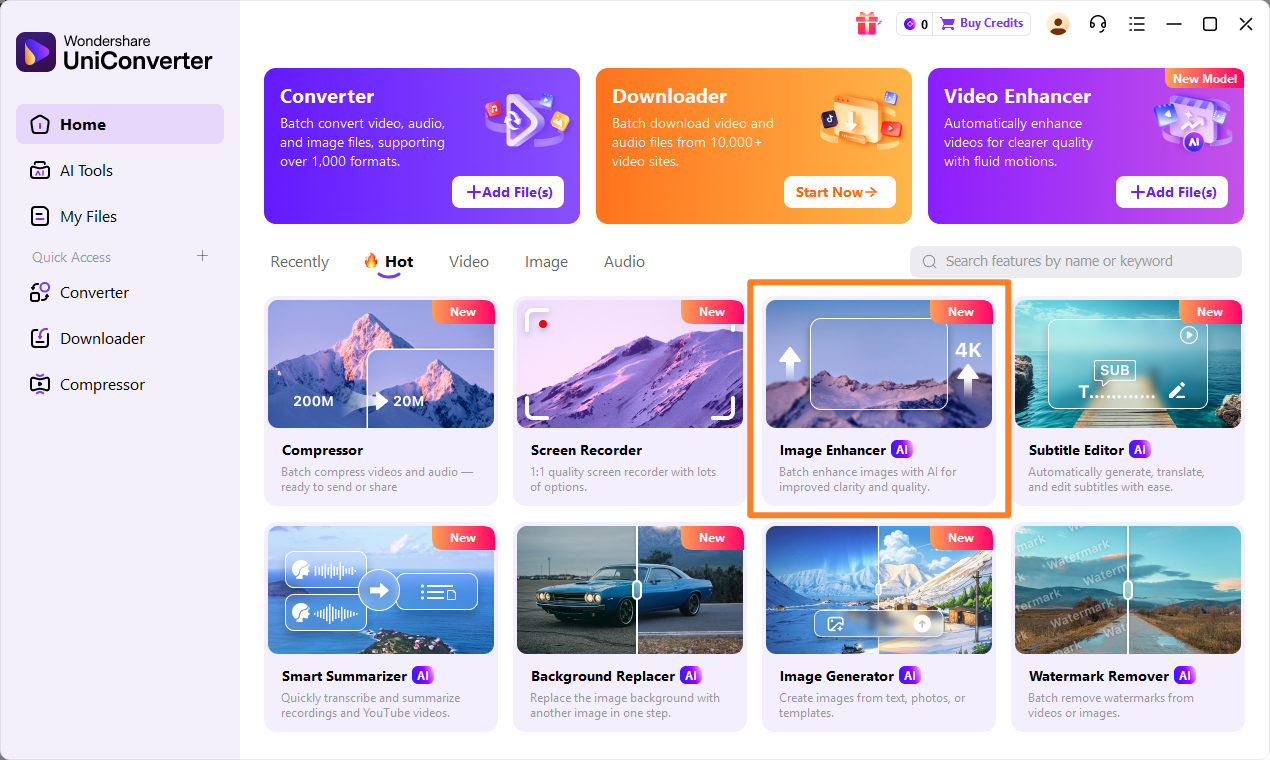
Step 1: Open UniConverter and Choose Image Enhancer
Launch UniConverter on your computer. On the main interface, navigate to the "Toolbox" section and select the "Image Enhancer" feature. This feature is designed to enhance images with ease.
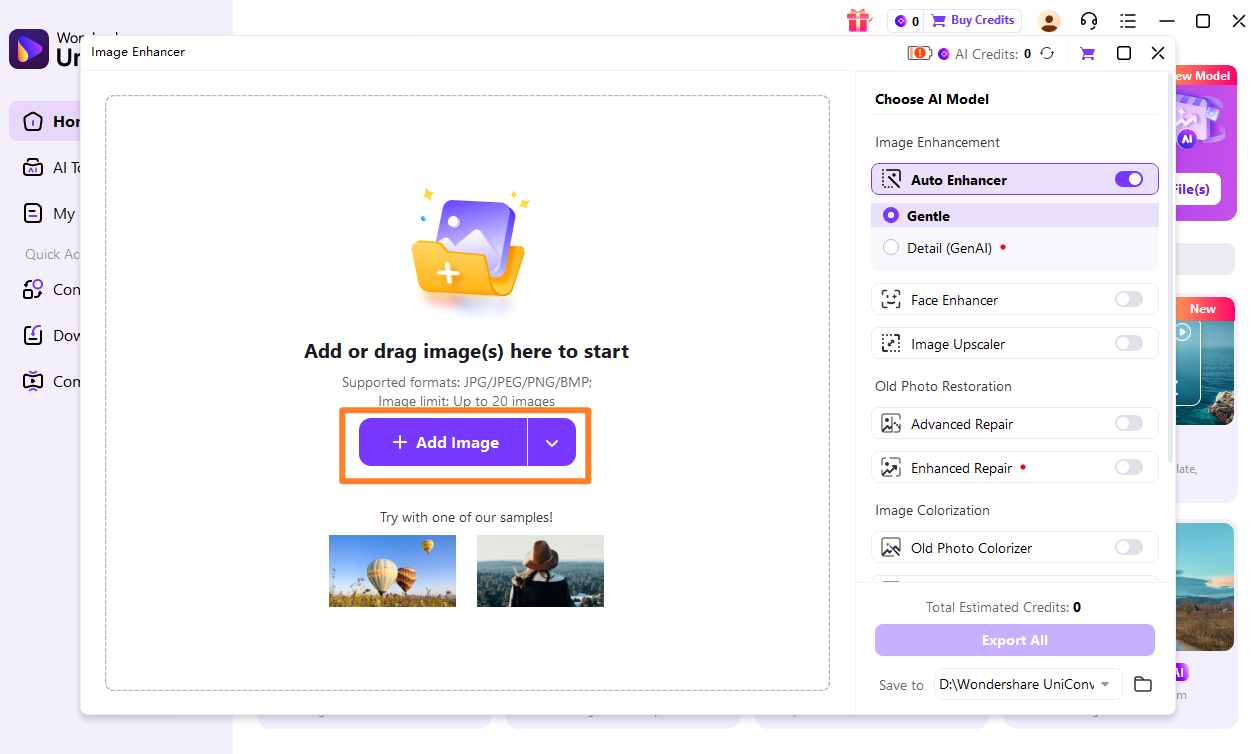
Step 2: Upload the Images
Click on the "Add Files" button or simply drag and drop the images you wish to enhance into the UniConverter window. You can add multiple images for batch processing, making it efficient to upscale images or apply other enhancements.
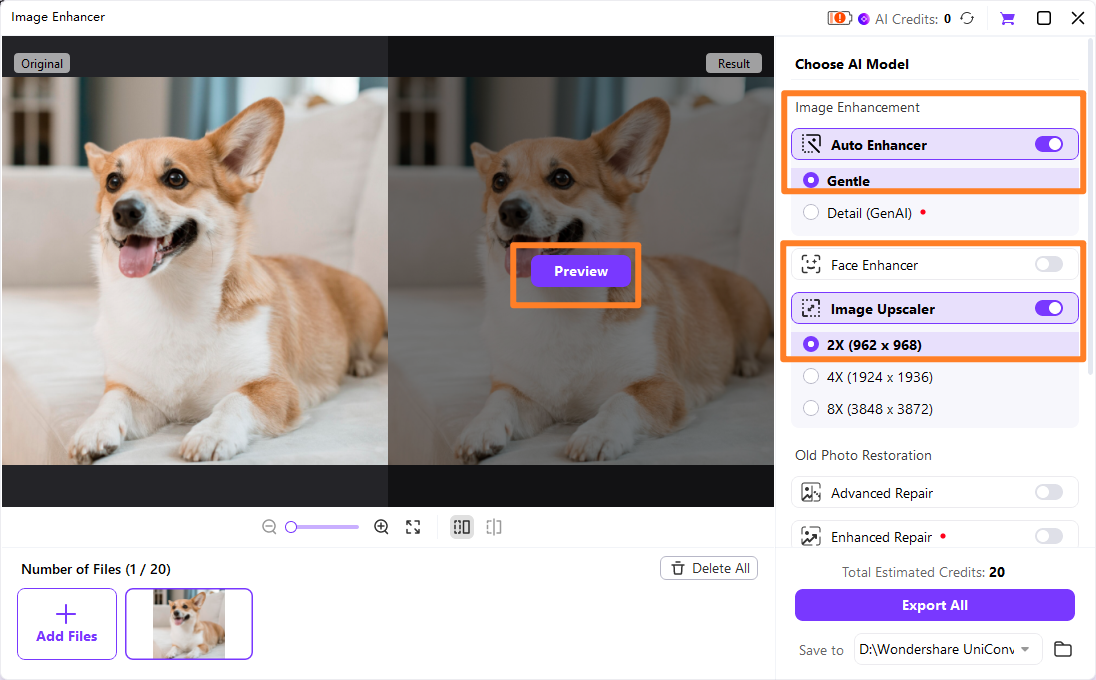
Step 3: Choose Enhancement Model
UniConverter offers different AI models for enhancement. Select the model that best suits your image type (e.g., general enhancement, portrait, landscape). You can also adjust intensity settings if available, allowing for precise control over the enhancer process.
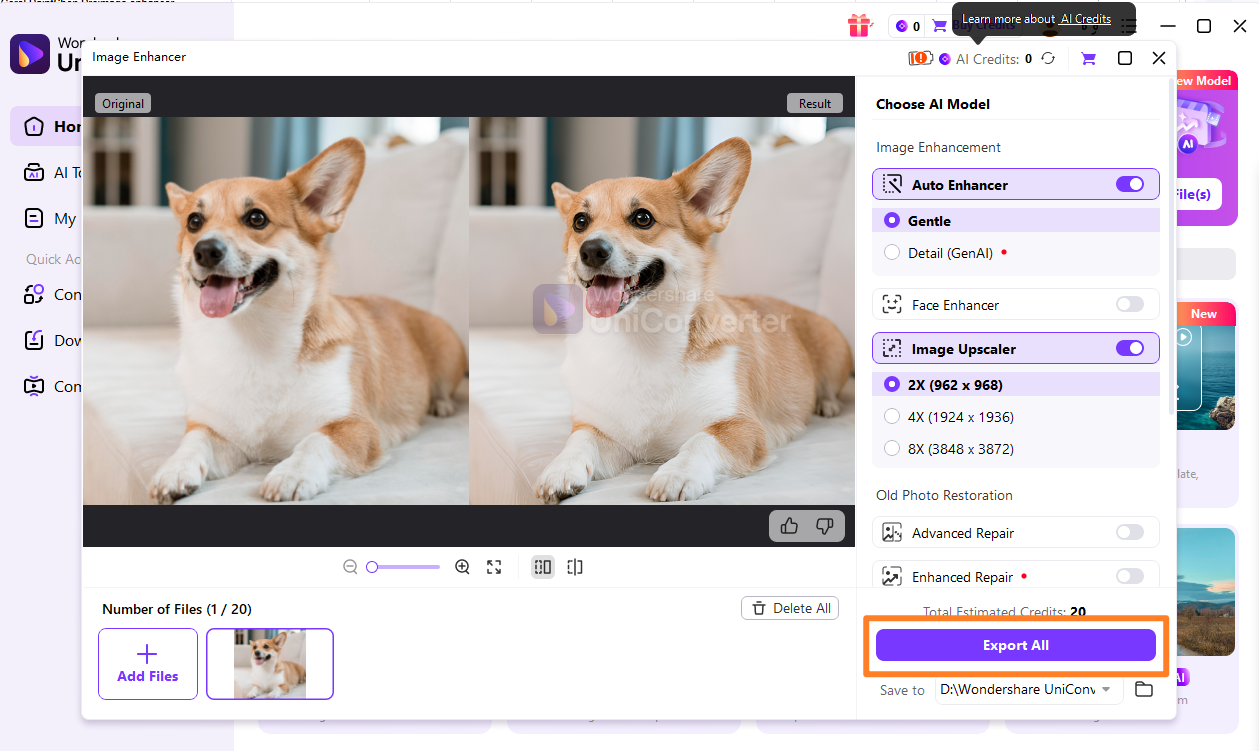
Step 4: Preview and Save the Enhanced Photos
Once the enhancement process is complete, you can preview the "before" and "after" versions of your images. If satisfied, click the "Export" button to save your enhanced photos to your desired location.

Looking for a Fotor Alternative?
Part 7: Final Verdict and Recommendations
After spending considerable time with Fotor Image Enhancer review and its competitors, my conclusion is that it's a valuable tool, but its utility largely depends on your specific needs. For casual users and social media enthusiasts, Fotor offers an incredibly accessible and efficient way to quickly improve photos. Its intuitive interface and diverse presets make it a joy to use for everyday touch-ups. However, for professionals or those requiring advanced control, Fotor's limitations in customization and potential for over-processing become apparent. Budget-conscious individuals will appreciate the freemium model, but should be aware of the ads and feature limitations. For batch processing, Fotor is good, but alternatives like UniConverter offer a more consistent and robust experience without the privacy concerns or subscription fatigue. Ultimately, Fotor is excellent for quick, low-stakes enhancements, but for critical work or extensive editing, I'd recommend looking at more powerful, dedicated software.
Part 8: FAQs
-
1. **Is Fotor Image Enhancer truly free?**
Fotor offers a free version with basic image enhancement features, but it includes advertisements and limits access to many advanced tools and presets. For a full, ad-free experience with all features, a paid subscription is required.
-
2. **How does Fotor's AI compare to other image enhancers?**
Fotor's AI is very good for general enhancements and ease of use, often providing pleasing results for casual photos. However, specialized AI enhancers like Topaz Photo AI or Luminar Neo often offer more sophisticated algorithms for specific tasks like noise reduction, sharpening, or upscaling, leading to more natural and detailed results for professional-grade work.
-
3. **Can Fotor enhance old or blurry photos effectively?**
Fotor can certainly improve old or slightly blurry photos by adjusting sharpness, contrast, and color. However, for severely blurry or heavily damaged old photos, its capabilities are limited. Dedicated restoration software or more advanced AI tools might yield better results for significant defects.
-
4. **What are the privacy implications of using Fotor?**
Like many cloud-based services, using Fotor involves uploading your images to their servers for processing. While Fotor states they protect user data, it's always wise to be mindful of the privacy policy and avoid uploading highly sensitive personal or confidential images if you have concerns about data security.
-
5. **Is UniConverter a better alternative for all users?**
UniConverter is a strong alternative, especially for users who prioritize batch processing, stable and consistent enhancement quality, and a comprehensive toolkit without ads or subscription fatigue. It's particularly beneficial for those who need to convert, edit, and enhance various media types. While Fotor might be quicker for a single, casual photo touch-up, UniConverter offers a more robust and versatile solution for broader media management and enhancement needs.
