- FotoJet Overview: Web-based AI tool for quick image enhancement, focusing on accessibility and ease of use.
- Core Features: Automatic color correction, sharpening, noise reduction, contrast, and exposure adjustments for vibrant photos.
- Pros & Cons: Intuitive interface and web accessibility vs. limited customization and potential for over-processing.
- Best Use Case: Ideal for quick social media post preparation; less suitable for high-resolution print production.
- Competitor Comparison: Simpler than UniConverter and Luminar Neo, but offers less control and advanced features.
- Risks to Consider: Data privacy, over-enhancement, internet dependency, and subscription limitations are key concerns.
- UniConverter Advantage: Offers stable, lossless, GPU-accelerated batch image enhancement with offline access, unlike FotoJet.
- Final Verdict: FotoJet suits casual users; professionals need tools like UniConverter for advanced control and offline work.
In this article
- Part 1: What is FotoJet Image Enhancer?
- Part 2: FotoJet Image Enhancer: Core Features, Pros, and Cons
- Part 3: Who Benefits from FotoJet Image Enhancer?
- Part 4: FotoJet Image Enhancer vs. Competitors
- Part 5: Risks and Pitfalls to Consider
- Part 6: How to Use UniConverter to Efficiently Enhance Images
- Part 7: Final Verdict and Recommendations
- Part 8: FAQs
When I first stumbled upon FotoJet Image Enhancer, I was looking for a quick fix for my everyday photos – something beyond basic cropping and color correction. This web-based tool promised to leverage AI for effortless image enhancement, a concept that immediately piqued my interest given the growing demand for visually appealing content across social media and personal blogs. This FotoJet Image Enhancer review aims to delve into its capabilities, comparing it with other market players and helping you decide if it’s the right tool for your specific needs. We’ll explore its core features, weigh its pros and cons, and identify the scenarios where it truly shines, as well as where it might fall short.
Part 1: What is FotoJet Image Enhancer?
FotoJet Image Enhancer is an online tool designed to automatically improve the quality of your digital images using artificial intelligence. It's part of the broader FotoJet suite, which offers various graphic design and photo editing functionalities. My initial impression was that it’s built for accessibility and ease of use, targeting individuals who need quick enhancements without diving into complex software. It aims to simplify the often-tedious process of color correction, detail sharpening, and noise reduction, making professional-looking results achievable for anyone. This review will explore whether it truly delivers on that promise and how it stacks up against more robust alternatives.
The Rise of AI-Powered Image Enhancement Tools
The digital age has brought with it an insatiable appetite for high-quality visuals. This demand has fueled the rapid development of AI-powered image enhancement tools, addressing several key pain points:
* Time-consuming manual edits: Traditional photo editing software often requires significant time and skill to achieve desired results.
* Lack of professional editing skills: Many users lack the expertise to manually adjust complex parameters like curves, levels, and color balance.
* Need for instant gratification: Social media and online platforms demand quick turnaround times for visually appealing content.
* Improving suboptimal photos: Users often have photos taken in less-than-ideal conditions that need a quick boost.
Part 2: FotoJet Image Enhancer: Core Features, Pros, and Cons
FotoJet Image Enhancer, from my experience, focuses on delivering a streamlined enhancement process. Its core capability lies in its AI algorithms that automatically detect and correct common image flaws. I found it particularly useful for:
* Automatic Color Correction: It intelligently adjusts hues, saturation, and brightness to make photos more vibrant and balanced.
* Detail Sharpening: It can bring out finer details that might appear soft or blurry in the original image.
* Noise Reduction: For photos taken in low light, it effectively reduces graininess without overly smoothing textures.
* Contrast Adjustment: It optimizes the difference between light and dark areas, adding depth to images.
* Exposure Correction: It helps fix underexposed or overexposed photos, bringing them closer to a balanced look.
Pros:
* Intuitive Interface for Quick Edits: Honestly, I was surprised by how easy it was to navigate. You upload, click a button, and boom – enhanced. It’s perfect for when you’re in a hurry.
* Diverse Enhancement Options for Various Photo Types: While it’s mostly automatic, I noticed it handles different photo types, from portraits to landscapes, with reasonable intelligence.
* Web-Based Accessibility for On-the-Go Use: The fact that it’s entirely online means I can use it from any device with an internet connection, which is super convenient when I’m not at my main workstation.
Cons:
* Limited Advanced Customization for Professional Users: If you're a pro looking for granular control over every aspect of your image, you'll feel constrained. It’s more of a "set it and forget it" tool.
* Potential for Over-Processing in Certain Scenarios: Sometimes, especially with already decent photos, the AI can be a bit heavy-handed, leading to an unnatural, overly sharpened, or saturated look.
Part 3: Who Benefits from FotoJet Image Enhancer?
Based on my time with FotoJet Image Enhancer, I’d say it’s definitely not a one-size-fits-all solution. It shines for certain user groups and specific tasks, while falling short for others. If you're someone who just needs to quickly spruce up a photo without getting bogged down in technical details, this tool is probably right up your alley. It's designed to be approachable and efficient, making it a good fit for quick, everyday enhancements.
Best Use Case: Quick Social Media Post Preparation
For me, the most useful scenario for FotoJet Image Enhancer is preparing photos for social media. I often need to post something quickly, and I don't have time to open up Photoshop or Lightroom. With FotoJet, I can upload a photo, let the AI do its magic, and have a much-improved image ready for Instagram or Facebook in minutes. It makes my casual photos look more polished without any real effort on my part. If you're just looking to make your vacation snaps or event photos pop a bit more before sharing them online, this is a fantastic option.
Limited Use Case: High-Resolution Print Production
However, if you're planning to print high-resolution images, especially for professional purposes like large-format posters or fine art prints, FotoJet Image Enhancer might not be the best choice. While it enhances images, it doesn't offer the precise control over detail, color accuracy, and resolution that professional printing demands. I've found that for anything requiring absolute fidelity and the ability to zoom in on every pixel without degradation, dedicated desktop software or more advanced AI tools are necessary. It simply doesn't provide the depth of control needed for such critical applications.
Part 4: FotoJet Image Enhancer vs. Competitors
When I look at FotoJet Image Enhancer, I see a tool that prioritizes simplicity. But how does it stack up against others in the market? I've tried a few, and here's my take on how it compares to some notable alternatives.
| Feature/Tool | FotoJet Image Enhancer | UniConverter | Luminar Neo | Remini |
| Ease of Use | High | High | Medium | High |
| AI Enhancement Quality | Good | Excellent | Excellent | Good |
| Advanced Features | Limited | Moderate | Extensive | Limited |
| Pricing Model | Freemium | Subscription | Subscription | Freemium |
| Offline Access | No | Yes | Yes | No |
Key Differentiators: Simplicity vs. Sophistication
FotoJet Image Enhancer's main strength is its sheer simplicity. If you just want a quick, decent enhancement without any fuss, it’s a solid choice. UniConverter, on the other hand, offers a more balanced approach. It’s still very easy to use, but I found its AI enhancement quality to be consistently better, especially for more challenging images, and the offline access is a huge plus for me. Luminar Neo is where you go if you want serious power and creative control; it’s a full-fledged editor with incredible AI features, but it has a steeper learning curve. Remini is great for specific tasks like restoring old photos or improving face clarity, but it's not as versatile for general enhancement. So, if you're just dipping your toes into image enhancement, FotoJet is fine. If you want something more robust but still user-friendly, UniConverter is a strong contender. For professional-level editing, Luminar Neo is the way to go.
Part 5: Risks and Pitfalls to Consider
Using online image enhancement tools like FotoJet Image Enhancer, while convenient, isn't without its potential downsides. I've learned to be cautious, especially when dealing with my more sensitive photos. It's important to understand these risks before you commit to using such services regularly.
Data Privacy Concerns with Online Tools
This is a big one for me. When I upload my photos to an online platform, I'm essentially handing over my personal data. While FotoJet states it respects privacy, the reality is that my images are processed on their servers. I always wonder: who has access to these photos? How long are they stored? Are they used to train AI models without my explicit consent? For casual, non-sensitive photos, I might not worry as much, but for anything personal or proprietary, I'm very hesitant. It's a trade-off between convenience and privacy that everyone needs to weigh for themselves.
Potential for Over-Enhancement and Unnatural Results
I've definitely seen this happen with FotoJet. The AI, in its attempt to "improve" an image, can sometimes go too far. What starts as a subtle boost in color can quickly turn into an oversaturated mess, or sharpening can introduce halos and an artificial, plastic look. It's like the AI is trying too hard to make the photo "perfect," and in doing so, it loses its natural charm. This is particularly noticeable with skin tones or delicate textures. If you're aiming for a natural, authentic look, you need to be wary of the AI's tendency to over-process.
Dependence on Internet Connectivity
Since FotoJet Image Enhancer is entirely web-based, it's completely reliant on a stable internet connection. I've been in situations where I needed to quickly enhance a photo, but my Wi-Fi was spotty, or I was offline. In those moments, FotoJet became useless. This dependency can be a significant limitation if you frequently work on the go, travel, or have unreliable internet access. It means you can't just open the app and get to work anytime, anywhere.
Subscription Model Limitations for Advanced Features
While FotoJet offers a freemium model, I've found that the free version often comes with limitations that push you towards a subscription. This could be in terms of output resolution, the number of enhancements you can perform, or access to more advanced tools. If you're a casual user, the free tier might suffice, but if you find yourself needing more, you'll eventually hit a paywall. It's important to understand what you're getting for free versus what you'll need to pay for, and if the paid features truly justify the cost for your usage.
Output Quality for Large-Scale Printing
I've learned the hard way that "enhanced" doesn't always mean "print-ready." While FotoJet can make a photo look great on a screen, the output quality might not hold up when printed at a large size. The AI might introduce artifacts or compromises in resolution that aren't visible on a small screen but become glaringly obvious on a big print. If your end goal involves high-quality printing, relying solely on an online enhancer like FotoJet might lead to disappointing results.
Part 6: How to Use UniConverter to Efficiently Enhance Images
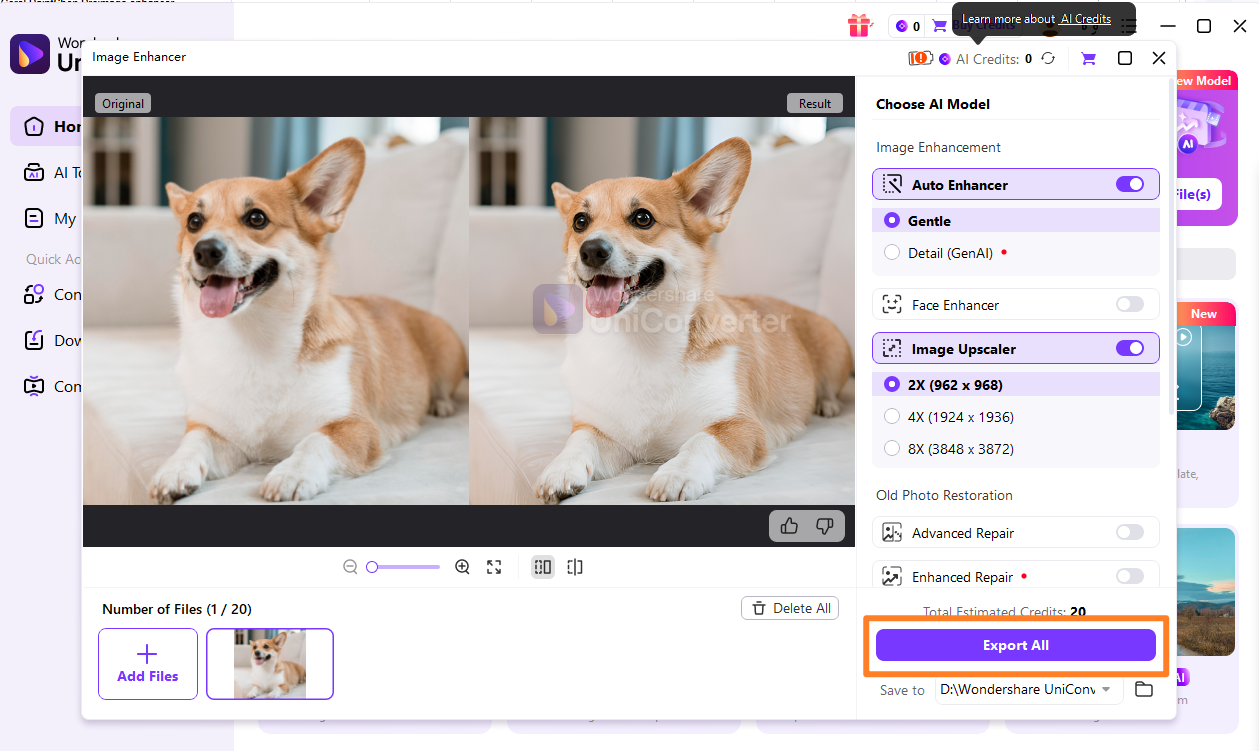
Sometimes, when I've found other tools falling short – perhaps they don't support batch processing, the enhancement is inconsistent, or the effects are just too subtle – I turn to UniConverter. It’s become my go-to for a more robust and reliable image enhancement experience. It avoids the common pitfalls of online tools like ads, watermarks, and inconsistent quality, offering a comprehensive solution for various image needs. With UniConverter, I get a stable, lossless enhancement process, often accelerated by GPU, and the ability to handle multiple images at once. It really feels like an all-in-one solution for my image and video needs, including options to upscale images to 4K or even enhance video quality.
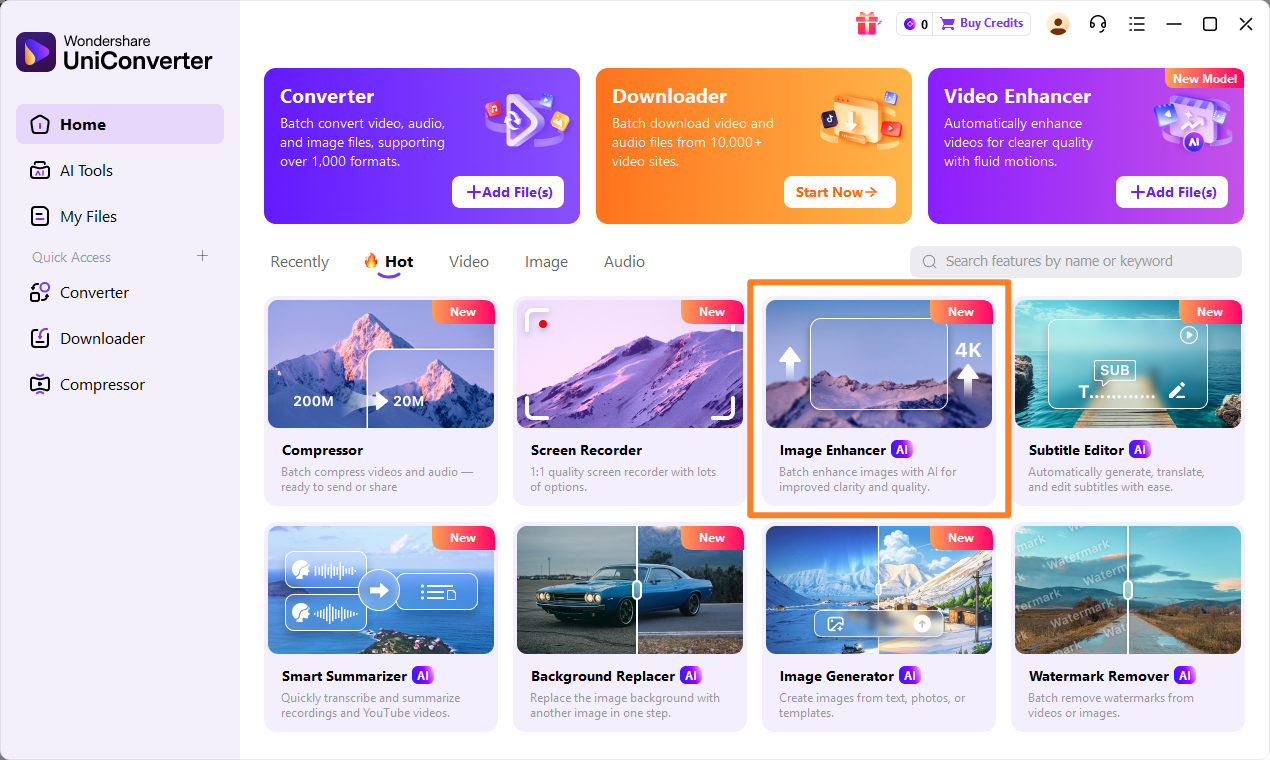
Step 1: Open UniConverter and Choose Image Enhancer
First, I launch UniConverter on my desktop. On the main interface, I navigate to the "Toolbox" section. Within the Toolbox, I'll find the "Image Enhancer" option. I click on it to open the dedicated image enhancer module.
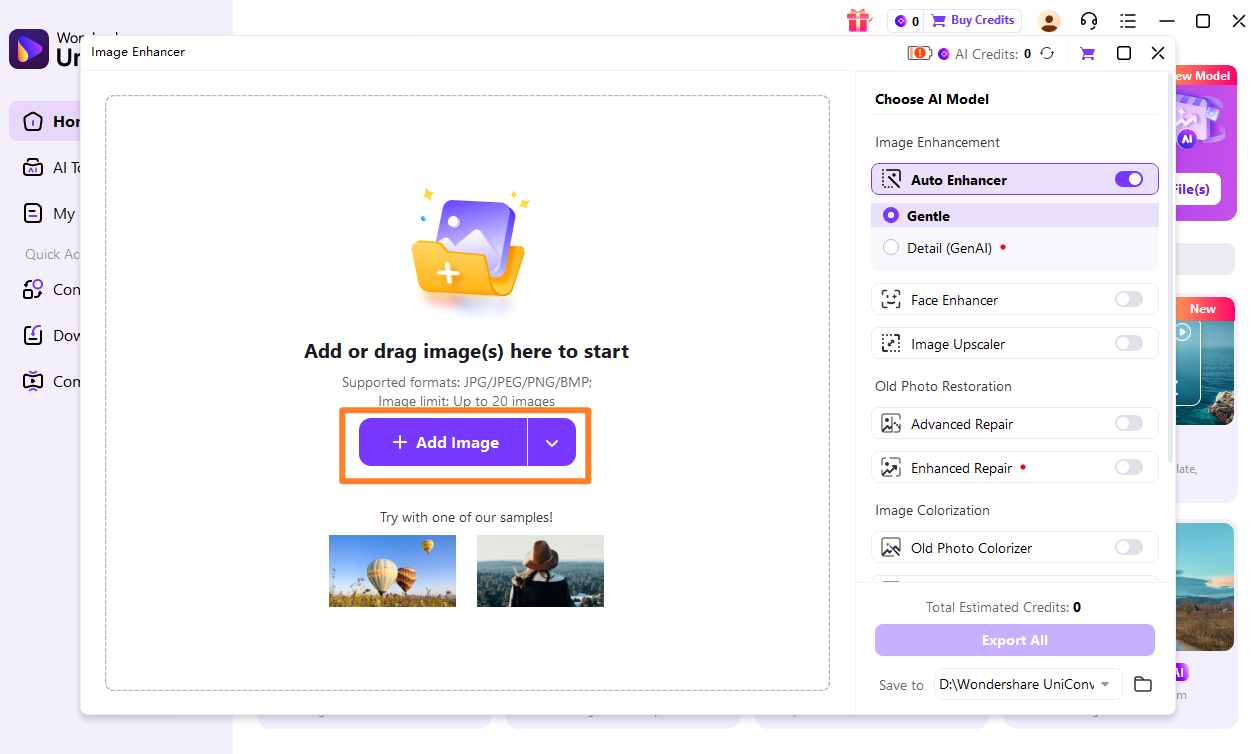
Step 2: Upload the Images
Next, I simply drag and drop the images I want to enhance directly into the UniConverter Image Enhancer window. Alternatively, I can click the "Add Files" button to browse and select images from my computer. UniConverter supports various image formats, so I don't usually have to worry about compatibility.
Step 3: Choose Enhancement Model
Once my images are loaded, UniConverter presents different enhancement models. I can choose the one that best suits my needs, whether it's for general improvement, noise reduction, or sharpening. I often experiment with a few to see which yields the best result for a particular photo.
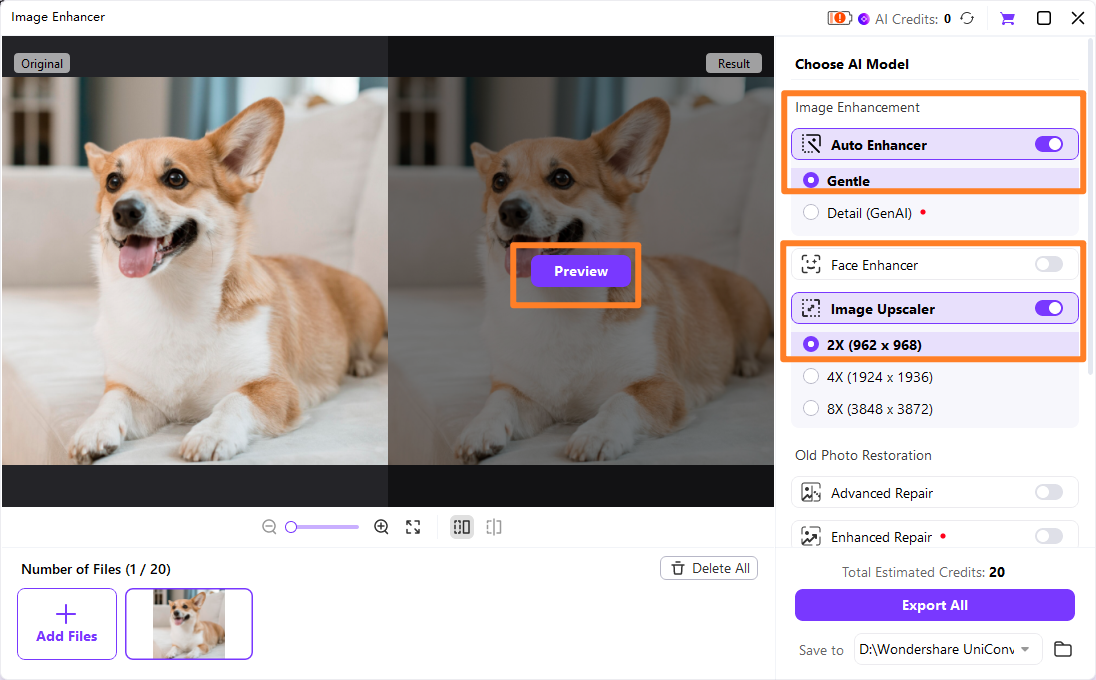
Step 4: Preview and Save the Enhanced Images
After selecting the enhancement model, UniConverter processes the images. I can then preview the enhanced versions side-by-side with the originals to compare. If I'm satisfied with the results, I click the "Save" or "Export" button, choose my desired output folder, and UniConverter saves my newly enhanced photos.

Need a FotoJet Image Enhancer Alternative?
Part 7: Final Verdict and Recommendations
After spending time with FotoJet Image Enhancer and comparing it to other tools, my conclusion is that it serves a specific niche very well. It's not a professional-grade editor, nor does it pretend to be. Instead, it's a quick, accessible solution for everyday photo improvements. The FotoJet Image Enhancer review reveals its strengths lie in its simplicity and web-based convenience, making it ideal for users who prioritize speed over granular control. However, for more demanding tasks or those requiring offline access and advanced features, other options clearly stand out.
For Casual Users and Social Media Enthusiasts
If you're like me and just need to quickly spruce up photos for Instagram, Facebook, or a personal blog, FotoJet Image Enhancer is a perfectly viable tool. Its intuitive interface means you can get decent results with minimal effort, and the web-based nature makes it accessible from anywhere. You won't get professional-level adjustments, but for making your casual snaps look better, it's more than adequate.
For Professionals Seeking Advanced Control
For photographers, graphic designers, or anyone who needs precise control over every aspect of their image, FotoJet Image Enhancer will likely feel too restrictive. The lack of advanced customization options, the potential for over-processing, and the inability to work offline mean it simply doesn't meet the demands of professional workflows. You'll need more robust desktop software or specialized AI tools for that level of detail and control.
For Users Prioritizing Offline Functionality
If you frequently work without an internet connection or prefer the stability and speed of desktop applications, FotoJet's online-only nature will be a significant drawback. Tools like UniConverter or Luminar Neo offer the flexibility of offline access, which can be crucial for productivity in various scenarios.
For Budget-Conscious Individuals
FotoJet's freemium model can be appealing, but be mindful of the limitations of the free tier. If you find yourself constantly hitting those limits, you might need to consider a subscription. At that point, it's worth comparing its paid features and cost against other subscription-based tools that might offer more value or advanced capabilities for a similar price.
Part 8: FAQs
-
1. Is FotoJet Image Enhancer free to use?
Yes, FotoJet Image Enhancer offers a free tier with basic enhancement features. However, some advanced options, higher resolution outputs, or unlimited usage might require a premium subscription.
-
2. Can FotoJet Image Enhancer improve old, blurry photos?
It can certainly attempt to improve old or slightly blurry photos by applying sharpening and noise reduction algorithms. However, its effectiveness depends heavily on the original quality and the extent of the damage. For severely damaged or extremely blurry photos, specialized restoration tools might yield better results.
-
3. What are the main differences between FotoJet and other online enhancers?
FotoJet generally focuses on an extremely user-friendly interface and quick, automated enhancements, making it ideal for casual users. Other online enhancers might offer more manual controls, different AI algorithms for specific tasks (like face enhancement), or unique stylistic filters. The key difference often lies in the balance between automation and user control.
-
4. Does FotoJet Image Enhancer compress image quality?
While FotoJet aims to enhance images, the output format and compression settings can sometimes lead to a slight reduction in file size, which might imply some compression. For the free version, there might be limitations on output resolution or quality to encourage premium subscriptions. It's always best to check the output file size and visual quality carefully if preserving maximum detail is crucial.
-
5. Is UniConverter a better option for batch processing images?
Yes, from my experience, UniConverter is significantly better for batch processing images. It's designed as a desktop application with robust batch processing capabilities, allowing you to apply enhancements to multiple images simultaneously without the limitations often found in web-based tools like FotoJet.
