
- Flowframes Focus: Free, open-source AI for smoother video motion through frame interpolation.
- Core Strength: Transforms choppy, low-frame-rate footage into fluid, modern viewing experiences.
- Limitations: Resource-intensive, lacks comprehensive features like upscaling, noise reduction, or advanced editing.
- Ideal User: Hobbyists and enthusiasts prioritizing motion smoothness on a budget.
- Vs. Competitors: Excels in free interpolation; UniConverter offers broader, user-friendly enhancement; Topaz AI provides comprehensive paid solutions.
- Risks: Potential for "AI artifacts" and high hardware demands for optimal results.
- UniConverter Alternative: Offers efficient, comprehensive video enhancement with broad format support and GPU acceleration.
- Decision Guide: Choose based on budget, specific enhancement needs (interpolation vs. full suite), and technical expertise.
In this article
- Part 1: What is Flowframes Video Enhancer?
- Part 2: Flowframes Video Enhancer: Core Features, Pros, and Cons
- Part 3: Flowframes Video Enhancer: Ideal Users and Use Cases
- Part 4: Flowframes Video Enhancer vs. Competitors
- Part 5: Risks and Pitfalls to Consider
- Part 6: How to Use UniConverter to Efficiently Enhance Videos
- Part 7: Conclusion
- Part 8: FAQs
Flowframes Video Enhancer: A Comprehensive Scenario-Based Review
The digital age has brought an explosion of video content, from archival footage to user-generated clips. However, not all videos are created equal, especially when it comes to quality. Many older or lower-resolution videos struggle to meet the demands of modern displays and viewing experiences. This is where AI-powered video enhancement tools like Flowframes Video Enhancer step in. This review will delve into its capabilities, comparing it against leading competitors to help users understand its strengths, limitations, and ideal applications, ultimately guiding them toward informed decisions for their video enhancement needs.
Part 1: What is Flowframes Video Enhancer?
Flowframes Video Enhancer is an open-source, AI-powered software primarily designed for frame interpolation, a process that generates new frames between existing ones to create smoother motion. It leverages advanced artificial intelligence algorithms to analyze video sequences and intelligently insert intermediate frames, effectively increasing the perceived frame rate. This technology is particularly valuable for transforming low-frame-rate content, such as old films or gaming footage, into a more fluid and visually appealing experience on modern high-refresh-rate displays. This review aims to dissect its performance, user-friendliness, and overall value proposition in the competitive landscape of video enhancement tools.
Addressing Key User Pain Points in Video Enhancement:
* Choppy Playback: Many older videos suffer from low frame rates, leading to a jerky and unpleasant viewing experience.
* Outdated Aesthetics: Content from previous eras often lacks the smooth motion expected by contemporary audiences.
* Limited Accessibility: High-quality frame interpolation tools can be expensive or complex, posing a barrier for enthusiasts.
Part 2: Flowframes Video Enhancer: Core Features, Pros, and Cons
Flowframes Video Enhancer focuses on delivering high-quality frame interpolation through its advanced AI models. It excels at analyzing motion vectors within video frames to generate realistic intermediate frames, resulting in significantly smoother playback. The software also offers a user-friendly interface that simplifies the enhancement process, making it accessible even for those without extensive video editing experience. Its open-source nature fosters community development and provides flexibility for advanced users.
Core Capabilities:
* AI-Powered Frame Interpolation: Generates new frames to increase video fluidity.
* Motion Vector Analysis: Intelligently predicts and inserts frames based on movement.
* Customizable Interpolation Settings: Allows users to fine-tune the degree of frame generation.
* Support for Various Video Formats: Compatible with a wide range of input video files.
* Batch Processing: Enables enhancement of multiple videos sequentially.
Pros:
* Advanced AI Interpolation for Smooth Motion: Delivers exceptionally fluid video playback.
* Intuitive User Interface for Easy Navigation: Simplifies complex enhancement tasks for all skill levels.
* Open-Source Flexibility and Community Support: Offers transparency, customization, and a helpful user base.
Cons:
* Resource-Intensive Processing Requirements: Demands significant CPU/GPU power for efficient operation.
* Limited Feature Set Beyond Frame Interpolation: Lacks comprehensive upscaling, noise reduction, or color grading tools.
Part 3: Flowframes Video Enhancer: Ideal Users and Use Cases
Flowframes Video Enhancer is primarily suited for individuals and hobbyists who prioritize smooth motion in their video content without incurring significant costs. Its open-source nature and straightforward interface make it an attractive option for those looking to experiment with AI-powered video enhancement.
Best Use Case: Enhancing Vintage Footage for Modern Displays
Imagine digitizing old home videos or classic film clips that were originally shot at lower frame rates. When played on a modern 60Hz or 120Hz display, these videos often appear choppy and jarring. Flowframes can take this 24fps or 30fps footage and intelligently interpolate it to 60fps or even higher, creating a dramatically smoother and more enjoyable viewing experience that feels native to contemporary screens. This breathes new life into cherished memories or historical content, making it more palatable for today's audiences.
Limited Use Case: Professional Color Grading and Advanced Editing Workflows
While Flowframes excels at frame interpolation, it is not designed to be a comprehensive video editing suite. Professional videographers or filmmakers who require advanced color grading, complex visual effects, multi-track editing, or precise audio synchronization will find Flowframes' capabilities severely limited. It lacks the robust toolsets for these tasks and would need to be integrated into a larger, more sophisticated workflow, serving only as a single-purpose enhancement step rather than a central editing platform.
Part 4: Flowframes Video Enhancer vs. Competitors
| Feature/Scenario | Flowframes Video Enhancer | Topaz Video AI | DaVinci Resolve (with plugins) | UniConverter |
| Processing Speed | Medium (GPU dependent) | Fast (GPU optimized) | Varies (hardware/plugin) | Fast (GPU optimized) |
| Output Quality | Excellent (interpolation) | Excellent (all-around) | Good (with quality plugins) | Excellent (upscaling, stabilization) |
| Ease of Use | High | Medium | Low | High |
| Customer Support | Community-based | Dedicated | Extensive | Dedicated |
| Security | Open-source (transparent) | Proprietary | Proprietary | Proprietary |
Key Differentiators:
Flowframes excels in free, high-quality frame interpolation, making it a go-to for enthusiasts on a budget. Topaz Video AI offers a more comprehensive suite of AI enhancement tools, including superior upscaling and noise reduction, catering to professionals seeking an all-in-one solution. DaVinci Resolve, while a full professional editing suite, requires additional plugins for comparable enhancement features, best suited for editors already within its ecosystem. UniConverter stands out for its user-friendly interface and efficient processing for common enhancement tasks like upscaling and stabilization.
Part 5: Risks and Pitfalls to Consider
When venturing into AI-powered video enhancement, especially with free or open-source tools like Flowframes, it's crucial to be aware of potential drawbacks and challenges. These can impact the quality of your output, the efficiency of your workflow, and even the security of your data.
Potential for "AI Artifacts" in Enhanced Footage
While AI interpolation can be impressive, it's not foolproof. The algorithms can sometimes misinterpret motion or struggle with complex scenes, leading to visual anomalies known as "artifacts." These can manifest as ghosting, flickering, warped textures, or unnatural movements, particularly in areas with fast action, intricate patterns, or low original quality. These artifacts can detract from the overall viewing experience and may require manual correction or re-processing.
Hardware Requirements for Optimal Performance
Flowframes, like most AI-driven video processing tools, is highly resource-intensive. It leverages your CPU and especially your GPU for computations. Running Flowframes effectively, particularly for high-resolution or long videos, demands a powerful graphics card (NVIDIA RTX series is often recommended) and a robust processor. Without adequate hardware, processing times can be excessively long, making the tool impractical for regular use or large projects.
Learning Curve for Advanced Settings
While Flowframes has an intuitive basic interface, achieving optimal results often requires delving into its advanced settings. Understanding parameters like interpolation models, motion blur, and frame blending can be complex for beginners. Experimentation is often necessary to find the right balance for different types of footage, which can be time-consuming and frustrating without prior knowledge of video processing concepts.
Limited Support for Niche Video Formats
While Flowframes supports common video formats, it might struggle with or completely lack support for more niche or proprietary codecs and container formats. This can necessitate an additional conversion step using other software before you can even begin the enhancement process, adding an extra layer of complexity and potential quality loss.
Privacy Concerns with Cloud-Based Alternatives
While Flowframes is a desktop application, many other video enhancement tools, especially some of its alternatives, operate on a cloud-based model. Uploading sensitive or personal video content to cloud servers for processing can raise significant privacy concerns. Users must carefully review the terms of service and privacy policies of such services to understand how their data is handled, stored, and potentially used.
Part 6: How to Use UniConverter to Efficiently Enhance Videos
When other tools fall short in batch processing, stable enhancement, or delivering noticeable improvements, UniConverter emerges as a robust solution. It offers a comprehensive suite of video tools, including powerful enhancement features, without the hassle of ads or complex interfaces. With broad format support, GPU acceleration, and lossless processing, UniConverter provides an all-in-one ultimate solution for your video enhancement needs, ensuring high-quality results every time.
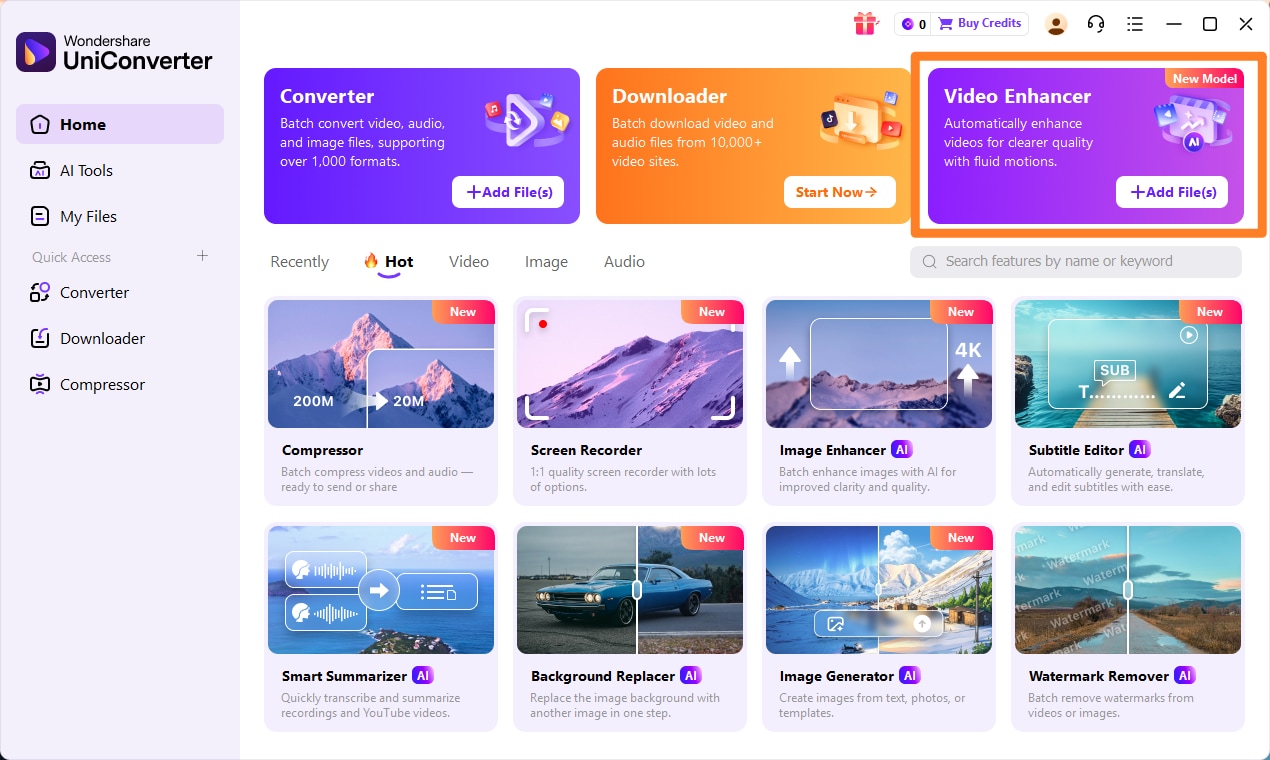
Step 1: Open UniConverter and Choose Video Enhancer
Launch UniConverter on your computer. From the main interface, navigate to the "Toolbox" section and select the "Video Enhancer" function. This will open the dedicated enhancement module.
Step 2: Upload the Videos
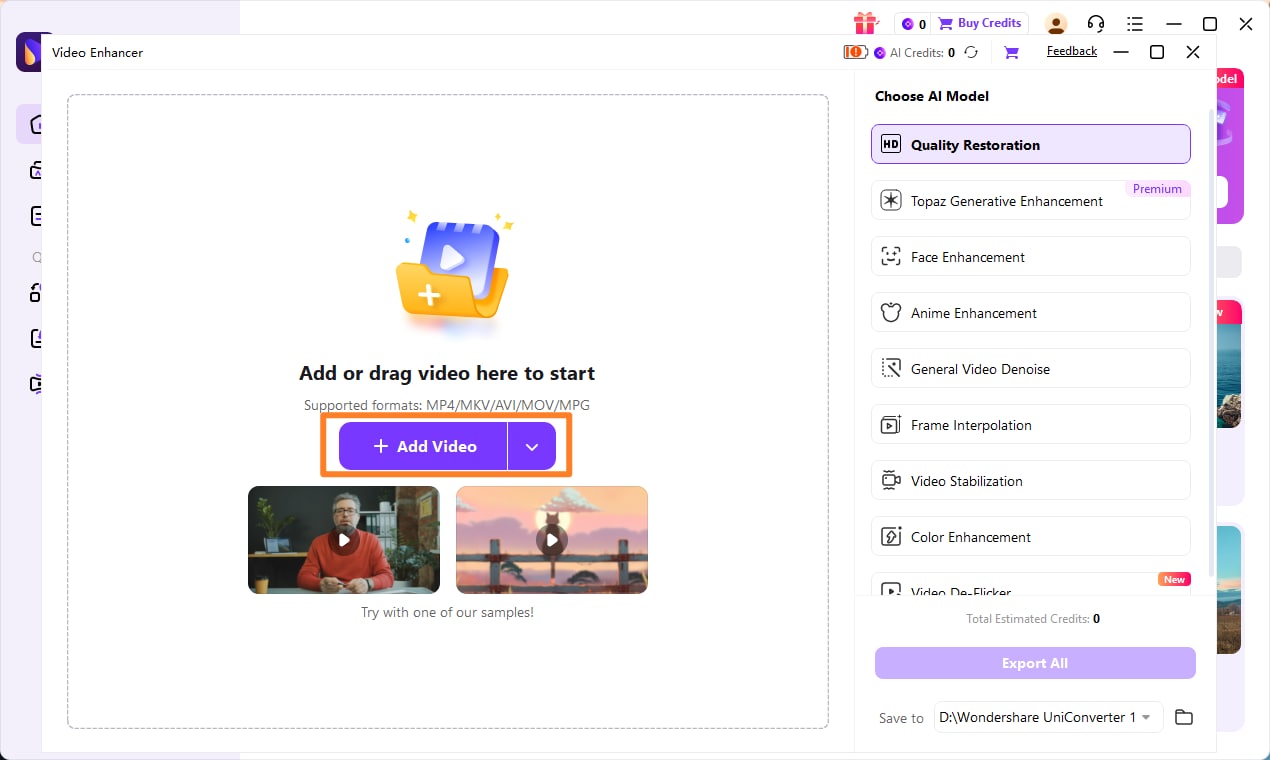
Click on the "Add Files" button or simply drag and drop the video files you wish to enhance into the UniConverter window. You can add multiple videos for batch processing.
Step 3: Choose Enhancement Model
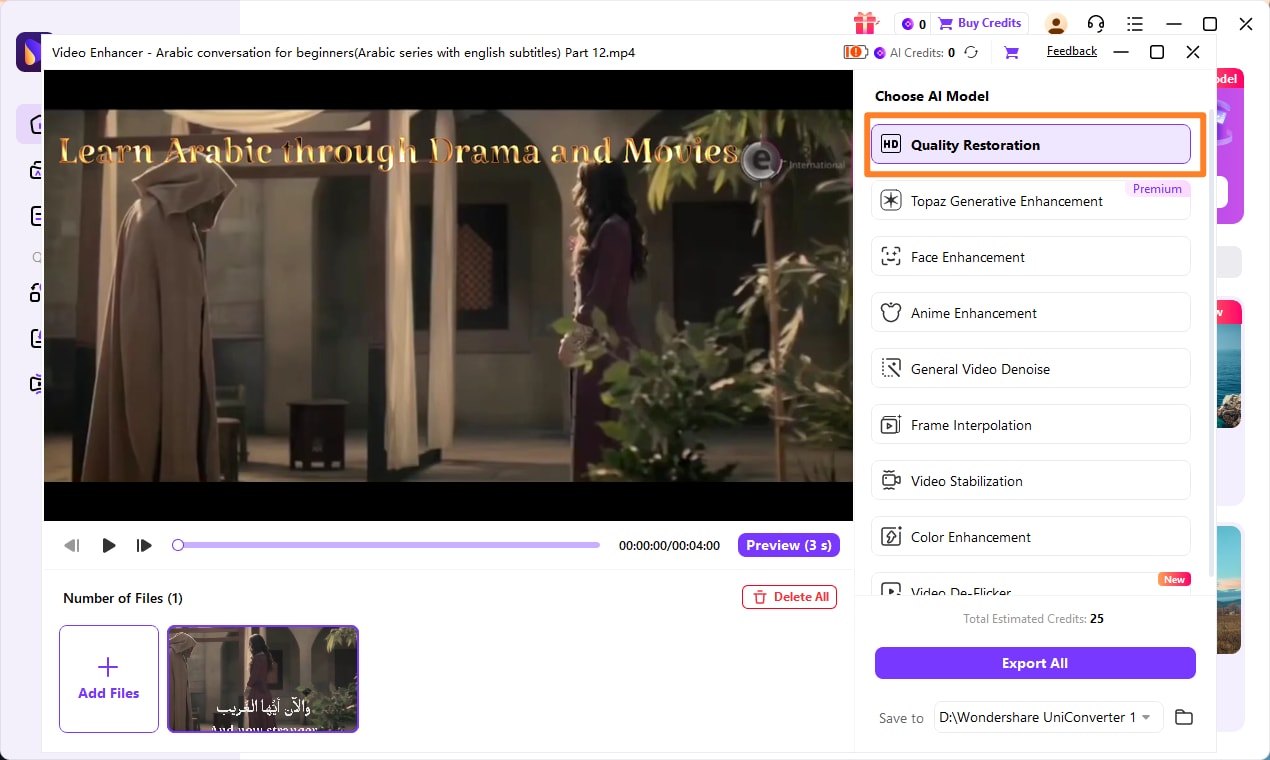
Once your video is loaded, UniConverter will present various enhancement options. Select the desired enhancement model, such as "Upscale," "Optimize Brightness and Contrast," "Denoise," or "Stabilize." Adjust any specific parameters as needed.
Step 4: Preview and Save the Enhanced Video
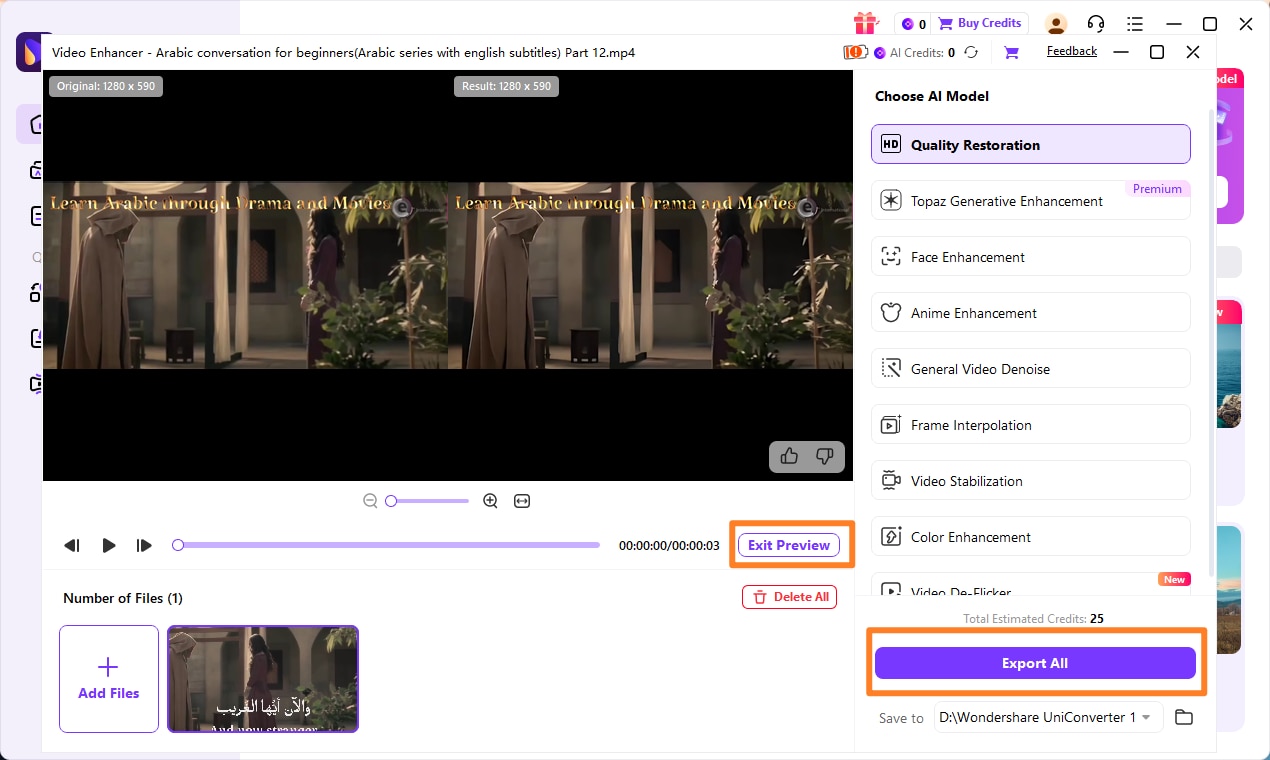
Before finalizing, use the "Preview" feature to see the effect of the enhancement. If satisfied, choose your desired output format and destination folder, then click "Enhance" to save your improved video.

Seeking a Flowframes Video Enhancer Alternative?
Part 7: Conclusion
Flowframes Video Enhancer offers a compelling solution for users seeking high-quality, free frame interpolation. Its open-source nature and intuitive interface make it an excellent choice for enthusiasts and hobbyists looking to smooth out choppy footage, particularly vintage content, for modern displays. However, its resource-intensive nature and limited feature set beyond interpolation mean it's not a one-stop shop for all video enhancement needs. For comprehensive AI enhancements like advanced upscaling and noise reduction, paid alternatives such as Topaz Video AI provide a more robust suite of tools, catering to professionals. Professional editors already invested in platforms like DaVinci Resolve can integrate enhancement plugins for similar capabilities. For beginners or those needing a user-friendly, all-in-one solution for various video tasks including reliable enhancement, UniConverter presents a strong, accessible alternative. Ultimately, the best choice depends on your specific requirements, budget, and technical expertise.
Part 8: FAQs
-
1. Is Flowframes Video Enhancer completely free to use?
Yes, Flowframes Video Enhancer is an open-source software and is completely free to download and use.
-
2. What kind of hardware do I need to run Flowframes effectively?
For optimal performance, especially with high-resolution videos, a powerful GPU (preferably an NVIDIA RTX series) and a strong multi-core CPU are highly recommended.
-
3. Can Flowframes enhance video resolution (upscaling)?
Flowframes primarily focuses on frame interpolation for smoother motion. While it can improve perceived quality, it does not offer dedicated resolution upscaling features like some other AI video enhancers.
-
4. Are there any privacy concerns when using Flowframes?
Flowframes is a desktop application, meaning your video files are processed locally on your computer. This generally eliminates privacy concerns associated with uploading sensitive data to cloud-based services.
-
5. How does Flowframes compare to professional video editing software?
Flowframes is a specialized tool for frame interpolation, whereas professional video editing software (like DaVinci Resolve or Adobe Premiere Pro) offers a comprehensive suite of editing, color grading, and effects tools. Flowframes can be a complementary tool within a professional workflow, but it is not a substitute for a full editing suite.
