
- FlexClip Value: Online, user-friendly for quick social media video enhancements.
- FlexClip Limitations: Lacks advanced customization, struggles with large files, not for professional post-production.
- Online vs. Desktop: FlexClip offers convenience; UniConverter and others provide power, offline editing, and extensive features.
- Risks to Consider: Data privacy, quality limitations for high-end projects, internet dependency, and subscription value.
- UniConverter Advantage: Robust desktop alternative for stable, lossless enhancement, extensive formats, and GPU acceleration.
In this article
- Part 1: What is FlexClip Video Enhancer?
- Part 2: FlexClip Video Enhancer: Core Features, Pros & Cons
- Part 3: FlexClip Video Enhancer: Target Audience & Use Cases
- Part 4: FlexClip Video Enhancer and Alternatives Comparison
- Part 5: Risks & Pitfalls to Consider
- Part 6: How to Use UniConverter to Efficiently Enhance Videos
- Part 7: Conclusion
- Part 8: FAQs
FlexClip Video Enhancer Review: Elevating Your Video Quality
The proliferation of user-generated content and the increasing demand for high-quality visuals across social media platforms have spurred the rapid development of online video editing tools. Among these, video enhancers have emerged as crucial utilities, promising to transform ordinary footage into polished, professional-looking videos with minimal effort. This FlexClip video enhancer review delves into one such prominent online solution, examining its capabilities, limitations, and overall value proposition. We will explore its core features, compare it against key competitors, and provide a comprehensive analysis to help you determine if FlexClip is the right tool for your video enhancement needs.
Part 1: What is FlexClip Video Enhancer?
FlexClip Video Enhancer is an online, browser-based tool designed to improve the visual quality of video footage. It integrates seamlessly within the broader FlexClip video editor suite, offering users a convenient way to refine their videos without the need for complex desktop software installations. Its primary aim is to democratize video enhancement, making it accessible to individuals and small businesses who may lack extensive video editing experience or high-end hardware. This review will critically assess its effectiveness in achieving this goal, particularly in the context of various user requirements and market alternatives.
The Rise of Online Video Enhancement Tools
The growing need for accessible and efficient video editing solutions has been driven by several factors:
* Social Media Dominance: The constant demand for engaging content on platforms like TikTok, Instagram, and YouTube necessitates quick and effective video enhancement.
* Remote Work and Collaboration: Cloud-based tools facilitate easier collaboration among distributed teams, allowing for shared access and real-time editing.
* Technological Advancements: Improvements in AI and cloud computing have made sophisticated video processing more feasible in a browser environment.
* User-Friendly Interfaces: Many online tools prioritize ease of use, catering to a broader audience beyond professional editors.
Part 2: FlexClip Video Enhancer: Core Features, Pros & Cons
FlexClip Video Enhancer provides a range of functionalities aimed at improving video aesthetics. Its core capabilities include basic color correction, brightness/contrast adjustments, and some rudimentary stabilization features, all accessible through its web interface. It focuses on providing a streamlined experience for users looking for quick fixes rather than in-depth, granular control.
Pros:
* Intuitive Interface for Quick Edits: The drag-and-drop interface and clearly labeled options make it incredibly easy for beginners to navigate and apply enhancements.
* Cloud-Based Accessibility and Collaboration: Being entirely online, FlexClip allows users to access their projects from any device with an internet connection and facilitates easy sharing.
* Diverse Template Library for Various Needs: While not directly an enhancer feature, its integration with FlexClip's extensive template library aids in overall video production, complementing enhanced footage.
Cons:
* Limited Advanced Customization Options: Users seeking precise control over color grading, noise reduction, or complex stabilization will find FlexClip's options insufficient.
* Potential Performance Issues with Large Files: Processing high-resolution or lengthy videos can be slow, and the browser might struggle, especially with less powerful internet connections.
Part 3: FlexClip Video Enhancer: Target Audience & Use Cases
FlexClip Video Enhancer is primarily designed for individuals and small businesses that require quick, straightforward video enhancements without delving into the complexities of professional software. Its ease of use makes it an attractive option for content creators who prioritize speed and simplicity.
Best Use Case: Quick Social Media Content Creation
For social media influencers, small business marketers, or casual content creators, FlexClip excels. It allows for rapid adjustments to video clips destined for platforms like Instagram Stories, TikTok, or YouTube Shorts, where speed and visual appeal often outweigh absolute technical perfection. Users can quickly brighten a dim shot, add a filter, or stabilize shaky footage to produce engaging content on the fly.
Limited Use Case: Professional-Grade Film Post-Production
FlexClip is not suitable for professional film post-production or projects demanding high-fidelity enhancements. Tasks such as cinematic color grading, advanced noise reduction for low-light footage, precise motion tracking, or complex visual effects are beyond its current capabilities. Professionals requiring uncompromised quality and extensive control will need to look towards dedicated desktop applications.
Part 4: FlexClip Video Enhancer and Alternatives Comparison
Understanding where FlexClip stands against its competitors is crucial for making an informed decision. Here’s a comparison with some notable alternatives:
| Feature/Tool | FlexClip Video Enhancer | UniConverter | DaVinci Resolve | Adobe Premiere Pro |
| AI Enhancement | Basic (auto-enhance) | Advanced (upscaling, denoising) | Advanced (neural engine) | Advanced (Sensei AI) |
| Price | Freemium | One-time purchase | Freemium (Studio version paid) | Subscription |
| Offline Editing | No | Yes | Yes | Yes |
| Output Formats | Limited (MP4, MOV, WebM) | Extensive (500+ formats) | Extensive | Extensive |
| Processing Speed | Moderate (cloud-dependent) | Fast (GPU acceleration) | Very Fast (GPU acceleration) | Very Fast (GPU acceleration) |
| Ease of Use | Very High | High | Moderate | Moderate |
| Output Quality | Good for web | Excellent (lossless options) | Excellent | Excellent |
Key Differentiators: Online Convenience vs. Desktop Power
FlexClip's primary strength lies in its online convenience and accessibility, making it ideal for quick edits and collaborative projects. However, this comes at the cost of advanced features and offline capabilities. Desktop alternatives like UniConverter, DaVinci Resolve, and Adobe Premiere Pro offer significantly more powerful enhancement tools, extensive format support, and superior processing speeds, especially for high-resolution and large files, leveraging local hardware for optimal performance. UniConverter strikes a balance by offering robust desktop enhancement features with a user-friendly interface, making it a strong contender for those seeking desktop power without the steep learning curve of professional suites.
Part 5: Risks & Pitfalls to Consider
While online video enhancers like FlexClip offer undeniable convenience, users should be aware of potential risks and limitations, especially when dealing with sensitive content or high-stakes projects.
Data Privacy Concerns with Cloud Processing
Uploading videos to a cloud-based platform means your data is stored on external servers. While reputable services have security measures, there's always an inherent risk of data breaches or unauthorized access. Users should carefully review FlexClip's privacy policy to understand how their data is handled and stored. For sensitive or confidential footage, offline solutions are generally safer.
Output Quality Limitations for High-End Projects
For projects requiring broadcast-quality or cinematic output, FlexClip's enhancement capabilities may fall short. Online tools often use more aggressive compression or simplified algorithms to speed up processing, which can lead to a loss of fine detail, color accuracy, or introduce artifacts, especially when upscaling or heavily enhancing footage.
Dependency on Internet Connectivity
As a purely online tool, FlexClip's performance is entirely reliant on a stable and fast internet connection. Slow internet can lead to frustratingly long upload and download times, interrupted workflows, and potential data loss if the connection drops during processing. This makes it unsuitable for users in areas with unreliable internet access or those who need to work offline.
Subscription Model Value Proposition
While FlexClip offers a free plan, it comes with significant limitations, including watermarks, restricted features, and lower output quality. To unlock its full potential, a paid subscription is necessary. Users must evaluate whether the cost of the subscription aligns with the features offered and their specific usage frequency, especially when compared to one-time purchase desktop software or more feature-rich freemium alternatives.
Potential for Watermarks on Free Plans
The free version of FlexClip, like many freemium online tools, typically applies a watermark to enhanced videos. This watermark can be distracting and unprofessional, making the free version unsuitable for any public-facing content. Removing the watermark requires upgrading to a paid plan, which adds to the overall cost.
Part 6: How to Use UniConverter to Efficiently Enhance Videos
When online tools fall short in terms of batch processing, enhancement stability, or overall effect, UniConverter emerges as a robust desktop alternative. It provides a comprehensive solution for video enhancement, offering stable, lossless processing, extensive format support, and GPU acceleration for faster results, all without ads or watermarks. UniConverter is positioned as an all-in-one ultimate solution for various media needs.
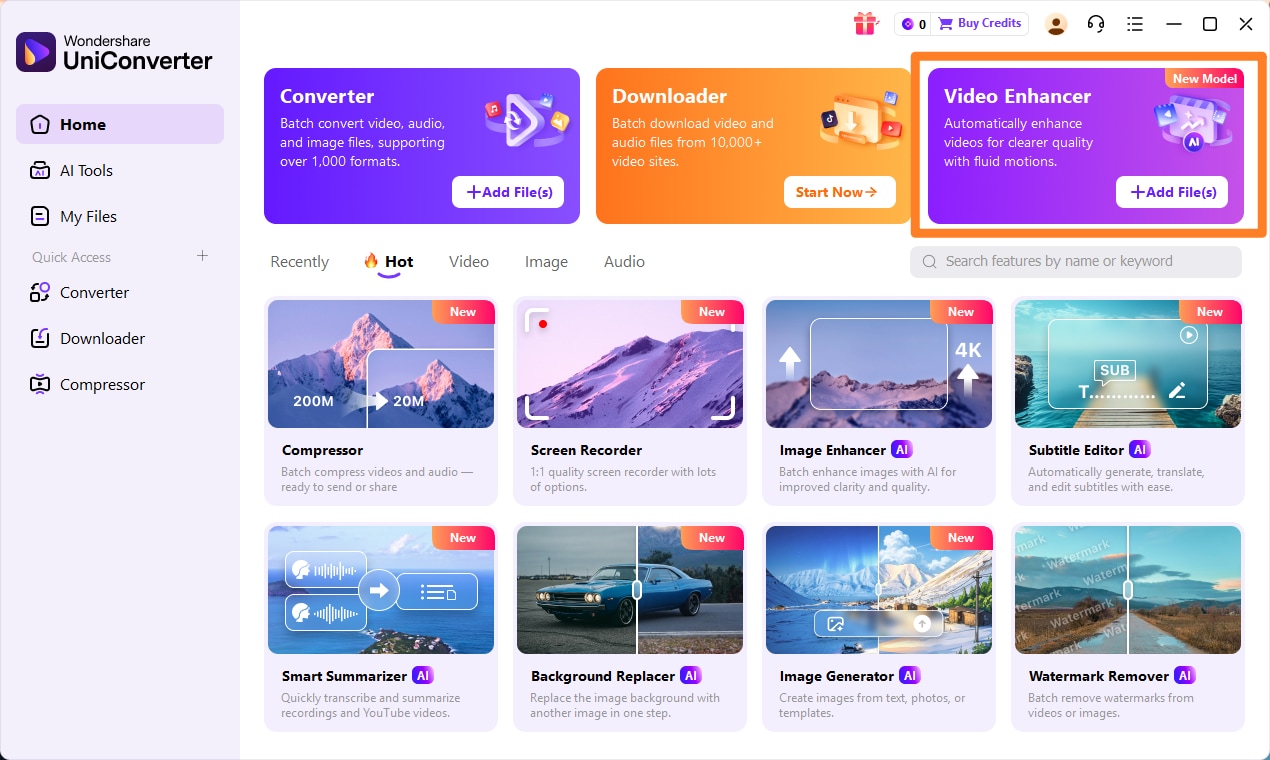
Step 1: Open UniConverter and Choose Video Enhancer
Launch UniConverter on your computer. From the main interface, navigate to the "Toolbox" section and select the "Video Enhancer" feature.
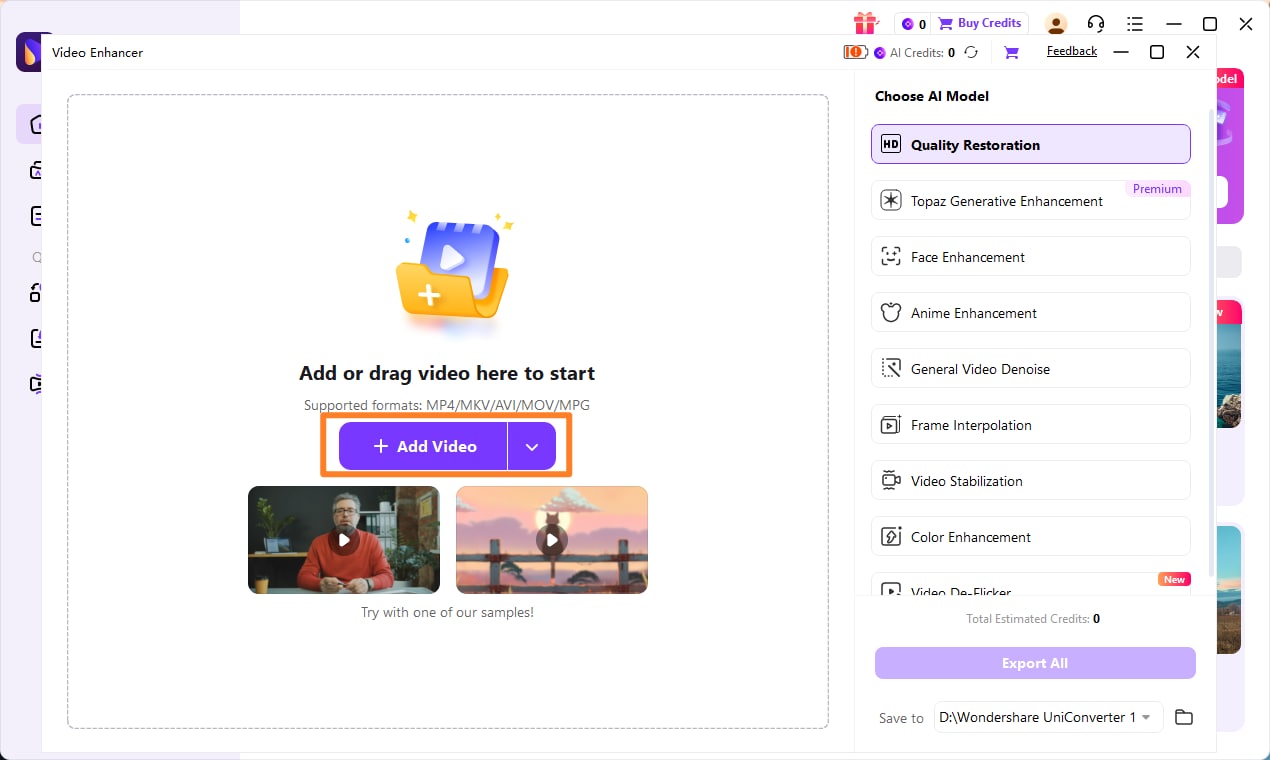
Step 2: Upload the Videos
Click on the "Add Files" button or drag and drop your video files into the UniConverter interface. You can add multiple videos for batch enhancement.
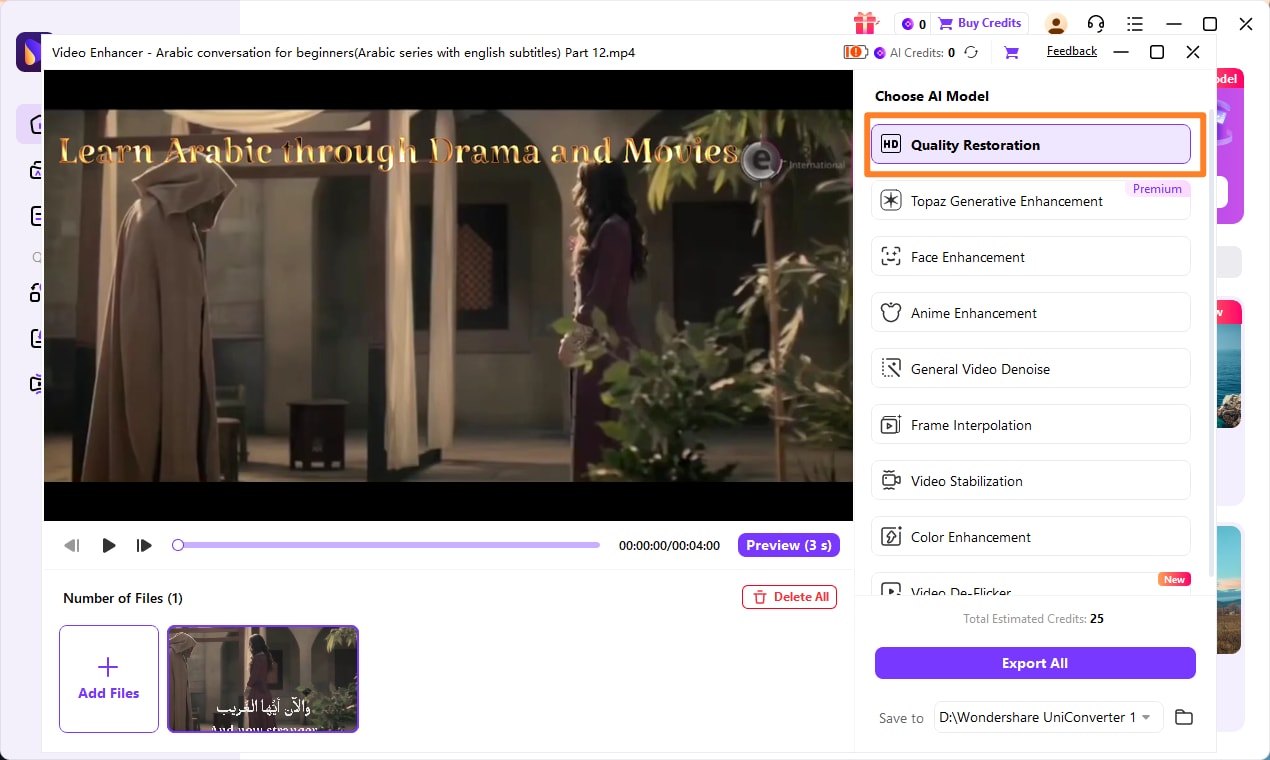
Step 3: Choose Enhancement Model
UniConverter offers various enhancement options such as "Upscale Video," "Optimize Brightness and Contrast," "Denoise Video," and "Stabilize Video." Select the desired enhancement features based on your video's needs. For instance, you might want to remove background without losing quality or utilize a high-definition background remover to refine your footage. If you're looking to change the backdrop, consider using a video background changer or an online background remover for quick edits.
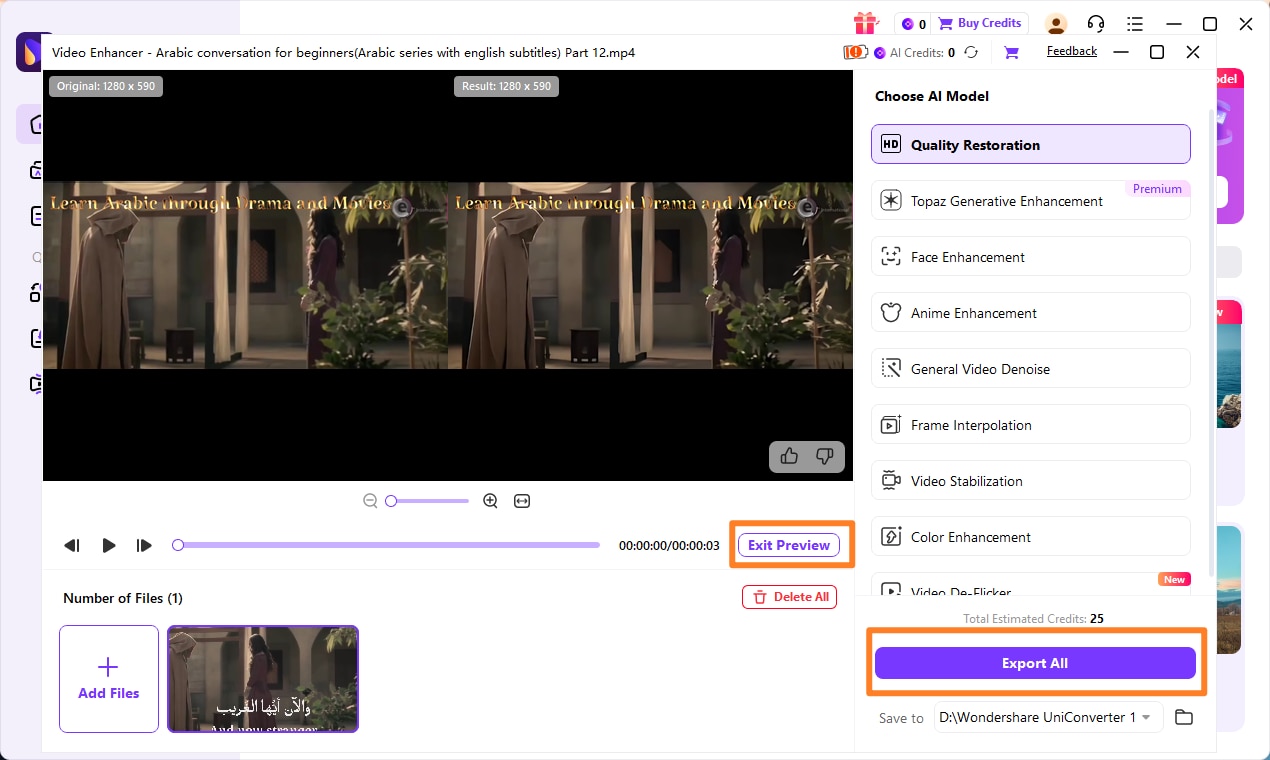
Step 4: Preview and Save the Enhanced Video
After selecting your enhancement options, you can preview the changes to ensure satisfaction. Once satisfied, choose your desired output format and destination folder, then click "Enhance" to process and save your improved video.

Seeking a FlexClip Alternative for Video Enhancement?
Part 7: Conclusion
This FlexClip video enhancer review highlights its position as a convenient and accessible online tool, particularly well-suited for casual creators and small businesses needing quick video touch-ups for social media. Its intuitive interface and cloud-based nature offer significant advantages for users prioritizing ease of use and collaboration over advanced features. However, for demanding professional workflows, high-end projects, or situations requiring offline capabilities and extensive customization, FlexClip's limitations become apparent. Users dealing with sensitive data, large files, or requiring precise control over enhancement parameters will find desktop alternatives like UniConverter, DaVinci Resolve, or Adobe Premiere Pro to be more appropriate. Ultimately, the choice depends on your specific needs, budget, and technical proficiency. It is always recommended to explore free trials of various tools to gain hands-on experience before committing to a particular solution.
Part 8: FAQs
-
1. Is FlexClip Video Enhancer free to use?
FlexClip offers a free plan with limited features and a watermark on output videos. Paid subscriptions unlock more functionalities, higher resolution outputs, and remove watermarks.
-
2. Can FlexClip enhance video resolution?
While FlexClip can improve overall video quality through adjustments like brightness and contrast, its resolution enhancement capabilities, such as true upscaling, are not as robust or advanced as dedicated desktop software.
-
3. Is FlexClip suitable for beginners?
Yes, FlexClip's user-friendly interface and straightforward tools make it highly suitable for beginners and those without extensive video editing experience who need quick and simple enhancements.
-
4. What file formats does FlexClip support?
FlexClip supports common video formats like MP4, MOV, and WebM for both input and output. Support for more advanced or less common formats might be limited compared to desktop applications.
-
5. How does FlexClip compare to desktop video enhancers?
FlexClip offers convenience and accessibility as an online tool, requiring no software installation and enabling cloud-based collaboration. Desktop enhancers, conversely, typically provide more powerful features, advanced customization, offline capabilities, and faster processing for large files by leveraging local hardware.
