
- FlexClip Overview: Online AI enhancer for quick video quality fixes, part of FlexClip's suite.
- Core Features: AI upscaling, noise reduction, sharpening, basic color correction, and batch processing.
- Ideal Users: Perfect for social media creators and marketers needing fast, easy enhancements.
- Limitations: Lacks advanced customization, not for professional film restoration or high-end projects.
- FlexClip vs. UniConverter: FlexClip is online and easy; UniConverter offers desktop power, lossless quality, and GPU acceleration.
- Risks: Data privacy concerns, potential for unnatural over-processing, and recurring subscription costs.
- Decision Factor: Choose based on your needs: quick online fixes (FlexClip) or powerful desktop control (UniConverter).
In this article
- Part 1: What is FlexClip Video Enhancer?
- Part 2: FlexClip Video Enhancer: Core Features, Pros & Cons
- Part 3: FlexClip Video Enhancer: Ideal Users & Use Cases
- Part 4: FlexClip Video Enhancer and Alternatives Comparison
- Part 5: Risks & Pitfalls to Consider
- Part 6: How to Use UniConverter to Efficiently Enhance Videos
- Part 7: Conclusion
- Part 8: FAQs
The digital age has ushered in an unprecedented demand for high-quality video content, yet not all footage is captured perfectly. This is where video enhancement tools, particularly those leveraging artificial intelligence, become indispensable. FlexClip Video Enhancer review delves into a solution designed to bridge the gap between raw, imperfect footage and polished, professional-looking videos. This review will explore its features, assess its strengths and weaknesses, compare it against key competitors, and ultimately help users determine if it's the right tool for their specific video enhancement needs.
Part 1: What is FlexClip Video Enhancer?
FlexClip Video Enhancer is an online AI-powered tool designed to improve the quality of video footage. It is part of the broader FlexClip suite, known for its user-friendly online video editing capabilities. This specific feature aims to address common video imperfections such as low resolution, noise, and blur, making videos clearer, sharper, and more visually appealing. The tool leverages artificial intelligence algorithms to analyze and process video frames, intelligently upscaling resolution, reducing visual noise, and enhancing details without requiring extensive technical knowledge from the user. Our review aims to dissect its effectiveness, ease of use, and overall value proposition in a crowded market.
The Growing Need for AI-Powered Video Enhancement
The proliferation of user-generated content and the increasing importance of visual communication have amplified the demand for efficient video enhancement solutions.
* Accessibility of Video Creation: With smartphones and affordable cameras, almost anyone can create video content, but not always at optimal quality.
* Social Media Standards: Platforms like TikTok, Instagram, and YouTube demand high visual fidelity to capture and retain audience attention.
* Archival and Restoration: There's a growing need to breathe new life into older, lower-resolution footage for modern consumption.
* Time and Cost Efficiency: AI enhancement offers a faster and more cost-effective alternative to traditional, labor-intensive video post-production.
Part 2: FlexClip Video Enhancer: Core Features, Pros & Cons
FlexClip Video Enhancer is positioned as an accessible online solution for improving video quality, integrating seamlessly into the FlexClip ecosystem. Its core capabilities revolve around AI-driven enhancements, aiming to simplify a complex process for everyday users. The tool primarily focuses on visual improvements, making it a go-to for quick fixes rather than deep, professional-grade restoration.
Core Features:
* AI-Powered Upscaling: Intelligently increases video resolution without significant loss of detail.
* Noise Reduction: Minimizes grain and visual artifacts, especially in low-light footage.
* Sharpening and Detail Enhancement: Improves clarity and brings out finer details in blurry or soft footage.
* Color Correction (Basic): Offers fundamental adjustments to color balance and saturation.
* Batch Processing: Allows for enhancing multiple video clips simultaneously, saving time.
Pros:
* Intuitive Interface for Quick Enhancements: The web-based platform is exceptionally user-friendly, allowing even beginners to navigate and apply enhancements with ease.
* AI-Powered Upscaling and Noise Reduction: Delivers noticeable improvements in video clarity and reduces unwanted visual noise, making footage look more polished.
* Integrated Video Editing Suite: As part of FlexClip, it offers a seamless transition from enhancement to basic video editing tasks like trimming, adding text, and music.
Cons:
* Limited Advanced Customization Options: Lacks granular control over enhancement parameters, which might be a drawback for users seeking precise adjustments.
* Performance Can Vary with Complex Footage: While effective for general improvements, highly degraded or extremely complex footage might not see dramatic, professional-level transformations.
Part 3: FlexClip Video Enhancer: Ideal Users & Use Cases
FlexClip Video Enhancer caters to a specific segment of the market, primarily those who prioritize ease of use and quick results over deep, professional-grade customization. It's designed for individuals and small teams who need to enhance video quality for digital platforms without investing in expensive software or extensive training.
Best Use Case: Quick Social Media Content Enhancement
For content creators, social media marketers, and small businesses who frequently produce videos for platforms like Instagram, TikTok, YouTube Shorts, or Facebook, FlexClip Video Enhancer is an excellent fit. Imagine a scenario where a social media manager has captured a product demo on their phone, but the lighting wasn't ideal, leading to some graininess and slightly soft focus. Instead of re-shooting or hiring a professional editor, they can quickly upload the video to FlexClip, apply AI enhancement to reduce noise and sharpen the image, and then proceed to add text overlays and background music within the same platform. This workflow is efficient, cost-effective, and perfectly aligns with the fast-paced nature of social media content creation, ensuring visually appealing content is published promptly.
Limited Use Case: Professional Film Restoration Projects
Conversely, FlexClip Video Enhancer is not suited for professional film restoration projects or high-end cinematic post-production. Consider a film archivist working on digitizing and restoring decades-old film reels, which often suffer from severe degradation, scratches, color fading, and significant resolution loss. These projects require highly specialized software with advanced algorithms for frame interpolation, artifact removal, precise color grading, and often manual intervention at a pixel level. FlexClip's automated, broad-stroke enhancements would be insufficient for the meticulous and nuanced work required in professional film restoration, where every detail matters and the output must meet broadcast or theatrical quality standards.
Part 4: FlexClip Video Enhancer and Alternatives Comparison
When evaluating video enhancement tools, it's crucial to compare FlexClip Video Enhancer against its competitors to understand its position in the market. While FlexClip offers an accessible online solution, other tools provide varying levels of control, quality, and features.
| Feature / Product | FlexClip Video Enhancer | UniConverter | Topaz Video AI | DaVinci Resolve |
| Processing Speed | Moderate (Cloud-based) | Fast (GPU-accelerated) | Very Fast (GPU-intensive) | Varies (Hardware dependent) |
| Output Quality | Good for general use | Excellent, lossless | Superior, highly detailed | Professional-grade |
| Ease of Use | Very High (Beginner-friendly) | High (Intuitive UI) | Moderate (Learning curve) | Low (Steep learning curve) |
| Customer Support | Email/Chat | Email/Live Chat/Resources | Email/Forum | Extensive Community/Docs |
| Security | Standard Cloud Security | Local Processing Option | Local Processing | Local Processing |
| Pricing Model | Subscription | One-time purchase/Subscription | One-time purchase | Free/Studio Version |
Key Differentiators: AI Accuracy, Ease of Use, Feature Set
FlexClip Video Enhancer stands out for its exceptional ease of use and online accessibility, making it ideal for quick enhancements without software installation. Its AI accuracy is good for common issues but might not match dedicated desktop solutions. UniConverter offers a strong balance, providing excellent output quality with GPU acceleration and a user-friendly interface, making it a robust alternative for those needing more power than FlexClip but less complexity than professional tools. Topaz Video AI excels in AI accuracy and detailed enhancement, targeting users who prioritize the absolute best quality, albeit with a steeper learning curve. DaVinci Resolve, while offering unparalleled professional features, is a comprehensive editing suite where enhancement is just one component, demanding significant expertise. For users prioritizing speed and simplicity for social media, FlexClip is a solid choice. For those needing higher quality and more control without going fully professional, UniConverter is a compelling option.
Part 5: Risks & Pitfalls to Consider
While FlexClip Video Enhancer offers convenience and accessibility, users should be aware of potential risks and limitations, especially when dealing with online tools and AI-driven processes. Understanding these pitfalls can help manage expectations and ensure a smoother workflow.
Data Privacy and Security Concerns
As a cloud-based service, uploading video files to FlexClip means entrusting your data to a third-party server. For sensitive or proprietary footage, there's always a risk of data breaches or unauthorized access, however small. Users should review FlexClip's privacy policy to understand how their data is stored, processed, and protected. This concern is amplified for businesses or individuals handling confidential client information.
Potential for Over-Processing and Unnatural Results
AI enhancement, while powerful, isn't always perfect. There's a risk that the automated algorithms might over-process footage, leading to an artificial or "plastic" look. Excessive sharpening can introduce halos, and aggressive noise reduction might smooth out important textures, making faces or objects appear unnatural. This is particularly true for videos that are already of decent quality, where enhancement might degrade rather than improve the original footage.
Subscription Model Value Proposition
FlexClip operates on a subscription model, which means continuous costs for access to its features. Users need to critically evaluate if the frequency of their video enhancement needs justifies a recurring expense. For occasional users, a one-time purchase software or a free alternative might be more cost-effective. The value proposition diminishes if the enhancements provided don't consistently meet the user's quality expectations.
Output Quality Limitations for High-End Needs
While FlexClip is effective for general improvements, it may fall short for users with high-end or professional output requirements. The level of detail restoration, artifact removal, and color precision might not match what dedicated desktop software or professional-grade tools can achieve. For projects requiring broadcast quality, cinematic aesthetics, or meticulous restoration of severely damaged footage, FlexClip's automated approach might not provide the necessary finesse or control.
Part 6: How to Use UniConverter to Efficiently Enhance Videos
When other tools fall short, offering inconsistent enhancements, lacking batch processing, or introducing unwanted watermarks and ads, UniConverter emerges as a robust and reliable solution. It's designed to be an all-in-one video toolkit, providing stable, lossless, and high-quality video enhancement with GPU acceleration, extensive format support, and a completely ad-free experience. UniConverter is ideal for users who need a powerful yet user-friendly desktop application to elevate their video quality efficiently.
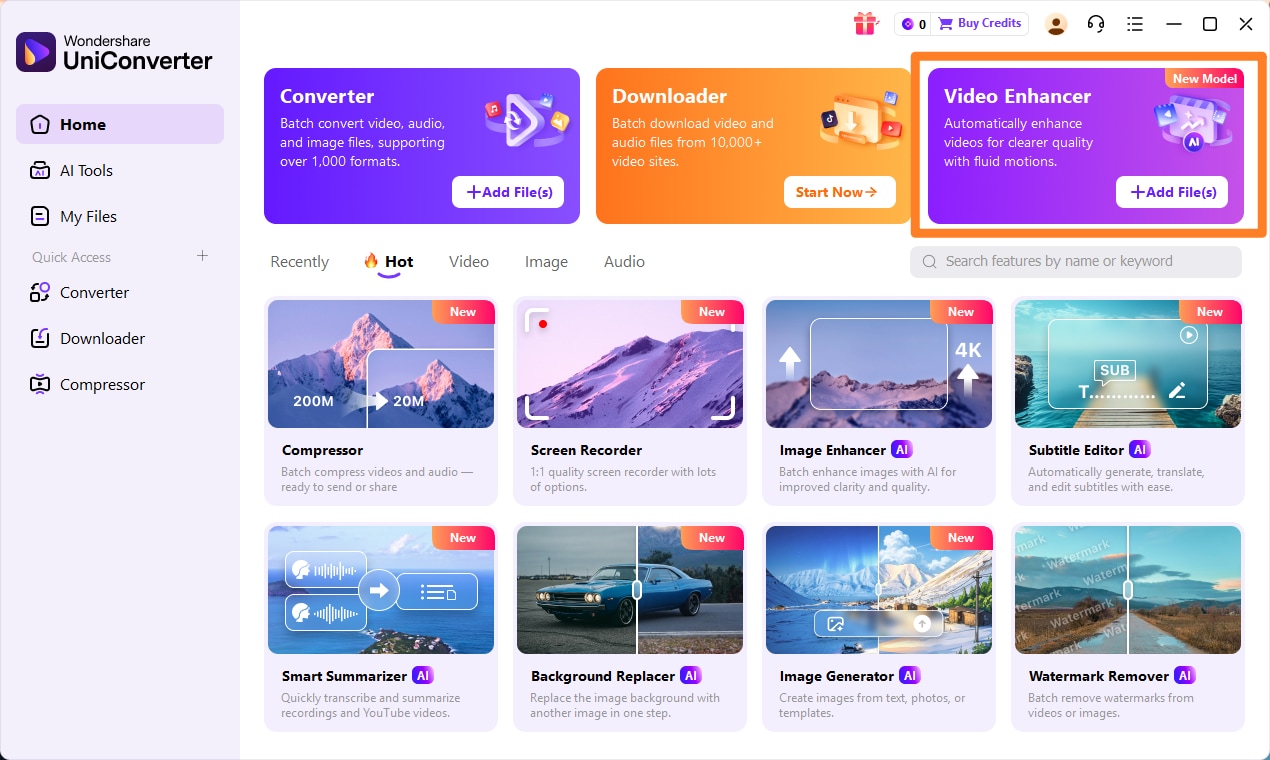
Step 1: Open UniConverter and Choose Video Enhancer
Launch UniConverter on your computer. From the main interface, navigate to the "Toolbox" section and select the Video Enhancer feature.
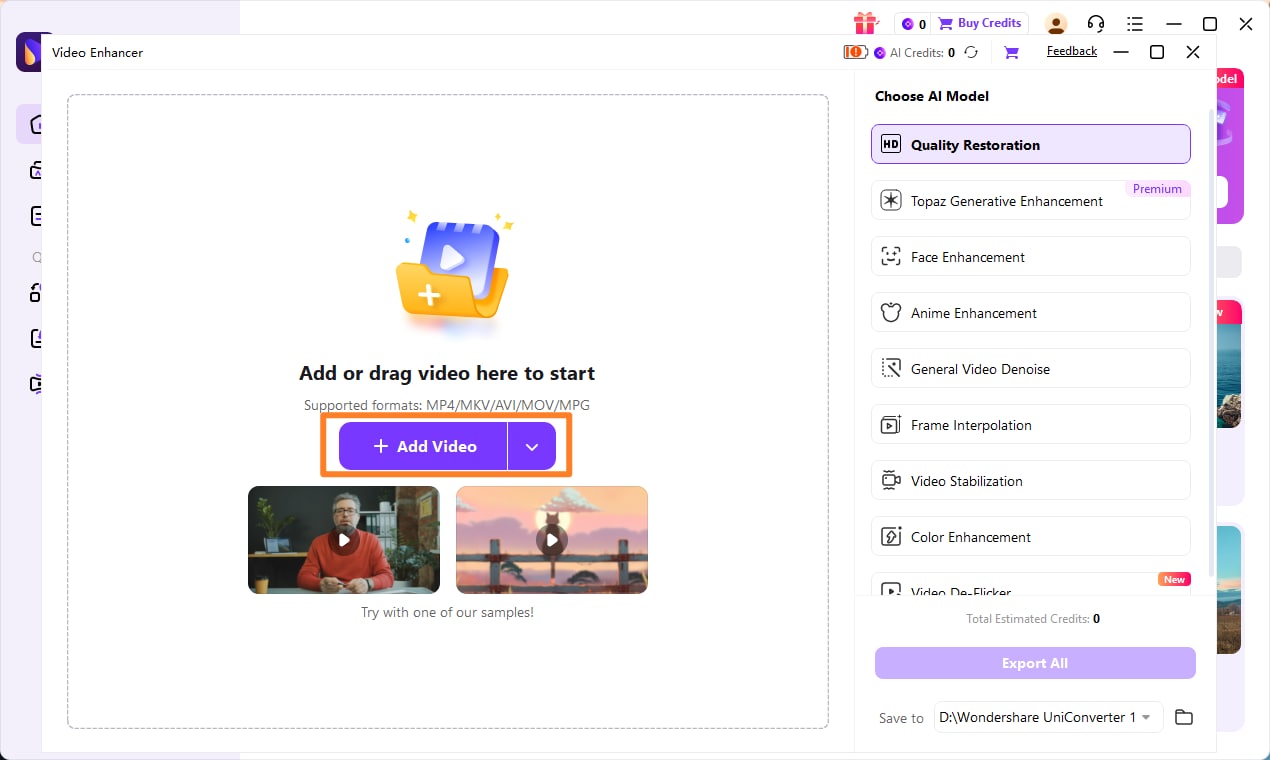
Step 2: Upload the Videos
Click on the "Add Files" button or drag and drop your video files into the UniConverter window. You can add multiple videos for batch processing.
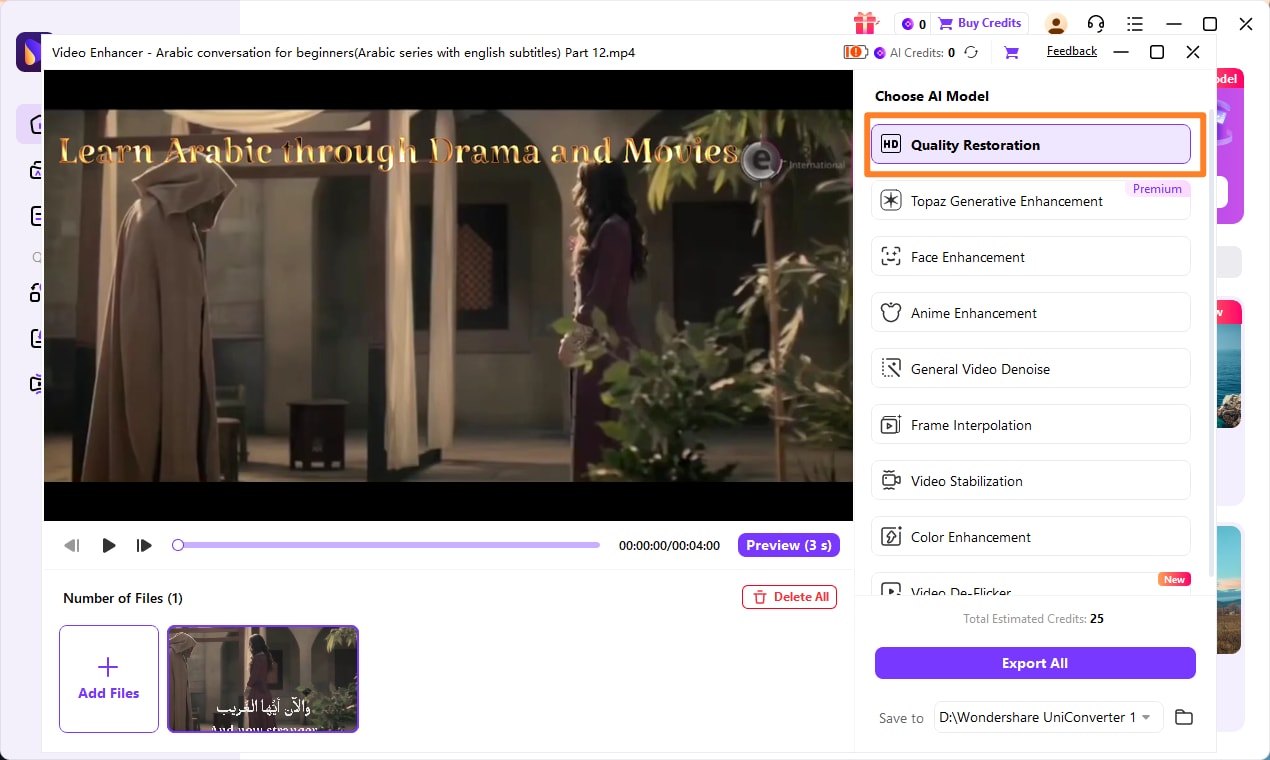
Step 3: Choose Enhancement Model
UniConverter offers various enhancement models. Select the desired options such as "Upscale Resolution," "Optimize Brightness and Contrast," "Remove Video Noise," or Stabilize Video. You can also adjust output settings like format and resolution. For instance, you can upscale video to 4K to improve clarity.
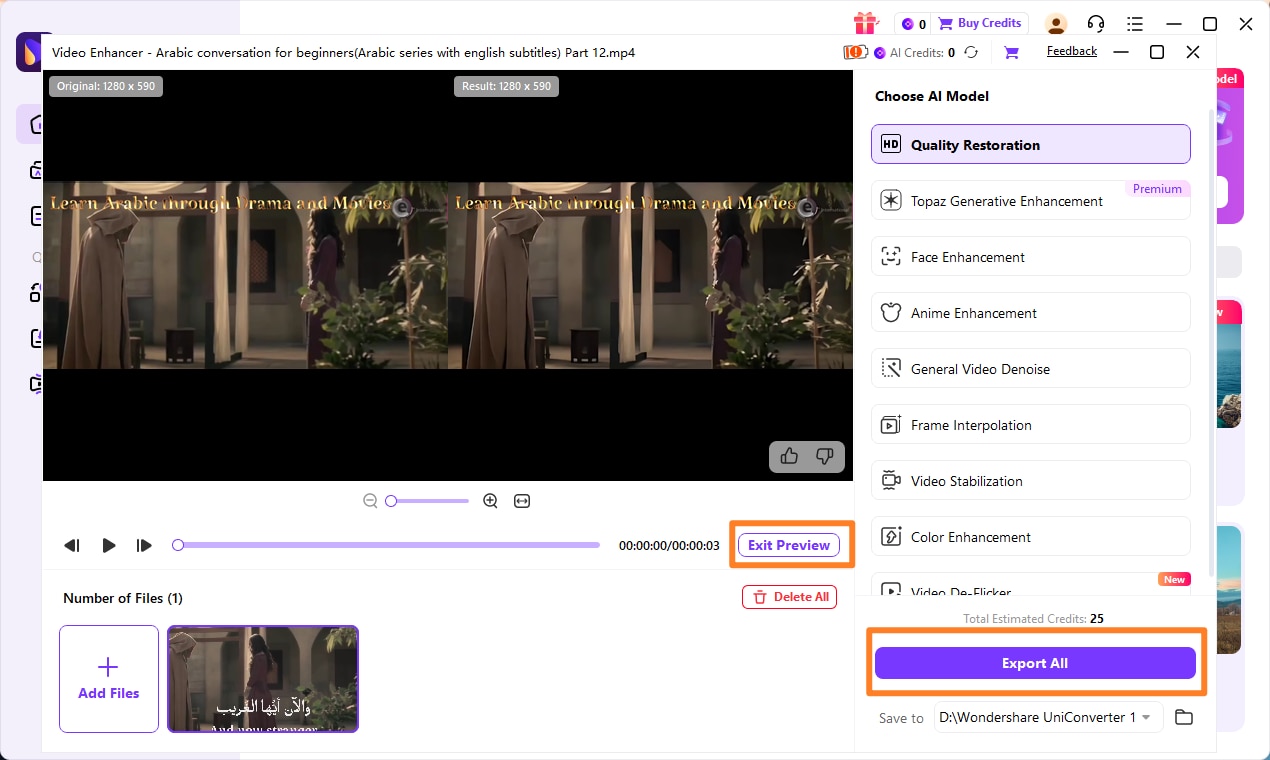
Step 4: Preview and Save the Enhanced Video
After selecting your enhancement options, click "Preview" to see the changes. Once satisfied, click the "Enhance" button to start the process and save your high-quality video. This allows you to unblur a video or fix pixelated videos with ease.

Seeking a FlexClip Video Enhancer Alternative?
Part 7: Conclusion
The FlexClip Video Enhancer review reveals a tool that excels in accessibility and ease of use, making it an attractive option for casual users and content creators who need quick, AI-powered video enhancements for social media and online platforms. Its intuitive interface and integration within the broader FlexClip suite simplify the workflow for basic improvements like upscaling and noise reduction. However, its limitations in advanced customization and potential for over-processing mean it may not satisfy the demands of professional film restoration or high-end production. For small businesses and marketers, FlexClip offers a cost-effective way to maintain visual quality for their digital content. For those requiring more robust features, greater control, and higher output quality without the complexities of professional software, alternatives like UniConverter present a compelling desktop solution, offering a balance of power and user-friendliness. Ultimately, the choice depends on the user's specific needs, technical expertise, and budget, with FlexClip serving as a strong entry-level option for immediate, web-based enhancements.
Part 8: FAQs
-
1. What types of videos can FlexClip Video Enhancer improve?
FlexClip Video Enhancer is designed to improve a wide range of videos, particularly those suffering from low resolution, blurriness, or excessive noise. It's most effective for user-generated content, social media videos, and general footage that needs a quick visual uplift.
-
2. Is FlexClip Video Enhancer suitable for professional use?
While FlexClip can enhance videos for professional social media content or marketing materials, it may not be suitable for high-end professional film restoration, broadcast-quality productions, or projects requiring precise, granular control over every aspect of the enhancement process. Dedicated desktop software offers more advanced features for such needs.
-
3. How does FlexClip Video Enhancer compare to desktop software?
FlexClip Video Enhancer offers the convenience of an online, browser-based tool, making it highly accessible without software installation. Desktop software like UniConverter or Topaz Video AI typically offers more powerful processing capabilities, greater control over enhancement parameters, and often superior output quality, especially for large or complex video files.
-
4. Are there any free alternatives to FlexClip Video Enhancer?
Yes, there are some free online video enhancers or basic editing tools with enhancement features, but they often come with limitations such as watermarks, lower quality output, slower processing, or fewer features. For truly free and high-quality enhancement, open-source desktop software might be an option, though they usually have a steeper learning curve.
-
5. What are the system requirements for using FlexClip Video Enhancer?
As a cloud-based tool, FlexClip Video Enhancer primarily requires a stable internet connection and a modern web browser. While it doesn't have specific local system requirements like desktop software, a faster internet connection will significantly improve upload and download times, and a capable computer will ensure a smoother user experience within the browser.
