
- FCPX Enhancers: Improve video quality within Final Cut Pro, addressing common issues like low resolution and noise.
- Why Enhance: Crucial for professional output, meeting broadcast standards, future-proofing content, and gaining a competitive edge.
- FCPX Pros: Seamless integration, AI-powered tools, and non-destructive editing enhance workflow efficiency.
- FCPX Cons: Steep learning curve and demanding hardware requirements can be challenging for users.
- Target Audience: Ideal for professional filmmakers and content creators needing high-quality output and complex enhancements.
- Limited Use: Less suitable for quick social media edits where speed and simplicity are prioritized over granular control.
- FCPX vs. Competitors: FCPX integrates well; UniConverter is user-friendly; Topaz AI excels in upscaling; DaVinci Resolve offers comprehensive tools.
- Risks: Over-processing, hardware bottlenecks, compatibility issues, and data privacy concerns with cloud-based enhancers.
- UniConverter Solution: Offers efficient, stable, and lossless video enhancement with GPU acceleration, a robust alternative.
- Decision: Choose based on desired quality, workflow, and resources. UniConverter is great for ease-of-use and efficiency.
In this article
- Part 1: What is Final Cut Pro Video Enhancer?
- Part 2: Final Cut Pro Video Enhancer: Core Features, Pros, and Cons
- Part 3: Final Cut Pro Video Enhancer: Target Audience and Use Cases
- Part 4: Final Cut Pro Video Enhancer vs. Competitors
- Part 5: Risks and Pitfalls of Using FCPX Video Enhancers
- Part 6: How to Use UniConverter to Efficiently Enhance Videos
- Part 7: Conclusion
- Part 8: FAQs
Final Cut Pro Video Enhancer Review: Elevating Your Footage
This Final Cut Pro video enhancer review delves into the capabilities of various tools designed to improve footage quality within or alongside Apple's professional editing suite. We'll explore the core features, advantages, and limitations of enhancing videos for Final Cut Pro, comparing integrated solutions with dedicated third-party alternatives. This review aims to provide a comprehensive guide for filmmakers, content creators, and enthusiasts seeking to elevate their video projects, offering insights into optimal usage scenarios and potential pitfalls to ensure informed decision-making.
Part 1: What is Final Cut Pro Video Enhancer?
A Final Cut Pro video enhancer refers to any software or plugin, whether built-in or third-party, designed to improve the visual quality of video footage within or for use with Final Cut Pro X (FCPX). These tools address common issues like low resolution, noise, poor lighting, and shaky footage, aiming to produce a cleaner, sharper, and more professional-looking final product. The core problem these enhancers solve is the often-unavoidable reality of less-than-perfect source footage, transforming it into broadcast-ready or high-quality content. This review will dissect the effectiveness and practicality of these solutions in a professional post-production environment.
The Growing Need for Video Enhancement in Post-Production
The demand for high-quality video content has never been greater, pushing creators to seek tools that can perfect their visuals.
* Addressing Imperfect Source Footage: Many shoots occur in less-than-ideal conditions, resulting in grainy, blurry, or poorly exposed video.
* Meeting High Broadcast Standards: Professional productions require impeccable visual fidelity, often necessitating enhancement to meet industry benchmarks.
* Future-Proofing Content: Upscaling lower-resolution footage ensures it remains relevant and visually appealing on higher-resolution displays.
* Competitive Edge: Enhanced video stands out in a crowded digital landscape, attracting more viewers and engagement.
Part 2: Final Cut Pro Video Enhancer: Core Features, Pros, and Cons
Final Cut Pro's native capabilities, augmented by specialized plugins, offer a robust ecosystem for video enhancement. These tools typically provide features such as AI-powered upscaling, noise reduction, stabilization, color correction, and sharpening. The strength lies in their ability to integrate directly into the FCPX workflow, allowing editors to apply enhancements without leaving their primary editing environment. This seamless integration is crucial for maintaining efficiency in demanding production schedules. However, the effectiveness and ease of use can vary significantly between different solutions.
Pros:
* Seamless Integration with FCPX Workflow: Many enhancers are designed as FCPX plugins, allowing for direct application and real-time preview within the editing timeline.
* Advanced AI-Powered Upscaling and Noise Reduction: Leveraging machine learning, these tools can intelligently increase resolution and remove unwanted grain without sacrificing detail.
* Real-time Preview and Non-Destructive Editing: Changes can be viewed instantly and adjusted, with the original footage remaining untouched, offering flexibility.
Cons:
* Steep Learning Curve for New Users: Advanced features and settings can be complex, requiring time and effort to master for optimal results.
* Resource-Intensive, Requires Powerful Hardware: High-quality enhancement, especially AI-driven processes, demands significant CPU and GPU power, potentially slowing down less robust systems.
Part 3: Final Cut Pro Video Enhancer: Target Audience and Use Cases
Final Cut Pro video enhancers primarily cater to a professional audience that demands high-quality output and efficient workflows. These tools are indispensable for filmmakers, documentary producers, and commercial videographers who often work with diverse footage sources and need to deliver polished results. While powerful, their complexity and resource demands make them less suitable for casual users or quick social media edits. Understanding the specific scenarios where these enhancers shine, and where they fall short, is key to maximizing their value.
Best Use Case: Professional Filmmakers and Content Creators
For professionals, these enhancers are invaluable for salvaging challenging footage, such as low-light shots, archival material, or drone footage with inherent noise. They are essential for upscaling HD content to 4K or 8K for future-proofing or broadcast delivery, ensuring every frame meets stringent quality standards. The ability to integrate these enhancements into a complex post-production pipeline without disrupting the workflow is a major advantage for feature films, documentaries, and high-end commercial projects.
Limited Use Case: Quick Edits for Social Media
For users primarily focused on rapid content creation for platforms like TikTok or Instagram, the overhead of learning and applying advanced enhancement techniques in FCPX might be excessive. Simpler, often automated, mobile apps or online tools are usually more efficient for quick touch-ups and filters, where speed and ease of use outweigh granular control over image fidelity.
Part 4: Final Cut Pro Video Enhancer vs. Competitors
When evaluating video enhancement solutions, it's crucial to compare Final Cut Pro's integrated options with standalone software. While FCPX offers robust native tools and a plugin ecosystem, dedicated enhancers like Topaz Video AI and DaVinci Resolve provide specialized capabilities that might surpass FCPX in certain areas. UniConverter, on the other hand, offers a more generalized, user-friendly approach. Each tool has its strengths, catering to different user needs and technical proficiencies.
| Feature/Scenario | Final Cut Pro Video Enhancer | UniConverter | Topaz Video AI | DaVinci Resolve Studio |
| Integration | Excellent (FCPX) | Standalone | Standalone | Excellent (Integrated) |
| AI Upscaling | Advanced (Plugins) | Moderate | Advanced | Advanced |
| Ease of Use | Moderate | High | Moderate | Low |
| Cost | Included/Add-on | One-time | One-time | One-time |
| Processing Speed | Good (GPU dependent) | Fast | Very Fast | Fast (GPU dependent) |
| Output Quality | High | Good | Excellent | Excellent |
| Customer Support | Apple Support/Plugin Devs | Good | Excellent | Good |
| Security | High | High | High | High |
Final Cut Pro's strength lies in its seamless integration for FCPX users, offering a cohesive editing and enhancement experience. Topaz Video AI excels in AI-driven upscaling and noise reduction, often delivering superior results for challenging footage, albeit as a standalone application. DaVinci Resolve Studio provides a comprehensive suite for color grading and advanced enhancement, making it a strong contender for those needing an all-in-one post-production solution. UniConverter stands out for its user-friendliness and efficiency in basic enhancement tasks, ideal for quick fixes without a steep learning curve.
Part 5: Risks and Pitfalls of Using FCPX Video Enhancers
While Final Cut Pro video enhancers offer significant benefits, their improper use or reliance on certain types of tools can introduce several risks and pitfalls. Understanding these potential issues is crucial for maintaining video quality, ensuring workflow efficiency, and protecting data. From over-processing to hardware limitations and compatibility concerns, users must navigate these challenges carefully to achieve desired results without compromising their projects.
Potential for Over-Processing and Unnatural Results
Aggressive application of enhancement features like sharpening, noise reduction, or upscaling can lead to an "over-processed" look. This manifests as artifacts, plastic-like skin textures, or a loss of natural film grain, making the footage appear artificial and detracting from its original aesthetic. Achieving a natural, subtle enhancement requires a delicate touch and careful parameter adjustment.
Hardware Requirements and Performance Bottlenecks
High-quality video enhancement, particularly AI-driven processes, is extremely demanding on hardware. Systems with insufficient RAM, an outdated CPU, or a weak GPU will experience significant slowdowns, long rendering times, and potential crashes. This can severely impede workflow efficiency and frustrate editors working on tight deadlines.
Compatibility Issues with Older FCPX Versions
Third-party plugins and even some native FCPX features might not be fully compatible with older versions of Final Cut Pro. This can lead to unexpected errors, crashes, or features not working as intended, forcing users to either update their software (which might have its own compatibility issues with other plugins) or find alternative solutions.
Data Privacy Concerns with Cloud-Based Enhancers
Some video enhancement services operate in the cloud, requiring users to upload their footage to external servers. For sensitive projects or proprietary content, this raises significant data privacy and security concerns. Users must carefully review the terms of service and security protocols of any cloud-based enhancer before entrusting their valuable footage to them.
Part 6: How to Use UniConverter to Efficiently Enhance Videos
When other tools fall short with batch processing, unstable enhancements, or weak results, UniConverter offers a robust and reliable alternative. It provides a comprehensive solution for video enhancement, ensuring stable, lossless quality with GPU acceleration and support for a wide range of formats. UniConverter is an all-in-one ultimate solution for your video enhancement needs, free from ads and pop-ups.
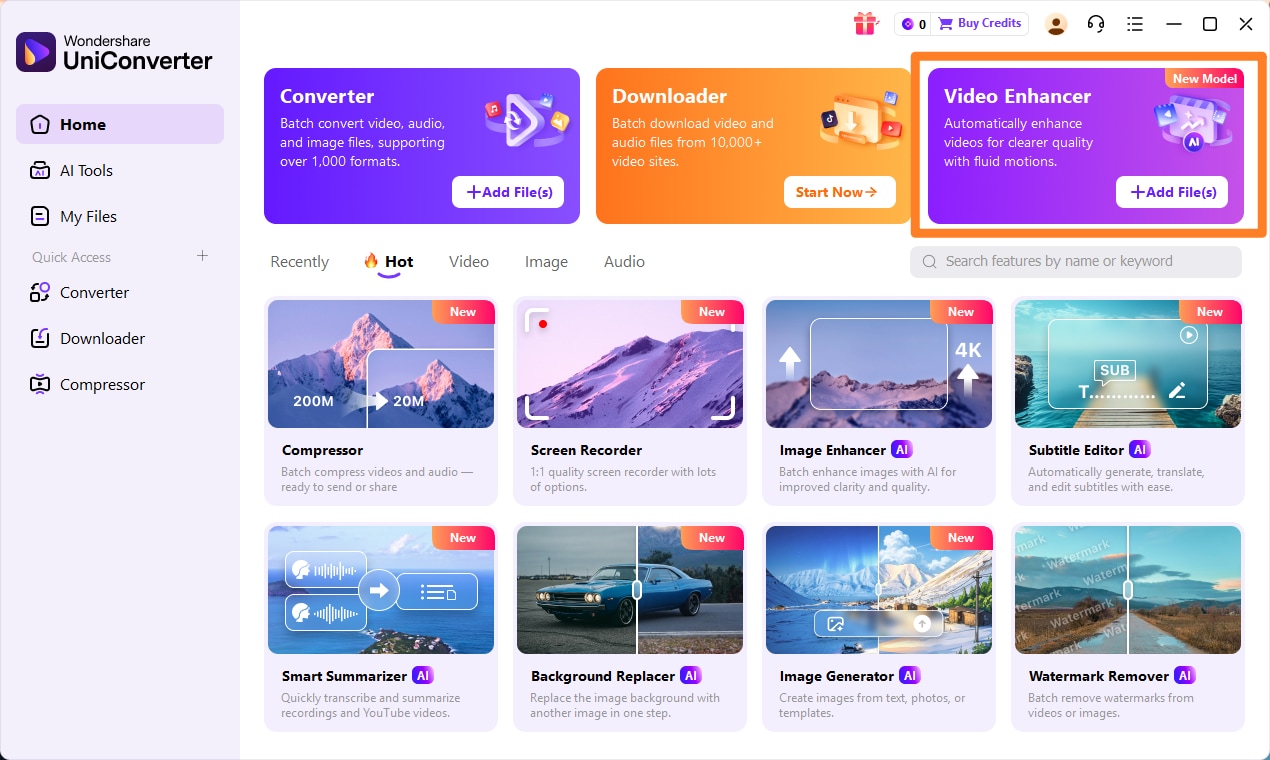
Step 1: Open UniConverter and Choose Video Enhancer
Launch UniConverter on your computer. From the main interface, navigate to the "Toolbox" section and select the "Video Enhancer" feature.
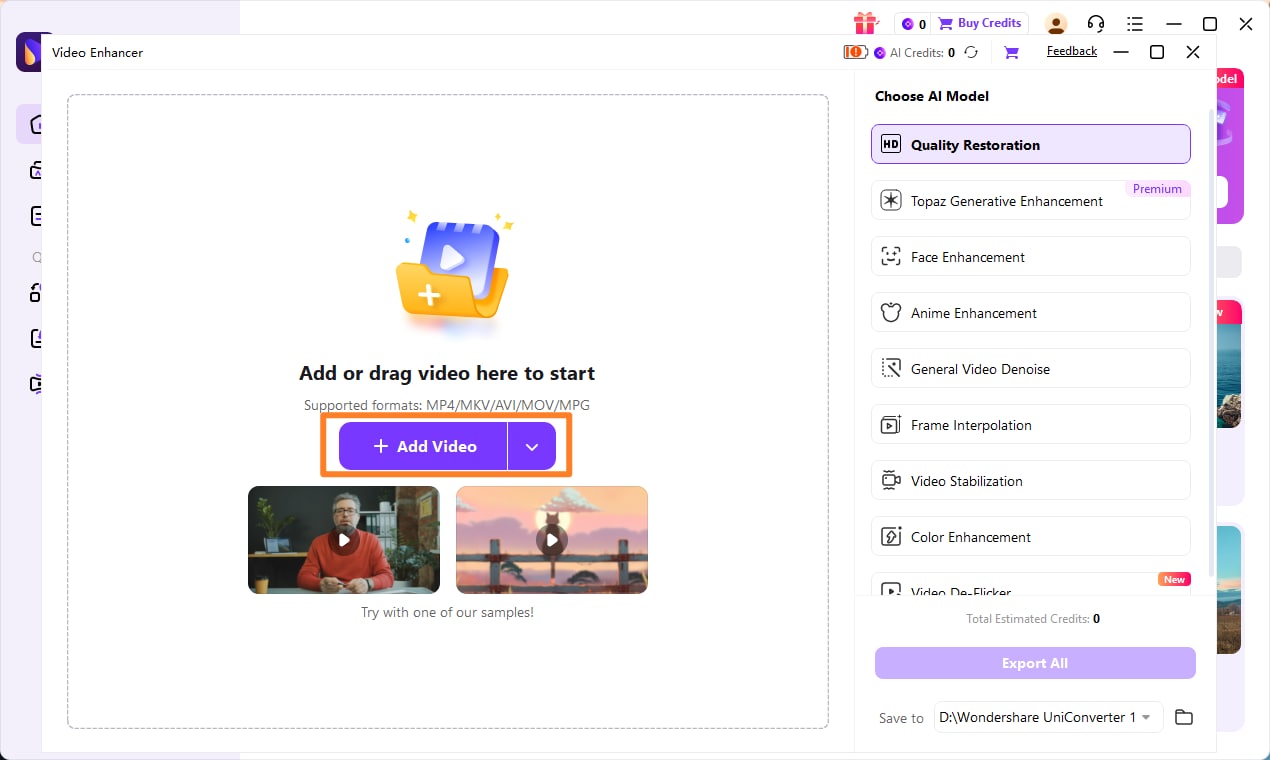
Step 2: Upload the Videos
Click the "Add Files" button or drag and drop your video files into the UniConverter window. You can add multiple videos for batch processing.
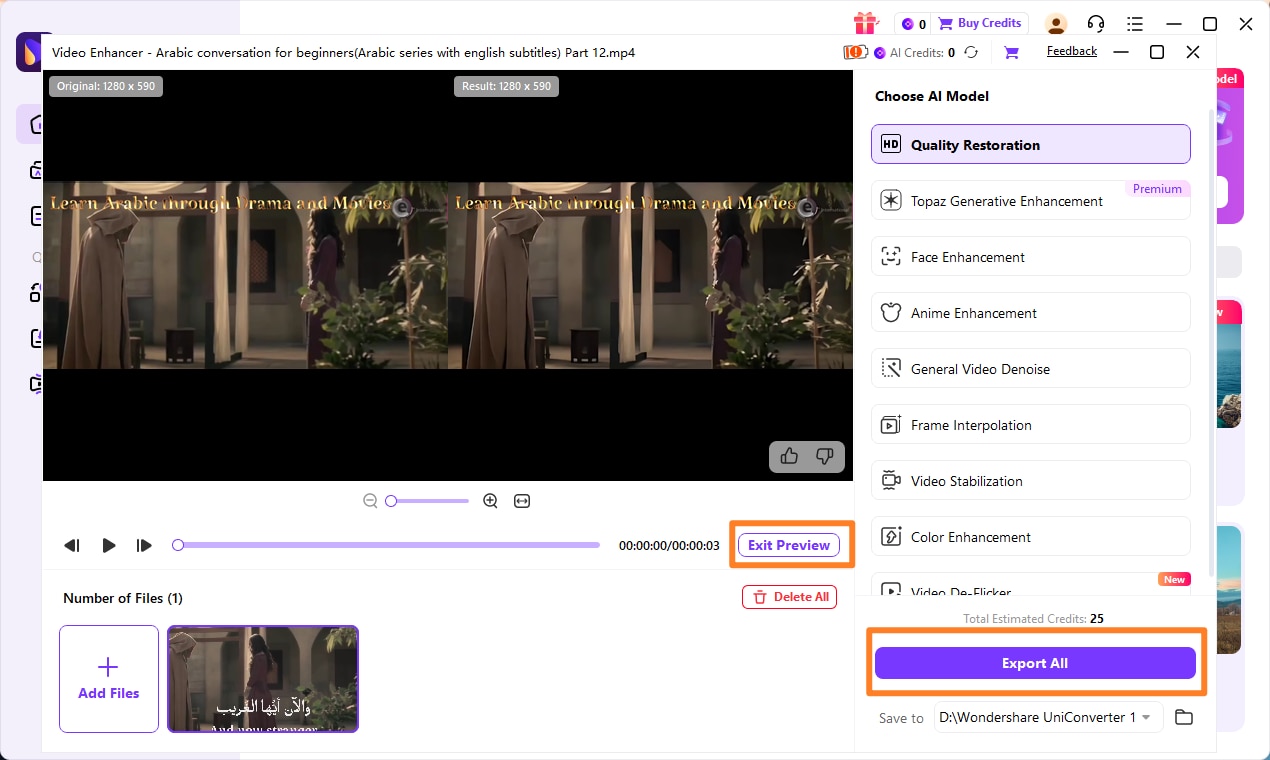
Step 3: Choose Enhancement Model
UniConverter offers various enhancement models. Select the appropriate options such as "Upscale Resolution," "Optimize Brightness and Contrast," "Remove Video Noise," or "Stabilize Video" based on your specific needs. Adjust the intensity or parameters as required. For instance, you might want to remove background without losing quality or utilize a high-definition background remover for specific projects. If you're looking to change video background, UniConverter provides the tools to do so effectively.

Step 4: Preview and Save the Enhanced Video
Before exporting, use the "Preview" function to see the enhanced result. Once satisfied, choose your desired output format and destination folder, then click "Enhance" to save your high-quality video. You can even explore options for an online background remover if you prefer web-based tools, or learn how to remove background from SVG images.

Seeking a Powerful Final Cut Pro Alternative?
Part 7: Conclusion
This Final Cut Pro video enhancer review highlights the diverse landscape of tools available for improving video quality. For professional FCPX users, leveraging built-in tools and specialized plugins offers the most integrated and powerful enhancement capabilities, particularly for complex projects requiring granular control and high fidelity. However, the learning curve and hardware demands can be significant. Beginners or users with cross-platform needs might find dedicated, user-friendly enhancers like UniConverter to be more accessible and efficient for basic to moderate enhancement tasks. Ultimately, the best choice balances the desired quality, workflow efficiency, and available resources. Careful consideration of each tool's strengths and weaknesses in specific use cases will lead to the most effective and satisfying results.
Part 8: FAQs
-
1. Can Final Cut Pro enhance video quality automatically?
Final Cut Pro offers some automatic enhancement features, such as "Balance Color" and basic noise reduction, but for significant quality improvements like upscaling or advanced noise removal, manual adjustments or third-party plugins are usually required.
-
2. What are the best third-party video enhancers for FCPX?
Popular third-party video enhancers for FCPX include plugins from companies like Red Giant (e.g., Denoiser III), Neat Video for advanced noise reduction, and various upscaling solutions that integrate with FCPX. Topaz Video AI is also a highly regarded standalone option for AI-driven enhancement.
-
3. Does video enhancement in FCPX reduce file size?
Generally, video enhancement in FCPX does not reduce file size; in fact, improving quality (e.g., upscaling resolution or adding detail) can often lead to larger file sizes, especially when exporting in high-quality codecs.
-
4. How do I fix grainy video in Final Cut Pro?
To fix grainy video in Final Cut Pro, you can use FCPX's built-in noise reduction filter (found in the Effects Browser under "Noise Reduction"). For more advanced and effective results, consider using third-party plugins like Neat Video or Red Giant Denoiser III, which offer superior algorithms for grain removal.
-
5. Is it worth investing in a dedicated video enhancer for FCPX?
For professionals who frequently deal with challenging footage, require high-quality output, or need advanced upscaling and noise reduction capabilities beyond FCPX's native tools, investing in a dedicated video enhancer or a powerful third-party plugin is definitely worth it. For casual users, FCPX's built-in features might suffice.
