
- Value: Filmora Video Enhancer excels for casual users and social media creators seeking easy, effective video improvements.
- Comparison: It offers user-friendliness, while alternatives like Topaz AI and DaVinci Resolve provide more professional depth.
- Decision: Choose Filmora for quick enhancements; opt for UniConverter for balanced, comprehensive, and stable results.
- Risk: Be aware of potential over-processing, subscription costs, and performance issues on older hardware.
- Solution: UniConverter provides efficient, stable, and ad-free batch enhancement, outperforming Filmora in many scenarios.
In this article
- Part 1: What is Filmora Video Enhancer?
- Part 2: Filmora Video Enhancer: Core Features, Pros & Cons
- Part 3: Filmora Video Enhancer: Ideal Users & Scenarios
- Part 4: Filmora Video Enhancer and Alternatives Comparison
- Part 5: Risks and Pitfalls to Consider
- Part 6: How to Efficiently Enhance Video and Images with UniConverter
- Part 7: Final Verdict & Recommendations
- Part 8: FAQs
In the ever-evolving digital landscape, video content reigns supreme, driving the demand for tools that can elevate raw footage into polished, professional-looking masterpieces. From casual social media posts to meticulously crafted documentaries, the desire to enhance video quality is universal. This Filmora video enhancer review delves into one such prominent tool, Filmora Video Enhancer, examining its capabilities, limitations, and how it stacks up against its rivals. We will explore its core features, analyze its suitability for various user scenarios, and highlight potential pitfalls, ultimately guiding you toward an informed decision in your video enhancement journey.
Part 1: What is Filmora Video Enhancer?
Filmora Video Enhancer is a dedicated software component or feature within the broader Filmora video editing suite, designed to improve the visual quality of video footage. It leverages advanced algorithms, including AI, to address common video imperfections such as blurriness, noise, low resolution, and poor lighting. Its primary objective is to make videos look sharper, clearer, and more vibrant, often transforming mediocre clips into visually appealing content. This review aims to dissect its effectiveness, user experience, and overall value proposition in a crowded market.
The Landscape of Video Enhancement Software
* Growing demand for high-quality content: With the proliferation of high-resolution cameras and streaming platforms, users expect pristine video quality.
* Accessibility for non-professionals: The rise of content creation by individuals has fueled the need for user-friendly enhancement tools.
* Technological advancements: AI and machine learning are increasingly being integrated to automate and improve enhancement processes.
* Diverse user needs: From restoring old family videos to optimizing footage for social media, the range of enhancement requirements is broad.
Part 2: Filmora Video Enhancer: Core Features, Pros & Cons
Filmora Video Enhancer offers a suite of functionalities aimed at improving video aesthetics and clarity. Its core capabilities include intelligent upscaling, noise reduction, color correction, and stabilization. The software is designed to be accessible, allowing users to achieve noticeable improvements without extensive technical knowledge.
Pros:
* Intuitive Interface for Quick Enhancements: The user-friendly design allows even beginners to navigate and apply enhancements with minimal learning curve.
* AI-Powered Upscaling for Older Footage: Effectively breathes new life into low-resolution or older videos, making them suitable for modern displays.
* Comprehensive Color Correction and Grading Tools: Provides robust options to adjust hues, saturation, and brightness, ensuring visually balanced and appealing footage.
Cons:
* Resource-Intensive for High-Resolution Projects: Can strain system resources, leading to slower processing times on less powerful hardware, especially with 4K or higher resolutions.
* Limited Advanced Customization Options for Professionals: While good for quick fixes, it may lack the granular control and specialized tools required by professional colorists or videographers.
Part 3: Filmora Video Enhancer: Ideal Users & Scenarios
Filmora Video Enhancer caters to a broad spectrum of users, primarily those who prioritize ease of use and efficient results over highly specialized, complex controls. Its design philosophy makes it a strong contender for individuals and small content creators.
Best Use Case: Revitalizing Home Videos and Social Media Content
For individuals looking to restore old, faded home videos, or content creators aiming to quickly polish footage for platforms like YouTube, TikTok, or Instagram, Filmora Video Enhancer shines. Its AI upscaling can transform grainy, low-resolution clips into watchable content, while its color correction tools can quickly fix exposure issues and add vibrancy. The intuitive interface means less time spent learning software and more time creating.
Limited Scenario: Professional Film Production with Specific Technical Demands
In professional film production environments, where precise color grading, advanced noise reduction algorithms, and highly customizable effects are paramount, Filmora Video Enhancer may fall short. Professionals often require tools that offer frame-by-frame control, support for specific color spaces (e.g., LOG footage), and integration with complex post-production workflows. While Filmora can provide a good starting point, it typically lacks the depth and specialized features needed for high-end cinematic projects.
Part 4: Filmora Video Enhancer and Alternatives Comparison
Understanding how Filmora Video Enhancer stacks up against its competitors is crucial for making an informed decision. Here, we compare it with two other popular video enhancement tools: Topaz Video AI and DaVinci Resolve.
| Feature/Product | Filmora Video Enhancer | Topaz Video AI | DaVinci Resolve | UniConverter |
| AI Upscaling | Excellent | Superior | Good (with Studio version) | Excellent |
| Ease of Use | High | Medium | Low | High |
| Price Point | Mid-range | High | Free (Studio is High) | Mid-range |
| Advanced Features | Moderate | High | Very High | Moderate |
| Processing Speed | Good | Excellent | Variable (GPU dependent) | Excellent |
| Output Quality | Very Good | Exceptional | Professional | Very Good |
| Customer Support | Good | Good | Community-driven | Excellent |
| Security | Standard | Standard | High | High |
Key Differentiators: User-Friendliness vs. Professional Depth
Filmora Video Enhancer excels in user-friendliness, offering a streamlined experience for quick and effective enhancements. It's ideal for those who need reliable results without a steep learning curve. Topaz Video AI, while more expensive and requiring a steeper learning curve, delivers superior AI upscaling and de-noising, making it a favorite for professionals focused on maximizing visual fidelity. DaVinci Resolve, especially its free version, offers unparalleled professional-grade color grading and editing tools, but its complexity makes it less accessible for casual users. UniConverter strikes a balance, offering excellent AI enhancement capabilities with a focus on ease of use and efficient processing, positioning it as a strong all-rounder for various enhancement needs.
Part 5: Risks and Pitfalls to Consider
While video enhancement tools like Filmora Video Enhancer offer significant benefits, users should be aware of potential risks and pitfalls that can impact the final output and overall experience.
Potential for Over-Processing and Unnatural Results
One of the most common risks is the tendency to over-process footage. Aggressive application of enhancement features like sharpening, noise reduction, or color saturation can lead to an artificial, "plastic" look, or introduce artifacts that detract from the video's natural appearance. It's crucial to apply enhancements judiciously and preview changes carefully.
Subscription Model vs. One-Time Purchase Value
Filmora often operates on a subscription model, which can be a recurring cost. Users should evaluate if the ongoing expense justifies their usage frequency and if a one-time purchase alternative (if available) offers better long-term value, especially for infrequent users. The perceived value can diminish if the software isn't used regularly.
Performance on Older Hardware
Video enhancement, particularly AI-driven upscaling and complex color grading, is computationally intensive. Running Filmora Video Enhancer on older or underpowered hardware can lead to frustratingly slow processing times, frequent crashes, or an inability to handle high-resolution projects efficiently. Users should check system requirements before committing.
Data Privacy Concerns with Cloud Features
If Filmora Video Enhancer utilizes cloud-based features for processing or storage, users should be mindful of data privacy. Uploading sensitive or personal video content to cloud servers carries inherent risks. Always review the software's privacy policy and terms of service to understand how your data is handled, stored, and protected.
In-App Advertisements and Upsells
Some software, especially those with free trials or lower price points, may include in-app advertisements or aggressive upsells for additional features, plugins, or other products. This can disrupt the user experience and create a less professional environment. Users should be prepared for such interruptions, particularly if opting for a free or basic version.
Part 6: How to Efficiently Enhance Video and Images with UniConverter
When other tools fall short in batch processing, stable enhancement, or delivering noticeable improvements, UniConverter emerges as a robust solution. It bypasses common issues like unstable enhancements and weak effects, offering a comprehensive, ad-free experience with extensive format support, GPU acceleration, and stable, lossless batch enhancement. UniConverter stands as an all-in-one ultimate solution for your video and image enhancement needs.
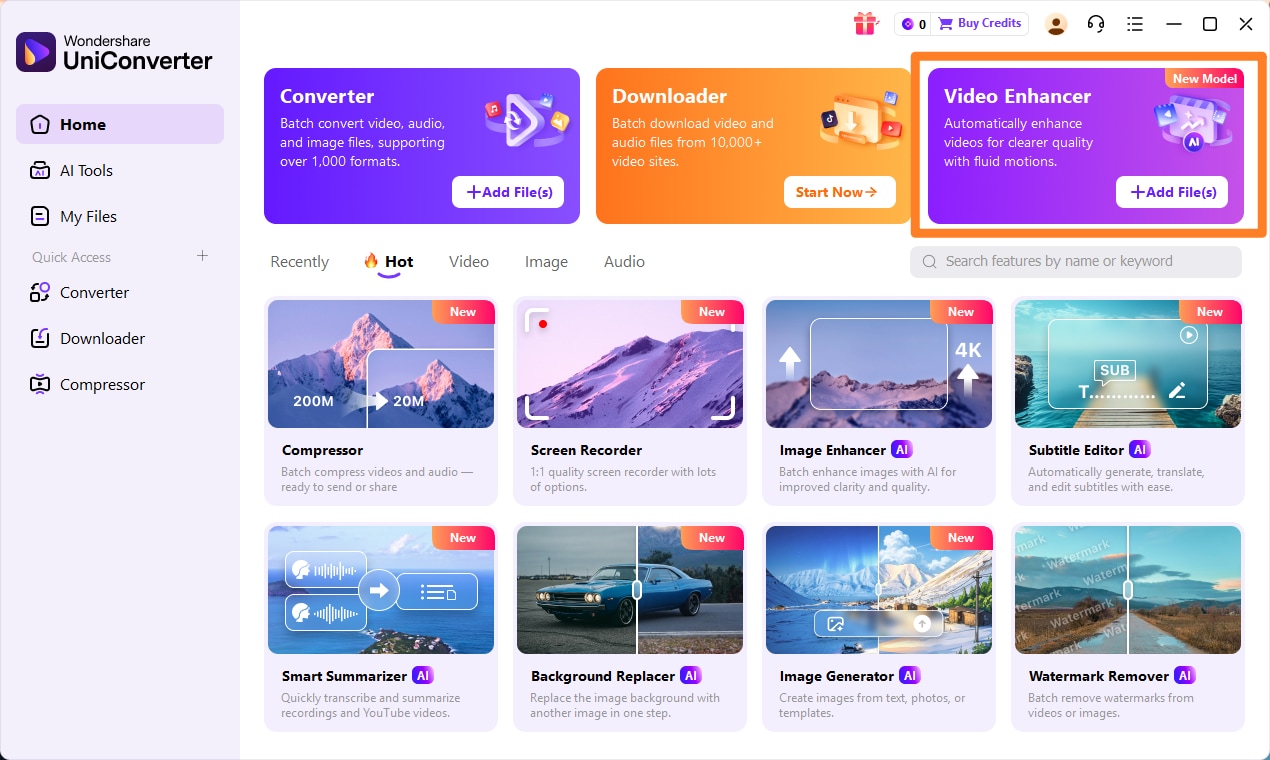
Step 1: Open UniConverter and Choose Video Enhancer
Launch UniConverter on your computer. From the main interface, navigate to the "AI Lab" section and select the "Video Enhancer" tool.
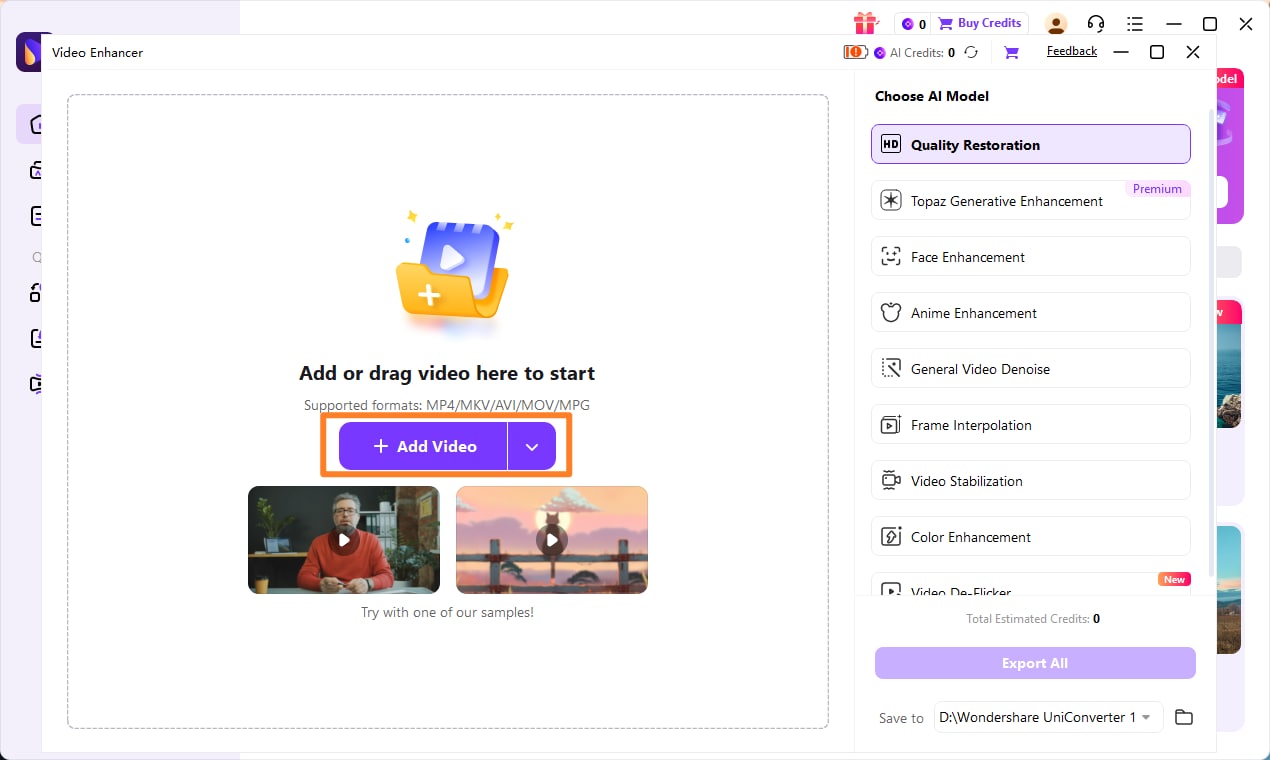
Step 2: Upload the Videos
Click on the "Add Files" button or drag and drop your video files into the designated area. You can add multiple videos for batch processing.
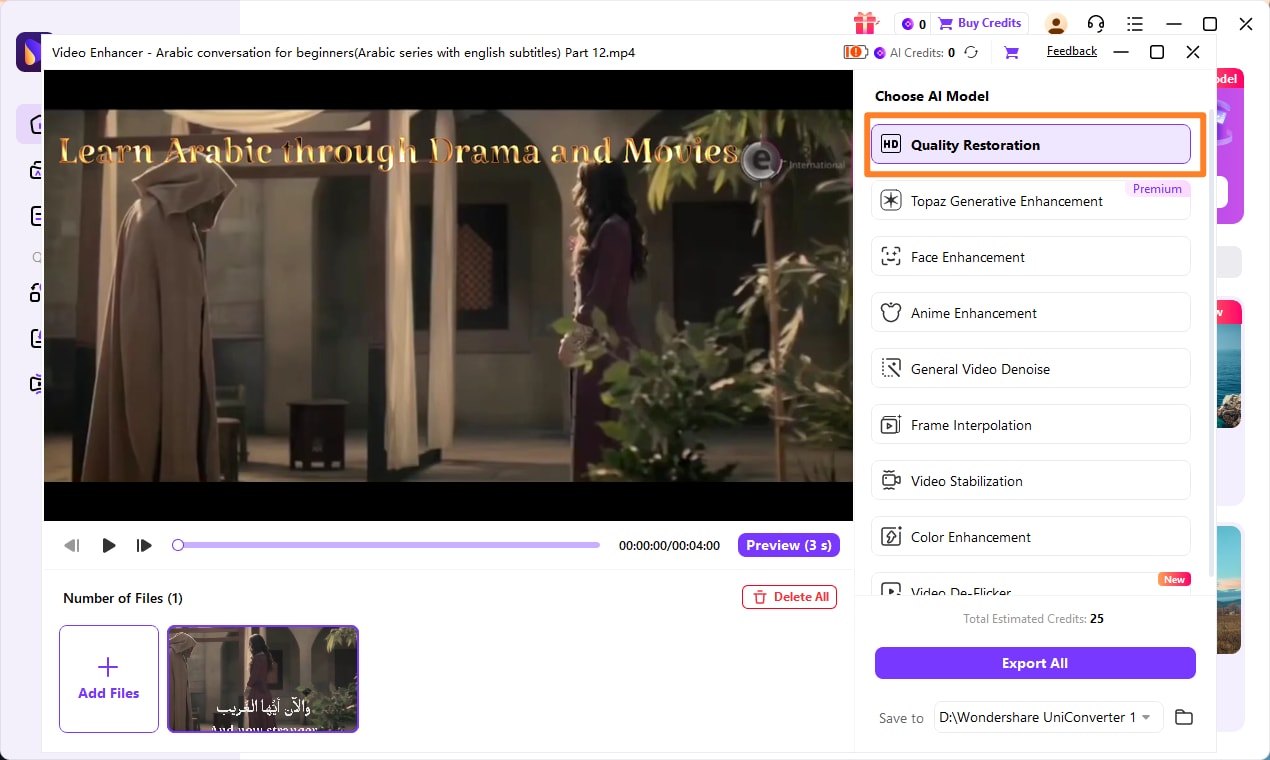
Step 3: Choose Enhancement Model
After uploading, select the desired enhancement model (e.g., AI Upscale, Denoise, Deblur, Low Light Enhancement) from the available options. Adjust any specific parameters if needed.
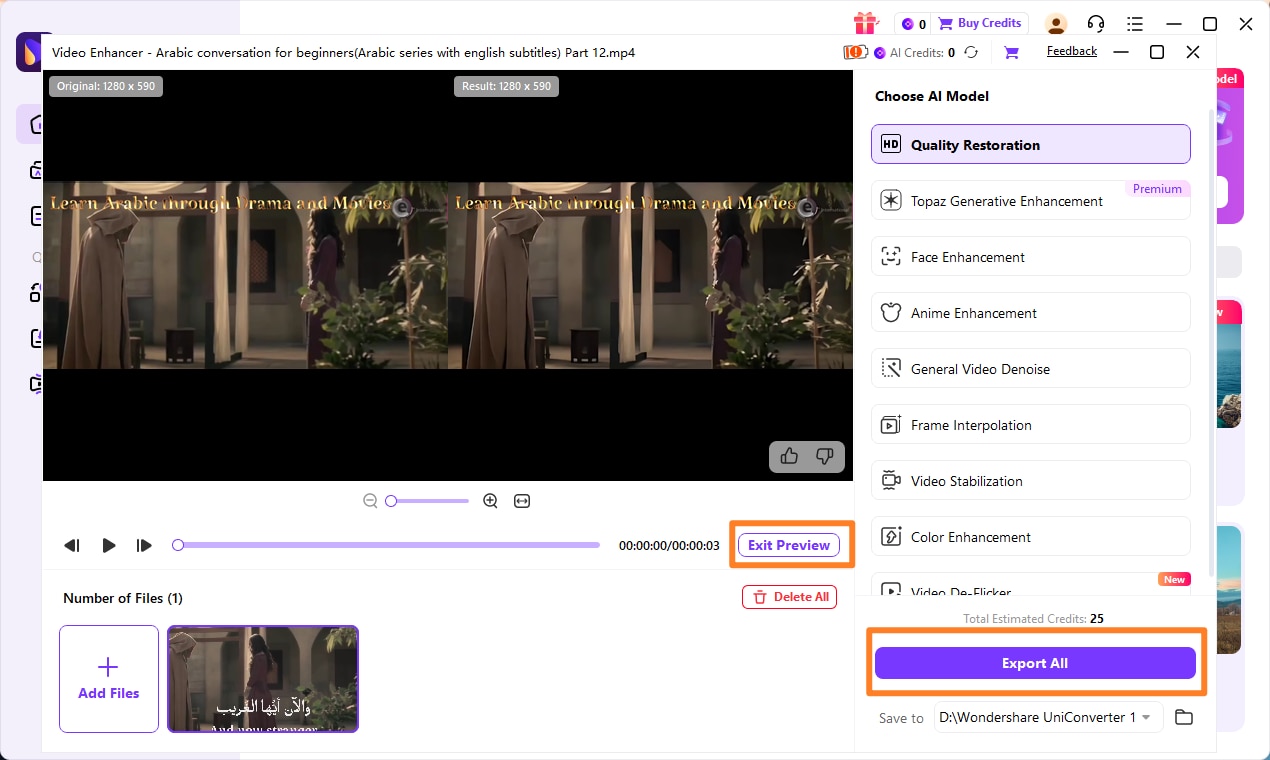
Step 4: Preview and Save the Enhanced Video
Preview the enhanced video to ensure satisfaction. Once ready, choose your desired output format and destination folder, then click "Export" to save your enhanced video.

Seeking a Filmora Video Enhancer Alternative?
Part 7: Final Verdict & Recommendations
This Filmora video enhancer review has explored the capabilities and limitations of Filmora Video Enhancer, positioning it within the broader landscape of video enhancement software. For casual users and content creators, Filmora offers an accessible and efficient solution for improving video quality, particularly for home videos and social media content. Its intuitive interface and AI-powered features make it a strong contender for those prioritizing ease of use. For budget-conscious individuals, the cost-effectiveness, especially during promotions, can be a significant draw, though the subscription model should be weighed against usage frequency. However, for professionals seeking advanced control, granular customization, and specialized tools for high-end film production, Filmora may not provide the depth required. In such cases, more specialized software like DaVinci Resolve or Topaz Video AI might be more appropriate. Ultimately, the best choice depends on individual needs, technical proficiency, and the specific demands of the video projects.
Part 8: FAQs
-
1. Is Filmora Video Enhancer suitable for beginners?
Yes, its user-friendly interface makes it highly accessible for novices to quickly enhance their videos.
-
2. Can Filmora Video Enhancer improve low-light footage significantly?
It can improve low-light footage to some extent, but dramatic transformations in extremely dark footage are challenging for any software and may not always yield natural results.
-
3. Does Filmora Video Enhancer offer a free trial?
Yes, a free trial is typically available, often with limited features or watermarks on exported videos, allowing users to test its capabilities before purchasing.
-
4. How does Filmora Video Enhancer compare to professional-grade software like DaVinci Resolve?
Filmora is designed for ease of use and quick edits, making it more approachable for general users. DaVinci Resolve, on the other hand, offers deeper, professional-level color grading, editing, and post-production tools, requiring a steeper learning curve.
-
5. Is my data safe when using Filmora Video Enhancer's cloud features?
Filmora generally adheres to standard data privacy practices. However, users should always review their privacy policy and terms of service to understand how their data is handled, stored, and protected, especially when utilizing cloud-based functionalities.
