
- Face26 Focus: Excels at enhancing facial details and general clarity, ideal for old, low-resolution photos.
- Value Proposition: Best for casual users and family photo restoration, offering impressive results with minimal effort.
- Customization & Cost: Limited customization and a subscription model may not suit advanced users or infrequent use.
- UniConverter Alternative: Offers versatile image/video enhancement, batch processing, and often a one-time purchase for better long-term value.
- Professional Needs: Content creators needing granular control or diverse image enhancement should consider UniConverter or Topaz Labs Photo AI.
- Data Privacy: Cloud-based processing raises data privacy concerns; always review policies for personal images.
- Potential Pitfalls: Risk of over-processed, unnatural results and hidden subscription costs.
- Decision Factor: Choose based on usage frequency, need for control, and budget (subscription vs. one-time purchase).
In this article
- Part 1: What is Face26 Image Enhancer?
- Part 2: Face26 Image Enhancer: Core Features, Pros, and Cons
- Part 3: Face26 Image Enhancer: Ideal Users and Use Cases
- Part 4: Face26 Image Enhancer & Competitors: A Comparative Analysis
- Part 5: Risks and Pitfalls to Consider
- Part 6: How to Enhance Images with UniConverter
- Part 7: Final Verdict and Recommendations
- Part 8: FAQs
Face26 Image Enhancer Review: A Scenario-Based Comparison
When I first stumbled upon Face26 Image Enhancer review, I was intrigued. In an age where every photo tells a story, and often an old one needs a bit of a facelift, AI image enhancement tools have become indispensable. This review aims to cut through the marketing hype and give you a real-world perspective on Face26, comparing it to other players in the market. I’ll delve into its core features, ideal use cases, and even some potential pitfalls, helping you decide if it’s the right tool for your digital photo needs.
Part 1: What is Face26 Image Enhancer?
Face26 Image Enhancer positions itself as an AI-powered solution designed to breathe new life into your photos, particularly focusing on facial details. It's built for those moments when you unearth a blurry old photo of a loved one or capture a moment that didn't quite come out sharp. My initial impression was that it promised a lot, especially for restoring clarity and detail to faces, which is often the most challenging aspect of image enhancement. This review will explore whether it truly delivers on these promises and where it stands against its competitors.
The Rise of AI Image Enhancement Tools
The demand for tools that can magically fix imperfect photos has skyrocketed.
* Nostalgia and Digital Archiving: People are increasingly digitizing old family photos, and these often suffer from blur, low resolution, and color fading.
* Social Media and Content Creation: A crisp, clear image stands out. Content creators and social media enthusiasts constantly seek ways to improve their visual output without needing professional-grade editing skills.
* Accessibility and Ease of Use: Traditional photo editing software can be complex. AI tools offer a user-friendly alternative, automating intricate processes.
Part 2: Face26 Image Enhancer: Core Features, Pros, and Cons
From my experience, Face26 Image Enhancer primarily focuses on making your photos look sharper and more vibrant, especially when it comes to faces. Its core strength lies in its AI algorithms that intelligently analyze and reconstruct details. I found it particularly effective for:
* Facial Detail Restoration: This is where Face26 truly shines. It can take a blurry face and bring back surprising levels of detail, making eyes clearer and skin textures more defined.
* Noise Reduction: Old, grainy photos often become much cleaner after a pass through Face26.
* Color Correction: It subtly enhances colors, making them pop without looking oversaturated.
* Upscaling: It can increase the resolution of smaller images, which is a huge plus for old scans.
* One-Click Enhancement: For most basic tasks, it’s incredibly straightforward – just upload and let the AI do its thing.
Pros:
* Advanced AI for realistic facial detail restoration: I was genuinely impressed by how well it handled faces, often making them look natural rather than artificially sharpened.
* User-friendly interface for quick enhancements: Even my tech-averse aunt could figure this out. It’s designed for simplicity.
* Batch processing capability for efficiency: This saved me a ton of time when I was digitizing a whole album of old photos.
Cons:
Limited customization options for advanced users: If you're used to Photoshop's granular controls, Face26 might feel a bit restrictive. You don't have much say in how* it enhances.
* Subscription model can be costly for infrequent use: For someone who only needs to enhance a few photos a year, the recurring cost might not make sense.
Part 3: Face26 Image Enhancer: Ideal Users and Use Cases
Having spent some time with Face26, I can tell you it's not a one-size-fits-all solution, but it definitely excels in specific scenarios. If you're someone who wants quick, impressive results without diving deep into complex editing, this tool is probably for you.
Best Use Case: Revitalizing Old Family Photos for Digital Archiving
This is where Face26 truly shines for me. I had a box of faded, blurry photos from my grandparents' era, and Face26 brought them back to life. The AI's ability to intelligently reconstruct facial features and reduce grain made these precious memories look surprisingly good for digital archives. It's perfect for anyone looking to preserve their family history with minimal effort.
Limited Use Case: Professional Photography Post-Processing for High-Resolution Prints
While Face26 is great for quick fixes, I wouldn't recommend it for professional photographers who need precise control over every pixel for high-resolution prints. The lack of granular customization means you can't fine-tune the enhancements to meet specific artistic visions or client demands. For professional work, you'll likely find its capabilities too broad and not specific enough.
Part 4: Face26 Image Enhancer & Competitors: A Comparative Analysis
When I put Face26 up against some of its rivals, the differences became quite clear. It's not just about what they can do, but how they do it and for whom.
| Feature/Scenario | Face26 Image Enhancer | UniConverter | Remini | Topaz Labs Photo AI |
| Facial Detail Enhancement | Excellent | Very Good | Excellent | Excellent |
| Batch Processing | Yes | Yes | Limited | Yes |
| Output Resolution | High | High | Medium | Very High |
| Pricing Model | Subscription | One-time purchase/Subscription | Subscription | One-time purchase |
| Ease of Use | Very High | High | Very High | Medium |
| Processing Speed | Fast | Very Fast (GPU) | Fast | Moderate |
| Customization Options | Limited | Moderate | Limited | Extensive |
From my perspective, Face26 excels in ease of use and facial enhancement, making it a go-to for quick fixes. UniConverter, on the other hand, offers a more versatile package with robust batch processing and a good balance of features and ease of use, often with a one-time purchase option which I prefer. Remini is a strong contender for facial enhancement but can sometimes over-process, giving an artificial look. Topaz Labs Photo AI is the powerhouse for professionals, offering unparalleled control and quality, but it comes with a steeper learning curve and price tag. If you just want to enhance faces with minimal fuss, Face26 or Remini are great. If you need more general image enhancement with good control and batch processing, UniConverter is a solid choice. For absolute top-tier quality and control, Topaz Labs is the way to go.
Part 5: Risks and Pitfalls to Consider
While Face26 and similar AI image enhancers offer incredible convenience, I've learned that it's crucial to be aware of potential downsides. It’s not always a magic bullet, and sometimes the "magic" comes with hidden costs or compromises.
Data Privacy Concerns with Cloud-Based Processing
Many of these tools, including Face26, rely on cloud-based processing. This means you're uploading your potentially personal or sensitive images to their servers. While companies usually state they have robust privacy policies, I always feel a slight unease. Who has access to these photos? How long are they stored? For highly personal family photos, this is a legitimate concern. Always read their privacy policy carefully before uploading.
Potential for Over-Processed, Unnatural Results
I've seen it happen – an image goes in looking a bit soft, and comes out looking like a plastic doll. AI enhancement, especially with faces, can sometimes go overboard, smoothing out natural textures and making skin look artificial. Face26 is generally good at avoiding this, but there are instances where the "enhancement" makes a person look less like themselves. It's a fine line between improvement and artificiality, and these tools don't always get it right.
Hidden Costs and Subscription Traps
Many of these services operate on a subscription model, and while they might offer a few free enhancements, the real benefits are locked behind a paywall. I’ve often found myself signing up for a monthly plan only to realize I don't use it enough to justify the cost. Always check the pricing structure and consider if your usage truly warrants a recurring expense. Sometimes, a one-time purchase for a desktop app is more economical in the long run.
Output Quality Limitations for Specific Image Types
While Face26 excels with faces, I've noticed it's not always the best for other types of images. For instance, landscapes or architectural photos might not see the same dramatic improvements. Sometimes, the AI might even introduce artifacts or distortions in complex patterns or fine details that aren't faces. Don't expect it to magically fix every type of photo flaw with equal prowess.
Part 6: How to Enhance Images with UniConverter
When I've found myself frustrated with the limitations of some online enhancers – the slow processing, the inconsistent results, or the constant push for subscriptions – I often turn to UniConverter. It's a robust desktop solution that avoids many of the pitfalls I mentioned earlier. If you're looking for a reliable, all-in-one tool that offers powerful image enhancement without the fuss of cloud-based services, UniConverter is a strong contender. It provides excellent batch processing, stable results, and leverages GPU acceleration for speed, making it a truly versatile option for various media tasks, not just image enhancement. For those interested in improving video quality, UniConverter also offers features to enhance video content. You can even learn how to fix pixelated videos with its capabilities.
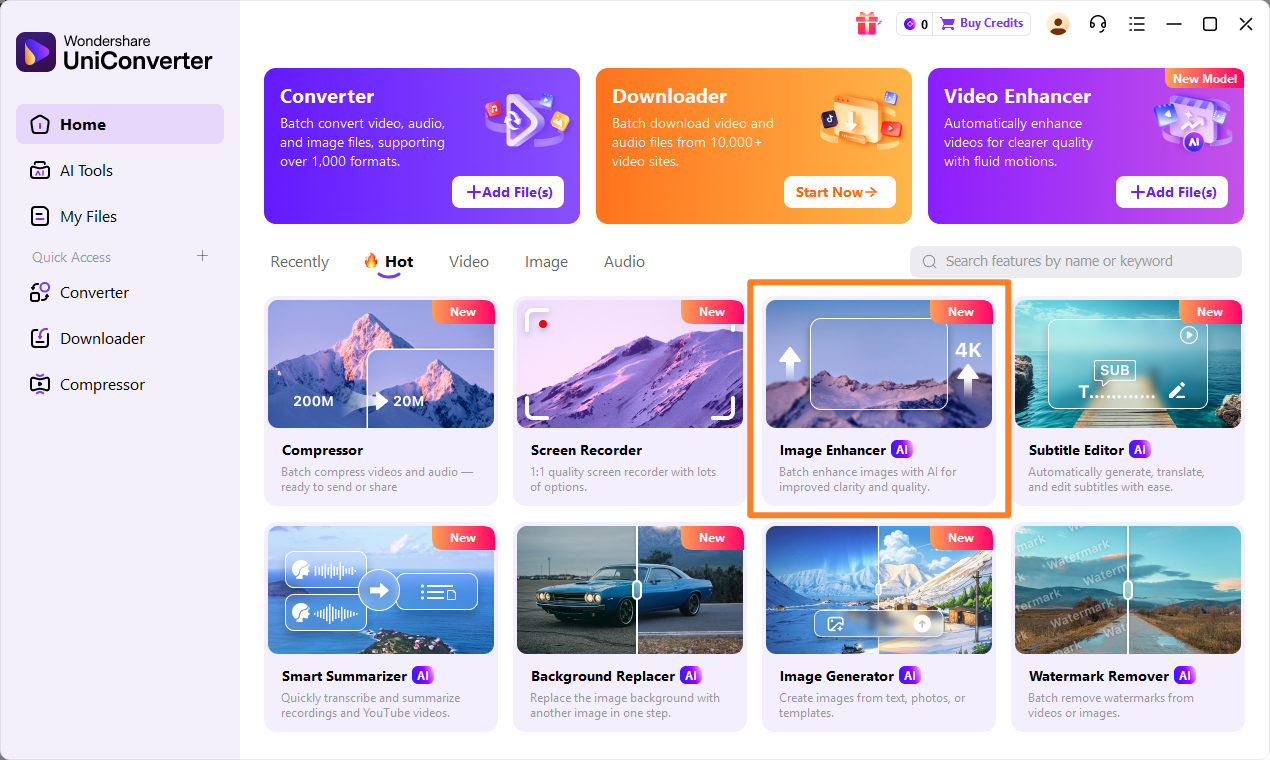
Step 1: Open UniConverter and Choose Image Enhancer
First, launch UniConverter on your computer. You'll find the "AI Lab" section on the left sidebar. Click on it, and then select "Image Enhancer" from the available tools.
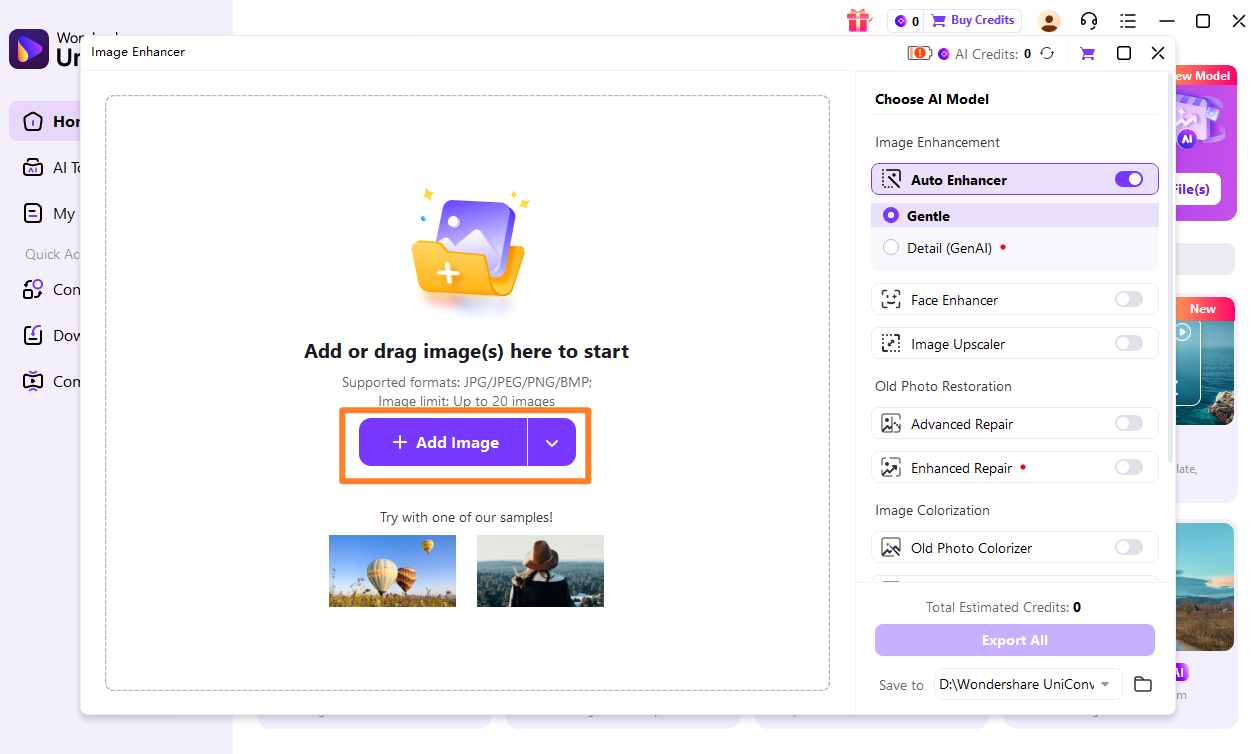
Step 2: Upload the Images
Next, you'll need to import the images you want to enhance. You can either drag and drop your photos directly into the interface or click the "Add Files" button to browse and select them from your computer. UniConverter supports various image formats.
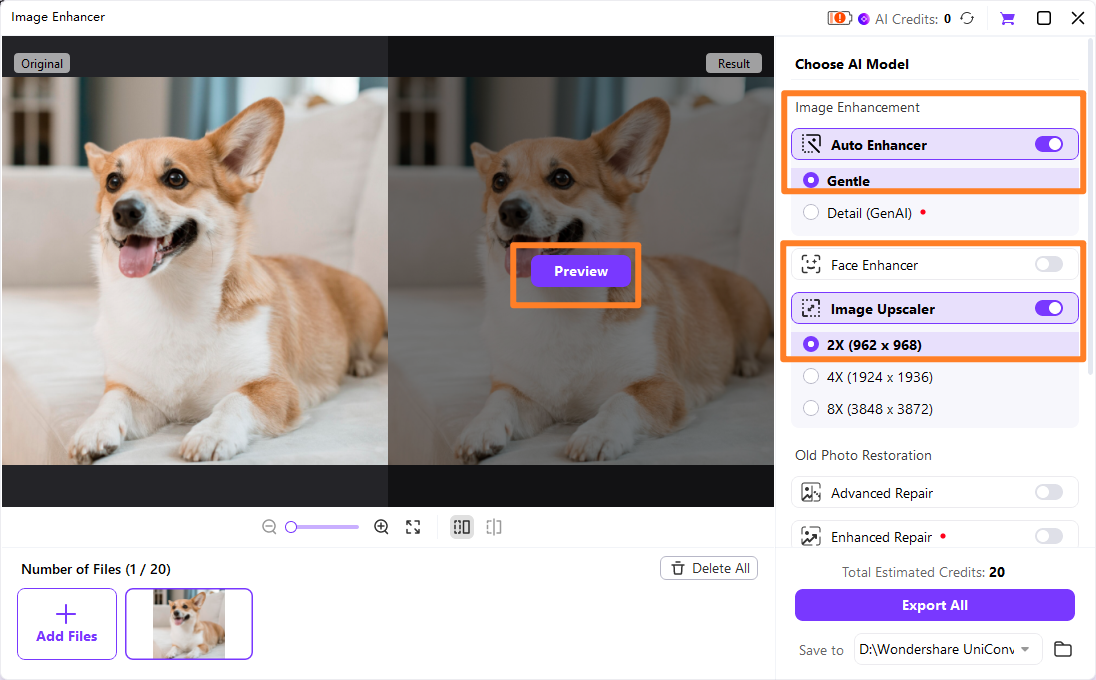
Step 3: Choose Enhancement Model and Adjust Settings
Once your images are loaded, UniConverter will offer different AI enhancement models. Select the one that best suits your needs (e.g., general enhancement, facial detail). You might also find options to adjust the intensity of the enhancement or other parameters.
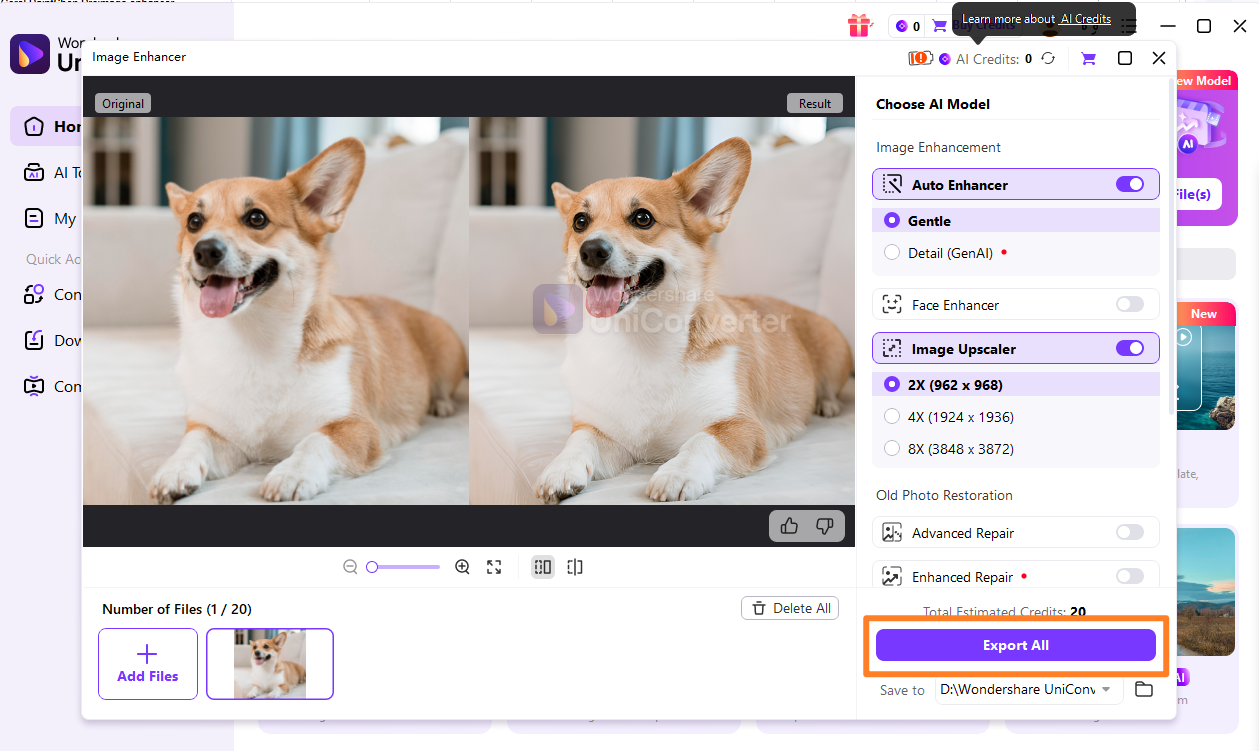
Step 4: Preview and Save the Enhanced Images
After selecting your settings, UniConverter will process the images. You can usually preview the enhanced versions side-by-side with the originals. Once you're satisfied, choose your desired output format and destination folder, then click "Export" or "Save" to get your high-quality enhanced images.

Enhance Images Beyond Face26 with UniConverter
Part 7: Final Verdict and Recommendations
After putting Face26 Image Enhancer review through its paces, my overall impression is that it's a solid tool for specific needs. It excels at quickly improving facial details and general image clarity, especially for older, lower-resolution photos. However, its subscription model and limited customization mean it's not for everyone. For casual users and family photo restoration, Face26 offers impressive results with minimal effort, making it a convenient choice for digitizing memories. For content creators and social media enthusiasts who need consistent, high-quality output for a variety of image types, Face26 might fall short due to its focus on faces and lack of granular control. They might find more versatile tools like UniConverter or even more advanced options like Topaz Labs Photo AI more suitable. Finally, for budget-conscious users seeking versatility, a one-time purchase desktop solution like UniConverter often presents a better long-term value, offering a broader range of features beyond just image enhancement without recurring costs.
Part 8: FAQs
-
1. Is Face26 Image Enhancer free to use?
Face26 typically offers a limited number of free enhancements or a trial period. Full functionality and unlimited usage usually require a paid subscription.
-
2. How does Face26 compare to Photoshop for image enhancement?
Face26 is much simpler and uses AI for automated enhancements, especially for faces. Photoshop offers extensive manual control and a vast array of tools for professional-level editing, but it has a steeper learning curve. Face26 is for quick fixes, Photoshop is for detailed, artistic work.
-
3. Can Face26 improve blurry photos significantly?
Yes, Face26 is quite effective at reducing blur and sharpening details, particularly on faces. However, it cannot create information that isn't there, so extremely blurry photos might see improvement but won't become perfectly sharp.
-
4. What are the best alternatives to Face26 for batch processing?
For robust batch processing, I'd recommend UniConverter or Topaz Labs Photo AI. Both offer excellent capabilities for processing multiple images efficiently, often with more control over the output than Face26.
-
5. Is my data safe when using Face26 Image Enhancer?
Face26, like most cloud-based services, states it has privacy measures in place. However, when uploading personal images, it's always wise to review their privacy policy to understand how your data is handled, stored, and if it's used for AI training.
