
- Value Proposition: Exposure X excels in artistic control and analog film aesthetics, ideal for professional photographers seeking unique creative expression.
- Core Features: Offers extensive film emulation, non-destructive editing, and advanced layering, but has a steep learning curve and is resource-intensive.
- Ideal Users: Best for photographers prioritizing artistic vision and film-like quality; less suitable for casual users needing quick, simple enhancements.
- Comparison Insight: Exposure X prioritizes artistic control over AI automation, differentiating it from tools like Lightroom, Luminar Neo, and Topaz Photo AI.
- Decision Factor: UniConverter provides a user-friendly, AI-powered alternative for efficient, general-purpose image enhancement, especially for batch processing.
- Risks & Pitfalls: Potential for over-processing, compatibility issues, performance bottlenecks, and a significant learning curve for new users.
In this article
- Part 1: What is Exposure X?
- Part 2: Exposure X: Core Features, Pros, and Cons
- Part 3: Exposure X: Ideal Users and Use Cases
- Part 4: Exposure X and Alternatives Comparison
- Part 5: Risks and Pitfalls When Using Exposure X
- Part 6: How to Use UniConverter for Efficient Image Enhancement
- Part 7: Conclusion
- Part 8: FAQs
Exposure X (Exposure Software) image enhancer review: As a seasoned product reviewer, I've seen countless image enhancement tools come and go. Exposure X, from Exposure Software, has carved out a niche for itself, particularly among photographers who yearn for the rich, nuanced aesthetics of analog film. This review will delve into its unique strengths, compare it against prominent alternatives, and help you determine if it's the right fit for your creative workflow. We'll explore its core features, ideal use cases, potential pitfalls, and even suggest a versatile alternative for different enhancement needs.
Part 1: What is Exposure X?
Exposure X is a powerful photo editor and organizer, developed by Exposure Software, that stands out for its exceptional film emulation capabilities and creative effects. Unlike many contemporary image enhancers that lean heavily on AI for automated corrections, Exposure X prioritizes artistic control and a hands-on approach to image manipulation. I've found it to be less about "fixing" an image and more about "transforming" it into a unique piece of art, often with a nostalgic, film-like quality. When I first started using it, I was immediately struck by the depth of its film presets – it's not just a superficial filter, but a comprehensive recreation of film stock characteristics, from grain structure to color shifts.
The Evolving Landscape of Image Enhancement
The world of image enhancement is constantly shifting, driven by new technologies and evolving user demands.
* The Rise of AI: Many new tools are leveraging artificial intelligence for one-click solutions to common problems like noise reduction, sharpening, and even content-aware filling. This appeals to users seeking speed and simplicity.
* The Enduring Appeal of Analog: Despite the digital age, there's a strong and growing appreciation for the imperfections and unique character of analog photography. This is where tools like Exposure X shine.
* Workflow Integration: Photographers increasingly demand tools that integrate seamlessly into their existing workflows, whether as standalone applications or plugins for other editors.
Part 2: Exposure X: Core Features, Pros, and Cons
Exposure X, in my experience, is a robust tool that excels in creative image manipulation. Its core strength lies in its ability to replicate the look and feel of various film stocks, offering a vast library of presets that go far beyond simple filters. I've found its non-destructive editing workflow incredibly reassuring, allowing me to experiment freely without fear of permanently altering my original images. The layering and masking capabilities are also top-notch, providing granular control over specific areas of an image, which is crucial for complex artistic edits.
Core Capabilities:
* Extensive Film Emulation Library: A massive collection of film presets, accurately replicating classic film stocks.
* Creative Effects Suite: A wide array of artistic effects, including light leaks, textures, and borders.
* Non-Destructive Editing: All edits are applied as adjustments, preserving the original image data.
* Advanced Layering and Masking: Precise control over local adjustments and composite images.
* Intuitive Interface: A well-designed user interface that promotes an efficient workflow.
Pros:
* Advanced Film Emulation and Creative Effects for Artistic Expression: For me, this is the absolute killer feature. The sheer variety and accuracy of the film emulations are unparalleled.
* Intuitive Interface and Non-Destructive Editing Workflow: I appreciate how easy it is to navigate and how all my edits are reversible.
* Powerful Layering and Masking Capabilities for Precise Adjustments: This allows for incredibly detailed and nuanced edits, which is essential for professional work.
Cons:
* Steep Learning Curve for New Users Unfamiliar with Advanced Editing: I remember feeling a bit overwhelmed initially by the sheer number of options. It's not a "point and click" solution.
* Resource-Intensive, Potentially Slowing Down Older Systems: My older laptop definitely struggled with some of the more complex edits, leading to noticeable slowdowns.
Part 3: Exposure X: Ideal Users and Use Cases
From my perspective, Exposure X isn't for everyone, but for the right user, it's an indispensable tool. If you're a photographer who truly values the artistic process and wants to imbue your digital images with the soul of analog film, then Exposure X is probably going to be your new best friend. I've found it particularly useful when I'm aiming for a specific mood or aesthetic that generic filters just can't achieve. However, if your primary goal is just to quickly brighten a snapshot for social media, you might find it overkill.
Best Use Case: Professional Photographers Seeking Analog Film Aesthetics and Creative Control
This is where Exposure X truly shines. If you're a wedding photographer wanting to add a timeless, filmic quality to your images, or a portrait photographer looking for unique creative effects, Exposure X offers the depth and control you need. I often use it for my personal projects where I want to push the creative boundaries of my photography.
Limited Use Case: Casual Users Needing Quick, One-Click Enhancements for Everyday Photos
If you're just looking for a simple "make my photo look better" button, Exposure X might be too much. Its strength lies in its granular control and artistic options, which can be overwhelming for someone who just wants a quick fix. For those quick edits, I usually reach for something simpler.
Part 4: Exposure X and Alternatives Comparison
When I look at the image enhancement market, Exposure X occupies a unique space. It's not trying to be an all-in-one AI powerhouse, but rather a master of artistic expression, particularly in film emulation. Here's how I see it stacking up against some key competitors:
| Feature/Competitor | Exposure X | Adobe Lightroom | Luminar Neo | Topaz Photo AI | UniConverter |
| AI Enhancement | Limited | Yes | Yes | Yes | Yes |
| Film Emulation | Excellent | Good | Fair | N/A | Fair |
| Non-Destructive Editing | Yes | Yes | Yes | Yes | Yes |
| Layering/Masking | Excellent | Good | Good | Limited | Limited |
| Price Model | Perpetual/Subscription | Subscription | Perpetual/Subscription | Perpetual | Perpetual |
| Processing Speed | Moderate | Fast | Fast | Fast | Fast |
| Output Quality | Excellent (Artistic) | Excellent (General) | Very Good | Excellent (Technical) | Good |
| Ease of Use | Moderate | Moderate | Easy | Easy | Very Easy |
| Customer Support | Good | Excellent | Good | Good | Excellent |
| Security | High | High | High | High | High |
Key Differentiators: Artistic Control vs. AI Automation
From my experience, the biggest difference is philosophical. Exposure X is for the artist who wants to craft every detail, while tools like Topaz Photo AI and Luminar Neo are for those who want intelligent automation to handle the heavy lifting. Lightroom sits somewhere in the middle, offering both robust manual controls and increasingly powerful AI features. UniConverter, on the other hand, is more about quick, efficient, and reliable enhancement, especially for general-purpose images, with a focus on ease of use and speed. If you're after technical perfection with minimal effort, Topaz Photo AI is hard to beat. But if you want to create a specific artistic vision, Exposure X is often my first choice.
Part 5: Risks and Pitfalls When Using Exposure X
While Exposure X is a fantastic tool for creative photographers, I've learned through my own use that it's not without its potential downsides. It's important to be aware of these before diving in, as they can impact your workflow and the final quality of your images.
Potential for Over-Processing and Unnatural Results
Because Exposure X offers such extensive creative control, it's incredibly easy to go overboard. I've definitely found myself getting carried away with film grain or light leaks, only to realize later that the image looked unnatural or overly stylized. It requires a delicate touch and a good eye to ensure the enhancements complement, rather than detract from, the original photograph. My advice is always to step away for a bit and then come back to your edit with fresh eyes.
Compatibility Issues with Specific Camera Raw Formats
While Exposure X generally has good raw file support, I've occasionally run into issues with newer camera models or less common raw formats. Sometimes, the software might not fully interpret the raw data as accurately as, say, Adobe Camera Raw. This can lead to subtle color shifts or detail loss that you might not notice immediately. It's always a good idea to test your specific camera's raw files with the trial version before committing.
Performance Bottlenecks on Underpowered Hardware
As I mentioned earlier, Exposure X can be quite resource-intensive. If you're running it on an older computer with limited RAM or a less powerful processor, you're likely to experience slowdowns, especially when working with large raw files or applying multiple complex layers and effects. This can severely impact your workflow efficiency and make the editing process frustrating. I've found that a solid GPU and plenty of RAM make a huge difference.
Subscription Model vs. Perpetual License Considerations
Exposure Software offers both perpetual licenses and subscription options for Exposure X. While a perpetual license means you own that version forever, you'll need to pay for major upgrades to get new features. The subscription model ensures you always have the latest version, but it's an ongoing cost. For me, weighing the upfront cost versus continuous updates is a significant decision, and it depends on how frequently you need the newest features.
Learning Curve Impact on Workflow Efficiency
For someone new to advanced photo editing, the sheer number of options and controls in Exposure X can be daunting. It's not a tool you can master in an afternoon. I remember spending a fair amount of time watching tutorials and experimenting to truly understand its capabilities. This initial learning curve can definitely slow down your workflow until you become proficient, so factor in that time investment.
Part 6: How to Use UniConverter for Efficient Image Enhancement
Sometimes, you just need a quick, reliable way to enhance your images, especially if other tools are proving too complex, slow, or inconsistent. When I encounter situations where I need to batch process images, or if I'm dealing with a tool that produces unstable or weak enhancement effects, I often turn to UniConverter. It's a versatile solution that avoids the pitfalls of many free or overly simplistic enhancers, offering a stable, high-quality, and efficient way to improve your photos without ads, watermarks, or complex settings. Its GPU acceleration and lossless processing are a huge plus for maintaining image quality. For those looking to enhance image resolution or perform a general image enhancer task, this tool is highly recommended.
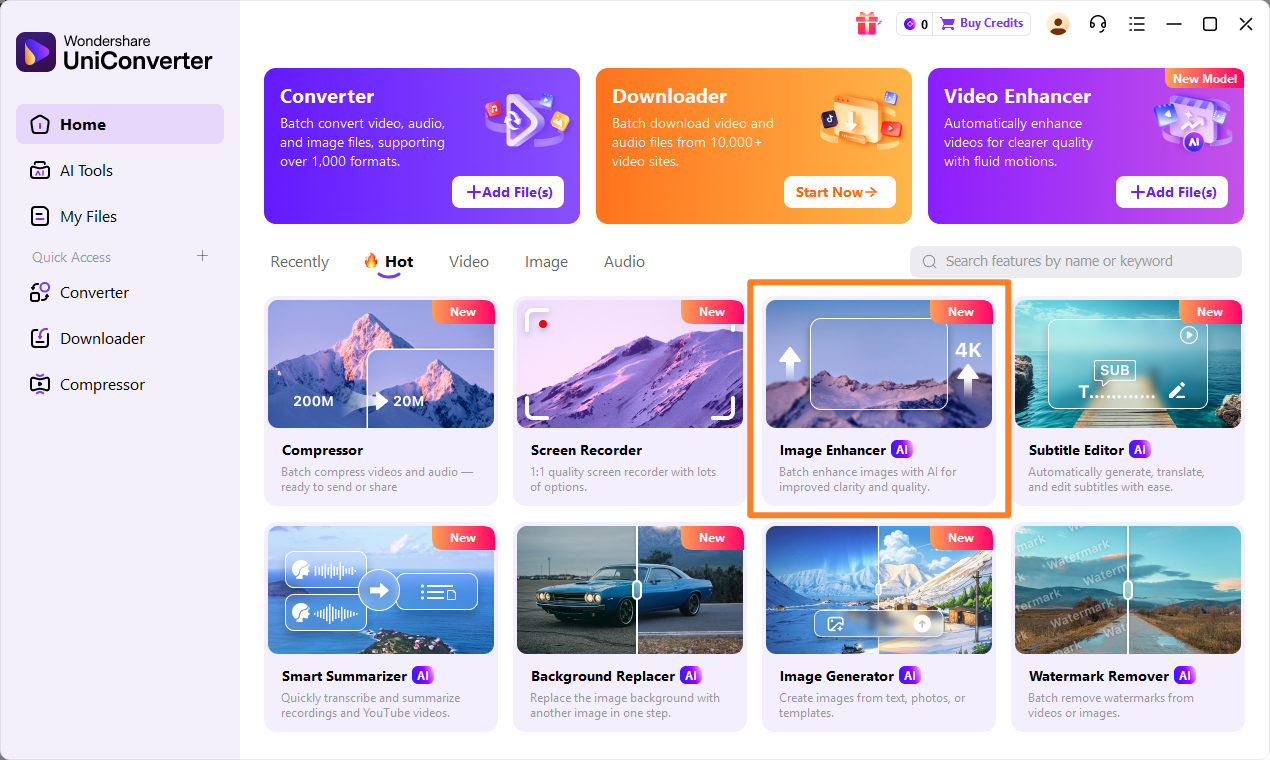
Step 1: Open UniConverter and Choose Image Enhancer
Launch UniConverter on your computer and navigate to the "AI Lab" section. From there, select the "AI Image Enhancer" tool. This feature is designed to enhance your images with advanced AI capabilities.
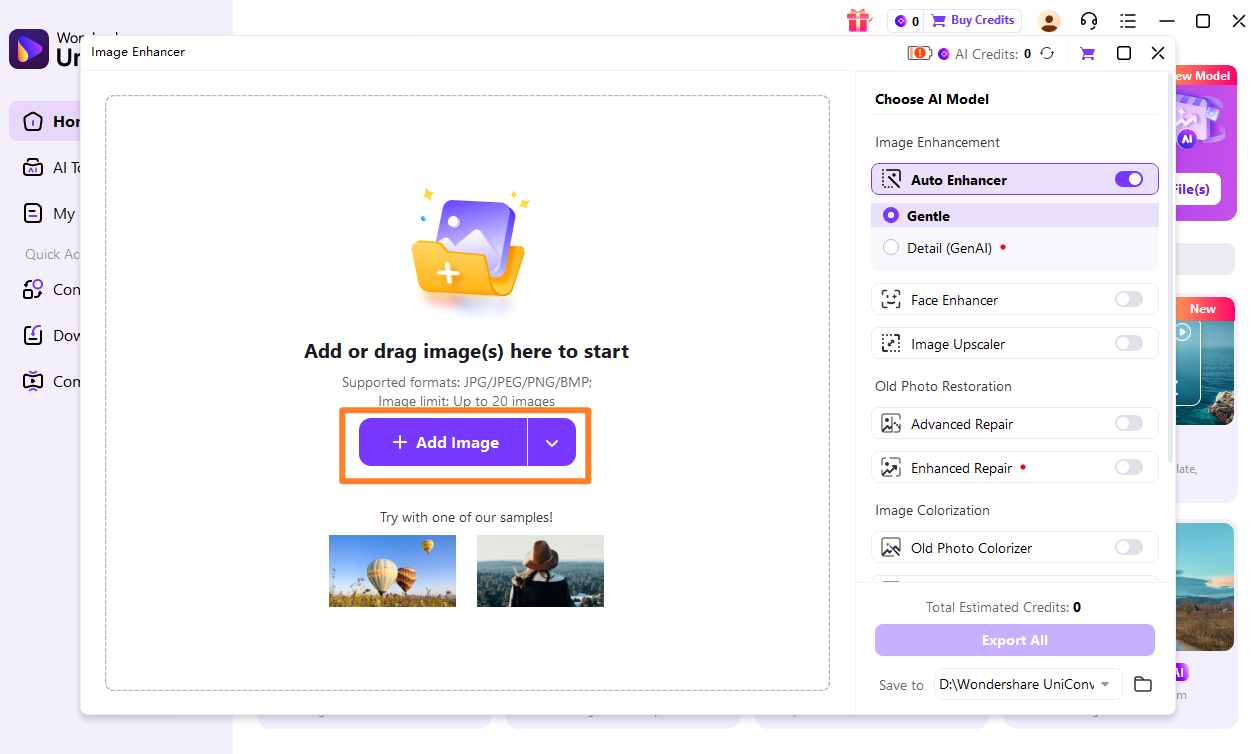
Step 2: Upload the Images
Click on the "Add Files" button or simply drag and drop the images you wish to enhance into the UniConverter interface. You can add multiple images for batch processing.
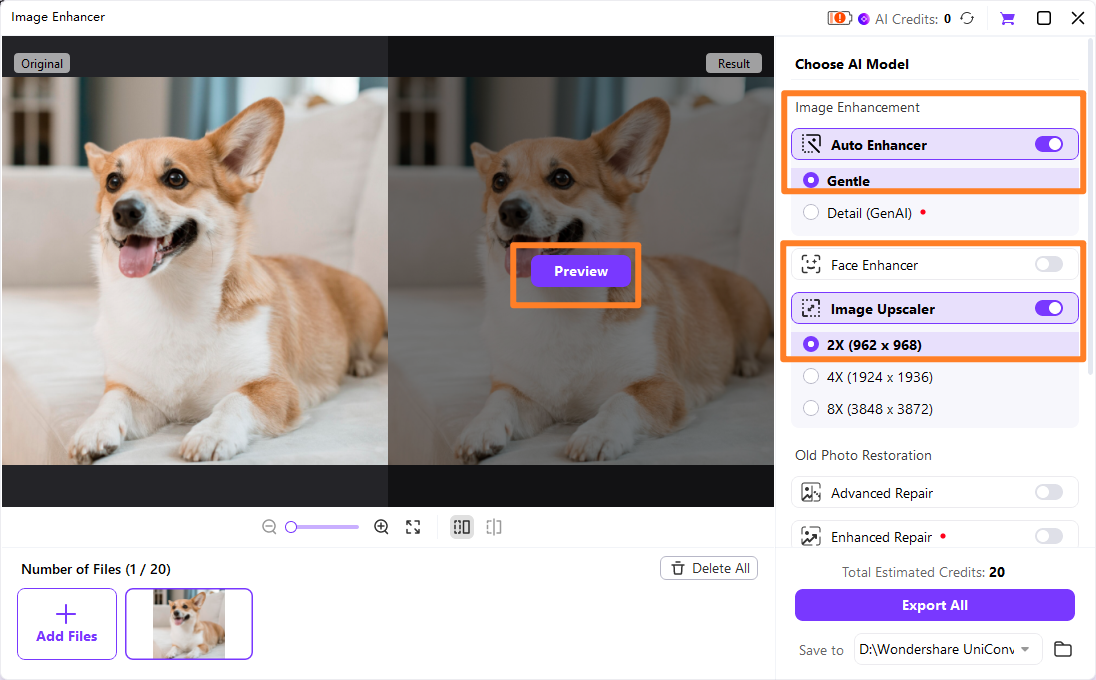
Step 3: Choose Enhancement Model
Once your images are loaded, UniConverter will present various enhancement options. Select the desired AI model for enhancement, such as general enhancement, portrait enhancement, or noise reduction, based on your image's needs. This allows you to effectively upscale your images to a higher quality.
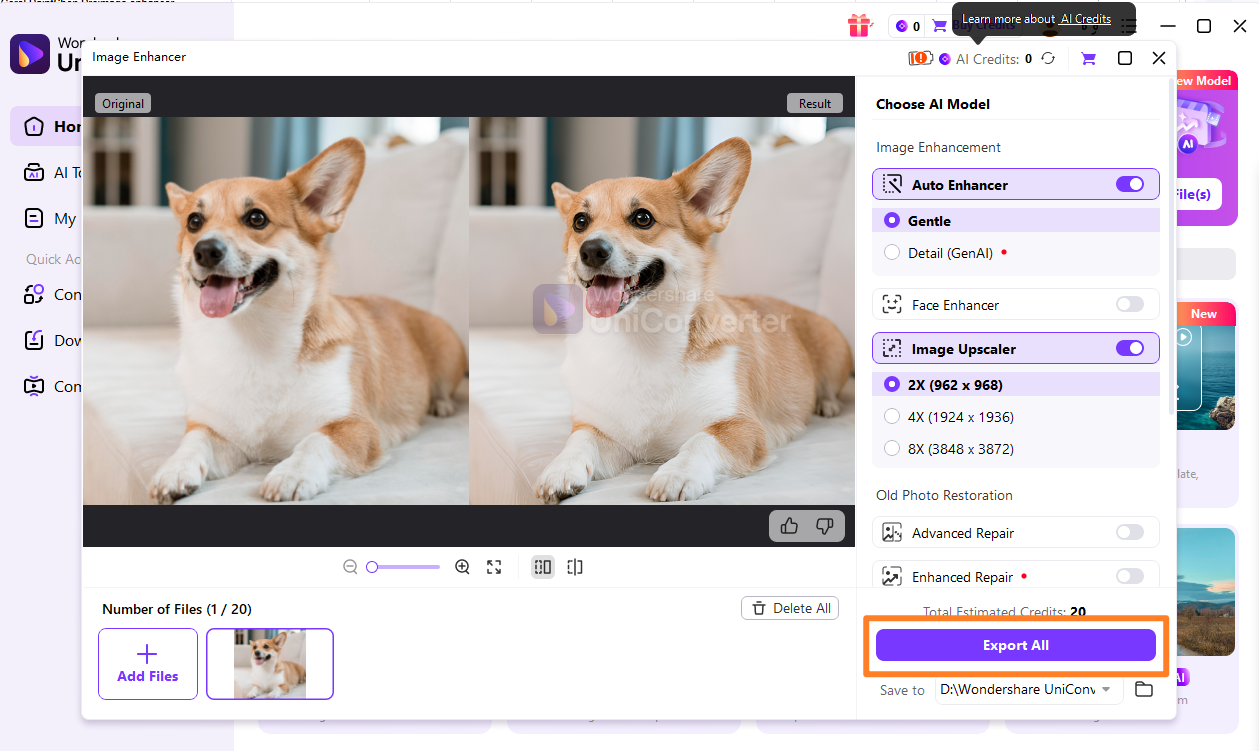
Step 4: Preview and Save the Enhanced Images
After selecting the enhancement model, UniConverter will process your images. You can preview the enhanced results alongside the originals. Once satisfied, click the "Export" button to save your improved images to your desired location.

Seeking an Exposure X Alternative for Image Enhancement?
Part 7: Conclusion
In conclusion, Exposure X (Exposure Software) image enhancer review reveals it as a niche but incredibly powerful tool for photographers who prioritize artistic control and the distinctive aesthetics of analog film. It excels in delivering rich film emulations and creative effects, making it an ideal choice for professional photographers and serious enthusiasts who want to infuse their work with a unique, handcrafted feel. However, its steeper learning curve and resource demands mean it's not the best fit for casual users seeking quick, one-click solutions. For those who need efficient, AI-powered enhancements, especially for general-purpose photos or batch processing, UniConverter offers a compelling and user-friendly alternative. Ultimately, the best choice depends on your specific workflow, artistic goals, and budget. I always recommend trying out the free trials of both Exposure X and UniConverter to see which one aligns best with your personal needs and creative vision before making a commitment.
Part 8: FAQs
-
1. Is Exposure X a standalone image editor or a plugin?
Exposure X can function as both a standalone image editor and a plugin for other host applications like Photoshop or Lightroom, offering flexibility in your workflow.
-
2. How does Exposure X's film emulation compare to other software?
Exposure X is widely regarded for its extensive and accurate film emulation presets, often considered superior to many competitors in this specific area due to its depth and attention to detail in replicating film characteristics.
-
3. Can Exposure X enhance low-light or noisy images effectively?
While Exposure X offers noise reduction tools, its primary strength lies in creative enhancements rather than advanced AI-driven noise reduction, which some dedicated AI enhancers excel at. For heavy noise, I'd often look to a specialized tool first.
-
4. Is Exposure X suitable for beginners in photo editing?
Due to its comprehensive features and advanced controls, Exposure X might have a steeper learning curve for absolute beginners compared to more simplified image enhancement tools. It rewards patience and a willingness to learn.
-
5. What are the main advantages of using UniConverter for image enhancement over Exposure X?
UniConverter offers a more streamlined, AI-driven approach to image enhancement, making it ideal for users who prioritize quick, efficient, and often automated improvements, especially for general-purpose photos, without the artistic complexity of Exposure X.
