
- Enhance.Pho.to Value: Discover if Enhance.Pho.to's one-click photo perfection meets your quick editing needs for social media.
- Feature Comparison: Compare Enhance.Pho.to's core features, pros, and cons against leading alternatives like UniConverter for informed decisions.
- Ideal User & Use Cases: Understand who benefits most from Enhance.Pho.to and when to consider more robust tools for professional results.
- Risks & Pitfalls: Learn about potential data privacy concerns, over-enhancement, and limitations before committing to online enhancers.
- UniConverter Alternative: Explore UniConverter for efficient, high-quality image enhancement with batch processing, surpassing online tool limitations.
In this article
- Part 1: What is Enhance.Pho.to?
- Part 2: Enhance.Pho.to: Core Features, Pros, and Cons
- Part 3: Enhance.Pho.to: Ideal Users and Use Cases
- Part 4: Enhance.Pho.to and Alternatives Comparison
- Part 5: Risks and Pitfalls to Consider
- Part 6: How to Use UniConverter for Efficient Image Enhancement
- Part 7: Conclusion
- Part 8: FAQs
When I first stumbled upon Enhance.Pho.to image enhancer review, I was intrigued by its promise of one-click photo perfection. In an age where everyone's a photographer, and social media demands visually appealing content, tools like Enhance.Pho.to are becoming indispensable. This review will delve into its capabilities, comparing it against other popular image enhancement solutions. I'll share my personal experiences, highlight its strengths and weaknesses, and ultimately help you decide if it's the right tool for your specific needs. From quick social media touch-ups to more demanding photographic tasks, we'll explore where Enhance.Pho.to shines and where you might need to look elsewhere.
Part 1: What is Enhance.Pho.to?
Enhance.Pho.to positions itself as an accessible, AI-powered online image enhancer designed to breathe new life into your photos with minimal effort. It's part of a larger ecosystem of photo editing tools, aiming to democratize image enhancement for users of all skill levels. My initial impression was that it’s built for speed and simplicity, catering to those who need quick results without diving deep into complex editing software. This review aims to dissect its core offerings and see if it truly lives up to its "enhance with a click" promise, especially when stacked against a crowded market of similar tools.
The Rise of AI-Powered Image Enhancement
The landscape of photo editing has been dramatically reshaped by artificial intelligence.
* Automated Solutions: AI has enabled tools to automatically detect and correct common photo flaws like poor lighting, color imbalances, and even blur.
* Accessibility for All: This technology has made professional-grade enhancements available to casual users who lack traditional editing skills.
* Time-Saving: For content creators and social media enthusiasts, AI enhancement significantly cuts down on post-processing time, allowing for quicker content delivery.
Part 2: Enhance.Pho.to: Core Features, Pros, and Cons
Enhance.Pho.to offers a straightforward approach to image improvement. Its core capability revolves around its AI-driven enhancement engine, which aims to automatically adjust various aspects of an image to make it look better. I found its primary function to be a general "beautification" algorithm that brightens, sharpens, and adjusts colors. Beyond that, it provides a selection of artistic filters and basic editing tools like cropping and rotation. For someone like me, who often needs to quickly polish photos for online sharing, its simplicity is a major draw.
Core Features:
* One-Click Auto-Enhance: Automatically adjusts exposure, contrast, and color.
* Artistic Filters: A variety of preset filters to change the mood or style of your photo.
* Basic Editing Tools: Includes crop, rotate, and straighten functions.
* Red-Eye Removal: A dedicated tool for fixing red eyes in portraits.
* Portrait Retouching: Basic skin smoothing and blemish removal.
Pros:
* One-click automatic enhancement for quick results, which is incredibly handy when you're in a rush.
* User-friendly interface, ideal for beginners who might be intimidated by more complex software.
* Wide range of artistic filters and effects, offering creative options without much effort.
Cons:
* Limited advanced customization options, meaning I often hit a wall if I wanted precise control over specific adjustments.
* Potential for over-processing in some scenarios, leading to an unnatural or "plastic" look, especially with portraits.
Part 3: Enhance.Pho.to: Ideal Users and Use Cases
From my experience, Enhance.Pho.to truly shines for a specific demographic: those who prioritize speed and simplicity over granular control. If you're someone who needs to quickly spruce up photos for casual sharing or personal projects, this tool is right up your alley. I've used it countless times for social media posts where I just needed a quick boost in vibrancy or clarity without spending ages tweaking sliders.
Best Use Case: Quick Social Media Photo Touch-ups
This is where Enhance.Pho.to excels. If you're like me and constantly sharing moments on Instagram, Facebook, or other platforms, you'll appreciate how fast it can make your photos look more appealing. It's perfect for fixing minor imperfections, boosting colors, or applying a trendy filter before hitting "post." I often use it for travel photos or everyday snapshots that just need a little extra pop.
Limited Use Case: Professional Photography Post-processing
However, if you're a professional photographer or someone who demands precise control over every aspect of an image, Enhance.Pho.to will quickly feel restrictive. For high-resolution prints, commercial work, or complex photo manipulations, its limited customization options and potential for over-processing become significant drawbacks. I wouldn't rely on it for client work where color accuracy and nuanced adjustments are paramount.
Part 4: Enhance.Pho.to and Alternatives Comparison
When I look at image enhancers, I'm always weighing ease of use against the quality of the output and the level of control I get. Enhance.Pho.to is great for quick fixes, but for anything more serious, I start looking at alternatives.
| Feature/Product | Enhance.Pho.to | UniConverter | Topaz Photo AI | Luminar Neo |
| Ease of Use | Very High | High | Medium | Medium |
| AI Enhancement Quality | Good | Excellent | Excellent | Excellent |
| Customization Options | Limited | Moderate | Extensive | Extensive |
| Pricing Model | Freemium | One-time purchase | One-time purchase | Subscription/One-time |
| Batch Processing | No | Yes | Yes | Yes |
| Output Resolution | Limited | High | High | High |
| Customer Support | Live Chat/Email | Email/Forum | Email/Forum | |
| Data Privacy | Standard | High | High | High |
Enhance.Pho.to's strength lies in its sheer simplicity, making it incredibly accessible for casual users. However, when it comes to AI enhancement quality and customization, tools like UniConverter, Topaz Photo AI, and Luminar Neo clearly pull ahead. UniConverter offers a fantastic balance, providing robust AI enhancements and batch processing without the steep learning curve of more professional tools. Topaz Photo AI and Luminar Neo are geared towards users who need extensive control and top-tier results, often at a higher price point. If you're just looking for a quick, free touch-up, Enhance.Pho.to is fine, but for consistent, high-quality results and more features, the alternatives offer a much better experience.
Part 5: Risks and Pitfalls to Consider
While Enhance.Pho.to offers a convenient way to improve your photos, I've learned that it's important to be aware of certain drawbacks, especially when relying on online tools. These aren't necessarily deal-breakers, but they're definitely things I keep in mind.
Data Privacy Concerns
As an online tool, uploading your photos to Enhance.Pho.to means entrusting your personal data to a third party. While they likely have privacy policies in place, I always exercise caution with sensitive images. It's worth considering what kind of data they collect and how it's used, especially if you're dealing with photos that contain personal or confidential information.
Potential for Over-Enhancement
I've noticed that the "one-click" magic can sometimes be a bit too aggressive. The AI, in its attempt to make a photo "better," can lead to oversaturation, unnatural sharpening, or a plastic-like appearance, especially on faces. This "over-enhancement" can actually detract from the natural beauty of the image, making it look artificial rather than improved.
In-App Advertisements
Like many freemium services, Enhance.Pho.to often includes advertisements. While not always intrusive, they can interrupt the workflow and sometimes lead to a less seamless user experience. For me, a clean, ad-free interface is always preferable, especially when I'm trying to focus on editing.
Output Resolution Limitations
For free users, I've found that the output resolution can sometimes be limited. If you're enhancing photos for print or for platforms that require high-resolution images, this can be a significant constraint. You might end up with a beautifully enhanced photo that's too small or pixelated for your intended use, forcing you to upgrade or look elsewhere.
Subscription Model Transparency
While there's often a free tier, the full features and higher output quality usually come with a subscription. It's crucial to understand the pricing structure and what you're getting for your money. Sometimes, the benefits of the paid version might not justify the cost, especially if you only need occasional enhancements.
Part 6: How to Use UniConverter for Efficient Image Enhancement
When I find that online tools like Enhance.Pho.to fall short—whether it's due to batch processing limitations, inconsistent enhancement quality, or simply not delivering the "wow" factor I need—I often turn to UniConverter. It's a robust desktop solution that avoids many of the pitfalls of web-based enhancers, offering a reliable, ad-free experience with excellent output quality and batch processing capabilities. For me, it's an all-in-one solution for video and image tasks, including powerful AI-driven image enhancement. This tool is particularly effective for those looking to enhance image resolution or generally improve their photos.
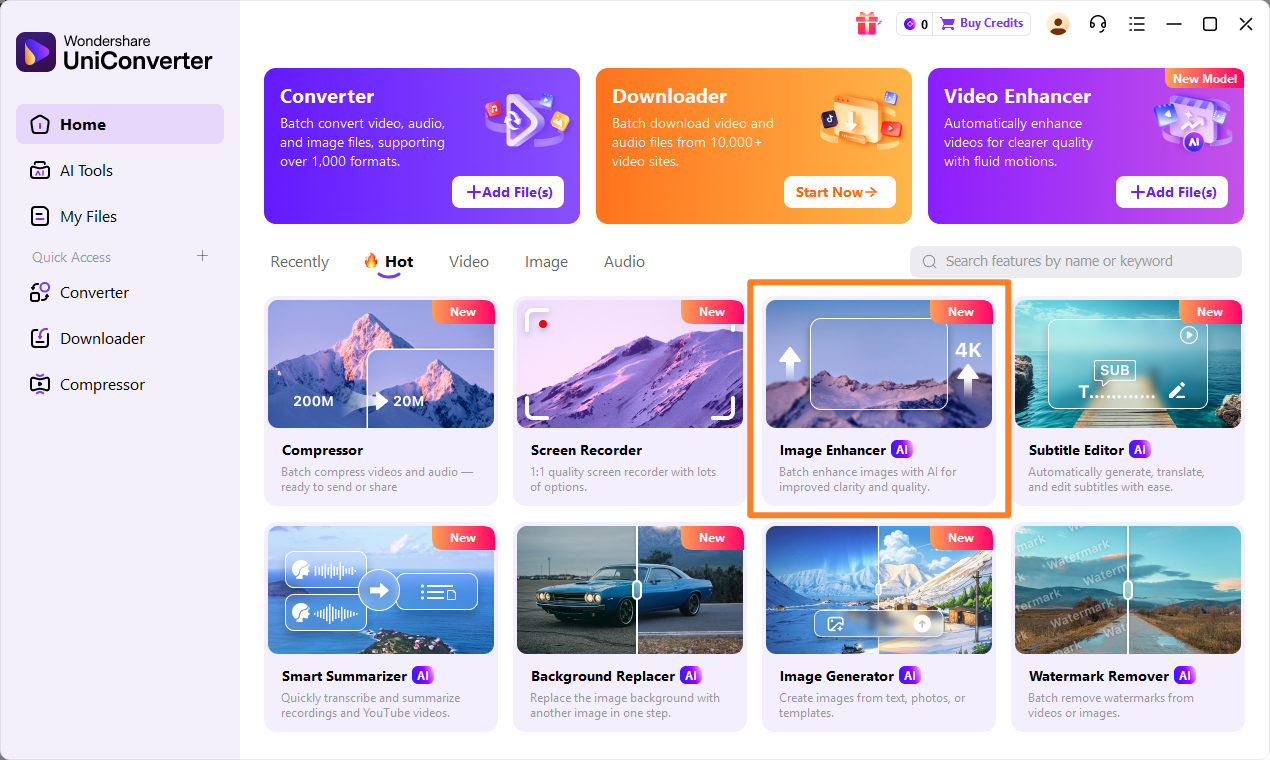
Step 1: Open UniConverter and Choose Image Enhancer
First, launch UniConverter on your computer. Navigate to the "Toolbox" section, and you'll find the "Image Enhancer" option. This is where the magic begins for enhancing your images.
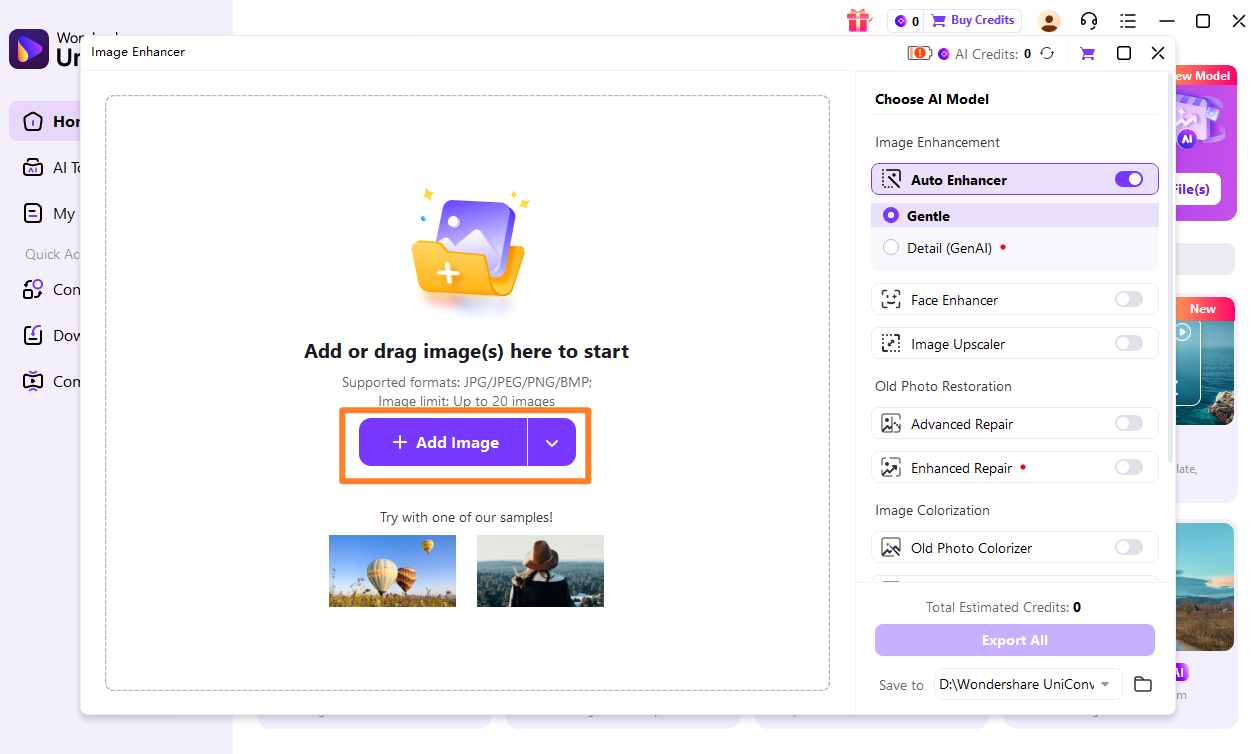
Step 2: Upload the Images
Click on the "Add Files" button or simply drag and drop the images you want to enhance into the UniConverter interface. You can add multiple images for batch processing, which is a huge time-saver.
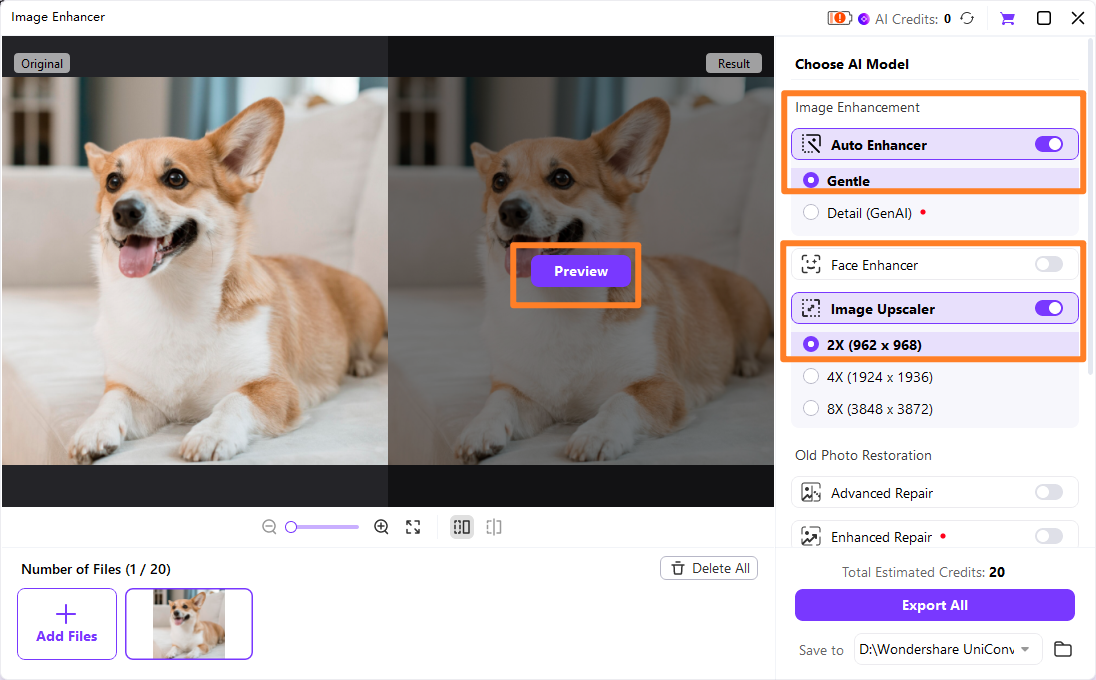
Step 3: Choose Enhancement Model
Once your images are loaded, UniConverter will present you with various enhancement models. Select the one that best suits your needs – whether it's for general improvement, portrait enhancement, or specific color correction. This allows for a tailored enhancer experience.
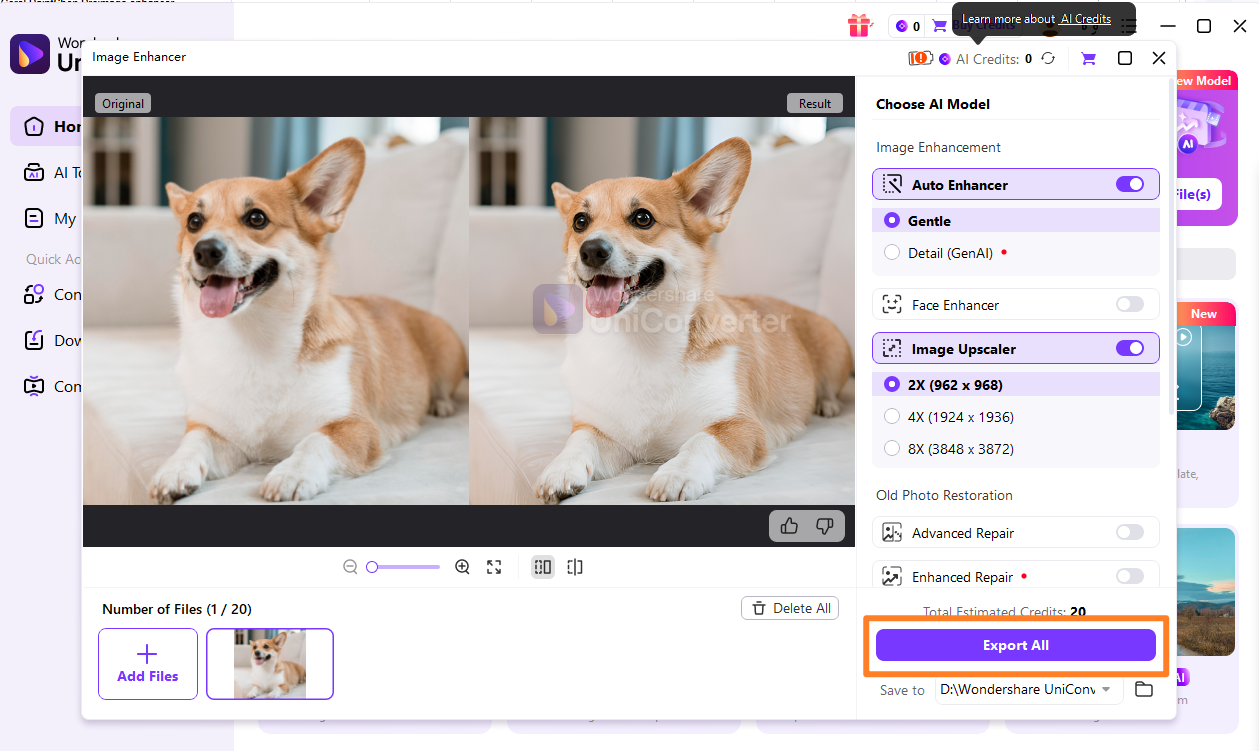
Step 4: Preview and Save the Enhanced Images
After selecting your enhancement model, UniConverter will process the images. You can then preview the enhanced versions side-by-side with the originals. Once satisfied, click "Export" to save your high-quality, enhanced photos to your desired location.

Seeking a Powerful Enhance.Pho.to Alternative?
Part 7: Conclusion
After spending considerable time with Enhance.Pho.to image enhancer review and its alternatives, my conclusion is clear: its utility largely depends on your specific needs and expectations. For casual users, social media enthusiasts, or anyone needing a quick, no-fuss photo touch-up, Enhance.Pho.to offers a convenient and accessible solution. Its one-click enhancement and user-friendly interface are undeniably appealing for those who prioritize speed over granular control. However, for hobbyist photographers, professionals, or anyone demanding precise adjustments, high-resolution output, and batch processing capabilities, Enhance.Pho.to quickly reveals its limitations. In such scenarios, desktop applications like UniConverter, Topaz Photo AI, or Luminar Neo provide a far more comprehensive and reliable experience, albeit with a steeper learning curve or a higher price point. Ultimately, if you're just looking to make your everyday photos pop with minimal effort, Enhance.Pho.to is a decent choice. But for serious image enhancement, I'd strongly recommend exploring its more robust alternatives.
Part 8: FAQs
-
1. Is Enhance.Pho.to free to use?
Yes, Enhance.Pho.to offers a free tier with basic enhancement features and some limitations on output resolution. Full features and higher quality often require a premium subscription.
-
2. Can Enhance.Pho.to improve blurry photos?
While Enhance.Pho.to can apply some sharpening, its ability to significantly improve truly blurry photos is limited. For severe blur, dedicated deblurring software or more advanced AI tools might be more effective.
-
3. Does Enhance.Pho.to offer batch processing?
No, Enhance.Pho.to typically processes images one at a time. If you need to enhance multiple photos simultaneously, you'll need to look for alternatives that support batch processing.
-
4. How does Enhance.Pho.to compare to Photoshop?
Enhance.Pho.to is a simplified, AI-driven tool for quick enhancements, while Photoshop is a professional-grade image editing suite offering extensive control, layers, and advanced manipulation capabilities. They serve very different user bases and purposes.
-
5. What are the best alternatives to Enhance.Pho.to?
For more advanced features and control, consider UniConverter, Topaz Photo AI, Luminar Neo, or Adobe Lightroom. For other free online options, you might look at Fotor or Pixlr, though they also have their own limitations.
