
- DxO PhotoLab excels in RAW processing, optical corrections, and AI noise reduction (DeepPRIME/XD).
- Unmatched image quality for landscapes and architecture, especially in challenging light conditions.
- Consider alternatives like UniConverter for quick edits, batch processing JPEGs, or simpler workflows.
- High hardware demands and a steep learning curve are potential pitfalls for new users.
- UniConverter offers a user-friendly, efficient solution for general image enhancement and media conversion.
- Choose PhotoLab for professional-grade image fidelity; UniConverter for speed and versatility.
In this article
DxO PhotoLab Image Enhancer: A Comprehensive Scenario-Based Review
When I first delved into the world of serious photography, I quickly realized that capturing an image was only half the battle. The real magic often happens in post-processing. That's where tools like DxO PhotoLab image enhancer review come into play. It's a powerful piece of software that promises to elevate your RAW files to new heights, especially when it comes to optical corrections and noise reduction. In this review, I'll share my firsthand experiences, comparing it against other industry giants and helping you understand if it's the right fit for your workflow. We'll explore its core features, ideal use cases, and potential pitfalls, offering a practical guide to making an informed decision.
Part 1: What is DxO PhotoLab
DxO PhotoLab is a sophisticated RAW image processing software developed by DxO Labs, a French company renowned for its rigorous camera and lens testing. It's not just another photo editor; it's built from the ground up with a strong emphasis on image quality, particularly through its unique optical corrections and advanced noise reduction technologies. My journey with PhotoLab started when I was frustrated with the limitations of other software in handling high ISO images and correcting lens imperfections. This review aims to address whether PhotoLab truly delivers on its promise of superior image quality and how it stacks up against its competitors in real-world scenarios.
Market Position and Target Audience
* Addressing Image Quality Demands: Many photographers, myself included, are constantly seeking ways to extract the absolute best quality from their camera's RAW files, especially in challenging lighting conditions.
* Overcoming Lens Imperfections: Every lens has its quirks – vignetting, chromatic aberration, distortion. Finding a tool that automatically and accurately corrects these can be a game-changer.
* Simplifying Complex Workflows: While powerful, some image editors can be overly complex. The desire for a streamlined yet effective workflow is a common pain point.
Part 2: DxO PhotoLab Core Features: Pros & Cons
DxO PhotoLab truly shines in its core image processing capabilities. From my experience, its approach to image enhancement is deeply rooted in scientific precision, which translates into visibly superior results.
Core Features:
* Unrivaled RAW Processing and Optical Corrections: This is where PhotoLab truly differentiates itself. It uses meticulously calibrated camera and lens profiles to automatically correct optical flaws like distortion, vignetting, and chromatic aberration with astonishing accuracy. I've seen lens issues disappear that I thought were permanent.
* Advanced Noise Reduction (DeepPRIME/DeepPRIME XD): The DeepPRIME and DeepPRIME XD technologies are nothing short of revolutionary. When I first tried them on some high ISO shots, I was genuinely amazed at how much detail was retained while virtually eliminating noise. It's a game-changer for low-light photography.
* Powerful Local Adjustments with U Point Technology: The U Point technology, inherited from Nik Collection, allows for incredibly precise local adjustments without complex masking. It intelligently selects areas based on color and tone, making targeted enhancements intuitive and efficient.
* Integrated Photo Library: While not as robust as dedicated asset managers, PhotoLab includes a basic photo library for organizing and searching your images. It's functional for smaller projects but can feel limited for extensive catalogs.
* Color Management and Soft Proofing: For those of us who care about color accuracy, PhotoLab offers excellent color management tools and soft proofing capabilities, ensuring what you see on screen is what you get in print.
Pros:
* Exceptional Image Quality: The combination of optical corrections and DeepPRIME noise reduction delivers unparalleled image quality, especially from RAW files.
* Intuitive Local Adjustments: U Point technology makes complex local edits surprisingly easy and effective.
* Time-Saving Automatic Corrections: The automatic lens and camera corrections save a significant amount of time in post-processing.
Cons:
* Steep Learning Curve for Beginners: While powerful, PhotoLab can be intimidating for newcomers due to its extensive features and unique workflow.
* Higher Price Point Compared to Some Competitors: It's an investment, and the cost can be a barrier for hobbyists or those on a tighter budget.
Part 3: Target Users and Use Cases
From my perspective, DxO PhotoLab isn't for everyone, but for the right user, it's an indispensable tool. It caters to a specific niche that prioritizes absolute image quality above all else.
Best Use Case: Professional Landscape and Architectural Photography
For me, PhotoLab truly shines when I'm working on landscape or architectural images. These genres demand impeccable detail, precise geometry, and minimal noise, especially when shooting in challenging conditions or with wide-angle lenses. The automatic optical corrections are a godsend for correcting lens distortions in architectural shots, ensuring straight lines remain straight. And for those long exposure landscape shots taken at dusk or dawn, the DeepPRIME noise reduction preserves incredible detail while cleaning up any sensor noise. If you're a professional who regularly delivers large prints or high-resolution images where every pixel counts, PhotoLab will be your best friend. I've found it invaluable for client work where image integrity is paramount.
Limited Use Case: Quick Social Media Edits and Batch Processing of JPEGs
However, if your primary goal is to quickly edit JPEGs for social media or to batch process hundreds of images with minimal fuss, PhotoLab might feel like overkill. Its strengths lie in deep, precise RAW processing, not in rapid, superficial adjustments. While it can process JPEGs, you won't get the full benefit of its optical corrections or DeepPRIME technology, which are designed for RAW files. For quick edits, I often find myself reaching for simpler, faster tools. The learning curve and processing time for PhotoLab, especially with DeepPRIME, can be too much for casual social media sharing. If you're just looking to add a filter and crop, you're probably better off with something else.
Part 4: DxO PhotoLab and Alternatives Comparison
When I look at the landscape of image editing software, DxO PhotoLab stands out for its unique strengths, but it's important to see how it compares to the competition. Here's my take on how it stacks up against some popular alternatives.
| Feature/Software | DxO PhotoLab | Adobe Lightroom Classic | Capture One Pro | Luminar Neo | UniConverter |
| RAW Processing Quality | Excellent | Very Good | Excellent | Good | N/A (Enhancement) |
| Noise Reduction | Superior (DeepPRIME XD) | Good | Very Good | Good | Good (AI Enhancement) |
| Local Adjustments | Advanced (U Point) | Advanced | Advanced | Good | Basic |
| Asset Management | Basic | Excellent | Excellent | Good | Basic |
| Price | High | Subscription | High | Moderate | Moderate (Perpetual/Subscription) |
| Processing Speed | Moderate (DeepPRIME can be slow) | Fast | Fast | Moderate | Fast |
| Output Quality | Exceptional | High | Exceptional | Good | Good |
| Ease of Use | Moderate | Moderate | Moderate | High | High |
| Customer Support | Good | Excellent | Good | Good | Excellent |
| Security | High | High | High | High | High |
Key Differentiators:
From my experience, DxO's proprietary optical corrections and DeepPRIME technology offer unmatched image quality, especially for high ISO RAW files. No other software I've used can clean up noise and retain detail quite like PhotoLab. However, competitors often excel in asset management and broader ecosystem integration. Lightroom, with its extensive cataloging features and seamless integration with Photoshop, is a powerhouse for managing large photo libraries. Capture One Pro also offers superb tethered shooting and color grading capabilities that are often preferred by studio photographers. Luminar Neo, on the other hand, focuses more on AI-driven creative edits and a more user-friendly interface for quick enhancements. UniConverter, while not a direct competitor in RAW processing, offers a simpler, faster solution for general image enhancement and conversion, especially if you're dealing with various media types.
Part 5: Risks and Pitfalls
While I'm a big fan of DxO PhotoLab, it's crucial to be aware of potential risks and pitfalls before committing to it. My experience has taught me that even the best tools have their downsides.
Hardware Requirements for Optimal Performance
This is a big one. When I first started using DeepPRIME, I quickly realized my older machine was struggling. PhotoLab, especially with its advanced AI-driven noise reduction like DeepPRIME and DeepPRIME XD, is incredibly resource-intensive. You'll need a modern CPU, ample RAM (16GB minimum, 32GB recommended), and a powerful GPU (NVIDIA RTX or AMD Radeon RX series are ideal) to experience smooth performance and reasonable processing times. If your hardware isn't up to par, you'll find yourself waiting a long time for exports, which can be incredibly frustrating during a busy workflow. Don't expect miracles on an old laptop; it will crawl.
Steep Learning Curve and Workflow Integration
I initially found the interface and workflow of PhotoLab quite different from what I was used to with other editors. While powerful, its unique approach to local adjustments (U Point) and its specific module-based workflow can take some time to master. If you're coming from a more traditional layer-based editor or a simpler interface, there's definitely a learning curve. Integrating it into an existing workflow, especially if you rely heavily on other software for asset management or specific creative edits, can also be a challenge. It's not always a seamless plug-and-play solution.
Potential for Over-Processing and Unnatural Results
With great power comes great responsibility, and PhotoLab's powerful enhancement tools are no exception. It's very easy to overdo the noise reduction or sharpening, leading to images that look plasticky, overly smooth, or unnaturally crisp. I've had to learn to dial back the sliders and trust the subtle improvements rather than pushing them to their limits. The temptation to make an image "perfect" can result in an artificial look that detracts from the natural beauty of the photograph. Always review your edits critically and compare them to the original to avoid this pitfall.
Subscription Model vs. Perpetual License
While DxO offers perpetual licenses for PhotoLab, they also have upgrade pricing for new versions. This means you're not locked into a subscription like Adobe, but you'll still need to pay for major version upgrades to get the latest features and camera support. This can be a significant ongoing cost if you want to stay current. It's a different financial model, and you need to weigh whether you prefer a one-time purchase with paid upgrades or a recurring subscription. For me, the perpetual license is a pro, but the upgrade costs are something to factor in.
Part 6: How to Use UniConverter for Efficient Image Enhancement
Sometimes, you just need a quick and reliable way to enhance your images without diving into the complexities of professional RAW editors. Or perhaps you're dealing with a batch of images where the advanced features of PhotoLab are overkill, or you're encountering issues with unstable enhancements or weak effects from other tools. This is where UniConverter steps in as a fantastic alternative, offering a user-friendly and efficient solution for various image and video enhancement needs, especially for those seeking a simpler workflow. It's a great choice when you need to quickly process multiple images, ensure consistent quality, and avoid issues like watermarks or intrusive ads often found in free online tools. UniConverter offers a stable, lossless, and GPU-accelerated enhancement process, making it an all-in-one ultimate solution for your media needs. For those looking to enhance image resolution or perform a general image enhancer function, this tool provides a streamlined experience. If you're also interested in video improvements, UniConverter can also serve as a powerful video enhancer, helping you to unblur a video or fix pixelated videos.
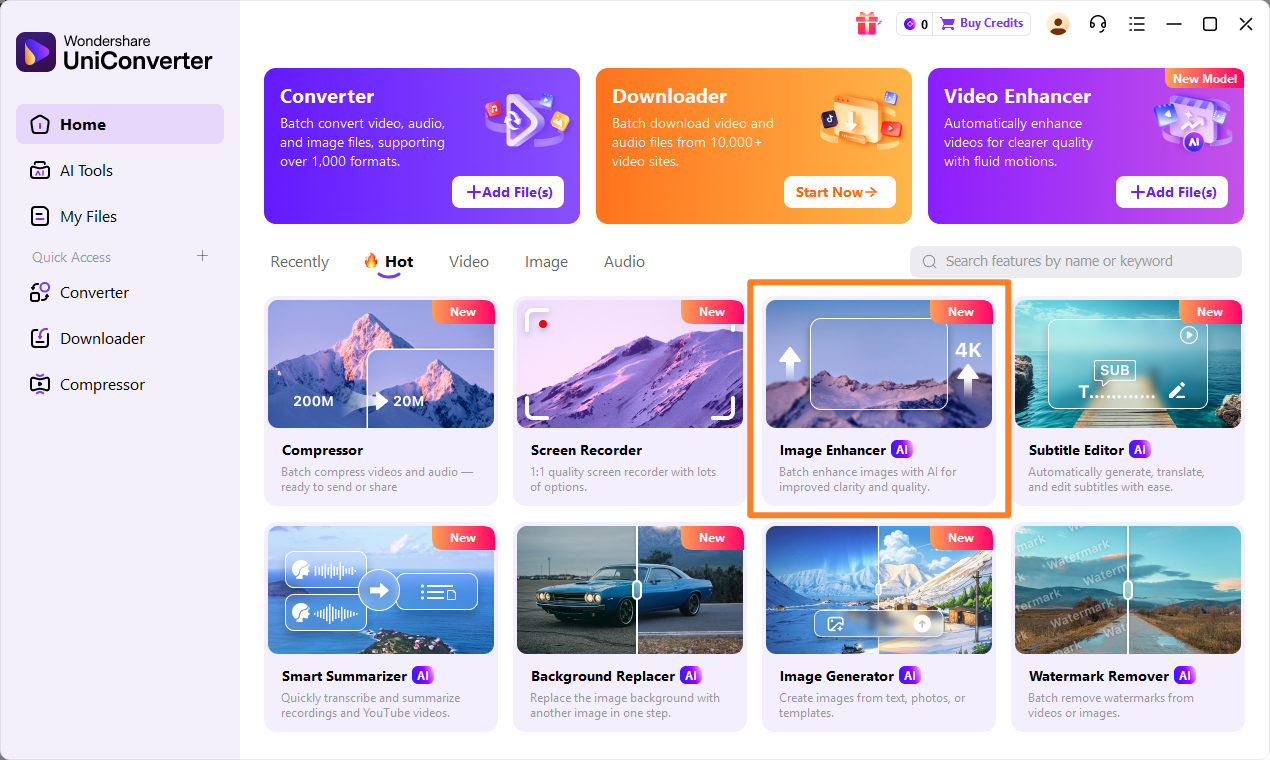
Step 1: Open UniConverter and Choose Image Enhancer
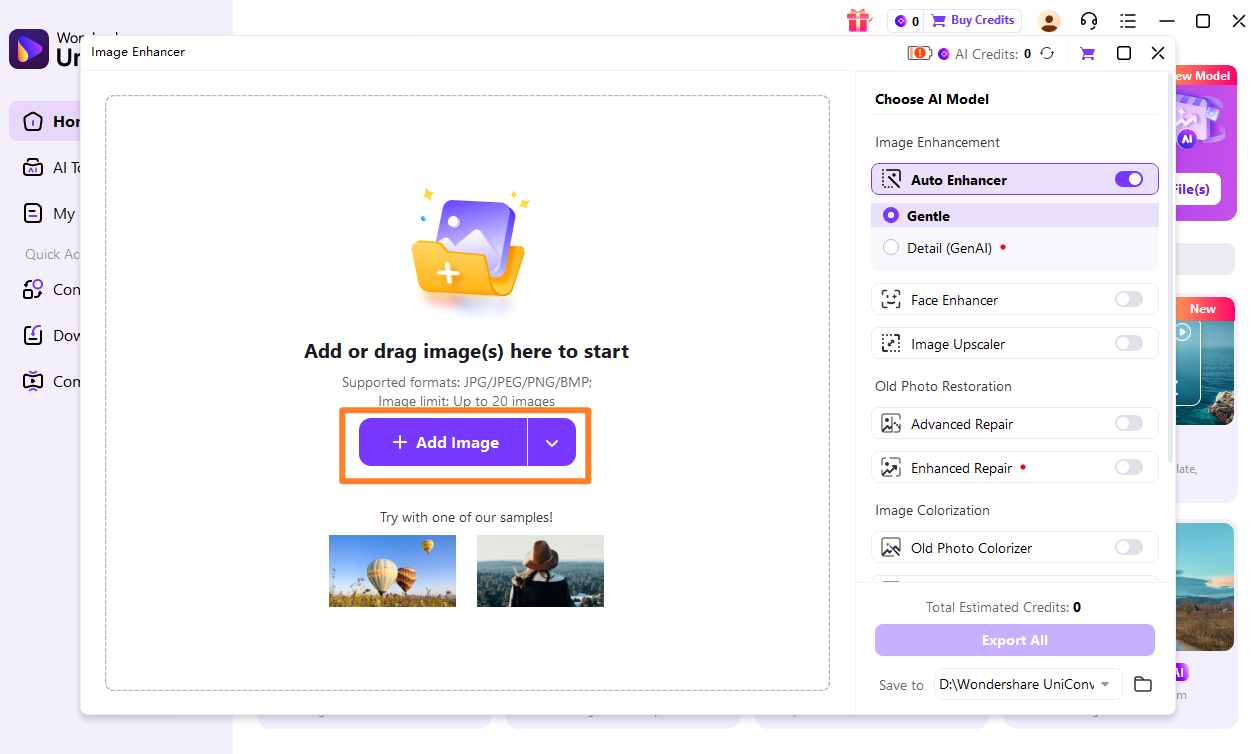
Step 2: Upload the Images
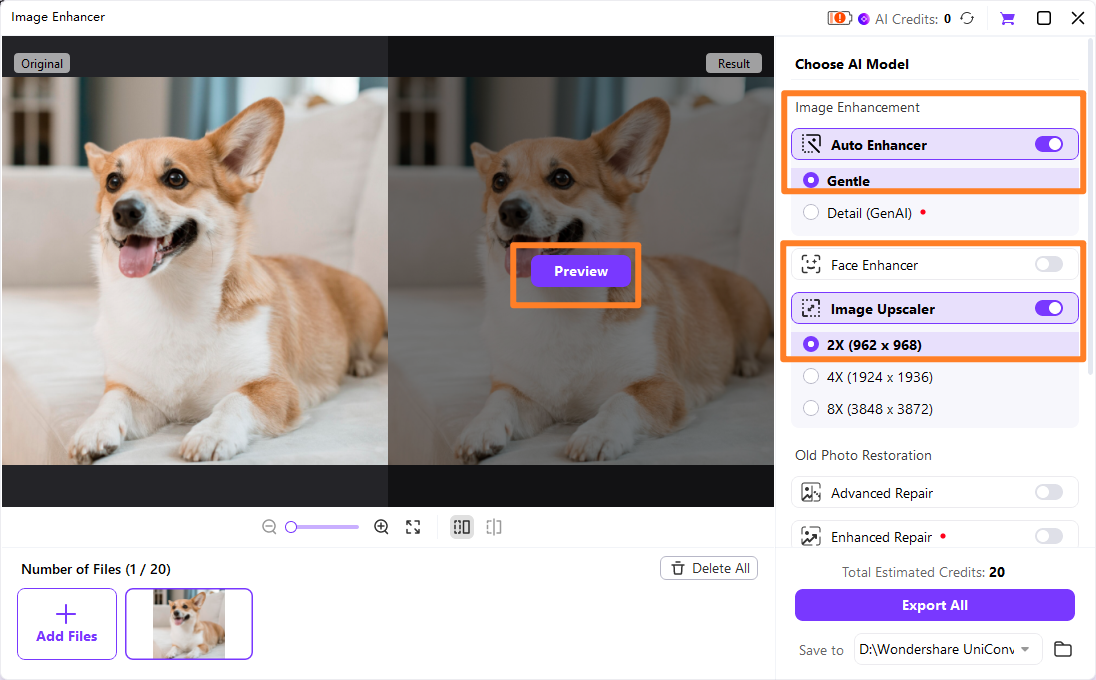
Step 3: Choose Enhancement Model
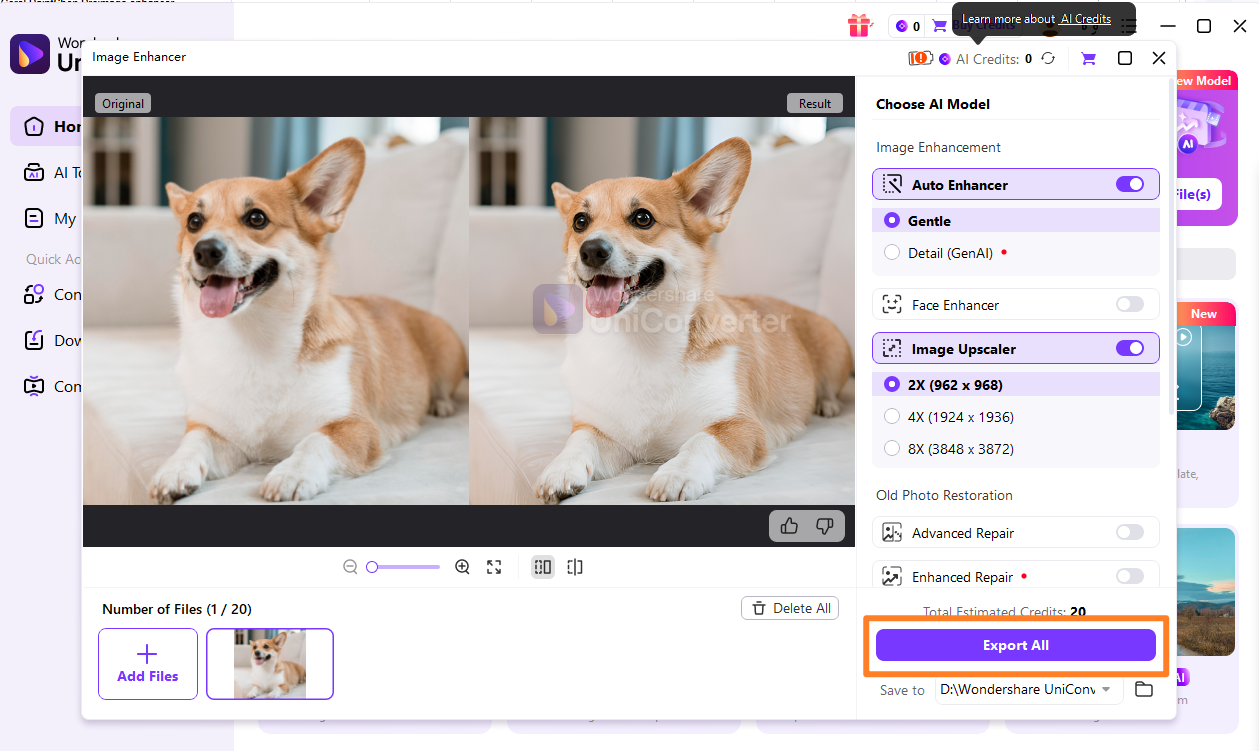
Step 4: Preview and Save the Enhanced Images

Seeking a DxO PhotoLab Alternative?
Part 7: Final Verdict and Recommendations
After spending considerable time with DxO PhotoLab image enhancer review, my conclusion is that it's a truly exceptional tool for specific types of photographers. For professional photographers prioritizing image quality, especially those working with landscape, architectural, or low-light photography, PhotoLab is an unparalleled choice. Its optical corrections and DeepPRIME/DeepPRIME XD noise reduction are simply the best in the business, delivering results that often surpass competitors. If you're an enthusiast seeking advanced RAW processing and are willing to invest time in learning its nuances, PhotoLab will reward you with stunningly clean and detailed images. However, for users on a budget or needing simpler workflows for quick edits or social media, PhotoLab might be overkill. Its steep learning curve, hardware demands, and higher price point can be deterrents. In such cases, simpler editors or even UniConverter for basic enhancements might be more appropriate. Ultimately, PhotoLab is a specialized tool that excels in its niche, offering a level of image fidelity that few others can match, provided you have the right needs and resources.
Part 8: FAQs
-
1. Is DxO PhotoLab a good alternative to Adobe Lightroom?
Yes, for RAW processing and image quality, especially noise reduction and optical corrections, it often surpasses Lightroom. However, Lightroom offers superior asset management, a broader ecosystem, and a more integrated workflow for many photographers. If your priority is absolute image quality from RAW files, PhotoLab is a strong contender; if it's overall workflow and organization, Lightroom might be better.
-
2. Does DxO PhotoLab support all camera RAW formats?
DxO PhotoLab supports a wide range of camera RAW formats from major manufacturers. However, it's crucial to check their official compatibility list, as support for the very latest camera models might take some time to be added through updates. I always recommend checking their website before purchasing if you have a brand-new camera.
-
3. What is DeepPRIME XD in DxO PhotoLab?
DeepPRIME XD is an advanced, AI-powered noise reduction technology within DxO PhotoLab. It's an evolution of the original DeepPRIME, designed to deliver even greater detail retention and clarity while effectively eliminating noise in high ISO images. It's particularly effective in challenging low-light conditions, allowing you to push your camera's ISO further than ever before.
-
4. Can I use DxO PhotoLab for batch processing?
Yes, DxO PhotoLab offers robust batch processing capabilities. You can apply corrections, presets, and export settings to multiple images simultaneously, which is a huge time-saver. This is especially useful when you've shot a series of images under similar conditions and want to apply consistent edits.
-
5. Is there a free trial available for DxO PhotoLab?
Yes, DxO PhotoLab typically offers a fully functional free trial for a limited period, usually 30 days. I highly recommend downloading the trial to test it with your own RAW files and see how it fits into your workflow before making a purchase decision. It's the best way to experience its power firsthand.
