
- Value: Designify excels in automated, quick image enhancements for e-commerce and social media, ideal for small businesses.
- Comparison: Designify prioritizes speed and commercial utility; Topaz Labs offers granular control; UniConverter provides local, versatile processing.
- Decision: Choose Designify for fast, automated commercial visuals; UniConverter for local processing, batch handling, and multimedia needs.
- Value: UniConverter offers a robust, locally processed solution, balancing quality, speed, and versatility for diverse multimedia tasks.
- Comparison: Unlike cloud-based Designify, UniConverter processes locally, ensuring data privacy and consistent quality across image types.
- Decision: Opt for UniConverter to avoid cloud privacy concerns, over-processing, and subscription lock-in, while gaining comprehensive tools.
In this article
- Part 1: What is Designify Image Enhancer?
- Part 2: Designify Image Enhancer: Core Features, Pros, and Cons
- Part 3: Who is Designify Image Enhancer For? Ideal Scenarios and Limitations
- Part 4: Designify Image Enhancer and Alternatives Comparison
- Part 5: Risks and Pitfalls to Consider
- Part 6: How to Enhance Images with UniConverter Efficiently
- Part 7: Conclusion
- Part 8: FAQs
When I first heard about Designify Image Enhancer review, I was intrigued by its promise of AI-powered image transformation. In today's visually-driven world, where every social media post and e-commerce listing demands perfection, tools that simplify image enhancement are invaluable. This review will delve into Designify's capabilities, comparing it with other market leaders and exploring its ideal use cases. My goal is to provide a practical, scenario-based analysis to help you decide if Designify is the right tool for your specific needs, or if an alternative might serve you better.
Part 1: What is Designify Image Enhancer?
Designify Image Enhancer positions itself as an AI-driven solution designed to effortlessly elevate the quality and presentation of your images. It's built for speed and simplicity, aiming to democratize professional-looking visuals for everyone, from small business owners to social media enthusiasts. I found that it primarily focuses on automating tasks that traditionally require significant manual effort, such as background removal, lighting adjustments, and overall image polish. My initial thought was, "Can it really be that easy?" And for many common tasks, it surprisingly is.
The Rise of AI Image Enhancement Tools
The explosion of AI in image processing stems from a clear need:
* Democratizing Professional Visuals: Not everyone has the budget for professional photographers or graphic designers. AI tools bridge this gap.
* Meeting the Demands of Digital Content: The sheer volume of images needed for e-commerce, social media, and marketing campaigns is immense, requiring efficient solutions.
* Simplifying Complex Editing Tasks: AI takes the guesswork and technical skill out of tasks like background removal and color correction, making them accessible to novices.
Part 2: Designify Image Enhancer: Core Features, Pros, and Cons
Designify's core strength lies in its AI-driven automation. What I found most impressive was its ability to quickly transform ordinary photos into something more polished. It's not just about making images "better"; it's about making them suitable for specific commercial contexts with minimal fuss.
Core Features:
* AI-powered background removal: This is a standout feature for me, especially for product shots.
* Automatic lighting and color correction: It intelligently adjusts exposure and vibrancy.
* Smart object detection and enhancement: It focuses on the main subject.
* Template-based design suggestions: For quick social media posts or banners.
* Batch processing capabilities: A real time-saver for multiple images.
Pros:
* AI-powered background removal and replacement for e-commerce product shots: This feature alone is a game-changer for online sellers. It's fast and surprisingly accurate.
* One-click enhancement for social media visuals: If you're constantly posting, this saves a ton of time. The results are usually good enough for casual use.
* Batch processing for efficiency in marketing campaigns: For me, being able to upload a dozen product photos and have them all processed similarly is incredibly valuable.
Cons:
* Limited advanced editing capabilities for professional photographers: If you need fine-tuned control over curves, levels, or specific color grading, Designify will feel restrictive.
* Potential for "AI artifacting" on complex images: On occasion, with intricate details or unusual lighting, the AI can produce strange blurs or unnatural edges.
Part 3: Who is Designify Image Enhancer For? Ideal Scenarios and Limitations
Based on my experience, Designify isn't a one-size-fits-all solution. It shines in specific contexts where speed and automation are paramount, but it definitely has its limits.
Best Use Case: E-commerce Product Photography for Small Businesses
* Scenario: As a small online store owner, I constantly need to create professional-looking product images with clean backgrounds for my website and social media. Designify's automated background removal and enhancement features save me immense time and money compared to manual editing or hiring a graphic designer. I can upload a batch of new product photos, let Designify do its magic, and have them ready for my store in minutes. It’s perfect for getting consistent, appealing visuals without a steep learning curve or significant investment.
Limited Use Case: High-End Artistic Photography Restoration
* Scenario: If I were a professional photographer looking to restore an old, damaged photograph with intricate details and subtle color variations, Designify wouldn't be my first choice. While it can "enhance," its AI might over-process or misinterpret artistic nuances, leading to a less authentic restoration compared to specialized manual tools like Photoshop or dedicated restoration software. The AI tends to apply a general enhancement, which isn't always what you want for preserving the original character of a delicate, artistic piece.
Part 4: Designify Image Enhancer and Alternatives Comparison
When I look at Designify Image Enhancer review alongside its competitors, its niche becomes clear. It's built for speed and commercial utility, often sacrificing granular control for efficiency.
Comparison Table: Designify vs. Top Image Enhancers
| Feature/Scenario | Designify | Topaz Labs Photo AI | Adobe Express | UniConverter |
| E-commerce Background Removal | Excellent | Good | Good | Good |
| Batch Processing | Good | Excellent | Fair | Excellent |
| Artistic Photo Restoration | Fair | Excellent | Poor | Good |
| Ease of Use | Excellent | Good | Excellent | Excellent |
| Pricing Model | Subscription | One-time purchase | Subscription (part of suite) | One-time purchase/Subscription |
| Output Quality (General) | Very Good | Excellent | Good | Very Good |
| Processing Speed | Fast | Moderate | Fast | Very Fast (GPU accelerated) |
| Local Processing | No (Cloud-based) | Yes | No (Cloud-based) | Yes |
Key Differentiators:
Designify excels in automated, quick-turnaround enhancements for commercial use, particularly e-commerce. Topaz Labs Photo AI offers more granular control and specialized algorithms for professional-grade restoration and upscaling, making it a favorite for serious photographers. Adobe Express provides a broader suite of design tools alongside basic enhancement, often integrated into a larger ecosystem, which is great if you're already in the Adobe world. UniConverter, on the other hand, offers a robust, locally processed solution that balances quality with speed and versatility.
Part 5: Risks and Pitfalls to Consider
While Designify offers convenience, I've learned that relying solely on cloud-based AI tools comes with its own set of considerations. It's important to be aware of these before diving in.
Data Privacy Concerns with Cloud-Based Processing
Since Designify is a cloud-based service, every image I upload is sent to their servers for processing. This immediately raises questions about data privacy. While they likely have robust policies, I always wonder who has access to my images and how long they're stored. For sensitive product designs or personal photos, this is a significant concern for me. It’s not like editing locally on my machine where I have full control.
Potential for Over-Processing and Loss of Original Detail
I've noticed that sometimes, in its attempt to "enhance," Designify can over-process an image. This often leads to a loss of subtle textures, fine details, or a slightly artificial, "plastic" look. For instance, if I upload a photo with delicate fabric textures, the AI might smooth them out too much, making the product look less authentic. It’s a trade-off for the automation.
Subscription Model Lock-in and Feature Updates
Like many SaaS products, Designify operates on a subscription model. While this ensures continuous updates, it also means I'm locked into recurring payments. If I stop subscribing, I lose access to the tool. Also, feature updates, while generally positive, can sometimes change workflows or introduce new bugs, which can be frustrating if I've gotten used to a particular way of doing things.
Output Quality Consistency Across Different Image Types
I've found that Designify's performance can vary significantly depending on the type of image. It works wonders on clean product shots with clear subjects. However, with complex scenes, busy backgrounds, or unusual lighting conditions, the results can be inconsistent. Sometimes the background removal is flawless, other times it leaves jagged edges or incorrectly identifies parts of the subject as background.
Advertising and Upselling within the Platform
While not always intrusive, I've occasionally encountered prompts or suggestions within the platform for upgrading my plan or trying other related services. It's a common business practice, but it can interrupt my workflow when I'm trying to quickly get a task done. It reminds me that I'm using a commercial product, not just a simple utility.
Part 6: How to Enhance Images with UniConverter Efficiently
When I've found other tools lacking in batch processing, struggling with enhancement stability, or simply not delivering the desired quality, I often turn to UniConverter. It's been a reliable alternative, especially when I need a comprehensive solution that handles more than just image enhancement. UniConverter avoids many of the pitfalls of cloud-based services by processing everything locally, offering a robust, ad-free experience with excellent output quality and GPU acceleration for speed. It's a true all-in-one multimedia toolkit that includes a powerful image enhancer, making it a versatile choice for anyone needing stable, high-quality, and bulk image processing without privacy concerns. For those looking to upscale images or improve video quality, UniConverter provides an effective solution. You can also enhance video content with its dedicated features, ensuring your media always looks its best. If you're dealing with pixelated videos, UniConverter can help resolve those issues efficiently.
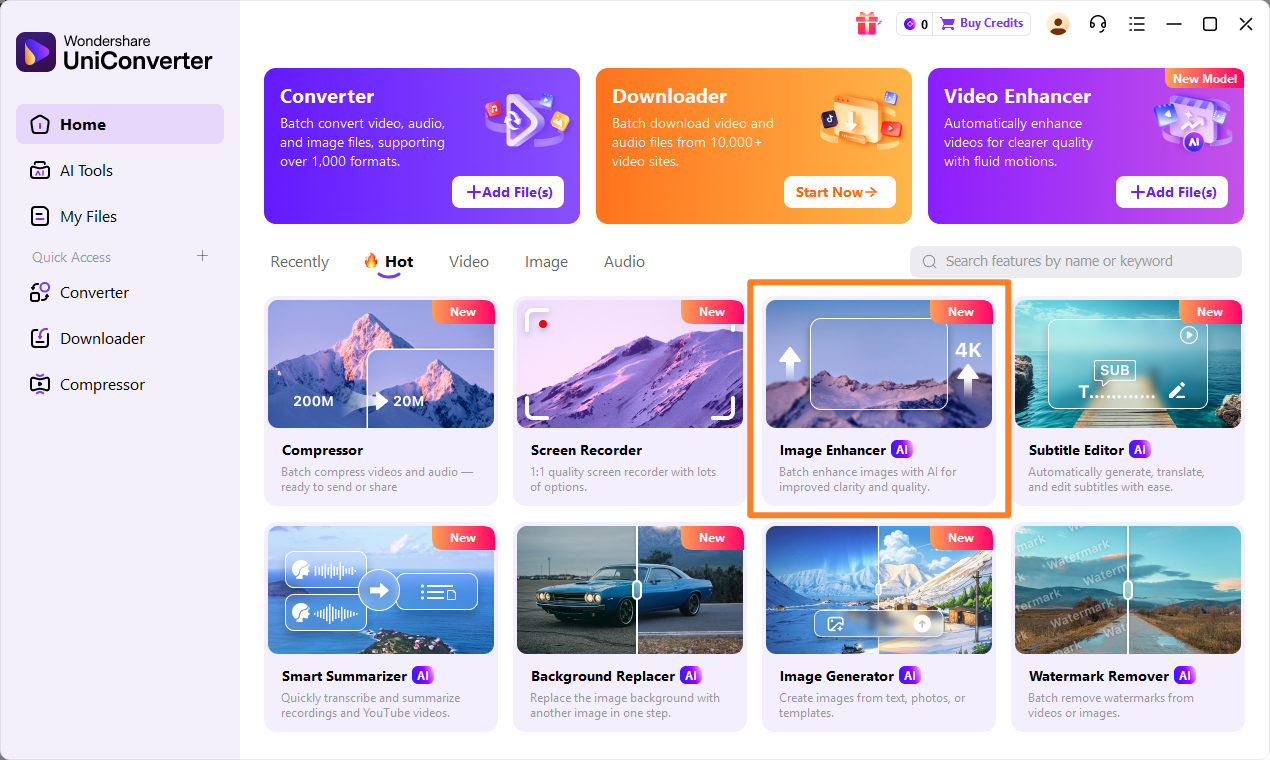
Step 1: Open UniConverter and Choose Image Enhancer
Launch UniConverter on your computer. On the main interface, navigate to the "Toolbox" section and select the "Image Enhancer" feature.
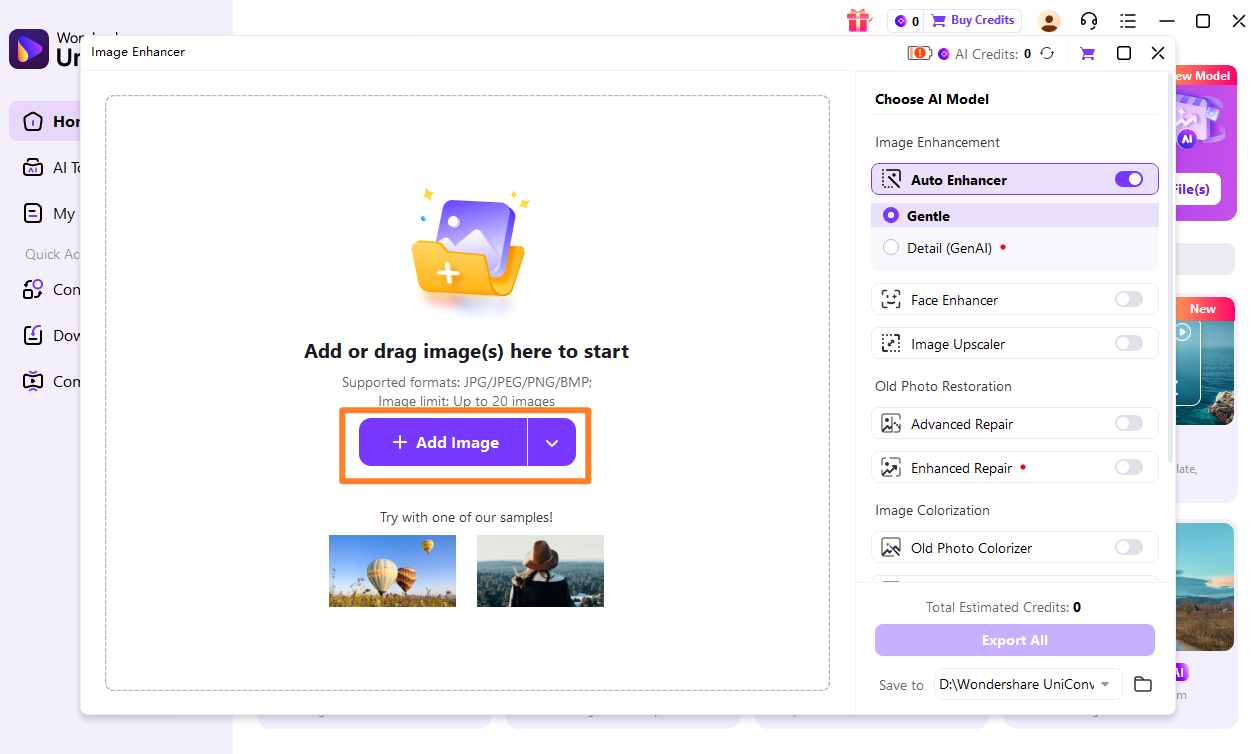
Step 2: Upload the Images
Click on the "Add Files" button or simply drag and drop the images you wish to enhance into the UniConverter window. You can add multiple images for batch processing.
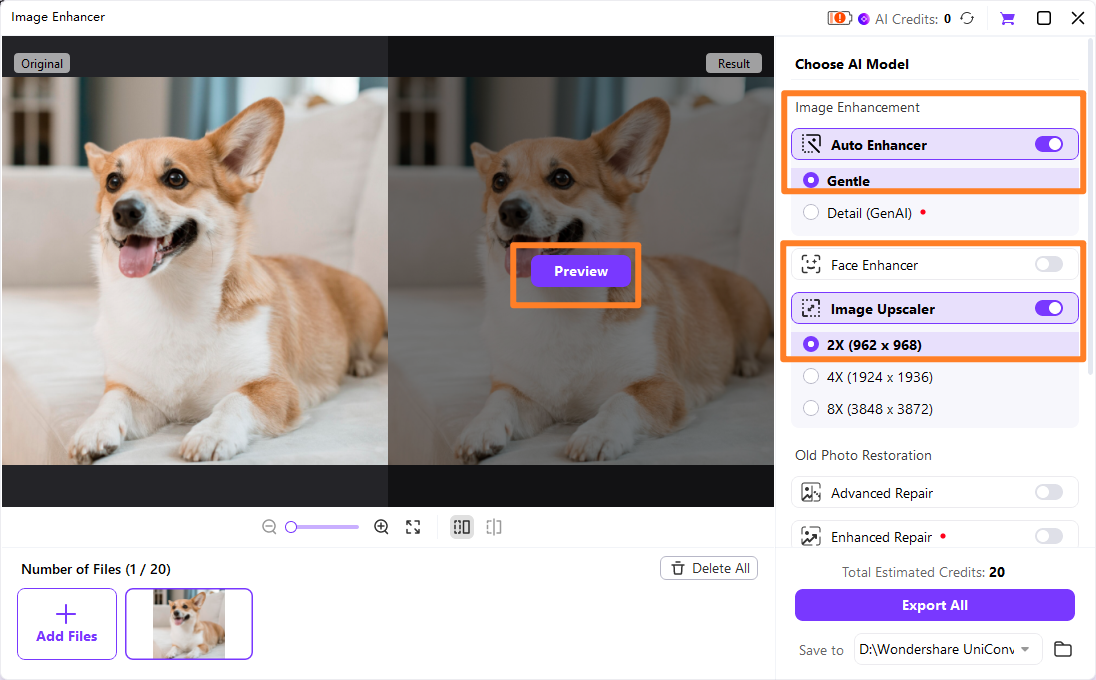
Step 3: Choose Enhancement Model
Once your images are loaded, UniConverter will present various enhancement options. Select the AI model that best suits your needs, such as general enhancement, denoise, or upscaling. You can preview the changes before applying them.
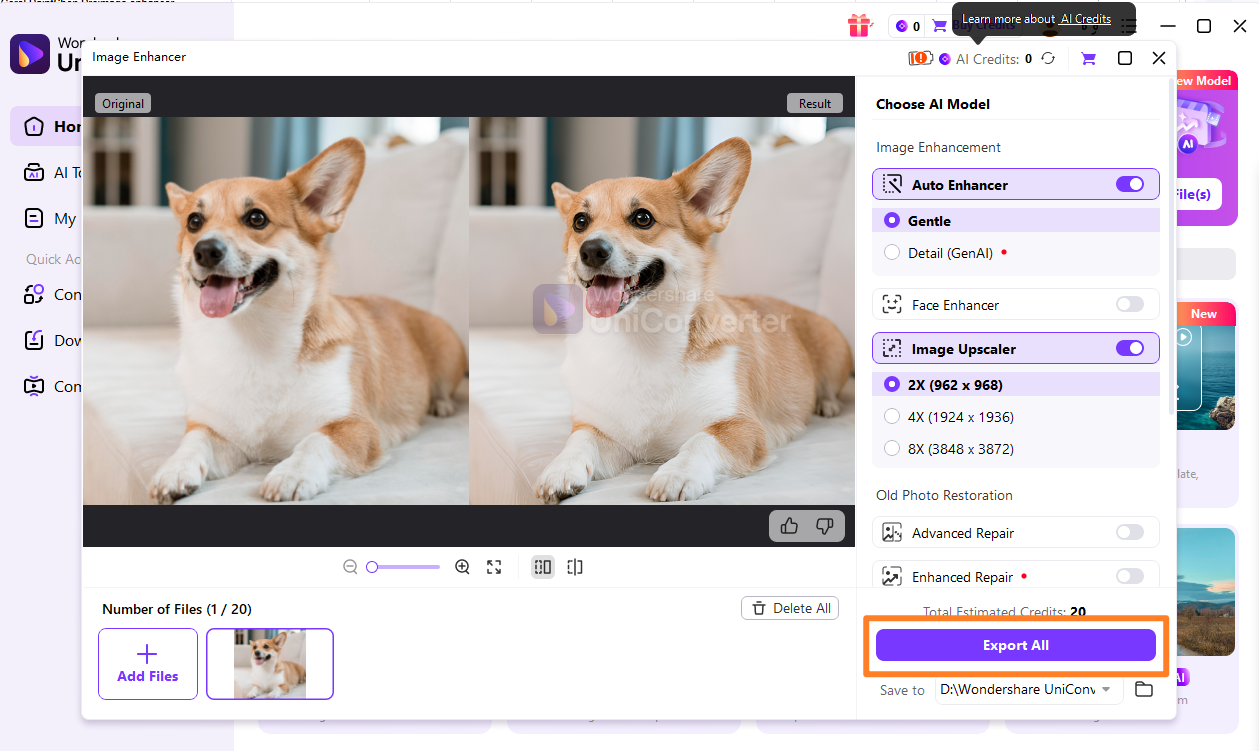
Step 4: Preview and Save the Enhanced Images
After selecting your desired enhancements, click "Start" to process your images. Once completed, you can preview the enhanced versions and then choose your output folder to save them.

Enhance Images Beyond Designify
Part 7: Conclusion
After spending time with Designify Image Enhancer review, I can confidently say it’s a powerful tool for specific use cases. If your primary need is quick, automated background removal and general enhancement for e-commerce product shots or social media content, Designify is an excellent choice. Its ease of use and batch processing capabilities make it highly efficient for small businesses and marketers who prioritize speed over granular control. However, for professional photographers requiring advanced editing, intricate restoration, or absolute control over every pixel, specialized software like Topaz Labs Photo AI will be more suitable. For those who value local processing, a broader suite of multimedia tools, and consistent high-quality output without subscription lock-in or privacy concerns, UniConverter presents a compelling alternative. Ultimately, the best tool depends on your specific workflow, technical skill, and the type of images you're working with.
Part 8: FAQs
-
1. **Is Designify Image Enhancer free to use?**
Designify typically offers a free trial or a limited free tier, but its full features and batch processing capabilities usually require a paid subscription.
-
2. **Can Designify enhance old, blurry photos?**
Yes, Designify can apply general enhancements to old or blurry photos, often improving clarity and color. However, for severely damaged or highly artistic old photos, specialized restoration tools might yield better, more nuanced results.
-
3. **How does Designify handle image privacy?**
As a cloud-based service, Designify processes images on its servers. While they have privacy policies, users should review these carefully, especially for sensitive content, as images are uploaded and stored temporarily.
-
4. **What file formats does Designify support?**
Designify generally supports common image formats like JPG, PNG, and WebP for both input and output, making it compatible with most web and social media platforms.
-
5. **Is UniConverter's image enhancer as good as Designify's?**
UniConverter's image enhancer is highly competitive, especially for users who prefer local processing, batch capabilities, and a broader multimedia toolkit. It offers excellent quality and speed, often surpassing Designify in scenarios requiring diverse multimedia functions or privacy-sensitive work.
