
- Descript's Core: AI-driven, text-based editing simplifies video by treating audio/video as text, ideal for dialogue-heavy content.
- Key Features: Automatic transcription, 'Overdub' for voice generation, and intuitive text-based editing streamline workflows significantly.
- Ideal Users: Perfect for podcasters, content creators, and educators needing efficient editing for spoken-word content.
- Vs. Competitors: Excels in text-based editing; traditional editors (Premiere Pro, DaVinci Resolve) lead in visual effects and color grading.
- Potential Pitfalls: Cloud storage raises privacy concerns; over-reliance on AI can lead to inaccuracies; learning curve for traditional editors.
- UniConverter Alternative: Offers stable, comprehensive video enhancement, batch processing, and broad format support for diverse needs.
In this article
- Part 1: What is Descript Video Enhancer?
- Part 2: Descript Video Enhancer: Core Features, Pros, and Cons
- Part 3: Descript Video Enhancer: Ideal Users and Use Cases
- Part 4: Descript Video Enhancer vs. Competitors
- Part 5: Risks and Pitfalls When Using Descript Video Enhancer
- Part 6: How to Use UniConverter to Efficiently Enhance Videos
- Part 7: Conclusion
- Part 8: FAQs
Descript Video Enhancer: A Comprehensive Scenario-Based Review
The digital content landscape is rapidly evolving, with video becoming the dominant medium for communication, entertainment, and education. This surge in video consumption has fueled a demand for accessible and efficient video editing tools. Traditional video editing software often presents a steep learning curve, requiring specialized skills and significant time investment. This is where AI-powered solutions like Descript Video Enhancer emerge, promising to democratize video editing by simplifying complex tasks. This review will delve into Descript's capabilities, comparing it against key competitors and offering scenario-based insights to help users make informed decisions in their video production workflows.
Part 1: What is Descript Video Enhancer?
Descript Video Enhancer is an innovative, AI-driven video editing platform that reimagines the editing process by treating video and audio as text. Its core philosophy revolves around a text-based editing interface, allowing users to edit video by simply editing a transcript. This approach aims to make video editing as intuitive as editing a document, significantly lowering the barrier to entry for content creators, podcasters, and businesses. This review will explore how Descript stands out in a crowded market and address the critical question of whether its unique approach truly enhances the video creation workflow.
The Rise of AI-Powered Video Editing
* Simplifying Complex Tasks: AI automates tedious processes like transcription, filler word removal, and even voice cloning, freeing up creators to focus on narrative and creative elements.
* Democratizing Content Creation: Tools like Descript empower individuals without traditional video editing expertise to produce high-quality video content.
* Meeting Market Demands: The explosion of video content across platforms necessitates faster, more efficient, and accessible editing solutions.
* Bridging the Skill Gap: AI helps bridge the gap between creative vision and technical execution, making advanced editing techniques more attainable for a wider audience.
Part 2: Descript Video Enhancer: Core Features, Pros, and Cons
Descript Video Enhancer offers a unique suite of features primarily focused on streamlining the audio and video editing process through its text-based interface. Its core strength lies in its ability to transcribe audio automatically and allow users to edit the video by manipulating the text transcript.
Core Features:
* AI-powered transcription: Automatically converts spoken words into editable text.
* "Overdub" for seamless audio editing: Generate new audio in your voice using AI, allowing for corrections or additions without re-recording.
* Intuitive text-based video editing workflow: Edit video clips by simply cutting, pasting, or deleting text in the transcript.
* Integrated screen recording: Capture screen activity directly within the application.
* Remote collaboration tools: Share projects and collaborate with team members in real-time.
Pros:
* Significantly speeds up editing for dialogue-heavy content.
* Excellent for removing filler words and silences automatically.
* Facilitates easy repurposing of long-form content into shorter clips.
Cons:
* Can be resource-intensive, leading to performance issues on older hardware.
* Lacks advanced color grading and complex visual effects capabilities found in dedicated video editors.
Part 3: Descript Video Enhancer: Ideal Users and Use Cases
Descript Video Enhancer is particularly well-suited for users who prioritize efficient content creation, especially when dealing with spoken word content. Its unique text-based editing paradigm caters to a specific set of needs and workflows.
* Scenario 1: Podcasters and Content Creators Seeking Efficient Editing
* Best Use Case: Streamlining podcast production by using text-based editing to quickly remove mistakes, filler words, and awkward pauses. This allows creators to focus on the narrative flow rather than scrubbing through audio waveforms. It's also excellent for rapidly generating social media clips from longer interviews or episodes.
* Example: A podcaster records a 60-minute interview. Descript automatically transcribes it. The podcaster then edits the transcript, deleting irrelevant sections, and Descript automatically cuts the corresponding video/audio. They can then use the "Overdub" feature to correct a misspoken word without re-recording the entire segment.
* Scenario 2: Businesses and Educators for Training and Presentations
* Best Use Case: Producing professional-looking training videos or online course materials where clear audio and precise voiceover adjustments are crucial. The ability to easily edit voiceovers by manipulating text ensures accuracy and consistency.
* Example: An educator creates a tutorial video. They can record their screen and voiceover simultaneously. If they make a mistake in their narration, they simply edit the transcript, and Descript adjusts the audio accordingly, ensuring a polished final product.
* Scenario 3: Collaborative Teams on Remote Projects (Limited)
* Limited Use Case: While Descript offers integrated collaboration features for sharing and reviewing video drafts with commenting, its visual editing limitations mean it's less ideal for teams requiring extensive visual effects or complex multi-track editing. It excels in synchronizing audio and video for multi-speaker interviews and providing a shared workspace for dialogue-focused content.
Part 4: Descript Video Enhancer vs. Competitors
| Feature/Aspect | Descript Video Enhancer | Adobe Premiere Pro | DaVinci Resolve | UniConverter |
| Primary Focus | Text-based editing, AI audio | Professional video editing | Color grading, post-production | All-in-one video toolkit |
| Ease of Use | High (text-based) | Moderate to High | Moderate to High | High |
| AI Capabilities | Strong (audio, text) | Moderate (Sensei) | Moderate (neural engine) | Moderate (upscaling, noise) |
| Collaboration | Integrated | Project sharing | Cloud collaboration | Limited |
| Pricing Model | Subscription | Subscription | Free/Paid | One-time/Subscription |
Analysis: Descript shines in its unique text-based editing and AI audio capabilities, making it unparalleled for dialogue-heavy content and rapid content repurposing. Adobe Premiere Pro and DaVinci Resolve are superior for professional-grade visual effects, complex multi-track editing, and advanced color grading. Premiere Pro offers robust integration with Adobe's creative suite, while DaVinci Resolve is renowned for its industry-leading color correction. UniConverter, on the other hand, is an all-in-one solution that excels in video conversion, basic editing, and AI-powered enhancements like upscaling and noise reduction, offering a more versatile toolkit for general video tasks. For users prioritizing speed and simplicity in audio-centric video editing, Descript is a clear winner. For visual fidelity and advanced post-production, Premiere Pro or DaVinci Resolve are the go-to choices. UniConverter provides a balanced approach for users needing a comprehensive, easy-to-use video utility.
Part 5: Risks and Pitfalls When Using Descript Video Enhancer
While Descript Video Enhancer offers significant advantages, users should be aware of potential risks and limitations, especially when integrating it into professional workflows or handling sensitive data.
Data Privacy and Cloud Storage Concerns
As a cloud-based platform, Descript processes and stores user data, including video footage and transcripts, on its servers. This raises concerns about data privacy and security, particularly for sensitive projects or proprietary content. Users must trust Descript's security protocols and be aware of their data retention policies.
Potential for Over-Reliance on AI Features
Descript's AI features, while powerful, are not infallible. Over-reliance on automated transcription or "Overdub" can lead to inaccuracies, especially with complex terminology, accents, or poor audio quality. Manual review and correction are often necessary, which can negate some of the time-saving benefits.
Learning Curve for Traditional Video Editors
For experienced video editors accustomed to timeline-based, visual editing software like Premiere Pro or DaVinci Resolve, Descript's text-based interface can present an initial learning curve. The paradigm shift might feel counter-intuitive, and adapting to a different workflow could take time.
Export Quality Limitations for High-End Productions
While Descript can produce high-quality exports, it may not offer the granular control over codecs, bitrates, and color spaces that high-end professional productions demand. For projects requiring broadcast-quality output or specific technical specifications, Descript's export options might be limiting.
Subscription Cost vs. Feature Set
Descript operates on a subscription model. While its unique features offer value, users must weigh the recurring cost against their specific needs. For those who only occasionally edit dialogue-heavy videos or require more advanced visual editing capabilities, the subscription might not be cost-effective compared to free alternatives or one-time purchase software with broader functionality.
Part 6: How to Use UniConverter to Efficiently Enhance Videos
When other tools fall short in batch processing, stable enhancement, or delivering noticeable improvements, UniConverter emerges as a robust solution. It bypasses common issues like unstable enhancements, weak effects, and lack of batch processing found in some specialized tools. UniConverter offers a comprehensive, ad-free experience with extensive format support, GPU acceleration for speed, and stable, lossless batch enhancement, positioning it as an ultimate all-in-one video solution.
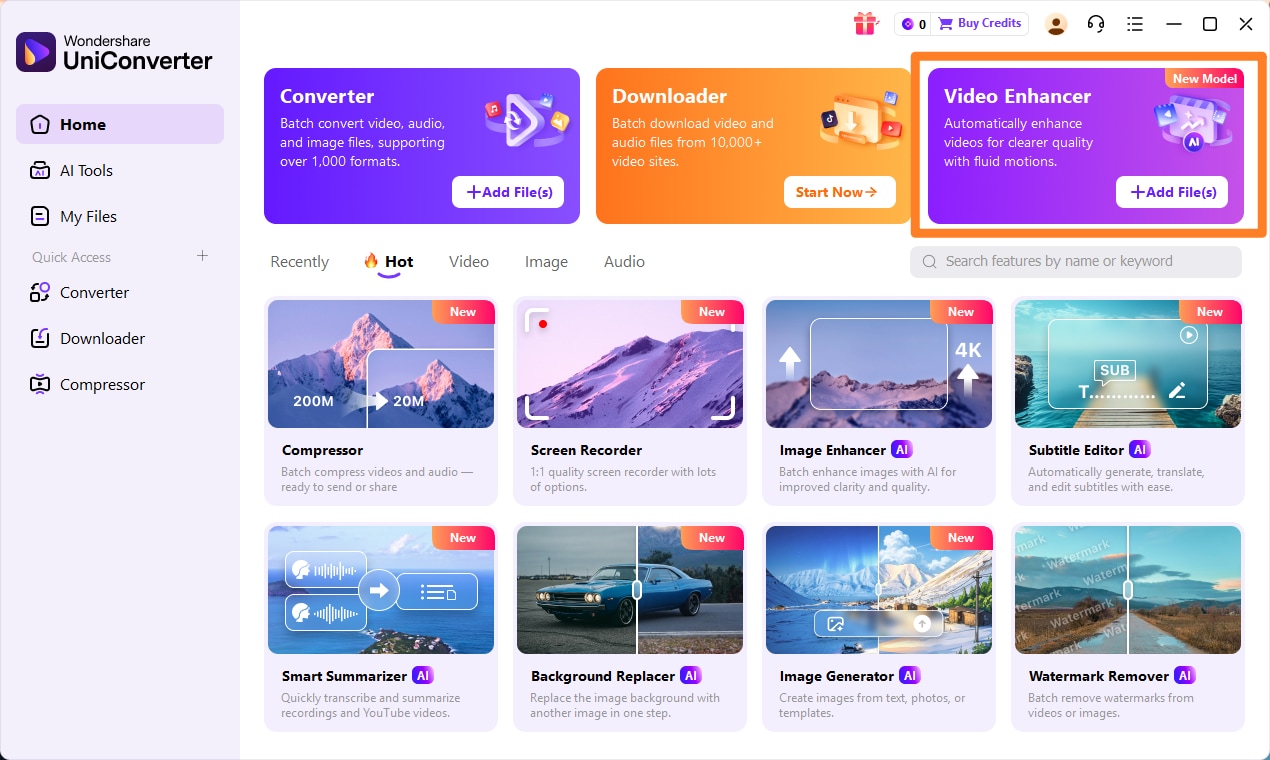
Step 1: Open UniConverter and Choose Video Enhancer
Launch UniConverter and navigate to the "Toolbox" section. Select the Video Enhancer feature.
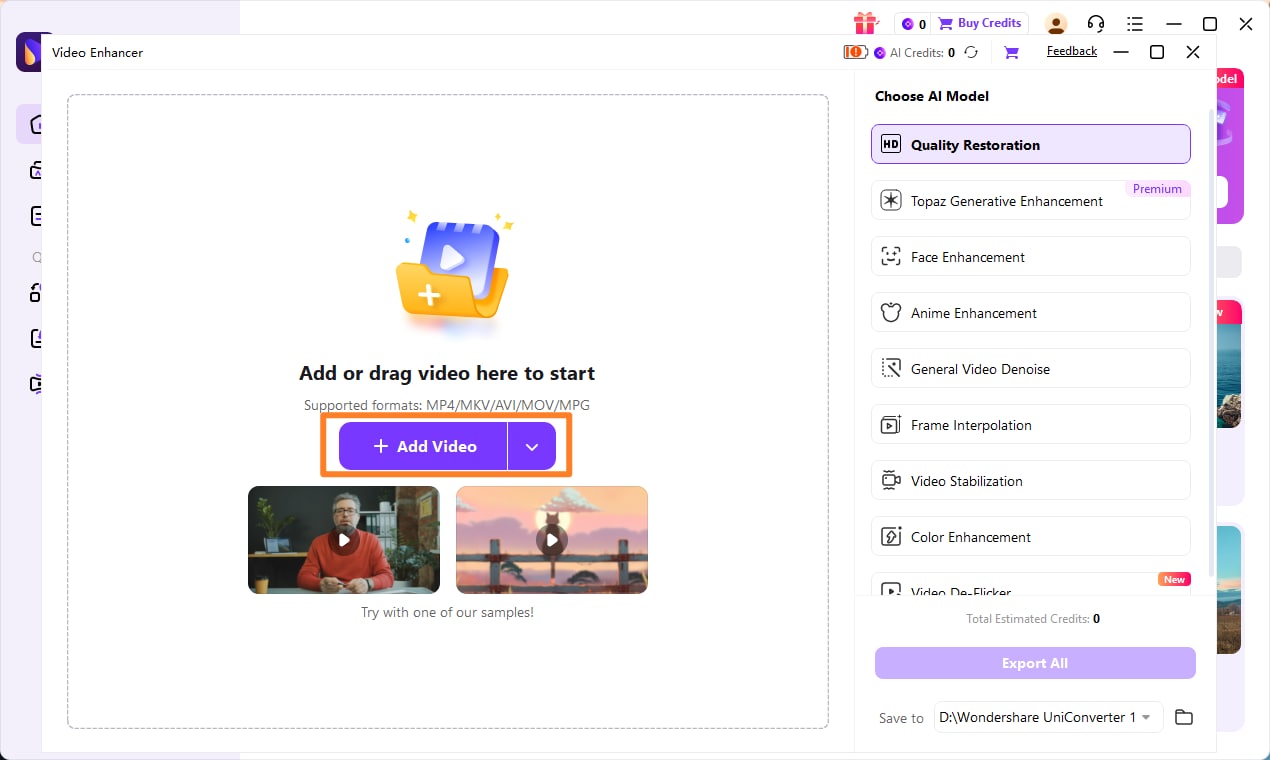
Step 2: Upload the Videos
Click on the "Add Files" button or drag and drop your video files into the UniConverter interface. You can add multiple videos for batch processing.
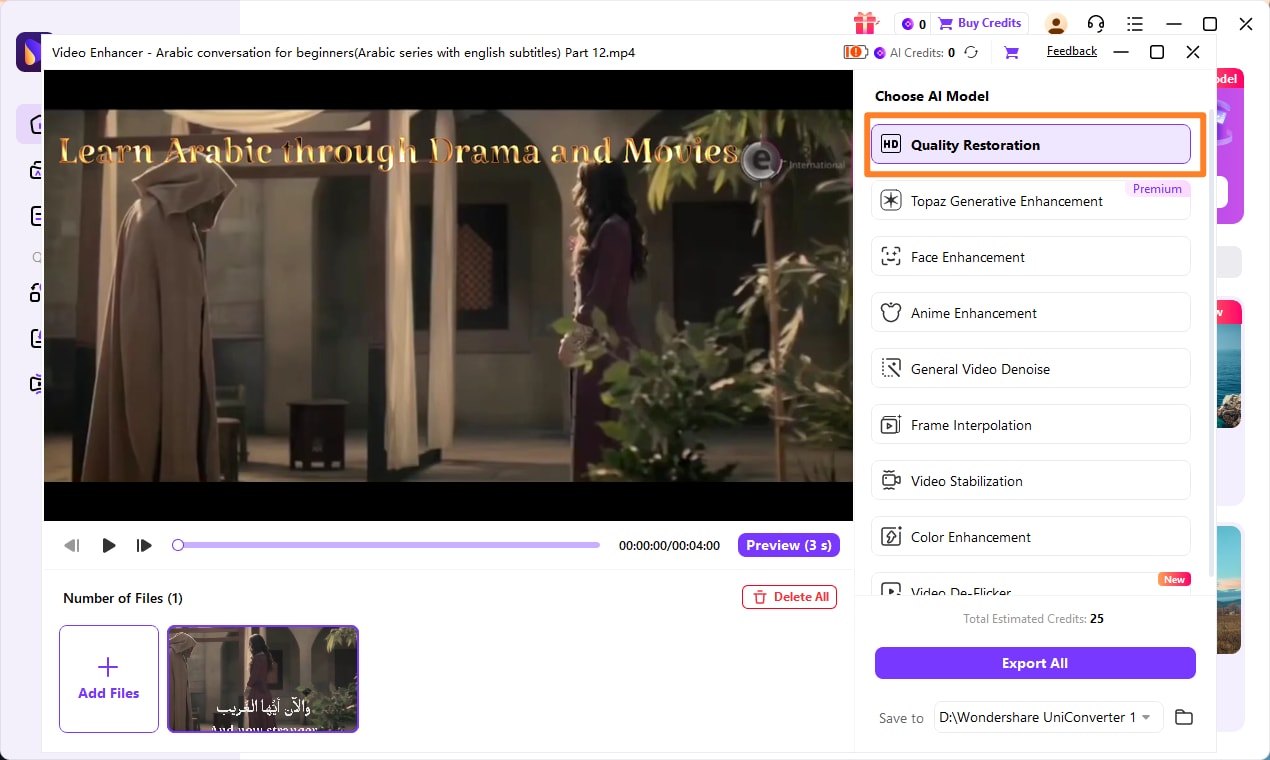
Step 3: Choose Enhancement Model
Select the desired enhancement model (e.g., AI Upscale, Denoise, Deblur, etc.) and adjust settings like resolution, brightness, and contrast. For instance, you can easily fix pixelated videos or unblur a video with its advanced capabilities.
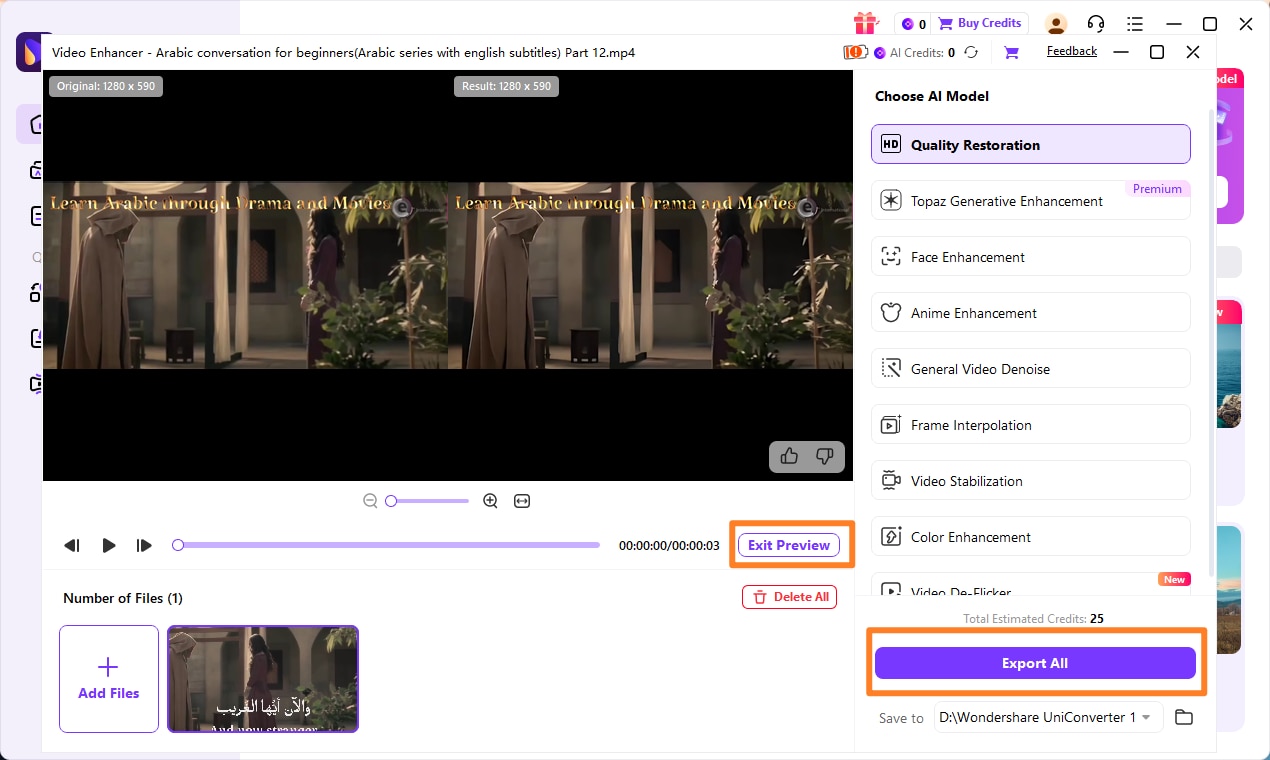
Step 4: Preview and Save the Enhanced Video
Preview the enhanced video to ensure satisfaction. Once ready, choose your output format and destination, then click "Enhance" to save your improved video.

Seeking a Descript Video Enhancer Alternative?
Part 7: Conclusion
The Descript Video Enhancer review reveals a powerful and innovative tool that redefines video editing, particularly for content heavily reliant on spoken word. Its text-based editing paradigm offers unparalleled efficiency for podcasters, educators, and content creators looking to streamline their workflows and repurpose content quickly. While it excels in audio and dialogue manipulation, it's crucial to understand its limitations in advanced visual effects and color grading, areas where professional tools like Adobe Premiere Pro and DaVinci Resolve still dominate. For users prioritizing speed, simplicity, and AI-driven audio editing, Descript is an excellent choice. However, for those requiring comprehensive visual post-production or a versatile all-in-one utility, alternatives like UniConverter offer a broader spectrum of capabilities. Ultimately, the best tool depends on the specific needs, technical expertise, and budget of the user, with Descript carving out a valuable niche in the evolving landscape of AI-powered content creation.
Part 8: FAQs
-
1. Is Descript Video Enhancer suitable for beginners?
Yes, its text-based editing makes it very accessible for new users, as it simplifies the complex timeline editing process.
-
2. Can Descript replace traditional video editing software like Premiere Pro?
For basic to intermediate tasks, especially those involving heavy dialogue editing, yes. However, for advanced visual effects, complex multi-track editing, and professional color grading, it cannot fully replace software like Premiere Pro or DaVinci Resolve.
-
3. What are the main limitations of Descript's video enhancement features?
Descript's primary strength lies in audio and text-based editing. Its visual enhancement capabilities are more basic, focusing on fundamental adjustments rather than advanced color correction or intricate visual effects.
-
4. Does Descript offer a free trial?
Yes, Descript offers a free tier with limited features, allowing users to test its core functionalities before committing to a paid subscription.
-
5. How does Descript handle collaboration on projects?
It offers integrated cloud collaboration, enabling multiple users to work on the same project, share feedback, and track changes in real-time, which is highly beneficial for team-based content creation.
