
- DeepAI Overview: DeepAI Image Enhancer uses AI for quick, online image quality improvement, ideal for casual users.
- Pros & Cons: Offers effortless one-click enhancement for low-res images, but lacks granular control, risking over-processing.
- Ideal Users: Best for social media quick fixes; unsuitable for professional photography needing precise control.
- Comparison: DeepAI excels in ease of use; alternatives like UniConverter offer more control and quality for serious users.
- Risks: Cloud-based processing raises data privacy concerns; AI can over-enhance, creating unnatural artifacts.
- UniConverter Value: UniConverter provides a robust, offline alternative with better control, batch processing, and privacy.
- Decision Guide: Choose DeepAI for simple, quick enhancements; opt for UniConverter for consistent quality and control.
In this article
- Part 1: What is DeepAI Image Enhancer?
- Part 2: DeepAI Image Enhancer: Core Features, Pros, and Cons
- Part 3: DeepAI Image Enhancer: Ideal Users and Use Cases
- Part 4: DeepAI Image Enhancer and Alternatives Comparison
- Part 5: Risks and Pitfalls to Consider
- Part 6: How to Use UniConverter to Efficiently Enhance Images
- Part 7: Final Verdict and Recommendations
- Part 8: FAQs about DeepAI Image Enhancer and Image Enhancement
When I first started dabbling in digital photography, I quickly realized that not every shot comes out perfect. Sometimes, a photo just needs a little boost to really shine. That's where image enhancers come in, and I've spent a fair bit of time exploring different options. Today, I want to share my thoughts on the DeepAI Image Enhancer review, a tool that promises to magically transform your pictures. I'll dive into its features, what it's good for, and where it falls short, especially when compared to other tools I've used. My goal is to help you figure out if DeepAI is the right fit for your image enhancement needs, based on my own experiences.
Part 1: What is DeepAI Image Enhancer?
DeepAI Image Enhancer is an online tool that leverages artificial intelligence to automatically improve the quality of your images. It’s part of a broader suite of AI tools offered by DeepAI, aiming to make complex AI capabilities accessible to everyone. My initial impression was that it’s designed for quick, no-fuss enhancements, perfect for those moments when you just need to make a photo look a bit better without diving into professional-grade editing software.
The Rise of AI-Powered Image Enhancement
The demand for easy-to-use image enhancement tools has skyrocketed, driven by:
* Social Media's Visual Dominance: Everyone wants their photos to look great on platforms like Instagram and Facebook.
* Smartphone Photography Limitations: While phone cameras are good, they often struggle in challenging lighting or with fine details.
* Accessibility to AI: AI technology has become sophisticated enough to perform complex image processing with a simple click.
Part 2: DeepAI Image Enhancer: Core Features, Pros, and Cons
DeepAI Image Enhancer's core appeal lies in its simplicity. You upload an image, and it does its magic. It primarily focuses on improving resolution, sharpening details, and enhancing colors. I've found it to be a straightforward tool for basic improvements.
Pros:
* Effortless One-Click Enhancement for Casual Users: Seriously, it's as easy as uploading and downloading. No complex settings to navigate.
* Effective for Quick Fixes on Low-Resolution Images: I've used it to breathe a little life into some older, pixelated photos, and it often makes a noticeable difference.
* Accessible Web-Based Platform with Simple Interface: No downloads, no installations. Just open your browser and go.
Cons:
* Limited Granular Control Over Enhancement Parameters: This is where it falls short for me. I can't tweak specific aspects like sharpness, contrast, or noise reduction individually.
* Potential for Over-Processing and Unnatural Results: Sometimes, the AI can be a bit too aggressive, leading to images that look artificial or "plastic."
Part 3: DeepAI Image Enhancer: Ideal Users and Use Cases
From my experience, DeepAI Image Enhancer really shines for a specific type of user and scenario. It's not a one-size-fits-all solution, but it definitely has its place.
Best Use Case: Quickly Improving Social Media Photos
If you're like me and just want to quickly spruce up a photo before posting it on social media, DeepAI is fantastic. I often use it for photos taken in less-than-ideal lighting or ones that just need a general boost in clarity and color. It's perfect for casual snaps where perfection isn't the goal, but a noticeable improvement is desired. It saves me time from opening a more complex editor for a simple fix.
Limited Use Case: Professional Photography Post-Processing
However, if you're a professional photographer or someone who needs precise control over every aspect of an image, DeepAI Image Enhancer will likely disappoint. I've tried using it for more serious work, and the lack of granular control means I can't achieve the specific look or correction I need. For high-stakes projects where image integrity and artistic vision are paramount, I find myself reaching for more robust software. It's simply not designed for the nuanced adjustments that professional post-processing demands.
Part 4: DeepAI Image Enhancer and Alternatives Comparison
When I look at image enhancers, I always consider how they stack up against others. Here's a quick comparison of DeepAI with some other tools I've used.
DeepAI Image Enhancer & Competitors: Feature Comparison Table
| Feature | Online AI Tools | UniConverter | Topaz Video AI | Runway ML |
| Ease of Use | High | High | Medium | Medium |
| Granular Control | Low | Medium | High | High |
| AI Model Sophistication | Medium | High | High | High |
| Output Quality (General) | Good | Excellent | Excellent | Very Good |
| Pricing Model | Freemium | Subscription | One-time Purchase | Subscription |
Key Differentiators: DeepAI's Niche in the Market
DeepAI's main differentiator is its extreme ease of use and web-based accessibility. It's designed for instant gratification, making it ideal for users who don't want to install software or delve into complex settings. While tools like Topaz Photo AI and Luminar Neo offer far more control and often superior results, they come with a steeper learning curve and a higher price tag. UniConverter, on the other hand, strikes a good balance, offering more control than DeepAI while still being user-friendly, and it's part of a larger toolkit. DeepAI is really for those quick, casual enhancements where you just need something "better" without much effort.
Part 5: Risks and Pitfalls to Consider
While DeepAI Image Enhancer offers convenience, I've learned that it's important to be aware of certain risks and limitations, especially with cloud-based AI tools.
Data Privacy Concerns with Cloud-Based Processing
Since DeepAI is a web-based tool, you're uploading your images to their servers for processing. This immediately raises questions about data privacy. While they likely have policies in place, I always feel a bit uneasy uploading sensitive or personal photos to a third-party server. It's a trade-off for the convenience, but something to definitely keep in mind, especially if you're dealing with confidential images.
Potential for Over-Enhancement and Artifacts
As I mentioned before, the AI can sometimes be too aggressive. I've seen instances where it introduces unnatural sharpening, color shifts, or even strange artifacts that weren't present in the original image. This "over-processing" can ruin a photo, making it look artificial rather than naturally improved. It's a common issue with automated tools that lack fine-tuning options.
Subscription Model Limitations for Heavy Users
While DeepAI offers a freemium model, heavy users will quickly hit limitations and might need to subscribe. For me, if I'm going to pay for an image enhancer, I expect a higher level of control and quality than what DeepAI currently offers. The value proposition for a paid subscription might not be there if your needs extend beyond basic, quick fixes.
Lack of Advanced Editing Features
DeepAI is strictly an enhancer. It doesn't offer any advanced editing features like cropping, resizing, color grading, or selective adjustments. If you need to do anything beyond a general "make it better" button, you'll need another tool. This means a fragmented workflow if you're trying to do more comprehensive image work.
Part 6: How to Use UniConverter to Efficiently Enhance Images
Sometimes, I find that online tools like DeepAI just don't cut it when I need consistent quality, more control, or batch processing. That's when I turn to a more comprehensive solution like UniConverter. It's been a game-changer for me because it avoids the issues of inconsistent enhancement, watermarks, and privacy concerns that often come with free online tools. UniConverter offers a robust image enhancer that's part of a larger suite, providing a stable, high-quality, and ad-free experience with GPU acceleration for faster processing and batch enhancement capabilities. It's my go-to for an all-in-one solution. For those looking to enhance image resolution or improve overall quality, this tool is highly effective. Additionally, it can serve as a powerful video enhancer for your footage.
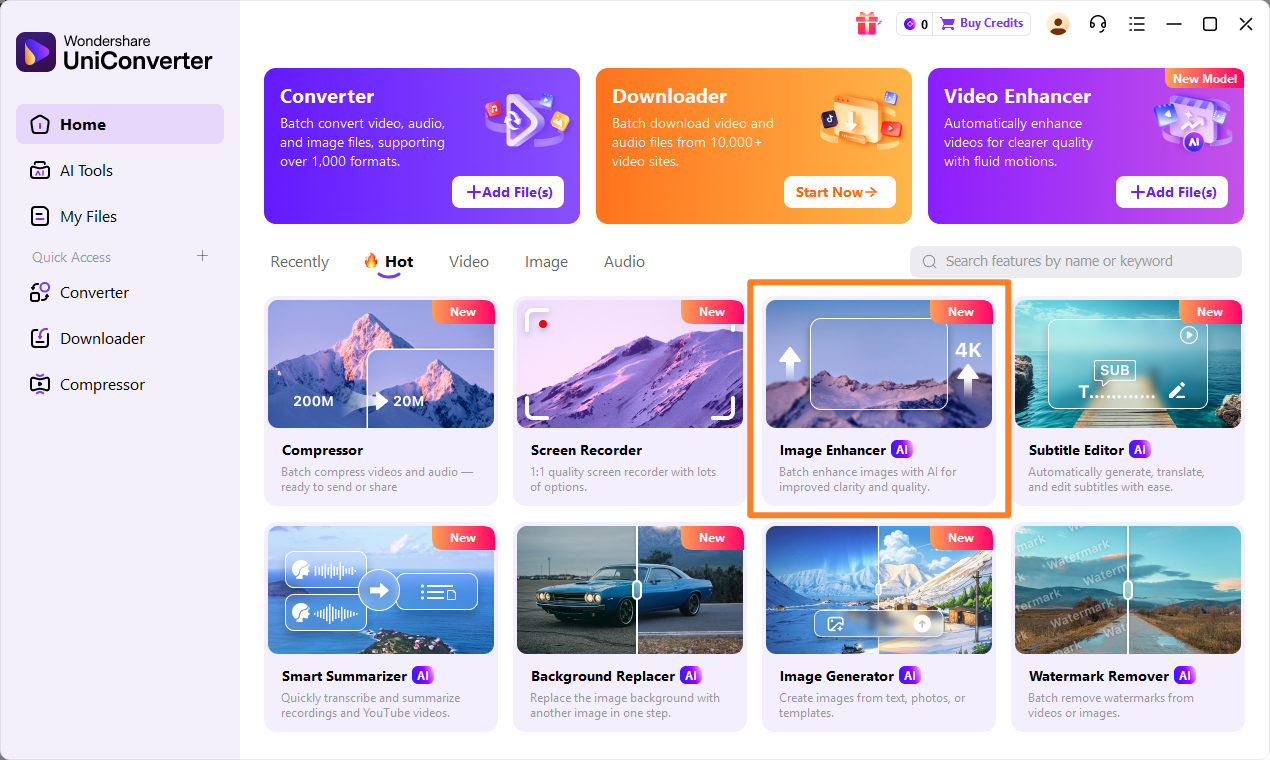
Step 1: Open UniConverter and Choose Image Enhancer
First, launch UniConverter on your computer. On the main interface, navigate to the "Toolbox" section and select the "Image Enhancer" module.
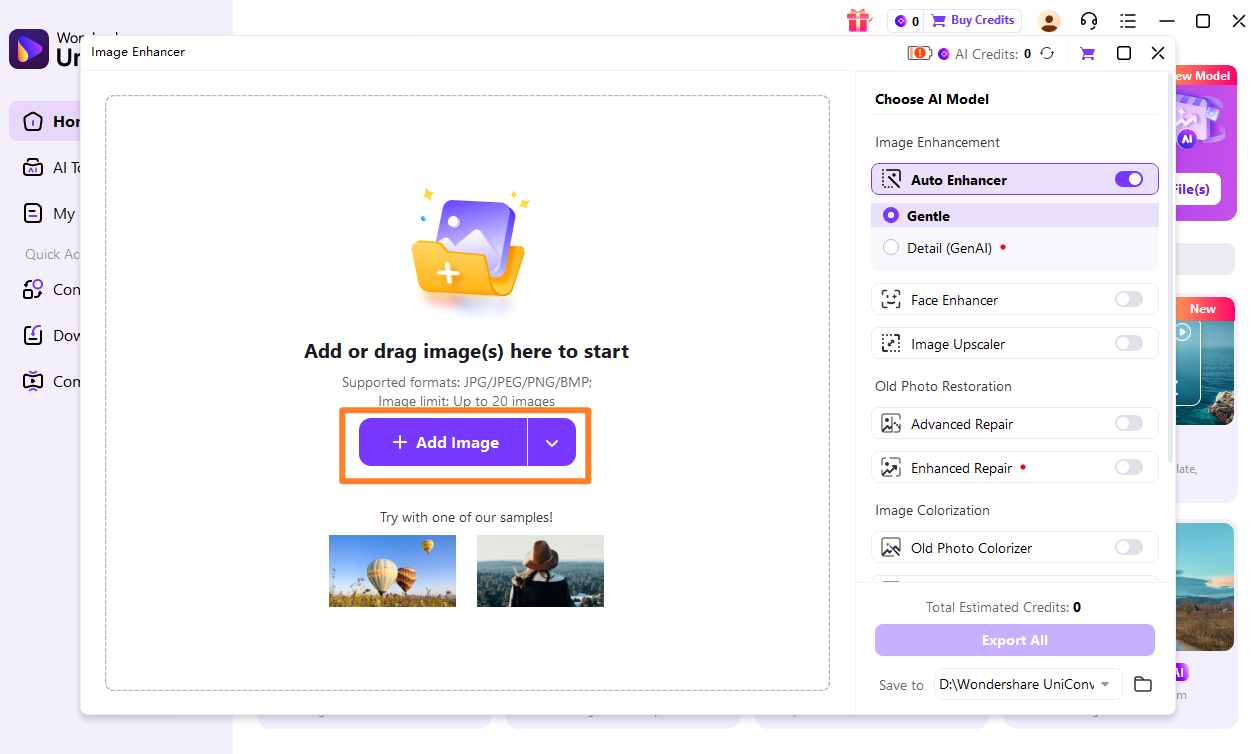
Step 2: Upload the Images
Click on the "Add Files" button or simply drag and drop the images you want to enhance into the UniConverter window. You can add multiple images for batch processing.
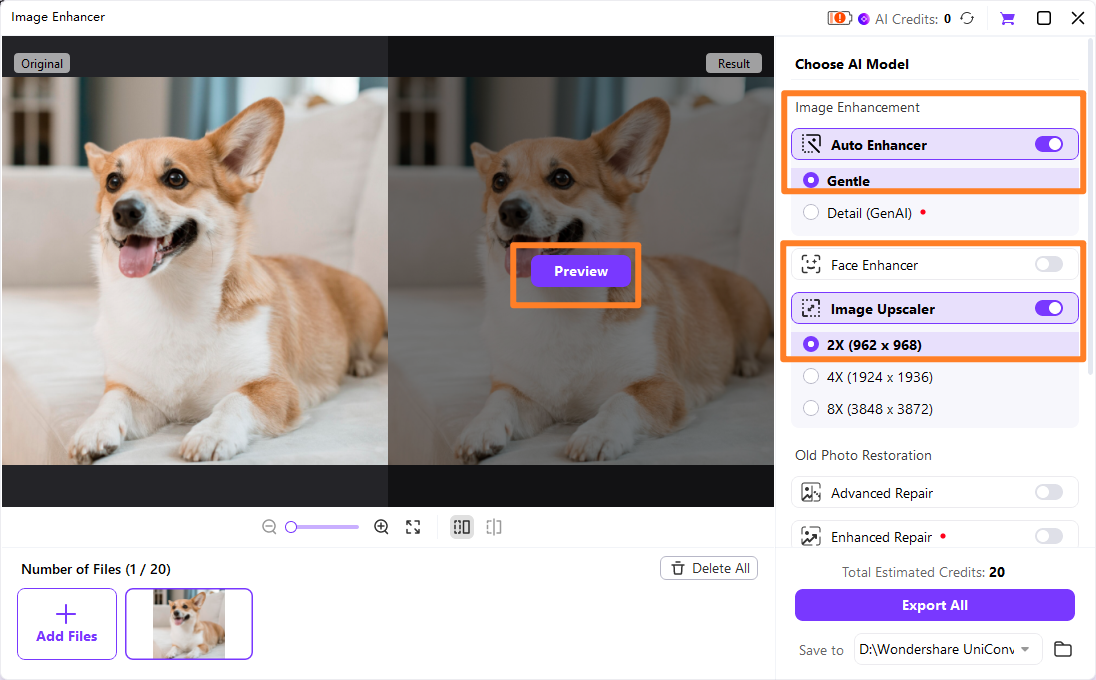
Step 3: Choose Enhancement Model and Preview Results
UniConverter usually offers different enhancement models. Select the one that best suits your image. You can often preview the enhanced image alongside the original to compare the results and make adjustments if available.
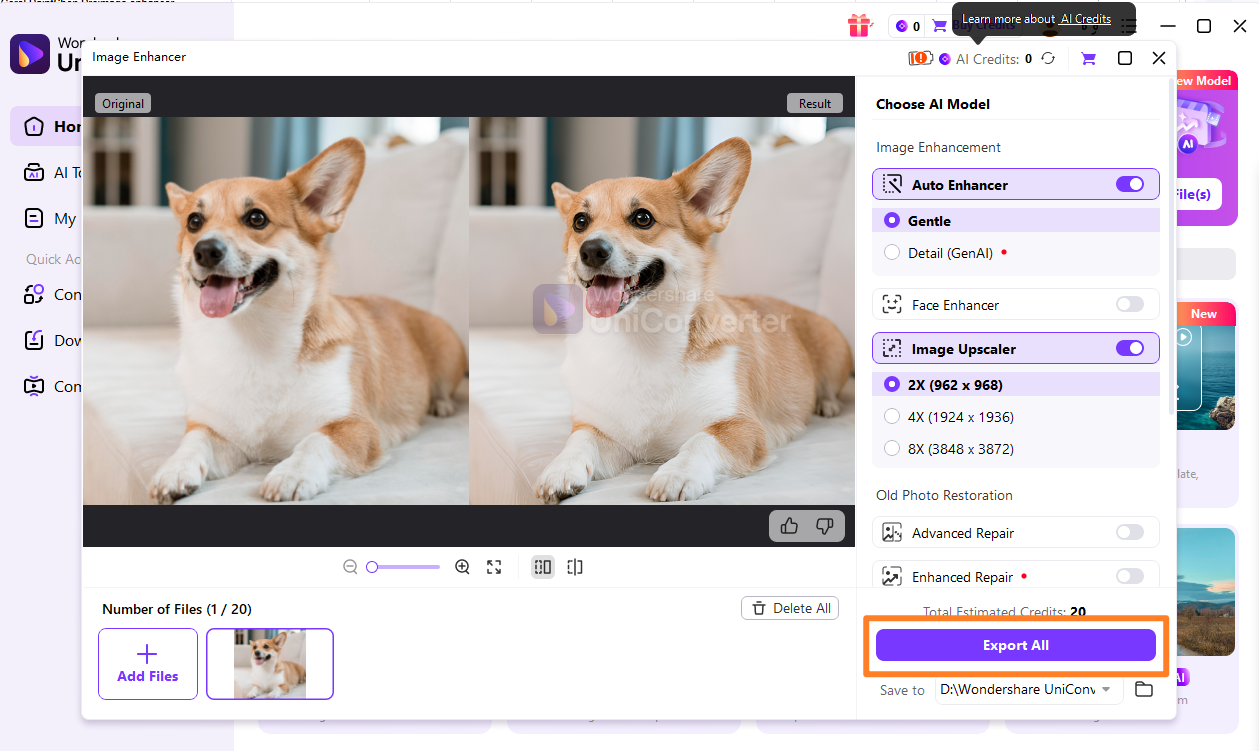
Step 4: Export Your Enhanced Images
Once you're satisfied with the enhancement, choose your desired output format and destination folder. Click "Export" to save your high-quality, enhanced images.

Seeking a Powerful DeepAI Image Enhancer Alternative?
Part 7: Final Verdict and Recommendations
After spending time with various image enhancers, including the DeepAI Image Enhancer review, I can confidently say that no single tool is perfect for everyone. My experience shows that your choice really depends on your specific needs and technical comfort level.
For Casual Users Seeking Quick Fixes
If you're someone who just wants to quickly improve a photo for social media or a personal album without any fuss, DeepAI Image Enhancer is a decent option. Its one-click simplicity is truly its strongest suit, and for basic improvements, it gets the job done without requiring any software installation or technical know-how. Just be mindful of potential over-processing.
For Content Creators Needing Consistent Quality
For content creators or small businesses that need consistent, high-quality enhancements across multiple images, DeepAI might fall short due to its lack of granular control and potential for inconsistent results. In these scenarios, I'd suggest looking into tools that offer more control and batch processing capabilities, even if they come with a subscription.
For Professionals Requiring Precise Control
Professionals, or anyone who demands precise control over every pixel and needs advanced editing features, will find DeepAI Image Enhancer too limiting. For critical work, investing in more robust software like Topaz Photo AI, Luminar Neo, or even a comprehensive suite like UniConverter, which offers more detailed adjustments and a broader range of tools, will be a much better choice. Ultimately, match the tool to your task and your skill level.
Part 8: FAQs about DeepAI Image Enhancer and Image Enhancement
-
1. Is DeepAI Image Enhancer free to use?
Yes, DeepAI Image Enhancer offers a freemium model, allowing you to use it for free with certain limitations, such as the number of images you can process or the resolution of the output. For more extensive use or higher quality outputs, a subscription is usually required.
-
2. Can DeepAI Image Enhancer improve very blurry images?
DeepAI Image Enhancer can often improve slightly blurry or low-resolution images by sharpening details and upscaling. However, it has limitations. If an image is severely blurry or out of focus, no AI enhancer can perfectly reconstruct lost information, and the results might still appear artificial or distorted.
-
3. How does DeepAI Image Enhancer compare to Photoshop's enhancement tools?
DeepAI Image Enhancer is designed for quick, automated, one-click enhancements, making it very easy to use for casual users. Photoshop, on the other hand, is a professional-grade image editing software that offers extensive manual control over every aspect of image enhancement, including advanced sharpening, noise reduction, and color correction. Photoshop provides far more precision and flexibility but requires a steeper learning curve.
-
4. What are the best practices for using AI image enhancers?
To get the best results from AI image enhancers, start with the highest quality original image you have. Avoid over-processing by checking the output carefully for artifacts or unnatural looks. Use these tools for general improvements rather than expecting them to fix severely damaged or extremely low-quality photos. Always keep a backup of your original image.
-
5. Is my data safe when using online image enhancement tools?
When using online image enhancement tools, your images are uploaded to their servers for processing. It's crucial to review the tool's privacy policy to understand how your data is handled, stored, and if it's used for AI model training. For sensitive or confidential images, consider using desktop-based software that processes images locally on your computer to minimize privacy risks.
