
- Deep Image AI Review: Explores Deep Image AI's features, pros, and cons for image enhancement.
- Target Audience: Ideal for professionals and e-commerce needing high-quality, efficient image upscaling.
- Comparison: Benchmarks Deep Image AI against Topaz Photo AI, Luminar Neo, and Photoshop.
- Risks: Discusses data privacy, over-processing, subscription fatigue, and internet dependency.
- UniConverter Alternative: Highlights UniConverter for versatile, efficient, and comprehensive image enhancement.
- Decision Guide: Helps users choose the best tool based on workflow, budget, and creative needs.
In this article
- Part 1: What is Deep Image AI
- Part 2: Deep Image AI: Core Features, Pros, and Cons
- Part 3: Deep Image AI: Target Audience and Use Cases
- Part 4: Deep Image AI and Alternatives Comparison
- Part 5: Risks and Pitfalls to Consider
- Part 6: How to Use UniConverter for Efficient Image Enhancement
- Part 7: Conclusion
- Part 8: FAQs
In the ever-evolving digital landscape, high-quality visuals are no longer a luxury but a necessity. From e-commerce product listings to professional photography portfolios, crisp, clear, and vibrant images significantly impact audience engagement and perception. This Deep Image AI image enhancer review delves into the world of AI-powered image enhancement, focusing on Deep Image AI and its place within a competitive market. I'll be sharing my hands-on experience, comparing it with alternatives, and helping you navigate the choices to find the best tool for your specific needs. Get ready to discover how these intelligent tools can transform your visual content.
Part 1: What is Deep Image AI
Deep Image AI emerged as a promising solution in the burgeoning market of AI-driven image enhancement. Its core promise is simple yet powerful: to effortlessly upscale and improve image quality using advanced artificial intelligence. When I first heard about it, I was intrigued by the idea of an AI doing the heavy lifting that usually requires meticulous manual adjustments in complex photo editors. The central question this review aims to address is whether Deep Image AI truly delivers on this promise, especially for users who need consistent, high-quality results without a steep learning curve.
The Growing Need for AI-Powered Image Enhancement
The demand for AI-powered image enhancement tools has skyrocketed, driven by several key factors:
* The Proliferation of Visual Content: We're living in a visual-first world, where every social media post, website, and ad relies heavily on compelling imagery.
* Accessibility of Photography: With smartphones, everyone's a photographer, but not every shot is perfect. AI can rescue less-than-ideal images.
* Efficiency for Professionals: Manual editing is time-consuming. AI offers a way to enhance large volumes of images quickly and consistently.
* E-commerce Demands: High-resolution, professional-looking product photos are crucial for online sales, and AI can help businesses achieve this at scale.
Part 2: Deep Image AI: Core Features, Pros, and Cons
Deep Image AI positions itself as a robust tool for automatic image enhancement, and in my experience, its core capabilities are quite impressive. It primarily focuses on upscaling images, removing noise, and sharpening details, all powered by its proprietary AI algorithms. I found it particularly effective for breathing new life into older, lower-resolution photos or preparing images for print that originally weren't quite large enough.
Pros:
* Advanced AI Algorithms for Detail Restoration: This is where Deep Image AI truly shines. I've seen it intelligently reconstruct details in faces and textures that other tools might just blur.
* User-Friendly Interface for Quick Enhancements: The interface is incredibly intuitive. You upload your image, choose your desired enhancements, and let the AI do its magic. It's a breath of fresh air compared to the often-overwhelming interfaces of traditional photo editors.
* Batch Processing Capability for Efficiency: For someone like me who often deals with multiple images from a single shoot, the batch processing feature is a game-changer. It saves a tremendous amount of time.
Cons:
* Subscription-Based Model for Full Features: While there's a free trial, unlocking the full potential and higher resolution outputs requires a subscription, which might be a barrier for casual users.
* Occasional Artifacts on Highly Compressed Images: I've noticed that with extremely low-quality or heavily compressed source images, the AI can sometimes introduce subtle, unnatural artifacts, especially around sharp edges.
Part 3: Deep Image AI: Target Audience and Use Cases
From my perspective, Deep Image AI isn't a one-size-fits-all solution, but it excels in specific niches. It's clearly designed for users who prioritize efficiency and quality in image enhancement, without necessarily needing deep, granular control over every pixel.
Best Use Case: Professional Photographers and E-commerce Businesses Needing High-Quality Product Shots
For professional photographers, especially those working with events or product photography, Deep Image AI can be a lifesaver. Imagine needing to quickly upscale a batch of product images for a new e-commerce listing, ensuring they all meet high-resolution requirements without hours of manual work. This is where Deep Image AI truly shines. Its ability to intelligently enhance details and upscale images makes it perfect for ensuring product shots look crisp and professional, directly impacting conversion rates. I've personally used it to prepare images for print, where resolution is paramount, and it consistently delivered impressive results.
Limited Use Case: Casual Users Seeking Free, One-Off Enhancements
If you're just looking to quickly enhance a single photo for social media or a personal project and aren't keen on a subscription, Deep Image AI might feel like overkill. There are many free online tools that offer basic enhancements, albeit with less sophisticated AI and often lower quality. For a casual user, the investment in a subscription for occasional use might not be justifiable, especially if they don't require the advanced upscaling or batch processing capabilities.
Part 4: Deep Image AI and Alternatives Comparison
When I look at the landscape of image enhancement tools, Deep Image AI stands out for its straightforward approach to AI-powered upscaling and detail restoration. However, it's crucial to see how it stacks up against other popular options, each with its own strengths.
Comparison Table: Deep Image AI, Topaz Photo AI, Luminar Neo, and Adobe Photoshop
| Feature/Scenario | Deep Image AI | Topaz Photo AI | Luminar Neo | Adobe Photoshop |
| Ease of Use | High | Medium | High | Low |
| AI Enhancement Quality | Excellent | Excellent | Very Good | Good (with plugins) |
| Batch Processing | Yes | Yes | Yes | Limited |
| Pricing Model | Subscription | One-time purchase | Subscription/One-time | Subscription |
| Learning Curve | Low | Medium | Low | High |
| Specific Use Case | E-commerce, Print | Noise Reduction, Sharpening | Creative Edits | Comprehensive Editing |
Key Differentiators: Deep Image AI's Focus on Simplicity and E-commerce Readiness
What I've found is that Deep Image AI truly differentiates itself with its singular focus on simplicity and high-quality, automated enhancement, making it particularly appealing for e-commerce and print preparation. While Topaz Photo AI excels in noise reduction and sharpening, and Luminar Neo offers more creative editing tools, Deep Image AI is about getting the best possible resolution and detail with minimal fuss. Photoshop, of course, is the comprehensive powerhouse, but its steep learning curve and manual approach mean it's not always the most efficient for quick, AI-driven enhancements. If your primary goal is efficient upscaling and detail restoration for business applications, Deep Image AI often provides a more streamlined workflow.
Part 5: Risks and Pitfalls to Consider
Even with the impressive capabilities of AI image enhancers like Deep Image AI, it's important to be aware of potential downsides and risks. From my experience, rushing into these tools without understanding their limitations can lead to unexpected issues.
Data Privacy and Image Security Concerns
When you upload your images to a cloud-based AI service, you're entrusting your data to a third party. For sensitive or proprietary images, this raises questions about how your data is stored, processed, and protected. I always recommend reviewing the privacy policy carefully. While most reputable services have strong security measures, it's a valid concern, especially for professional work.
Potential for Over-Processing and Unnatural Results
The "AI magic" can sometimes be a double-edged sword. While it’s great at enhancing, there’s a risk of over-processing. I've seen instances where an image, particularly one with subtle textures or natural grain, can look unnaturally smooth or have an almost "plastic" appearance after enhancement. It's crucial to find the right balance and not push the settings too far, as it can detract from the original image's authenticity.
Subscription Fatigue and Cost-Effectiveness
Many of these AI tools operate on a subscription model. While Deep Image AI offers excellent value for consistent users, if you only need occasional enhancements, the recurring cost can add up. I've personally experienced "subscription fatigue" from managing multiple monthly payments. It's worth evaluating if your usage justifies a continuous subscription versus a one-time purchase alternative or a pay-per-use model.
Dependence on Internet Connection for Cloud Processing
Since Deep Image AI primarily relies on cloud-based processing, a stable and fast internet connection is essential. If you're working offline or in an area with poor connectivity, you won't be able to utilize its features. This can be a significant limitation for photographers or businesses operating in remote locations or during travel.
Limited Creative Control Compared to Full-Fledged Editors
While Deep Image AI excels at automated enhancement, it's not a replacement for a comprehensive photo editor. You won't find the same level of creative control over color grading, selective adjustments, or complex compositing that you would in tools like Photoshop or Luminar Neo. If your workflow requires extensive artistic manipulation beyond basic enhancement, you'll likely need to integrate Deep Image AI with another editor.
Part 6: How to Use UniConverter for Efficient Image Enhancement
Sometimes, despite the specialized tools, you find yourself needing a more versatile solution that handles various media tasks, including image enhancement, without the common pitfalls of single-purpose apps like inconsistent results or limited batch processing. This is where I've found UniConverter to be an incredibly useful alternative. It's not just an image enhancer; it's an all-in-one media toolkit that can effectively address issues like unstable enhancements or weak results from other tools. UniConverter offers a robust, ad-free experience with extensive format support, GPU acceleration for speed, stable and lossless processing, and efficient batch enhancement, making it a truly comprehensive solution for image enhancement and video enhancement. For instance, you can easily upscale images or upscale videos to improve their quality.
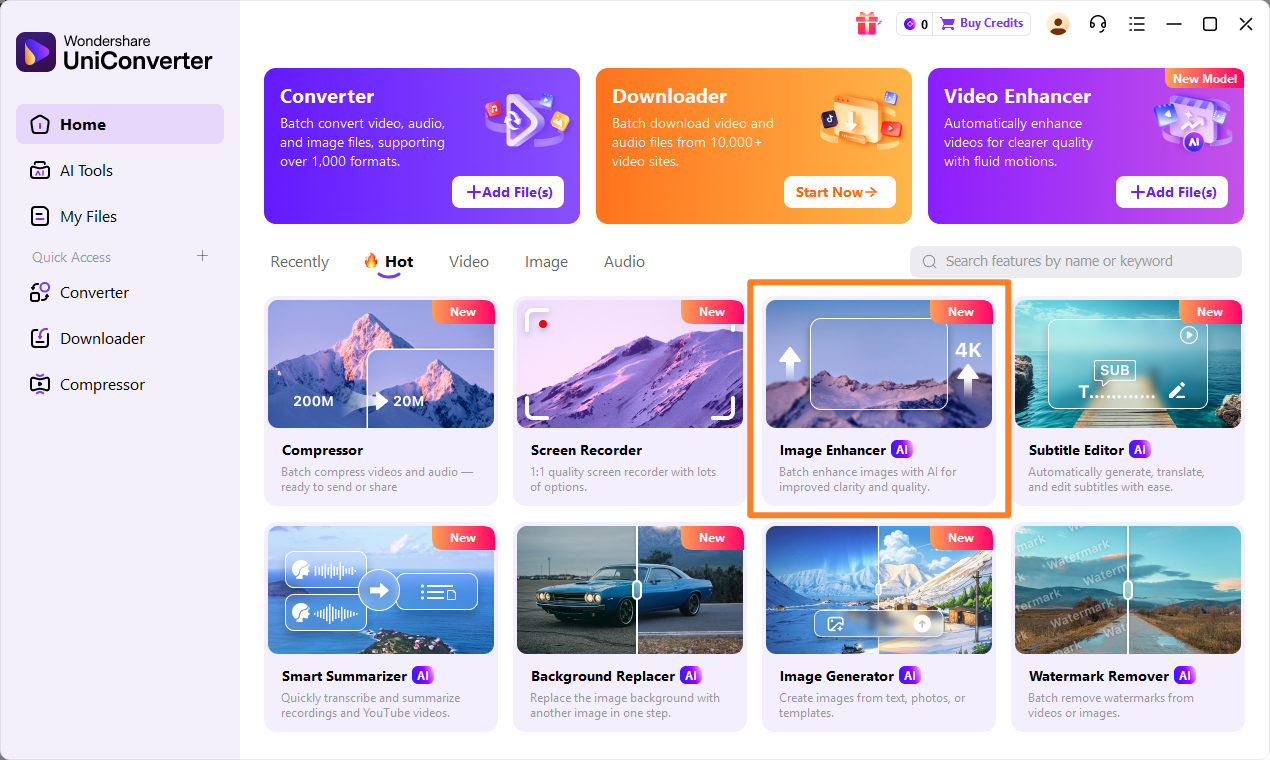
Step 1: Open UniConverter and Choose Image Enhancer
First, launch UniConverter. On the main interface, navigate to the "Toolbox" section. Here, you'll find a variety of tools. Select the "AI Image Enhancer" option to begin.
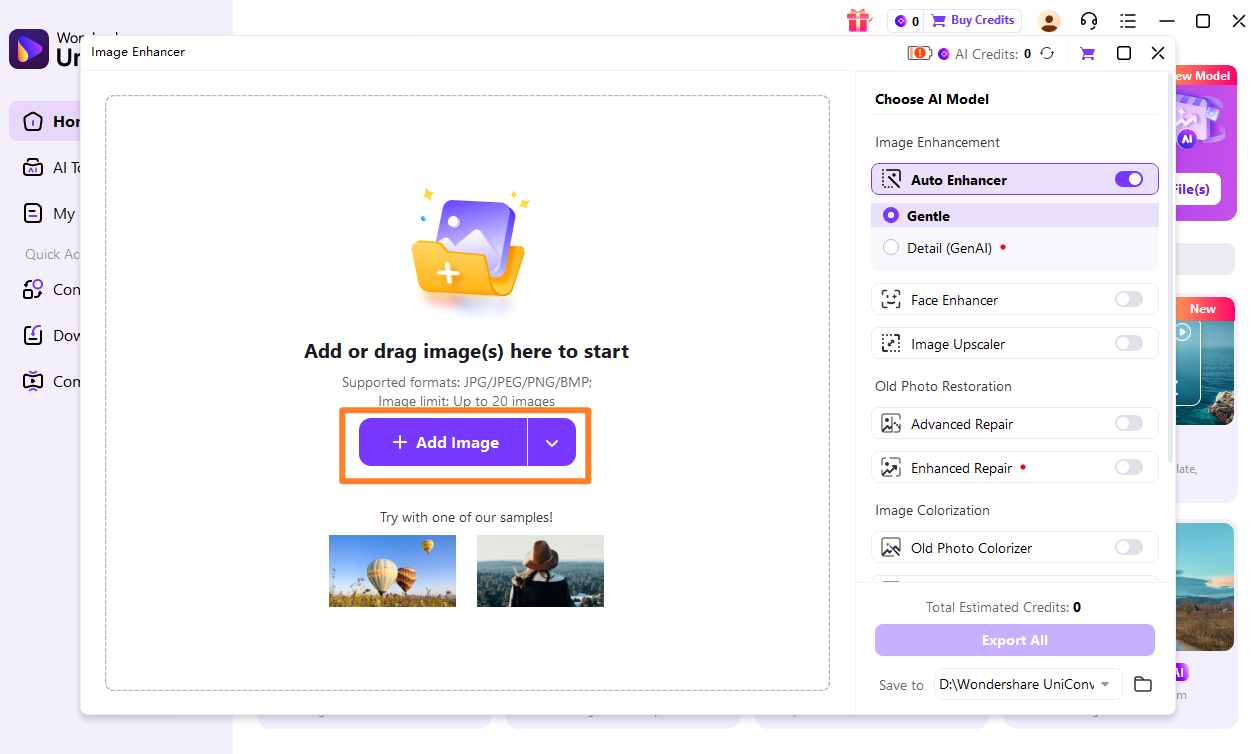
Step 2: Upload the Images
Once the AI Image Enhancer tool is open, you'll be prompted to add your images. You can either drag and drop your photos directly into the interface or click the "Add Files" button to browse and select them from your computer. UniConverter supports various image formats.
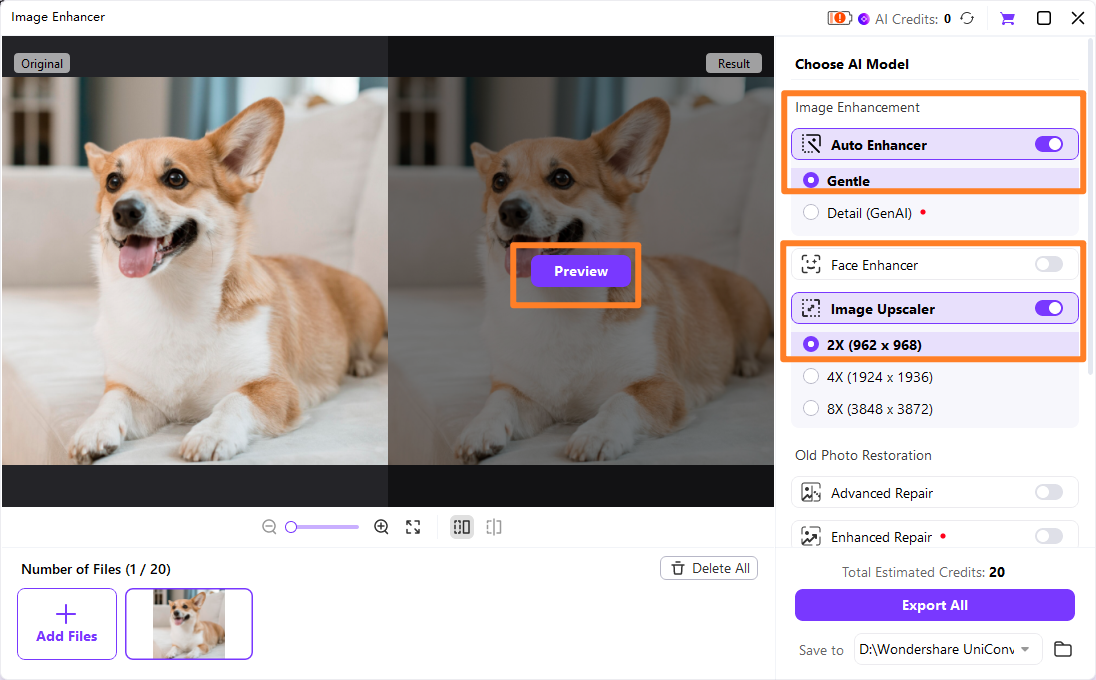
Step 3: Choose Enhancement Model
After uploading, UniConverter will display your images. You can then select the desired enhancement model. UniConverter offers different AI models tailored for various improvements, such as upscaling, de-noising, or sharpening. Choose the one that best suits your image's needs.
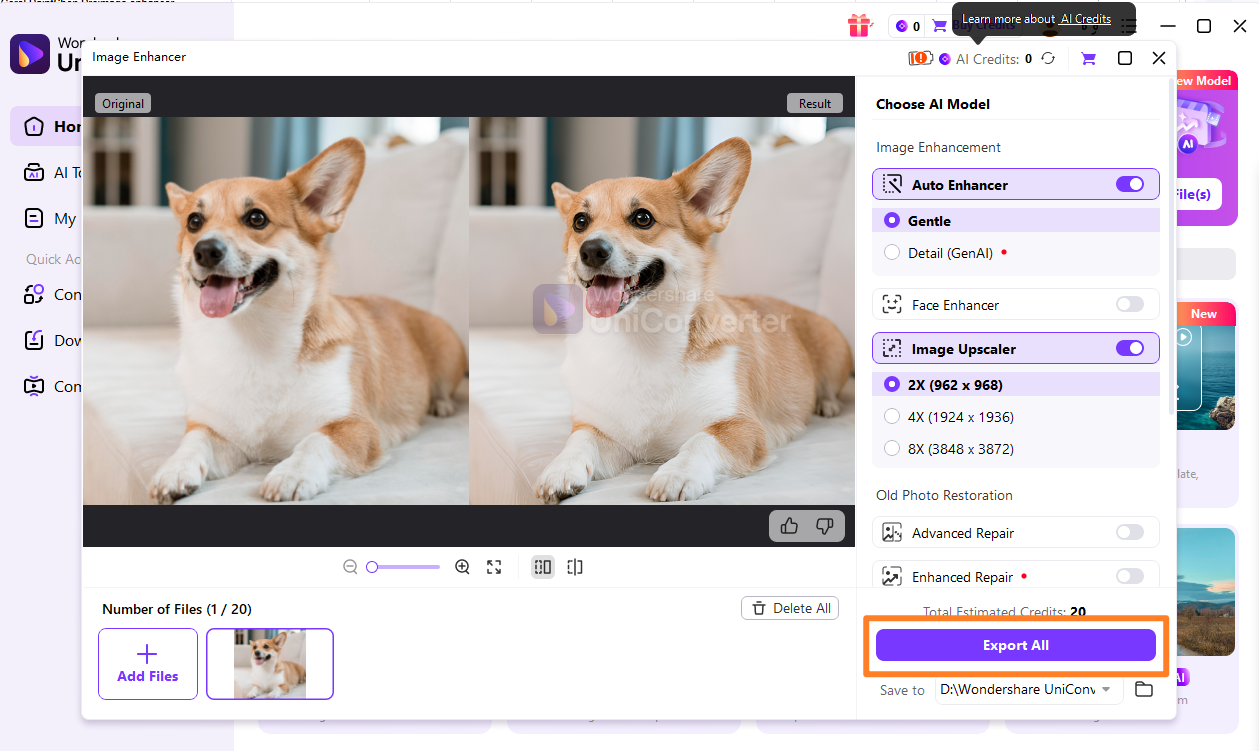
Step 4: Preview and Save the Enhanced Images
Before saving, UniConverter allows you to preview the enhanced image alongside the original, so you can compare the improvements. Once satisfied, select your output folder and click "Start All" to save your enhanced images.

Enhance Images Beyond Deep Image AI
Part 7: Conclusion
After diving deep into Deep Image AI image enhancer review and comparing it with its competitors, my takeaway is clear: Deep Image AI is an excellent tool for specific use cases, particularly for businesses and professionals who need efficient, high-quality image upscaling and enhancement. Its advanced AI algorithms and user-friendly interface make it a strong contender for e-commerce product shots and preparing images for print. However, its subscription model and potential for over-processing on very low-quality inputs might not suit everyone. For those seeking a more versatile, cost-effective, and comprehensive media solution that includes robust image enhancement capabilities, UniConverter emerges as a compelling alternative. Ultimately, the best choice depends on your specific workflow, budget, and the level of creative control you require. I always recommend trying out the free trials available for these tools to see which one seamlessly integrates into your existing processes and delivers the results you expect.
Part 8: FAQs
-
1. What is Deep Image AI primarily used for?
Deep Image AI is primarily used for upscaling and enhancing image quality, especially for e-commerce, print, and digital media, focusing on detail restoration and noise reduction.
-
2. Is Deep Image AI free to use?
Deep Image AI offers a free trial with limited features and processing credits, but full access to its advanced capabilities and higher resolution outputs requires a paid subscription.
-
3. How does Deep Image AI compare to Photoshop for image enhancement?
Deep Image AI excels in automated AI enhancement for specific tasks like upscaling and de-noising, offering a much simpler workflow. Photoshop, on the other hand, provides broader, manual control for complex, pixel-level editing and creative manipulation, but with a steeper learning curve.
-
4. Can Deep Image AI improve blurry photos significantly?
Deep Image AI can improve slightly blurry photos by sharpening details and reducing noise. However, for heavily blurred or out-of-focus images, its ability to reconstruct missing information is limited, and results may still appear artificial or lack true clarity.
-
5. What are the main advantages of using UniConverter as an alternative?
UniConverter offers a comprehensive suite of tools beyond just image enhancement, including video conversion, editing, and compression. Its advantages include an ad-free experience, extensive format support, GPU acceleration for speed, stable and lossless processing, and efficient batch enhancement, providing better value and versatility for various media tasks.
