
- DaVinci Resolve: A powerful, integrated suite for professional video editing and enhancement.
- Core Features: Offers advanced AI-powered upscaling, noise reduction, and granular control.
- Pros: Seamless workflow, high-quality results, and extensive customization for experts.
- Cons: Steep learning curve and demanding hardware requirements for optimal performance.
- Target Users: Ideal for professional filmmakers and colorists seeking high-end, integrated enhancement.
- Alternatives: UniConverter offers ease of use, batch processing, and broad format support for quick enhancements.
- Comparison: Resolve excels in integration; UniConverter in user-friendliness and versatility.
- Risks: Over-processing, hardware bottlenecks, and significant time investment for mastery.
- Decision: Choose Resolve for professional depth, UniConverter for efficient, user-friendly enhancement.
In this article
- Part 1: What is DaVinci Resolve?
- Part 2: DaVinci Resolve's Core Features & Pros/Cons
- Part 3: Target Users & Use Cases
- Part 4: DaVinci Resolve and Alternatives Comparison
- Part 5: Risks & Pitfalls to Consider
- Part 6: How to Use UniConverter for Effortless Video Enhancement
- Part 7: Conclusion
- Part 8: FAQs
In the demanding world of video production, where visual fidelity is paramount, the ability to enhance footage can dramatically elevate a project's impact. DaVinci Resolve, a powerhouse in post-production, offers a suite of tools designed to refine and improve video quality. This DaVinci Resolve video enhancer review delves into its capabilities, comparing it against leading alternatives to provide a comprehensive understanding for professionals and enthusiasts alike. We will explore its strengths, weaknesses, ideal use cases, and potential pitfalls, ultimately guiding users toward informed decisions in their pursuit of pristine video.
Part 1: What is DaVinci Resolve?
DaVinci Resolve is a comprehensive video editing software developed by Blackmagic Design, renowned for its professional-grade color correction, non-linear editing, visual effects, and audio post-production capabilities. It has evolved from a dedicated color grading system into an all-in-one solution for filmmakers, broadcasters, and content creators. Its video enhancement features are deeply integrated into this powerful ecosystem, allowing for seamless workflow from initial edit to final polished output. This review aims to dissect its enhancement prowess, evaluating how it stands against specialized video enhancer tools in terms of quality, efficiency, and user experience.
The Evolving Landscape of Video Enhancement Needs:
* Demand for Higher Quality: With the proliferation of 4K and 8K content, and the increasing sophistication of display technologies, there's an insatiable demand for sharper, cleaner, and more vibrant video.
* Addressing Imperfections: Footage often comes with imperfections like noise, grain, or softness due to shooting conditions or equipment limitations, necessitating robust enhancement solutions.
* Integrated Workflows: Professionals increasingly seek integrated tools that can handle multiple post-production tasks, including enhancement, within a single software environment to streamline their workflow.
Part 2: DaVinci Resolve's Core Features & Pros/Cons
DaVinci Resolve's video enhancement capabilities are deeply embedded within its professional-grade post-production suite. Its core strengths lie in its ability to offer highly granular control over image manipulation, leveraging advanced algorithms for superior results.
Core Capabilities:
* Noise Reduction: Offers sophisticated spatial and temporal noise reduction tools to clean up grainy or noisy footage without sacrificing detail.
* Super Scale (Upscaling): Utilizes AI-powered algorithms to intelligently upscale lower-resolution footage to higher resolutions (e.g., HD to 4K) with impressive detail preservation.
* Sharpening and Detail Enhancement: Provides a range of tools to selectively enhance fine details and sharpen images, avoiding artificial halos.
* Deinterlacing: Converts interlaced footage to progressive scan, improving playback quality and eliminating combing artifacts.
* Image Stabilization: Advanced stabilization algorithms can smooth out shaky footage, making it more watchable.
Pros:
* Integrated Professional Color Grading and Editing Suite: Offers a seamless, all-in-one workflow for editing, color, effects, and audio, making enhancement a natural part of the post-production process.
* Advanced AI-Powered Upscaling and Noise Reduction: Leverages cutting-edge AI for high-quality results in resolution enhancement and noise removal.
* Highly Customizable and Granular Control over Enhancement Parameters: Provides extensive controls, allowing users to fine-tune every aspect of the enhancement for precise results.
Cons:
* Steep Learning Curve for Beginners: The sheer depth and complexity of the software can be overwhelming for new users.
* Resource-Intensive, Requiring Powerful Hardware: Demands significant CPU, GPU, and RAM resources, especially when dealing with high-resolution footage and AI features.
Part 3: Target Users & Use Cases
DaVinci Resolve's video enhancement tools are tailored for a specific segment of the market, primarily catering to professionals who demand the highest quality and integrated workflows.
Best Use Case: Professional Filmmakers and Colorists Seeking Integrated High-End Enhancement
DaVinci Resolve shines brightest in professional film and television production, as well as high-end commercial projects. Filmmakers and colorists can leverage its advanced enhancement features to refine footage shot under challenging conditions, upscale archival material for modern displays, or meticulously clean up noise before final delivery. Its deep integration with color grading and editing means that enhancement decisions can be made in context with the entire look and feel of the project, ensuring consistency and artistic intent. For instance, a colorist might use Resolve's noise reduction to clean up a low-light scene before applying a specific color grade, or a filmmaker might upscale vintage footage to seamlessly integrate it into a 4K documentary.
Limited Use Case: Quick, Automated Enhancements for Casual Users
For casual users or those needing quick, automated enhancements without diving deep into complex settings, DaVinci Resolve can be overkill. Its extensive feature set and manual controls, while powerful, are not designed for one-click solutions. A user simply wanting to quickly upscale a home video or remove minor noise from a smartphone clip might find the interface daunting and the process time-consuming compared to simpler, more automated tools. The software's power comes with a learning commitment, which casual users may not be willing to invest for basic enhancement tasks.
Part 4: DaVinci Resolve and Alternatives Comparison
When evaluating video enhancement tools, DaVinci Resolve stands out for its comprehensive integration, but it's essential to compare it with other dedicated or feature-rich alternatives.
Comparison Table: DaVinci Resolve vs. Top Video Enhancers
| Feature/Aspect | DaVinci Resolve | UniConverter | Topaz Video AI | HitPaw Video Enhancer |
| Enhancement Quality | Excellent (AI, granular control) | Very Good (AI upscaling, noise reduction) | Excellent (AI-driven, specialized models) | Very Good (AI models for specific scenarios) |
| Ease of Use | Difficult (Steep learning curve) | Easy (Intuitive interface) | Moderate (Specialized, but user-friendly) | Easy (Simple, one-click options) |
| Integration | High (Within full NLE/Color Suite) | Standalone/Utility | Standalone | Standalone |
| Price | Free (Studio Paid) | Paid (Subscription/Lifetime) | Paid (One-time purchase) | Paid (Subscription/Lifetime) |
| System Requirements | High (GPU intensive) | Moderate | High (GPU intensive) | Moderate |
| Processing Speed | Fast (with powerful GPU) | Moderate to Fast (GPU acceleration) | Very Fast (Optimized for GPU) | Moderate |
| Output Formats | Wide range (Pro codecs) | Very Wide (1000+ formats) | Limited (MP4, MOV, ProRes) | Limited (MP4, MOV) |
DaVinci Resolve excels in its integrated workflow, allowing for enhancement within a professional editing and grading environment. This is ideal for those who need precise control and seamless transitions between tasks. Topaz Video AI, on the other hand, often leads in pure AI-driven enhancement quality, especially for upscaling and de-interlacing, making it a strong contender for users whose primary need is the absolute best enhancement. UniConverter offers a more user-friendly experience with a broader range of format support, making it suitable for users who prioritize ease of use and versatility for various video tasks beyond just enhancement. HitPaw Video Enhancer provides a simpler, more automated approach, appealing to users who want quick results with minimal fuss.
Part 5: Risks & Pitfalls to Consider
While DaVinci Resolve offers powerful video enhancement capabilities, users, especially those new to the platform or advanced enhancement techniques, should be aware of several potential risks and pitfalls.
Hardware Requirements and Performance Bottlenecks
DaVinci Resolve, particularly its AI-powered enhancement features like Super Scale and advanced noise reduction, is incredibly resource-intensive. Running these features on underpowered hardware can lead to significant performance bottlenecks, including slow processing times, frequent crashes, and an overall frustrating user experience. Users might invest in the software only to find their current system cannot handle the demands, necessitating costly hardware upgrades.
Complexity of Advanced Settings for Non-Experts
The software's strength lies in its granular control, but this also translates to a steep learning curve. Non-experts attempting to use advanced enhancement settings without a solid understanding of video processing principles can easily over-process footage, leading to undesirable artifacts or an unnatural look. The sheer number of parameters can be overwhelming, making it difficult to achieve optimal results without significant study and practice.
Time Investment for Mastering the Software
Mastering DaVinci Resolve, especially its intricate enhancement tools, requires a substantial time investment. This includes learning the interface, understanding the underlying principles of video enhancement, and experimenting with various settings. For users with limited time or those seeking quick solutions, this learning curve can be a significant deterrent, potentially leading to underutilization of the software's full potential.
Potential for Over-Processing and Unnatural Results
The power of DaVinci Resolve's enhancement tools comes with the risk of over-processing. Aggressive noise reduction can lead to a "plastic" or "waxy" look, while excessive sharpening can introduce halos or aliasing. Over-upscaling footage that lacks sufficient original detail can result in blurry or artifact-ridden output. Achieving a natural, high-quality enhancement requires a delicate balance and a keen eye, which can be challenging for inexperienced users.
Part 6: How to Use UniConverter for Effortless Video Enhancement
When other tools fall short with batch processing, unstable enhancements, or weak results, UniConverter emerges as a robust and user-friendly alternative. It bypasses the complexities of professional suites, offering a streamlined approach to video enhancement without compromising quality. UniConverter is an all-in-one solution that supports a vast array of formats, leverages GPU acceleration for faster processing, ensures stable and lossless enhancement, and excels in batch processing, making it ideal for users who need efficient and high-quality results without the steep learning curve.
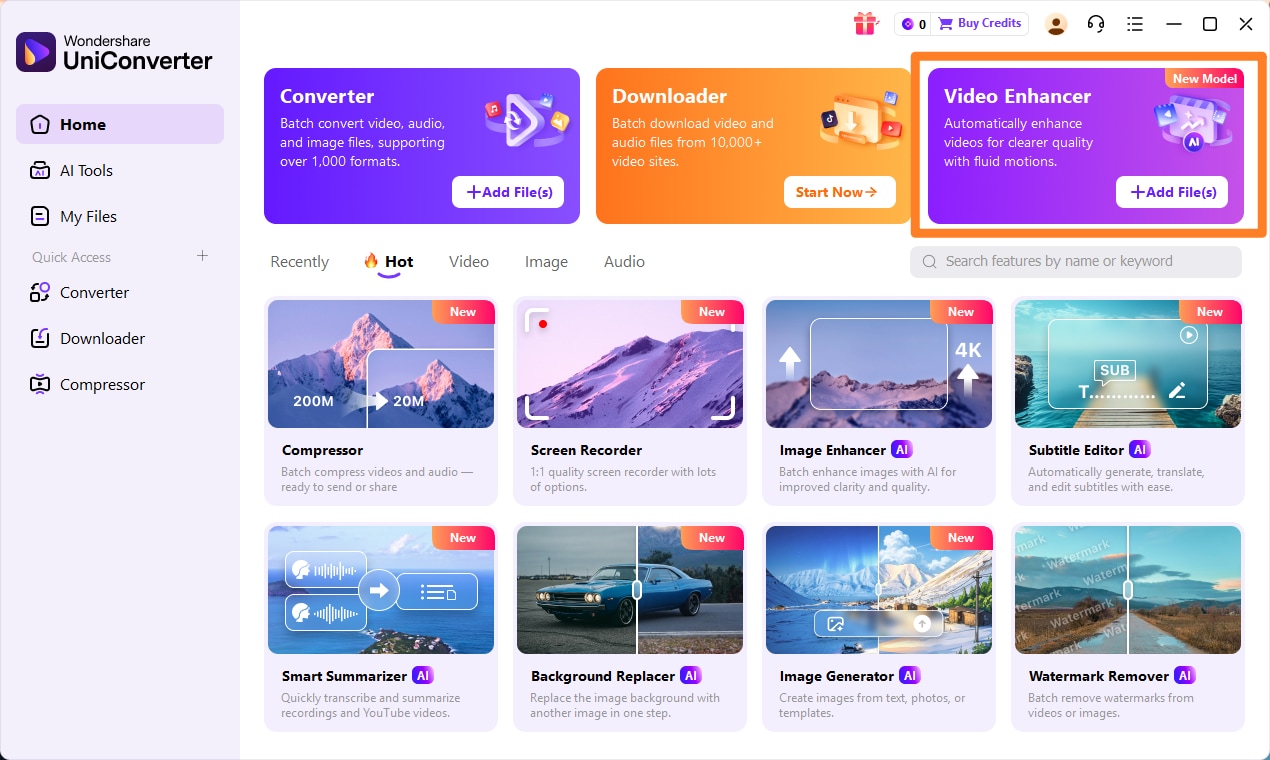
Step 1: Open UniConverter and Choose Video Enhancer
Launch UniConverter on your computer. From the main interface, navigate to the "Toolbox" section and select the "Video Enhancer" feature.
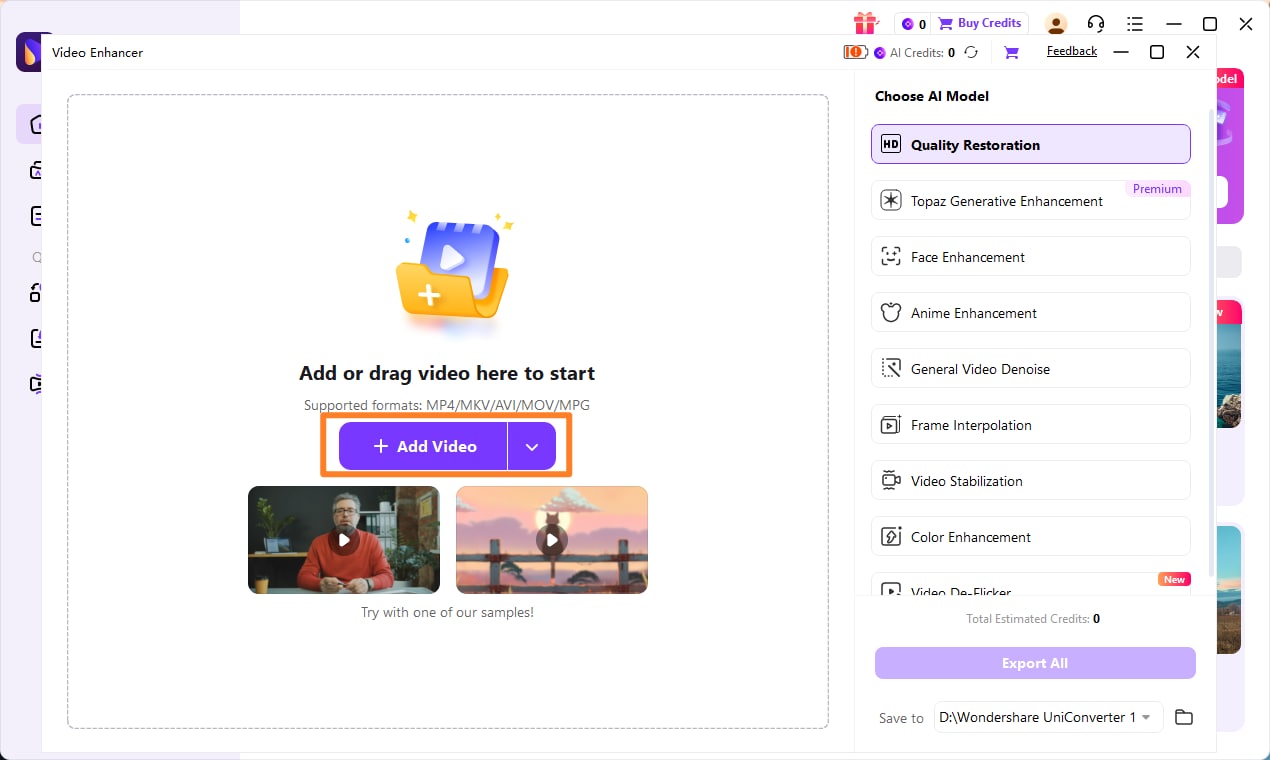
Step 2: Upload the Videos
Click on the "Add Files" button or drag and drop your video files into the UniConverter interface. You can add multiple videos for batch processing.
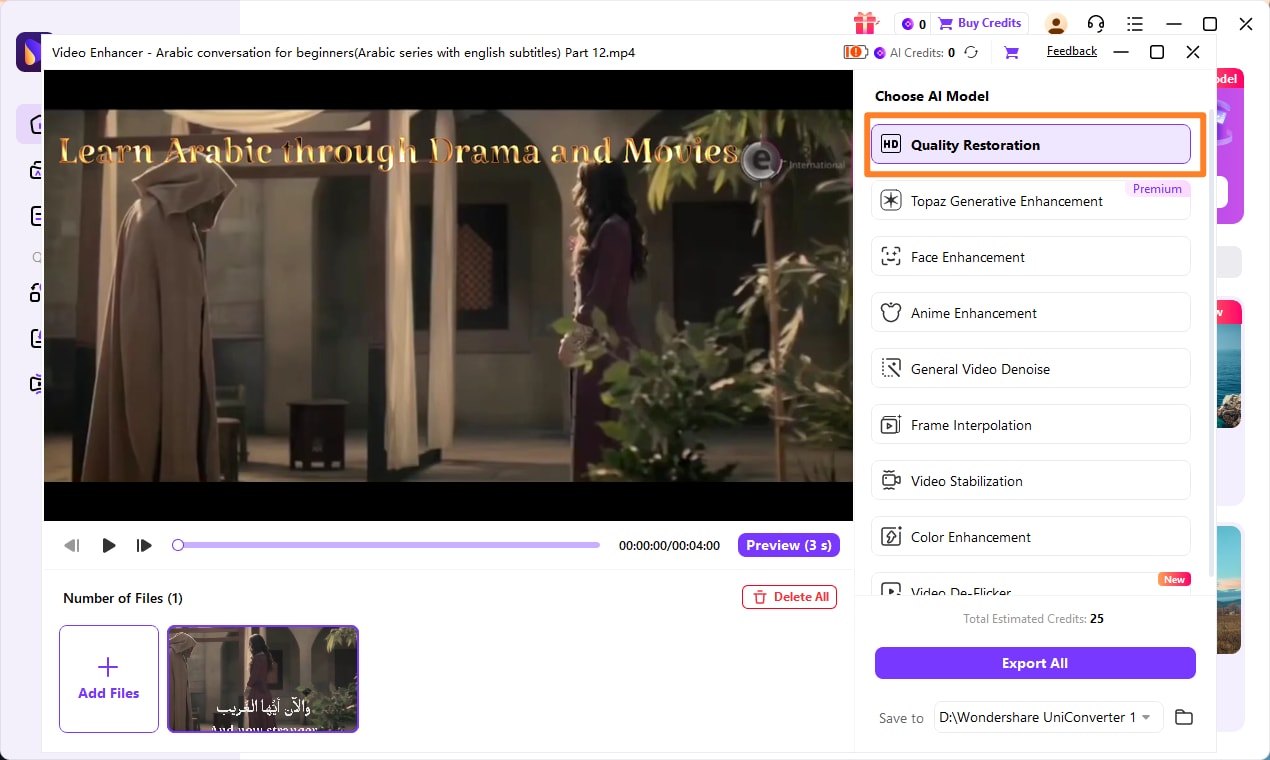
Step 3: Choose Enhancement Model
UniConverter offers various AI enhancement models. Select the most suitable model for your video, such as AI Upscaler, Noise Reduction, or Brightness Adjustment. You can also customize parameters like resolution and quality. For instance, if you're looking to remove background without losing quality from your video, UniConverter provides advanced tools for that. You can also change video background with ease.
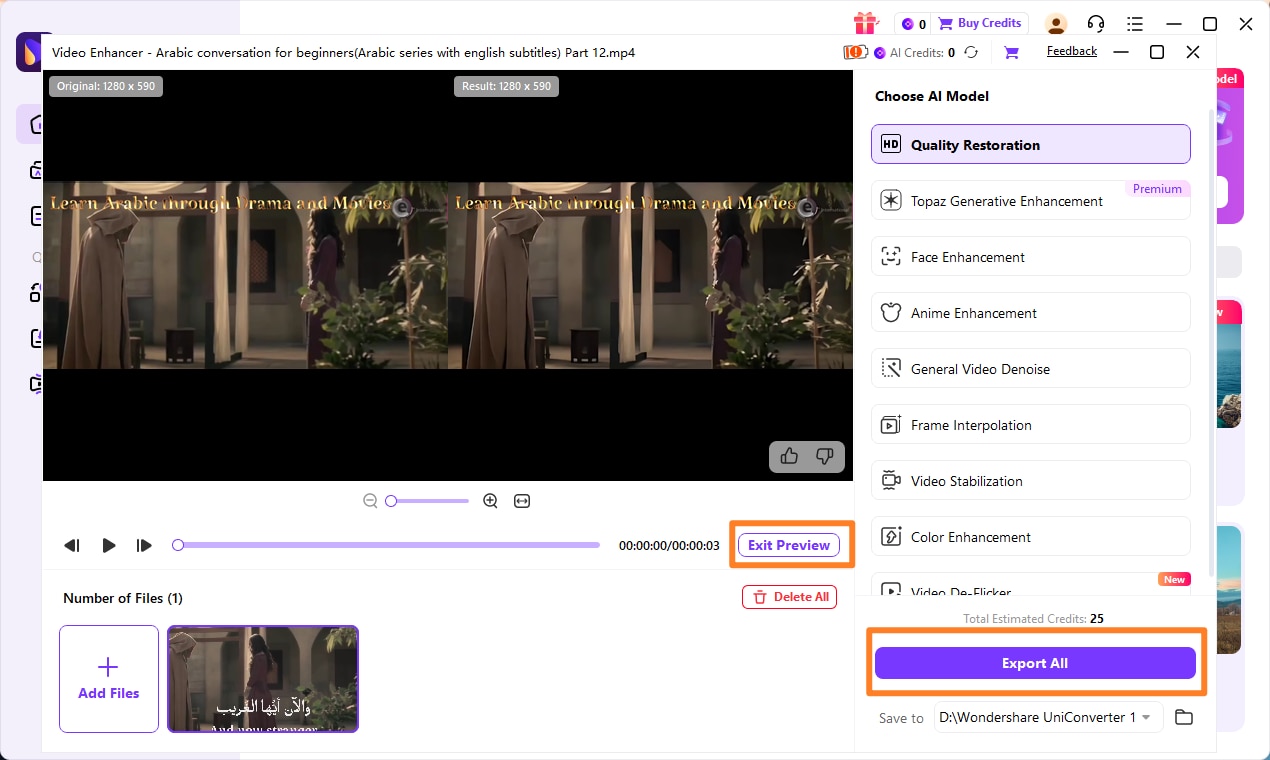
Step 4: Preview and Save the Enhanced Video
After selecting your enhancement options, click "Preview" to see the changes. Once satisfied, choose your desired output format and destination folder, then click "Enhance" to save your improved video. Whether you need a high-definition background remover or want to change the background of your video, UniConverter ensures a seamless process.

Seeking a DaVinci Resolve Video Enhancer Alternative?
Part 7: Conclusion
This DaVinci Resolve video enhancer review highlights its unparalleled capabilities as an integrated solution for professional video enhancement. For professional filmmakers, colorists, and post-production houses, DaVinci Resolve offers an unmatched suite of tools for precise control over every aspect of video quality, from noise reduction to AI-powered upscaling, all within a comprehensive editing and grading environment. Its strength lies in its depth and integration, making it an indispensable tool for those who demand the highest quality and have the expertise to wield its power. However, its steep learning curve and demanding hardware requirements make it less suitable for casual users or those seeking quick, automated fixes. For content creators willing to invest time and resources, it's a worthy long-term investment. For users prioritizing ease of use, speed, and broad format compatibility for general enhancement tasks, simpler alternatives like UniConverter provide an excellent, more accessible solution without sacrificing significant quality. Ultimately, the best choice depends on the user's specific needs, skill level, and hardware capabilities.
Part 8: FAQs
-
1. Is DaVinci Resolve's video enhancer free?
The core DaVinci Resolve software, including basic enhancement tools, is free. Advanced AI-powered features like Super Scale and more sophisticated noise reduction are typically part of the paid DaVinci Resolve Studio version.
-
2. How does DaVinci Resolve compare to dedicated AI video upscalers?
DaVinci Resolve offers a comprehensive suite where enhancement is integrated into a professional workflow, providing extensive manual control alongside AI features. Dedicated AI upscalers like Topaz Video AI often focus solely on that one task, sometimes with more specialized algorithms and models for specific types of footage, potentially offering superior automated results for upscaling alone.
-
3. What kind of hardware do I need for DaVinci Resolve's video enhancement?
For optimal performance, especially with 4K or higher resolution footage and AI features, a powerful multi-core CPU, a dedicated GPU with at least 8GB (preferably 12GB+) of VRAM, and a minimum of 32GB of RAM are highly recommended. SSD storage is also crucial for fast project loading and rendering.
-
4. Can DaVinci Resolve fix blurry videos?
While DaVinci Resolve can improve the perceived sharpness and reduce noise, it cannot magically "unblur" severely out-of-focus footage. Its enhancement tools work best with footage that has some underlying detail to work with, improving clarity rather than creating detail from scratch.
-
5. Is UniConverter a good alternative for DaVinci Resolve for video enhancement?
UniConverter is an excellent alternative for users who need a simpler, more intuitive tool for quick and effective video enhancement, especially for upscaling, noise reduction, and basic quality improvements, without the complexity of a full professional editing suite. It excels in ease of use, batch processing, and broad format support.
