
- DaVinci Resolve: Professional-grade video enhancement, ideal for high-end post-production with integrated workflow and advanced AI. Requires powerful hardware.
- Target Users: Best for professionals and serious enthusiasts needing cinematic quality and extensive control. Not suitable for quick, casual edits.
- Alternatives: Topaz Video AI for specialized AI upscaling; Adobe Premiere Pro for ecosystem flexibility; UniConverter for ease of use and efficiency.
- Risks: Steep learning curve, high hardware demands, potential for over-processing, and occasional compatibility issues.
- UniConverter: User-friendly alternative for efficient video enhancement, offering stable, lossless results with GPU acceleration and broad format support.
In this article
- Part 1: What is DaVinci Resolve Video Enhancer?
- Part 2: DaVinci Resolve Video Enhancer: Core Features, Pros, and Cons
- Part 3: Target Users and Use Cases
- Part 4: DaVinci Resolve Video Enhancer and Alternatives Comparison
- Part 5: Risks and Pitfalls When Using DaVinci Resolve for Video Enhancement
- Part 6: How to Use UniConverter for Efficient Video Enhancement
- Part 7: Conclusion
- Part 8: FAQs
DaVinci Resolve Video Enhancer: A Comprehensive Scenario-Based Review
The digital age has ushered in an unprecedented demand for high-quality video content, from professional cinematic productions to everyday social media clips. As content creators strive for visual perfection, the need for robust video enhancement tools has become paramount. DaVinci Resolve, traditionally renowned for its industry-leading color grading capabilities, has progressively integrated powerful video enhancement features, positioning itself as a formidable contender in this evolving landscape. This DaVinci Resolve Video Enhancer review will delve into its core functionalities, compare it against key competitors, and provide scenario-based insights to help users make informed decisions about their video enhancement workflows. We will explore its strengths, weaknesses, and ideal applications, alongside potential pitfalls, ensuring a holistic understanding of its utility in various production environments.
Part 1: What is DaVinci Resolve Video Enhancer?
DaVinci Resolve, developed by Blackmagic Design, is a comprehensive post-production suite that has evolved from a dedicated color grading system into an all-in-one platform encompassing editing, visual effects, motion graphics, and audio post-production. Its "Video Enhancer" capabilities refer to a suite of tools within the software designed to improve the visual quality of video footage. These tools range from sophisticated noise reduction and sharpening algorithms to advanced AI-powered upscaling and detail recovery features, aiming to elevate the aesthetic and technical quality of video content. This review seeks to address the core question: how effectively does DaVinci Resolve’s enhancement suite perform across different scenarios and against specialized alternatives?
The Evolving Landscape of Video Enhancement Software
The demand for superior video quality has driven significant innovation in enhancement software, addressing several key user pain points:
* Bridging Quality Gaps: Users often work with footage from diverse sources, requiring tools to standardize and improve overall visual fidelity.
* Future-Proofing Content: Enhancing older or lower-resolution content ensures its relevance and appeal on modern high-definition displays.
* Creative Control: Beyond basic fixes, creators seek granular control over every aspect of their video's appearance to achieve specific artistic visions.
* Workflow Efficiency: The integration of enhancement tools within a broader post-production environment is crucial for streamlining complex projects.
Part 2: DaVinci Resolve Video Enhancer: Core Features, Pros, and Cons
DaVinci Resolve's video enhancement capabilities are deeply integrated within its color page and Fusion page, offering a powerful array of tools. Key features include advanced noise reduction (temporal and spatial), sharpening, de-interlacing, stabilization, and more recently, AI-powered Super Scale for upscaling and detail recovery. Its strength lies in the synergy of these tools with its renowned color grading engine.
Core Features:
* Professional-grade Noise Reduction: Advanced temporal and spatial noise reduction algorithms.
* High-Quality Sharpening: Fine-tuned controls for enhancing detail without artifacts.
* AI-Powered Super Scale: Intelligent upscaling for resolution enhancement and detail recovery.
* Image Stabilization: Robust tools to smooth out shaky footage.
* De-interlacing: Converting interlaced footage to progressive scan for modern displays.
Pros:
* Professional-grade color grading and noise reduction for cinematic results: Unparalleled control over aesthetics.
* Integrated workflow for seamless editing, color, and effects: All-in-one solution minimizes round-tripping.
* Advanced AI-powered upscaling and detail recovery for specific footage types: Delivers impressive results for targeted enhancement.
Cons:
* Steep learning curve for beginners and casual users: Requires significant time investment to master.
* Resource-intensive, requiring powerful hardware for optimal performance: Demands high-end CPUs and GPUs.
Part 3: Target Users and Use Cases
DaVinci Resolve's video enhancement tools are primarily designed for professionals and serious enthusiasts who demand the highest quality and have the technical expertise to leverage its extensive features.
Best Use Case: Professional Post-Production for High-Stakes Projects
For feature films, documentaries, high-end commercials, and broadcast productions, DaVinci Resolve's integrated enhancement capabilities are invaluable. A professional colorist can seamlessly apply sophisticated noise reduction, precise sharpening, and AI-driven upscaling within the same environment where they perform complex color grades. For example, a filmmaker working on a period drama might use DaVinci Resolve to meticulously clean up archival footage, upscale it to 4K, and then integrate it seamlessly with newly shot material, all while maintaining a consistent visual aesthetic. The ability to fine-tune every parameter ensures the final output meets stringent industry standards.
Limiting Scenario: Quick Fixes for Casual Social Media Content
For a casual user needing to quickly enhance a short video for social media, DaVinci Resolve presents significant overkill. The software's complexity, steep learning curve, and hardware demands make it impractical for simple tasks like basic brightness adjustments or quick sharpening. A content creator looking to rapidly improve a smartphone video for Instagram would find the process cumbersome and time-consuming, as opposed to using more streamlined, user-friendly applications designed for quick, automated enhancements.
Part 4: DaVinci Resolve Video Enhancer and Alternatives Comparison
| Feature/Scenario | DaVinci Resolve Video Enhancer | Topaz Video AI | Adobe Premiere Pro + Plugins | UniConverter |
| Professional Color Grading | Excellent | Good (focused on AI) | Good (requires plugins) | Basic |
| Integrated Workflow | Excellent | Limited (standalone) | Good (suite-based) | Limited (standalone) |
| Ease of Use (Beginner) | Poor | Moderate | Moderate | Excellent |
| Hardware Requirements | High | High | High | Moderate |
| AI Upscaling Quality | Very Good | Excellent | Good | Good |
| Cost | Free (Studio version paid) | Paid | Subscription | Paid |
| Processing Speed | Fast (with powerful hardware) | Very Fast (GPU optimized) | Moderate | Fast |
| Output Quality | Professional | Excellent (AI-driven) | Good | Very Good |
| Customer Support | Good (community & official) | Good | Excellent | Excellent |
| Security | High | High | High | High |
Key Differentiators: Integrated Professionalism vs. Specialized AI vs. Ecosystem Flexibility
DaVinci Resolve excels in its integrated professional workflow, offering a holistic environment for high-end post-production. Topaz Video AI stands out for its specialized, cutting-edge AI upscaling and enhancement algorithms, often delivering superior results for specific AI-driven tasks. Adobe Premiere Pro, with its extensive plugin ecosystem, provides flexibility and integration within the broader Adobe Creative Cloud. UniConverter, on the other hand, prioritizes ease of use and efficiency for quick, high-quality enhancements, making it ideal for users who need straightforward solutions without the complexity of professional suites.
Part 5: Risks and Pitfalls When Using DaVinci Resolve for Video Enhancement
While DaVinci Resolve offers powerful video enhancement capabilities, users, especially those new to the platform, should be aware of several potential risks and pitfalls. These can impact workflow efficiency, final output quality, and overall user experience.
Steep Learning Curve and Time Investment
DaVinci Resolve is a professional-grade tool with an extensive feature set. Mastering its video enhancement tools, particularly the advanced noise reduction, sharpening, and AI features, requires significant time and dedication. Beginners might find themselves overwhelmed by the interface and the sheer number of parameters, leading to frustration and inefficient workflows. The time invested in learning could outweigh the benefits for casual users or those with simple enhancement needs.
Hardware Limitations and Performance Bottlenecks
Video enhancement, especially AI-powered upscaling and complex noise reduction, is computationally intensive. DaVinci Resolve demands powerful hardware, including a robust multi-core CPU, a high-end dedicated GPU with ample VRAM (12GB+ recommended), and sufficient RAM (32GB+). Running these features on underpowered systems will result in extremely slow processing times, frequent crashes, and a frustrating user experience, making the software practically unusable for serious enhancement tasks.
Potential for Over-Processing and Unnatural Results
With great power comes great responsibility. DaVinci Resolve's enhancement tools offer granular control, but improper use can lead to over-processing. Aggressive noise reduction can result in a "plastic" or "waxy" look, stripping away natural film grain and detail. Excessive sharpening can introduce halos and artifacts. AI upscaling, while powerful, can sometimes generate details that weren't originally present, leading to an unnatural or "fake" appearance, especially with very low-quality source footage. Achieving a natural, aesthetically pleasing enhancement requires a discerning eye and careful adjustment.
Compatibility Issues with Specific Codecs or Footage
While DaVinci Resolve supports a wide range of codecs and file formats, users might occasionally encounter compatibility issues with obscure or proprietary codecs, especially from older cameras or less common recording devices. This can lead to import errors, playback glitches, or unexpected behavior during the enhancement process. Ensuring footage is in a widely supported format or transcoding it before import can mitigate these risks, but it adds an extra step to the workflow.
Part 6: How to Use UniConverter for Efficient Video Enhancement
When other tools fall short with batch processing, unstable enhancements, or weak results, UniConverter emerges as a reliable solution. It offers a user-friendly interface, ensuring stable and lossless enhancements with GPU acceleration and extensive format support, making it an all-in-one ultimate solution for your video enhancement needs without ads.
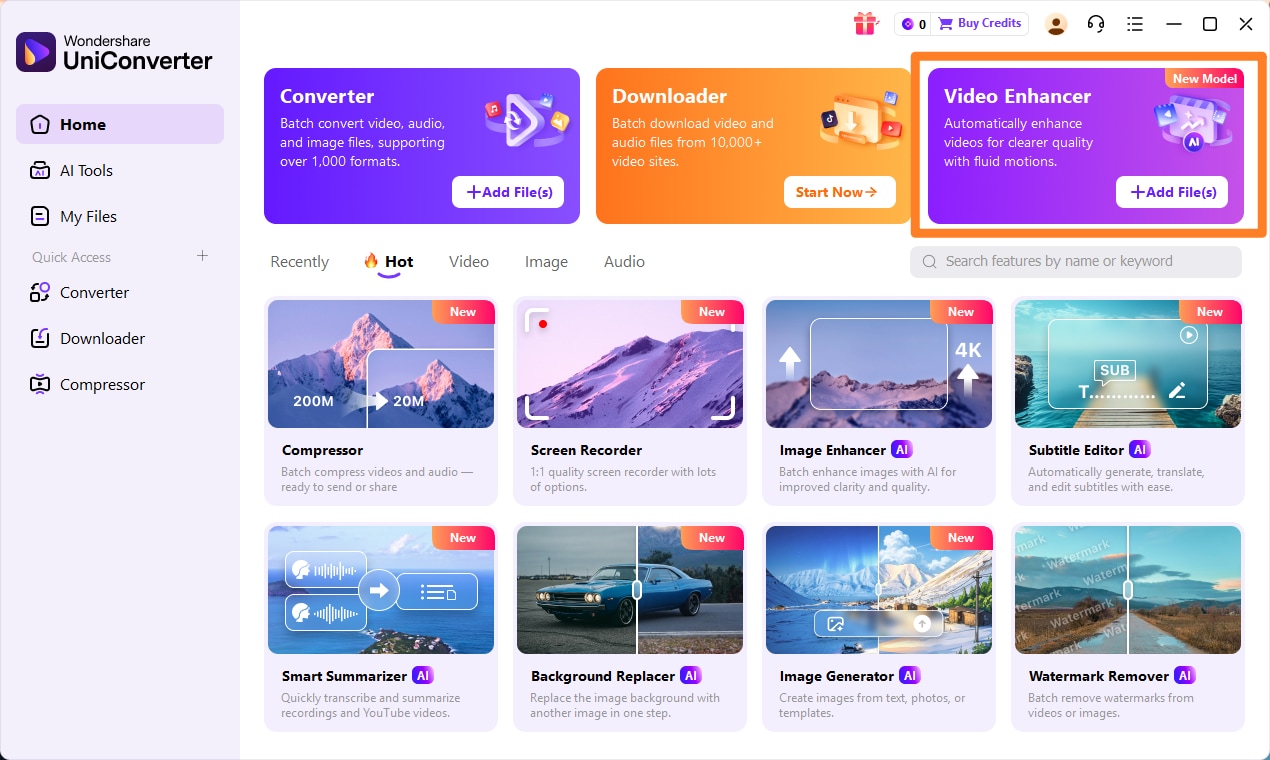
Step 1: Open UniConverter and Choose Video Enhancer
Launch UniConverter on your computer. From the main interface, navigate to the "Toolbox" section and select the "Video Enhancer" feature.
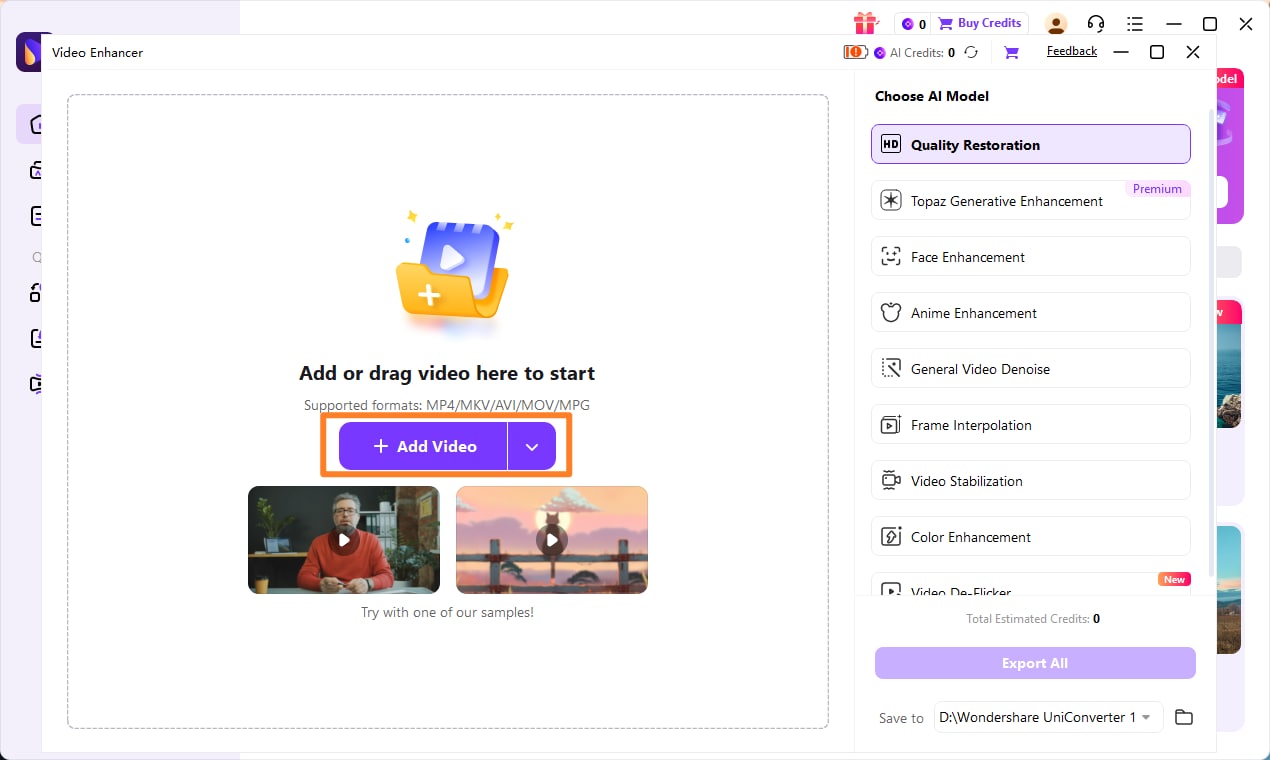
Step 2: Upload the Videos
Click on the "Add Files" button or drag and drop the video files you wish to enhance into the UniConverter interface. You can add multiple videos for batch processing.
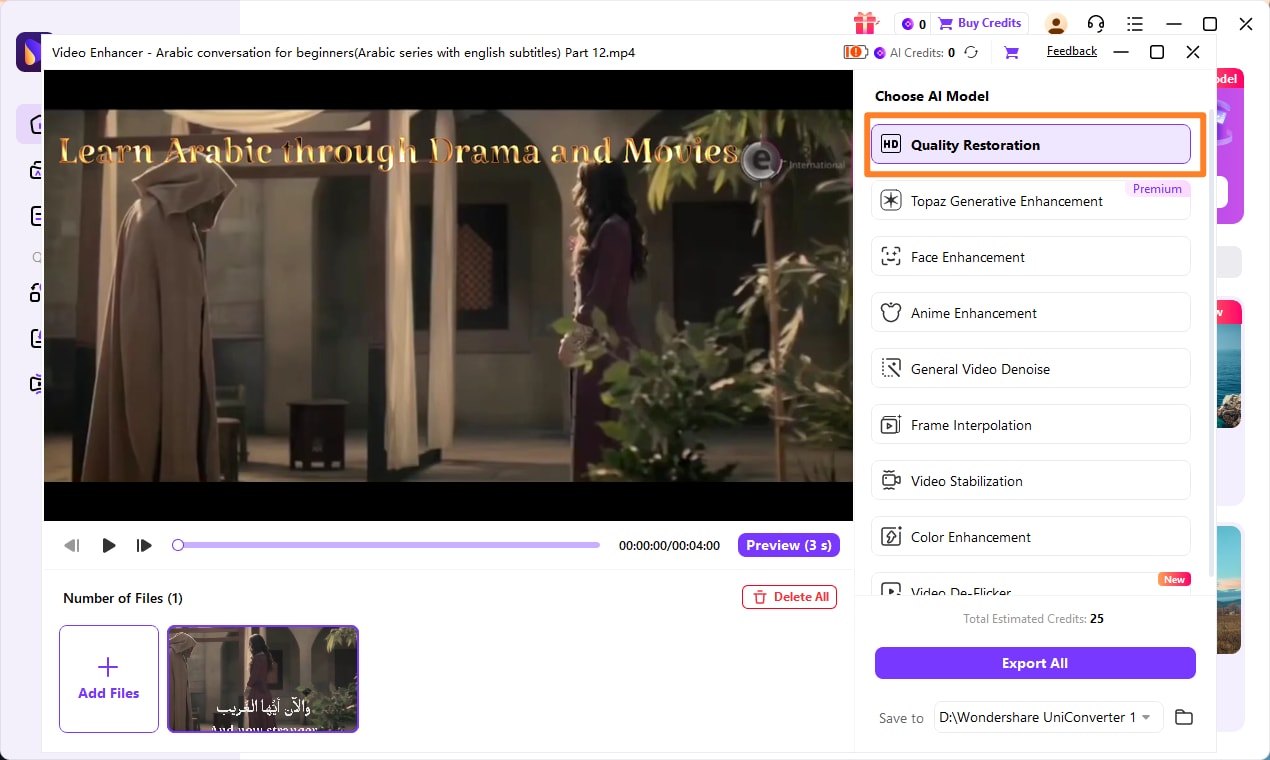
Step 3: Choose Enhancement Model
Once your video is loaded, select the desired enhancement options. UniConverter offers various models for upscaling, noise reduction, brightness adjustment, and more. Choose the settings that best suit your video's needs.
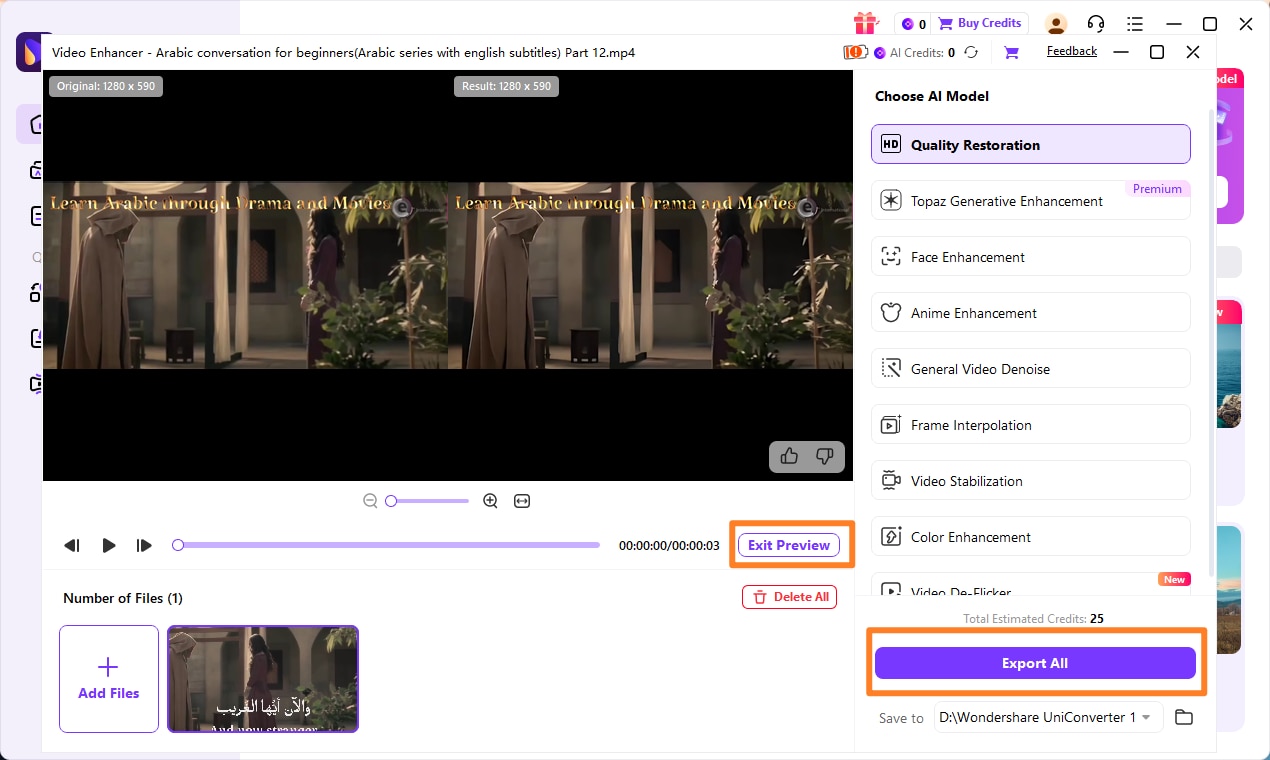
Step 4: Preview and Save the Enhanced Video
After selecting your enhancement settings, you can preview the changes to ensure satisfaction. Once satisfied, click the "Export" button to save your enhanced video to your desired output folder.

Seeking a DaVinci Resolve Video Enhancer Alternative?
Part 7: Conclusion
The DaVinci Resolve Video Enhancer review reveals a powerful, professional-grade suite of tools best suited for high-end post-production workflows. Its integrated environment, combining editing, color grading, and advanced enhancement, makes it an unparalleled choice for filmmakers and colorists who demand ultimate control and cinematic quality. However, its steep learning curve and demanding hardware requirements position it as less ideal for casual users or those seeking quick, automated fixes. For AI-driven upscaling specialists, dedicated tools like Topaz Video AI might offer a slight edge in specific algorithmic performance. For users prioritizing ease of use, efficiency, and a straightforward approach to video enhancement without the complexity of professional suites, UniConverter stands out as an excellent alternative. Ultimately, the best choice depends on the user's technical proficiency, project scope, budget, and specific enhancement needs. Exploring the free version of DaVinci Resolve is recommended for budget-conscious users before committing to the Studio version or other paid alternatives.
Part 8: FAQs
-
1. Is DaVinci Resolve's video enhancer free?
The core video enhancement features are available in the free version of DaVinci Resolve, but advanced features like AI-powered upscaling (e.g., Super Scale) are often part of the paid Studio version.
-
2. Can DaVinci Resolve enhance old, low-resolution footage?
Yes, DaVinci Resolve offers tools for noise reduction, upscaling, and detail recovery that can significantly improve the quality of old or low-resolution footage, though results vary based on original quality and the extent of degradation.
-
3. How does DaVinci Resolve's AI enhancement compare to dedicated AI upscaling software?
DaVinci Resolve's AI enhancement is powerful and integrated, but dedicated AI upscaling software often specializes in specific algorithms that might yield superior results for certain types of footage or specific upscaling tasks, sometimes offering more fine-tuned control over AI parameters.
-
4. What are the minimum system requirements for using DaVinci Resolve's enhancement features effectively?
While DaVinci Resolve can run on various systems, effective video enhancement, especially with AI, requires a powerful CPU (multi-core), a dedicated GPU with ample VRAM (8GB+ for HD, 12GB+ for 4K), and sufficient RAM (16GB minimum, 32GB+ recommended).
-
5. Is UniConverter a good alternative for professional video enhancement?
UniConverter is an excellent alternative for quick, user-friendly video enhancement and conversion, offering good quality for general use. However, it generally doesn't offer the same depth of professional-grade control, advanced features, and integrated post-production workflow as DaVinci Resolve.
