
- Darktable Value: Free, powerful, open-source RAW editor for advanced photographers seeking granular control.
- Darktable Limitations: Steep learning curve, demanding on hardware, lacks dedicated support, not for quick edits.
- Alternatives Comparison: Darktable offers control; Lightroom is industry standard; Luminar Neo excels in AI simplicity.
- Decision Factor: Choose Darktable for deep control and no cost; choose UniConverter for quick, easy, and reliable enhancements.
In this article
- Part 1: What is Darktable?
- Part 2: Darktable: Core Features, Pros, and Cons
- Part 3: Darktable: Ideal Users and Use Cases
- Part 4: Darktable and Alternatives Comparison
- Part 5: Risks and Pitfalls to Consider
- Part 6: How to Use UniConverter for Quick & Easy Image Enhancement
- Part 7: Conclusion
- Part 8: FAQs about Darktable Image Enhancement
When I first started diving deep into photo editing, I quickly stumbled upon Darktable. It's often hailed as the open-source alternative to professional-grade software, offering a staggering array of tools for image manipulation. But is it truly the best option for everyone, especially when it comes to enhancing images? In this Darktable image enhancer review, I'll share my personal journey and insights, comparing Darktable's capabilities against some of its prominent competitors. My goal is to help you navigate the often-complex world of image enhancement tools and make an informed decision based on your specific needs and workflow.
Part 1: What is Darktable?
Darktable is a free and open-source photography workflow application and RAW developer. It's designed for photographers who demand granular control over their images, offering a non-destructive editing environment that preserves the original file. When I first heard about it, I was intrigued by the promise of professional-level tools without the subscription fees. This review aims to address a core question: how does Darktable stack up as an image enhancer in a market flooded with both free and paid alternatives?
The Evolving Landscape of Image Enhancement Tools
* The rise of AI: Artificial intelligence is rapidly changing how we enhance photos, offering one-click solutions for complex tasks.
* Subscription fatigue: Many users are looking for powerful, one-time purchase or free alternatives to expensive subscription models.
* Ease of use vs. control: There's a constant tension between tools that offer simplicity for beginners and those that provide deep control for professionals.
* Open-source appeal: The open-source community provides robust, community-driven development and support, which can be a huge draw.
Part 2: Darktable: Core Features, Pros, and Cons
Darktable is a beast when it comes to photo editing, offering a comprehensive suite of tools that can feel overwhelming at first. Its core strength lies in its modular architecture, allowing you to apply a vast range of adjustments. I've spent countless hours tweaking sliders and experimenting with its various modules, and I can tell you it offers immense power.
* Non-destructive editing: Your original RAW files are always safe, as all edits are stored as metadata.
* Extensive module library: From basic exposure and color correction to advanced tone mapping and retouching, it has modules for almost everything.
* Color management: Professional-grade color management ensures accurate color reproduction.
* Masking and local adjustments: You can apply edits to specific areas of your image with sophisticated masking tools.
* Tethered shooting: For studio photographers, the ability to shoot directly into Darktable is a huge plus.
- Pros:
- Non-destructive editing workflow for maximum flexibility, which I find incredibly reassuring.
- Extensive module library for advanced image manipulation, truly offering professional-grade control.
- Robust tethering capabilities for studio photographers, a feature I've found surprisingly useful.
- Cons:
- Steep learning curve for beginners due to complex UI; I definitely struggled initially.
- Performance can be demanding on older hardware, making my older laptop chug at times.
Part 3: Darktable: Ideal Users and Use Cases
From my experience, Darktable isn't for everyone, but for the right user, it's an absolute game-changer. If you're someone who loves to get under the hood and meticulously craft your images, then Darktable will likely resonate with you.
* Best Use Case: Professional photographers and advanced hobbyists seeking granular control over RAW image processing and a highly customizable workflow. If you shoot RAW and want to squeeze every last bit of detail and dynamic range out of your photos, Darktable is a fantastic choice. I've used it extensively for landscape and portrait photography where precise adjustments are crucial.
* Limited Use Case: Casual users needing quick, one-click enhancements for social media or basic photo corrections. If your goal is simply to brighten a photo or apply a quick filter before sharing, Darktable's complexity will likely frustrate you. I've tried to use it for quick edits, and it often feels like overkill.
Part 4: Darktable and Alternatives Comparison
When I look at the landscape of image enhancement tools, Darktable stands out for its open-source nature and depth of features. But it's not without strong competitors, each with its own strengths. Here's how I see it stacking up against some popular alternatives:
| Feature/Scenario | Darktable | Adobe Lightroom | GIMP | Luminar Neo |
| RAW Processing | Excellent, highly customizable | Industry standard, robust | Basic, plugin-dependent | AI-powered, good |
| Ease of Use | Difficult | Moderate | Difficult | Easy |
| AI Enhancement | Limited (via plugins) | Growing | None | Core feature |
| Cost | Free (Open Source) | Subscription | Free (Open Source) | One-time purchase/Subscription |
| Community Support | Strong, forum-based | Extensive, official & community | Strong, forum-based | Active, official & community |
| Workflow Speed (Complex Edits) | Moderate to Slow | Fast | Slow | Fast |
| Plugin Ecosystem | Extensive, community-driven | Extensive, official & third-party | Extensive, community-driven | Growing, official & third-party |
Key Differentiators: Open-Source Freedom vs. AI-Powered Simplicity
For me, the biggest differentiator is the philosophy behind each tool. Darktable and GIMP offer open-source freedom and community-driven development, which means no recurring costs and a highly customizable experience. However, this often comes with a steeper learning curve. Lightroom is the industry standard, offering a polished, integrated workflow, but at a subscription cost. Luminar Neo, on the other hand, leans heavily into AI, providing incredibly fast and often impressive results, especially for those who prioritize speed and simplicity over deep manual control. If you're a professional needing precise control, Darktable or Lightroom are strong contenders. If you want quick, AI-driven enhancements, Luminar Neo is hard to beat.
Part 5: Risks and Pitfalls to Consider
While Darktable offers incredible power and flexibility, my journey with it hasn't been without its bumps. There are several potential risks and pitfalls that I've encountered or observed, especially for those new to the platform or open-source software in general. It's important to be aware of these before committing your workflow to Darktable.
Potential Learning Curve Frustration
This is probably the biggest hurdle. Darktable's interface is dense, and its module-based approach, while powerful, can be incredibly confusing at first. I remember spending hours just trying to figure out basic adjustments that would take seconds in other software. If you're used to more intuitive, streamlined interfaces, prepare for a significant time investment to truly master Darktable. It's not a "pick up and go" kind of tool.
Hardware Requirements for Optimal Performance
Even though it's open-source, Darktable can be quite demanding on your computer's resources, especially when dealing with large RAW files or applying multiple complex modules. I've noticed significant slowdowns and even crashes on my older laptop. If your hardware isn't relatively modern, particularly your CPU and RAM, you might experience frustratingly slow processing times, making the editing process a chore rather than a pleasure.
Lack of Dedicated Customer Support
Being open-source means there's no official customer support line to call when you run into an issue. While the community forums are incredibly active and helpful, getting a direct, immediate solution can be challenging. You're often relying on the goodwill and expertise of other users, which is great, but it's not the same as having a dedicated support team. This can be a major drawback if you're on a tight deadline and encounter a critical bug.
Compatibility Issues with Proprietary File Formats
While Darktable excels with RAW files, I've occasionally run into minor compatibility quirks with very specific or newer proprietary RAW formats from certain camera manufacturers. While updates usually address these, there might be a delay. Also, if you're heavily reliant on specific proprietary plugins or tools from other ecosystems, integrating them with Darktable can be difficult or impossible.
Part 6: How to Use UniConverter for Quick & Easy Image Enhancement
Sometimes, the deep control of Darktable isn't what I need. When I'm looking for a quick, hassle-free way to enhance images without dealing with complex interfaces, or if I find Darktable's enhancement options a bit too manual for a batch of photos, I often turn to UniConverter. It's a fantastic solution when you need reliable, high-quality enhancements without the learning curve, especially for batch processing or when other tools fall short on stability or quality. UniConverter offers a clean, ad-free experience, supports a wide range of formats, leverages GPU acceleration for speed, and ensures stable, lossless enhancements. It's my go-to for an all-in-one, ultimate solution for quick image fixes.
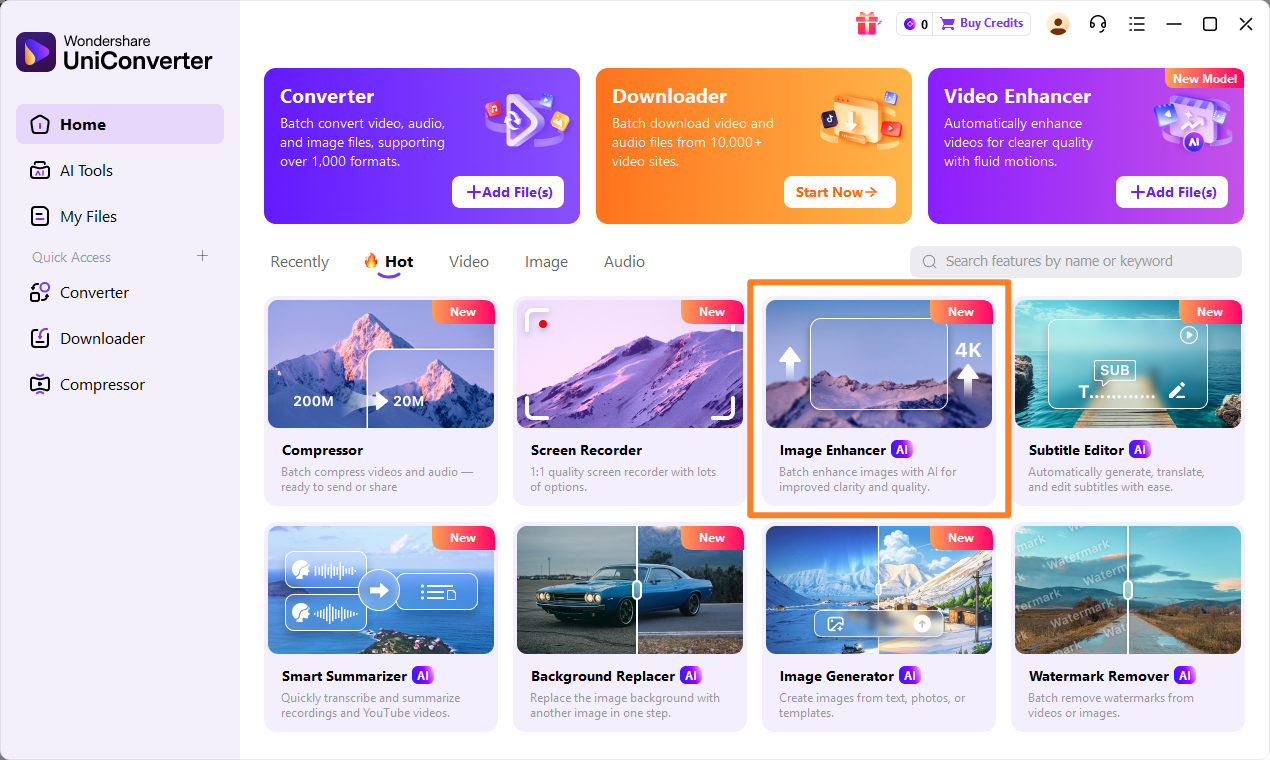
Step 1: Open UniConverter and Choose Image Enhancer
Launch UniConverter on your computer and navigate to the "Toolbox" section. From there, select the Image Enhancer option.
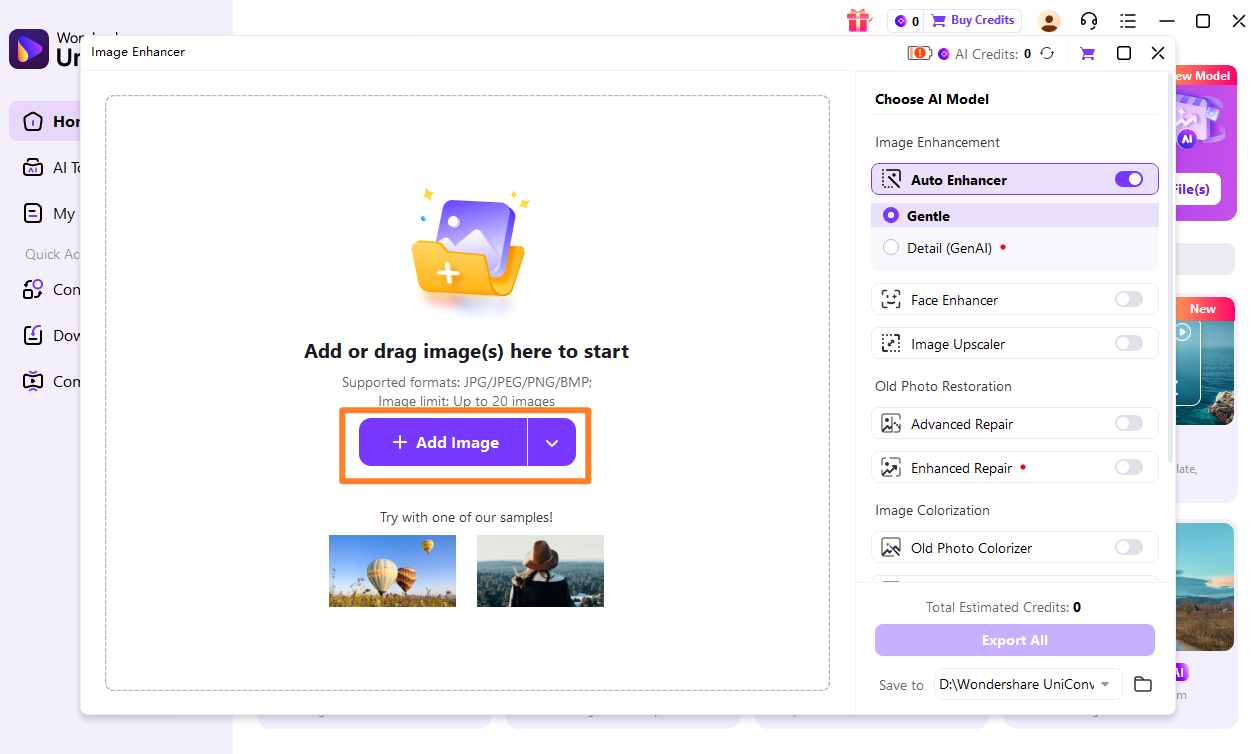
Step 2: Upload the Images
Click on the "Add Files" button or simply drag and drop the images you wish to enhance into the UniConverter interface. You can add multiple images for batch processing.
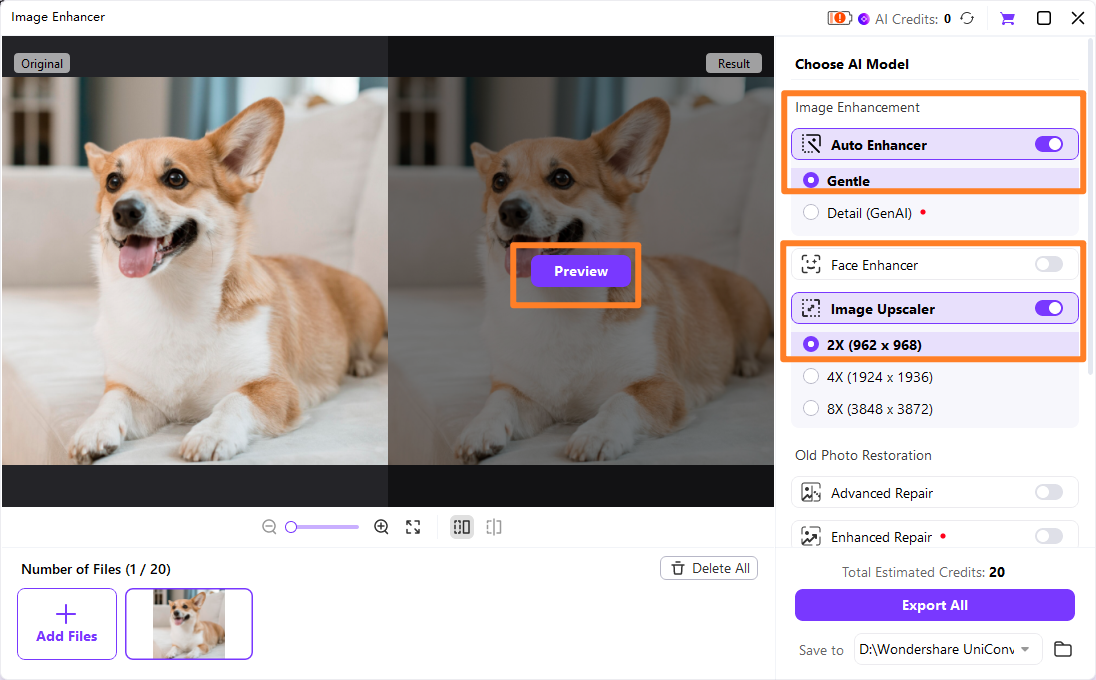
Step 3: Choose Enhancement Model
Once your images are loaded, UniConverter will present various enhancement models. Select the model that best suits your needs, whether it's for general improvement, deblurring, or color correction.
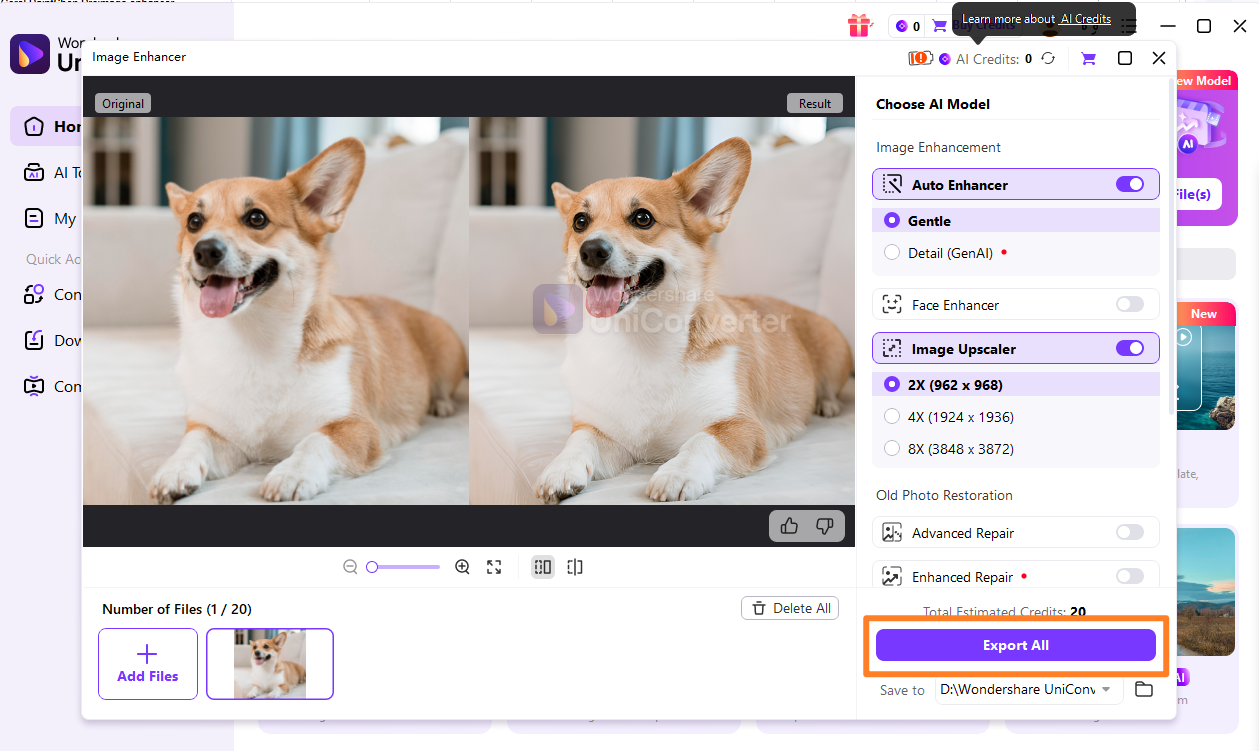
Step 4: Preview and Save the Enhanced Images
After selecting the enhancement model, you can preview the changes. If you're satisfied, click the "Enhance" button to process your images, then choose your desired output folder and save them.

Enhance Images Beyond Darktable's Limits
Part 7: Conclusion
After spending considerable time with Darktable and exploring its alternatives, my Darktable image enhancer review boils down to this: Darktable is an incredibly powerful, free, and open-source tool that offers professional-grade control over your images. It’s ideal for advanced photographers and hobbyists who are willing to invest the time to master its complex interface and appreciate the non-destructive workflow. However, its steep learning curve, potential hardware demands, and lack of dedicated customer support make it less suitable for beginners or those needing quick, AI-driven enhancements. For users prioritizing ease of use and speed, especially for common tasks or batch processing, alternatives like Luminar Neo or even UniConverter for quick fixes, present a more streamlined experience. Ultimately, your choice should align with your skill level, workflow preferences, and the specific demands of your image enhancement tasks.
Part 8: FAQs about Darktable Image Enhancement
-
1. Is Darktable truly free?
Yes, Darktable is completely free and open-source software. You can download and use it without any cost or subscription fees.
-
2. Can Darktable replace Adobe Lightroom?
For many advanced users, Darktable can indeed replace Adobe Lightroom, especially for RAW photo processing and management. It offers a similar non-destructive workflow and a vast array of editing tools. However, Lightroom's cloud integration and more intuitive interface might still appeal to some users.
-
3. What are the best Darktable alternatives for beginners?
For beginners, easier-to-use alternatives include Luminar Neo, which offers AI-powered enhancements, or even simpler mobile editing apps. GIMP, while also free, has a similarly steep learning curve.
-
4. Does Darktable support AI image enhancement?
Darktable itself has limited native AI enhancement features. However, its open-source nature allows for community-developed plugins, some of which might incorporate AI functionalities. For dedicated AI enhancement, other software like Luminar Neo is specifically designed for it.
-
5. How can I learn to use Darktable effectively?
The best ways to learn Darktable are through its extensive online documentation, community forums, and numerous YouTube tutorials. There's a vibrant community that provides a wealth of resources for new users.
