
- Dain-App Overview: Specializes in AI frame interpolation for smoother video, ideal for revitalizing old content.
- Strengths: Exceptional motion smoothing and intuitive interface, backed by strong community support.
- Weaknesses: Demands high-end hardware, especially a powerful GPU, and offers limited customization options.
- Best Use Cases: Perfect for enhancing vintage footage and gaming content, transforming choppy videos into fluid experiences.
- Challenging Scenarios: Not suitable for real-time live streaming due to intensive processing and latency.
- Dain-App vs. UniConverter: Dain-App is free and open-source, focusing on interpolation; UniConverter is an all-in-one, user-friendly alternative with broader AI enhancements.
- Risks: Potential security concerns with open-source downloads, hidden hardware costs, and possible "uncanny valley" effects.
- UniConverter Alternative: Offers comprehensive AI enhancement, upscaling, denoising, and color correction with GPU acceleration and dedicated support.
- Final Verdict: Dain-App is great for niche frame interpolation if you have powerful hardware; UniConverter offers a more versatile, user-friendly, and comprehensive solution.
In this article
- Part 1: Dain-App Video Enhancer: An Overview
- Part 2: Dain-App's Core Features, Strengths, and Weaknesses
- Part 3: Who Benefits Most? Dain-App's Ideal and Challenging Scenarios
- Part 4: Dain-App vs. Competitors: A Head-to-Head Comparison
- Part 5: Potential Risks and Considerations Before Using Dain-App
- Part 6: UniConverter: A Recommended Alternative for Video Enhancement
- Part 7: Final Verdict and Recommendations
- Part 8: Frequently Asked Questions (FAQs)
Dain-App Video Enhancer: A Comprehensive Scenario-Based Review
The proliferation of user-generated content and the increasing demand for high-quality visuals have propelled video enhancement tools into the spotlight. Among these, Dain-App Video Enhancer review has emerged as a significant player, particularly for its prowess in frame interpolation. This review delves into Dain-App's capabilities, contrasting it with leading alternatives and offering a scenario-based analysis to guide potential users. We aim to provide a clear understanding of its strengths, weaknesses, and ideal applications, helping you make an informed decision in the crowded video enhancement market.
Part 1: Dain-App Video Enhancer: An Overview
Dain-App Video Enhancer is a desktop application primarily known for its advanced frame interpolation technology. It leverages deep learning algorithms to generate intermediate frames between existing ones, effectively increasing the frame rate of videos and creating a smoother, more fluid viewing experience. Developed by a passionate community, it has gained traction among enthusiasts looking to breathe new life into older footage, enhance gaming recordings, or simply achieve a more cinematic look.
The Growing Need for AI-Powered Video Enhancement
The demand for sophisticated video enhancement solutions is driven by several factors:
* Revitalizing Legacy Content: Many users possess old videos with low frame rates that appear choppy on modern high-refresh-rate displays.
* Improving Gaming Experience: Gamers often seek to smooth out gameplay footage for better viewing and sharing.
* Creative Freedom: Filmmakers and content creators are exploring AI tools to achieve unique visual effects and overcome technical limitations.
* Accessibility to Advanced Techniques: AI-powered tools democratize complex video processing, making it accessible to a wider audience without specialized technical knowledge.
Part 2: Dain-App's Core Features, Strengths, and Weaknesses
Dain-App's primary function revolves around its sophisticated frame interpolation, but its overall user experience also contributes to its standing.
Pros:
* Exceptional Frame Interpolation for Smooth Motion: Dain-App excels at generating highly realistic intermediate frames, resulting in remarkably smooth motion, especially noticeable in slow-motion sequences or when upscaling frame rates.
* Intuitive User Interface for Quick Enhancements: Despite the complex technology under the hood, Dain-App offers a relatively straightforward interface, allowing users to quickly load videos, adjust basic settings, and initiate the enhancement process.
* Strong Community Support and Active Development: Being an open-source or community-driven project, Dain-App benefits from a dedicated user base and continuous updates, addressing bugs and introducing new features.
Cons:
* Resource-Intensive Processing Requires High-End Hardware: The deep learning algorithms demand substantial computational power, particularly a powerful GPU, making it inaccessible or slow for users with older or less capable hardware.
* Limited Customization Options for Advanced Users: While user-friendly, Dain-App offers fewer granular controls over the interpolation process compared to some professional-grade tools, which might be a drawback for users seeking highly specific artistic outcomes.
Part 3: Who Benefits Most? Dain-App's Ideal and Challenging Scenarios
Dain-App shines in specific contexts while facing limitations in others, making it a specialized tool rather than a universal solution.
Best Use Case: Revitalizing Vintage Footage and Gaming Content
Dain-App is an excellent choice for breathing new life into old, low-frame-rate videos, such as home movies, archival footage, or classic film clips. The smooth motion it generates can significantly improve the viewing experience, making the content feel more modern and engaging. Similarly, gamers can use Dain-App to enhance their recorded gameplay, transforming choppy 30fps footage into fluid 60fps or even higher, providing a more immersive and professional-looking presentation for streaming or sharing. Its ability to create natural-looking slow-motion effects from standard footage is also a significant advantage for creative projects.
Challenging Scenario: Real-time Live Streaming Enhancement
Due to its resource-intensive nature and the time required for processing, Dain-App is not suitable for real-time video enhancement during live streaming. The computational overhead makes it impossible to apply its frame interpolation algorithms instantaneously without significant latency, which would severely disrupt the live broadcast. For live streaming, alternative solutions that offer less computationally demanding enhancements or rely on hardware-accelerated processing are necessary.
Part 4: Dain-App vs. Competitors: A Head-to-Head Comparison
Choosing the right video enhancer often comes down to specific needs and the trade-offs between features, performance, and cost.
Dain-App & Competitors: Feature Comparison Table
| Feature / Product | Dain-App Video Enhancer | UniConverter | Topaz Video AI | Flowframes |
| Processing Speed | Moderate (GPU dependent) | Fast (GPU acceleration) | Fast (GPU acceleration) | Moderate (GPU dependent) |
| Output Quality | Excellent (Frame Interpolation) | Excellent (AI Enhancement, Upscaling, Interpolation) | Excellent (Upscaling, Stabilization, Interpolation) | Good (Frame Interpolation) |
| Ease of Use | Moderate | Very Easy | Moderate | Moderate |
| Customer Support | Community-driven | Dedicated Support | Dedicated Support | Community-driven |
| Security | Open-source (user discretion) | High (Reputable company) | High (Reputable company) | Open-source (user discretion) |
| Price Model | Free (Open-source) | Subscription/One-time purchase | One-time purchase | Free (Open-source) |
| Key Features | Frame Interpolation | All-in-one video toolkit | Upscaling, Stabilization, Interpolation | Frame Interpolation |
Key Differentiators: Where Dain-App Stands Out and Falls Short
Dain-App excels in its core function of frame interpolation, offering a high-quality, free solution for motion smoothing. However, its open-source nature means community-driven support and a lack of a comprehensive feature set beyond interpolation. UniConverter stands out as an all-in-one solution, offering not just enhancement but also conversion, editing, and compression, making it highly versatile. Topaz Video AI is a premium option known for its superior upscaling and stabilization capabilities, catering to professionals. Flowframes, like Dain-App, focuses on frame interpolation but might offer slightly different algorithms or performance characteristics.
Part 5: Potential Risks and Considerations Before Using Dain-App
While Dain-App offers powerful capabilities, users should be aware of potential drawbacks and considerations before committing to its use.
Data Privacy and Security Concerns
As an open-source application, Dain-App's code is publicly available for scrutiny, which can be a double-edged sword. While it allows for transparency and community contributions, users must ensure they are downloading from trusted sources to avoid modified versions that could contain malware. Unlike commercial software with dedicated security teams, the responsibility often falls on the user to verify the integrity of the software.
Subscription Model and Hidden Costs
Dain-App itself is free and open-source. However, achieving optimal performance often requires significant hardware investment, particularly a high-end GPU. This can be considered a "hidden cost" for users who don't already possess such hardware. Furthermore, while the software is free, any additional tools or plugins developed by the community might come with their own pricing models.
Output Quality Limitations on Specific Source Material
While Dain-App's frame interpolation is generally excellent, its effectiveness can vary depending on the quality and nature of the source material. Videos with significant motion blur, compression artifacts, or very low original frame rates might not yield perfectly smooth or artifact-free results. Aggressive interpolation can sometimes introduce visual anomalies or "ghosting" effects.
Hardware Requirements and Performance Bottlenecks
As mentioned, Dain-App is extremely resource-intensive. Without a powerful GPU (preferably NVIDIA with CUDA support), processing times can be excruciatingly long, rendering the software impractical for larger projects or frequent use. This hardware dependency creates a significant barrier to entry for many potential users.
Potential for "Uncanny Valley" Effects with Aggressive Interpolation
When frame interpolation is applied too aggressively, or to certain types of footage (e.g., human faces with subtle movements), it can sometimes lead to an "uncanny valley" effect, where the motion appears unnaturally smooth or artificial, rather than genuinely fluid. This can detract from the realism and overall viewing experience, requiring careful adjustment of settings.
Part 6: UniConverter: A Recommended Alternative for Video Enhancement
When other tools fall short in batch processing, stable enhancement, or delivering robust results, UniConverter emerges as a versatile and reliable alternative. It provides a comprehensive suite of video tools, ensuring high-quality, efficient, and user-friendly enhancement without the common pitfalls of less integrated solutions. UniConverter offers a seamless experience with no ads, extensive format support, GPU acceleration for speed, lossless quality, and powerful batch processing capabilities, making it an all-in-one ultimate solution for all your video needs.
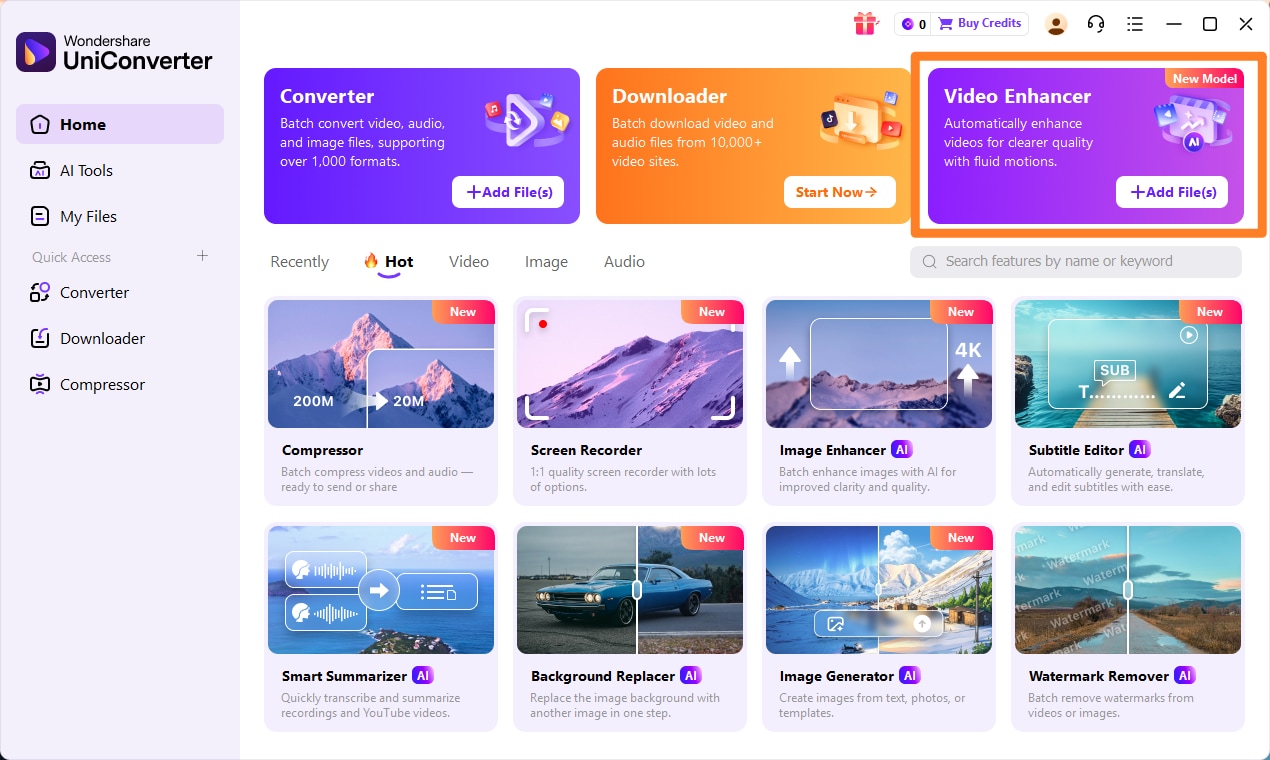
Step 1: Open UniConverter and Choose Video Enhancer
Launch UniConverter on your computer. From the main interface, navigate to the "Toolbox" section and select the "AI Lab" option. Within the AI Lab, choose "Video Enhancer."
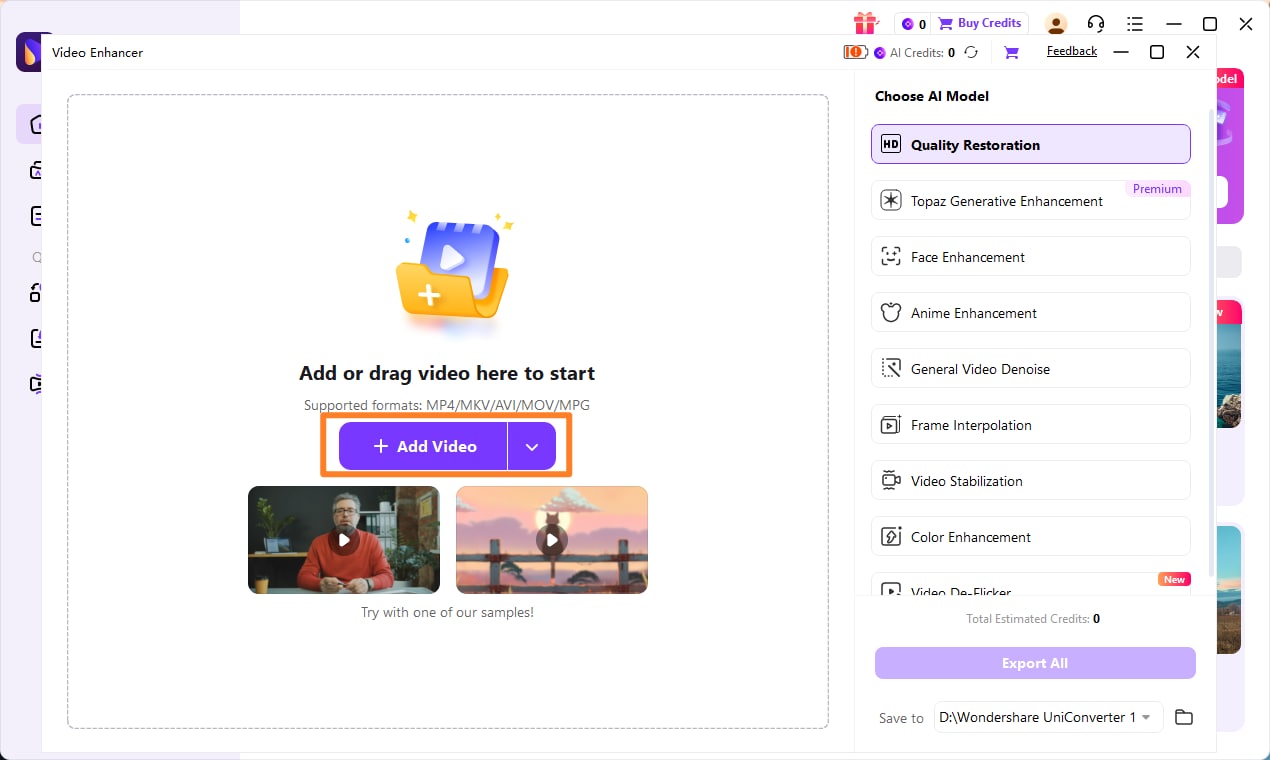
Step 2: Upload the Videos
Click the "Add Files" button or drag and drop your video file directly into the UniConverter interface. You can add multiple videos for batch processing.
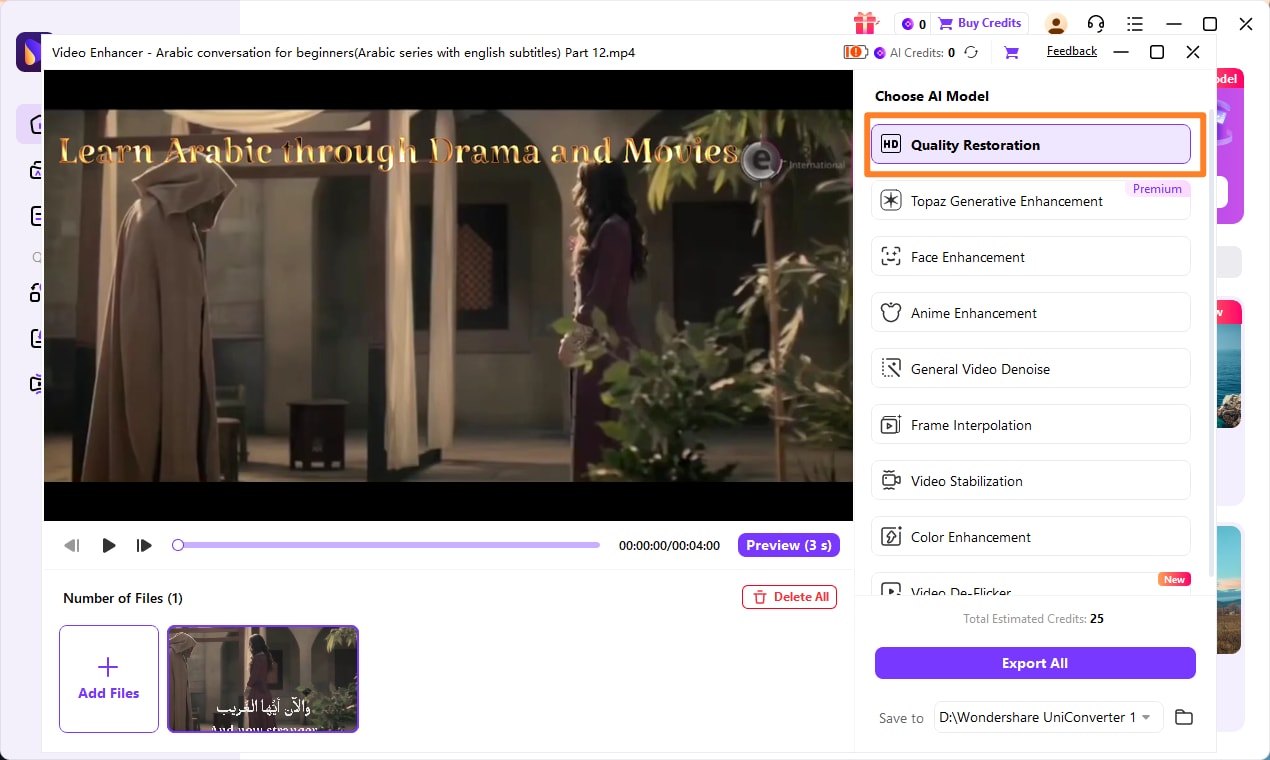
Step 3: Choose Enhancement Model
UniConverter offers various AI enhancement models. Select the model that best suits your needs, such as "AI Upscale," "AI Denoise," or "AI Color Correction." Adjust any additional settings like resolution or quality. For instance, you might want to remove background without losing quality or utilize a high-definition background remover to refine your footage. You can also explore options for a video background changer to create dynamic visual effects.
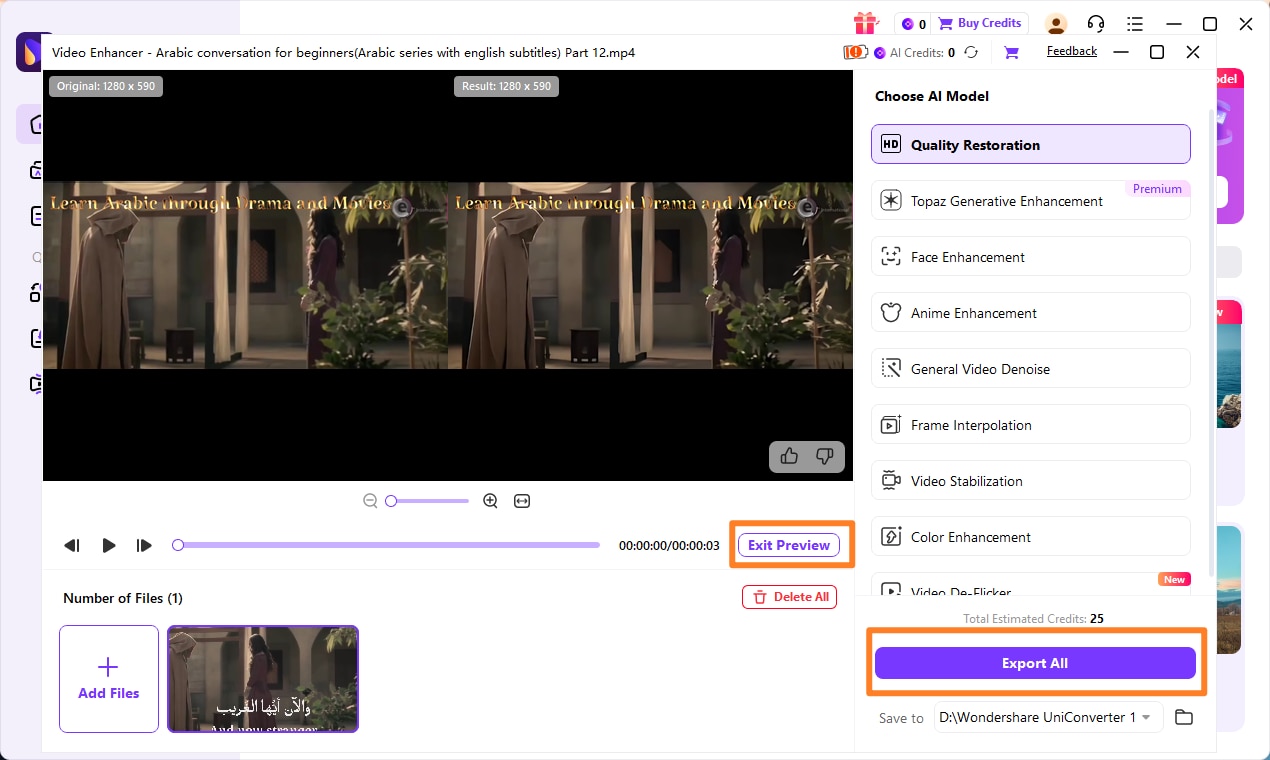
Step 4: Preview and Save the Enhanced Video
After selecting your enhancement settings, click "Preview" to see the effect. Once satisfied, choose your desired output format and destination folder, then click "Export" to save your enhanced video. This process allows you to change video background or apply other enhancements efficiently.

Seeking a Powerful Dain-App Video Enhancer Alternative?
Part 7: Final Verdict and Recommendations
The Dain-App Video Enhancer review reveals a powerful, specialized tool for frame interpolation, particularly appealing to enthusiasts and those looking to revitalize older content. Its open-source nature and excellent motion smoothing are significant advantages for users with the necessary hardware. However, its resource intensity, limited feature set beyond interpolation, and reliance on community support might deter some. For professionals requiring granular control over various enhancement aspects, or for users seeking a more comprehensive, all-in-one solution with dedicated support and broader capabilities like upscaling, stabilization, and format conversion, alternatives such as Topaz Video AI or UniConverter would be more suitable. Budget-conscious users who prioritize a free solution and possess powerful GPUs will find Dain-App highly valuable for its specific niche. Beginners prioritizing ease of use and a wider range of features without deep technical knowledge might find UniConverter's intuitive interface and integrated tools more appealing. Ultimately, the best choice depends on individual needs, technical proficiency, and available hardware.
Part 8: Frequently Asked Questions (FAQs)
-
1. Is Dain-App Video Enhancer free to use?
Yes, Dain-App is an open-source project and is free to download and use. However, it requires significant hardware investment for optimal performance.
-
2. What are the minimum system requirements for Dain-App?
While there isn't a strict minimum, a powerful GPU (preferably NVIDIA with CUDA support) with at least 8GB of VRAM is highly recommended for reasonable processing times. A strong CPU and ample RAM also contribute to overall performance.
-
3. Can Dain-App enhance video resolution?
Dain-App's primary function is frame interpolation, meaning it increases the frame rate to create smoother motion. While some users might combine it with other upscaling tools, Dain-App itself does not inherently enhance video resolution.
-
4. How does Dain-App compare to traditional video editing software?
Dain-App is a specialized tool focused on AI-powered frame interpolation, whereas traditional video editing software (e.g., Adobe Premiere Pro, DaVinci Resolve) offers a broad range of editing, color grading, and effects capabilities. Dain-App can be used as a complementary tool within a larger video editing workflow.
-
5. Are there any ethical considerations when using AI video enhancement?
Yes, ethical considerations include the potential for creating "deepfakes" or manipulating footage in misleading ways. Users should be mindful of the ethical implications of altering video content, especially when dealing with sensitive material or public information. Transparency about AI enhancement is often recommended.
