
- Cutout.Pro Value: Offers quick, AI-powered image enhancement, ideal for speed and simplicity in e-commerce.
- Limitations: Lacks advanced customization, risks over-processing, and raises data privacy concerns for critical projects.
- Comparison: Cutout.Pro excels in automation; UniConverter provides balanced, natural enhancements with more control.
- Decision Factor: Choose Cutout.Pro for rapid, automated fixes; opt for UniConverter for consistent quality and control.
- UniConverter Advantage: Desktop solution ensures data privacy, stable batch processing, and superior lossless enhancement.
In this article
- Part 1: What is Cutout.Pro Image Enhancer?
- Part 2: Cutout.Pro Image Enhancer: Core Features, Pros, and Cons
- Part 3: Target Users and Use Cases
- Part 4: Cutout.Pro and Alternatives Comparison
- Part 5: Risks and Pitfalls to Consider
- Part 6: How to Use UniConverter to Efficiently Enhance Images
- Part 7: Conclusion
- Part 8: FAQs
Cutout.Pro Image Enhancer: A Comprehensive Scenario-Based Review
When I first stumbled upon Cutout.Pro's image enhancement features, I was intrigued by the promise of AI-powered magic for my photos. In a world saturated with digital imagery, the need for quick, effective tools to make our visuals pop has never been greater. This Cutout.Pro image enhancer review dives deep into its capabilities, comparing it against other market players to help you decide if it's the right fit for your workflow. I'll share my personal experiences, highlighting where it shines and where you might need to look elsewhere, ensuring you get a clear picture before committing.
Part 1: What is Cutout.Pro Image Enhancer?
Cutout.Pro Image Enhancer is an online tool designed to automatically improve the quality of your images using artificial intelligence. It's part of a larger suite of AI-driven photo editing tools offered by Cutout.Pro, aiming to simplify complex tasks like background removal and object cutout. My initial thought was, "Can an AI really do a better job than my manual tweaks?" This review aims to answer that by exploring its core functionalities and comparing it with alternatives.
The Rise of AI-Powered Image Enhancement
The digital age has brought an explosion of visual content, creating a demand for efficient image processing.
* The sheer volume of images: We're all snapping photos constantly, and not every shot is perfect.
* The need for instant gratification: Waiting for manual edits is a luxury many can't afford.
* Accessibility for non-professionals: Not everyone is a Photoshop wizard, but everyone wants good-looking photos.
Part 2: Cutout.Pro Image Enhancer: Core Features, Pros, and Cons
Cutout.Pro Image Enhancer boasts a straightforward approach to improving image quality. It primarily focuses on sharpening details, enhancing colors, and reducing noise. I found its strength lies in its ability to quickly process images without requiring any technical expertise. For me, the most useful aspect was its automatic detection of areas needing improvement.
Pros:
* AI-powered automatic enhancement for various image types, meaning I don't have to guess what settings to use.
* User-friendly interface for quick results, which is a huge plus when I'm in a hurry.
* Batch processing capabilities for efficiency, saving me a ton of time when dealing with multiple photos.
Cons:
* Limited advanced customization options; sometimes I wish I had more control over specific parameters.
* Potential for over-processing in certain scenarios, leading to an unnatural or "plastic" look, especially with faces.
Part 3: Target Users and Use Cases
From my experience, Cutout.Pro Image Enhancer caters to a broad audience, but it truly shines for specific use cases. If you're someone who needs quick, decent results without diving into complex software, this is definitely worth considering.
Best-Fit Scenario: E-commerce Product Photography
For e-commerce, where high-quality product images are crucial but time is often short, Cutout.Pro is a godsend. I've used it to quickly enhance product shots, making them look sharper and more appealing without spending hours in post-production. It helps standardize image quality across a catalog, which is incredibly valuable.
Limited-Fit Scenario: Professional Fine Art Restoration
However, if you're working on professional fine art restoration or require extremely nuanced control over every pixel, Cutout.Pro might fall short. I found that for delicate tasks like restoring old, faded photographs with intricate details, its automatic enhancements could sometimes be too aggressive or miss subtle nuances that a human eye or more specialized software would catch. It's great for general improvements, but not for highly precise, artistic work.
Part 4: Cutout.Pro and Alternatives Comparison
When I started looking into image enhancers, I realized there are quite a few options out there. Here's how Cutout.Pro stacks up against some others I've tried, including UniConverter, which I'll delve into more later.
| Feature/Aspect | Cutout.Pro Image Enhancer | UniConverter | Topaz Labs Gigapixel AI | Luminar Neo |
| Core Enhancement Quality | Good for general use, quick | Excellent, balanced detail & color | Outstanding for upscaling & detail | Very good, creative enhancements |
| Ease of Use | Very High, fully automated | High, intuitive interface | Moderate, some learning curve | Moderate, feature-rich |
| Customization Options | Limited | Moderate, good presets | High, fine-tuned controls | Very High, extensive tools |
| Pricing Model | Subscription/Credits | One-time purchase/Subscription | One-time purchase | Subscription/One-time purchase |
| Batch Processing | Yes | Yes | Yes | Yes |
| Specific Use Case Performance | E-commerce, quick fixes | All-around enhancement, video | Print, large format | Creative photography, portraits |
Key Differentiators:
Cutout.Pro's strength, in my opinion, lies in its seamless integration with other Cutout.Pro tools, especially background removal. UniConverter, on the other hand, offers a more balanced approach to enhancement, often yielding more natural-looking results across various image types. Topaz Labs Gigapixel AI is a powerhouse for upscaling and detail recovery, particularly for prints, but it comes with a steeper learning curve and price. Luminar Neo stands out with its advanced color grading and creative editing tools, making it a favorite for photographers looking for more artistic control. If you're just looking for quick, decent enhancements, Cutout.Pro is fine, but for more serious work, the others offer more depth.
Part 5: Risks and Pitfalls to Consider
Using online AI tools like Cutout.Pro, while convenient, isn't without its potential downsides. I've learned to be cautious, especially when dealing with sensitive images or critical projects.
Data Privacy and Image Security Concerns
This is a big one for me. When I upload my images to an online service, I always wonder about data privacy. Who has access to my photos? How long are they stored? While Cutout.Pro states they prioritize security, the fact that my images are on someone else's server always makes me a bit uneasy, especially for client work. It's a trade-off for the convenience.
Potential for AI Hallucinations and Artifacts
AI isn't perfect. I've seen instances where Cutout.Pro's enhancer, in its attempt to "improve" an image, introduces weird artifacts or "hallucinations"—details that weren't originally there or look unnatural. This is particularly noticeable in complex textures or low-light photos, where the AI might guess at details rather than accurately restore them. It can sometimes make a photo look worse than before.
Subscription Model Value Proposition
Cutout.Pro operates on a subscription or credit-based model. For casual users, the cost might not justify the occasional need. I initially thought I'd save money, but if I'm not constantly enhancing images, those credits can feel like they're going to waste. It's essential to evaluate your usage frequency to determine if the subscription offers real value for you.
Over-reliance on Automation for Critical Projects
While automation is a time-saver, I've learned not to blindly trust it for critical projects. For a client's high-stakes image, I wouldn't just hit "enhance" and call it a day. The lack of granular control means I can't fine-tune specific areas, which is often necessary for professional-grade results. It's a good starting point, but rarely the final step for important work.
Advertising and Upselling Practices
Like many online tools, Cutout.Pro sometimes uses advertising or tries to upsell you on other features. While understandable for a business, it can interrupt the workflow and feel a bit intrusive when I'm just trying to get a quick task done. I prefer a cleaner, ad-free experience, especially if I'm paying for a service.
Part 6: How to Use UniConverter to Efficiently Enhance Images
Sometimes, online tools just don't cut it, especially when you need consistent, high-quality results without the risks of data privacy or over-processing. If you're like me and find some tools lacking in batch processing, stability, or overall enhancement quality, UniConverter offers a robust desktop solution. It's become my go-to for its reliability, ad-free experience, extensive format support, GPU acceleration, and stable, lossless batch enhancement. It feels like an all-in-one ultimate solution for image and video needs.
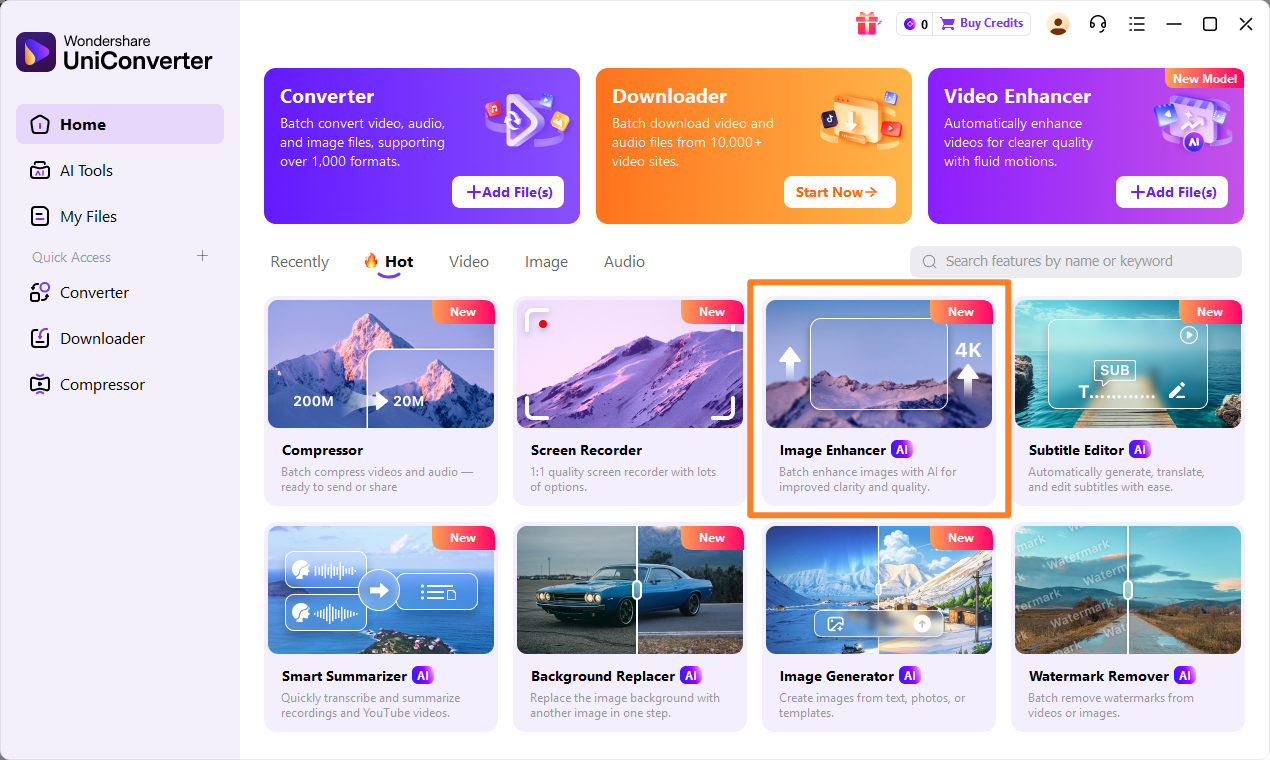
Step 1: Open UniConverter and Choose Image Enhancer
Launch UniConverter on your computer. On the main interface, navigate to the "Toolbox" section and select "Image Enhancer."
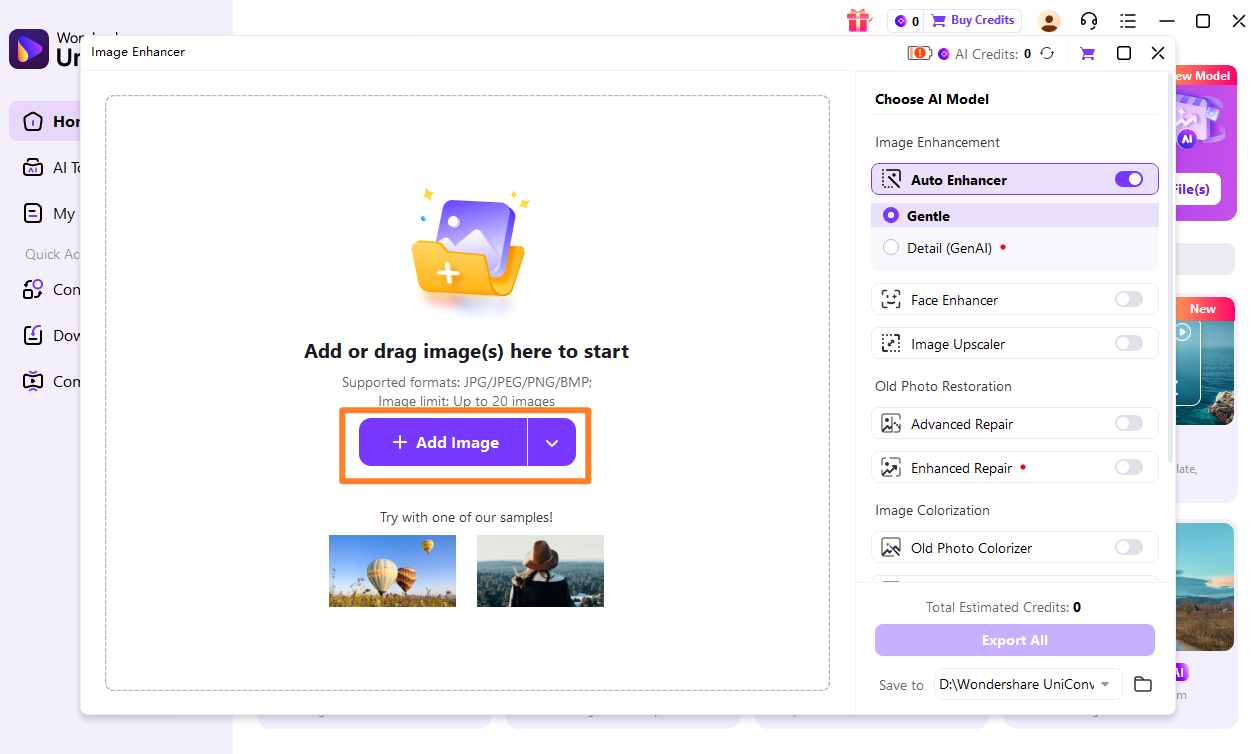
Step 2: Upload the Images
Drag and drop your images into the UniConverter Image Enhancer window, or click the "Add Files" button to browse and select them. You can add multiple images for batch processing.
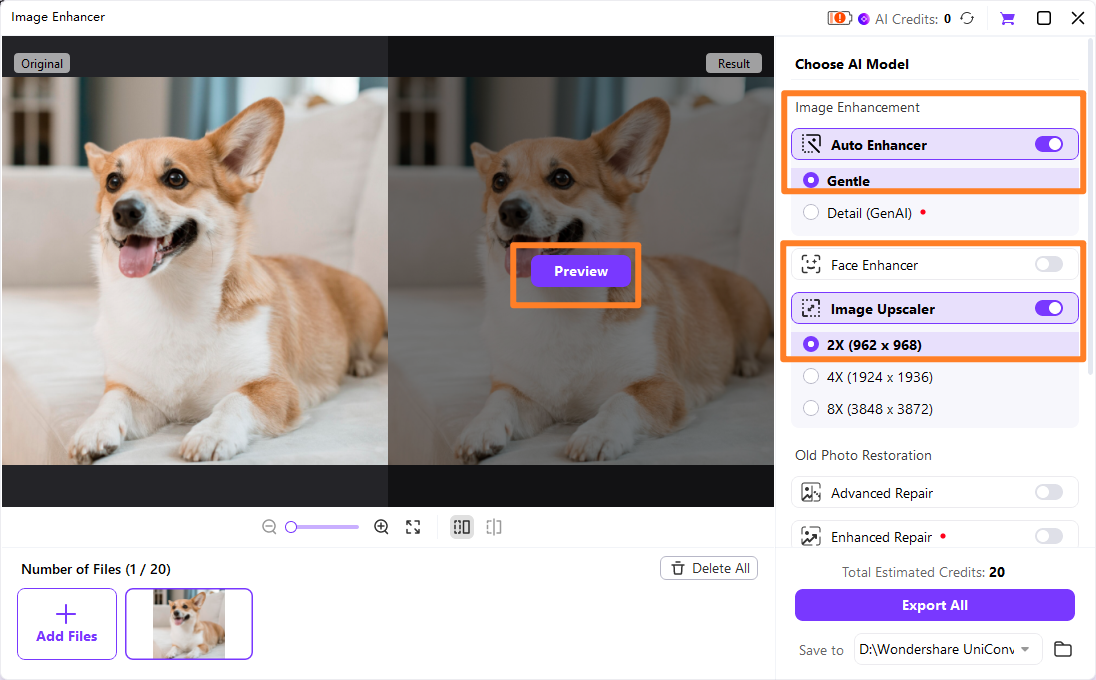
Step 3: Choose Enhancement Model
UniConverter provides various AI enhancement models. Select the one that best suits your image type (e.g., general, portrait, landscape). You can preview the changes in real-time. For instance, to upscale images to 4K, you can choose an appropriate model.
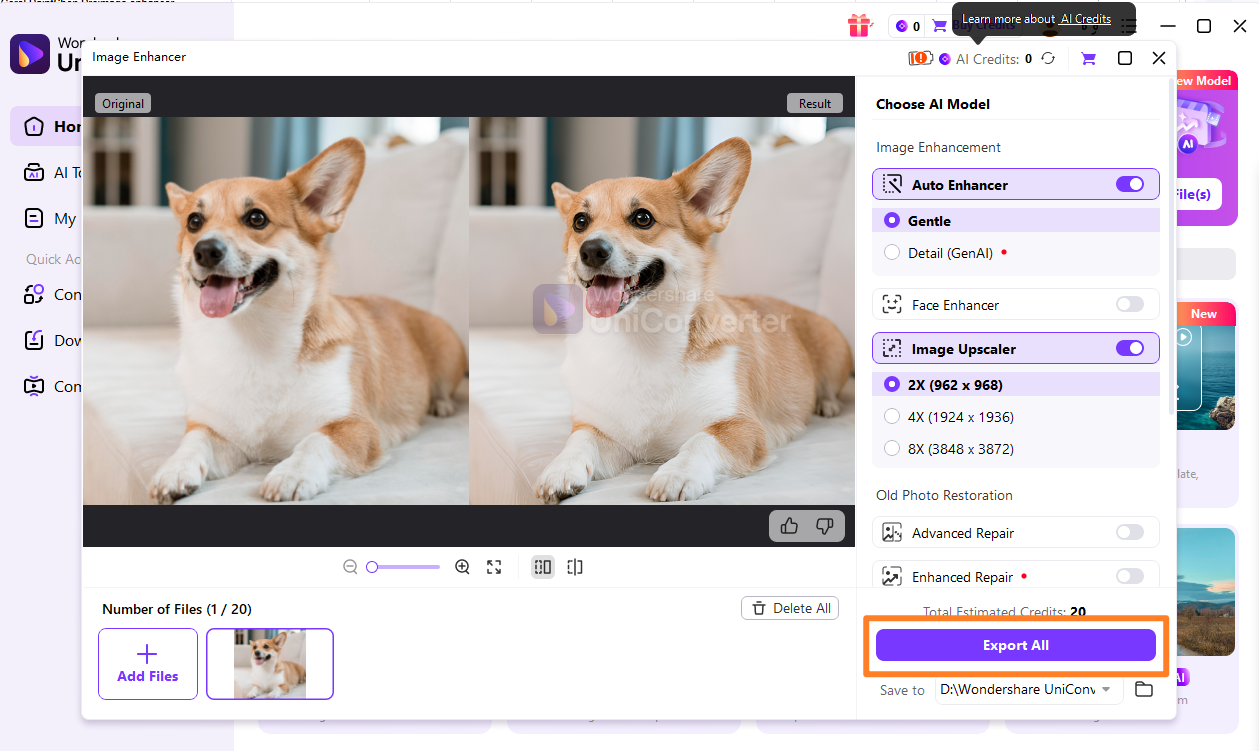
Step 4: Preview and Save the Enhanced Images
After applying the enhancement, preview the results. If you're satisfied, choose your desired output format and destination folder, then click "Export" to save your enhanced images.

Cutout.Pro Alternative for Image Enhancement?
Part 7: Conclusion
After spending considerable time with Cutout.Pro image enhancer review and its competitors, I've come to some clear conclusions. Cutout.Pro is undeniably a convenient tool for quick, automated image enhancements, especially for users who prioritize speed and simplicity over granular control. Its integration with other Cutout.Pro features makes it attractive for e-commerce or social media content creators needing rapid turnarounds. However, for those demanding precise control, professional-grade output, or concerned about data privacy and potential AI artifacts, alternatives like UniConverter or more specialized desktop software offer a superior experience. UniConverter, in particular, stands out as a reliable, comprehensive solution for consistent, high-quality batch enhancements without the online tool's inherent limitations. Ultimately, the best tool depends entirely on your specific needs, workflow, and tolerance for automation versus manual oversight.
Part 8: FAQs
-
1. **Is Cutout.Pro Image Enhancer free to use?**
Cutout.Pro offers a limited free tier with watermarked results or a small number of free credits. For full functionality and unwatermarked images, you'll need to subscribe to a paid plan or purchase credits.
-
2. **How does Cutout.Pro Image Enhancer compare to Photoshop's enhancement tools?**
Cutout.Pro is an automated, AI-driven tool designed for quick fixes, while Photoshop offers extensive manual control and a vast array of sophisticated tools for professional-level editing. Cutout.Pro is for speed and simplicity; Photoshop is for precision and creative depth.
-
3. **Can Cutout.Pro Image Enhancer improve the resolution of low-quality images?**
Yes, Cutout.Pro's enhancer can attempt to upscale and improve the perceived resolution of low-quality images by sharpening details and reducing noise. However, it cannot magically create information that isn't there, so results will vary depending on the original image quality.
-
4. **What file formats does Cutout.Pro Image Enhancer support?**
Cutout.Pro typically supports common image formats like JPG, PNG, and HEIC for input and usually outputs in JPG or PNG. Always check their official website for the most up-to-date list of supported formats.
-
5. **Is my data safe when using online image enhancers like Cutout.Pro?**
While most reputable online services, including Cutout.Pro, state they prioritize data security and privacy, uploading images to any cloud-based service carries inherent risks. For highly sensitive or confidential images, a desktop application like UniConverter might offer greater peace of mind regarding data control.
