
- Value: Cupscale offers free, open-source AI video enhancement, ideal for advanced users seeking deep customization.
- Comparison: Unlike Cupscale's complexity, UniConverter provides user-friendly, efficient video enhancement for broader needs.
- Decision: Choose Cupscale for granular control and archival restoration if you have powerful hardware and technical expertise.
- Decision: Opt for UniConverter for balanced quality, ease of use, and efficient batch processing without a steep learning curve.
In this article
- Part 1: What is Cupscale Video Enhancer?
- Part 2: Cupscale Video Enhancer: Core Features, Pros & Cons
- Part 3: Target Audience & Use Cases for Cupscale Video Enhancer
- Part 4: Cupscale Video Enhancer and Alternatives Comparison
- Part 5: Risks & Pitfalls to Consider
- Part 6: How to Use UniConverter for Efficient Video Enhancement
- Part 7: Conclusion
- Part 8: FAQs
Cupscale Video Enhancer review: This comprehensive Cupscale Video Enhancer review delves into the capabilities of this open-source AI video enhancement tool, offering a detailed analysis of its features, strengths, and limitations. In an era where AI-driven solutions are transforming video production, Cupscale emerges as a powerful option for users seeking to breathe new life into older or lower-quality footage. This review will provide a multi-dimensional comparison with leading alternatives, guiding users through various scenarios to help them make informed decisions about their video enhancement needs.
Part 1: What is Cupscale Video Enhancer?
Cupscale Video Enhancer is a free, open-source desktop application that leverages advanced AI models, primarily based on ESRGAN (Enhanced Super-Resolution Generative Adversarial Networks), to upscale and enhance video quality. It allows users to significantly improve the resolution, detail, and overall visual fidelity of low-resolution or older video content. Developed by a community of enthusiasts, Cupscale provides a highly customizable platform for video restoration and upscaling, making it a unique player in the burgeoning field of AI video enhancement. This review aims to dissect its functionalities, compare it with commercial alternatives, and identify its ideal user base and use cases.
The Rise of AI Video Enhancement Tools
The demand for AI video enhancement tools has surged due to several key factors:
* Reviving Legacy Content: A vast archive of historical and personal videos exists in lower resolutions, which AI enhancement can modernize.
* Improving User-Generated Content: Social media and amateur videography often produce footage that benefits from quality improvements.
* Meeting High-Resolution Demands: The widespread adoption of 4K and 8K displays necessitates higher quality source material.
* Cost-Effective Solutions: AI tools offer a more accessible way to achieve professional-grade enhancements without extensive manual work.
Part 2: Cupscale Video Enhancer: Core Features, Pros & Cons
Cupscale Video Enhancer stands out with its ability to transform low-resolution videos into higher-quality outputs using sophisticated AI algorithms. Its core capabilities revolve around super-resolution, noise reduction, and detail restoration. Users can fine-tune various parameters to achieve specific aesthetic results, making it a powerful tool for those who require granular control over the enhancement process.
Core Features:
* AI-Powered Upscaling: Utilizes advanced ESRGAN models for significant resolution improvement.
* Customizable Model Selection: Supports various AI models, allowing users to choose the best fit for their specific footage.
* Parameter Fine-Tuning: Offers extensive controls over scaling factor, noise reduction, sharpening, and artifact suppression.
* Batch Processing: Capable of processing multiple video files sequentially.
* Open-Source Nature: Benefits from community contributions and continuous development.
Pros:
* Advanced AI Upscaling for Legacy Content: Excels at breathing new life into old, low-resolution videos, making them suitable for modern displays.
* Highly Customizable Enhancement Parameters: Provides unparalleled control over the enhancement process, allowing users to achieve precise results.
* Open-Source Community Support and Development: Benefits from a dedicated community, leading to ongoing improvements and access to new models.
Cons:
* Steep Learning Curve for Beginners: The extensive customization options can be overwhelming for users new to video enhancement or AI models.
* Resource-Intensive Processing Requirements: Demands significant GPU power and VRAM, making it less accessible for users with older or less powerful hardware.
Part 3: Target Audience & Use Cases for Cupscale Video Enhancer
Cupscale Video Enhancer is primarily aimed at users with a strong interest in video restoration, archival work, and those who require a high degree of control over the enhancement process. Its open-source nature and advanced features make it particularly appealing to tech-savvy individuals, researchers, and hobbyists who are comfortable experimenting with different AI models and settings. It's less suited for casual users seeking quick, automated solutions.
Best Use Case: Restoring and Upscaling Archival Footage for Professional Projects
For filmmakers, archivists, or content creators working with historical footage, old home videos, or low-resolution source material, Cupscale offers a powerful solution. Its ability to meticulously upscale and restore detail can transform grainy, pixelated videos into watchable, even professional-grade, content. The extensive customization allows for tailoring the enhancement to preserve the original aesthetic while improving clarity.
Limited Use Case: Quick, On-the-Go Enhancements for Social Media Content
For users who need to quickly enhance short clips for social media platforms, Cupscale's complex interface and resource-intensive processing can be a significant hurdle. The time and effort required to set up and process videos, especially for minor improvements, make it an inefficient choice for casual, on-the-fly enhancements. Simpler, more automated tools are better suited for this purpose.
Part 4: Cupscale Video Enhancer and Alternatives Comparison
| Feature/Scenario | Cupscale Video Enhancer | UniConverter | Topaz Video AI | DaVinci Resolve Studio |
| Upscaling Quality (Low-Res to 4K) | Excellent, highly customizable | Very Good, balanced | Excellent, pre-trained models | Good, integrated workflow |
| Ease of Use (Beginner) | Difficult | Very Easy | Moderate | Moderate |
| Processing Speed (Large Files) | Slow, GPU dependent | Fast, GPU optimized | Moderate to Fast, GPU optimized | Fast, hardware accelerated |
| Cost | Free (Open Source) | Premium (Subscription/Lifetime) | Premium (One-time purchase) | Premium (One-time purchase) |
| Customization Options | Extensive | Moderate | Moderate | Moderate |
| Customer Support | Community Forums | Dedicated Support | Dedicated Support | Dedicated Support |
| Security | Local Processing | Local Processing | Local Processing | Local Processing |
Cupscale offers unparalleled customization for specific enhancement needs, making it ideal for experts who want fine-grained control over every aspect of the upscaling process. UniConverter prioritizes user-friendliness and efficiency, providing a balanced solution for users who need reliable enhancement without a steep learning curve. Topaz Video AI excels with its high-quality, pre-trained models that deliver impressive results with less manual intervention. DaVinci Resolve Studio integrates enhancement within a broader, professional video editing ecosystem, making it a strong choice for those already within its workflow.
Part 5: Risks & Pitfalls to Consider
Using advanced video enhancement tools like Cupscale, while powerful, comes with its own set of challenges and potential drawbacks that users should be aware of. These can impact the final output quality, user experience, and overall project efficiency.
Potential for Over-Processing and Artifact Introduction
Aggressive enhancement settings, especially when dealing with very low-quality source material, can lead to over-processing. This can introduce undesirable artifacts such as "AI hallucinations" (details that weren't originally present), a plastic-like appearance, or a loss of natural texture, making the video look artificial rather than genuinely improved.
Hardware Compatibility and Performance Bottlenecks
Cupscale is highly dependent on powerful hardware, particularly a dedicated GPU with substantial VRAM. Users with older or less powerful systems may experience extremely slow processing times, crashes, or an inability to run the software effectively, leading to frustration and delays in their workflow.
Lack of Dedicated Customer Support
As an open-source project, Cupscale does not offer official customer support channels. Users must rely on community forums, GitHub issues, and self-help resources to troubleshoot problems or seek guidance, which can be challenging for less technical users.
Data Privacy Concerns with Cloud-Based Alternatives
While Cupscale itself processes files locally, users exploring alternatives should be wary of cloud-based video enhancers. These services often require uploading sensitive video content to external servers, raising potential data privacy and security concerns, especially for proprietary or personal footage.
Time Investment for Optimal Results
Achieving the best results with Cupscale often requires significant experimentation with different models, settings, and parameters. This trial-and-error process can be very time-consuming, especially for complex projects, and may not be suitable for users with tight deadlines.
Part 6: How to Use UniConverter for Efficient Video Enhancement
When other tools fall short in batch processing, stability, or delivering noticeable enhancement, UniConverter emerges as a robust alternative. It offers a user-friendly and efficient solution for video enhancement, especially for users seeking a balance between quality and ease of use. UniConverter provides a comprehensive suite of tools, including a powerful video enhancer that operates without ads, supports a wide range of formats, leverages GPU acceleration for speed, ensures stable and lossless output, and excels in batch processing. It positions itself as an all-in-one ultimate solution for your video needs.
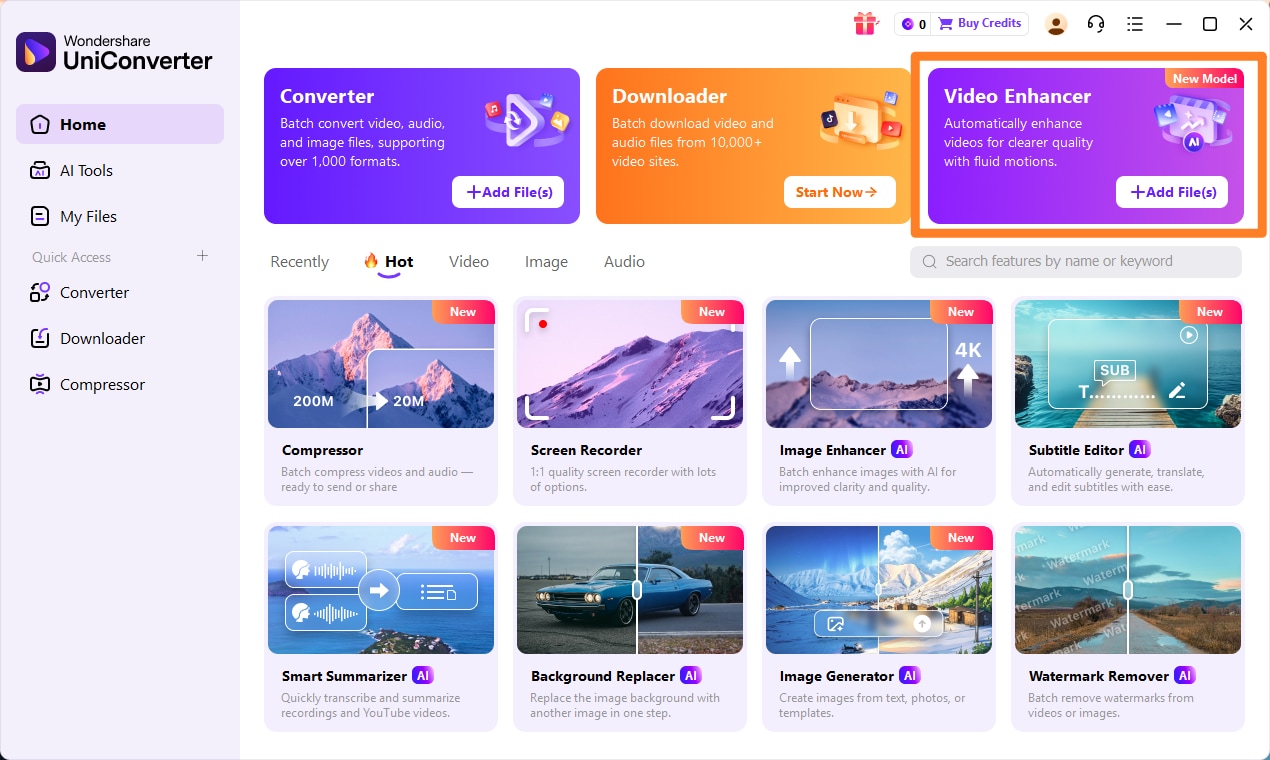
Step 1: Open UniConverter and Choose Video Enhancer
Launch UniConverter on your computer. From the main interface, navigate to the "Toolbox" section and select the "Video Enhancer" feature.
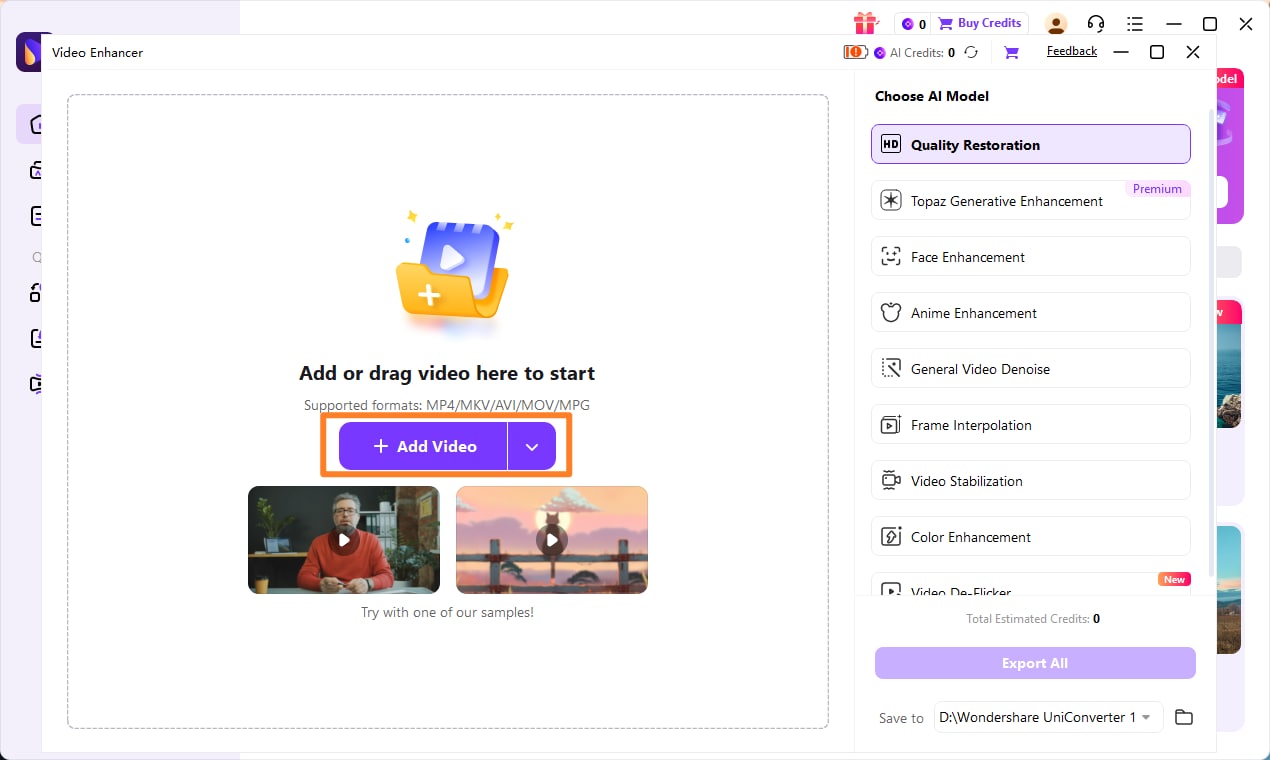
Step 2: Upload the Videos
Click the "Add Files" button or drag and drop your video files directly into the UniConverter interface. You can add multiple videos for batch enhancement.
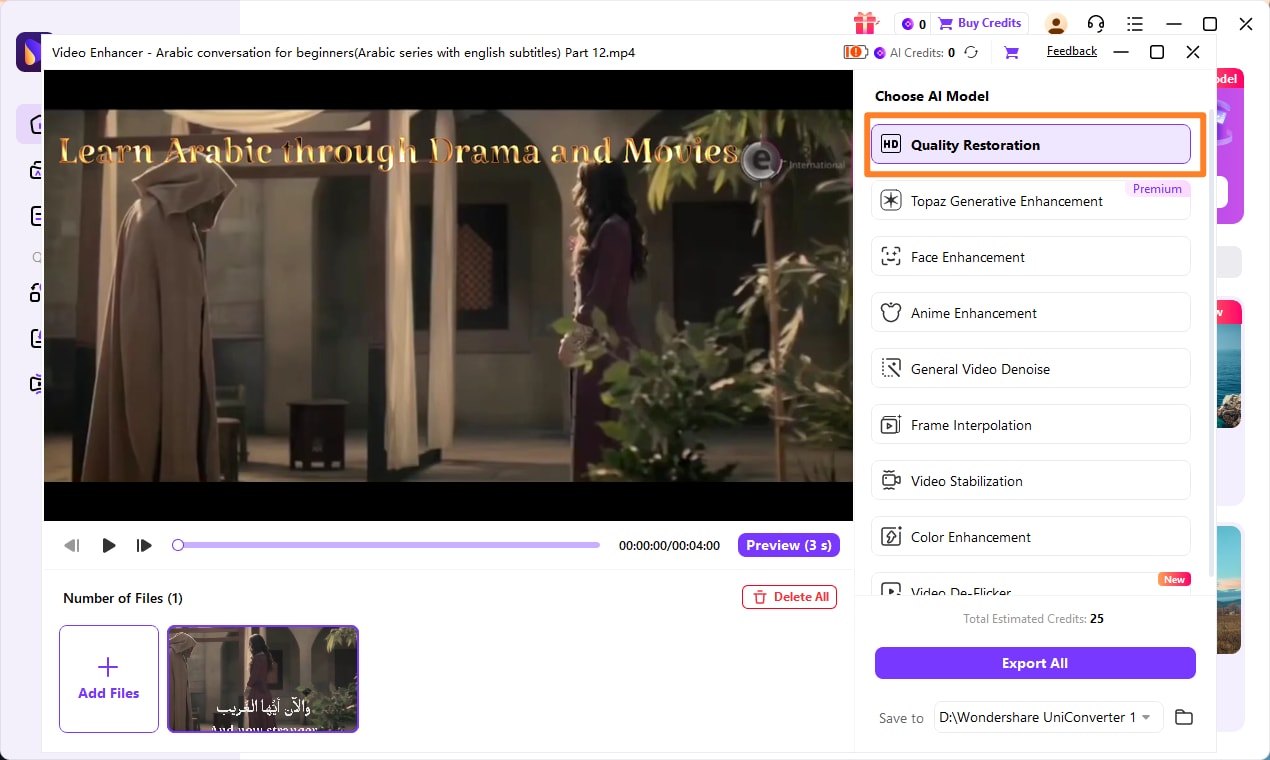
Step 3: Choose Enhancement Model
UniConverter offers various enhancement options. Select the desired enhancement model (e.g., AI Upscale, Brightness/Contrast adjustment, Denoise) and configure any specific parameters. For instance, you might want to remove background without losing quality from your video, or perhaps use a high-definition background remover to achieve a professional look. You can also change video background to something more suitable.
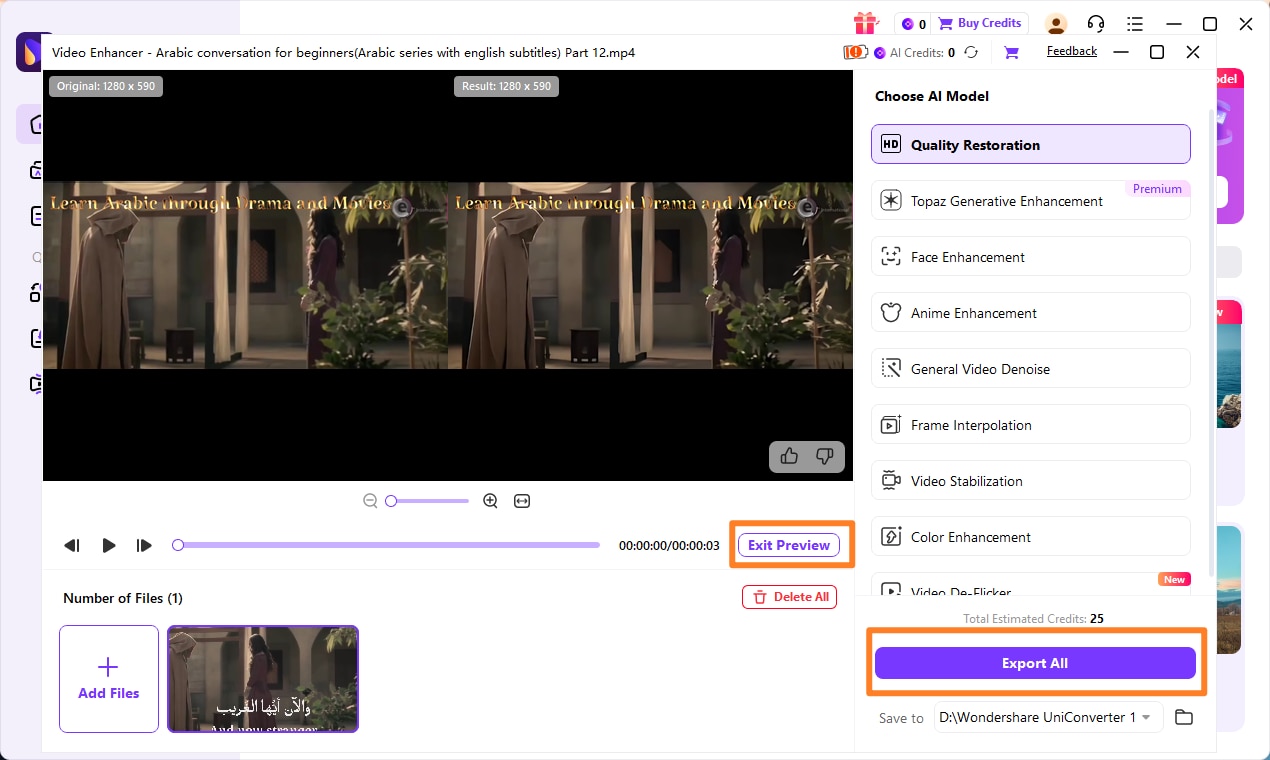
Step 4: Preview and Save the Enhanced Video
Preview the enhanced video to ensure the desired quality. Once satisfied, choose your output format and destination folder, then click "Enhance" or "Start All" to save your improved video. For those looking to change video background or perform a background replacer operation, the preview step is crucial to verify the new background integrates seamlessly.

Cupscale Video Enhancer Alternative for Better Results?
Part 7: Conclusion
The Cupscale Video Enhancer review reveals it as a formidable tool for advanced users and researchers seeking unparalleled customization in AI video upscaling. Its open-source nature and reliance on powerful ESRGAN models make it a go-to for breathing new life into legacy content, provided users are comfortable with its steep learning curve and significant hardware demands. For professionals needing integrated workflows, premium suites like DaVinci Resolve Studio offer a more cohesive environment. Casual users and those prioritizing ease of use and efficiency will find UniConverter a balanced and highly effective solution, offering quality enhancement without the complexities. Budget-conscious users can explore Cupscale, but with an understanding of the time and technical investment required. Ultimately, the best choice depends on individual technical proficiency, project requirements, and available hardware.
Part 8: FAQs
-
1. Is Cupscale Video Enhancer truly free to use?
Yes, Cupscale is an open-source project and is completely free to download and use, relying on community contributions for its development.
-
2. What kind of hardware do I need to run Cupscale effectively?
A powerful GPU (NVIDIA recommended) with ample VRAM (at least 8GB, preferably more) is crucial for efficient processing, especially for high-resolution videos and complex AI models.
-
3. Can Cupscale fix heavily compressed or damaged video files?
While Cupscale can significantly improve quality and reduce artifacts, it cannot fully restore severely damaged or extremely low-quality source material. It enhances what's there, it doesn't magically create missing information.
-
4. How does Cupscale compare to online video enhancers?
Cupscale offers far more control, higher quality output, and local processing compared to most online enhancers. Online tools are often limited by file size, processing power, and may introduce watermarks or privacy concerns.
-
5. Are there any privacy concerns when using Cupscale?
As an offline, open-source tool, Cupscale processes files locally on your computer. This minimizes privacy concerns associated with cloud-based services that require uploading your video content to external servers.
