
- Value: Clipify excels at revitalizing old family videos, offering easy AI upscaling, color correction, and de-noising for casual users.
- Comparison: Unlike professional tools, Clipify prioritizes simplicity over granular control, making it less suitable for nuanced artistic or professional projects.
- Decision: For quick, automated video fixes without a steep learning curve, Clipify is a good choice; for advanced control, consider alternatives.
- Pitfalls: Be aware of potential data privacy issues with cloud processing, over-processed results, watermarks, and hidden costs in freemium models.
- Alternative: UniConverter offers a stable, all-in-one solution with GPU acceleration and batch processing, bypassing common free tool limitations.
In this article
- Part 1: What is Clipify Video Enhancer?
- Part 2: Clipify Video Enhancer: Core Features, Pros & Cons
- Part 3: Ideal Users and Use Cases for Clipify Video Enhancer
- Part 4: Clipify Video Enhancer and Alternatives Comparison
- Part 5: Risks and Pitfalls to Consider
- Part 6: How to Use UniConverter for Efficient Video and Image Enhancement
- Part 7: Conclusion
- Part 8: FAQs
Clipify Video Enhancer Review: A Scenario-Based Comparison
The digital age has brought an explosion of video content, but often, cherished older footage or hastily shot clips suffer from poor quality. This has led to a surge in demand for AI-powered video enhancement tools, promising to breathe new life into pixelated memories and shaky recordings. This Clipify Video Enhancer review will delve into its capabilities, comparing it against leading competitors to help users make informed decisions about their video enhancement needs. We will explore its core features, ideal use cases, potential pitfalls, and offer a comprehensive comparison to guide your choice.
Part 1: What is Clipify Video Enhancer?
Clipify Video Enhancer emerges as a promising contender in the burgeoning market of AI-driven video enhancement software. Positioned as an accessible solution, it aims to democratize the process of improving video quality, making sophisticated enhancements available to everyday users without requiring extensive technical expertise. This review will critically assess its performance, particularly in scenarios where quick, effective improvements are paramount, and contrast it with more professional-grade alternatives. The core problem this review seeks to address is how Clipify stands up against competitors in delivering tangible quality improvements for various user needs.
Understanding the Rise of AI Video Enhancement Tools
* The Proliferation of User-Generated Content: With smartphones and affordable cameras, everyone is a content creator, leading to a vast amount of footage needing quality refinement.
* Nostalgia and Digital Archiving: There's a growing desire to digitize and enhance old family videos, preserving memories in higher fidelity.
* Accessibility of AI Technology: Advances in AI have made complex video processing more automated and user-friendly, moving it from specialized studios to consumer desktops.
* Demand for Quick and Easy Solutions: Many users prioritize speed and simplicity over intricate manual controls, seeking tools that deliver good results with minimal effort.
Part 2: Clipify Video Enhancer: Core Features, Pros & Cons
Clipify Video Enhancer is designed to simplify the video enhancement process, offering a suite of features aimed at improving visual quality with minimal user intervention. Its core capabilities revolve around leveraging AI algorithms to automatically detect and correct common video imperfections.
* AI-Powered Upscaling: Intelligently increases video resolution, making low-resolution footage suitable for modern displays.
* Noise Reduction: Effectively minimizes grain and digital noise, particularly in videos shot in low-light conditions.
* Color Correction: Automatically adjusts color balance, saturation, and contrast to produce more vibrant and natural-looking visuals.
* Stabilization: Reduces camera shake, making shaky footage smoother and more watchable.
* Sharpening: Enhances edge detail and clarity, making blurry videos appear crisper.
Pros:
* AI-Powered Upscaling for Older Footage: Excels at breathing new life into vintage videos, making them look surprisingly good on modern screens.
* User-Friendly Interface for Quick Edits: Its intuitive design allows even novices to achieve decent results without a steep learning curve.
* Specialized Filters for Specific Video Issues (e.g., de-noising): Offers targeted solutions for common problems, making it efficient for specific enhancement tasks.
Cons:
* Limited Advanced Customization Options: Lacks the granular control needed for professional-grade adjustments, restricting artistic freedom.
* Potential for Over-Processed, Unnatural Results: The automated nature can sometimes lead to an artificial or "plastic" look, especially with aggressive settings.
Part 3: Ideal Users and Use Cases for Clipify Video Enhancer
Clipify Video Enhancer caters primarily to users who prioritize ease of use and quick results over extensive manual control. Its automated AI features make it an attractive option for those without professional video editing experience but who still desire significant improvements to their footage.
Best Use Case: Revitalizing Old Family Videos for Digital Archiving
Imagine discovering a box of old VHS tapes or mini-DV cassettes filled with precious family memories. These videos often suffer from low resolution, color fading, and significant noise. Clipify Video Enhancer shines in this scenario. Its AI upscaling can transform blurry, pixelated footage into a much clearer digital format, suitable for sharing on social media or archiving on cloud platforms. The automated color correction can restore faded hues, and its de-noising capabilities can significantly clean up grainy visuals, making these nostalgic moments enjoyable again without requiring hours of manual editing. It’s perfect for individuals who want to preserve and share their past without getting bogged down in complex software.
Limited Use Case: Professional Filmmaking Requiring Granular Control and Artistic Fidelity
While excellent for casual users, Clipify Video Enhancer falls short for professional filmmakers or videographers. These professionals require absolute control over every aspect of their footage, from precise color grading to intricate noise reduction algorithms and advanced stabilization techniques. They often work with high-resolution raw footage and demand tools that allow for artistic interpretation and meticulous adjustments to maintain the original artistic intent. The automated nature and limited customization options of Clipify can lead to an "over-processed" look that compromises the nuanced aesthetic required in professional productions, making it unsuitable for projects where granular control and uncompromised fidelity are paramount.
Part 4: Clipify Video Enhancer and Alternatives Comparison
| Feature / Product | Clipify Video Enhancer | UniConverter | Topaz Video AI | DaVinci Resolve |
| Processing Speed | Moderate (CPU-dependent) | Fast (GPU acceleration) | Very Fast (Highly optimized for GPU) | Fast (GPU acceleration, highly scalable) |
| Output Quality | Good for casual use, can be artificial | Excellent, stable, lossless | Exceptional, highly detailed, natural | Professional-grade, highly customizable |
| Ease of Use | Very Easy (Automated) | Easy (Intuitive UI, guided steps) | Moderate (More options than Clipify) | High (Steep learning curve for full features) |
| Customer Support | Basic (Email, FAQs) | Responsive (Email, live chat, tutorials) | Good (Email, forum, detailed guides) | Extensive (Community forum, paid support, tutorials) |
| Security | Standard (Local processing, if desktop) | High (Local processing, no data upload) | High (Local processing) | High (Local processing) |
| Key Differentiators | Simplicity, quick fixes, AI for older footage | All-in-one toolkit, versatile, stable enhancement | Advanced AI models, superior upscaling/de-noising | Comprehensive post-production suite, color grading |
| Pricing Model | Freemium/Subscription | One-time purchase/Subscription | One-time purchase | Free (limited) / Studio (paid) |
Clipify Video Enhancer excels in simplicity and quick, automated fixes, making it ideal for users who need basic improvements without a steep learning curve. UniConverter offers a more versatile all-in-one solution, balancing ease of use with robust enhancement capabilities and broad format support, making it a strong contender for content creators. Topaz Video AI stands out for its cutting-edge AI models, delivering superior output quality, especially for upscaling and de-noising, albeit with a higher price point. DaVinci Resolve is the professional's choice, offering unparalleled control and a comprehensive suite for all post-production needs, but demands significant time to master.
Part 5: Risks and Pitfalls to Consider
When venturing into the world of video enhancement, especially with tools like Clipify Video Enhancer that often offer free or freemium models, it's crucial to be aware of potential risks and pitfalls. While the promise of magically improved footage is enticing, the reality can sometimes fall short or come with hidden costs.
Data Privacy Concerns with Cloud-Based Processing
Many "free" or low-cost enhancement tools operate in the cloud, requiring users to upload their video files to external servers. This raises significant data privacy concerns. Sensitive personal footage, proprietary business content, or any video containing identifiable information could be vulnerable to breaches, unauthorized access, or misuse. Users should always scrutinize the privacy policy of any cloud-based service and consider the implications of entrusting their data to a third party.
Over-Reliance on AI Leading to Loss of Original Artistic Intent
While AI can be incredibly powerful, its automated nature can sometimes be a double-edged sword. Clipify Video Enhancer, with its focus on simplicity, might aggressively apply enhancements that fundamentally alter the original look and feel of a video. This can lead to a loss of artistic intent, where subtle nuances, natural film grain, or specific color palettes are inadvertently smoothed out or over-processed, resulting in an artificial or "plastic" aesthetic that deviates from the creator's vision.
Potential for Watermarks or Advertisements in Free/Trial Versions
A common strategy for freemium software is to impose limitations on the free or trial versions. This often includes embedding obtrusive watermarks on the enhanced video output or bombarding users with advertisements and pop-ups within the application. These can significantly detract from the user experience and render the "enhanced" video unusable for any public or professional purpose, forcing users into a paid subscription to remove them.
Actual Output Quality vs. Marketing Claims
Marketing materials often showcase the most dramatic "before and after" transformations, leading to high user expectations. However, the actual output quality from tools like Clipify Video Enhancer can vary widely depending on the original footage's quality, the complexity of the scene, and the specific enhancement algorithms used. Users might find that severely damaged or extremely low-resolution footage doesn't achieve the advertised pristine quality, leading to disappointment.
Subscription Model Lock-in and Hidden Costs
Many video enhancement tools operate on a subscription basis. While this can offer continuous updates and support, it also means users are locked into recurring payments. Furthermore, some services might have hidden costs, such as limits on processing time, file size, or the number of enhancements, which are only revealed after significant investment of time or initial payment, leading to unexpected expenses.
Part 6: How to Use UniConverter for Efficient Video and Image Enhancement
When other tools fall short in batch processing, stable enhancement, or delivering weak results, UniConverter emerges as a robust alternative. It bypasses common issues like intrusive ads, limited format support, and unstable enhancement, offering a comprehensive, all-in-one solution. UniConverter leverages GPU acceleration for rapid processing, ensures stable and lossless enhancement, and supports batch processing, making it an ultimate solution for diverse video and image needs.
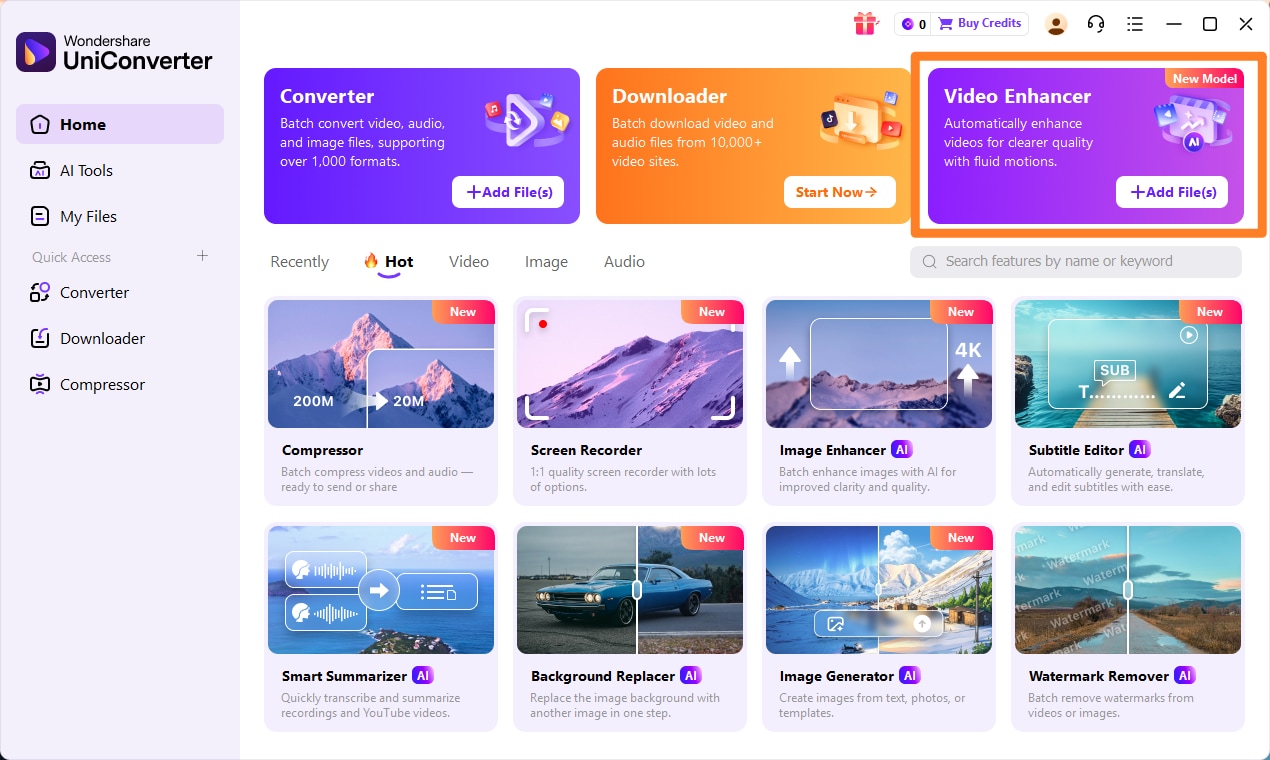
Step 1: Open UniConverter and Choose Video Enhancer
Launch UniConverter on your desktop. On the main interface, navigate to the "Toolbox" section and select the "Video Enhancer" feature. This will open the dedicated enhancement module.
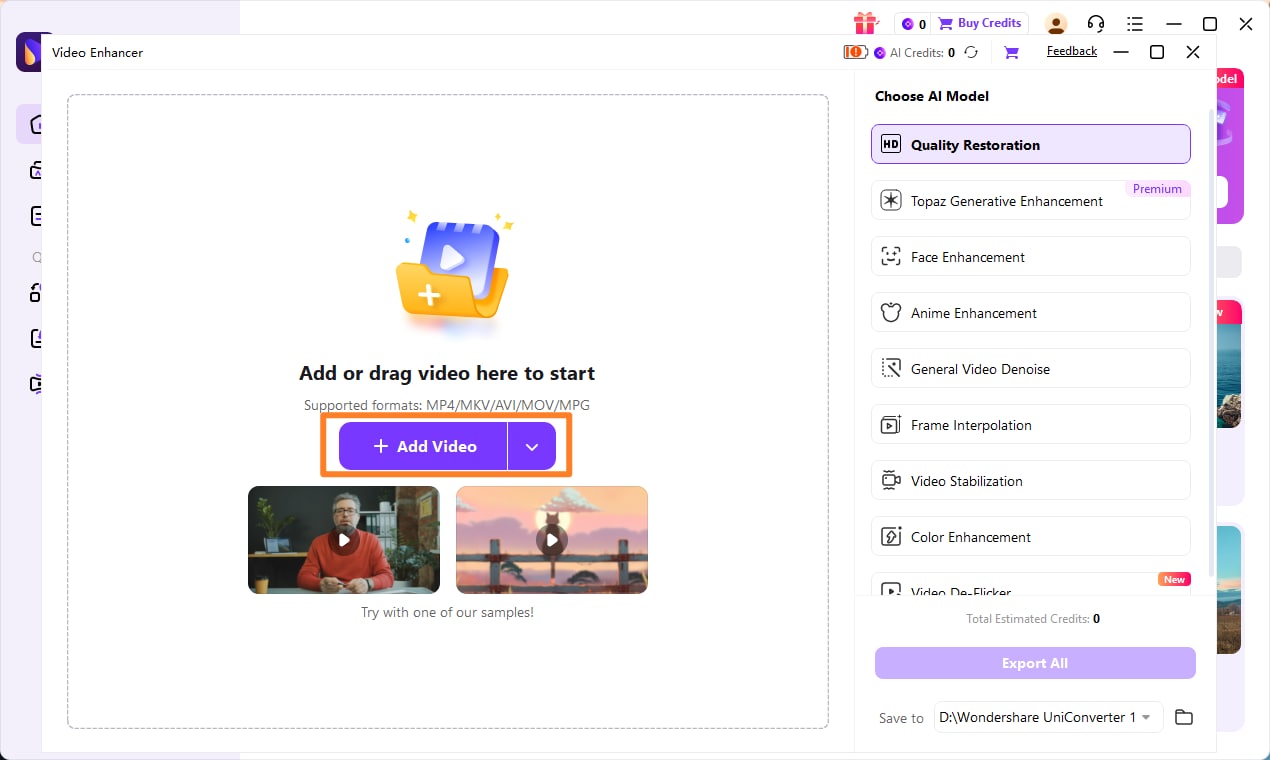
Step 2: Upload the Videos
Click the "Add Files" button or simply drag and drop the videos you wish to enhance into the UniConverter interface. You can add multiple videos for batch processing.
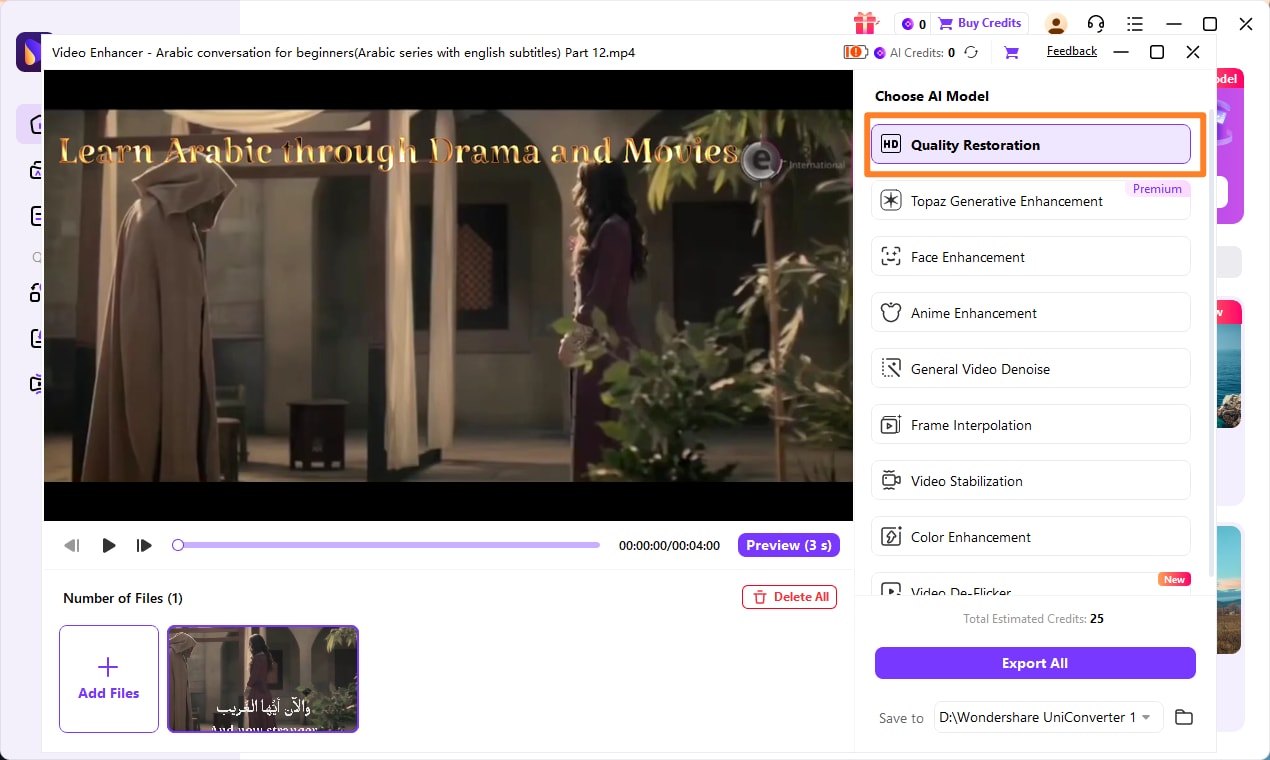
Step 3: Choose Enhancement Model
Once your videos are loaded, UniConverter will present various enhancement options. Select the desired AI model for upscaling, noise reduction, color correction, or stabilization. Adjust parameters as needed.
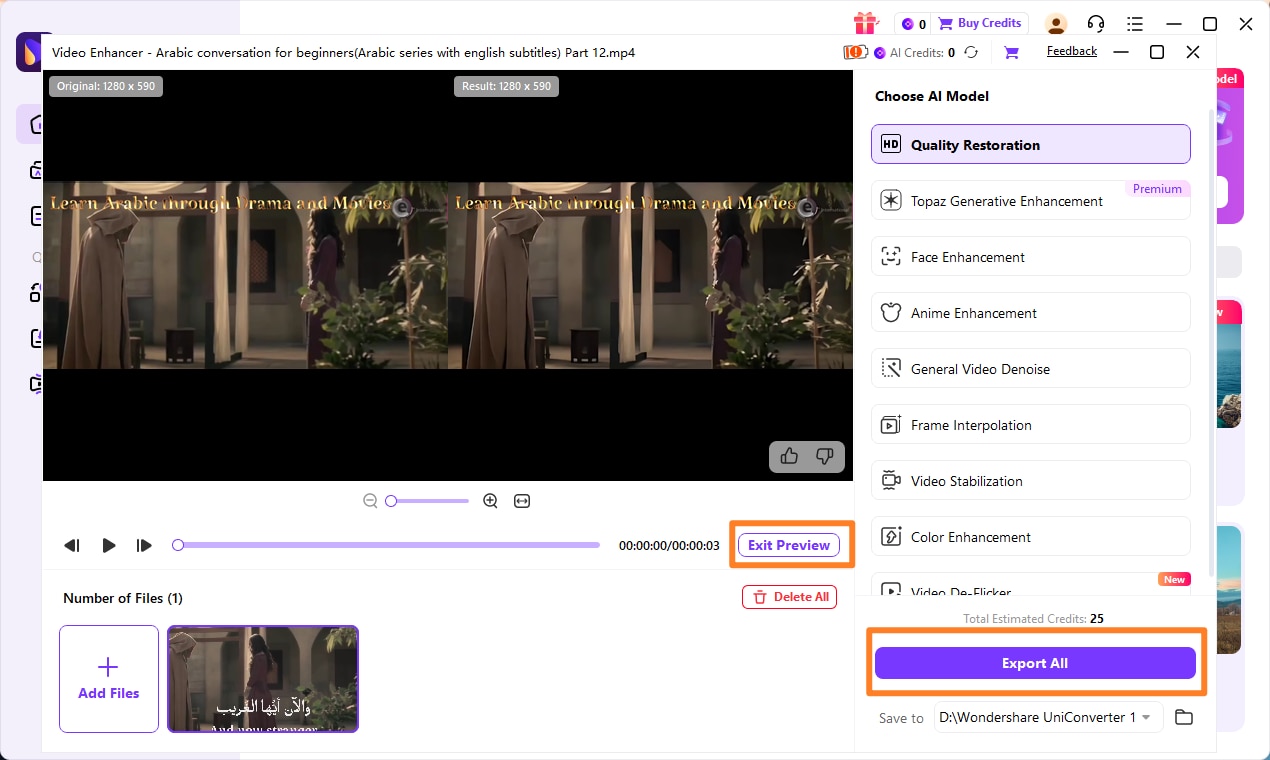
Step 4: Preview and Save the Enhanced Video
After selecting your enhancement settings, UniConverter allows you to preview the changes. Once satisfied, choose your output format and destination folder, then click "Export" to save your enhanced video.

Seeking a Clipify Video Enhancer Alternative?
Part 7: Conclusion
The Clipify Video Enhancer review reveals it as a commendable tool for casual users and those seeking quick, automated improvements for their video footage, particularly for revitalizing old family videos. Its user-friendly interface and AI-powered features make it accessible to individuals without extensive editing experience, offering a straightforward path to better-looking videos. However, its limitations in advanced customization and potential for over-processing mean it falls short for professional filmmakers who demand granular control and artistic fidelity. For content creators seeking a balance of quality and speed, or for users who encounter the pitfalls of free tools, alternatives like UniConverter offer a more versatile and stable all-in-one solution with robust enhancement capabilities and broader format support. Professionals, on the other hand, will find tools like Topaz Video AI or DaVinci Resolve indispensable for their advanced features and uncompromised output quality. Ultimately, the best choice depends on the user's specific needs, technical proficiency, and the desired level of control over the enhancement process.
Part 8: FAQs
-
1. **Is Clipify Video Enhancer truly free?**
Clipify Video Enhancer often operates on a freemium model. While it may offer a free version with basic features, it typically includes limitations such as watermarks on output videos, restricted processing time, or access to advanced features only through a paid subscription.
-
2. **How does Clipify Video Enhancer compare to professional editing software?**
Clipify Video Enhancer is designed for simplicity and automated enhancements, making it user-friendly for beginners. Professional editing software like DaVinci Resolve or Adobe Premiere Pro offers far more granular control, advanced editing tools, and comprehensive post-production capabilities, but comes with a steeper learning curve and higher cost.
-
3. **Can Clipify Video Enhancer fix severely damaged footage?**
While Clipify Video Enhancer can significantly improve low-quality or slightly damaged footage through upscaling, noise reduction, and color correction, it has limitations. Severely damaged footage with missing frames, extreme blur, or irreparable artifacts may not be fully recoverable to a high-quality state, and results can vary.
-
4. **What are the system requirements for Clipify Video Enhancer?**
System requirements for Clipify Video Enhancer typically include a modern operating system (Windows or macOS), a decent processor (Intel i3 or equivalent), at least 4GB of RAM, and sufficient free disk space. For optimal performance, especially with AI enhancements, an integrated or dedicated GPU is often recommended.
-
5. **Does Clipify Video Enhancer offer batch processing?**
Some versions or premium tiers of Clipify Video Enhancer may offer batch processing capabilities, allowing users to apply the same enhancements to multiple videos simultaneously. However, this feature might be limited in the free version or have restrictions on the number of files that can be processed at once.
