
- Clipdrop Review: Discover Clipdrop's AI video enhancement capabilities for quick, accessible improvements.
- Feature Focus: Understand Clipdrop's core features, pros (ease of use, social media), and cons (limited customization, performance issues).
- Ideal Users: Learn who benefits most from Clipdrop (influencers, casual users) and who needs alternatives (professionals).
- Comparison: See how Clipdrop stacks against UniConverter, Topaz AI, and DaVinci Resolve in speed, quality, and ease.
- Risks & Pitfalls: Be aware of data privacy, over-processing, subscription costs, and internet dependency.
- UniConverter Advantage: Explore UniConverter for robust, secure, and efficient video enhancement with local processing.
- Decision Guide: Make an informed choice based on your specific needs: ease vs. control, cloud vs. local.
In this article
- Part 1: What is Clipdrop Video Enhancer?
- Part 2: Clipdrop Video Enhancer: Core Features, Pros, and Cons
- Part 3: Clipdrop Video Enhancer: Ideal Users and Use Cases
- Part 4: Clipdrop Video Enhancer and Alternatives Comparison
- Part 5: Risks and Pitfalls to Consider
- Part 6: How to Use UniConverter to Efficiently Enhance Videos
- Part 7: Conclusion
- Part 8: FAQs
Clipdrop Video Enhancer Review: A Scenario-Based Analysis
The digital landscape is awash with content, and video has emerged as a dominant medium. However, not all captured footage is perfect, often suffering from poor lighting, low resolution, or general lack of clarity. This is where AI video enhancement tools step in, promising to breathe new life into otherwise mediocre clips. Clipdrop Video Enhancer, a relatively new player in this burgeoning market, positions itself as an accessible solution for quick and effective video improvements. This Clipdrop video enhancer review will delve into its capabilities, comparing it against established competitors and offering a scenario-based analysis to help users make informed decisions about its suitability for their specific needs.
Part 1: What is Clipdrop Video Enhancer?
Clipdrop Video Enhancer is an AI-powered online tool designed to improve the visual quality of videos. It leverages artificial intelligence to automatically upscale resolution, reduce noise, and enhance details, aiming to transform ordinary footage into more polished content. This review seeks to address the core question of whether Clipdrop Video Enhancer delivers on its promises of ease of use and effective enhancement, especially when compared to more robust, professional-grade alternatives.
The Rise of AI Video Enhancement Tools
The demand for high-quality video content has never been higher, driving the rapid development of AI-powered enhancement solutions.
* Accessibility for Non-Professionals: These tools democratize video editing, allowing users without extensive technical knowledge to achieve professional-looking results.
* Efficiency in Workflow: AI automation significantly reduces the time and effort traditionally required for manual video correction.
* Addressing Common Video Flaws: From blurry footage to low-light conditions, AI enhancers tackle a wide array of common video imperfections.
* Meeting Social Media Demands: The constant need for engaging, visually appealing content on platforms like TikTok and Instagram fuels the adoption of such tools.
Part 2: Clipdrop Video Enhancer: Core Features, Pros, and Cons
Clipdrop Video Enhancer primarily focuses on simplifying the video enhancement process through its AI-driven algorithms. Its core capabilities revolve around automatic resolution upscaling, noise reduction, and detail sharpening. It aims to provide a quick fix for common video quality issues without requiring extensive user input.
Pros:
* Intuitive Interface for Quick Edits in Social Media Content Creation: The platform is remarkably easy to navigate, allowing users to upload and enhance videos with minimal clicks, ideal for fast-paced content creation.
* Effective for Minor Detail Enhancement in Casual Vlogs: For vlogs or personal videos with slight imperfections, Clipdrop can noticeably improve clarity and sharpness.
* Good for Batch Processing of Short Clips for Marketing Campaigns: Its ability to handle multiple short videos efficiently makes it suitable for marketers needing to quickly polish several campaign assets.
Cons:
* Limited Customization Options for Professional Filmmaking: The lack of granular control over enhancement parameters restricts its utility for professional videographers who require precise adjustments.
* Performance Issues with High-Resolution or Long-Duration Footage: Users may experience slower processing times and occasional crashes when attempting to enhance 4K or lengthy video files.
Part 3: Clipdrop Video Enhancer: Ideal Users and Use Cases
Clipdrop Video Enhancer is primarily designed for users who prioritize speed and simplicity over extensive control and professional-grade output. Its AI-driven automation makes it an attractive option for individuals and small businesses with basic video enhancement needs.
Best Use Case: Social Media Influencers Enhancing Short-Form Content
Social media influencers and content creators who frequently produce short-form videos for platforms like Instagram Reels, TikTok, or YouTube Shorts will find Clipdrop Video Enhancer highly beneficial. Its quick processing and user-friendly interface allow them to rapidly improve the visual quality of their content, ensuring it stands out in a crowded feed without requiring advanced editing skills or expensive software. This is particularly useful for enhancing mobile-shot footage that might suffer from minor blurriness or low light.
Limited Use Case: Professional Videographers Requiring Granular Control and High Fidelity
For professional videographers, filmmakers, or studios working on high-stakes projects, Clipdrop Video Enhancer falls short. These professionals demand granular control over every aspect of video enhancement, including specific noise reduction algorithms, precise sharpening parameters, and advanced color grading capabilities. Clipdrop's automated, one-size-fits-all approach does not provide the necessary flexibility or the uncompromised quality required for broadcast-ready or cinematic productions. They would typically opt for more comprehensive and powerful desktop software that offers a full suite of post-production tools.
Part 4: Clipdrop Video Enhancer and Alternatives Comparison
When evaluating video enhancement tools, it's crucial to consider how they stack up against the competition in various scenarios. This comparison focuses on Clipdrop Video Enhancer, UniConverter, Topaz Video AI, and DaVinci Resolve.
| Feature/Scenario | Clipdrop Video Enhancer | UniConverter | Topaz Video AI | DaVinci Resolve |
| Processing Speed | Moderate (Cloud-based) | Fast (GPU Accelerated) | Very Fast (GPU Optimized) | Variable (System Dependent) |
| Output Quality | Good (Basic Enhancement) | Very Good (AI-driven, Lossless) | Excellent (Advanced AI Upscaling) | Excellent (Professional Grade) |
| Ease of Use | High | High | Medium | Low |
| Customer Support | Email/FAQ | 24/7 Live Chat/Email | Email/Forum | Extensive Community/Forum |
| Security | Cloud-based (Data Privacy Concerns) | Local Processing (High Security) | Local Processing (High Security) | Local Processing (High Security) |
Key Differentiators:
Clipdrop excels in user-friendliness for quick, basic enhancements, making it ideal for casual users. UniConverter offers a balanced approach, providing strong AI enhancement with excellent ease of use and local processing for security. Topaz Video AI stands out with its superior AI-driven upscaling and de-noising, catering to professionals seeking the highest quality results. DaVinci Resolve, while having a steeper learning curve, provides a comprehensive suite for all post-production needs, including advanced color grading and editing, making it the choice for professional studios.
Part 5: Risks and Pitfalls to Consider
While AI video enhancement tools offer compelling advantages, users should be aware of potential risks and pitfalls, especially when relying on cloud-based services or expecting professional-grade results from simpler platforms. Understanding these challenges can help in making a more informed decision.
Data Privacy Concerns with Cloud-Based Processing
For cloud-based tools like Clipdrop Video Enhancer, uploading sensitive or proprietary video content means entrusting it to a third-party server. This raises significant data privacy concerns, as the security of your footage depends entirely on the provider's infrastructure and policies. There's always a risk of unauthorized access, data breaches, or the potential misuse of uploaded content, which can be a major deterrent for commercial projects or personal videos containing sensitive information.
Potential for Over-Processing and Unnatural Artifacts
AI enhancement is not always perfect. Aggressive application of enhancement algorithms can lead to "over-processing," where the video loses its natural look. This can manifest as unnatural smoothness, exaggerated sharpness, or the introduction of visual artifacts like halos, ghosting, or strange patterns, especially in areas with complex textures or motion. Instead of improving the video, it can make it look artificial and detract from the original footage's integrity.
Subscription Model Limitations for Infrequent Users
Many AI video enhancers operate on a subscription model, which can be financially inefficient for users who only need to enhance videos occasionally. Paying a monthly or annual fee for a tool that is only used a few times a year can be a significant waste of resources. This model often forces users to either overpay for infrequent use or seek out less powerful free alternatives that come with their own set of limitations.
Dependence on Internet Connection for Optimal Performance
Cloud-based video enhancement tools inherently require a stable and fast internet connection. Slow or intermittent internet can severely hamper the user experience, leading to frustratingly long upload and download times, interrupted processing, or even failed enhancement jobs. This dependency makes such tools less reliable in environments with poor connectivity, limiting their usability for professionals on the go or in remote locations.
Output Quality Inconsistencies Across Different Source Materials
The effectiveness of AI video enhancement can vary dramatically depending on the quality and characteristics of the original source material. A tool that performs well on a well-lit, moderately resolution video might struggle significantly with heavily compressed, low-light, or extremely blurry footage. Users might experience inconsistent results, where some videos are enhanced beautifully, while others show minimal improvement or even degradation, leading to unpredictable outcomes and potential disappointment.
Part 6: How to Use UniConverter to Efficiently Enhance Videos
When other tools fall short in batch processing, stable enhancement, or delivering noticeable improvements, UniConverter emerges as a robust solution. It bypasses common issues like inconsistent quality, intrusive ads, and limited format support, offering a comprehensive, ad-free experience. UniConverter leverages GPU acceleration for rapid processing and ensures lossless quality, making it an all-in-one ultimate solution for video enhancement, conversion, and editing.
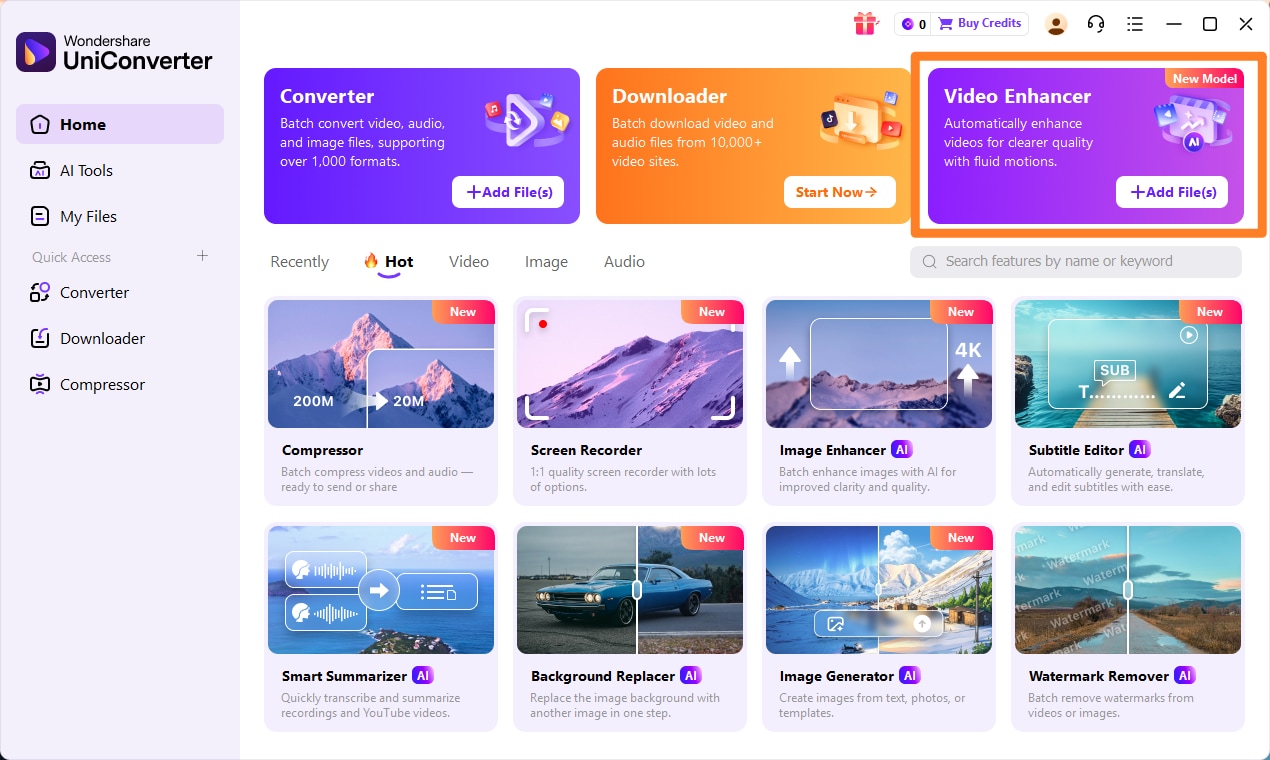
Step 1: Open UniConverter and Choose Video Enhancer
Launch UniConverter on your computer. From the main interface, navigate to the "Toolbox" section and select the "Video Enhancer" feature. This will open a dedicated window for video enhancement.
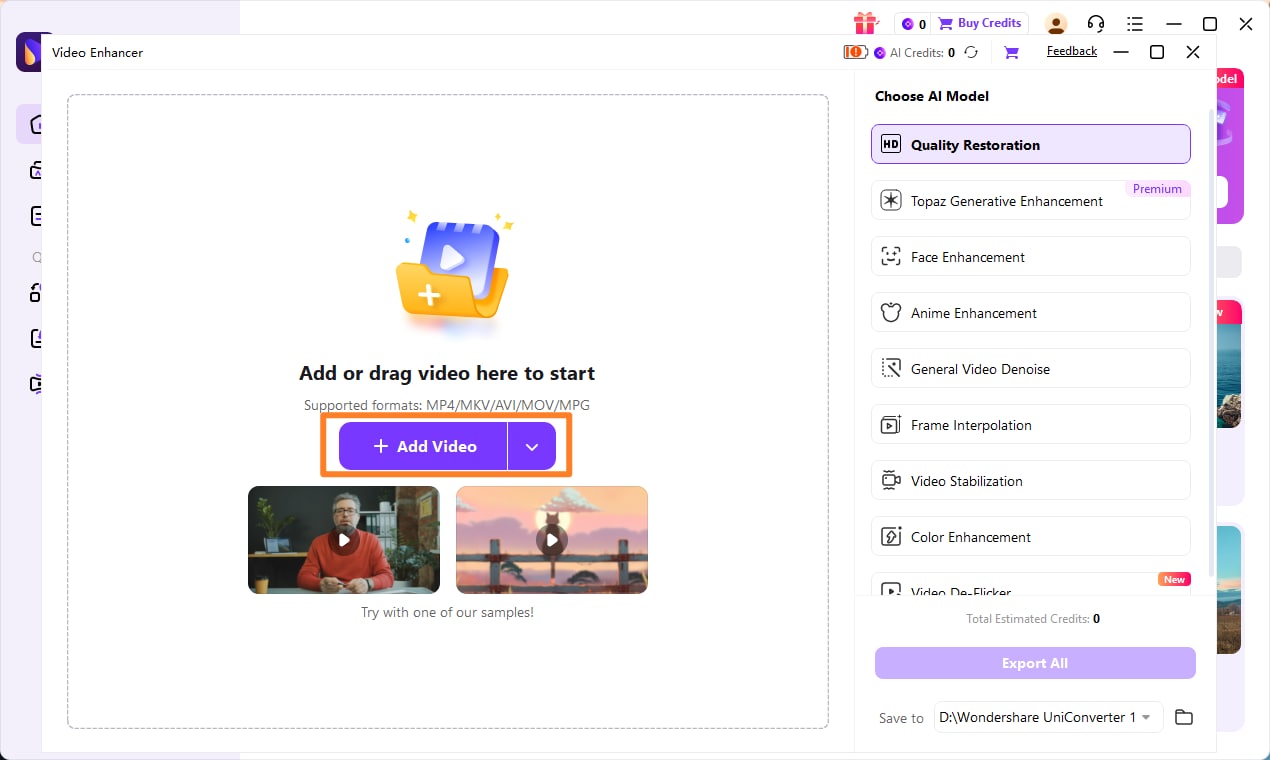
Step 2: Upload the Videos
Click on the "Add Files" button or drag and drop the video files you wish to enhance into the UniConverter interface. You can add multiple videos for batch processing.
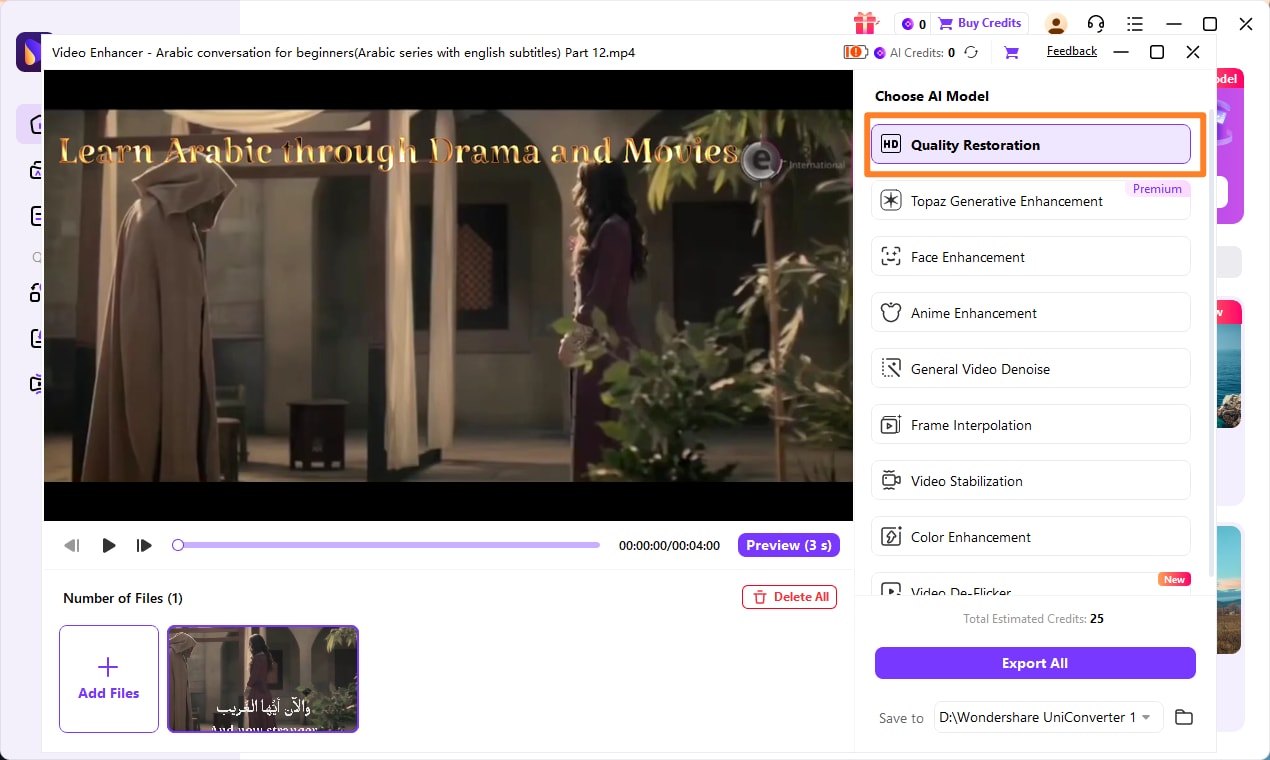
Step 3: Choose Enhancement Model
Once your videos are loaded, UniConverter will present various enhancement options. Select the desired AI enhancement model (e.g., upscale resolution, reduce noise, stabilize video) and adjust any specific parameters as needed. For instance, you might want to remove background without losing quality or utilize a high-definition background remover to refine your footage. You can also change video background or use the background replacer feature for creative edits.
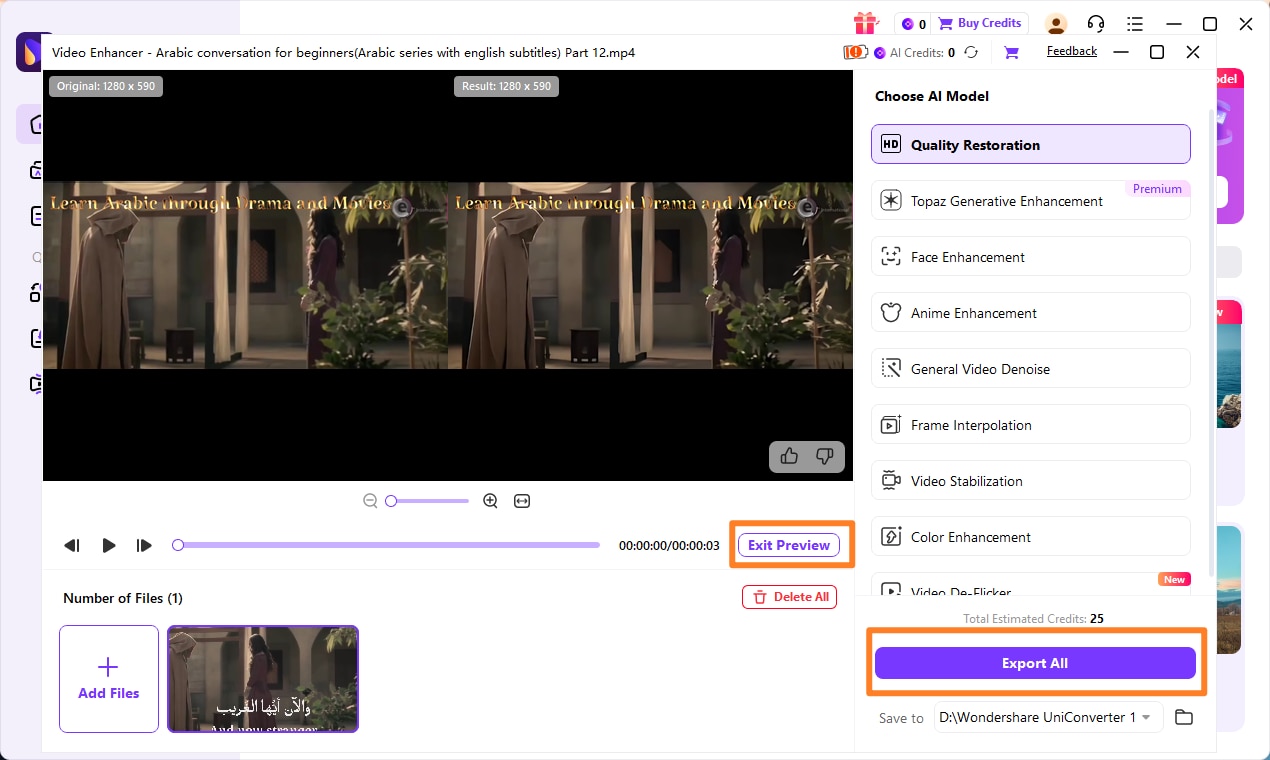
Step 4: Preview and Save the Enhanced Video
After selecting your enhancement options, you can often preview the changes to ensure satisfaction. Once satisfied, choose your output format and destination folder, then click "Enhance" or "Start All" to begin processing and saving your enhanced videos.

Seeking a Clipdrop Video Enhancer Alternative?
Part 7: Conclusion
This Clipdrop video enhancer review has explored the capabilities and limitations of Clipdrop Video Enhancer within the broader context of AI video enhancement tools. While Clipdrop offers an intuitive and efficient solution for quick, basic video improvements, particularly for social media content creators and casual users, its cloud-based nature and limited customization options present significant drawbacks for professionals. Users must weigh the convenience of its automated features against potential risks such as data privacy concerns, the possibility of over-processing, and performance inconsistencies with high-resolution or lengthy footage. For those seeking a more robust, secure, and locally processed alternative with advanced features and consistent quality, tools like UniConverter or Topaz Video AI offer compelling advantages. Ultimately, the best choice depends on individual needs, the specific use case, and the desired balance between ease of use, control, and output quality.
Part 8: FAQs
-
1. **Is Clipdrop Video Enhancer free to use?**
Clipdrop Video Enhancer typically offers a free tier with limited features or processing capacity, alongside paid subscription plans that unlock full functionality and higher usage limits.
-
2. **What video formats does Clipdrop Video Enhancer support?**
Clipdrop Video Enhancer generally supports common video formats like MP4, MOV, and WebM, but specific format compatibility might vary and is usually listed on their official website.
-
3. **Can Clipdrop Video Enhancer improve low-light footage?**
Yes, Clipdrop Video Enhancer can apply AI algorithms to improve the visibility and reduce noise in low-light footage, though the extent of improvement can vary based on the original video quality.
-
4. **How does Clipdrop Video Enhancer compare to desktop software?**
Clipdrop Video Enhancer is a simpler, cloud-based tool focused on ease of use and quick enhancements, whereas desktop software like DaVinci Resolve or Topaz Video AI offers more advanced features, granular control, and often superior performance for professional-grade results.
-
5. **Is Clipdrop Video Enhancer suitable for commercial projects?**
For commercial projects, Clipdrop Video Enhancer might be suitable for quick, minor enhancements of social media content or marketing snippets. However, for high-stakes, professional-grade commercial work requiring precise control and uncompromised quality, more advanced desktop software is generally recommended due to its greater capabilities and local processing security.
